On this page
A healthtech startup wins its first hospital deal and then faces the security review: prove HIPAA, prove SOC 2, prove it all with evidence. The seven tools below do that for a startup budget, from seven thousand five hundred dollars a year to twenty-one thousand five hundred dollars a year. Every price was checked on the vendor site on November 27, 2026. Secureframe is our first pick — the lowest entry price with a guided setup a small team can follow.
How we researched this
We started with the compliance platforms healthtech startups actually buy, then read each price on the vendor pricing page on November 27, 2026 and checked whether the plan covers HIPAA alongside SOC 2. We judged them for a startup with a small team, a tight budget and a customer deadline, where speed and guided setup matter more than enterprise depth. We dropped quote-only platforms that publish no rate, because a startup cannot budget for a price it cannot see.
Compare the tools
| Name | Best for | Starting price | Free plan | |
|---|---|---|---|---|
 Vanta | Healthtech startups that need HIPAA and SOC 2 proven fast | $14,000/year | No free plan; demo available | Visit |
 Drata | Healthtech startups with enterprise customers and large audit scopes | $15,000/year | No free plan; demo available | Visit |
 Secureframe | Seed-stage healthtech startups that need the lowest entry price | $7,500/year | No free plan; demo available | Visit |
 Sprinto | Healthtech startups racing a customer deadline to SOC 2 | $9,500/year | No free plan; demo available | Visit |
 Thoropass | Healthtech startups that want the audit and the software from one vendor | $8,700/year | No free plan; demo available | Visit |
 Scrut | Healthtech startups that need risk reporting for investors and boards | $15,000/year | No free plan; demo available | Visit |
 Strike Graph | Healthtech startups with no compliance staff that need hand-holding | $21,500/year | No free plan; demo available | Visit |
The compliance automation software for healthtech startups, compared
1. Vanta
Best for: Healthtech startups that need HIPAA and SOC 2 proven fast
Paid tool Starting price: $14,000/year · Fourteen thousand dollars a year for the Essentials plan, with higher plans for larger teams
Free plan: No free plan; demo available
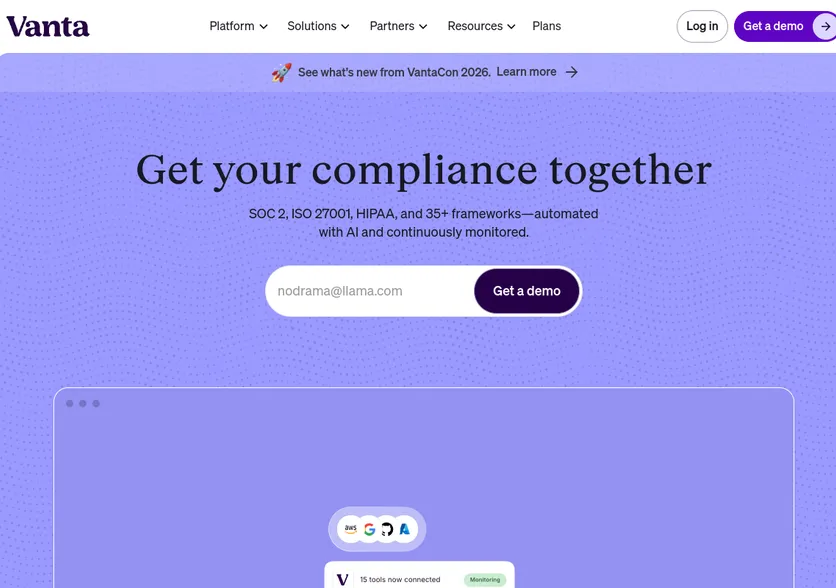
For a healthtech startup, Vanta turns compliance from a six-month project into a dashboard that collects evidence while the team ships product. This Vanta Essentials plan costs fourteen thousand dollars a year and connects to more than two hundred tools to prove HIPAA and SOC 2 controls automatically. A startup that needs to pass a hospital security review gets the most trusted name in the category.
What we like
- Most trusted name for startup security reviews
- Over two hundred integrations collect evidence automatically
- Policy templates save weeks of writing
Watch out for
- Entry price is steep for a pre-seed team
- Extra frameworks cost more than the base plan
How to try it
- Open the Vanta site and book a demo
- Connect your cloud, code and identity tools
- Follow the checklist until every control shows green
2. Drata
Best for: Healthtech startups with enterprise customers and large audit scopes
Paid tool Starting price: $15,000/year · Fifteen thousand dollars a year for the Foundation plan covering one to fifty full-time employees and one framework, as listed on the vendor's AWS Marketplace page; the platform fee plus one framework for a 100-employee company totals thirty-two thousand five hundred dollars a year
Free plan: No free plan; demo available
Drata gives a healthtech startup the compliance platform that enterprise customers already trust, with continuous monitoring across SOC 2, HIPAA and ISO 27001. This Drata Foundation plan costs fifteen thousand dollars a year and watches every control in real time so drift never reaches the audit. A startup selling into hospitals and health plans gets the deepest control library money can buy.
What we like
- Deepest control library in this comparison
- Continuous monitoring catches drift early
- Enterprise customers recognise the name
Watch out for
- Highest price in this comparison by far
- Overkill for a team with one product and ten staff
How to try it
- Open the Drata site and request a demo
- Select the frameworks your customers require
- Connect your stack and let controls monitor themselves
3. Secureframe
Best for: Seed-stage healthtech startups that need the lowest entry price
Paid tool Starting price: $7,500/year · Seven thousand five hundred dollars a year for the Fundamentals plan, or six hundred twenty-five dollars a month
Free plan: No free plan; demo available
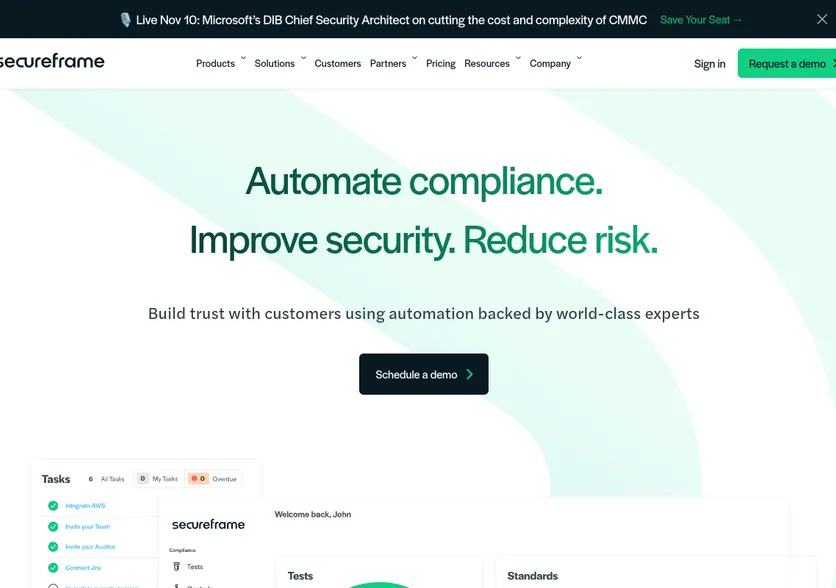
Secureframe is the compliance platform a seed-stage healthtech startup can actually afford, covering HIPAA and SOC 2 for less than eight thousand dollars a year. This Secureframe Fundamentals plan costs seven thousand five hundred dollars a year and guides a small team through evidence collection with templates and auditor support. A startup closing its first hospital deal gets audit-ready without hiring a compliance officer.
What we like
- Lowest entry price in this comparison
- Guided setup needs no compliance hire
- Fastest path to a first audit for small teams
Watch out for
- Fewer integrations than Vanta or Drata
- Higher frameworks need a more expensive plan
How to try it
- Open the Secureframe site and book a demo
- Choose HIPAA and SOC 2 as your frameworks
- Connect your tools and work the guided checklist
4. Sprinto
Best for: Healthtech startups racing a customer deadline to SOC 2
Paid tool Starting price: $9,500/year · Nine thousand five hundred dollars a year for the core plan
Free plan: No free plan; demo available
Sprinto is the compliance platform built for speed, moving a startup from zero to SOC 2 audit-ready in weeks instead of months. This Sprinto plan costs nine thousand five hundred dollars a year and covers SOC 2, HIPAA and ISO 27001 with an assigned auditor keeping the work on track. A healthtech startup with a ninety-day security deadline gets the fastest route to a passed audit.
What we like
- Fastest time to audit-ready in this comparison
- Assigned auditor keeps a startup on schedule
- Covers SOC 2, HIPAA and ISO 27001 together
Watch out for
- Smaller integration list than Vanta
- Exact pricing leans on a demo for larger teams
How to try it
- Open the Sprinto site and book a demo
- Tell the team your deadline and frameworks
- Work the checklist with your assigned auditor
5. Thoropass
Best for: Healthtech startups that want the audit and the software from one vendor
Paid tool Starting price: $8,700/year · Eight thousand seven hundred dollars a year for the Compliance Platform plan; a Launch package starts from eight thousand nine hundred ninety-five dollars a year
Free plan: No free plan; demo available
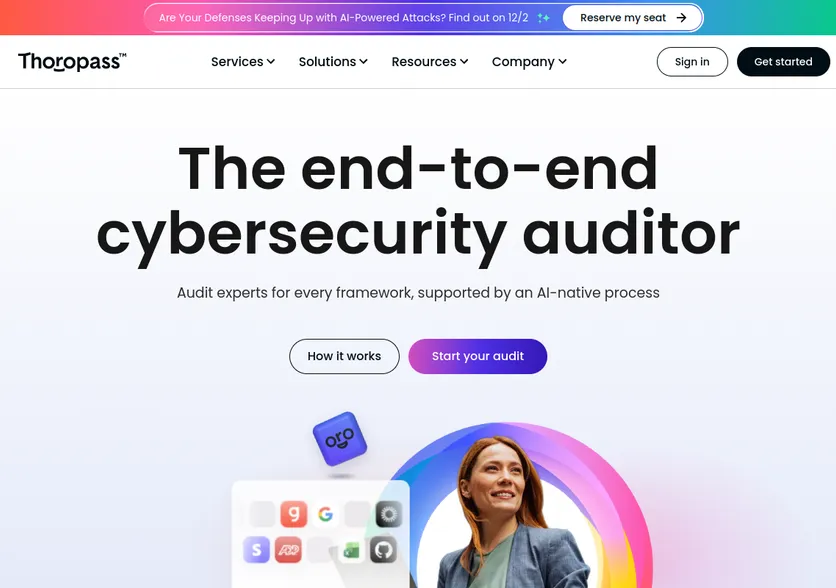
Thoropass bundles the compliance platform and the audit team, so a startup never chases an auditor who has not seen its evidence. This Thoropass Compliance Platform plan costs eight thousand seven hundred dollars a year and covers SOC 2, HIPAA and ISO 27001 with the audit handled in the same system. A healthtech startup with no compliance staff gets one vendor, one dashboard and one audit.
What we like
- Audit team included in the same platform
- One vendor means no auditor handoff delay
- Good HIPAA and SOC 2 coverage together
Watch out for
- Smaller customer base than Vanta or Drata
- Launch package costs more than the core plan
How to try it
- Open the Thoropass site and request a demo
- Pick your frameworks and audit scope
- Let the built-in audit team review the same evidence
6. Scrut
Best for: Healthtech startups that need risk reporting for investors and boards
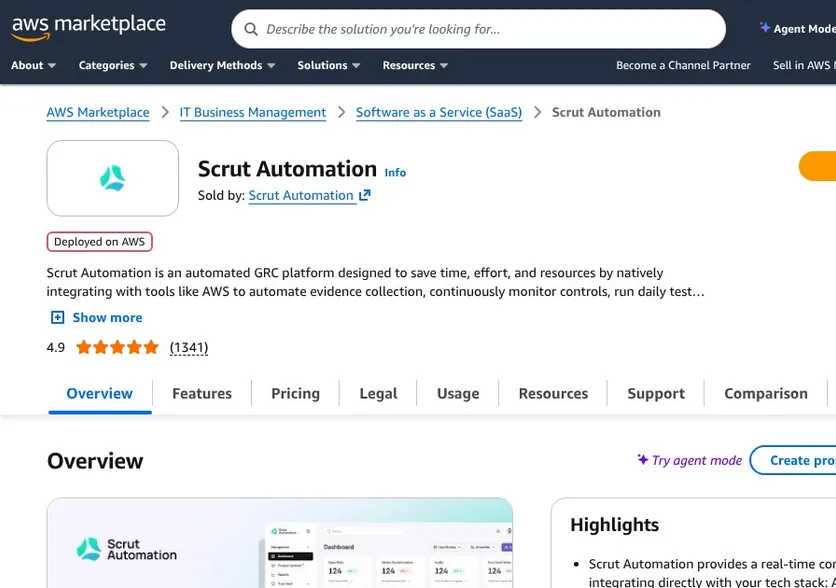
Paid tool Starting price: $15,000/year · Fifteen thousand dollars a year, listed on the AWS Marketplace for the Scrut Automation platform
Free plan: No free plan; demo available
Scrut is the platform a healthtech startup uses when investors ask about risk as well as compliance, combining the two in one dashboard. This Scrut Automation plan costs fifteen thousand dollars a year and covers SOC 2, HIPAA and ISO 27001 with a risk register built in. A startup preparing for a fundraise gets the compliance and risk reports a board actually reads.
What we like
- Risk management built in alongside compliance
- Board-ready reporting from day one
- Covers HIPAA, SOC 2 and ISO 27001 together
Watch out for
- Vendor pricing page does not publish the rate
- Less known in the US than Vanta or Drata
How to try it
- Open the Scrut site and request a demo
- Choose the frameworks your customers and investors need
- Connect your systems and build the risk register
7. Strike Graph
Best for: Healthtech startups with no compliance staff that need hand-holding
Paid tool Starting price: $21,500/year · Twenty-one thousand five hundred dollars a year for the compliance platform
Free plan: No free plan; demo available
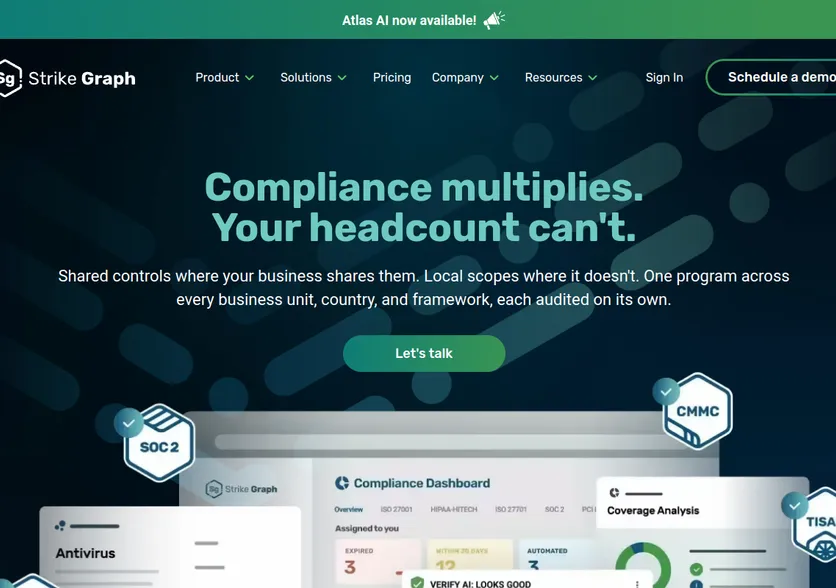
Strike Graph walks a startup through compliance step by step, with a guided workflow that assumes nobody on the team has done an audit before. This Strike Graph plan costs twenty-one thousand five hundred dollars a year and covers the full journey from readiness to the final audit report. A healthtech startup with a tiny team gets the most personal guidance in this list.
What we like
- Most hands-on guidance in this comparison
- Step-by-step workflow suits first-time teams
- Assigned support throughout the audit
Watch out for
- High price for a startup tool
- Fewer integrations than the larger platforms
How to try it
- Open the Strike Graph site and book a demo
- Work through the guided readiness checklist
- Complete the audit with your assigned support team
Prices above were checked on each vendor’s own website on Nov 27, 2026 and can change — the vendor’s page is the final word. Vendor links are editorial: nobody paid to be listed or ranked here. Vendors who want a featured listing can see how it works on our Get listed page.
What startup compliance costs in 2026
The software price is only the first line of the budget, because the audit fee sits on top and usually runs from ten thousand to thirty thousand dollars for a first SOC 2 audit. A seven-thousand-five-hundred-dollar Secureframe plan plus a fifteen-thousand-dollar audit costs twenty-two thousand five hundred dollars in year one, which is still cheaper than hiring a compliance consultant. Budget the software, the audit and the team time together before you sign.
Start with demos on two tools and connect your real stack before you commit. Check that HIPAA maps cleanly, that evidence collects without manual uploads, and that the vendor signs a business associate agreement. Pick the platform your engineers will actually keep green, because a compliance tool the team ignores before the audit costs you the deal it was bought to win.
Before you buy
- Check the entry price against your runway, because a fourteen-thousand-dollar plan hurts a seed startup more than a Series B team.
- Ask how fast the platform gets you audit-ready, because a customer deadline in ninety days rules out slow tools.
- Confirm the tool covers HIPAA, because a SOC 2-only platform leaves your health data controls unproven.
- Count the frameworks in the base plan, because adding ISO 27001 later can double the bill.
- Test the onboarding, because a startup with no compliance hire needs a tool that guides the work.
Official websites
Official websites of the products reviewed above. Features and prices were checked against these sites when this guide was written, and they can change, so confirm on the vendor site before you buy.
Frequently asked questions
Which compliance automation software is best for healthtech startups in 2026?
Secureframe is the best overall pick for a startup at seven thousand five hundred dollars a year, with the lowest entry price and a guided setup. Vanta is the best choice for a startup that needs the most trusted name at fourteen thousand dollars a year. Sprinto is the best pick for a startup racing a customer deadline, with the fastest path to audit-ready.
How much does compliance automation cost for a healthtech startup?
Prices in this list run from seven thousand five hundred dollars a year for Secureframe to twenty-one thousand five hundred dollars a year for Strike Graph. A seed-stage startup usually lands between seven thousand five hundred and nine thousand five hundred dollars a year. Add the audit fee, which typically runs ten thousand to thirty thousand dollars for a first SOC 2 audit.
Do healthtech startups need compliance automation software?
Yes, as soon as a hospital or health plan asks for a SOC 2 report or a HIPAA attestation, which usually happens at the first enterprise deal. Starting early is cheaper than rushing later, because the tool collects evidence from day one. A startup that waits until the security review arrives pays for speed it could have had for free.
Which tools cover HIPAA for healthtech startups?
Vanta, Drata, Secureframe, Sprinto, Thoropass, Scrut and Strike Graph all cover HIPAA alongside SOC 2. Confirm that the vendor signs a business associate agreement before any patient data flows through the platform. A SOC 2-only tool does not prove HIPAA compliance.
How long does a startup compliance audit take?
Three to six months is typical for a first audit, and Sprinto advertises the fastest path in this list. The timeline depends on how many controls already exist and how quickly the team closes gaps. Start the platform at least a quarter before the customer deadline, because evidence needs time to accumulate.
Building healthy habits too? Try Toolsvine's free health tools right in your browser.
Browse Health & Fitness Calculators tools