On this page
The dinner rush does not wait for a dispatcher to finish a spreadsheet, and a food fleet that plans routes by hand leaves money on the road every night. The seven tools below turn a list of orders into optimized routes, live driver tracking and proof of delivery, with prices checked on the vendor site on November 27, 2026. The list runs from twenty-six dollars per vehicle a month to six hundred and nineteen dollars a month. Routific is our first pick — the flat monthly price that covers every driver at no extra seat cost.
How we researched this
We started with the dispatch tools food fleets actually buy, then read each price on the vendor pricing page on November 27, 2026 and noted the free plan or trial each one carries. We judged them for a fleet that peaks at dinner, with part-time drivers, tight delivery windows and customers who want a live ETA. We dropped Bringg and DispatchTrack because neither vendor publishes a list price, so a buyer cannot compare them without a sales call.
Compare the tools
| Name | Best for | Starting price | Free plan | |
|---|---|---|---|---|
| Onfleet | Delivery operations that run thousands of tasks a month and need dispatch, tracking and proof of delivery in one platform | $619/month | No free plan; book a demo to start | Visit |
| Routific | Food and retail businesses that pay for the orders they deliver, not for every driver on the roster | $150/month | Free plan up to 100 orders a month | Visit |
| Shipday | Restaurants and shops that dispatch their own drivers and want auto-dispatch with route optimization | $49/month | Free Basic plan up to 300 orders a month | Visit |
| Spoke Dispatch | Courier companies and local delivery teams that dispatch multi-driver routes by stop volume | $125/month | No free plan; free trial available | Visit |
| Track-POD | Teams that need proof of delivery, route optimization and live tracking with a three-driver minimum | $49/driver/month | No free plan; 7-day free trial | Visit |
| OptimoRoute | Teams that plan routes by driver count and want a published per-driver rate | $35.10/driver/month | No free plan; 30-day free trial | Visit |
| Tookan | Small delivery operations that want task-based pricing and pay only for the deliveries they complete | $99/month | Free Forever plan up to 100 tasks a month | Visit |
The delivery dispatch software for food delivery fleets, compared
1. Onfleet
Best for: Delivery operations that run thousands of tasks a month and need dispatch, tracking and proof of delivery in one platform
Paid tool Starting price: $619/month · Six hundred and nineteen dollars a month for the Launch plan, covering two thousand and five hundred tasks; Scale costs one thousand three hundred and forty-nine dollars a month for five thousand tasks
Free plan: No free plan; book a demo to start
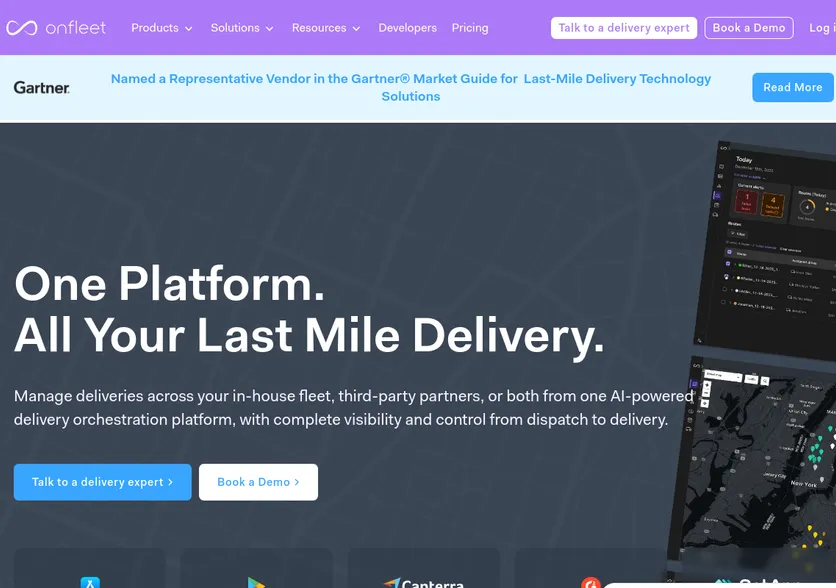
Food delivery fleets live or die by the dinner rush, and Onfleet is the dispatch platform built for that peak, routing thousands of orders through one live map with drivers tracked in real time. This Onfleet Launch plan costs six hundred and nineteen dollars a month and covers two thousand and five hundred tasks with unlimited users. A fleet that already runs at volume gets auto-dispatch, barcode scanning and proof of delivery without adding another system.
What we like
- Task-based pricing that scales with delivery volume
- Unlimited users on every plan
- Driver app with photo and signature proof of delivery
Watch out for
- Entry plan starts at six hundred and nineteen dollars a month
- SMS and voice notifications are billed separately
How to try it
- Open the Onfleet site and book a product demo
- Import your delivery tasks and set up driver teams
- Run a test route and check proof of delivery capture
2. Routific
Best for: Food and retail businesses that pay for the orders they deliver, not for every driver on the roster
Paid tool Starting price: $150/month · One hundred and fifty dollars a month flat for up to one thousand orders, with a free plan up to one hundred orders; higher volumes are charged per order with volume discounts
Free plan: Free plan up to 100 orders a month
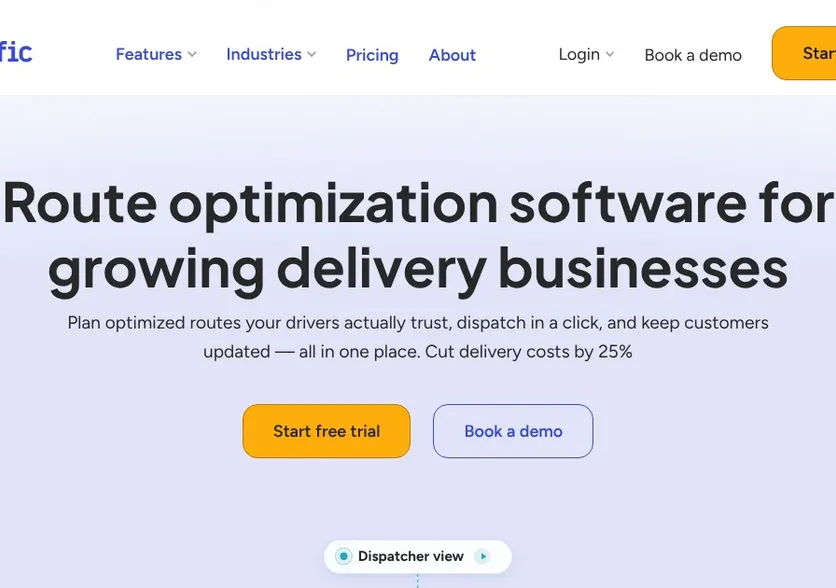
Food fleets pay for orders, not seats, and Routific is the route planner that charges a flat monthly price for the orders you deliver, with every driver added free. This Routific paid plan costs one hundred and fifty dollars a month for up to one thousand orders, and the free plan covers one hundred orders a month. A food business with part-time drivers gets optimized routes, live tracking and proof of delivery without a per-driver bill.
What we like
- Flat monthly price with every feature included
- Free plan covers up to one hundred orders a month
- Drivers cost nothing extra, however many you add
Watch out for
- Per-order billing climbs fast above one thousand orders
- SMS notifications are a paid add-on, not included
How to try it
- Open the Routific site and start the free plan
- Import your orders and let the optimizer build routes
- Send routes to the driver app and watch live tracking
3. Shipday
Best for: Restaurants and shops that dispatch their own drivers and want auto-dispatch with route optimization
Paid tool Starting price: $49/month · Forty-nine dollars a month for the Professional plan with three hundred orders included and route optimization; Professional Lite costs twenty-nine dollars a month without route optimization
Free plan: Free Basic plan up to 300 orders a month
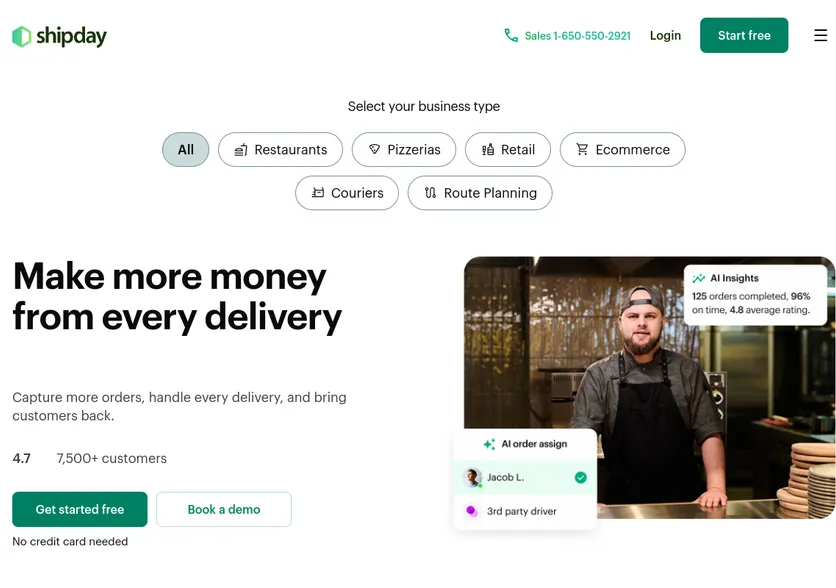
Food delivery fleets start with restaurants, and Shipday is the dispatch platform built for restaurants and shops that run their own drivers. This Shipday Professional plan costs forty-nine dollars a month and includes three hundred orders with route optimization and auto-dispatch. A food fleet that takes orders from its own store gets dispatch, live tracking and proof of delivery without a courier marketplace.
What we like
- Free Basic plan covers three hundred orders a month
- Route optimization included on Professional
- Driver app with live tracking and proof of delivery
Watch out for
- Professional Lite has no route optimization
- Extra orders past the allowance cost ten cents each
How to try it
- Open the Shipday site and start with the free Basic plan
- Connect your ordering system and add your drivers
- Upgrade to Professional for route optimization and auto-dispatch
4. Spoke Dispatch
Best for: Courier companies and local delivery teams that dispatch multi-driver routes by stop volume
Paid tool Starting price: $125/month · One hundred and twenty-five dollars a month for the Starter plan with one thousand stops included; Premium costs two hundred dollars a month for two thousand stops
Free plan: No free plan; free trial available
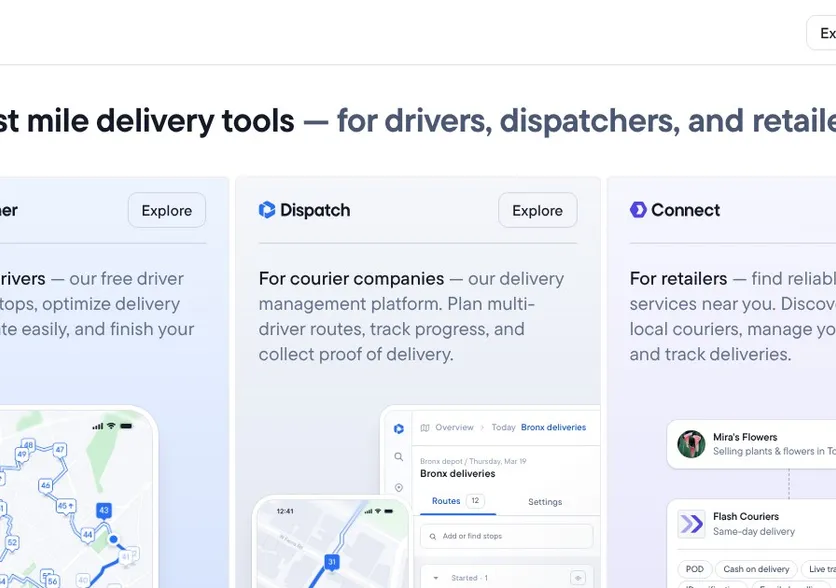
Food delivery fleets measure cost per stop, and Spoke Dispatch is the platform that sells stops in monthly bundles with unlimited drivers on every plan. This Spoke Dispatch Starter plan costs one hundred and twenty-five dollars a month and includes one thousand stops with proof of delivery. A food fleet that runs the same routes daily gets multi-driver planning, live tracking and branded customer updates without a per-driver bill.
What we like
- Unlimited drivers on every plan
- Stop-based pricing that fits variable fleets
- Proof of delivery included on the Starter plan
Watch out for
- Stops past the allowance cost extra per stop
- SMS notifications are charged at messaging rates
How to try it
- Open the Spoke site and start the Dispatch free trial
- Import your stops and build multi-driver routes
- Dispatch routes and collect proof of delivery in the app
5. Track-POD
Best for: Teams that need proof of delivery, route optimization and live tracking with a three-driver minimum
Paid tool Starting price: $49/driver/month · Forty-nine dollars per driver a month billed annually for the Advanced plan, or fifty-nine dollars billed monthly, with a three-driver minimum; Advanced Plus costs sixty-nine dollars per driver a month billed annually
Free plan: No free plan; 7-day free trial
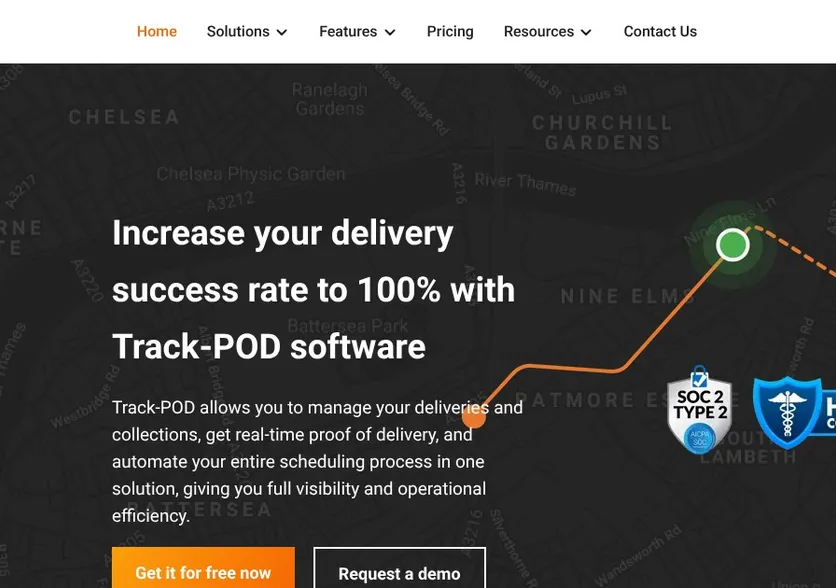
Food fleets prove every drop with a photo, and Track-POD is the delivery platform that pairs route optimization with signature, photo and barcode proof on every order. This Track-POD Advanced plan costs forty-nine dollars per driver a month billed annually and covers six thousand orders a month. A food fleet that fields disputed deliveries gets proof of delivery, live tracking and customer notifications in one place.
What we like
- Proof of delivery on every plan, with photos and signatures
- Per-order plans available for variable fleets
- Driver app works offline and records cash on delivery
Watch out for
- Three-driver minimum, so one van costs the same as three
- SMS notifications are billed on top
How to try it
- Open the Track-POD site and start the 7-day free trial
- Import your orders and optimize routes for your drivers
- Check proof of delivery photos and signatures after the run
6. OptimoRoute
Best for: Teams that plan routes by driver count and want a published per-driver rate
Paid tool Starting price: $35.10/driver/month · Thirty-five dollars and ten cents per driver a month billed annually for the Lite plan, or thirty-nine dollars billed monthly; Pro costs forty-four dollars and ten cents per driver a month billed annually
Free plan: No free plan; 30-day free trial
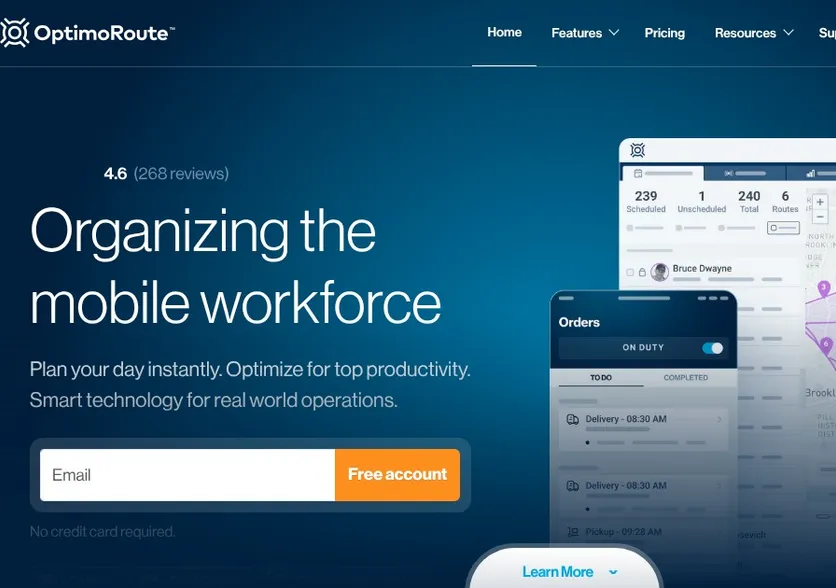
Food fleets with a fixed driver roster want a price per driver, and OptimoRoute is the planner that charges per driver while letting dispatchers and office staff use the web app free. This OptimoRoute Lite plan costs thirty-five dollars and ten cents per driver a month billed annually and covers up to seven hundred orders at once. A food business with five steady drivers knows its bill to the dollar before the week starts.
What we like
- Per-driver pricing with unlimited web users free
- Live tracking and ETAs on every plan
- Thirty-day free trial with no credit card
Watch out for
- Proof of delivery needs the Pro plan
- Lite caps at seven hundred orders planned at once
How to try it
- Open the OptimoRoute site and start the 30-day trial
- Import your orders and assign them to drivers
- Send routes to the driver app and track deliveries live
7. Tookan
Best for: Small delivery operations that want task-based pricing and pay only for the deliveries they complete
Paid tool Starting price: $99/month · Ninety-nine dollars a month billed annually for the Startup plan with one thousand tasks, or one hundred and twenty-nine dollars billed monthly; a Black Friday price of eighty-nine dollars a month was running on the pricing page
Free plan: Free Forever plan up to 100 tasks a month
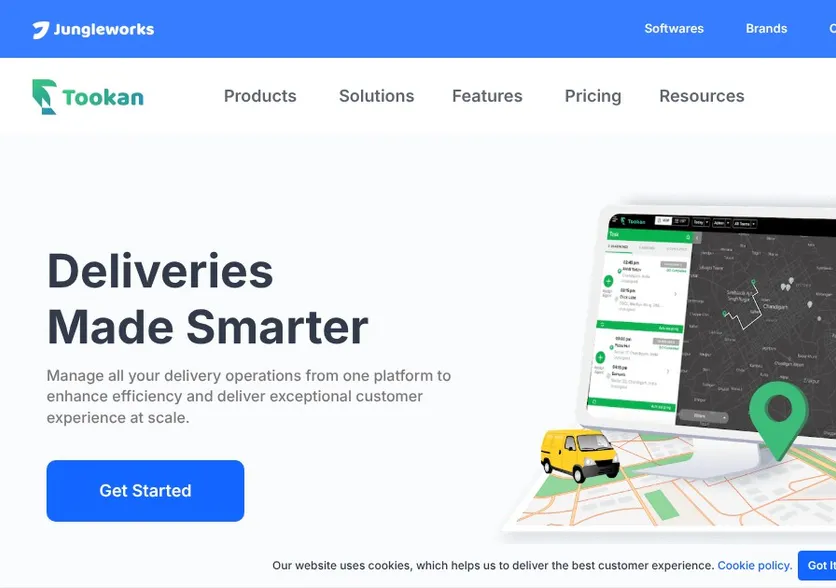
Food fleets with spiky order volume want to pay for what they deliver, and Tookan is the task-based platform that charges a monthly base fee for a set number of tasks with overage per task. This Tookan Startup plan costs ninety-nine dollars a month billed annually and covers one thousand tasks with unlimited agents. A food business that is quiet on weekdays and slammed on weekends pays for tasks, not for drivers sitting idle.
What we like
- Free Forever plan covers one hundred tasks a month
- Unlimited agents and drivers on paid plans
- Task-based billing that follows real volume
Watch out for
- Route optimization is a paid add-on on every plan
- Branded driver app costs extra on every tier
How to try it
- Open the Tookan site and start with the Free Forever plan
- Add your agents and create delivery tasks
- Upgrade to Startup when you pass one hundred tasks a month
Prices above were checked on each vendor’s own website on Nov 27, 2026 and can change — the vendor’s page is the final word. Vendor links are editorial: nobody paid to be listed or ranked here. Vendors who want a featured listing can see how it works on our Get listed page.
What food delivery dispatch costs in 2026
Food dispatch tools charge in four ways, per task, per order, per driver, or per stop, and the unit decides the bill. Per-order pricing suits a fleet with part-time drivers, while per-driver pricing suits a fleet with a fixed roster. The cheapest plan here costs twenty-six dollars and ten cents per vehicle a month, while the most expensive costs six hundred and nineteen dollars a month.
Start with a trial on two tools and run one real dinner service through each one. Load the same orders, send the routes to the same drivers, and compare how many deliveries arrive late and how many customers ask where their food is. Pick the tool whose ETAs customers trust, because a dispatch platform that cannot tell a customer when dinner arrives is just a prettier spreadsheet.
Before you buy
- Check whether the price follows orders or drivers, because a per-driver bill punishes a fleet with part-time couriers.
- Confirm proof of delivery is included, because a disputed dinner needs a photo, not a phone call.
- Ask how the free plan caps orders, because a cap of one hundred orders runs out on one busy Friday.
- Test live tracking from the customer side, because an ETA link customers cannot open creates more calls.
- Count the SMS charges separately, because customer texts can double a cheap monthly plan during a rush.
Official websites
Official websites of the products reviewed above. Features and prices were checked against these sites when this guide was written, and they can change, so confirm on the vendor site before you buy.
Frequently asked questions
Which delivery dispatch software is best for food delivery fleets in 2026?
Routific is the best overall pick at one hundred and fifty dollars a month flat, with every driver included free and a free plan up to one hundred orders. Shipday is the best pick for restaurants at forty-nine dollars a month, built for shops with their own drivers. Detrack is the best budget pick at twenty-six dollars and ten cents per vehicle a month for proof of delivery and live tracking.
How much does delivery dispatch software cost?
Prices in this list run from twenty-six dollars and ten cents per vehicle a month for Detrack to six hundred and nineteen dollars a month for Onfleet, with most tools landing between thirty-five and one hundred and fifty dollars a month. Per-order pricing suits fleets with part-time drivers, while per-driver pricing suits fleets with a fixed roster. Add SMS charges and overage fees to the subscription before you compare totals.
Do food fleets need proof of delivery?
Yes, because a customer who says dinner never arrived leaves the fleet with no answer and no refund defence. A photo and signature at the door ends the argument in seconds, and most tools here capture both on every plan. A fleet that delivers without proof pays for the same order twice, once in food and once in refunds.
Can a small food business use dispatch software?
Yes, and several tools here are built for exactly that buyer. Routific is free up to one hundred orders a month, Shipday is free up to three hundred orders, and Tookan has a free plan for one hundred tasks. A small shop can run its first months on a free plan and upgrade only when order volume passes the cap.
Per-order or per-driver pricing: which is cheaper for food fleets?
Per-order pricing wins when drivers are part-time and order volume swings by day, since quiet days cost nothing. Per-driver pricing wins when the same drivers work every day and order volume is steady, since the bill never moves. Count your orders per driver per week first, then price both models at your real volume before you choose.
Delivering food all day? Try Toolsvine's free business tools right in your browser.
Browse Business Tools tools