On this page
Nonprofits that email the whole donor list with one message raise less than teams that segment, because a lapsed major donor and a first-time giver need different asks. The seven tools below slice a donor list by behavior, with segments that update themselves and feed straight into appeals. Every price was checked on the vendor site on November 27, 2026, and the list runs from twenty-nine to one hundred and sixty-four dollars a month. Neon CRM is our first pick — segmentation across giving, membership and events in one record.
How we researched this
We started with the donor segmentation tools nonprofits actually buy, then read each price on the vendor pricing page on November 27, 2026 and noted whether segments update themselves. We judged them for a team that already holds donor history and needs to slice it by behavior, with segments that feed straight into email and appeals. We dropped Raiser's Edge, Salesforce Nonprofit Cloud and Virtuous because none of them publishes a list price a team can compare without a sales call.
Compare the tools
| Name | Best for | Starting price | Free plan | |
|---|---|---|---|---|
 Neon CRM | Nonprofits that segment donors by giving, membership and events in one database | $99/month | No free plan; free trial available | Visit |
 Bloomerang | Nonprofits that segment by engagement score and likelihood to give again | $125/month | No free plan; free trial available | Visit |
 DonorPerfect | Nonprofits that segment with SmartActions and deep reporting history | $119/month | No free plan; demo available | Visit |
 Little Green Light | Small nonprofits that want full segmentation at a low flat price | $45/month | No free plan; 30-day free trial | Visit |
 DonorSnap | Small teams that segment donors and email the segment from one login | $68/month | No free plan; 30-day free trial | Visit |
 Keela | Nonprofits that segment with AI insights on donor behavior | $164/month | No free plan; demo available | Visit |
| Network for Good | Small nonprofits that segment by active contacts with AI guidance | $29/month | Free plan with a 3% platform fee | Visit |
The donor segmentation software for nonprofits, compared
1. Neon CRM
Best for: Nonprofits that segment donors by giving, membership and events in one database
Paid tool Starting price: $99/month · Ninety-nine dollars a month billed annually for the Essentials plan for nonprofits, or one hundred and nine dollars for associations; Impact costs $209 and Empower costs $409 a month, with membership, volunteer and event modules priced as a percentage of the CRM fee
Free plan: No free plan; free trial available
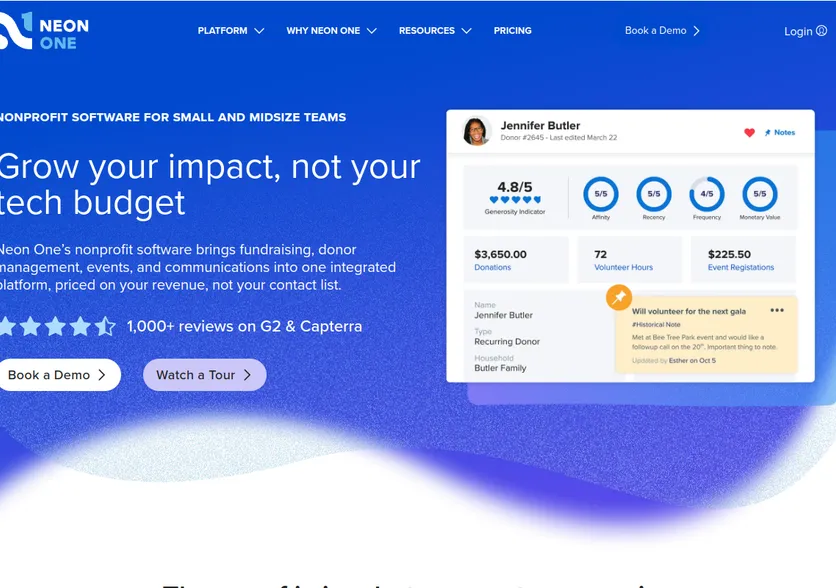
Neon CRM segments donors across giving, memberships, events and volunteering, because every relationship lives in one constituent record. This Neon CRM Essentials plan costs ninety-nine dollars a month billed annually and includes unlimited users, contacts and donation forms. Saved lists update themselves as donors give, join or attend, so the next appeal always targets the right people.
What we like
- Segments across giving, membership and events
- Saved lists update themselves automatically
- Priced by revenue, not by record count
Watch out for
- Add-on modules raise the monthly total fast
- The final price depends on your revenue band
How to try it
- Open the Neon One site and start a free trial
- Import constituents and tag them by relationship
- Build a saved list of lapsed major donors
2. Bloomerang
Best for: Nonprofits that segment by engagement score and likelihood to give again
Paid tool Starting price: $125/month · One hundred and twenty-five dollars a month billed annually for Bloomerang CRM, priced by record count with unlimited users; Fundraising starts at $40 a month as a bundle with the CRM and Volunteer starts at $119 a month
Free plan: No free plan; free trial available
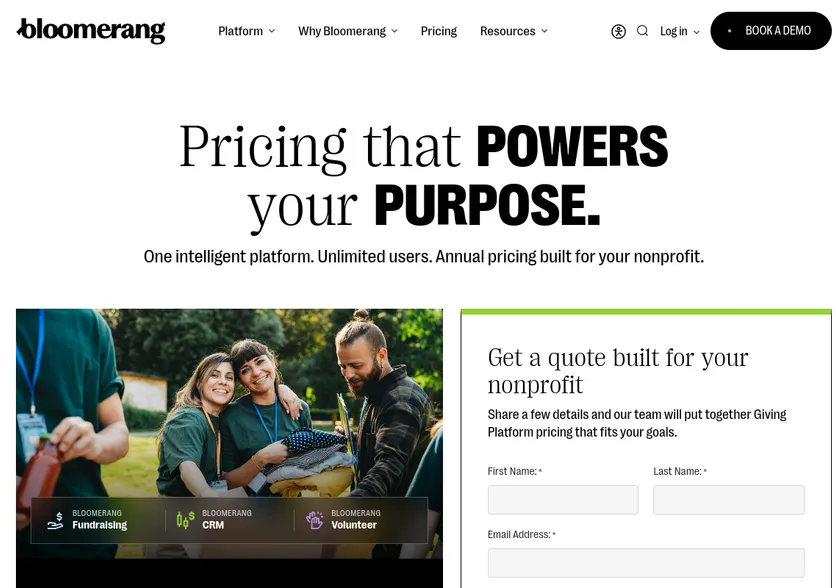
Bloomerang segments donors by engagement score, so a fundraising team can email the donors most likely to give again and win back the ones drifting away. This Bloomerang CRM starts at one hundred and twenty-five dollars a month billed annually and pairs donor records with an engagement meter and retention reports. Its Fundraising add-on connects the same records to donation forms, events and text giving.
What we like
- Engagement scores drive every segment
- Retention reports show where gifts leak
- Unlimited users on every plan
Watch out for
- Price rises with the number of records you track
- Fundraising tools need the CRM bundle, not sold alone
How to try it
- Open the Bloomerang site and start a free trial
- Import donor records and check the engagement scores
- Build a segment of highly engaged donors for the appeal
3. DonorPerfect
Best for: Nonprofits that segment with SmartActions and deep reporting history
Paid tool Starting price: $119/month · One hundred and nineteen dollars a month with annual billing for the Core plan covering up to 499 records; Plus starts at $199 a month for 2,000 records and Pro starts at $649 a month for 25,000 records
Free plan: No free plan; demo available
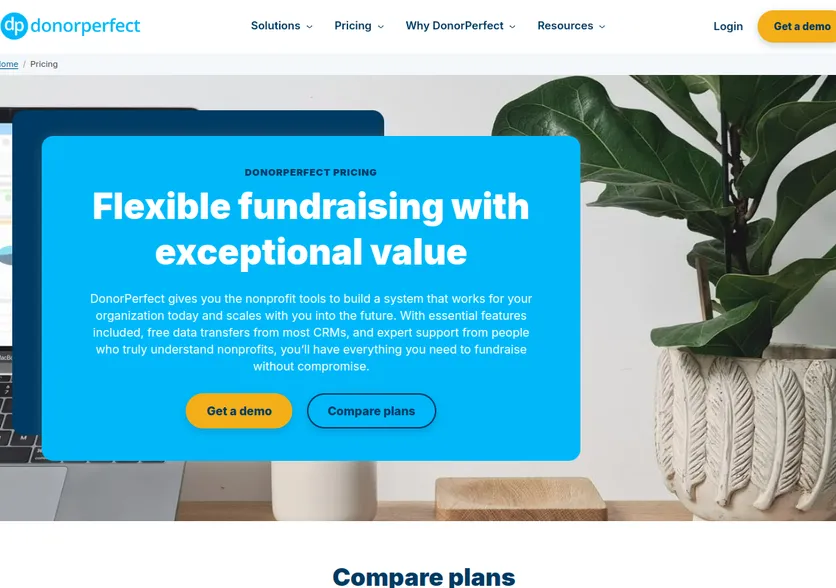
DonorPerfect segments donors with SmartActions that react when a pattern changes, like a lapsed major donor or a first-time giver ready for a second ask. This DonorPerfect Core plan starts at one hundred and nineteen dollars a month with annual billing for five hundred records and three concurrent users. Every plan includes online donation forms, receipting, grant management and a Constant Contact account.
What we like
- SmartActions automate follow-up by segment
- Four decades of fundraising CRM experience
- Constant Contact account included on every plan
Watch out for
- Core covers only five hundred records before upgrades
- No free plan, so the demo is the only test
How to try it
- Open the DonorPerfect site and book a demo
- Import donor records and gift history
- Build a segment and a SmartAction for lapsed donors
4. Little Green Light
Best for: Small nonprofits that want full segmentation at a low flat price
Paid tool Starting price: $45/month · Forty-five dollars a month for up to 2,500 constituents, rising to $60 for 5,000, $75 for 10,000 and $135 for 50,000; annual prepayment saves 10% and there are no setup fees or contracts
Free plan: No free plan; 30-day free trial
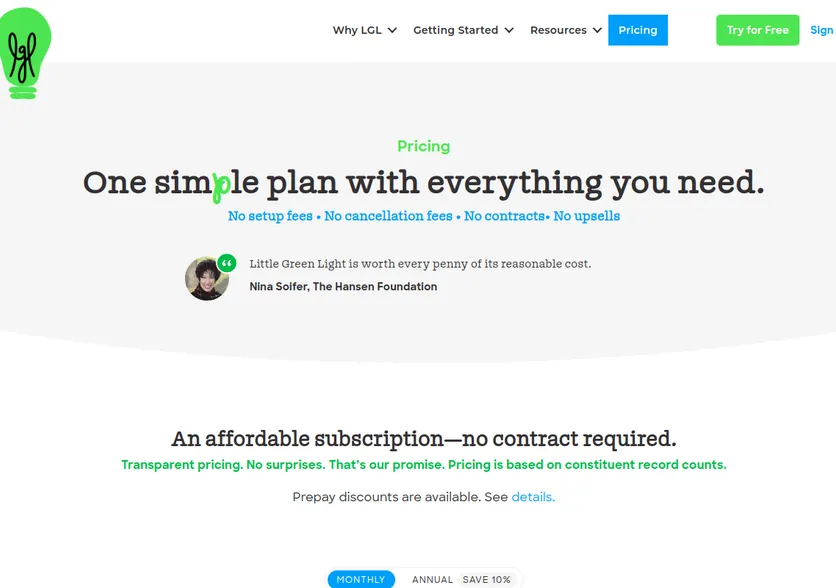
Little Green Light segments donors with the same tools on every plan, so a small team never pays a higher tier to slice its list. This Little Green Light plan starts at forty-five dollars a month for up to two thousand five hundred constituents, with all features and unlimited users included. The price rises only with the number of records, and annual prepayment cuts the cost by ten percent.
What we like
- Every feature on every plan, no tiers
- Cheapest full segmentation in this list
- Unlimited users with no setup fees
Watch out for
- No free plan, only a thirty day trial
- Not offered to organizations in the European Union
How to try it
- Open the Little Green Light site and start a free trial
- Import constituents and gift history
- Build segments by gift size, recency and campaign
5. DonorSnap
Best for: Small teams that segment donors and email the segment from one login
Paid tool Starting price: $68/month · Sixty-eight dollars a month billed monthly for the Basic plan up to 1,000 contacts, or $734 a year with annual billing; Pro costs $108 a month and adds the email campaign studio, analytics and an annual database audit, plus a one-time $200 setup fee
Free plan: No free plan; 30-day free trial
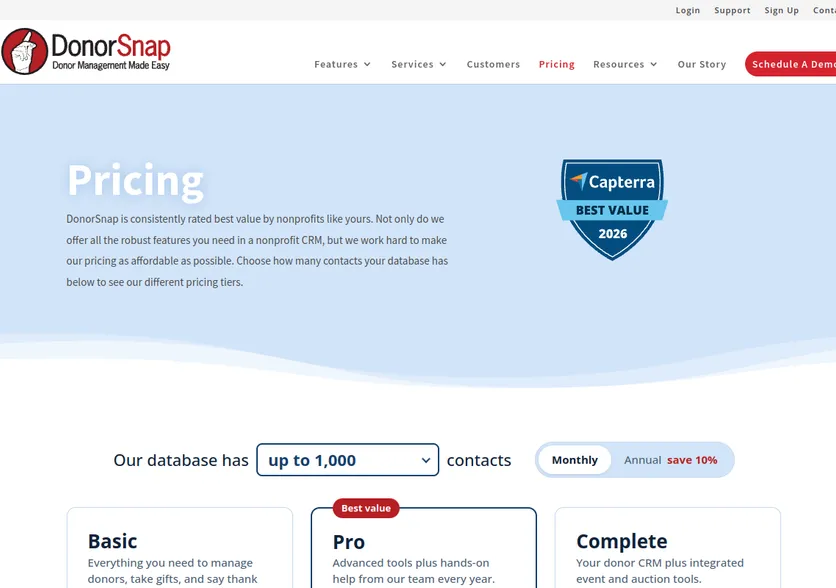
DonorSnap turns a donor segment into an email campaign without leaving the tool, with its Mass Email Campaign Studio on the Pro plan. This DonorSnap Basic plan costs sixty-eight dollars a month billed monthly for up to one thousand contacts, with all features and unlimited users included. A one-time two hundred dollar setup fee covers data conversion and private training.
What we like
- Segments feed straight into email campaigns
- Unlimited users with no per-seat fees
- Online donation forms included on Basic
Watch out for
- Phone support costs forty dollars a month extra
- A one-time two hundred dollar setup fee applies
How to try it
- Open the DonorSnap site and start a free trial
- Import contacts and gift history
- Build a segment and send it an email campaign
6. Keela
Best for: Nonprofits that segment with AI insights on donor behavior
Paid tool Starting price: $164/month · One hundred and sixty-four dollars a month billed annually for up to 1,000 contacts, or $190 billed monthly; higher bands cost $243 a month for 1,001 to 2,500 contacts and $316 a month for 2,501 to 5,000 contacts, with Premium Care support from $200 a month
Free plan: No free plan; demo available
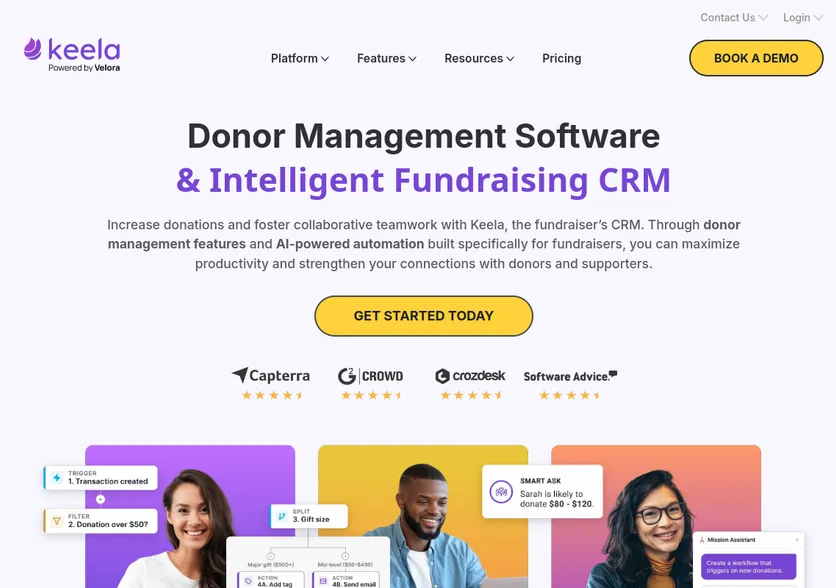
Keela segments donors with AI insights that flag supporters ready to give more and those drifting away, so each appeal targets the right group. This Keela plan starts at one hundred and sixty-four dollars a month billed annually for up to one thousand contacts, with no transaction fees of its own. Every plan includes the CRM, donor and volunteer management, email marketing, reporting and compliant tax receipts.
What we like
- AI insights drive every segment
- No transaction fees on donations
- Tax receipts compliant in the United States and Canada
Watch out for
- The most expensive entry tier in this list
- Premium Care support costs extra from two hundred dollars
How to try it
- Open the Keela site and book a demo
- Import donor records and check the AI insights
- Build a segment of donors likely to upgrade
7. Network for Good
Best for: Small nonprofits that segment by active contacts with AI guidance
Paid tool Starting price: $29/month · Twenty-nine dollars a month for Essentials, or two hundred and ninety-nine dollars a year, with a three percent platform fee; the Free plan costs nothing monthly with the same three percent fee, and Intelligence starts at $325 a month billed annually with no platform fee
Free plan: Free plan with a 3% platform fee
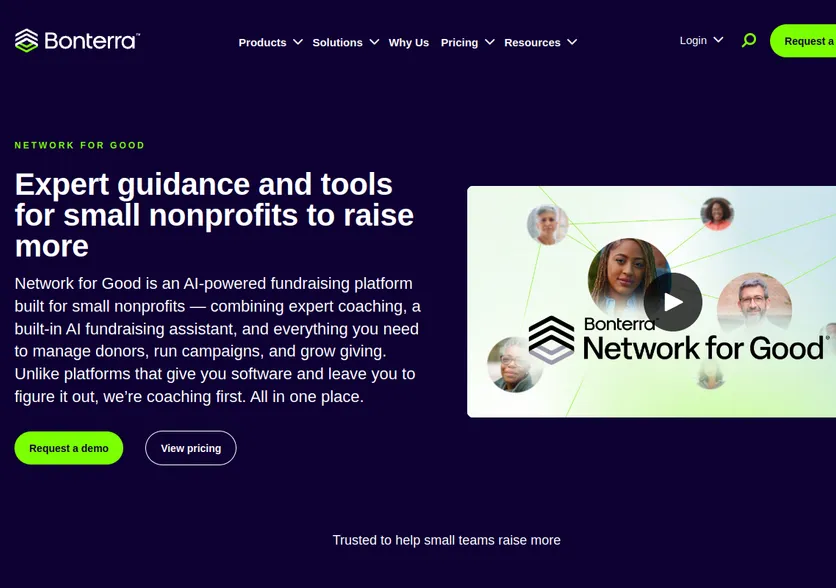
Network for Good segments donors by active contacts and guides the next message with an AI assistant that suggests what to send each group. This Network for Good Essentials plan costs twenty-nine dollars a month with a three percent platform fee on donations received. The Free plan costs nothing monthly with the same three percent fee, and Intelligence starts at three hundred and twenty-five dollars a month with no platform fee.
What we like
- AI fundraising assistant included on every plan
- Segmentation by active contacts, not total records
- Free plan covers the first two hundred fifty contacts
Watch out for
- Free and Essentials cap at one active campaign
- Intelligence jumps to three hundred twenty-five dollars
How to try it
- Open the Network for Good site and request a demo
- Import donors and check the active contact count
- Build a segment and send it a targeted email
Prices above were checked on each vendor’s own website on Nov 27, 2026 and can change — the vendor’s page is the final word. Vendor links are editorial: nobody paid to be listed or ranked here. Vendors who want a featured listing can see how it works on our Get listed page.
What donor segmentation costs in 2026
Donor segmentation usually comes inside the CRM, not as a separate bill, and the price follows the record count rather than the user count. The cheapest route here costs twenty-nine dollars a month for Network for Good Essentials, while the AI-led option costs one hundred and sixty-four dollars a month for up to one thousand contacts. A team that pays per user should compare the total for its whole staff, because a flat plan with unlimited users often wins.
Start with a trial on two tools and load your real donor list into each one. Build three segments, monthly donors, lapsed donors and first-time givers, then check which tool updates them automatically. Pick the tool whose segments stay fresh without manual work, because a stale segment misfires the next appeal.
Before you buy
- Check that segments update themselves, because a list that goes stale misfires the next appeal.
- Confirm you can segment by giving, events and membership together, because one dimension is not enough.
- Test a segment on your own donor list, because sample data hides messy records.
- Check the price as your list grows, because segmentation tools charge by record count.
- Ask whether email and text send from the segment, because a segment you cannot message is just a list.
Official websites
Official websites of the products reviewed above. Features and prices were checked against these sites when this guide was written, and they can change, so confirm on the vendor site before you buy.
Frequently asked questions
Which donor segmentation software is best for nonprofits in 2026?
Neon CRM is the best donor segmentation software for nonprofits because it segments across giving, memberships, events and volunteering in one record, with saved lists that update themselves. Bloomerang is the best pick for segments driven by engagement score. Little Green Light is the best budget pick, giving a small team full segmentation for forty-five dollars a month.
How much does donor segmentation software cost?
Prices in this list run from twenty-nine dollars a month for Network for Good Essentials to one hundred and sixty-four dollars a month for Keela, with most tools landing between forty-five and one hundred and twenty-five dollars a month. Segmentation rarely carries a separate fee, but some tools lock advanced segments or automated lists behind a higher tier. Add the record limit to the price, because a cheap plan that caps records costs more later.
What is donor segmentation, and why does it raise more money?
Donor segmentation is the practice of slicing a donor list into groups that share behavior, like first-time givers, monthly donors, lapsed major donors or event attendees, so each group gets a message that fits. A segmented appeal raises more than a blast to the whole list, because the ask matches the donor history. The tools here build those segments from gift data and keep them updated automatically.
Can a small nonprofit use donor segmentation software?
Yes, and a small nonprofit should, because even a five hundred donor list splits into clear groups like monthly donors, one-time givers and lapsed supporters. Little Green Light at forty-five dollars a month and DonorSnap at sixty-eight dollars a month give a small team the same segmentation tools as the bigger plans. Start with three segments, monthly donors, lapsed donors and first-time givers, and add more as the list grows.
Which donor segments should a nonprofit build first?
The three segments every nonprofit should build first are monthly donors, lapsed donors and first-time givers. Monthly donors get stewardship and upgrade asks, lapsed donors get a win-back message with a reason to return, and first-time givers get a thank-you and a second-gift ask within ninety days. Those three segments cover most of the revenue a small team can influence.
Need everyday business help too? Try Toolsvine's free business tools right in your browser.
Browse Business Tools tools