On this page
A university employs thousands of people across faculties, libraries, labs and estates, and most of them never meet each other. Engagement here is less about one office culture and more about giving every department a way to listen and recognise. The tools below were picked for campuses where staff range from professors to cleaners, and where budgets need a published price. We compared eight platforms on price, survey quality and reach across departments. Lattice is our first pick, because its surveys and action plans work across a whole campus without adding admin.
How we researched this
We started with engagement platforms that publish a per-person price and work for staff across many departments, then read each price on the vendor site on November 27, 2026. We judged them for a university with faculty, admin, library and estates teams, where surveys must reach people who never share an office. We dropped quote-only platforms and tools built only for small offices, because a university needs a price it can budget and a tool every department can open.
Compare the tools
| Name | Best for | Starting price | Free plan | |
|---|---|---|---|---|
 15Five | Universities that want weekly check-ins plus surveys | $4/user/month | No free plan; demo available | Visit |
 Lattice | Universities that want one survey view across campus | $4/seat/month | No free plan; demo available | Visit |
| Nectar | Universities that want shoutouts and milestones in one feed | $5/employee/month | No free plan; demo available | Visit |
 Assembly | Universities that want flat-price recognition with AI insights | $3/user/month | No free plan; demo available | Visit |
 Engagedly | Universities that want surveys plus recognition across campus | $2/user/month | No free plan; demo available | Visit |
 Matter | Universities already running Slack or Microsoft Teams | $1/user/month | Free plan, unlimited users | Visit |
 Connecteam | Universities that want chat, surveys and recognition in one app | $29/month per hub | Free Small Business plan for up to 10 users | Visit |
 Kudos | Universities that want values-based recognition with analytics | $2–$5/user/month | No free plan; free trial available | Visit |
The employee engagement software for universities, compared
1. 15Five
Best for: Universities that want weekly check-ins plus surveys
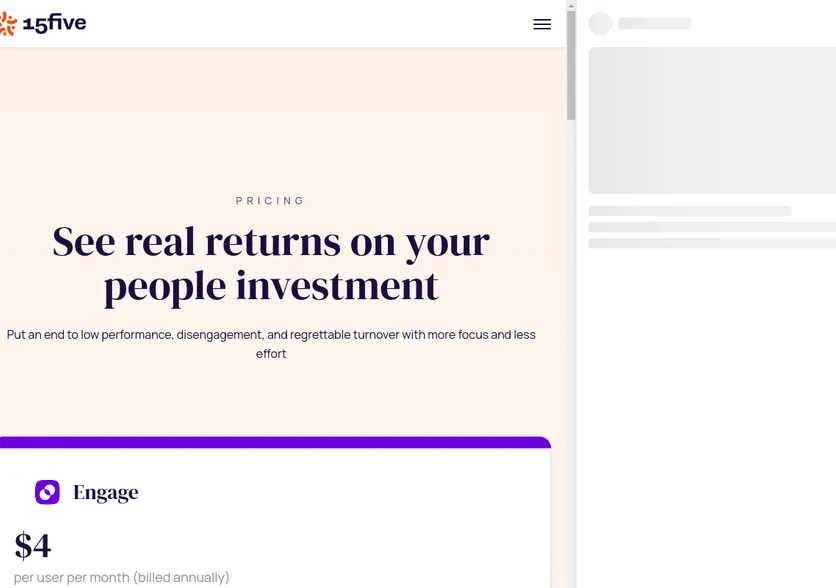
Paid tool Starting price: $4/user/month · Four dollars per user a month billed annually for the Engage plan; Perform is eleven dollars and the Total Platform is sixteen dollars, and contracts are billed annually.
Free plan: No free plan; demo available
This 15Five plan pairs weekly check-ins with engagement surveys, which gives a department head a regular read on staff who rarely meet. High Fives let colleagues recognise each other across faculties, and the AI impact score points to the departments that need attention first. Lifecycle surveys cover onboarding and exit, so a university learns why new staff leave in the first ninety days.
What we like
- Weekly check-ins suit staff who rarely meet
- AI impact score shows which departments need help
- Lifecycle surveys explain early turnover
Watch out for
- Annual-only contracts with no monthly option
- Performance tools cost extra on higher tiers
How to try it
- Start a trial with one department
- Send the first survey after term starts
- Review the AI impact score with department heads
2. Lattice
Best for: Universities that want one survey view across campus
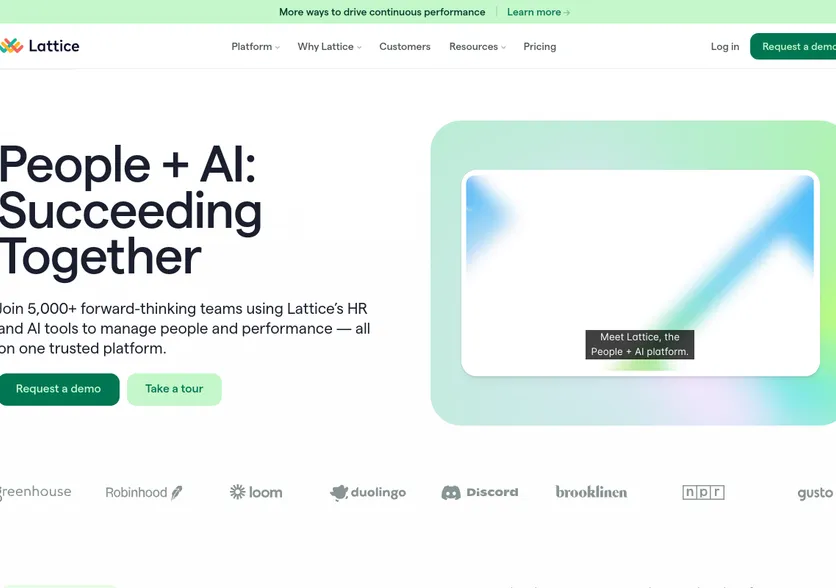
Paid tool Starting price: $4/seat/month · Four dollars per seat a month billed annually for Engagement, with Performance at ten dollars and Goals and OKRs at eight dollars; the minimum annual agreement is four thousand dollars and all contracts bill annually.
Free plan: No free plan; demo available
This Lattice engagement module runs pulse surveys, eNPS and onboarding surveys across every department from one dashboard. Results turn into action plans with named owners, so feedback about a struggling faculty becomes a task instead of a forgotten report. The four thousand dollar annual minimum is easy to clear on a campus, but a small college should still check the total cost first.
What we like
- One dashboard for surveys across every department
- Action plans turn feedback into named tasks
- Onboarding and exit surveys are included
Watch out for
- Four thousand dollar annual minimum is steep for a small college
- Engagement is sold separately from performance tools
How to try it
- Buy the Engagement module on its own first
- Survey every department in the same week
- Turn the weakest department score into one action
3. Nectar
Best for: Universities that want shoutouts and milestones in one feed
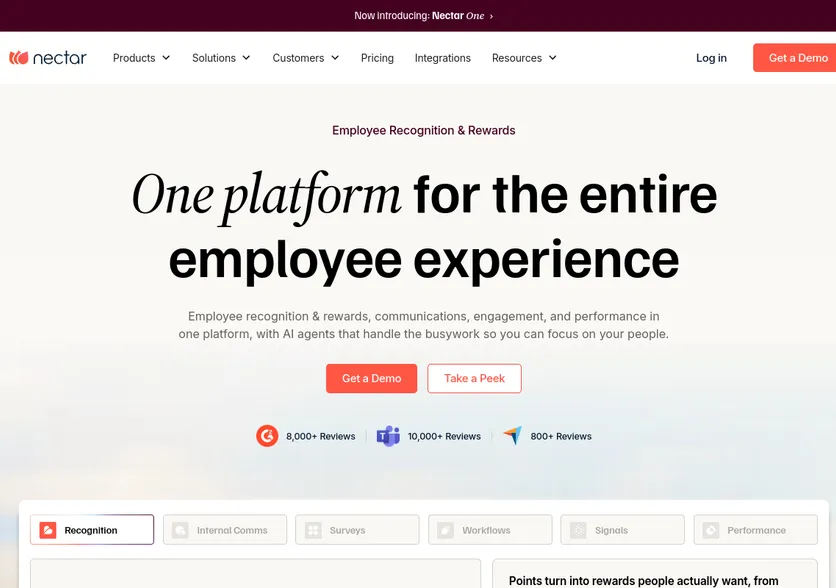
Paid tool Starting price: $5/employee/month · Five dollars per employee a month billed annually for the Plus tier, with Premium at six dollars; Nectar now presents pricing as industry bundles, so confirm the bundle quote, and rewards are funded separately.
Free plan: No free plan; demo available
This Nectar plan puts shoutouts, milestones and rewards in one feed that staff can open on a phone anywhere on campus. Automated birthdays and work anniversaries mean nobody gets missed, even among part-time and contract staff. Pricing now leads with industry bundles, so a university should confirm the exact bundle and its cost before signing up.
What we like
- One feed for shoutouts, milestones and rewards
- Automated milestones suit part-time and contract staff
- Reward catalog covers gifts, swag and giving
Watch out for
- Pricing now leads with bundles rather than simple tiers
- No free tier for a small college
How to try it
- Book a demo and ask for the education bundle price
- Turn on automated milestones for every department
- Launch with one value tied to student service
4. Assembly
Best for: Universities that want flat-price recognition with AI insights
Paid tool Starting price: $3/user/month · Three dollars per user a month billed annually for the Empower plan, with Enterprise on a custom quote; Assembly was acquired by Quantum Workplace in January 2026 and still operates as Assembly.
Free plan: No free plan; demo available
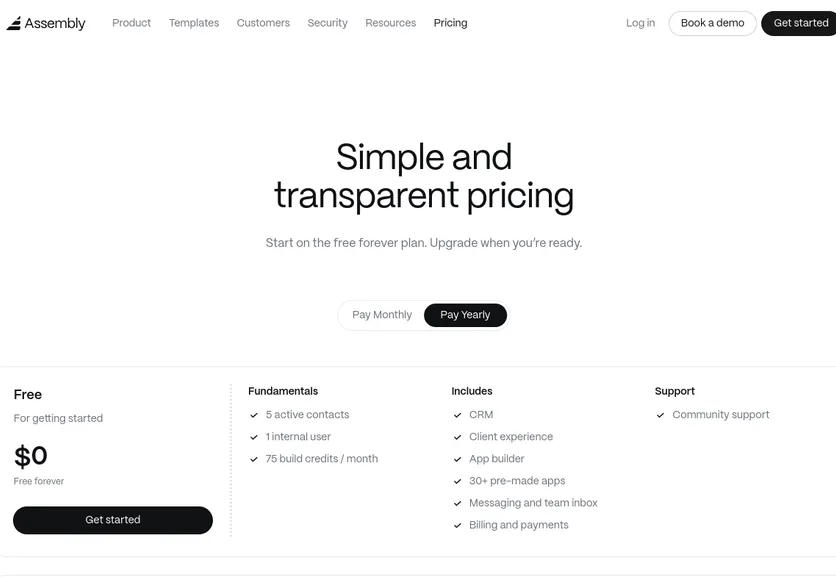
This Assembly plan charges a flat three dollars per user a month, which keeps budgeting simple when staff join and leave between terms. Peer recognition, points, awards and challenges run with little admin, and the Dora Hub uses AI to spot people who have gone unnoticed. The appeal is one price, one feed, and recognition that does not depend on a manager remembering everyone.
What we like
- Flat price suits staff turnover between terms
- Awards and challenges run with little admin
- AI insights spot people who go unnoticed
Watch out for
- Only two plans, so growing teams jump to Enterprise
- Rewards catalog pricing sits outside the subscription
How to try it
- Start with the Empower plan for one department
- Turn on automated milestone celebrations
- Check Dora Hub insights with department heads monthly
5. Engagedly
Best for: Universities that want surveys plus recognition across campus
Paid tool Starting price: $2/user/month · Two dollars per user a month billed annually for the Engage and Listen suite, with a seven thousand five hundred dollar annual minimum; performance, learning and mentoring suites cost extra per user.
Free plan: No free plan; demo available
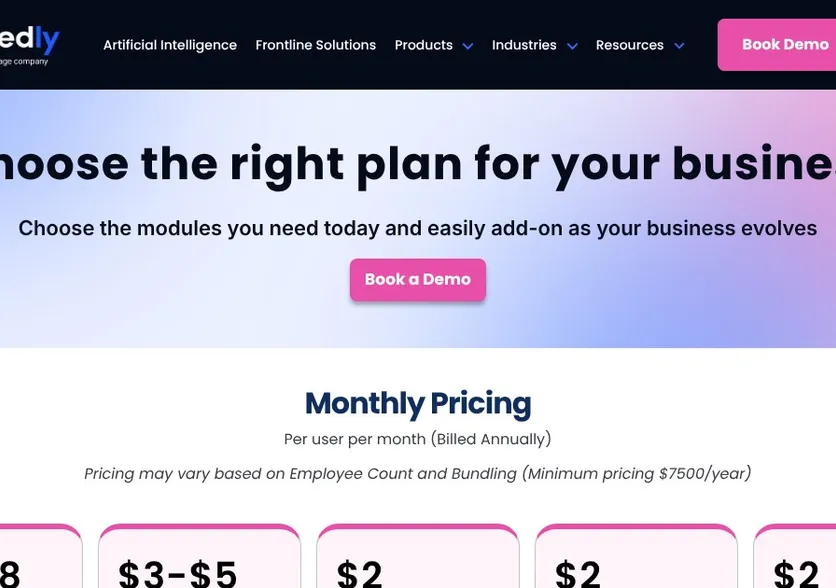
This Engagedly suite pairs engagement surveys with recognition and rewards, so a university can listen and reward in the same tool. The social wall shows praise across departments, which helps library, estates and admin staff feel part of one campus. The seven thousand five hundred dollar annual minimum is easy to clear on a large campus, but a small college should get the total cost first.
What we like
- Surveys, recognition and rewards in one suite
- Social wall connects staff across departments
- AI coach and templates are included
Watch out for
- Annual minimum is steep for a small college
- Extra suites push the per-person price up fast
How to try it
- Ask for the Engage and Listen suite price in writing
- Launch one survey and one recognition value
- Check the social wall weekly for quiet departments
6. Matter
Best for: Universities already running Slack or Microsoft Teams
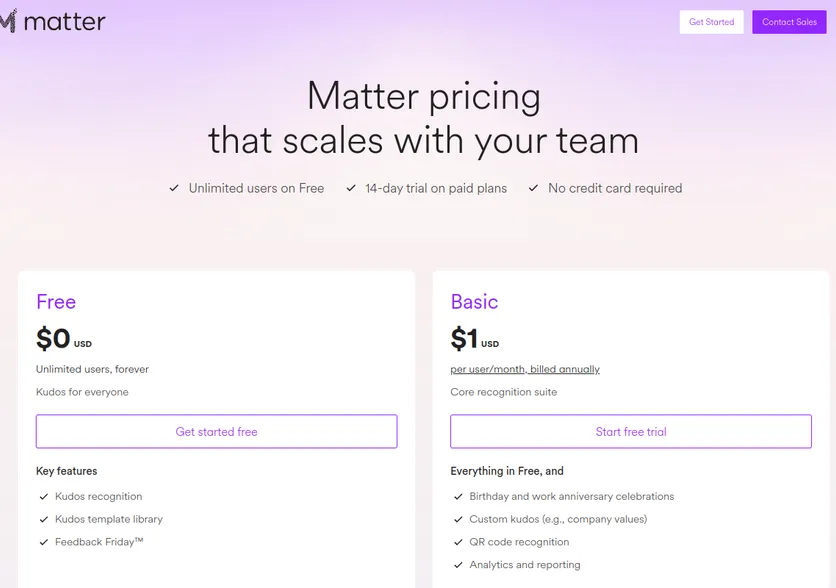
Paid tool Starting price: $1/user/month · One dollar per user a month billed annually for the Basic plan, or two dollars billed monthly; the Pro plan with rewards is three dollars billed annually, and the surveys add-on is two dollars.
Free plan: Free plan, unlimited users
This Matter plan works inside Slack and Microsoft Teams, so campus staff can send kudos without learning another app. The Basic plan adds birthday and anniversary celebrations and QR code recognition, which lets a student recognise a staff member without a login. A university only pays for people in the Matter channel, and Matter offers discounts for educational institutions.
What we like
- Works inside Slack and Teams with no new app
- QR code recognition needs no login
- Discounts for educational institutions
Watch out for
- Needs Slack or Teams to work at all
- Rewards and surveys cost extra
How to try it
- Add Matter to your Slack or Teams channel
- Turn on birthday and anniversary celebrations
- Place QR codes where students can recognise staff
7. Connecteam
Best for: Universities that want chat, surveys and recognition in one app
Paid tool Starting price: $29/month per hub · Twenty-nine dollars a month per hub for the Basic plan, billed annually for the first thirty users, or thirty-five dollars billed monthly; Advanced is forty-nine dollars and Expert is ninety-nine dollars, with extra users from fifty cents a month.
Free plan: Free Small Business plan for up to 10 users
This Connecteam plan bundles chat, updates, surveys and a directory in one mobile app, which suits campus staff who work across buildings. The HR and Skills hub adds recognition, rewards and onboarding, so a university can welcome new staff and celebrate service in the same place. Pricing is per hub, so a university that wants all three hubs should budget for three subscriptions rather than one.
What we like
- One mobile app for chat, updates and surveys
- HR hub adds recognition and onboarding
- Free Small Business plan covers ten users
Watch out for
- Hubs are priced separately, so three hubs cost three times as much
- Extra users add a small per-person charge
How to try it
- Start with the Communications hub Basic plan
- Add the HR and Skills hub for recognition
- Invite staff with a phone number, not an email
8. Kudos
Best for: Universities that want values-based recognition with analytics
Paid tool Starting price: $2–$5/user/month · Two to five dollars per user a month depending on user count and contract length, according to the vendor, with rewards funded at face value and no markup on points; confirm the exact rate on a quote.
Free plan: No free plan; free trial available
This Kudos platform ties recognition to company values, so praise on campus reinforces the service behaviours a university wants more of. Points attach to recognition and spend in the rewards catalog at face value, with no markup on the point itself. Analytics show which departments recognise most, which helps a university spot a team that has gone quiet.
What we like
- Recognition is tied to company values
- Rewards are never marked up above face value
- Analytics show which departments recognise most
Watch out for
- Published pricing is a range, not a single list price
- No pricing page with plan tiers
How to try it
- Ask for a quote with your headcount and department count
- Pick three values that match student service
- Review recognition analytics by department each month
Prices above were checked on each vendor’s own website on Nov 27, 2026 and can change — the vendor’s page is the final word. Vendor links are editorial: nobody paid to be listed or ranked here. Vendors who want a featured listing can see how it works on our Get listed page.
How a university should run engagement across departments
Start with one department, not the whole campus. Pick a faculty or a service team, run one short survey, and prove people answer before you pay for thousands of seats. Universities buy in cycles, so get the total cost in writing, including any annual minimum, before the budget meeting. A tool that works for an office of twenty may fail for a campus of three thousand, so test it with the biggest department first.
Make the tool work for everyone, from professors to cleaners. If it needs a university email that part-time staff never received, half the campus will miss it, so check login options and mobile access first. Keep surveys short and anonymous, because staff will not answer honestly if they think a dean can read their name. Give one person ownership in each department, because a campus-wide tool with no local owner goes quiet within a term.
Before you buy
- Count every department, not just academic staff, when you check seat minimums
- Check whether surveys reach staff without a university email
- Make sure recognition works for part-time and contract staff
- Ask whether the price covers the whole campus or per department
- Pick a tool with a free trial so one department can test it first
Official websites
Official websites of the products reviewed above. Features and prices were checked against these sites when this guide was written, and they can change, so confirm on the vendor site before you buy.
Frequently asked questions
What is the cheapest engagement software for a university?
Matter Basic costs one dollar per user a month billed annually, and its free plan covers kudos for unlimited users, which makes it the cheapest start. Engagedly Engage and Listen costs two dollars per user a month, and Assembly Empower costs three dollars. A university should still check annual minimums, because Lattice needs four thousand dollars a year and Engagedly needs seven thousand five hundred.
How do engagement surveys work across a whole campus?
Run short pulse surveys by department and keep them anonymous, so staff answer honestly about their own team. Lattice turns results into action plans with named owners, and 15Five shows eNPS by department so a weak faculty stands out. Compare departments in one dashboard, but never publish results for a team so small that answers can be traced to one person.
Can these tools reach staff who never use a computer?
Yes, if the tool works on a phone and does not need a university email that part-time staff never received. Connecteam signs people in with a phone number, Matter works inside Slack or Teams, and Nectar runs from its mobile app. Check the login method before you buy, because a tool that needs a desktop login will miss cleaners, caterers and estates staff.
Do universities get discounts on these tools?
Matter offers discounts for non-profits and educational institutions, and other vendors will often quote education pricing on request, so ask before you sign. The prices in this comparison are the standard list prices, and a university buying thousands of seats should expect a volume conversation. Get any education discount in writing, because a verbal promise will not survive a budget review.
What should a university start with?
Start with Lattice Engagement at four dollars per seat a month if you want surveys and action plans across departments, because it shows which department needs help first. If your team already uses Slack or Teams, start with Matter Basic at one dollar per user a month for kudos and celebrations. Pilot one department first, prove people open the tool, then roll it out across campus.
Compare the eight tools above, then start with a free trial in one department before you roll engagement out across campus.
Browse Business Tools tools