On this page
A beauty brand can have fifty shades of one product, and only five of them pay the rent. Order too much of a slow shade and it expires on the shelf; order too little of a hero shade and customers buy it from a rival. The tools below forecast demand from real sales history, shade by shade, and turn forecasts into purchase orders. Prediko leads the list because it forecasts at shade and bundle level from forty-nine dollars a month, and the other seven tools are ranked on the same test: how accurately they predict the next launch.
How we researched this
We checked every price on the vendor pricing page on November 28, 2026, and only included tools with a published US dollar list price and a free trial or demo. Two well-known names dropped out during checks: Flieber no longer publishes prices and now quotes per operation, and Forthcast is now free for new Shopify installs. Prices change, so confirm the current figure on the vendor site before you buy.
Compare the tools
| Name | Best for | Starting price | Free plan | |
|---|---|---|---|---|
 Veeqo | Beauty brands that want cheap multichannel stock sync with free shipping tools | $19/month | Free Shipping plan; no free Inventory plan | Visit |
| Prediko | Beauty brands that want AI forecasts from Shopify sales data | $49/month | Free 14-day trial; no free plan | Visit |
| StockTrim | Beauty brands that want simple revenue-based forecasting without per-user fees | $49/month | Free 14-day trial; no free plan | Visit |
| Fabrikatör | Beauty brands on Shopify that sell through stock and take backorders | $99/month | Free 14-day trial; no free plan | Visit |
| Sumtracker | Beauty brands that want twelve-month forecasts with purchase orders | $119/month | Free 14-day trial; no free plan | Visit |
| Inventory Planner | Beauty brands on Shopify that want a proven forecasting tool with Sage backing | $119.99/month | Free 14-day trial; no free plan | Visit |
| SKU Science | Beauty brands that want statistical demand planning with ABC classification | $349/month | Free 15-day trial; no free plan | Visit |
| Netstock | Larger beauty brands that want inventory optimization tied to their ERP | $900/month | Free demo; no free plan | Visit |
The inventory forecasting software for beauty brands, compared
1. Veeqo
Best for: Beauty brands that want cheap multichannel stock sync with free shipping tools
Paid tool Starting price: $19/month · Nineteen dollars per month for the Inventory plan, priced by order volume; the Shipping plan is free, and the High Volume plan starts at three hundred and fifty dollars per month
Free plan: Free Shipping plan; no free Inventory plan
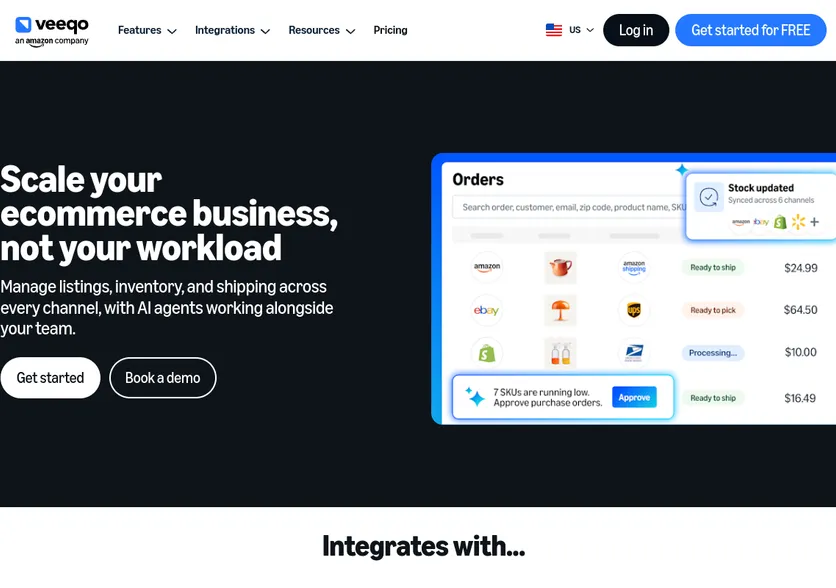
Veeqo is the cheapest entry point in this list, and it suits beauty brands selling on several channels at once. This Veeqo plan costs nineteen dollars per month, and it syncs stock across Amazon, Shopify, eBay and other channels so a sale on one site updates every listing. The free Shipping plan covers labels and order management, while the paid Inventory plan adds stock sync, demand forecasting and digital picking. Forecasting is basic here, so pair it with a dedicated planner if demand is hard to predict.
What we like
- Stock syncs across every connected sales channel
- Free Shipping plan covers labels and orders
- Low nineteen dollar entry price for inventory
Watch out for
- Forecasting is basic compared with dedicated tools
- Inventory price rises with order volume
How to try it
- Connect your sales channels and import products into one catalog
- Turn on stock sync so every sale updates all listings at once
- Set low-stock alerts for hero shades and bundles
2. Prediko
Best for: Beauty brands that want AI forecasts from Shopify sales data
Paid tool Starting price: $49/month · Forty-nine dollars per month for stores under one hundred thousand dollars in gross merchandise value, or forty-two dollars per month billed annually; higher GMV bands cost more, and a raw-materials and bills of materials add-on is twenty dollars per month
Free plan: Free 14-day trial; no free plan
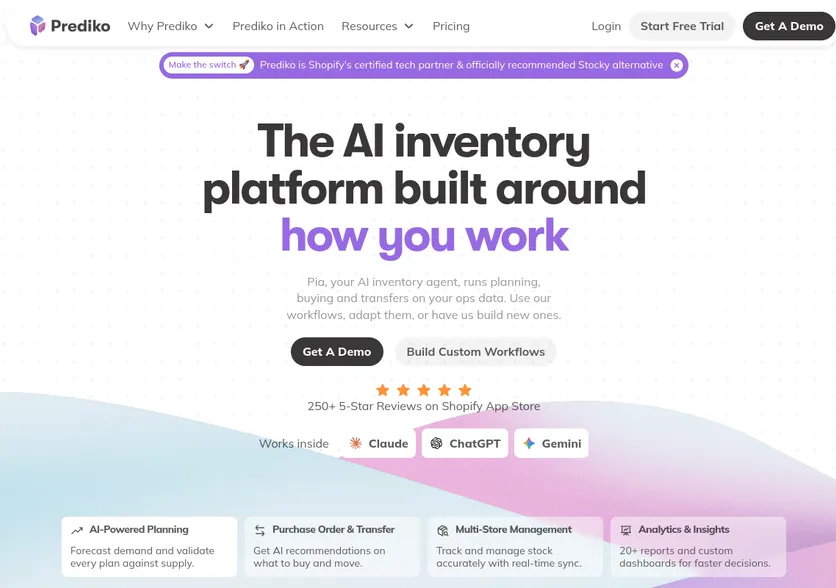
For a beauty brand with dozens of shades to forecast, Prediko is the cheapest dedicated option in this list. This Prediko plan costs forty-nine dollars per month for stores under one hundred thousand dollars in gross merchandise value, and it turns Shopify sales history into demand forecasts, purchase recommendations and reorder alerts. For a beauty brand it forecasts by shade and bundle, which matters when one shade of a lipstick sells out while the rest of the range sits. A raw-materials add-on covers ingredients and packaging for brands that fill their own products.
What we like
- Shade and bundle level forecasting included
- Purchase recommendations with reorder alerts
- Low forty-nine dollar entry price for small brands
Watch out for
- Price rises as your GMV band grows
- Shopify-first, so other channels need workarounds
How to try it
- Connect Shopify and let Prediko read your sales history
- Review the forecast by shade and bundle for each product
- Approve purchase recommendations and raise orders from them
3. StockTrim
Best for: Beauty brands that want simple revenue-based forecasting without per-user fees
Paid tool Starting price: $49/month · Forty-nine dollars per month billed annually for businesses under one hundred thousand dollars in annual revenue; monthly billing is sixty-seven dollars, and higher revenue bands cost more
Free plan: Free 14-day trial; no free plan
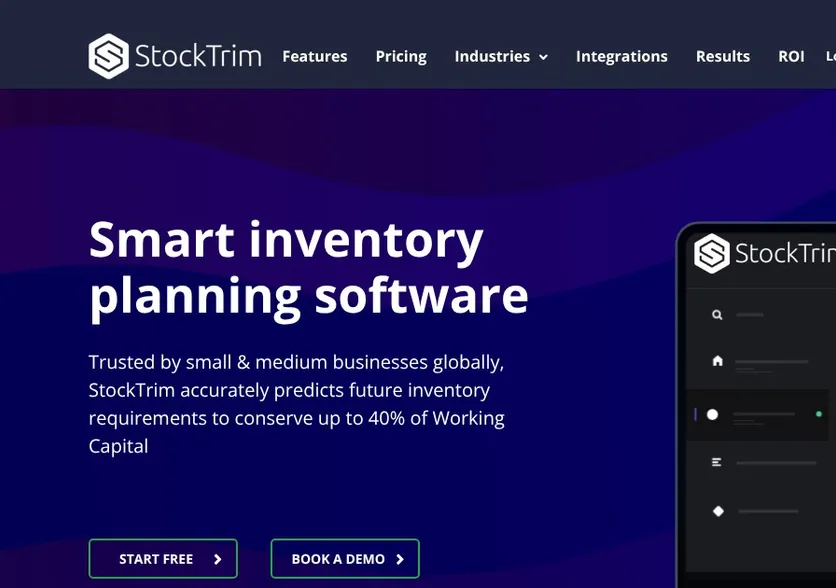
A beauty brand that wants forecasting without a planning team will find StockTrim the simplest route in this list. This StockTrim plan costs forty-nine dollars per month billed annually for businesses under one hundred thousand dollars in annual revenue, and it forecasts demand from sales history, then turns the forecast into suggested purchase orders. It suits beauty brands with a growing shade range that want a clear buy plan before each launch without paying for a planning department. Higher revenue bands cost more, so the price grows with the brand.
What we like
- Revenue-based pricing with no per-user fees
- Clear suggested orders before each launch
- Fast setup from sales history or a spreadsheet
Watch out for
- No dedicated raw-materials planning
- Price rises with the revenue band
How to try it
- Connect your store or upload sales history from a spreadsheet
- Check the forecast and suggested orders by shade and product
- Approve the buy plan and send purchase orders to suppliers
4. Fabrikatör
Best for: Beauty brands on Shopify that sell through stock and take backorders
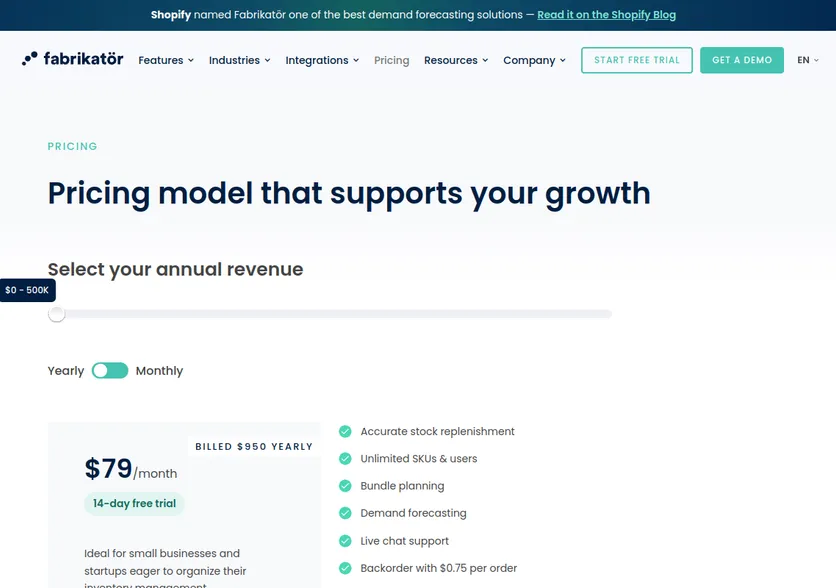
Paid tool Starting price: $99/month · Ninety-nine dollars per month on the Seed plan for up to five hundred thousand dollars in revenue ($79 a month billed annually, $950 a year); Scale-Up is one hundred and forty-nine dollars and Growth is one hundred and ninety-nine dollars per month, plus seventy-five cents per backorder after fifty free per month
Free plan: Free 14-day trial; no free plan
Fabrikatör is built for brands that sell through stock and keep selling on backorder, which fits beauty launches well. This Fabrikatör plan costs ninety-nine dollars per month on the Seed plan for up to five hundred thousand dollars in revenue, and it forecasts demand, flags overstock and manages backorders in one Shopify app. It knows which shades are about to run out and which are overstocked, so a brand can shift marketing to the shades it actually holds. Backorders cost seventy-five cents each after fifty free ones per month.
What we like
- Backorder management built into the forecast
- Shade-level overstock and stockout flags
- Made for Shopify product brands
Watch out for
- Shopify-only, no other sales channels
- Backorder fees add up at volume
How to try it
- Install the Shopify app and connect your sales history
- Review the forecast and overstock flags by shade and product
- Set backorder rules so sold-out shades keep selling
5. Sumtracker
Best for: Beauty brands that want twelve-month forecasts with purchase orders
Paid tool Starting price: $119/month · One hundred and nineteen dollars per month for the Replenish plan, or one hundred dollars per month billed annually; Replenish adds purchase orders and twelve-month forecasting to the fifty-nine dollar Manage plan
Free plan: Free 14-day trial; no free plan
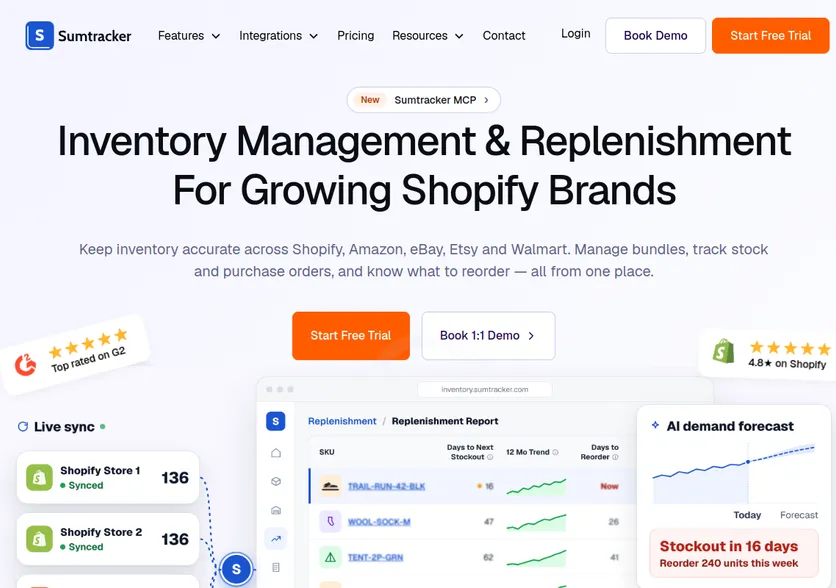
Sumtracker suits beauty brands that want a full year of forecasts, not just next month. This Sumtracker plan costs one hundred and nineteen dollars per month for the Replenish plan, and it adds purchase orders and twelve-month forecasting to the basic stock sync. A brand can plan a whole launch calendar, raise orders against the forecast and watch stock move against it as each launch runs. The cheaper Manage plan only syncs stock, so forecasting buyers need Replenish.
What we like
- Twelve-month forecasts with purchase orders
- Launch calendar planning in one view
- Priced by order volume, not by users
Watch out for
- Forecasting needs the Replenish plan, not Manage
- Multi-channel support is narrower than Cin7
How to try it
- Connect Shopify and sync stock across warehouses
- Open the twelve-month forecast for each product
- Raise purchase orders against the forecast and track them
6. Inventory Planner
Best for: Beauty brands on Shopify that want a proven forecasting tool with Sage backing
Paid tool Starting price: $119.99/month · One hundred and nineteen dollars and ninety-nine cents per thirty days for the Essentials tier on the Shopify App Store listing; the full Inventory Planner product is sold on a quoted basis, so confirm the current price before buying; the vendor's own homepage currently redirects to a domain-parking page, so Essentials is bought through its Shopify App Store listing
Free plan: Free 14-day trial; no free plan
For beauty brands on Shopify, Inventory Planner is the forecasting app with the longest track record here. This Inventory Planner tier costs one hundred and nineteen dollars and ninety-nine cents per thirty days for the Essentials plan on the Shopify App Store, and it forecasts demand, suggests replenishment and automates purchase orders for Shopify stores. It is the most reviewed tool in this list, with one hundred and fifty-five Shopify reviews, and it suits brands that want a proven system rather than a new startup. The full product is sold on a quoted basis.
What we like
- Most reviewed forecaster in this list
- Purchase order automation from forecasts
- Sage backing and long track record
Watch out for
- Full product is quote-based, not published
- Essentials tier is single warehouse only
How to try it
- Install the app from the Shopify App Store
- Let it build forecasts from your sales history
- Approve replenishment suggestions and automate purchase orders
7. SKU Science
Best for: Beauty brands that want statistical demand planning with ABC classification
Paid tool Starting price: $349/month · Three hundred and forty-nine dollars per month billed annually on the Launch plan for one user and up to two thousand five hundred forecast units; Core is six hundred and twenty-five dollars per month and adds multi-user access and dashboards
Free plan: Free 15-day trial; no free plan
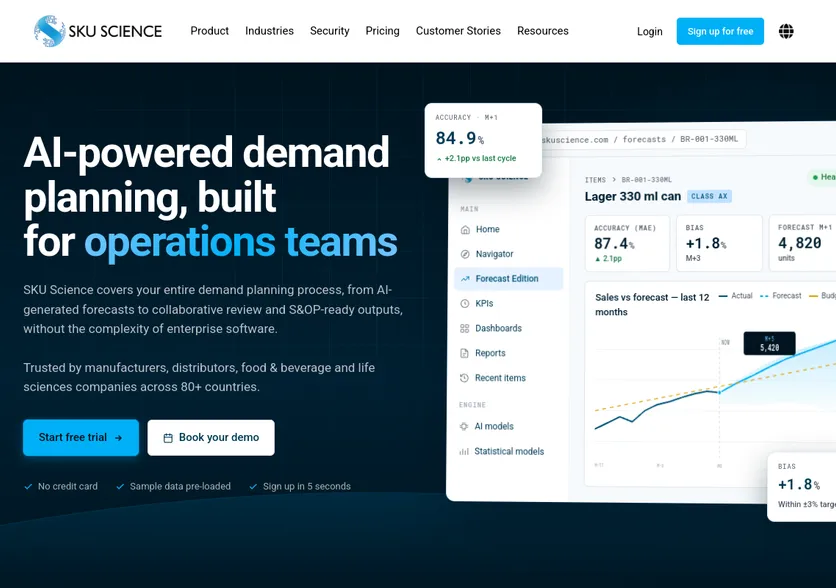
A beauty brand with hundreds of shades needs classification, not just counting, and SKU Science is built for that. This SKU Science plan costs three hundred and forty-nine dollars per month billed annually on the Launch plan, and it builds statistical forecasts from sales history with automatic ABC and XYZ classification. For a beauty brand with hundreds of shades, that classification shows which few shades drive most of the profit and which can be cut from the range. The Launch plan is limited to one user and two thousand five hundred forecast units.
What we like
- Statistical forecasts with ABC and XYZ classification
- Built for SKU-level planning, not generic stock
- Forecast accuracy tracking included
Watch out for
- Launch plan is single-user only
- No inventory or order management included
How to try it
- Upload sales history and map products to forecast units
- Review the ABC and XYZ classification for your range
- Approve the statistical forecast and export the buy plan
8. Netstock
Best for: Larger beauty brands that want inventory optimization tied to their ERP
Paid tool Starting price: $900/month · Nine hundred dollars per month for the Essentials plan on an annual term; Advanced starts at one thousand five hundred dollars and Commercial at two thousand dollars per month, with implementation taking six to ten weeks
Free plan: Free demo; no free plan
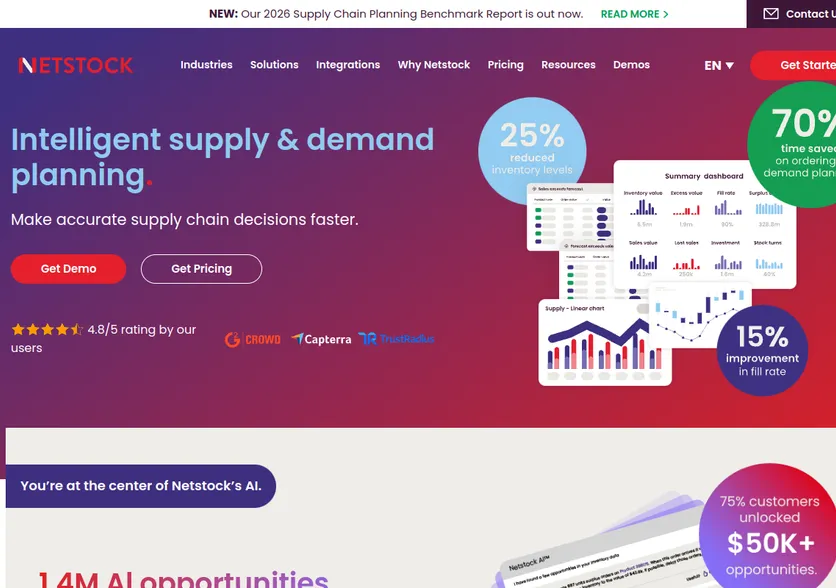
Larger beauty brands that run stock through an ERP will find Netstock at the enterprise end of this list. This Netstock plan costs nine hundred dollars per month for the Essentials plan on an annual term, and it optimizes inventory levels, safety stock and order timing from ERP data. It suits beauty brands with a warehouse and a planning team that need defensible numbers for every buy, including bundles and gift sets. Implementation takes six to ten weeks, so it is a commitment rather than a quick install.
What we like
- ERP-grade inventory optimization
- Safety stock and order timing built in
- Trusted by larger brands and distributors
Watch out for
- Nine hundred dollar starting price is high
- Six to ten week implementation
How to try it
- Connect Netstock to your ERP and import sales history
- Review the optimized stock and safety stock levels
- Approve order recommendations and track forecast accuracy
Prices above were checked on each vendor’s own website on Nov 28, 2026 and can change — the vendor’s page is the final word. Vendor links are editorial: nobody paid to be listed or ranked here. Vendors who want a featured listing can see how it works on our Get listed page.
How a beauty brand should forecast a launch
Start with your hero shades, not the whole range. Pull sales history by shade and bundle, and mark which shades sold out and which were left over, because the pattern repeats more than most buyers expect. Forecast shades separately, since demand for one shade can be ten times that of another, and build the buy plan from the forecast rather than from a guess about the launch. Leave part of the budget uncommitted for reorders, so a hero shade can be topped up while it is still selling. Finally, check expiry dates alongside stock levels every month, because unsold stock with a short shelf life is a write-off, not a future sale.
Before you buy
- Check that forecasts work at shade and bundle level, not just at product level
- Confirm whether expiry dates and shelf life are tracked alongside stock levels
- Ask how the tool handles subscription boxes and repeat purchase patterns
- Count the cost per forecast unit or GMV band so a growing shade range does not surprise you
- Run a trial on your best-selling shade and compare the forecast to what actually sold
Official websites
Official websites of the products reviewed above. Features and prices were checked against these sites when this guide was written, and they can change, so confirm on the vendor site before you buy.
Frequently asked questions
What is inventory forecasting software for beauty brands?
It is software that predicts how much of each shade, bundle and product will sell, then turns that prediction into a buy plan. The tools in this list use sales history to forecast demand, flag overstock and suggest purchase orders, so a brand orders what will sell instead of guessing. For beauty the forecast must work at shade level, since one shade of a lipstick can sell out while the rest of the range sits.
How much does inventory forecasting software cost for beauty brands?
The tools in this list start at nineteen dollars a month for Veeqo and forty-nine dollars for Prediko and StockTrim, with Fabrikator at ninety-nine dollars and Sumtracker at one hundred and nineteen dollars. Inventory Planner Essentials costs one hundred and nineteen dollars and ninety-nine cents per thirty days. SKU Science costs three hundred and forty-nine dollars a month, and Netstock starts at nine hundred dollars.
What does Prediko cost for a beauty brand?
Prediko costs forty-nine dollars a month for stores under one hundred thousand dollars in gross merchandise value, or forty-two dollars a month billed annually. It forecasts demand from Shopify sales history, breaks forecasts down by shade and bundle, and raises purchase recommendations with reorder alerts. A raw-materials add-on for ingredients and packaging costs twenty dollars a month.
How do I test a forecasting tool before buying it?
Start with your best-selling shade. Feed a tool your real sales history for that shade and compare its forecast with what actually sold over the last three months. Prediko and StockTrim are the cheapest way to run that test, and both offer a fourteen-day trial. If the forecast misses your hero products by a wide margin, the tool is not reading your demand patterns well enough.
What mistakes do beauty brands make when forecasting inventory?
The two most common mistakes are forecasting at product level instead of shade level, and ordering a full launch quantity of a new shade before it has any sales history. Forecast shades separately, since demand varies sharply by shade, and treat a new launch as a small test order until the first weeks of sales show which shades move. Watch expiry dates too, since unsold stock with a short shelf life is a write-off, not a sale.
Compare the eight tools above, then start with a free trial on the tool that matches how your brand plans a launch before you pay for a full year.
Browse Business Tools tools