On this page
A grocery delivery business sells fresh stock that expires in days, so the forecast matters more than the count. The eight tools below track fresh goods, orders and fulfilment from one list, from $19 a month up to a multichannel system. StockTrim leads because it forecasts demand by SKU on a published rate card, and the rest are ranked on the same test: whether the shelves hold enough for tonight's orders without tomorrow's waste.
How we researched this
We checked every price on the vendor pricing page on November 28, 2026, and only included tools with a published US dollar list price and a free trial or free plan. Delivery and forecasting systems that publish no price are not in this list, however good their routing looks. Prices change, so confirm the current figure on the vendor site before you buy.
Compare the tools
| Name | Best for | Starting price | Free plan | |
|---|---|---|---|---|
| StockTrim | Grocery delivery brands that need demand forecasting by SKU | $49/month | No free plan; 14-day free trial | Visit |
 Cin7 Core | Grocery delivery brands with more than one fulfilment point | $349/month | 14-day free trial; no free plan | Visit |
 Square for Retail | Grocery delivery businesses with a counter and a dark store | $49/month | Free plan ($0 per location); 30-day free trial on Plus | Visit |
 Ordoro | Grocery delivery businesses packing hundreds of orders a day | $499/month | Free Shipping plan; 15-day free trial | Visit |
 Zoho Inventory | Grocery delivery startups syncing app and store stock | $29/month | Free plan with 50 orders a month and 1 user | Visit |
 inFlow Inventory | Grocery delivery businesses with one fulfilment point | $99/month | No free plan; 14-day free trial | Visit |
 Lightspeed Retail | Grocery delivery businesses with a shop floor and a counter | $89/month | No free plan; 14-day free trial | Visit |
 ShipStation | Grocery delivery businesses sending orders out by courier | $14.99/month | No free plan; 30-day free trial | Visit |
The inventory management software for grocery delivery, compared
1. StockTrim
Best for: Grocery delivery brands that need demand forecasting by SKU
Paid tool Starting price: $49/month · Forty-nine dollars a month billed annually for businesses under $100,000 in annual revenue ($67 on monthly billing); the price rises with the revenue band, reaching $298 a month at $3 million to $5 million, and the BOMs add-on costs $50 more a month
Free plan: No free plan; 14-day free trial
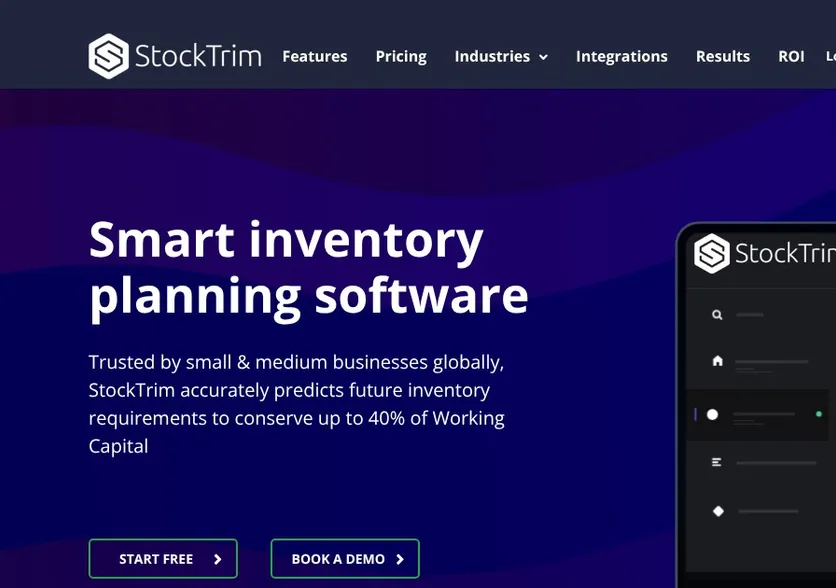
A grocery delivery business lives or dies on forecasting, because fresh stock expires fast, and StockTrim forecasts demand by SKU from $49 a month billed annually for businesses under $100,000 in revenue. The price rises with the revenue band, reaching $298 a month at $3 million to $5 million, and unlimited users and SKUs are included on every plan. The BOMs add-on costs $50 more a month for multi-level recipes and raw materials.
What we like
- A published rate card, rare among forecasting vendors
- Unlimited users and SKUs on every plan
- Seasonality is built into the demand forecast
Watch out for
- The price rises with the annual revenue band
- The BOMs add-on costs $50 more a month
How to try it
- Connect the sales channels and import sales history by SKU
- Let StockTrim forecast demand and suggest reorder points
- Raise purchase orders from the suggested quantities each week
2. Cin7 Core
Best for: Grocery delivery brands with more than one fulfilment point
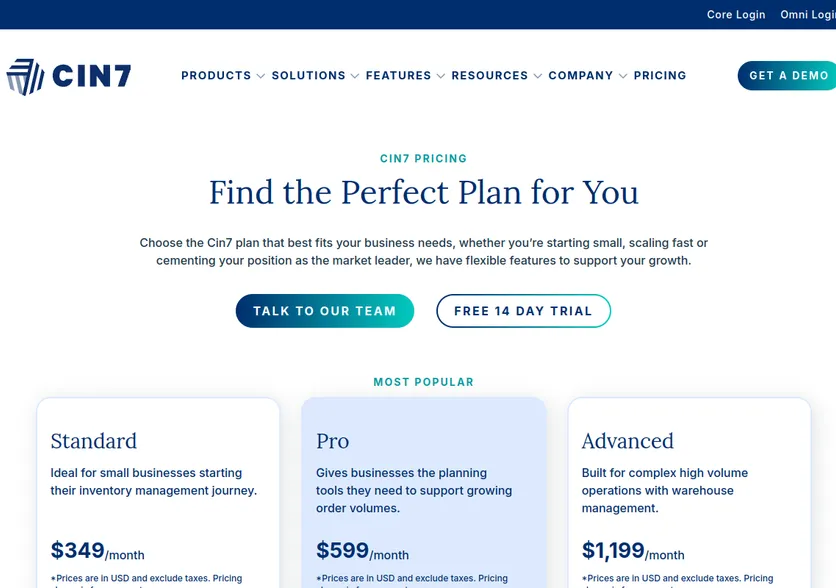
Paid tool Starting price: $349/month · Three hundred and forty-nine dollars a month on the Standard plan for 5 users and 6,000 sale orders a year; Pro is $599 and Advanced is $1,199 a month
Free plan: 14-day free trial; no free plan
A grocery delivery brand selling through its own app, a marketplace and partner stores needs one stock figure everywhere, and Cin7 Core syncs it for $349 a month on Standard. The plan covers 5 users, 6,000 sale orders a year and built-in demand forecasting, with Pro at $599 and Advanced at $1,199 a month. It is the right size once the brand runs more than one fulfilment point.
What we like
- Stock syncs across every sales channel in real time
- Demand forecasting is built in, not an add-on
- More than 700 integrations cover most storefronts and warehouses
Watch out for
- The $349 entry price is steep for a single-channel seller
- Sale-order caps push high-volume sellers to Pro or Advanced
How to try it
- Connect each sales channel and warehouse to one Cin7 Core account
- Set reorder points on the fastest-moving SKUs and turn on forecasting
- Review the low-stock report daily and raise purchase orders from it
3. Square for Retail
Best for: Grocery delivery businesses with a counter and a dark store
Paid tool Starting price: $49/month · Forty-nine dollars a month per location on the Plus plan, which adds inventory management and purchase orders; the Free plan is $0 per location and Premium is $149 a month per location
Free plan: Free plan ($0 per location); 30-day free trial on Plus
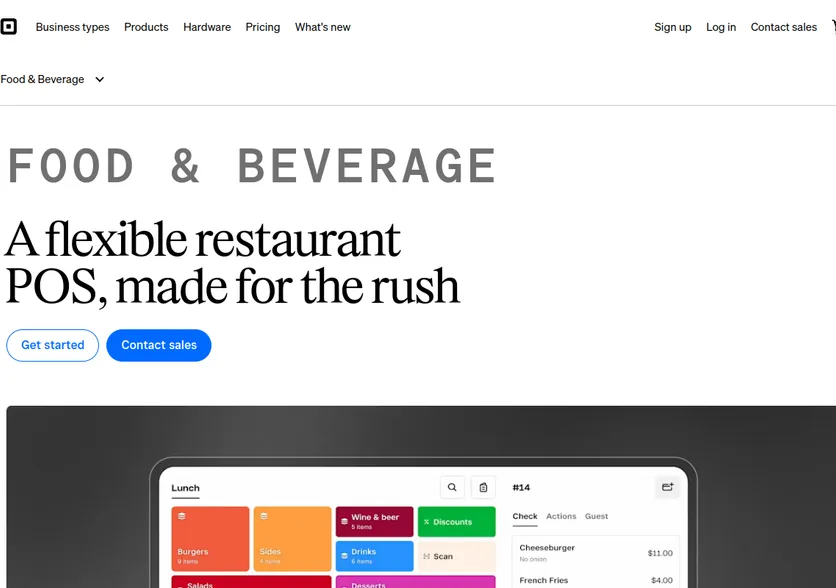
A grocery delivery business with a counter and a dark store needs the till to count stock at both, and Square for Retail does it on the $49 a month Plus plan per location. Plus adds inventory management, vendor records and purchase orders to the free plan, with Premium at $149 a month. It suits a small operator better than a multi-warehouse brand.
What we like
- A free plan covers basic selling at $0 per location
- Inventory and purchase orders arrive on the $49 Plus plan
- Hardware starts with a free card reader
Watch out for
- The free plan lacks vendor and purchase order management
- Card processing runs 2.6% plus 15 cents on the free plan
How to try it
- Add items with SKUs, variants and stock counts at each location
- Turn on stock alerts and raise purchase orders to vendors
- Count stock on the Square app and reconcile the variances
4. Ordoro
Best for: Grocery delivery businesses packing hundreds of orders a day
Paid tool Starting price: $499/month · Four hundred and ninety-nine dollars a month on the Pro plan, which is where inventory management, kitting and purchase orders start; Express at $59 a month is shipping only, and Enterprise starts at $999 a month
Free plan: Free Shipping plan; 15-day free trial
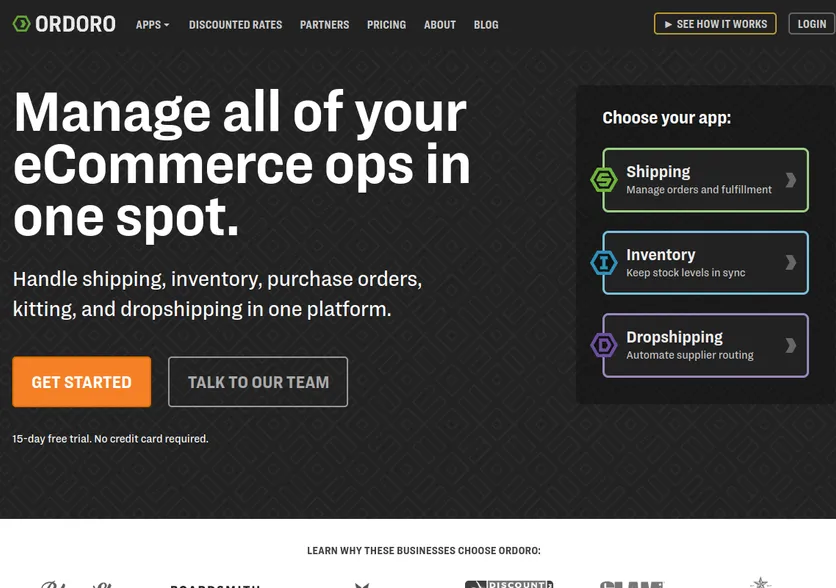
A grocery delivery business packing hundreds of orders a day needs labels, kitting and stock in one workflow, and Ordoro bundles them on Pro at $499 a month. The plan adds inventory management, kitting, purchase orders and multi-warehouse tracking to batch label printing with discounted USPS rates. Express at $59 a month is shipping only, so inventory buyers pay the Pro price.
What we like
- Shipping, inventory and kitting share one workflow
- Batch label printing with discounted USPS rates
- Multi-warehouse tracking on the Pro plan
Watch out for
- Inventory starts on Pro at $499, not on the $59 Express plan
- Dropshipping automation is a separate $299 a month module
How to try it
- Connect the sales channels and import the product catalog
- Set up kitting rules for bundles that share components
- Print batch labels and let stock deduct as orders ship
5. Zoho Inventory
Best for: Grocery delivery startups syncing app and store stock
Paid tool Starting price: $29/month · Twenty-nine dollars a month billed annually on the Standard plan per organization ($39 on monthly billing); Professional is $79, Premium $129 and Enterprise $249 a month billed annually
Free plan: Free plan with 50 orders a month and 1 user
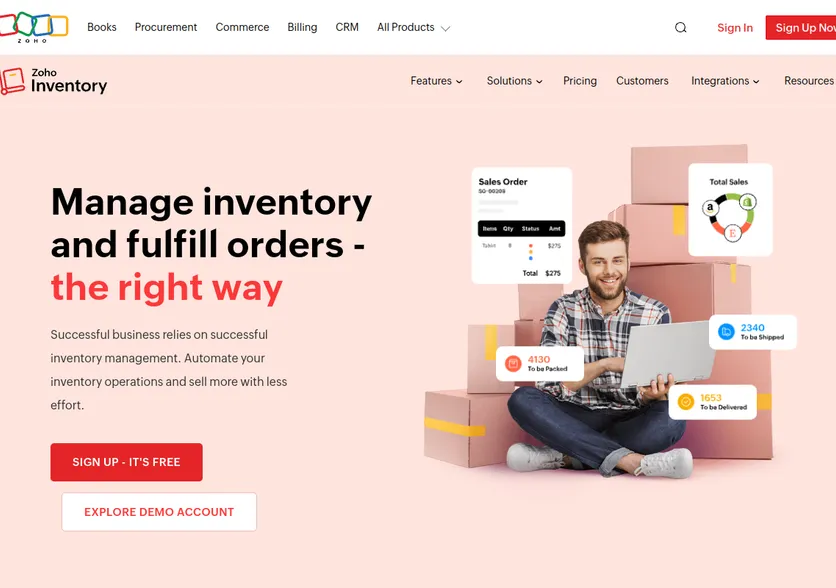
A grocery delivery startup needs stock synced across its app and its store, and Zoho Inventory does it from $29 a month on Standard with a free plan below it. Standard covers 500 orders a month for 2 users at 2 locations, with batch tracking on paid plans for expiry-dated goods. The order caps are the first thing to outgrow once daily volume rises.
What we like
- A genuinely usable free plan covers 50 orders a month
- Pricing is per organization, not per user
- Serial and batch tracking arrive on paid plans
Watch out for
- Order, user and location caps force upgrades as volume grows
- The Zoho Books link is the smoothest accounting path, not QuickBooks
How to try it
- Add products with SKUs and opening stock at each location
- Connect the sales channels and let orders pull stock automatically
- Set reorder points and let the system raise purchase orders
6. inFlow Inventory
Best for: Grocery delivery businesses with one fulfilment point
Paid tool Starting price: $99/month · Ninety-nine dollars a month billed annually on the Lite plan for 2 team members and 1 location ($129 on monthly billing); Core is $299, Pro $499 and Max $699 a month billed annually
Free plan: No free plan; 14-day free trial
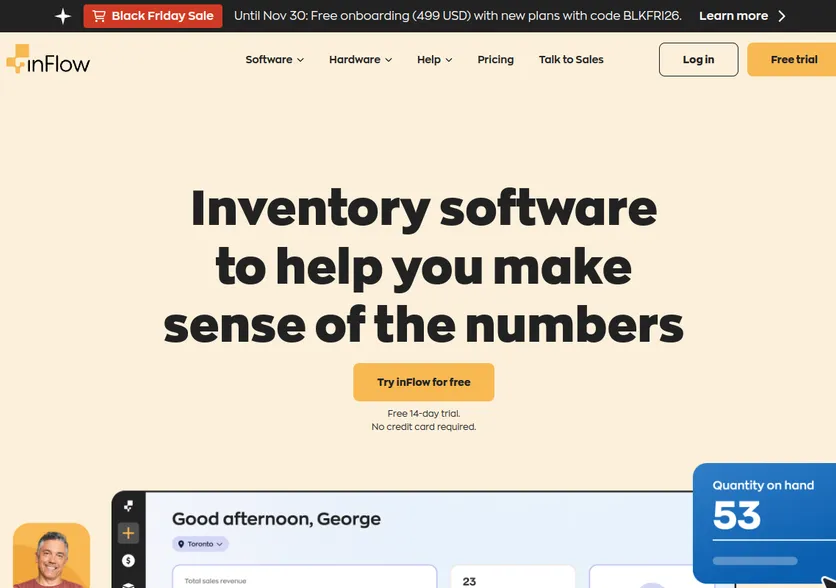
A grocery delivery business with one fulfilment point needs purchase orders, barcodes and one stock list, and inFlow Inventory fits that shape on Lite at $99 a month billed annually. The plan covers unlimited products and orders for 2 team members at 1 location, with Core at $299 a month for 5 members and 5 locations. A $499 onboarding package is required on Core and above.
What we like
- Flat-rate plans keep the bill predictable as the team grows
- Unlimited products and orders on every plan
- Barcode scanning works on phones and desktops
Watch out for
- A $499 onboarding package is required on Core, Pro and Max
- Serial and lot tracking are paid add-ons on lower plans
How to try it
- Import the product list and set opening stock per location
- Create purchase orders from low-stock alerts and receive stock by barcode
- Run the inventory valuation report at month end for the books
7. Lightspeed Retail
Best for: Grocery delivery businesses with a shop floor and a counter
Paid tool Starting price: $89/month · Eighty-nine dollars a month billed annually on the Basic plan ($109 on monthly billing); Core is $149 and Plus is $289 a month billed annually, and card processing is 2.6% plus 10 cents in person
Free plan: No free plan; 14-day free trial
A grocery delivery business with a shop floor and a delivery counter sells the same item two ways, and Lightspeed Retail tracks it as one item for $89 a month billed annually on Basic. The plan includes core inventory, one register and basic ecommerce, with Core at $149 and Plus at $289 a month. Multi-location transfers help when one store runs low and another still holds stock.

What we like
- Matrix variants handle size and colour stock cleanly
- Multi-location stock and transfers are built in
- Wholesale ordering through NuORDER and Lightspeed Wholesale
Watch out for
- A monthly fee applies if you use a third-party payment processor
- Extra registers cost $59 a month each
How to try it
- Import the catalog with variants for size, colour and style
- Set reorder points and raise purchase orders from the low-stock list
- Transfer stock between locations when one shop runs low
8. ShipStation
Best for: Grocery delivery businesses sending orders out by courier
Paid tool Starting price: $14.99/month · Fourteen dollars and ninety-nine cents a month on the Starter plan at 50 shipments a month; the price rises with shipment volume to $174.99 at 5,000 shipments, and annual billing saves 20%
Free plan: No free plan; 30-day free trial
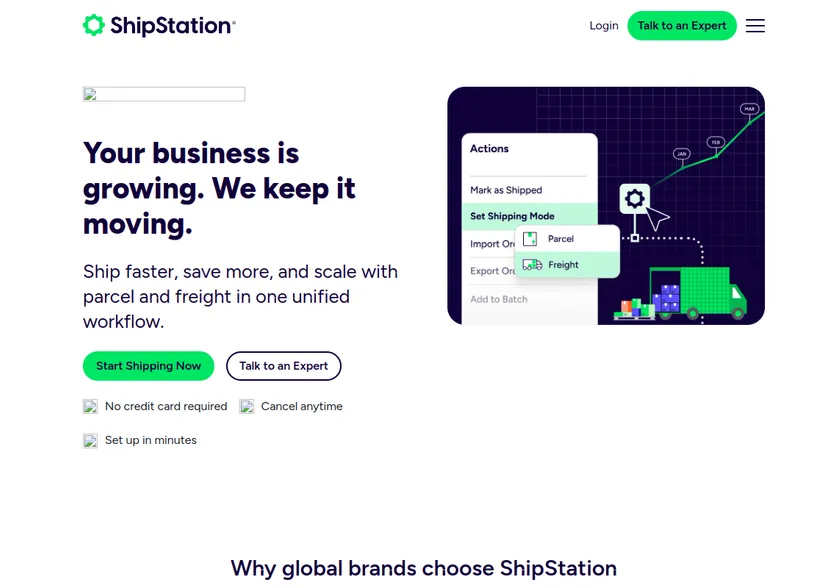
A grocery delivery business sending orders out by courier needs labels and stock to move together, and ShipStation pairs them from $14.99 a month on Starter at 50 shipments. The plan includes unlimited store connections, rate shopping and automation rules, with the price rising by shipment volume. Postage is extra, and annual billing saves 20%.
What we like
- Unlimited store connections on every plan
- Rate shopping across carriers on each label
- Automation rules cut manual order handling
Watch out for
- The price rises with monthly shipment volume
- Postage and insurance are billed on top of the subscription
How to try it
- Connect every sales channel and import open orders
- Set automation rules for carrier choice and packing slips
- Print batch labels and let stock levels update as orders ship
Prices above were checked on each vendor’s own website on Nov 28, 2026 and can change — the vendor’s page is the final word. Vendor links are editorial: nobody paid to be listed or ranked here. Vendors who want a featured listing can see how it works on our Get listed page.
How a grocery delivery business should run inventory with software
Start with the forecast, not the shelf. A grocery delivery business that orders by last week's sales will always be a week late, while a forecast by SKU with seasonality built in orders what tonight's customers will actually want. Count fresh goods daily and dry goods weekly, because fresh stock expires in days and dry stock forgives a late count. Set reorder points by shelf life rather than by quantity, so short-life items are ordered little and often. Keep the app, the store and the fulfilment point on one stock figure, so an item sold in store is not also promised for delivery the same evening.
Before you buy
- Check that demand forecasting covers perishables with expiry dates, not just dry goods
- Confirm whether the price is banded by revenue or order volume before you budget
- Ask whether stock syncs across the app, the store and the fulfilment point in real time
- Count the cost of the forecasting add-ons separately from the base plan
- Run a trial with one real delivery week, from forecast to last drop, before you commit
Official websites
Official websites of the products reviewed above. Features and prices were checked against these sites when this guide was written, and they can change, so confirm on the vendor site before you buy.
Frequently asked questions
What is inventory management software for grocery delivery?
It is software that tracks fresh and dry goods for a grocery delivery business, from the store shelf to the courier's bag, with forecasting that matches orders to shelf life. The tools in this list do that through demand forecasting, multichannel sync, or counter and shipping systems. None of them drives the van, but a good one stops the business promising tonight what it threw away this morning.
Which tool is cheapest for grocery delivery?
ShipStation is cheapest at $14.99 a month on Starter at 50 shipments, and StockTrim follows at $49 a month billed annually for businesses under $100,000 in revenue. Zoho Inventory starts at $29 a month with a free plan below it. Compare the total by volume, because ShipStation rises with shipments and StockTrim rises with the revenue band.
What does StockTrim cost for grocery delivery?
StockTrim costs $49 a month billed annually for businesses under $100,000 in annual revenue, or $67 a month on monthly billing. The price rises with the revenue band, reaching $298 a month at $3 million to $5 million, and the BOMs add-on costs $50 more a month. A 14-day free trial is available, and unlimited users and SKUs are included on every plan.
Do grocery delivery businesses need demand forecasting?
Yes, more than most sellers, because fresh stock expires in days and a wrong order becomes waste rather than a slow shelf. StockTrim forecasts demand by SKU with seasonality built in, and Cin7 Core includes forecasting on every plan. A business that only sells dry goods can manage with reorder points, but a business selling fresh produce should forecast or accept the waste.
Can these tools sync the app, the store and the fulfilment point?
Yes, the multichannel tools can: Cin7 Core, Zoho Inventory and inFlow keep one stock figure across the app, the store and the fulfilment point, so an item sold in store is not also promised for delivery. The counter tools, Square and Lightspeed Retail, cover the shop and the delivery counter. Pick the depth that matches how many fulfilment points the business runs.
Compare the eight tools above, then start with a free trial on the tool that matches how your grocery delivery operation already counts stock before you pay for a full year.
Browse Business Tools tools