On this page
A small retail team needs stock control that works at the till, not just in the back office: counts that update as items sell, purchase orders when shelves run low, and a clear view of what sits in the stockroom. The tools below cover that job from the register outward. Square for Retail leads the list because its free plan gives real-time counts and its Plus plan costs $89 a month per location, and the other seven tools are ranked on the same practical test: whether the count stays true during a busy Saturday.
How we researched this
We checked every price on the vendor pricing page on November 28, 2026, and only included tools with a published US dollar list price and a free trial or demo. Tools that publish no prices are not in this list. Prices change, so confirm the current figure on the vendor site before you buy.
Compare the tools
| Name | Best for | Starting price | Free plan | |
|---|---|---|---|---|
 Square for Retail | Small retail teams that want a register and stock in one system | $89/month | Free plan ($0 a month, card fees apply) | Visit |
 Lightspeed Retail | Retailers with deep ranges who need matrix variants and vendor catalogs | $89/month | Free demo | Visit |
 Shopify | Small retail teams selling in store and online from one count | $29/month | Free trial (3 days) | Visit |
 Zoho Inventory | Small retail teams that want stock control beyond the till | $29/month | Free plan (50 orders a month, 1 user) | Visit |
 Sortly | Small retail teams that want photo-led stock tracking | $49/month | Free plan (100 items, 1 user) | Visit |
 inFlow Inventory | Small retail teams that want purchase orders and barcode scanning | $99/month | Free trial (14 days) | Visit |
 QuickBooks Online | Small retail teams that want stock value in the ledger | $140/month | Free trial (30 days) | Visit |
 Xero | Small retail teams that want cheap accounting with basic stock | $15/month | Free trial (30 days) | Visit |
The inventory management software for small retail teams, compared
1. Square for Retail
Best for: Small retail teams that want a register and stock in one system
Paid tool Starting price: $89/month · Square for Retail Plus is eighty-nine dollars a month per location; the Free plan costs zero dollars a month with card fees of 2.6 percent plus ten cents in person; Plus adds purchase orders, vendor management and cost-of-goods-sold reporting
Free plan: Free plan ($0 a month, card fees apply)
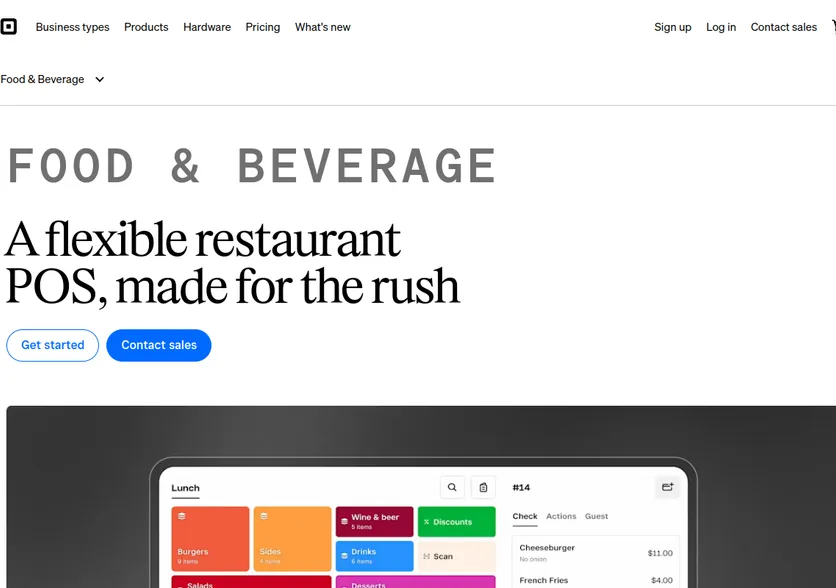
This Square for Retail plan costs $89 a month per location, and it gives a small retail team a register, an online store and stock control in one system. A shop can take sales on the counter, watch stock counts update live, and raise purchase orders to vendors on the Plus plan. The free plan covers basic counts, so a new shop can start without a subscription.
What we like
- A free plan with real-time counts gets a shop started fast
- Register, online store and stock share one system
- Hardware is cheap and setup takes hours, not weeks
Watch out for
- Purchase orders and vendor management need the Plus plan
- Card fees apply on every sale, free plan or not
How to try it
- Add your products with barcodes and stock counts
- Take sales on the register and watch counts update live
- Raise purchase orders to vendors when stock runs low
2. Lightspeed Retail
Best for: Retailers with deep ranges who need matrix variants and vendor catalogs
Paid tool Starting price: $89/month · Lean is eighty-nine dollars a month per location, or eight hundred and twenty-eight dollars a year on annual billing; Standard is one hundred and forty-nine dollars and Advanced two hundred and sixty-nine dollars per location per month; annual billing is required for the listed prices
Free plan: Free demo
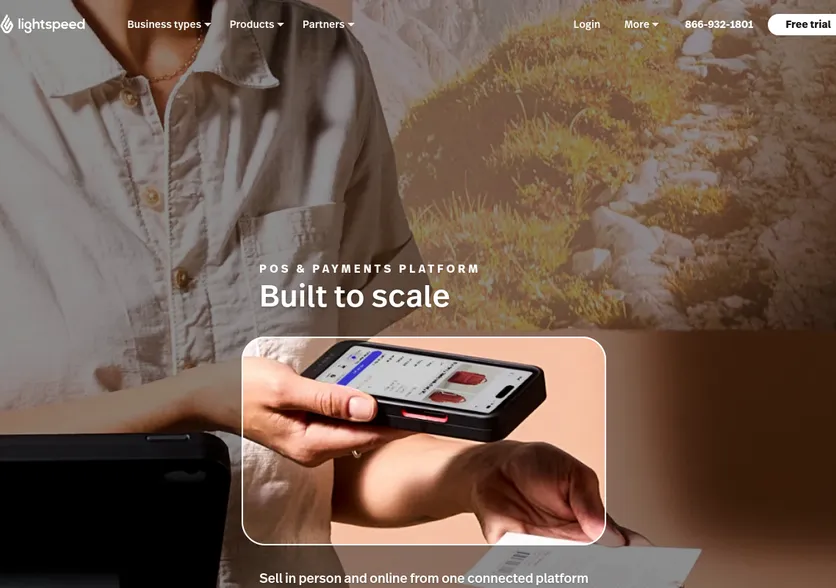
This Lightspeed Retail plan costs $89 a month per location, and it is the deepest inventory system of the retail point-of-sale tools in this list. A shop can manage matrix items for size and colour, build vendor catalogs that generate purchase orders, and transfer stock between locations as demand shifts. There is no free plan, and setup is heavier than Square, but the depth is real.
What we like
- Deepest inventory of the retail point-of-sale tools here
- Matrix items handle size, colour and style cleanly
- Vendor catalogs turn reordering into a few clicks
Watch out for
- There is no free plan, and setup is heavier than Square
- Payment processing fees sit on top of the subscription
How to try it
- Import your catalog with matrix variants for size and colour
- Set up vendor catalogs and generate purchase orders
- Transfer stock between locations as demand shifts
3. Shopify
Best for: Small retail teams selling in store and online from one count
Paid tool Starting price: $29/month · Basic is twenty-nine dollars a month billed annually, or thirty-nine dollars month to month; Grow is eighty-nine dollars and Advanced three hundred and fifty-nine dollars billed annually; card rates start at 2.9 percent plus thirty cents on Basic
Free plan: Free trial (3 days)
This Shopify plan costs $29 a month billed annually, and it gives a small retail team an online store and stock control in one subscription. A shop can sell in store and online from the same inventory, track stock across ten locations, and add point-of-sale hardware as it grows. Card and transaction fees sit on top, so budget for those too.

What we like
- Storefront, checkout and stock in one system
- Ten inventory locations included on the Basic plan
- The largest app ecosystem for adding warehouse features
Watch out for
- Serious forecasting and purchase orders need paid apps
- Card and transaction fees sit on top of the subscription
How to try it
- Add products with variants, SKUs and barcodes
- Set inventory levels per location and enable low-stock alerts
- Connect a fulfillment app when orders outgrow manual packing
4. Zoho Inventory
Best for: Small retail teams that want stock control beyond the till
Paid tool Starting price: $29/month · Standard is twenty-nine dollars a month billed annually per organization, or thirty-nine dollars month to month; Professional is seventy-nine dollars, Premium one hundred and twenty-nine dollars and Enterprise two hundred and forty-nine dollars; the free plan covers fifty orders a month
Free plan: Free plan (50 orders a month, 1 user)
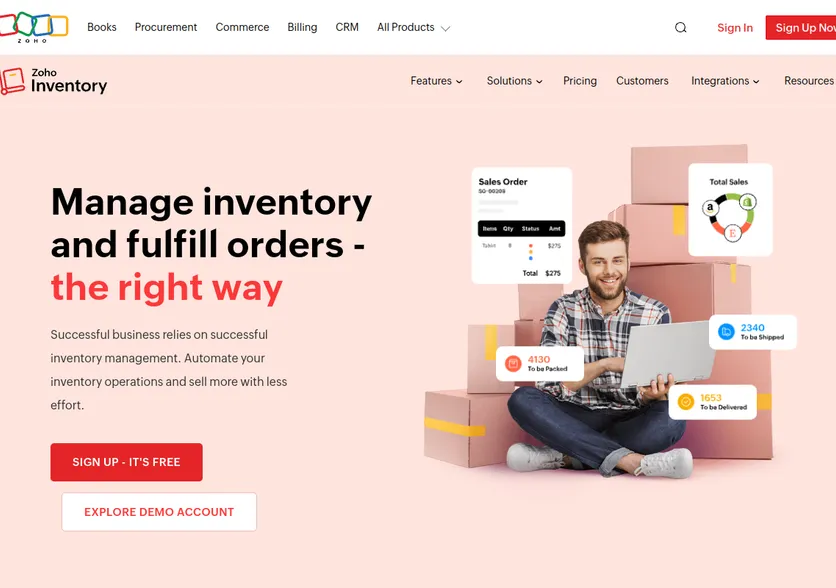
This Zoho Inventory plan costs $29 a month billed annually, and it is the value pick for a small retail team that needs stock control beyond a till. A shop can track inventory across locations, manage purchase orders and backorders, and keep the accounts in step through Zoho Books. Per-organization pricing means the whole team shares one low bill.
What we like
- Priced per organization, not per user, so teams stay cheap
- A free plan that a small operation can genuinely run on
- Deep links to Zoho Books, CRM and the rest of Zoho
Watch out for
- Order, user and location caps push growing sellers up the tiers
- Serial and batch tracking need the higher plans
How to try it
- Add your products and connect your sales channels
- Set reorder points and let purchase orders follow demand
- Sync stock with Zoho Books so the accounts stay current
5. Sortly
Best for: Small retail teams that want photo-led stock tracking
Paid tool Starting price: $49/month · Advanced lists at forty-nine dollars a month; the twenty-four dollars a month shown on the page is a fifty percent first-year discount, and a twenty percent discount applies after the first year; Ultra lists at one hundred and forty-nine dollars and Premium at two hundred and ninety-nine dollars
Free plan: Free plan (100 items, 1 user)
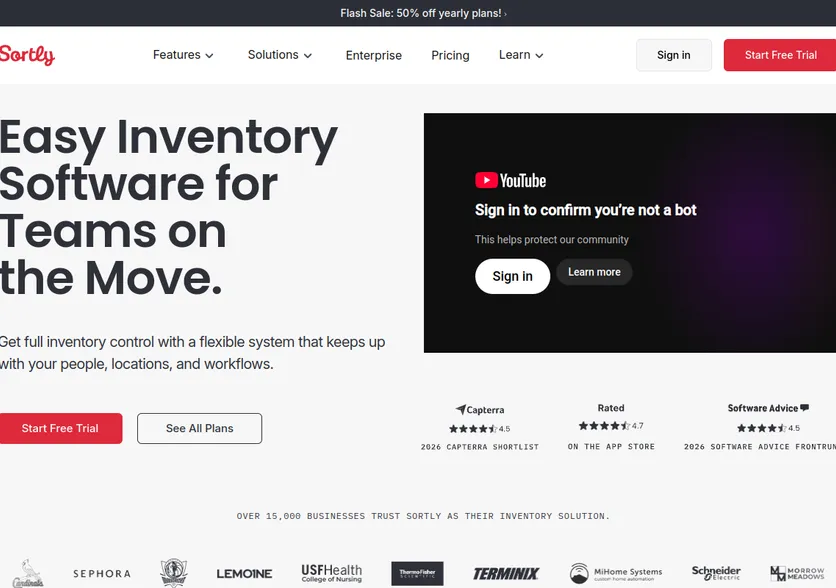
This Sortly plan costs $49 a month, and it gives a small retail team photo-led stock tracking that needs almost no training. A shop can photograph products, scan them in and out with QR labels, and set low-stock alerts for fast sellers. The free plan covers one hundred items, so a tiny shop can start free.
What we like
- Visual, photo-led inventory that a team learns in an afternoon
- QR labels and a mobile app make counts fast on site
- A genuinely useful free plan for a small stock list
Watch out for
- The advertised rate is a first-year discount, not the list price
- Purchase orders and deeper permissions need the higher plans
How to try it
- Photograph each item and add it with a quantity and location
- Print QR labels so anyone can scan and update stock
- Set low-stock alerts and check items in and out by job
6. inFlow Inventory
Best for: Small retail teams that want purchase orders and barcode scanning
Paid tool Starting price: $99/month · Lite is ninety-nine dollars a month billed annually, or one hundred and twenty-nine dollars month to month, for two team members and one location; Core is two hundred and ninety-nine dollars, Pro four hundred and ninety-nine dollars and Max six hundred and ninety-nine dollars billed annually; a four hundred and ninety-nine dollar onboarding package is required on most plans
Free plan: Free trial (14 days)
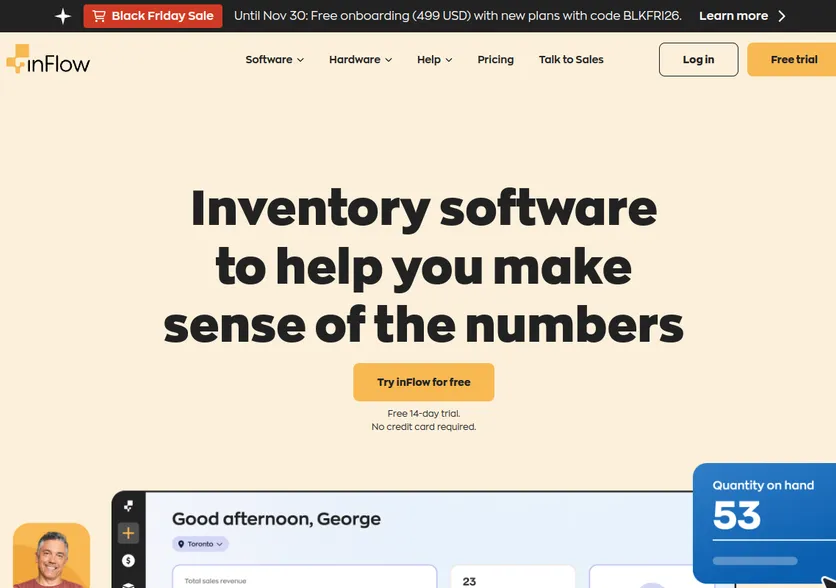
This inFlow Inventory plan costs $99 a month billed annually, and it gives a small retail team purchase orders, multi-location stock and barcode scanning without a point-of-sale overhaul. A shop can track what sits on the floor and in the back room, set reorder points for fast sellers, and receive stock against purchase orders. The flat rate stays the same as the team grows, which keeps the monthly bill predictable.
What we like
- Flat-rate pricing that stays predictable as the team grows
- Unlimited products, sales and purchase orders on every plan
- Works on desktop and mobile with barcode scanning
Watch out for
- Lite covers only two team members and one location
- Serial and lot tracking are paid add-ons below Enterprise
How to try it
- Import your products and set reorder points per location
- Raise purchase orders and receive stock against them
- Pick, pack and ship orders from the same screen
7. QuickBooks Online
Best for: Small retail teams that want stock value in the ledger
Paid tool Starting price: $140/month · Plus is one hundred and forty dollars a month after the August 1, 2026 price rise and is the tier with inventory tracking, for five users; Simple Start is thirty-eight dollars, Essentials eighty-five dollars and Advanced three hundred and forty dollars; the seventy percent off the first three months is a Black Friday intro offer, not the list price
Free plan: Free trial (30 days)
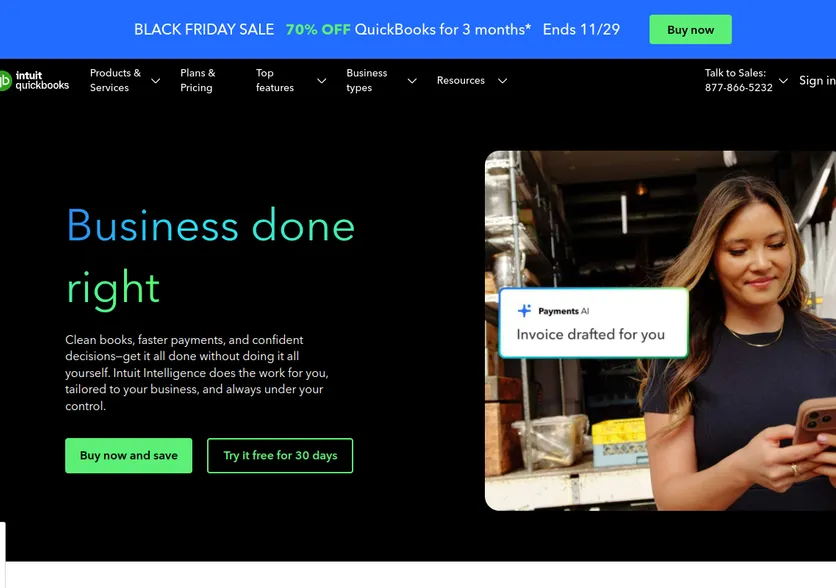
This QuickBooks Online plan costs $140 a month, and it is the accounting route for a small retail team that wants stock value in the ledger. A shop can track inventory with FIFO valuation on the Plus plan, manage five users, and keep sales, purchases and stock in one system. It is not a warehouse system, but it is the one most accountants prefer.
What we like
- Inventory and accounting in one ledger, with no sync to break
- The default choice most US accountants already know
- Five users included on the Plus plan
Watch out for
- Inventory tracking only appears on the Plus plan at one hundred and forty dollars
- Prices rose sharply in August 2026 and may rise again
How to try it
- Turn on inventory tracking on the Plus plan
- Add products with purchase and sales prices
- Reconcile stock value with the books at month end
8. Xero
Best for: Small retail teams that want cheap accounting with basic stock
Paid tool Starting price: $15/month · Early is fifteen dollars a month for twenty invoices and five bills; Growing is forty-two dollars and Established seventy-eight dollars; all plans include unlimited users, and Inventory Plus is a paid add-on on Growing
Free plan: Free trial (30 days)
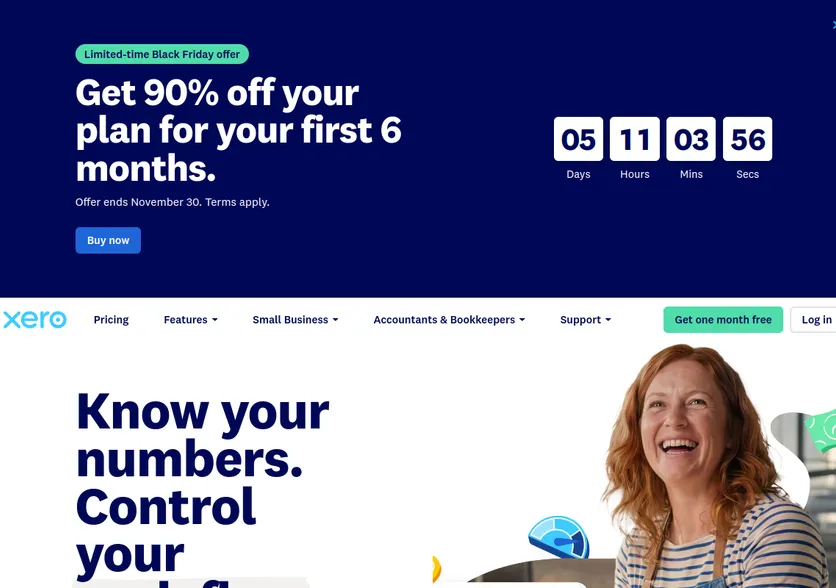
This Xero plan costs $15 a month, and it is the cheapest accounting route for a small retail team that needs basic stock tracking. A shop can track products with average-cost valuation, reconcile bank feeds, and add Inventory Plus when multi-location stock becomes a must. Unlimited users keep the cost flat as the team grows.
What we like
- Unlimited users on every plan, which keeps team costs flat
- Clean bank feeds and invoicing that accountants trust
- The cheapest serious accounting route to stock tracking
Watch out for
- Built-in stock tracking is basic, with average-cost valuation only
- Early caps invoices at twenty a month, so most sellers need Growing
How to try it
- Add your products to Xero for basic stock tracking
- Connect your sales channels or point of sale
- Add Inventory Plus when you need multi-location stock
Prices above were checked on each vendor’s own website on Nov 28, 2026 and can change — the vendor’s page is the final word. Vendor links are editorial: nobody paid to be listed or ranked here. Vendors who want a featured listing can see how it works on our Get listed page.
How a small retail team should keep the count honest
Count little and often instead of once a year, because a small drift each week becomes a big surprise at stocktake. Use the till as the counter: every sale should lower the count automatically, or the system is just a spreadsheet with a nicer screen. Set reorder points on the fast sellers and let purchase orders follow them, so the shelves refill before they empty. Keep the stockroom and the shop floor as separate locations, or the count will lie about what a customer can actually buy. Finally, price per location, not per user, since a shop's team is small but its locations multiply.
Before you buy
- Check that every sale lowers the stock count automatically
- Confirm purchase orders and vendor management are on the plan you buy
- Ask whether the shop floor and stockroom are separate locations
- Count the locations you run and price the plan per location
- Run a busy Saturday through the trial before you commit
Official websites
Official websites of the products reviewed above. Features and prices were checked against these sites when this guide was written, and they can change, so confirm on the vendor site before you buy.
Frequently asked questions
What is the best inventory software for a small retail team?
Square for Retail is the best overall pick because its free plan gives real-time counts and the Plus plan adds purchase orders, vendor management and cost-of-goods-sold reporting for $89 a month per location. Lightspeed Retail suits a shop with a deep range and matrix variants, while Shopify fits a shop that also sells online. The right choice depends on whether the till, the range or the website matters most.
How much does retail inventory software cost?
Prices in this list run from free for Square for Retail and $15 a month for Xero Early to $140 a month for QuickBooks Online Plus. Square Plus and Lightspeed Lean both cost $89 a month per location, Shopify Basic is $29 a month billed annually and Zoho Inventory is $29 a month. Card and transaction fees sit on top of the till tools.
Is Square free for retail inventory?
Square for Retail has a free plan that costs $0 a month and includes basic inventory with real-time counts, but card fees of 2.6 percent plus 10 cents apply on in-person sales. Purchase orders, vendor management and cost-of-goods-sold reporting need the Plus plan at $89 a month per location. A tiny shop can start free and upgrade when it needs purchase orders.
Do I need a point of sale or just inventory software?
A shop that sells in person needs both, and the tools in this list combine them. Square, Lightspeed and Shopify all run the till and the stock count from one system, so a sale updates inventory automatically. A pure inventory tool such as Sortly or inFlow suits a team that already has a till it likes and only needs better stock control.
Which tool is best for a shop with two locations?
Lightspeed Retail is the strongest pick for two locations because it handles transfers, matrix variants and vendor catalogs across locations at $89 a month per location on Lean. Square Plus also covers multiple locations at $89 a month per location. Zoho Inventory is the budget route at $29 a month, with two locations on the Standard plan.
Compare the eight tools above, then start with a free trial on the tool that matches whether your till, your range or your website needs the most help.
Browse Business Tools tools