On this page
An ecommerce seller with three sales channels and one stock count has exactly one job: never sell what is already gone. The tools below sync stock across Shopify, Amazon, eBay and a website in real time, then push orders into picking and shipping without retyping. Zoho Inventory leads the list because multichannel sync starts at $29 a month with a free plan underneath it, and the other seven tools are ranked on the same practical test: how cleanly an order moves from checkout to doorstep.
How we researched this
We checked every price on the vendor pricing page on November 28, 2026, and only included tools with a published US dollar list price. The enterprise systems in this category, including NetSuite and Brightpearl, publish no prices, so they are not in this list. Prices change, so confirm the current figure on the vendor site before you buy.
Compare the tools
| Name | Best for | Starting price | Free plan | |
|---|---|---|---|---|
 Zoho Inventory | Ecommerce sellers who need one stock count across every sales channel | $29/month | Free plan for 50 orders a month | Visit |
 ShipStation | Ecommerce sellers who ship hundreds of orders and need cheap, fast fulfilment | $14.99/month | Free trial | Visit |
 Ordoro | Ecommerce sellers who want inventory, orders and shipping under one roof | $499/month | Free trial | Visit |
 Linnworks | Multichannel sellers who need deep automation across marketplaces | $449/month | Free demo | Visit |
 Veeqo | Small ecommerce sellers who want shipping and stock in one low-cost tool | $19/month | Free demo | Visit |
 inFlow Inventory | Ecommerce sellers with a warehouse who need orders, picking and purchasing in one place | $99/month | Free trial | Visit |
 Cin7 Core | Ecommerce sellers with several warehouses who must never oversell | $499/month | Free demo | Visit |
 Katana | Ecommerce sellers who make what they sell and need production stock | $299/month | Free trial | Visit |
The inventory software for ecommerce sellers, compared
1. Zoho Inventory
Best for: Ecommerce sellers who need one stock count across every sales channel
Paid tool Starting price: $29/month · Twenty-nine dollars per organization a month billed annually on the Standard plan, or $39 billed monthly; Professional is $79, Premium is $129 and Enterprise is $249 a month billed annually
Free plan: Free plan for 50 orders a month
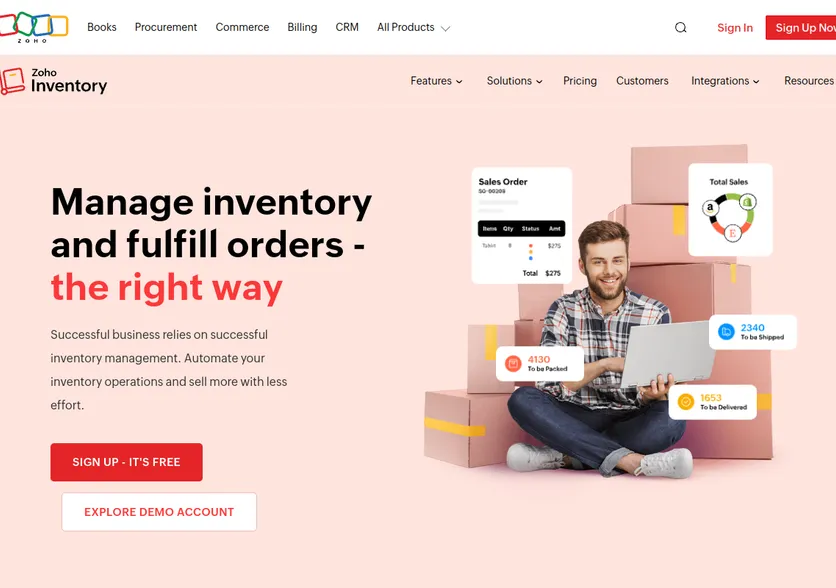
For Ecommerce sellers, this Zoho Inventory plan costs twenty-nine dollars per organization a month billed annually, and it syncs stock across Shopify, Amazon, eBay, Etsy and a website from one record. An order on any channel drops the same count everywhere else, purchase orders refill it, and composite items bundle products that ship together. The free plan covers fifty orders a month, so a small seller can prove the sync before paying.
What we like
- Stock sync across five major sales channels
- Priced per organization, not per user
- Free plan covers fifty orders a month
Watch out for
- Order caps rise only on higher plans
- Shipping needs a separate tool or integration
How to try it
- Connect every sales channel to one stock record
- Set reorder points per warehouse and raise purchase orders
- Use composite items to sell bundles that draw down real stock
2. ShipStation
Best for: Ecommerce sellers who ship hundreds of orders and need cheap, fast fulfilment
Paid tool Starting price: $14.99/month · Fourteen dollars and ninety-nine cents a month for the Starter plan; higher plans add more shipments, users and branded tracking pages, and monthly billing costs more than annual billing
Free plan: Free trial
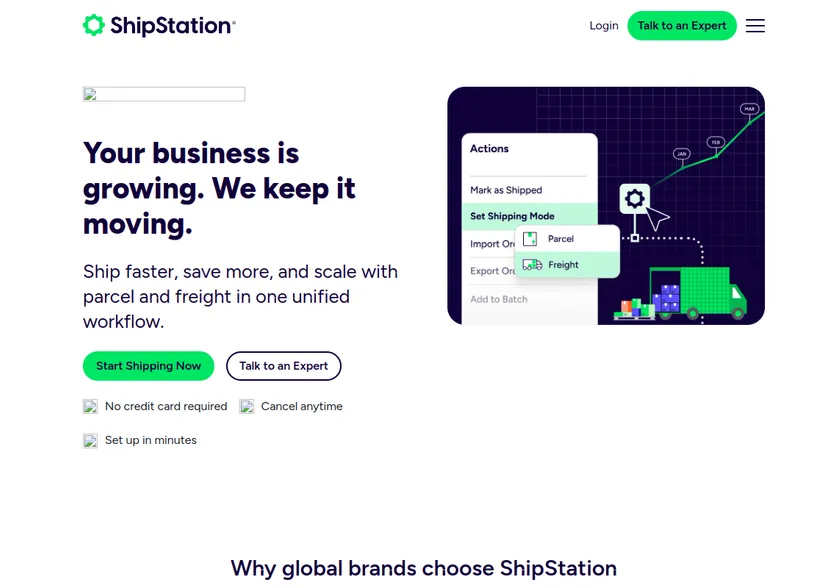
For Ecommerce sellers, this ShipStation plan costs fourteen dollars and ninety-nine cents a month, and it pulls orders from every sales channel into one shipping queue. Bulk labels, discounted carrier rates and branded tracking pages cut the cost of every parcel, while stock counts update as orders ship. It is a shipping tool with inventory awareness rather than a full stock system, so pair it with a proper inventory tool once the warehouse grows.
What we like
- Cheapest entry price on this list
- Bulk labels and discounted carrier rates
- Branded tracking pages on higher plans
Watch out for
- Not a full inventory system on its own
- Shipment limits rise only on higher plans
How to try it
- Connect every sales channel and import open orders automatically
- Print bulk labels at the discounted carrier rate
- Send branded tracking so buyers see where their order is
3. Ordoro
Best for: Ecommerce sellers who want inventory, orders and shipping under one roof
Paid tool Starting price: $499/month · Four hundred and ninety-nine dollars a month on the Pro plan, which is where inventory management, kitting and purchase orders start; Express at fifty-nine dollars a month is shipping only, and Enterprise is nine hundred and ninety-nine dollars a month
Free plan: Free trial
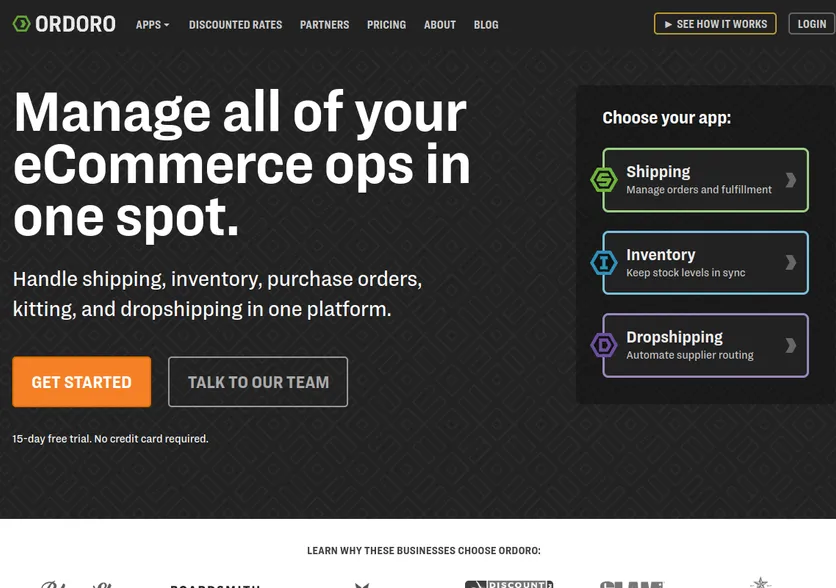
For Ecommerce sellers, this Ordoro plan costs four hundred and ninety-nine dollars a month on the Pro plan, and it covers inventory, order management and shipping in a single subscription. A seller can take an order from any channel, pick it, print the label and update the stock count without leaving the system, and dropshipping rules send some orders straight to the supplier. The price is high for a small store, but it replaces two or three separate subscriptions for a busy one.
What we like
- Inventory, orders and shipping in one subscription
- Dropshipping rules built in
- Unlimited users on the Pro plan
Watch out for
- Pro price is high for a small seller
- Setup takes longer than a shipping-only tool
How to try it
- Import orders from every channel into one queue
- Pick, pack and print labels from the same screen
- Set dropship rules so supplier orders never touch your shelf
4. Linnworks
Best for: Multichannel sellers who need deep automation across marketplaces
Paid tool Starting price: $449/month · Four hundred and forty-nine dollars a month, as listed on Linnworks' own site; Linnworks no longer publishes a standalone pricing page, so confirm the current figure with the vendor before buying, and higher volumes are priced by quote
Free plan: Free demo
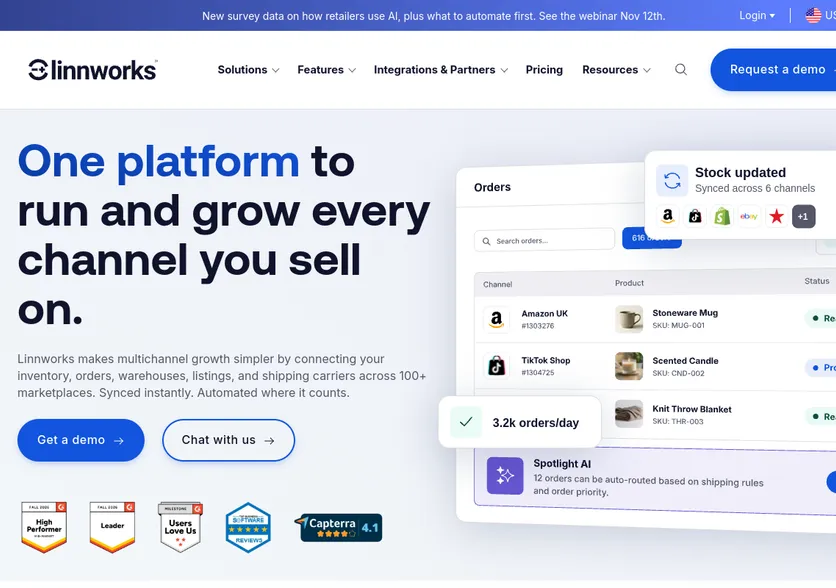
For Ecommerce sellers, this Linnworks plan costs four hundred and forty-nine dollars a month, and it automates stock, orders and listings across dozens of marketplaces from one dashboard. Rules repricing, reorder and routing run without daily hand-holding, which is what a seller with ten channels and thousands of SKUs needs. Linnworks no longer publishes a standalone pricing page, so confirm the current figure with the vendor before buying.
What we like
- Automation across dozens of marketplaces
- Rules handle repricing and reordering
- Built for high-volume multichannel sellers
Watch out for
- No standalone pricing page to check
- Pro price is high for a small seller
How to try it
- Connect every marketplace and sync stock in real time
- Set automation rules for repricing, reordering and routing
- Review the dashboard daily and fix only the flagged exceptions
5. Veeqo
Best for: Small ecommerce sellers who want shipping and stock in one low-cost tool
Paid tool Starting price: $19/month · Nineteen dollars a month, as listed on Veeqo's own site; Veeqo is owned by Amazon and its paid plans cover shipping and multichannel inventory, so confirm the current figure on the vendor site before buying
Free plan: Free demo
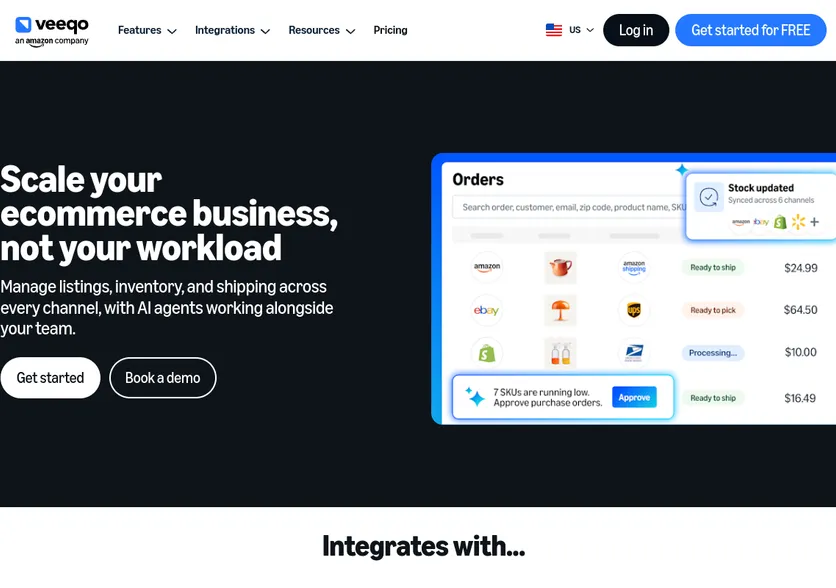
For Ecommerce sellers, this Veeqo plan costs nineteen dollars a month, and it pairs multichannel inventory with discounted shipping labels in one low-cost subscription. Orders from Shopify, Amazon and eBay land in one queue, stock updates everywhere at once, and labels print at the discounted rate. Veeqo is owned by Amazon, so confirm the current figure on the vendor site before buying, and check which channels are covered at this price.
What we like
- Lowest multichannel price on this list
- Shipping labels at discounted rates
- One queue for every sales channel
Watch out for
- Channel coverage varies by plan
- Confirm the current price with the vendor
How to try it
- Connect Shopify, Amazon and eBay to one stock record
- Import orders into one queue and print labels at the discounted rate
- Watch stock fall everywhere the moment an order ships
6. inFlow Inventory
Best for: Ecommerce sellers with a warehouse who need orders, picking and purchasing in one place
Paid tool Starting price: $99/month · Ninety-nine dollars a month billed annually on the Lite plan, or $129 billed monthly; Core is $299, Pro is $499 and Max is $699 a month billed annually, and a $499 onboarding package is required on most plans
Free plan: Free trial
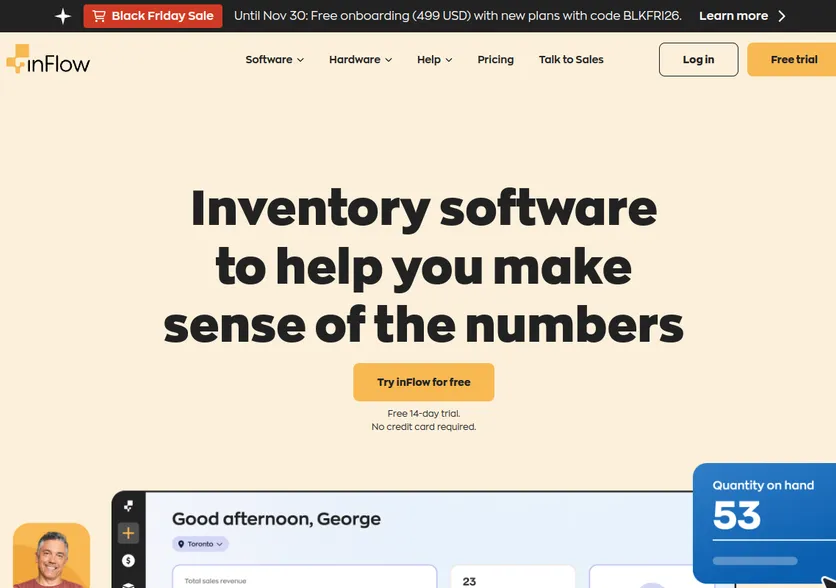
For Ecommerce sellers, this inFlow Inventory plan costs ninety-nine dollars a month billed annually, and it runs stock, sales orders, purchase orders and picking for two team members at a flat price. A seller can take an order from any channel, pick it from the warehouse, and ship it without retyping the order into another tool. The flat price keeps budgeting simple as the team grows to two.
What we like
- Orders, purchasing and fulfilment in one system
- Flat price for two team members
- Multi-location stock on higher plans
Watch out for
- Lot and serial tracking are paid add-ons
- A $499 onboarding package applies on most plans
How to try it
- Take the order and pick it against live stock
- Raise purchase orders when the low-stock report flags a line
- Ship from the same screen and sync the tracking number
7. Cin7 Core
Best for: Ecommerce sellers with several warehouses who must never oversell
Paid tool Starting price: $499/month · Three hundred and forty-nine dollars a month for the Standard plan; Retailing is $475 and Manufacturing is $525 a month, with an annual-billing discount equal to one month free
Free plan: Free demo
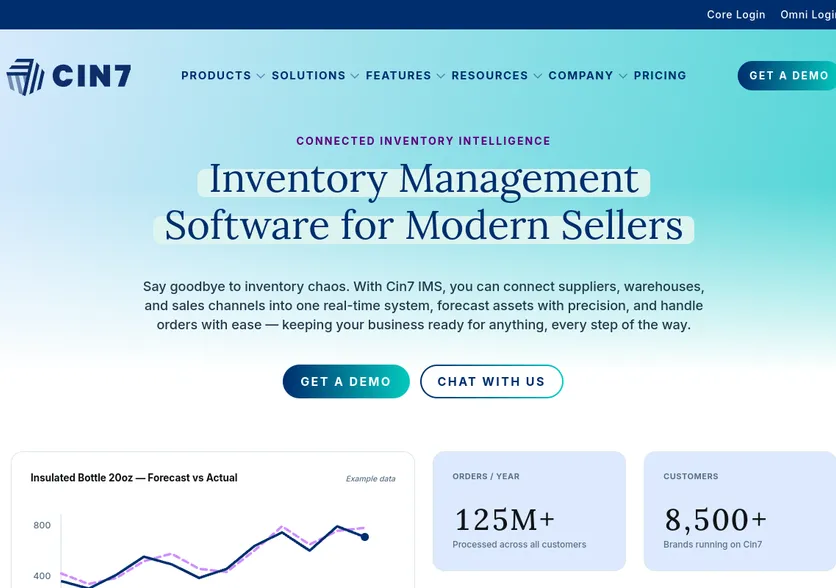
For Ecommerce sellers, this Cin7 Core plan costs three hundred and forty-nine dollars a month, and it keeps one true stock count across a website, marketplaces and every warehouse. An order from any channel updates the count everywhere at once, so a product is never sold twice, and barcode scanning, landed costs and accounting sync come with it. It is built for volume, which is why the entry price sits above the small-seller tools on this list.
What we like
- Real-time stock across channels and warehouses
- Barcode scanning and cost tracking included
- Accounting sync with QuickBooks and Xero
Watch out for
- Pro price is high for a small seller
- Setup takes longer than the simpler tools here
How to try it
- Connect every sales channel to one stock record
- Set reorder points per warehouse and automate purchase orders
- Track landed costs so margins stay honest on every sale
8. Katana
Best for: Ecommerce sellers who make what they sell and need production stock
Paid tool Starting price: $299/month · Two hundred and ninety-nine dollars a month for the Starter plan billed annually; higher plans add more users, locations and advanced manufacturing features
Free plan: Free trial
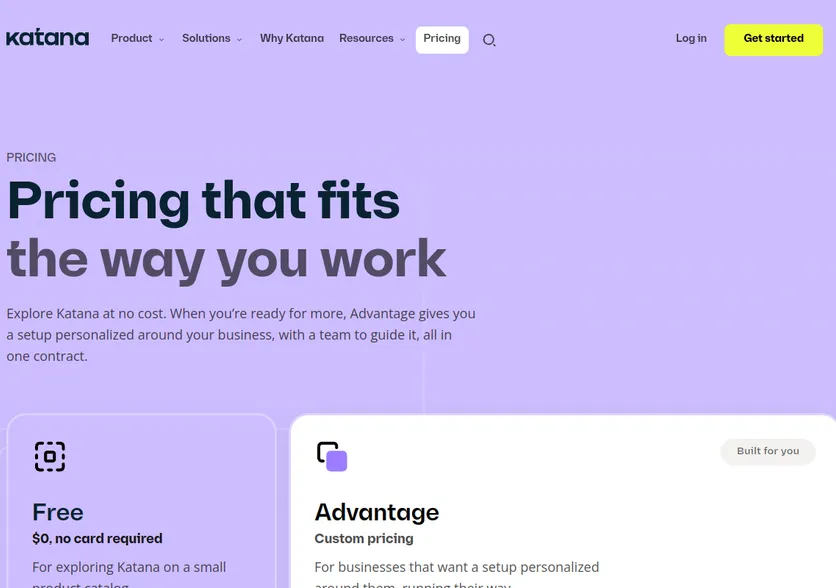
For Ecommerce sellers, this Katana plan costs two hundred and ninety-nine dollars a month billed annually, and it tracks materials through production to finished stock that sells online. A maker can see which materials are committed to open orders, build exactly what is needed, and sell from live finished-stock levels. It suits sellers who manufacture, not resellers who only move boxes, because the production side is where it earns its price.
What we like
- Production and sales share one stock record
- Materials committed to open orders are visible
- Real-time stock across sales channels
Watch out for
- Built for makers, not pure resellers
- Advanced reporting sits on higher plans
How to try it
- Record materials and commit them to open orders
- Build finished products and update stock the moment production ends
- Sell from live finished-stock levels on every channel
Prices above were checked on each vendor’s own website on Nov 28, 2026 and can change — the vendor’s page is the final word. Vendor links are editorial: nobody paid to be listed or ranked here. Vendors who want a featured listing can see how it works on our Get listed page.
How an ecommerce seller should run multichannel stock
Keep one stock count and let every channel read it. Connect the website, the marketplaces and the warehouse to a single record, so an order anywhere updates the count everywhere before the next buyer clicks. Set a reorder point on every line that sells every week and a safety stock level for your best sellers, because a stockout on a marketplace costs the sale and the ranking. Finally, ship from the same queue the orders land in, and print the label the moment the parcel leaves, so tracking and stock never disagree.
Before you buy
- Check that stock updates in real time across every sales channel, not on a nightly sync
- Confirm whether shipping labels and discounted carrier rates are included in the price
- Ask how dropshipping is handled, including who updates the stock count
- Count the onboarding and implementation cost separately from the monthly subscription before you compare
- Run a trial with one real order, from checkout to doorstep, before you commit
Official websites
Official websites of the products reviewed above. Features and prices were checked against these sites when this guide was written, and they can change, so confirm on the vendor site before you buy.
Frequently asked questions
What is inventory software for ecommerce sellers?
It is software that keeps one stock count across every sales channel, takes orders into one queue, and pushes them into picking and shipping without retyping. The tools in this list do that through multichannel sync, bulk shipping labels or full order management. None of them replaces your sales channels, but they stop a product from selling twice and cut the hours spent copying orders between systems.
Which tool is cheapest for an ecommerce seller?
ShipStation is cheapest at fourteen dollars and ninety-nine cents a month for the Starter plan, but it is a shipping tool with inventory awareness, not a full stock system. Zoho Inventory follows with a free plan for fifty orders a month and Standard at twenty-nine dollars a month billed annually. Pick ShipStation for shipping volume and Zoho Inventory when the stock count itself is the problem.
What does Ordoro cost for an ecommerce seller?
Ordoro costs three hundred and forty-nine dollars a month for the entry plan, covering inventory, order management and shipping in one subscription with unlimited users. Higher plans add more users, warehouses and automation. The price is high for a small store, but it replaces two or three separate subscriptions, so compare the combined cost of the tools it replaces.
Do these tools work with Shopify and Amazon?
Yes, all eight tools on this list connect to Shopify and Amazon, and most also cover eBay, Etsy and WooCommerce. Zoho Inventory, Cin7, Linnworks and Ordoro list the widest channel coverage, while ShipStation and Veeqo focus on pulling orders in for shipping. Check the integration list for your exact channels before you pay, because coverage varies by plan on some tools.
Can these tools stop me overselling on marketplaces?
Yes, when the stock sync runs in real time. Zoho Inventory, Cin7, Linnworks and Ordoro update the count on every channel the moment an order lands, so a product cannot sell twice. Tools that sync on a schedule leave a gap where overselling happens, so ask each vendor how fast the sync runs and test it with a real order before you commit.
Compare the eight tools above, then start with a free trial on the tool that covers every channel you already sell on.
Browse Business Tools tools