On this page
A medical clinic runs on devices that patients never see but always depend on: the front-desk workstation that checks them in, the exam room tablet that holds their chart, and the server that keeps the schedule running. When one of them fails mid-morning, the whole appointment book stalls. NinjaOne leads this list because it puts patching, monitoring, backup and remote access in one console for three dollars and seventy-five cents per device per month, and the other seven tools are judged on the same practical test: how quickly a clinic gets back to seeing patients.
How we researched this
We checked every price on the vendor pricing page on November 28, 2026, and only included tools with a published US dollar list price and a free trial or free plan. The big remote monitoring names in this category, including Kaseya VSA, ConnectWise Automate, Datto RMM and N-able N-central, publish no prices, so they are not in this list. Prices change, so confirm the current figure on the vendor site before you buy.
Compare the tools
| Name | Best for | Starting price | Free plan | |
|---|---|---|---|---|
 NinjaOne | Medical clinics that want patching, monitoring, backup and remote access in one console | $3.75/device per month | 14-day free trial | Visit |
 Atera | Medical clinics that want unlimited endpoints for one flat per-technician price | $149/technician per month | 30-day free trial | Visit |
 Syncro | Small clinic groups that want monitoring, ticketing and billing in one system | $129/user per month | 14-day free trial | Visit |
 SuperOps | Clinic groups working with a managed service provider or a small internal IT team | $129/technician per month | Free trial | Visit |
 JumpCloud | Medical clinics that need to control sign-in to every system and device | $9/user per month | 30-day free trial | Visit |
 Microsoft Intune | Medical clinics already running Microsoft 365 that want device management included | $8/user per month | Free trial available | Visit |
 ManageEngine Endpoint Central | Medical clinics that manage a mixed fleet of Windows, Mac and mobile devices | $1.32/device per month | Free for up to 25 endpoints | Visit |
 Hexnode UEM | Medical clinics that manage fleets of tablets, kiosks and staff phones | $2.20/device per month | 14-day free trial | Visit |
The IT management software for medical clinics, compared
1. NinjaOne
Best for: Medical clinics that want patching, monitoring, backup and remote access in one console
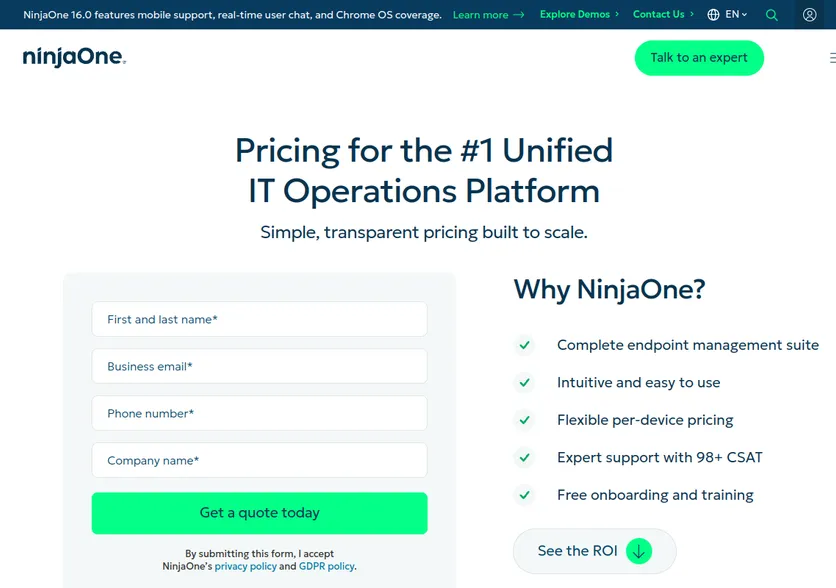
Paid tool Starting price: $3.75/device per month · Three dollars and seventy-five cents per device per month at fifty or fewer endpoints, falling to one dollar and fifty cents at ten thousand endpoints; the exact rate for a mid-size fleet is set by quote, and a fourteen-day free trial is included
Free plan: 14-day free trial
This NinjaOne plan covers every clinic computer, tablet and server from one console, starting at three dollars and seventy-five cents per device per month for small fleets. Patching runs overnight so exam room systems are never down during appointments, and a technician can fix a front-desk computer remotely while patients are still being checked in. Backup is built in, so a failed workstation can be restored from the image taken the night before.
What we like
- Patching, monitoring, backup and remote access share one console
- Overnight patch windows keep exam rooms running during the day
- Scales from one clinic to a whole practice group
Watch out for
- The exact per-device rate for mid-size fleets is quote-only
- A fifty-endpoint minimum applies to new accounts
How to try it
- Enroll every clinic workstation, tablet and server with the NinjaOne agent
- Schedule patching for the hours after the clinic closes
- Set up alerts for offline devices and failed backups
2. Atera
Best for: Medical clinics that want unlimited endpoints for one flat per-technician price
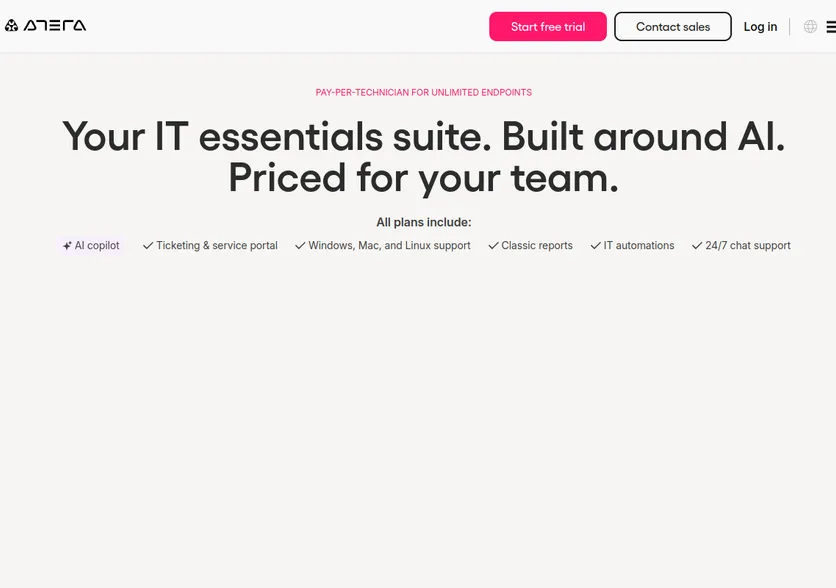
Paid tool Starting price: $149/technician per month · One hundred and forty-nine dollars per technician per month billed annually on the IT Department Professional plan (one hundred and sixty-nine dollars on monthly billing); Expert is one hundred and eighty-nine dollars and Master is two hundred and nineteen dollars, and a thirty-day free trial is included
Free plan: 30-day free trial
A clinic group pays for IT by the technician, not by the device, and Atera charges one hundred and forty-nine dollars per technician per month billed annually for unlimited endpoints. A clinic group with many workstations, tablets and servers pays per technician rather than per device, which keeps the bill steady as new locations open. Patching, monitoring, remote access and a help desk all share one console, and the AI assistant is included on every plan to draft replies and summarize tickets.
What we like
- Unlimited endpoints for a flat per-technician price
- Patching, monitoring, remote access and help desk in one console
- AI assistant included free on all plans
Watch out for
- Per-technician pricing is expensive for a clinic with one part-time IT person
- Backup is a paid add-on rather than part of the base plan
How to try it
- Install the Atera agent on every clinic computer and server
- Build patch policies that run after clinic hours
- Use the help desk to track support requests from every location
3. Syncro
Best for: Small clinic groups that want monitoring, ticketing and billing in one system
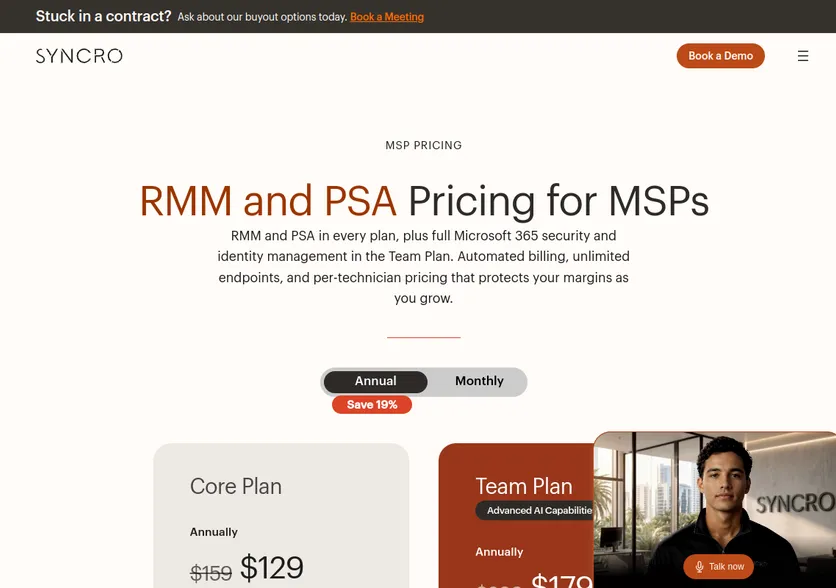
Paid tool Starting price: $129/user per month · One hundred and twenty-nine dollars per user per month billed annually on the Core plan (one hundred and fifty-nine dollars on monthly billing); Team is one hundred and seventy-nine dollars per user per month, and a fourteen-day free trial is included
Free plan: 14-day free trial
One screen for monitoring, tickets and invoicing is what a clinic group needs, and Syncro delivers it for one hundred and twenty-nine dollars per user per month billed annually. A clinic manager can watch every computer, raise a ticket when a workstation goes offline, and bill the fix to the right location from the same screen. Unlimited endpoints are included, so adding a new clinic does not change the per-user price, and the fourteen-day trial is long enough to test it across the whole group.
What we like
- Unlimited endpoints included in the per-user price
- Ticketing, invoicing and remote monitoring in one system
- Simple enough for a clinic without a full IT department
Watch out for
- The per-user price climbs fast if several staff need access
- Reporting is lighter than on the bigger enterprise platforms
How to try it
- Deploy the Syncro agent to every device in each clinic
- Create ticket queues per location so requests stay organized
- Set up automated patching and alerting for offline workstations
4. SuperOps
Best for: Clinic groups working with a managed service provider or a small internal IT team
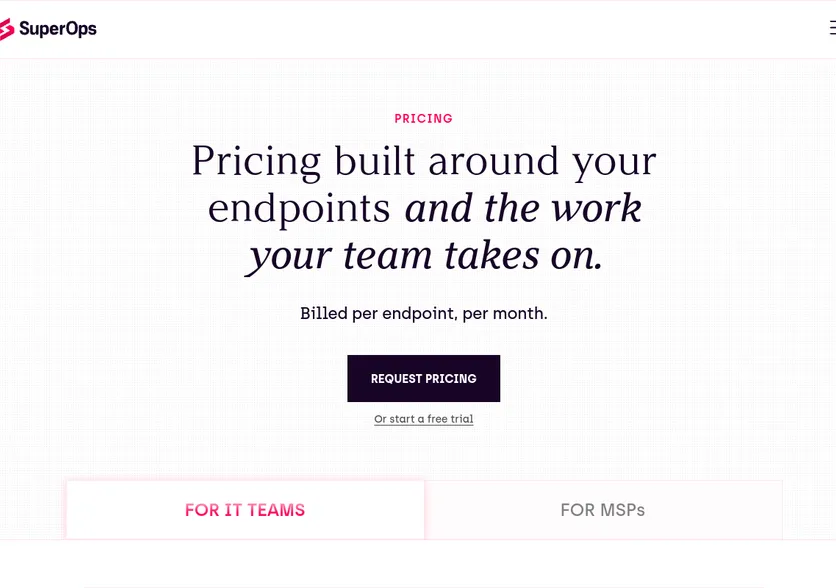
Paid tool Starting price: $129/technician per month · One hundred and twenty-nine dollars per technician per month billed annually on the MSP Pro plan (one hundred and forty-nine dollars on monthly billing); Super is one hundred and fifty-nine dollars per technician per month, and an IT Prime plan for internal teams starts at one dollar and fifty cents per endpoint per month
Free plan: Free trial
Multi-site management is the whole point of SuperOps, which costs one hundred and twenty-nine dollars per technician per month billed annually and is built for teams that manage many sites at once. A clinic group can keep each location separate while the IT lead watches all of them from one dashboard. Remote monitoring, patching, ticketing and documentation sit together, and the automation engine can restart a failed service or install a patch without a technician touching the machine.
What we like
- One dashboard across multiple clinic locations
- Strong automation for routine fixes and patching
- Documentation and ticketing share the same system
Watch out for
- Built for managed providers, so some features assume that model
- The lower plans lack the deeper automation on Super
How to try it
- Set up one site per clinic and enroll every device in it
- Build automation rules for common fixes like restarting services
- Use the built-in documentation to record each clinic network layout
5. JumpCloud
Best for: Medical clinics that need to control sign-in to every system and device
Paid tool Starting price: $9/user per month · Nine dollars per user per month billed annually on the Device Management plan (eleven dollars on monthly billing); single sign-on is eleven dollars and Device Identity Management is thirteen dollars per user per month, and a thirty-day free trial is included
Free plan: 30-day free trial
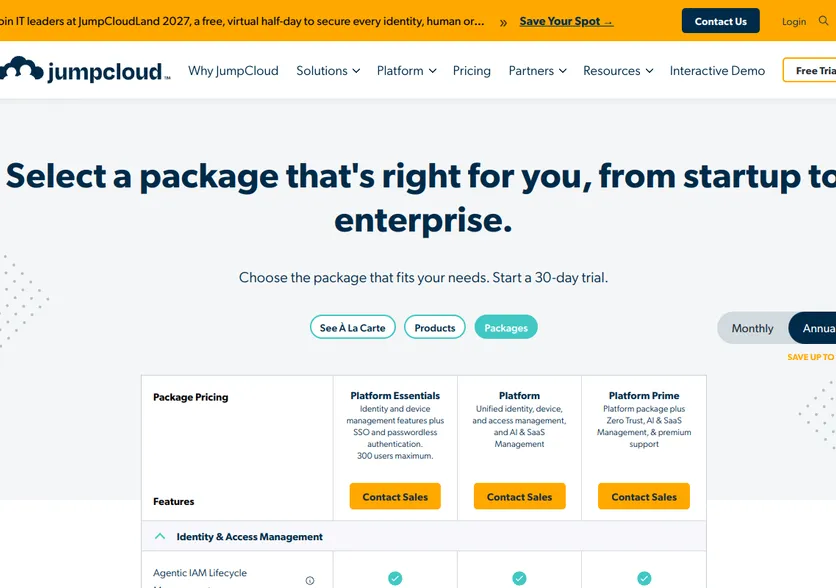
This JumpCloud plan costs nine dollars per user per month billed annually, and it puts identity at the center of clinic IT. One directory controls sign-in to workstations, servers, Wi-Fi and cloud apps, so a departing employee loses access everywhere at once instead of system by system. Device policies can require disk encryption and screen locks on every machine, which matters when laptops and tablets carry patient information out of the exam room.
What we like
- One directory for devices, servers and cloud apps
- Access can be revoked everywhere at once
- Device policies enforce encryption on every machine
Watch out for
- No permanent free plan, only a thirty-day trial
- Full identity features need the higher-priced plans
How to try it
- Connect the clinic directory to workstations, servers and cloud apps
- Set device policies that require encryption and screen locks
- Remove access in one place when a staff member leaves
6. Microsoft Intune
Best for: Medical clinics already running Microsoft 365 that want device management included
Paid tool Starting price: $8/user per month · Eight dollars per user per month for Plan 1 standalone on an annual commitment; Plan 2 is a four-dollar add-on and Intune Suite is a ten-dollar add-on. Intune is included in Microsoft 365 E3, E5 and Business Premium, so clinics on those plans pay no extra cost for it
Free plan: Free trial available
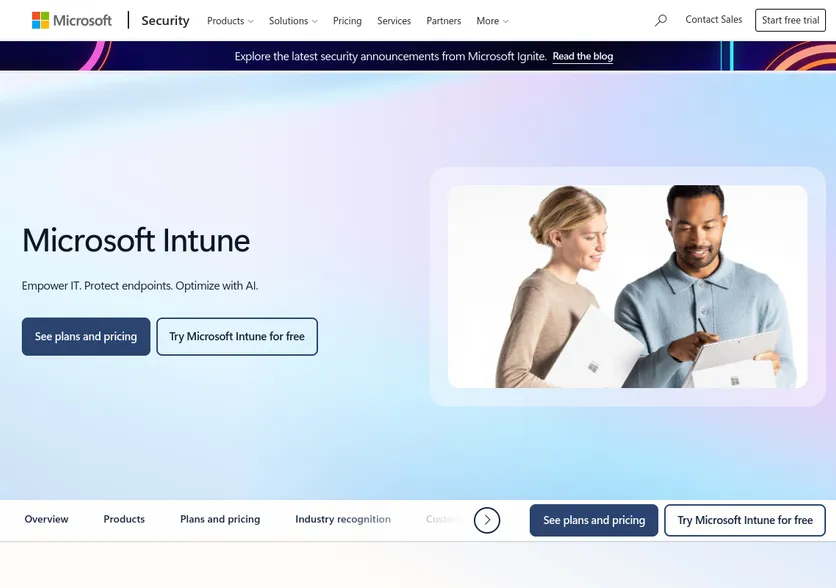
This Microsoft Intune plan costs eight dollars per user per month on an annual commitment, and it manages clinic devices from inside the Microsoft cloud. Windows computers, tablets and phones can be enrolled, patched and wiped from the same console that handles email and identity, so a clinic already paying for Microsoft 365 may need no second vendor at all. Clinics on Microsoft 365 E3, E5 or Business Premium already have Intune included, which makes the extra cost zero.
What we like
- Built into the Microsoft 365 cloud most clinics already use
- Included free with Microsoft 365 E3, E5 and Business Premium
- Remote wipe and compliance policies work across device types
Watch out for
- Standalone pricing only makes sense outside a Microsoft 365 bundle
- The console assumes Microsoft-first shops and can feel deep for small teams
How to try it
- Enroll clinic Windows devices and phones in Intune
- Set compliance policies that require encryption and current patches
- Wipe a lost device remotely from the admin console
7. ManageEngine Endpoint Central
Best for: Medical clinics that manage a mixed fleet of Windows, Mac and mobile devices
Paid tool Starting price: $1.32/device per month · One dollar and thirty-two cents per device per month billed annually on the cloud Professional plan at fifty endpoints (one thousand and forty-five dollars a year); Enterprise is one dollar and fifty-seven cents and UEM is one dollar and eighty-two cents, and a free edition covers up to twenty-five endpoints
Free plan: Free for up to 25 endpoints
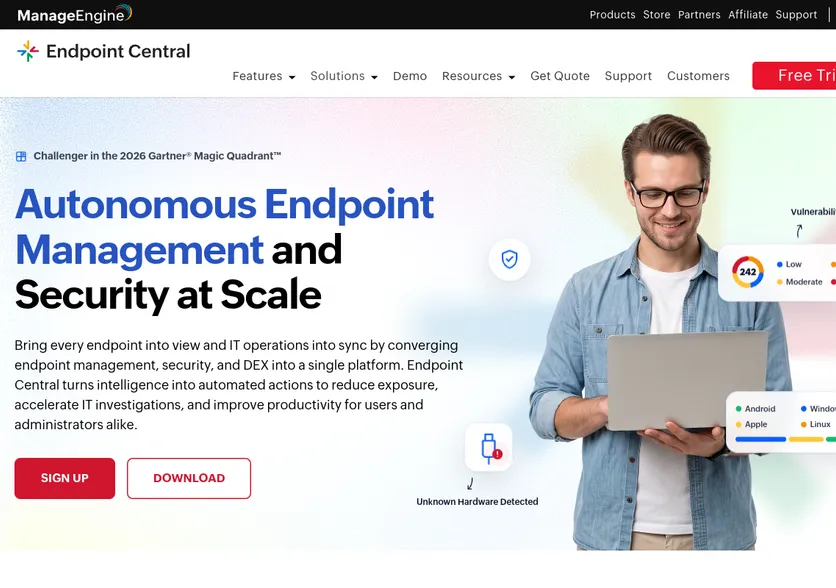
One dollar and thirty-two cents per device per month is what ManageEngine Endpoint Central charges on the cloud Professional plan at fifty endpoints, billed annually. It manages servers, desktops, laptops and mobile devices from one console, with patching, software deployment and security controls in the same place. A clinic can push the same patch to every workstation overnight, block USB drives on laptops that leave the building, and see which devices are missing updates before an audit.
What we like
- One console for servers, desktops, laptops and mobile devices
- Patching and software deployment are included at the entry price
- Free edition covers up to twenty-five endpoints
Watch out for
- The headline rate applies at fifty endpoints and changes with fleet size
- The console takes time to configure across mixed device types
How to try it
- Enroll every clinic device, including phones and tablets, in one console
- Build patch policies that run after clinic hours
- Block removable storage on laptops that carry patient information
8. Hexnode UEM
Best for: Medical clinics that manage fleets of tablets, kiosks and staff phones
Paid tool Starting price: $2.20/device per month · Two dollars and twenty cents per device per month billed annually on the Pro plan (two dollars and forty cents on monthly billing); Enterprise is three dollars and twenty cents and Ultimate is four dollars and seventy cents, with a fifteen-device minimum and a fourteen-day free trial
Free plan: 14-day free trial
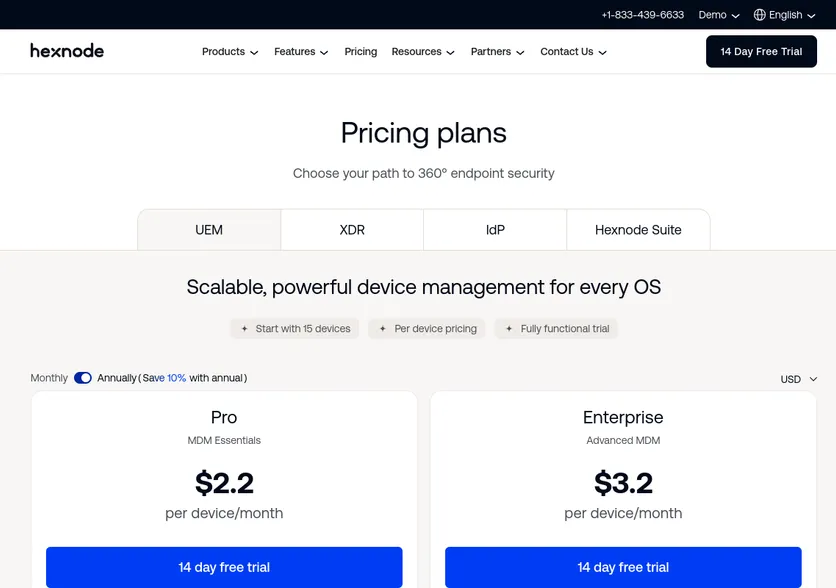
This Hexnode UEM plan costs two dollars and twenty cents per device per month billed annually, and it manages every tablet, kiosk and phone a clinic owns from one dashboard. Check-in tablets can be locked to the apps patients need, exam room tablets can be reset remotely when they freeze, and a lost device can be wiped before patient information is exposed. Policies apply by group, so the check-in fleet and the clinical fleet can run different rules without separate consoles.
What we like
- One dashboard for phones, tablets, kiosks and laptops
- Kiosk mode locks patient-facing devices to a single app
- Lost devices can be locked and wiped remotely
Watch out for
- A fifteen-device minimum applies to cloud plans
- It manages devices, so a separate service desk is still needed for tickets
How to try it
- Enroll check-in tablets, exam room devices and staff phones in Hexnode
- Create device groups per department with their own app and security policies
- Set up kiosk mode on check-in tablets so patients cannot leave the intake app
Prices above were checked on each vendor’s own website on Nov 28, 2026 and can change — the vendor’s page is the final word. Vendor links are editorial: nobody paid to be listed or ranked here. Vendors who want a featured listing can see how it works on our Get listed page.
How a medical clinic should run IT with a small team
Start with the front desk, because that is where a failure costs the most: a dead workstation at check-in means a queue in the waiting room and a delayed schedule for the whole morning. Give staff one way to report problems, whether that is a service portal or a phone number that creates a ticket, and make sure the evening shift can use it too. Next, list every device the clinic owns and where it lives, from exam room tablets to the server closet, because you cannot patch or wipe what you cannot find. Patch overnight and restart devices before the first appointment, not during it. Finally, keep one spare tablet and one spare workstation ready, since a swap takes minutes and a repair takes days.
Before you buy
- Check that lost or stolen clinic devices can be locked and wiped remotely the same day
- Confirm patching can run after clinic hours so exam room systems stay up during appointments
- Ask whether the tool supports the clinic's scheduling and records systems
- Count every workstation, tablet and phone before you compare per-device pricing
- Run a trial in one clinic with a real support incident before you roll it out
Official websites
Official websites of the products reviewed above. Features and prices were checked against these sites when this guide was written, and they can change, so confirm on the vendor site before you buy.
Frequently asked questions
What is IT management software for medical clinics?
It is software that keeps a clinic's computers, tablets, kiosks and phones patched, monitored and secure. The tools in this list cover endpoint management, identity control and device management for the hardware that runs scheduling, check-in and patient records. A clinic needs these, because a failed workstation during a full appointment book or a lost tablet carrying patient information is a real problem, not a minor glitch.
Which tool is best for a small medical clinic?
NinjaOne is the best starting point at three dollars and seventy-five cents per device per month for small fleets, because it combines patching, monitoring, backup and remote access in one console. If the clinic already runs Microsoft 365, Intune may cost nothing extra on an E3, E5 or Business Premium plan. ManageEngine Endpoint Central is free for up to twenty-five endpoints, which suits a single small clinic.
How much does Microsoft Intune cost for clinics?
Microsoft Intune Plan 1 costs eight dollars per user per month standalone on an annual commitment. Plan 2 is a four-dollar add-on and Intune Suite is a ten-dollar add-on. The important detail for clinics is that Intune is included in Microsoft 365 E3, E5 and Business Premium, so a clinic on one of those plans already has it and pays no extra cost.
Can these tools protect patient information?
Yes, in the practical sense. JumpCloud controls who can sign in to every workstation, server and cloud app, and can require disk encryption and screen locks on every machine. Endpoint tools like NinjaOne, Hexnode and Endpoint Central patch devices and can wipe a lost device remotely. No tool replaces the clinic's own policies, but these give the controls that auditors ask about.
Why are the big remote monitoring tools missing from this list?
The big names in remote monitoring, including Kaseya VSA, ConnectWise Automate, Datto RMM and N-able N-central, publish no prices on their websites, so there is no list price to compare. Every tool in this list publishes a US dollar price and offers a free trial or free plan, which is why they made the cut. If a vendor will not publish a price, budget on a quote, not on a roundup.
Compare the eight tools above, then start with a free trial in one clinic and test it on a real support incident before you roll it out across every location.
Browse Business Tools tools