On this page
A small city runs snow plows, garbage trucks, police cars and pool vans from one garage, and a spreadsheet cannot keep up with their inspections, repairs and fuel. The seven tools below track vehicles, schedule maintenance and prove inspections, so the fleet manager knows which truck is ready and which one is in the shop. Fleetio leads the list because it runs maintenance, work orders and inspections from four dollars per vehicle a month, and the other six are ranked on the same practical test: what a small city budget gets for the price.
How we researched this
We checked every price on the vendor pricing page on November 28, 2026, and only included tools with a published US dollar list price. The big telematics platforms that sell by quote, including Samsara, Motive, Geotab, Verizon Connect and Teletrac Navman, publish no prices, so they are not in this list. Prices change, so confirm the current figure on the vendor site before you buy.
Compare the tools
| Name | Best for | Starting price | Free plan | |
|---|---|---|---|---|
 Fleetio | Small cities whose main fleet pain is maintenance cost | $4/vehicle/month | 14-day free trial | Visit |
 Whip Around | Cities that need daily inspections to catch defects early | $5/asset/month | Free demo | Visit |
 Quartix | Small cities that want simple, published-price GPS tracking | $14/vehicle/month | Free trial | Visit |
 ClearPathGPS | Cities that want simple tracking with no long contract | $20/vehicle/month | Free demo | Visit |
 Azuga | Cities that want published telematics prices with driver coaching | $25/vehicle/month | Free demo | Visit |
 Linxup | Cities that want vehicle and tool tracking together | $25/vehicle/month | Free demo | Visit |
 FleetRabbit | Small cities that want the cheapest yearly fleet system | $50/vehicle/year | Free up to 3 assets | Visit |
The municipal fleet management software for small cities, compared
1. Fleetio
Best for: Small cities whose main fleet pain is maintenance cost
Paid tool Starting price: $4/vehicle/month · Four dollars per vehicle a month billed annually on the Essential plan, or five dollars month to month; Professional is seven dollars and Premium is ten dollars, both billed annually only
Free plan: 14-day free trial
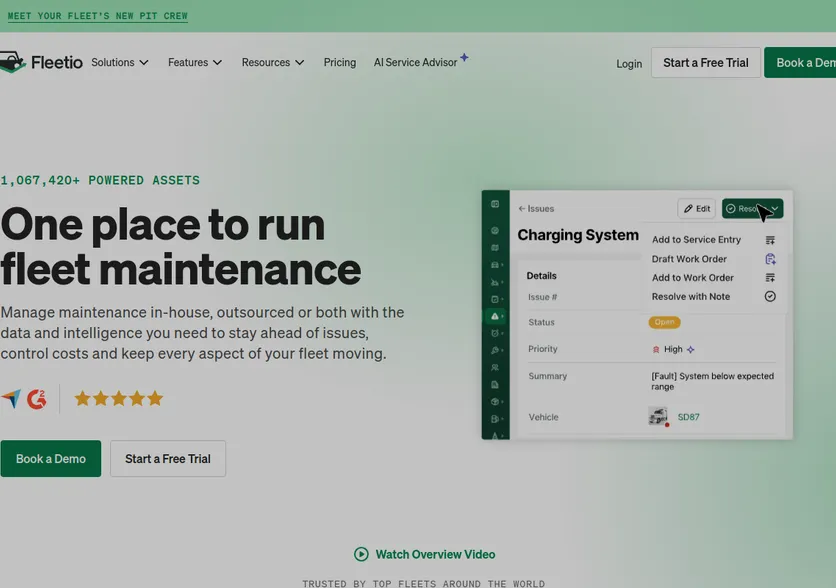
The cheapest start for a city fleet, Fleetio costs four dollars per vehicle a month on its Essential plan billed annually, and it attacks the cost that hurts most: maintenance. Preventive schedules, work orders, parts inventory, inspections and service history live in one system, and it pulls location and odometer data from telematics providers through integrations. There is no GPS tracking of its own, so a city that needs live maps pairs it with a tracker.
What we like
- Cheapest published fleet price in this list
- Preventive maintenance, work orders and inspections in one system
- Pulls location data from telematics through integrations
Watch out for
- No GPS tracking of its own
- Professional and Premium are annual billing only
How to try it
- Start the fourteen-day trial with the real vehicle list
- Set preventive schedules for the oldest vehicles
- Open the first work orders from inspection findings
2. Whip Around
Best for: Cities that need daily inspections to catch defects early
Paid tool Starting price: $5/asset/month · Five dollars per asset a month on the Standard plan; Pro is ten dollars per asset a month and adds deeper inspections, maintenance workflows and integrations
Free plan: Free demo
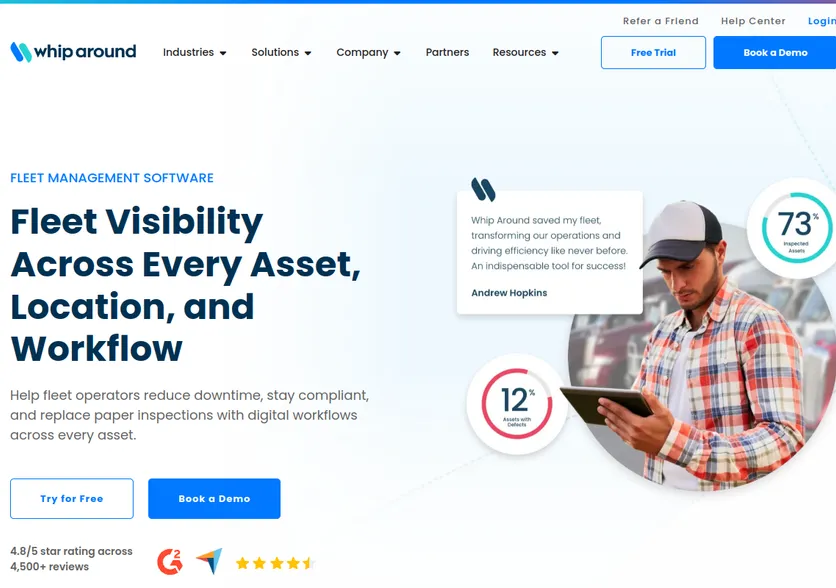
Built around the daily inspection, Whip Around costs five dollars per asset a month on its Standard plan, and it turns a driver walk-around into a digital record. Drivers complete inspections on a phone, defects raise work orders automatically, and managers see the whole fleet's condition before the day starts. That inspection-first workflow suits a city fleet where a missed defect becomes a breakdown on a school route or a snow plow run.
What we like
- Driver inspections on a phone with photos
- Defects raise work orders automatically
- Cheap entry price per asset
Watch out for
- No GPS tracking on the entry plan
- Deeper maintenance workflows need the Pro plan
How to try it
- Book a demo and list the inspection forms needed
- Give drivers the app and run the first inspections
- Check the defect queue after the first week
3. Quartix
Best for: Small cities that want simple, published-price GPS tracking
Paid tool Starting price: $14/vehicle/month · Fourteen dollars per vehicle a month on the Info Point plan; Info Plus is fifteen dollars and adds geofencing, detailed trip reports and driver behaviour monitoring; hardware costs seventy to two hundred and forty dollars per unit by volume
Free plan: Free trial
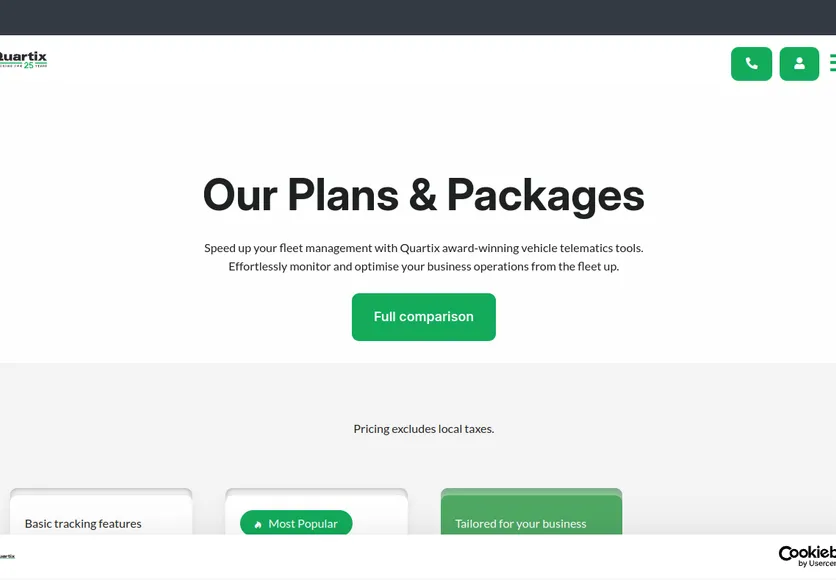
The simplest tracking pick for a small city, Quartix costs fourteen dollars per vehicle a month on Info Point, and it publishes its prices where most telematics vendors hide them. It covers live GPS tracking, trip history and three years of reporting history, with geofencing and driver behaviour on Info Plus at fifteen dollars. Hardware is a separate one-off cost, so a city should budget the unit price alongside the monthly fee.
What we like
- Published prices, a rarity in telematics
- Three years of reporting history included
- Hardware included on many plans
Watch out for
- No dash cams, ELD or route planning in these plans
- Hardware costs seventy to two hundred and forty dollars per unit
How to try it
- Start the free trial on a handful of vehicles
- Set geofences around the depot and the city boundary
- Review the trip history after the first month
4. ClearPathGPS
Best for: Cities that want simple tracking with no long contract
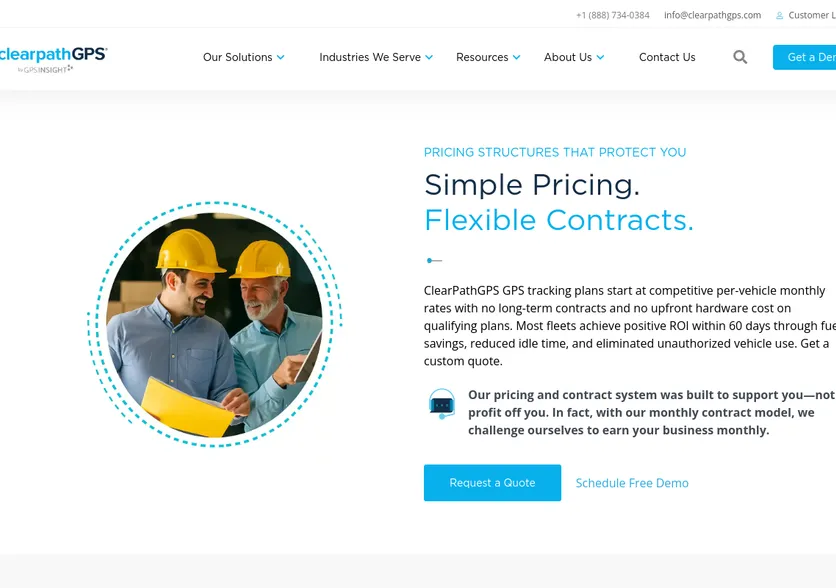
Paid tool Starting price: $20/vehicle/month · Twenty dollars per vehicle a month on the Standard plan, per the settled figure; the vendor redesigned its pricing page on November 20, 2026 and no longer shows dollar figures, so confirm the current price with sales before budgeting
Free plan: Free demo
For a city that wants simple tracking with US-based support, ClearPathGPS costs twenty dollars per vehicle a month on its Standard plan, and it keeps the contract short. There is no long-term lock-in, no upfront cost on qualifying plans, and dash cams are available without a forced bundle. The vendor's pricing page was redesigned in November 2026 and no longer shows figures, so the twenty-dollar figure is the last published price and should be confirmed.
What we like
- No long-term contract on the Standard plan
- US-based support with a simple tracker
- Dash cams available without a forced bundle
Watch out for
- The vendor page no longer shows prices
- No free plan, only a demo
How to try it
- Book a demo and ask for the current per-vehicle price
- Check the contract length and exit terms
- Trial the tracker on the oldest vehicles first
5. Azuga
Best for: Cities that want published telematics prices with driver coaching
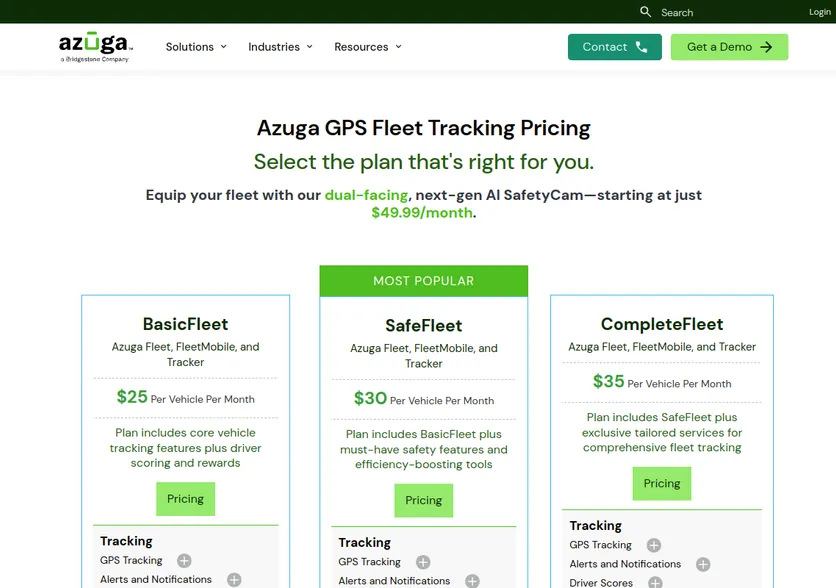
Paid tool Starting price: $25/vehicle/month · Twenty-five dollars per vehicle a month on the BasicFleet plan; SafeFleet is thirty dollars and CompleteFleet is thirty-five dollars; a thirty-six-month term applies, and the SafetyCam AI add-on is forty-one dollars and ninety-nine cents a month
Free plan: Free demo
One of the few telematics vendors that publishes prices, Azuga costs twenty-five dollars per vehicle a month on BasicFleet, and it covers GPS tracking, alerts, driver scores, geofencing and vehicle diagnostics. SafeFleet adds fuel saving tools and CompleteFleet adds more, while the SafetyCam AI add-on costs extra. The thirty-six-month term is the catch for a city budget: the monthly price is low, but the commitment is long.
What we like
- Published prices across three tiers
- Driver scores and gamification built in
- Fuel saving tools on higher tiers
Watch out for
- Thirty-six-month term on the plans
- SafetyCam AI costs extra per month
How to try it
- Book a demo and count the vehicles to be tracked
- Compare BasicFleet against SafeFleet for fuel tools
- Check the thirty-six-month term against the budget cycle
6. Linxup
Best for: Cities that want vehicle and tool tracking together
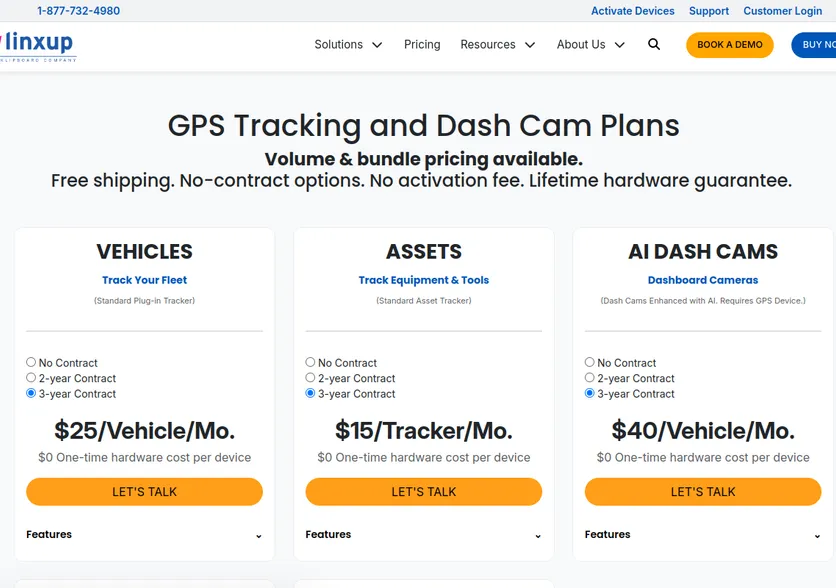
Paid tool Starting price: $25/vehicle/month · Twenty-five dollars per vehicle a month for GPS tracking, with the plug-in tracker hardware at sixty-nine dollars month to month or free on a three-year contract; the ELD add-on is thirty dollars a month
Free plan: Free demo
For a city that wants vehicle and tool tracking from one vendor, Linxup costs twenty-five dollars per vehicle a month for GPS tracking, and it adds tool and equipment tracking alongside the vehicles. The plug-in tracker hardware is sixty-nine dollars month to month, or free on a three-year contract, which suits a city that can commit. An ELD add-on at thirty dollars a month covers the trucks that need hours-of-service logs.
What we like
- Vehicle and tool tracking from one vendor
- Modular pricing with a free hardware option on contract
- ELD add-on for trucks that need it
Watch out for
- Hardware is sixty-nine dollars a month without a contract
- No free plan, only a demo
How to try it
- Book a demo and list vehicles and tools to track
- Choose the hardware deal that fits the budget cycle
- Add the ELD add-on only for the trucks that need it
7. FleetRabbit
Best for: Small cities that want the cheapest yearly fleet system
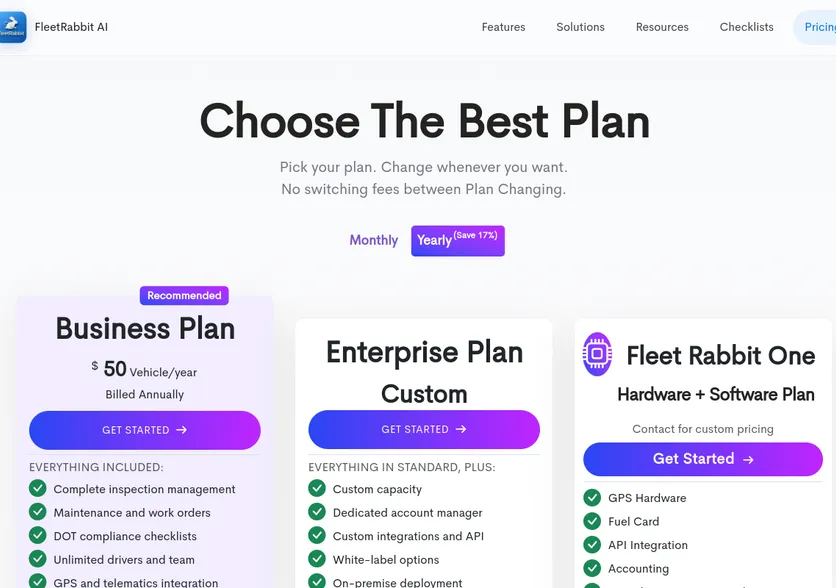
Paid tool Starting price: $50/vehicle/year · Fifty dollars per vehicle a year on the Business plan, with the first three assets free; the vendor's own blog also lists a three-dollar-a-month figure, which conflicts with the settled fifty-dollar-a-year Business price and is not used as the headline
Free plan: Free up to 3 assets
The budget pick for a city that counts every dollar, FleetRabbit costs fifty dollars per vehicle a year on its Business plan, and the first three assets are free. It covers maintenance, inspections and AI-assisted scheduling in one system, with no contract and no hardware required. That yearly price makes it the cheapest way for a small city to move from spreadsheets to a real fleet system.
What we like
- First three assets free
- Yearly price, no monthly billing to track
- No contract and no hardware required
Watch out for
- A conflicting three-dollar-a-month figure appears on the vendor blog
- Smaller feature set than the bigger telematics platforms
How to try it
- Sign up the first three assets free
- Import the vehicle list and set inspection schedules
- Add paid assets as the fleet grows
Prices above were checked on each vendor’s own website on Nov 28, 2026 and can change — the vendor’s page is the final word. Vendor links are editorial: nobody paid to be listed or ranked here. Vendors who want a featured listing can see how it works on our Get listed page.
How a small city picks fleet software on a public budget
Start with the job, not the map. A city fleet's biggest cost is usually maintenance and downtime, not knowing where a truck is, so a maintenance-first tool like Fleetio often beats a tracking-first platform that costs five times as much. Next, check the contract: a thirty-six-month term can outlive a budget cycle and a council vote, while month-to-month tools let the city leave. Then count the real fleet, because per-vehicle prices multiply fast across plows, trucks and vans, and a free tier for three assets can cover the smallest department outright. Finally, trial the inspections on real drivers before signing.
Before you buy
- Price the tool at the real vehicle count, not the entry tier
- Check the contract length against the city's budget cycle
- Decide whether maintenance or live tracking is the bigger pain
- Trial driver inspections on real routes before signing
- Confirm hardware costs, since some trackers are not included in the monthly price
Official websites
Official websites of the products reviewed above. Features and prices were checked against these sites when this guide was written, and they can change, so confirm on the vendor site before you buy.
Frequently asked questions
What is municipal fleet management software for small cities?
It is software that tracks a city's vehicles, schedules their maintenance, records driver inspections and logs fuel and repairs in one place. The tools in this list cover snow plows, garbage trucks, police cars and pool vans together, so the fleet manager can see which vehicle is ready, which is in the shop and which inspection is overdue. A spreadsheet cannot do that once the fleet passes a dozen vehicles.
How much does Fleetio cost for a small city fleet?
Fleetio Essential costs four dollars per vehicle a month billed annually, or five dollars month to month. Professional costs seven dollars and Premium costs ten dollars per vehicle a month, both billed annually only. A ten-vehicle city fleet pays forty dollars a month on Essential, with a fourteen-day free trial and no credit card required.
Which tool is cheapest for a small city fleet?
FleetRabbit is the cheapest yearly price at fifty dollars per vehicle a year on the Business plan, with the first three assets free. Fleetio follows at four dollars per vehicle a month billed annually, and Whip Around at five dollars per asset a month. The cheapest tool still depends on the job: Fleetio leads on maintenance, while Quartix leads on GPS tracking at fourteen dollars a vehicle a month.
Do these tools include GPS tracking?
Quartix, ClearPathGPS, Azuga and Linxup include GPS tracking, from fourteen to twenty-five dollars per vehicle a month. Fleetio and Whip Around do not track vehicles themselves: Fleetio pulls location data from telematics through integrations, and Whip Around focuses on inspections. A city that needs live maps should shortlist the tracking tools, not the maintenance ones.
Can a city avoid a long contract?
Yes, with Fleetio, ClearPathGPS and FleetRabbit, which offer month-to-month or no-contract terms. Azuga applies a thirty-six-month term, and Linxup gives free hardware only on a three-year contract. A city should match the contract to its budget cycle, because a term that outlives a council vote can become a problem when the fleet changes.
Compare the seven tools above, then start with a free trial on the tool that matches whether your fleet needs maintenance or tracking most before you pay for a full year.
Browse Business Tools tools