On this page
Restaurants hire fast, lose people fast and still need every new server, cook and bartender trained before the Friday rush. The eight tools below handle that cycle, from the first offer letter to the first solo shift, without a paper packet that gets lost in the office. 7shifts leads the list because it pairs restaurant scheduling with onboarding for about forty dollars a location a month, and the other seven tools are judged on the same test: how quickly a new hire becomes a useful shift member.
How we researched this
We checked every price on the vendor pricing page on November 28, 2026, and only included tools with a published US dollar list price. Trainual and Workstream publish no prices, so they are not in this list, and Freshteam was left out after reports that Freshworks began sunsetting it in early 2026. Prices change, so confirm the current figure on the vendor site before you buy.
Compare the tools
| Name | Best for | Starting price | Free plan | |
|---|---|---|---|---|
 7shifts | Restaurants that want scheduling and onboarding in one tool | $39.99/location/month | Free plan | Visit |
 Homebase | Single-location restaurants that want hiring, payroll and scheduling together | $24/location/month | Free plan | Visit |
 Harri | Hospitality groups that hire frontline staff constantly | $70/month | Free demo | Visit |
 Gusto | Restaurants that want onboarding tied directly to payroll | $49/month + $6/person | Free demo | Visit |
 When I Work | Restaurants that need cheap scheduling with light onboarding | $2.50/user/month | 14-day free trial | Visit |
 Deputy | Restaurants that want scheduling, timesheets and HR basics together | $5/user/month | Free trial | Visit |
 Sling | Small restaurants that want the cheapest scheduling and onboarding | $1.70/user/month | Free plan | Visit |
 BambooHR | Restaurant groups that need proper HR records and onboarding | $10/employee/month | Free demo | Visit |
The onboarding software for restaurants, compared
1. 7shifts
Best for: Restaurants that want scheduling and onboarding in one tool
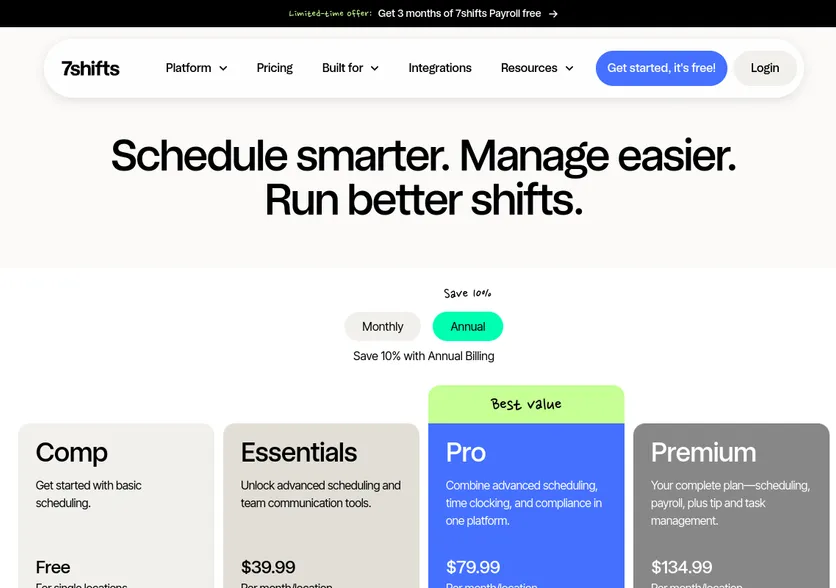
Paid tool Starting price: $39.99/location/month · Thirty-nine dollars and ninety-nine cents per location per month on the Essentials plan billed annually, or forty-four dollars and ninety-nine cents month to month; Pro is seventy-nine dollars and ninety-nine cents and Premium is one hundred and thirty-four dollars and ninety-nine cents; the free Comp plan covers one location and up to fifteen employees
Free plan: Free plan
This 7shifts plan costs thirty-nine dollars and ninety-nine cents per location a month on annual billing, and it is built for restaurants from the ground up. It combines scheduling, time tracking, team messaging and onboarding in one place, so a new hire gets their paperwork, training and first shifts without a separate HR system. That restaurant-first design is why it fits a busy dining room better than a generic HR tool.
What we like
- Built for restaurant workflows, not adapted from office HR
- Scheduling, messaging and onboarding share one roster
- Free Comp plan for a single small location
Watch out for
- Onboarding depth is lighter than a full HR suite
- Per-location pricing adds up across many sites
How to try it
- Create your location, add roles and invite the new hire
- Send onboarding documents and training before day one
- Publish the first schedule and track the hire's shifts
2. Homebase
Best for: Single-location restaurants that want hiring, payroll and scheduling together
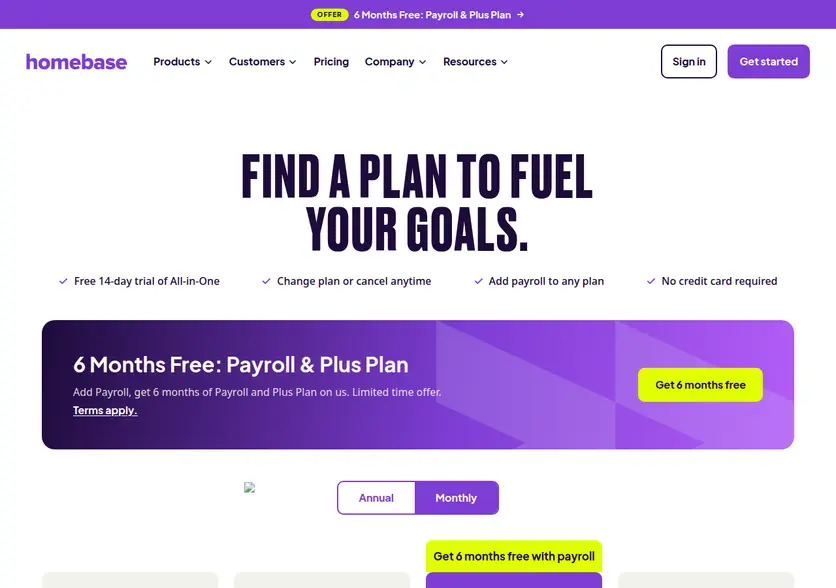
Paid tool Starting price: $24/location/month · Twenty-four dollars per location per month on the Essentials plan billed annually, or thirty dollars month to month; Plus is fifty-six dollars and All-in-One is ninety-six dollars a month billed annually; the free plan covers scheduling and time tracking for one location
Free plan: Free plan
This Homebase plan costs twenty-four dollars per location a month on annual billing, and it covers the whole hourly-team workflow. A restaurant can post the job, collect the new hire's documents, run payroll and publish the schedule from the same account. The free plan makes it the cheapest serious starting point for a single-location restaurant.
What we like
- Free plan covers scheduling and time tracking
- Hiring, onboarding, payroll and scheduling in one account
- Simple enough for a manager with no HR background
Watch out for
- Onboarding features sit behind the paid plans
- Reporting is basic compared with dedicated HR suites
How to try it
- Post the job and collect applications in Homebase
- Send the offer and onboarding packet digitally
- Add the hire to payroll and publish their first shifts
3. Harri
Best for: Hospitality groups that hire frontline staff constantly
Paid tool Starting price: $70/month · Seventy dollars per month for the Silver job-posting plan, which buys one job post; Gold is one hundred and sixty-eight dollars a month for three posts and Platinum is two hundred and forty dollars for five; the full Employee Experience platform, including onboarding, is quoted by sales and is not part of the seventy-dollar plan
Free plan: Free demo
This Harri plan costs seventy dollars a month for one job post, and it is the published entry point of a hospitality hiring platform. Harri is built for restaurants, hotels and bars, with hiring, onboarding, scheduling and employee experience tools designed around high-turnover frontline teams. A restaurant that hires constantly will value the hospitality focus, but the full onboarding suite itself is quoted rather than priced on the page.
What we like
- Purpose-built for hospitality and high-turnover hiring
- Hiring, onboarding and scheduling in one hospitality suite
- Team communication tools for frontline staff
Watch out for
- The seventy-dollar plan buys a job post, not the onboarding suite
- Full platform pricing is quoted, so costs are not public
How to try it
- Post the open role to Harri's hospitality job board
- Screen applicants and send offers from the same dashboard
- Move the hire into onboarding and their first schedule
4. Gusto
Best for: Restaurants that want onboarding tied directly to payroll
Paid tool Starting price: $49/month + $6/person · Forty-nine dollars per month plus six dollars per person on the Simple plan; Plus is eighty dollars plus twelve dollars per person and Premium is one hundred and eighty dollars plus twenty-two dollars per person; the Contractor Only plan closed to new signups on October 1, 2026
Free plan: Free demo
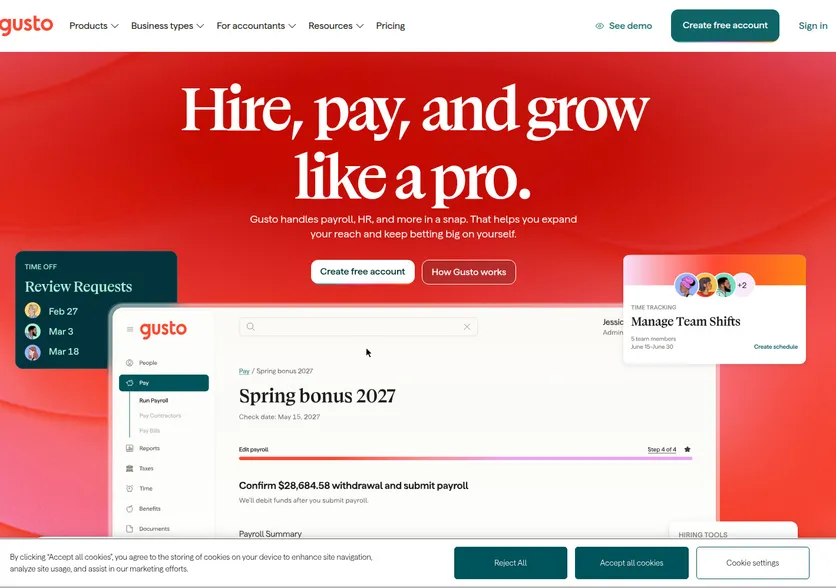
This Gusto plan costs forty-nine dollars a month plus six dollars per person, and it turns onboarding into a payroll task. A new hire fills in their own tax forms, direct deposit and benefits choices, and the information flows straight into payroll without retyping. It is the simplest route for a restaurant that wants compliant hiring without a separate HR hire.
What we like
- Self-service onboarding that feeds straight into payroll
- Tax forms, direct deposit and benefits in one flow
- Clear per-person pricing with no hidden modules
Watch out for
- No built-in scheduling, so a rota tool is still needed
- The per-person fee grows with headcount
How to try it
- Add the new hire and send the onboarding checklist
- Let the hire complete tax forms and direct deposit online
- Run the first payroll with the hire already set up
5. When I Work
Best for: Restaurants that need cheap scheduling with light onboarding
Paid tool Starting price: $2.50/user/month · Two dollars and fifty cents per user per month on the Essentials plan; Pro is five dollars and Premium is eight dollars per user per month; time tracking is one dollar and fifty cents extra on Essentials and two dollars on Pro and Premium, although one November 2026 read says it is now included in every plan; no free plan, fourteen-day trial; the billing period of the listed prices is not stated on the vendor page
Free plan: 14-day free trial
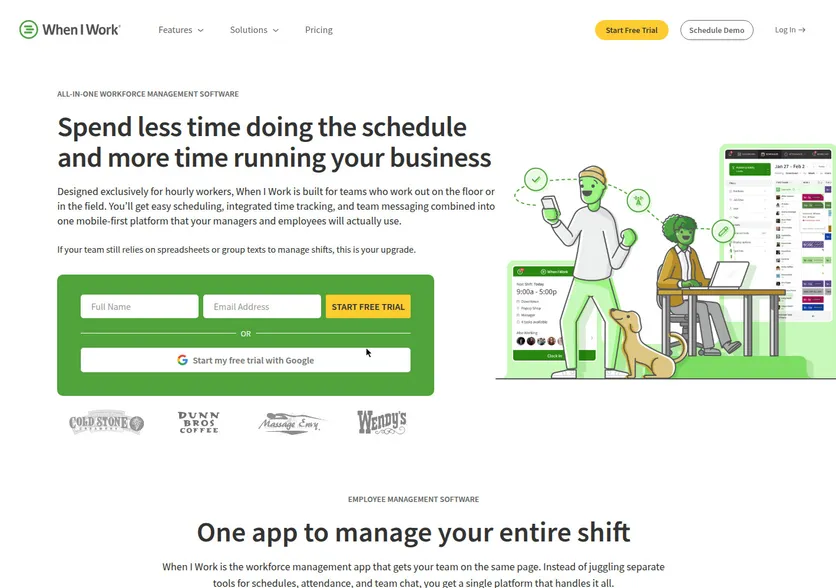
This When I Work plan costs two dollars and fifty cents per user a month, and it is the cheapest way to get a new hire onto the rota. Managers build schedules by drag and drop, staff swap shifts from their phones, and onboarding basics like team messaging and availability sit in the same app. It suits a restaurant that needs scheduling first and light onboarding second.
What we like
- Very low per-user price for a scheduling tool
- Shift swaps and messaging from staff phones
- Fast setup with no training needed
Watch out for
- Onboarding is basic compared with HR suites
- No free plan, only a fourteen-day trial
How to try it
- Create the team and set each role and pay rate
- Invite the new hire to set availability in the app
- Publish the schedule and let staff swap shifts
6. Deputy
Best for: Restaurants that want scheduling, timesheets and HR basics together
Paid tool Starting price: $5/user/month · Five dollars per user per month on the Lite plan billed annually, or five dollars and fifty cents month to month; Core is six dollars and fifty cents and Pro is nine dollars per user per month billed annually; a thirty-dollar monthly minimum applies per invoice on monthly plans; the HR add-on is two dollars per user per month
Free plan: Free trial
This Deputy plan costs five dollars per user a month on annual billing, and it pairs scheduling with the HR basics a restaurant needs. New hires complete their details and documents in the app, managers approve timesheets against the roster, and labor costs stay visible as the schedule is built. It is a solid middle ground between a rota app and a full HR platform.
What we like
- Scheduling, timesheets and onboarding in one app
- Labor cost tracking built into the roster
- Strong mobile apps for managers and staff
Watch out for
- The HR add-on costs extra on top of the base plan
- A monthly minimum applies on monthly billing
How to try it
- Add the new hire and send the onboarding forms
- Build the roster and set labor cost budgets
- Approve timesheets and export hours to payroll
7. Sling
Best for: Small restaurants that want the cheapest scheduling and onboarding
Paid tool Starting price: $1.70/user/month · One dollar and seventy cents per user per month on the Premium plan billed annually, or two dollars month to month; Business is three dollars and forty cents billed annually or four dollars month to month; free for up to thirty users with a fifteen-day trial on paid plans
Free plan: Free plan
This Sling plan costs one dollar and seventy cents per user a month on annual billing, and it is the lowest-priced paid option in this list. It covers scheduling, time clock, task lists and team chat, which is enough to get a new hire trained, scheduled and communicating from day one. A small restaurant can even run it free for up to thirty users before paying anything.
What we like
- Free for teams up to thirty users
- Scheduling, time clock and chat in one app
- Very low paid price per user
Watch out for
- No payroll or compliance depth
- Onboarding is task lists, not a full HR flow
How to try it
- Create the schedule template for each role
- Invite the new hire and assign onboarding tasks
- Publish shifts and track hours in the same app
8. BambooHR
Best for: Restaurant groups that need proper HR records and onboarding
Paid tool Starting price: $10/employee/month · Ten dollars per employee per month on the Core plan, or two hundred and fifty dollars a month flat for up to twenty-five employees; Pro is seventeen dollars and Elite is twenty-five dollars per employee per month; add-ons for payroll, benefits, time tracking and global employment are quoted separately
Free plan: Free demo
This BambooHR plan costs ten dollars per employee a month, and it brings real HR structure to a restaurant group. Onboarding checklists, e-signatures, employee records and time-off tracking live in one system, so a multi-location operator stops chasing paper files. It is the pick for a restaurant business that has outgrown spreadsheets and rota apps.
What we like
- Structured onboarding checklists with e-signatures
- Employee records and time-off tracking in one place
- Clear flat pricing for small teams up to twenty-five staff
Watch out for
- No built-in scheduling for shifts
- Payroll and benefits are separate quoted add-ons
How to try it
- Set up onboarding checklists and document templates
- Send the new hire a self-service onboarding link
- Track completion and store signed documents centrally
Prices above were checked on each vendor’s own website on Nov 28, 2026 and can change — the vendor’s page is the final word. Vendor links are editorial: nobody paid to be listed or ranked here. Vendors who want a featured listing can see how it works on our Get listed page.
The onboarding software for restaurants, compared
Start onboarding before the first shift, not on it. Send the paperwork, the menu test and the uniform policy the day the offer is accepted, so the first day is about the floor, not forms. Pair every new hire with one experienced team member for the first two weeks and give that buddy a short checklist, because most early quits happen when a new starter feels ignored. Keep the schedule stable for the first month, and review the hire at day seven and day thirty with the same three questions: what is unclear, what is slow, and what would help.
Before you buy
- Confirm the tool handles the documents your state requires, including tax forms and work eligibility
- Check whether onboarding checklists, e-signatures and training are included or sold as add-ons
- Ask how scheduling, payroll and onboarding share data, so no hire is typed in twice
- Make sure new hires can complete everything from a phone before their first shift
- Test the offboarding flow too, because high-turnover teams remove people as often as they add them
Official websites
Official websites of the products reviewed above. Features and prices were checked against these sites when this guide was written, and they can change, so confirm on the vendor site before you buy.
Frequently asked questions
What is onboarding software for restaurants?
It is software that takes a new restaurant hire from the accepted offer to a productive shift, covering paperwork, training, scheduling and payroll setup in one flow. The tools in this list differ in emphasis: some are scheduling apps with onboarding basics, while others are HR systems with checklists and e-signatures. A good fit depends on whether the restaurant needs rotas first or HR records first.
How much does 7shifts cost for a restaurant?
7shifts costs thirty-nine dollars and ninety-nine cents per location per month on the Essentials plan billed annually, or forty-four dollars and ninety-nine cents month to month. Pro is seventy-nine dollars and ninety-nine cents and Premium is one hundred and thirty-four dollars and ninety-nine cents per location per month. A free Comp plan covers one location with up to fifteen employees.
Can a restaurant onboard new hires for free?
Yes, with the free plans from Homebase, 7shifts and Sling. Homebase offers a free plan for one location, 7shifts has a free Comp plan for one location and up to fifteen employees, and Sling is free for up to thirty users. Free plans cover scheduling and basic onboarding, while paid plans add payroll, advanced onboarding and reporting.
Which tool is best for a restaurant that hires every week?
Harri is built for exactly that problem, with hospitality hiring and onboarding designed around high turnover. Homebase is the practical budget pick, because hiring, onboarding, payroll and scheduling sit in one account from twenty-four dollars a location a month. 7shifts is the best all-rounder when scheduling matters as much as hiring.
Do these tools handle payroll as well as onboarding?
Some do and some do not. Gusto and Homebase run payroll from the same account as onboarding, so a new hire's tax forms flow straight into pay runs. 7shifts, When I Work, Deputy and Sling focus on scheduling and integrate with payroll providers instead. Check whether the tool pays staff itself or hands the hours to another system.
Compare the eight tools above, then start with a free plan or trial on the tool that matches how your restaurant hires before you pay for a full year.
Browse Business Tools tools