On this page
Universities onboard in waves: faculty in August, researchers on grant cycles, student workers every semester, and all of it under compliance rules that do not forgive sloppy records. The eight tools below handle that scale without a paper file for every hire. Workable leads the list because it manages high-volume academic hiring for two hundred and ninety-nine dollars a month, and the other seven tools are judged on the same test: whether a department can onboard a hire without chasing central HR for every step.
How we researched this
We checked every price on the vendor pricing page on November 28, 2026, and only included tools with a published US dollar list price. Trainual and Workstream publish no prices, so they are not in this list, and Freshteam was left out after reports that Freshworks began sunsetting it in early 2026. Prices change, so confirm the current figure on the vendor site before you buy.
Compare the tools
| Name | Best for | Starting price | Free plan | |
|---|---|---|---|---|
 Workable | Universities running many searches across departments | $299/month | Free demo | Visit |
 BambooHR | University departments that need auditable HR records | $10/employee/month | Free demo | Visit |
 Rippling | Universities where IT and systems access slow onboarding down | $8/user/month + $40 base | Free demo | Visit |
 GoCo | University units that need cheap HR and compliance workflows | $5/employee/month | Free demo | Visit |
 Gusto | University departments that run their own payroll | $49/month + $6/person | Free demo | Visit |
 Breezy HR | Departments running several faculty or staff searches a year | $157/month | Free plan | Visit |
 When I Work | Campus units scheduling student workers and part-time staff | $2.50/user/month | 14-day free trial | Visit |
 Deputy | Hourly campus operations like dining halls and libraries | $5/user/month | Free trial | Visit |
The onboarding software for universities, compared
1. Workable
Best for: Universities running many searches across departments
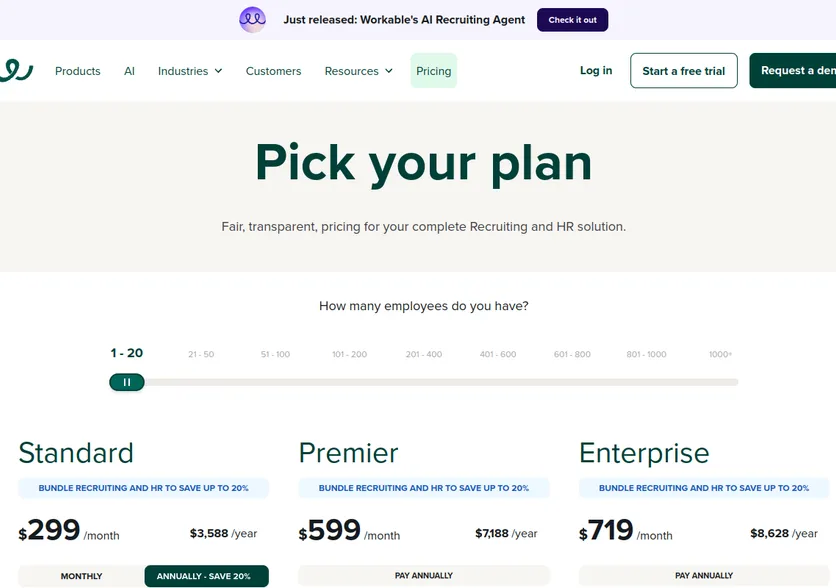
Paid tool Starting price: $299/month · Two hundred and ninety-nine dollars per month on the Standard plan billed annually, or three hundred and sixty dollars month to month; the Starter plan at one hundred and forty-nine dollars a month is gone; higher tiers are quoted
Free plan: Free demo
This Workable plan costs two hundred and ninety-nine dollars a month on annual billing, and it is built for the hiring volume a university produces. It posts roles to many boards, runs shared hiring pipelines across departments and hands each hire into onboarding with their full history intact. A university running dozens of searches a semester will feel the difference in the first month.
What we like
- Strong applicant tracking with multi-board job posting
- Shared hiring pipeline with comments and scorecards
- Onboarding handoff keeps the hire's history intact
Watch out for
- The highest entry price in this list
- More hiring power than a single department needs
How to try it
- Post the role to job boards from Workable
- Review candidates and collect scorecards in the pipeline
- Send the offer and move the hire into onboarding
2. BambooHR
Best for: University departments that need auditable HR records
Paid tool Starting price: $10/employee/month · Ten dollars per employee per month on the Core plan, or two hundred and fifty dollars a month flat for up to twenty-five employees; Pro is seventeen dollars and Elite is twenty-five dollars per employee per month; add-ons for payroll, benefits, time tracking and global employment are quoted separately
Free plan: Free demo
This BambooHR plan costs ten dollars per employee a month, and it brings order to the employee record side of university hiring. Onboarding checklists, e-signatures, employee files and time-off tracking live in one system, so a department stops keeping its own spreadsheets. It is the pick for a unit that needs auditable records without a campus-wide system.
What we like
- Structured onboarding checklists with e-signatures
- Employee records and time-off tracking in one place
- Clear flat pricing for teams up to twenty-five staff
Watch out for
- No built-in payroll or scheduling
- Payroll and benefits are separate quoted add-ons
How to try it
- Set up onboarding checklists and document templates
- Send the new hire a self-service onboarding link
- Track completion and store signed documents centrally
3. Rippling
Best for: Universities where IT and systems access slow onboarding down
Paid tool Starting price: $8/user/month + $40 base · Eight dollars per user per month plus a forty-dollar monthly base fee for the platform and Core HR; one small-business page lists a thirty-five-dollar base fee instead, so confirm the base fee on the vendor site; US payroll starts at eight dollars per employee per month billed annually, or ten dollars month to month; employer of record starts at four hundred and ninety-nine dollars and contractors at thirty dollars
Free plan: Free demo
This Rippling plan costs eight dollars per user a month plus a forty-dollar monthly base fee, and it automates the setup that slows university onboarding down. One hire triggers payroll, benefits, device access and app permissions from a single flow, which matters when a researcher needs systems access on day one. It is the strongest choice when IT setup is part of the onboarding problem.
What we like
- One flow sets up payroll, benefits, devices and app access
- Strong automation for teams with no HR staff
- Scales from a small lab to a whole college
Watch out for
- The base fee and add-ons push the real cost above the headline
- Pricing page itself is quote-led for larger plans
How to try it
- Add the hire and choose their role, pay and location
- Let Rippling provision payroll, benefits and apps automatically
- Review the completed onboarding checklist before day one
4. GoCo
Best for: University units that need cheap HR and compliance workflows
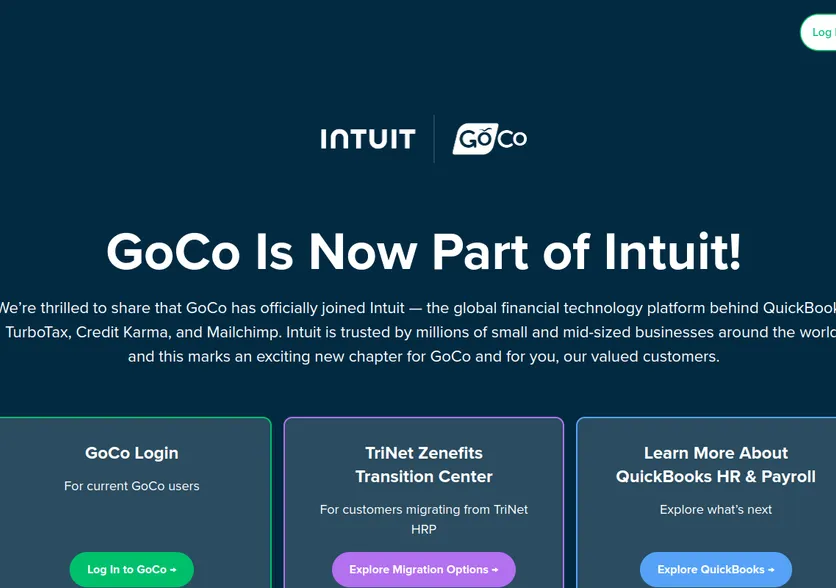
Paid tool Starting price: $5/employee/month · Five dollars per employee per month, the last price GoCo published before it became part of Intuit; new buyers are now directed through QuickBooks, and the vendor no longer publishes prices on its own pages, so confirm the current figure with the vendor before buying
Free plan: Free demo
This GoCo plan costs five dollars per employee a month at the last price it published, and it is the cheapest HR system in this list. It covers onboarding, benefits administration, time tracking and compliance workflows in one place, which suits a university unit watching its budget. The catch is that GoCo is now part of Intuit, so new buyers go through QuickBooks and the vendor no longer publishes prices itself.
What we like
- Lowest per-employee price in this list
- Onboarding, benefits and compliance in one system
- Simple setup for a small department
Watch out for
- Vendor no longer publishes prices on its own pages
- New buyers are routed through QuickBooks, not GoCo directly
How to try it
- Set up the onboarding workflow and document templates
- Invite the new hire to complete forms online
- Track benefits enrollment and compliance tasks centrally
5. Gusto
Best for: University departments that run their own payroll
Paid tool Starting price: $49/month + $6/person · Forty-nine dollars per month plus six dollars per person on the Simple plan; Plus is eighty dollars plus twelve dollars per person and Premium is one hundred and eighty dollars plus twenty-two dollars per person; the Contractor Only plan closed to new signups on October 1, 2026
Free plan: Free demo
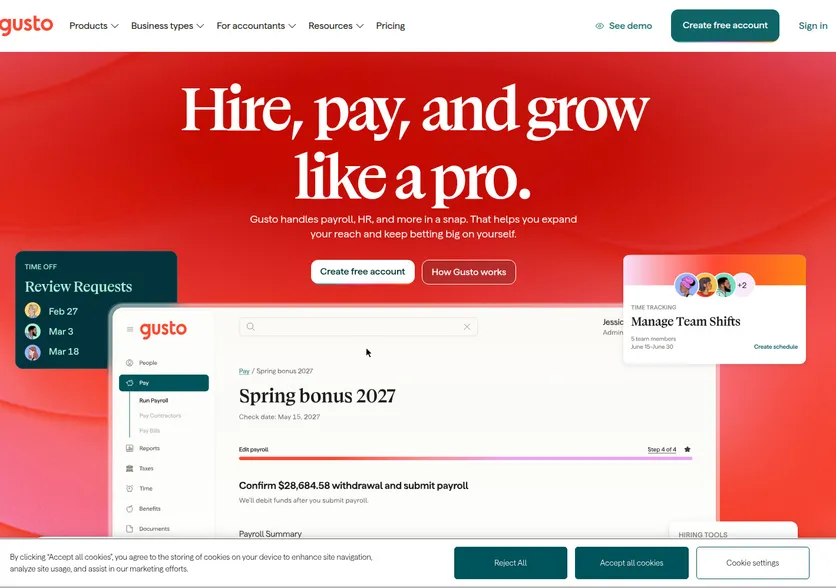
This Gusto plan costs forty-nine dollars a month plus six dollars per person, and it is the simplest payroll-linked option for a university unit. A new hire completes tax forms, direct deposit and benefits on their own, and the data flows straight into payroll without retyping. It fits a small department or research center that runs its own payroll and wants onboarding to take care of itself.
What we like
- Self-service onboarding that feeds straight into payroll
- Tax forms, direct deposit and benefits in one flow
- Simple per-person pricing with no surprise modules
Watch out for
- No scheduling for student workers or shift roles
- Built for small teams, not campus-wide deployment
How to try it
- Add the new hire and send the onboarding checklist
- Let the hire complete tax forms and direct deposit online
- Run the first payroll with the hire already set up
6. Breezy HR
Best for: Departments running several faculty or staff searches a year
Paid tool Starting price: $157/month · One hundred and fifty-seven dollars per month on the Startup plan billed annually, or one hundred and eighty-nine dollars month to month; Growth is two hundred and seventy-three dollars and Business is four hundred and thirty-nine dollars a month billed annually; the Bootstrap plan is free for one active position; the Breezy Onboard add-on is forty-nine dollars a month
Free plan: Free plan
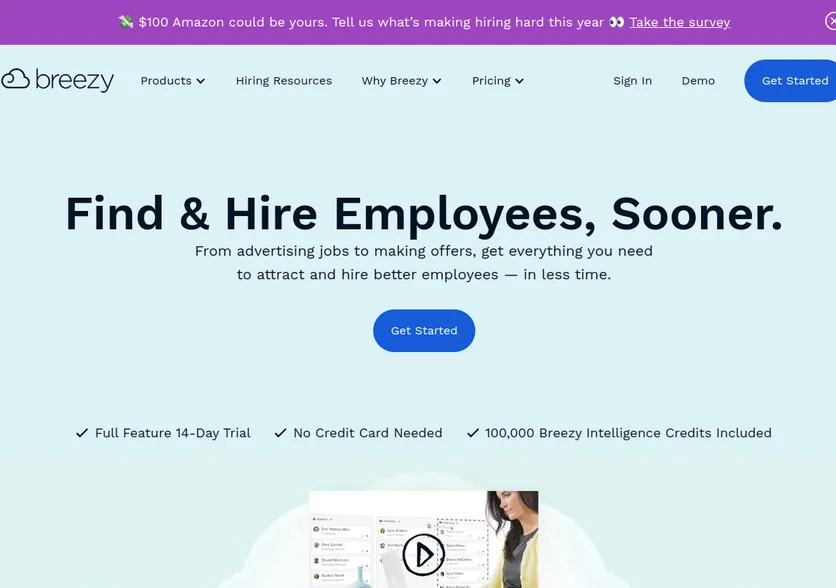
This Breezy HR plan costs one hundred and fifty-seven dollars a month on annual billing, and it keeps faculty and staff searches in one pipeline. Hiring committees score candidates, send offers and move the hire into onboarding tasks without changing tools, so nothing is lost between the committee vote and day one. It fits a department that runs several searches a year and cannot afford a dropped candidate.
What we like
- Hiring and onboarding share one candidate pipeline
- Free Bootstrap plan for a single open role
- Scorecards and offer letters built in
Watch out for
- Onboarding is an add-on, not in the base plan
- The price jump to Growth is steep for a small department
How to try it
- Post the role and collect applications in Breezy
- Score candidates and send the offer from the pipeline
- Move the hire into onboarding tasks and checklists
7. When I Work
Best for: Campus units scheduling student workers and part-time staff
Paid tool Starting price: $2.50/user/month · Two dollars and fifty cents per user per month on the Essentials plan; Pro is five dollars and Premium is eight dollars per user per month; time tracking is one dollar and fifty cents extra on Essentials and two dollars on Pro and Premium, although one November 2026 read says it is now included in every plan; no free plan, fourteen-day trial; the billing period of the listed prices is not stated on the vendor page
Free plan: 14-day free trial
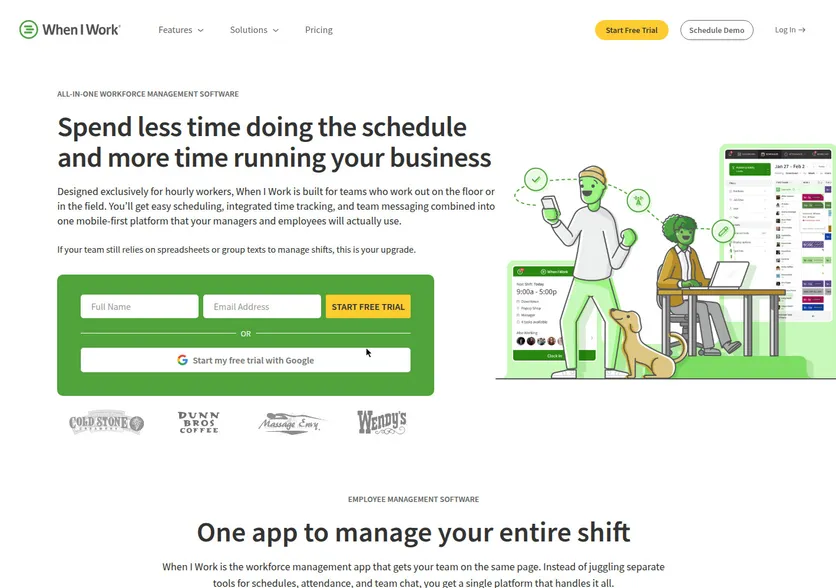
This When I Work plan costs two dollars and fifty cents per user a month, and it is the cheapest way to schedule student workers and part-time staff. Managers build rotas by drag and drop, students swap shifts from their phones, and availability is visible before the schedule is published. It suits the hourly side of a campus, where the onboarding job is mostly getting someone onto the rota.
What we like
- Very low per-user price
- Shift swaps and messaging from staff phones
- Setup takes minutes, not days
Watch out for
- Onboarding is basic, with no HR records depth
- No free plan, only a fourteen-day trial
How to try it
- Create the team and set roles and pay rates
- Invite the new hire to set availability in the app
- Publish the schedule and let staff swap shifts
8. Deputy
Best for: Hourly campus operations like dining halls and libraries
Paid tool Starting price: $5/user/month · Five dollars per user per month on the Lite plan billed annually, or five dollars and fifty cents month to month; Core is six dollars and fifty cents and Pro is nine dollars per user per month billed annually; a thirty-dollar monthly minimum applies per invoice on monthly plans; the HR add-on is two dollars per user per month
Free plan: Free trial
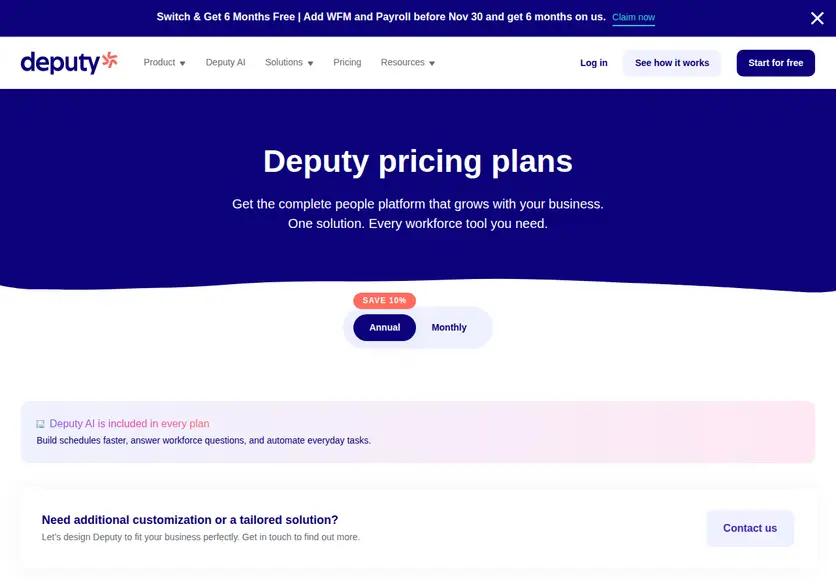
This Deputy plan costs five dollars per user a month on annual billing, and it pairs scheduling with the HR basics a campus unit needs. New hires complete their details in the app, managers approve timesheets against the roster, and labor costs stay visible while the schedule is built. It is a solid fit for dining halls, libraries and other hourly campus operations.
What we like
- Scheduling, timesheets and onboarding in one app
- Labor cost tracking built into the roster
- Strong mobile apps for managers and staff
Watch out for
- The HR add-on costs extra on top of the base plan
- A monthly minimum applies on monthly billing
How to try it
- Add the new hire and send the onboarding forms
- Build the roster and set labor cost budgets
- Approve timesheets and export hours to payroll
Prices above were checked on each vendor’s own website on Nov 28, 2026 and can change — the vendor’s page is the final word. Vendor links are editorial: nobody paid to be listed or ranked here. Vendors who want a featured listing can see how it works on our Get listed page.
The onboarding software for universities, compared
Build one onboarding track per hire type, not one track for everyone. Faculty, researchers, student workers and contractors need different documents, different systems access and different first-week plans, and a single generic checklist serves none of them. Give every hire a named contact in the department and a named contact in central HR, because the two most common delays are a missing form and a missing login. Set a start date that leaves a full week for paperwork, and review the hire at day thirty with the same three questions: what is unclear, what is slow, and what would help.
Before you buy
- Confirm the tool handles the documents your institution requires, including tax forms and work eligibility
- Check whether onboarding checklists, e-signatures and training are included or sold as add-ons
- Ask how hiring, payroll and IT access share data, so no hire is typed in twice
- Make sure new hires can finish everything from a phone before their first day
- Test the trial with a real department hire, not a demo account, before committing to a year
Official websites
Official websites of the products reviewed above. Features and prices were checked against these sites when this guide was written, and they can change, so confirm on the vendor site before you buy.
Frequently asked questions
What is onboarding software for universities?
It is software that takes a new university hire from the accepted offer to a productive first month, covering paperwork, systems access, training and payroll setup. Universities hire in waves and under strict compliance rules, so the tool must handle many hire types at once. The tools in this list range from high-volume hiring systems to simple scheduling apps for student workers.
How much does Workable cost for a university?
Workable costs two hundred and ninety-nine dollars per month on the Standard plan billed annually, or three hundred and sixty dollars month to month. The older Starter plan at one hundred and forty-nine dollars a month is gone, and higher tiers are quoted by sales. For that price a university gets applicant tracking, multi-board job posting and an onboarding handoff.
Can a university onboard new hires for free?
Yes, in part, with the free plans from Breezy and the low per-user prices elsewhere. Breezy has a free Bootstrap plan for one active position. When I Work costs two dollars and fifty cents per user a month and Sling is free for up to thirty users, though Sling is not in this list. Full HR suites in this list start at five dollars an employee a month with GoCo.
Which tool is best for hiring many faculty at once?
Workable is the best fit for high-volume academic hiring, because it runs shared pipelines across departments and posts to many job boards at once. Breezy is the budget alternative for a single department running a few searches a year. Both keep the candidate history intact through the offer and into onboarding, so committees do not lose context.
Do these tools handle payroll as well as onboarding?
Some do and some do not. Gusto and Rippling run payroll from the same account as onboarding, so a new hire's tax forms flow straight into pay runs. Workable, Breezy and BambooHR focus on hiring and records and hand payroll to another system. Check whether the tool pays staff itself or only prepares the data for the campus payroll office.
Compare the eight tools above, then start with a free trial or demo on the tool that matches how your university hires before you pay for a full year.
Browse Business Tools tools