On this page
How we researched this
We checked each vendor's own pricing page in November 2026 and kept tools that handle wholesale orders, price lists and multi-location stock. We kept only tools with a published list price and a real wholesale workflow, and we dropped quote-only platforms and retail-only tools. Every price is the vendor's list price, with annual billing noted where the vendor lists it.
Compare the tools
| Name | Best for | Starting price | Free plan | |
|---|---|---|---|---|
 Cin7 Core | Brands selling on several channels at once | $349/month | No free plan; 14-day free trial | Visit |
 Fishbowl | QuickBooks businesses with deep stock needs | $229/month | Free demo | Visit |
 Zoho Inventory | Small sellers who want stock and orders together | $29/month | Free plan (50 orders a month) | Visit |
 inFlow Inventory | Wholesalers with a B2B portal | $99/month | No free plan; 14-day free trial | Visit |
 Katana | Makers who sell what they build | $299/month | Free demo | Visit |
| Finale Inventory | Ecommerce brands with their own warehouses | $499/month | No free plan; free trial | Visit |
 EZOfficeInventory | Teams tracking shared equipment and assets | $44.75/month | Free trial | Visit |
| Fulfil | High-volume Shopify brands that need a full ERP | $4,000/month | Free demo | Visit |
The 8 order management tools compared
1. Cin7 Core
Best for: Brands selling on several channels at once
Paid tool Starting price: $349/month · Three hundred and forty-nine dollars a month on Standard for 5 users, 2 integrations and 6,000 sale orders a year; Pro is $599 and Advanced is $1,199 a month, and Cin7 Omni is quoted
Free plan: No free plan; 14-day free trial
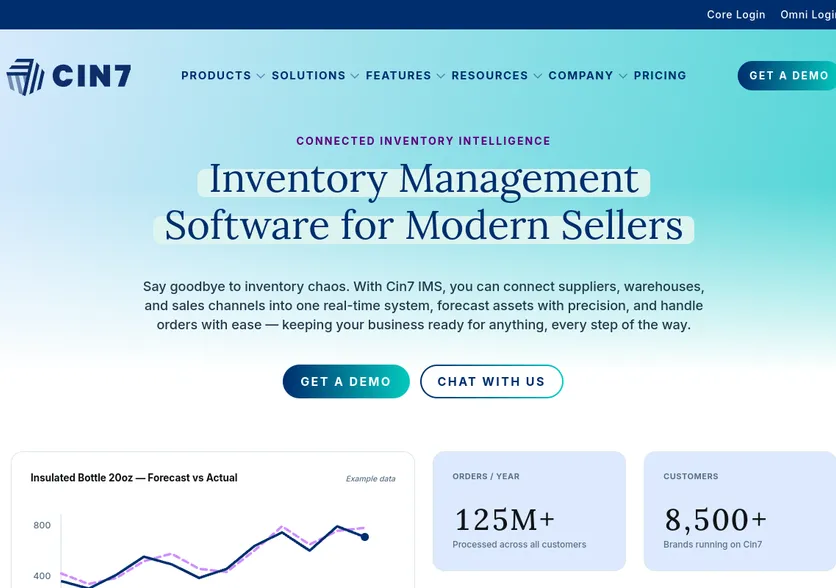
Wholesale orders, web store orders and marketplace orders all flow into one queue with Cin7 Core, and the Standard plan costs three hundred and forty-nine dollars a month. One stock record spans more than seven hundred integrations, so the team never juggles separate piles. The B2B portal lets trade buyers order for themselves, though it is a paid add-on on the Standard plan.
What we like
- One stock record across 700 plus integrations
- B2B portal for wholesale buyers on every plan
- AI demand forecasting on higher tiers
Watch out for
- Standard caps at 6,000 sale orders a year
- The B2B portal, POS and forecasting are paid add-ons
How to try it
- Connect the store, marketplaces and accounting app
- Set stock levels and reorder rules per location
- Route orders to the right warehouse for fulfillment
2. Fishbowl
Best for: QuickBooks businesses with deep stock needs
Paid tool Starting price: $229/month · Two hundred and twenty-nine dollars a month on Essentials; this is Fishbowl Inventory, not the Fishbowl restaurant guest platform, which is a different product with its own pricing
Free plan: Free demo
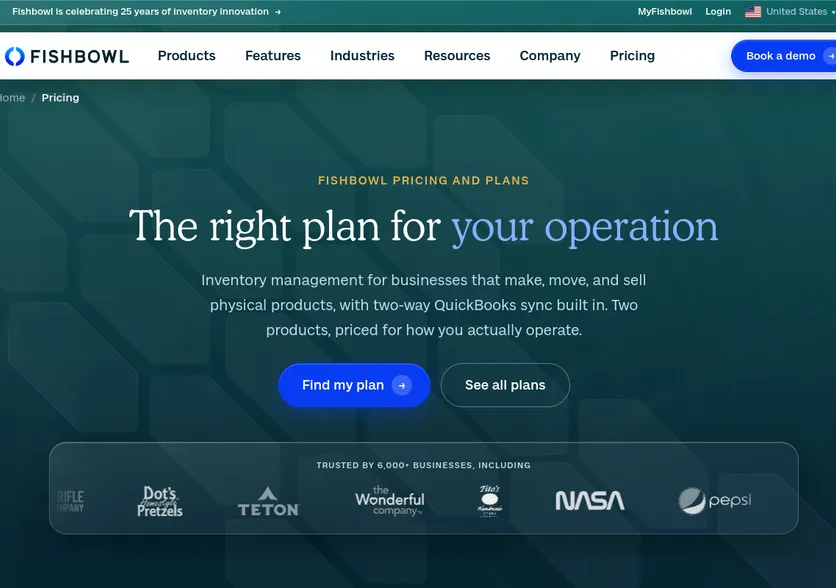
For a wholesale brand, Fishbowl adds lot and serial tracking to inventory at two hundred and twenty-nine dollars a month on the Essentials plan. The QuickBooks integration is the deepest in this list, so accounting and stock stay in sync. It is built for a brand that needs manufacturing and warehouse workflows, not just a label printer.
What we like
- Deep QuickBooks integration for inventory and accounting
- Lot and serial tracking for regulated stock
- Manufacturing and warehouse workflows included
Watch out for
- QuickBooks is close to required for the full value
- The restaurant product shares the name and confuses searches
How to try it
- Sync Fishbowl with QuickBooks and import products
- Set lot and serial tracking rules per item
- Run pick, pack and ship from the warehouse app
3. Zoho Inventory
Best for: Small sellers who want stock and orders together
Paid tool Starting price: $29/month · Twenty-nine dollars a month on Standard per organization billed annually ($39 billed monthly); Professional is $79, Premium is $129 and Enterprise is $249 a month billed annually
Free plan: Free plan (50 orders a month)
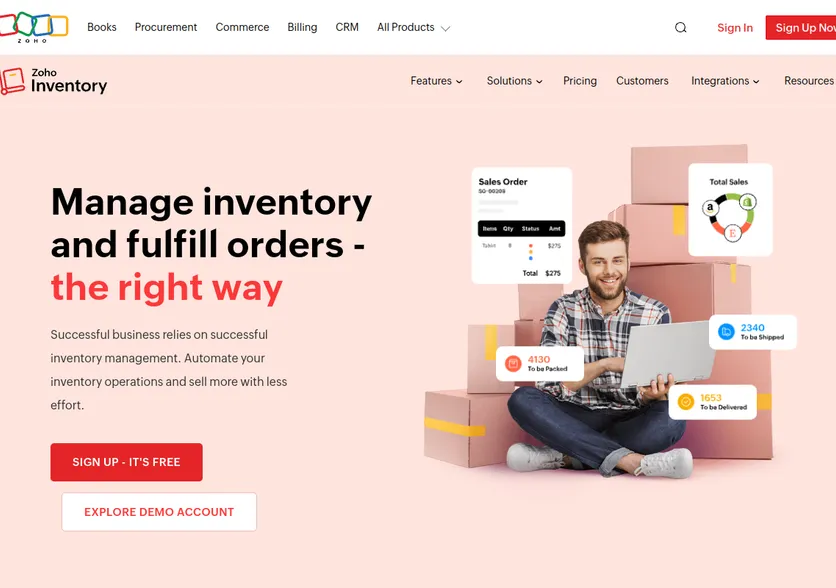
A wholesaler can start with the free plan from Zoho Inventory for fifty orders a month, and the Standard plan costs twenty-nine dollars a month per organization. A wholesaler gets stock, orders and dropshipping in one place, with links to Shopify, Amazon, eBay and Etsy. It is priced by organization, not by seat, so a small team stays cheap.
What we like
- Priced per organization, not per user
- Dropshipment and backordering on the Standard plan
- Native links to Shopify, Amazon, eBay and Etsy
Watch out for
- Standard caps at 500 orders and 3 users a month
- Extra orders, users and locations are paid add-ons
How to try it
- Import products and set reorder points per warehouse
- Connect sales channels and sync orders automatically
- Create purchase orders when stock runs low
4. inFlow Inventory
Best for: Wholesalers with a B2B portal
Paid tool Starting price: $99/month · Ninety-nine dollars a month on Lite billed annually ($129 billed monthly); Core is $299, Pro is $499 and Max is $699 billed annually, and a $499 onboarding package is optional on Lite and required from Core
Free plan: No free plan; 14-day free trial
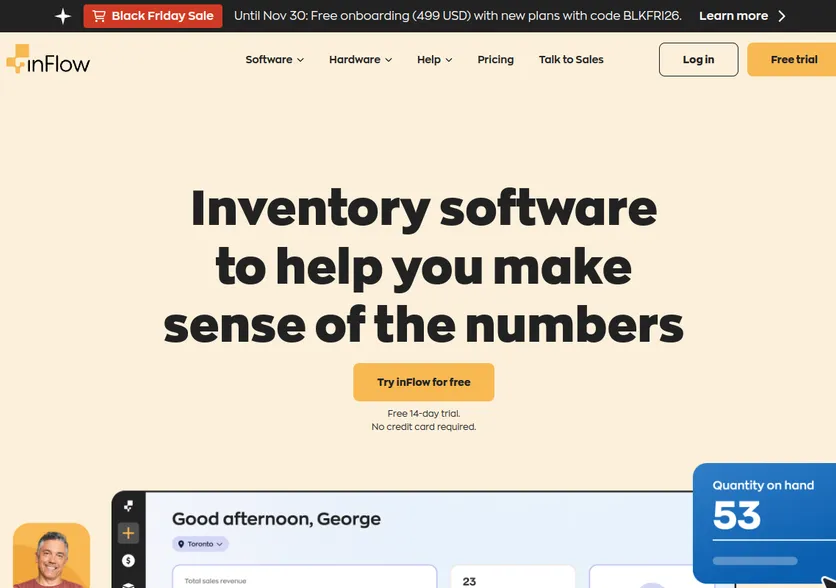
Ninety-nine dollars a month buys the Lite plan from inFlow Inventory billed annually, with a B2B showroom portal for trade customers. Orders are unlimited on every plan, and tiers are flat-rate, so the bill stays steady as the team grows. A five hundred dollar onboarding package is optional on Lite and required from Core.
What we like
- Flat-rate tiers, so the bill stays steady as the team grows
- B2B showroom portal for trade customers
- Unlimited orders and integrations on every plan
Watch out for
- No free plan, only a 14-day trial
- Add-ons such as lot tracking cost $39 or $49 a month extra
How to try it
- Import products and set stock levels per location
- Open the B2B portal so trade customers order themselves
- Create purchase orders and track them to delivery
5. Katana
Best for: Makers who sell what they build
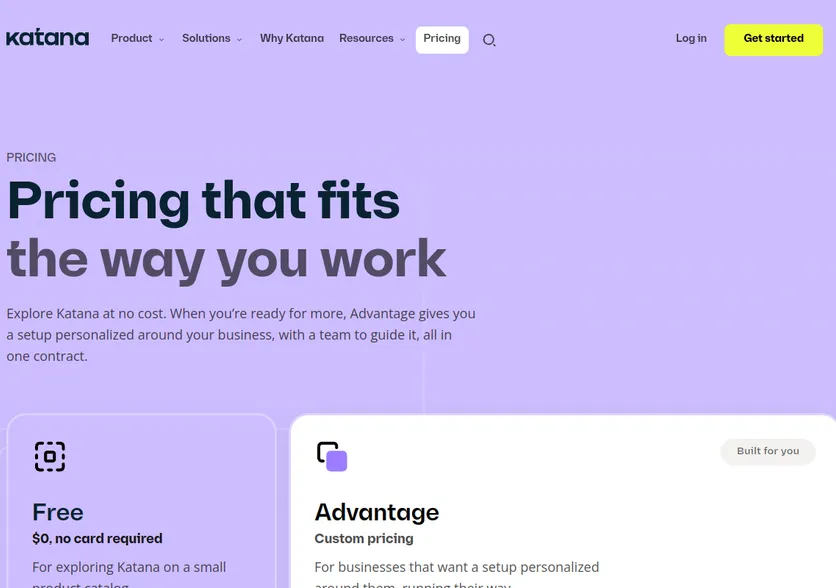
Paid tool Starting price: $299/month · Two hundred and ninety-nine dollars a month on Core billed annually; Advantage is a custom tier only, and manufacturing features such as bills of materials are included
Free plan: Free demo
For a wholesale brand that makes what it sells, Katana ties production planning to inventory at two hundred and ninety-nine dollars a month on the Core plan. Bills of materials, production orders and live stock sit in one record. It is priced for a real maker business, not a hobby.
What we like
- Visual production planning for makers and manufacturers
- Inventory, purchasing and sales in one live record
- Shopify and accounting integrations included
Watch out for
- The entry price is high for a hobby-scale maker
- Advanced manufacturing depth needs the custom tier
How to try it
- Import products and set bills of materials
- Create production orders from live sales
- Track raw materials and finished stock in one view
6. Finale Inventory
Best for: Ecommerce brands with their own warehouses
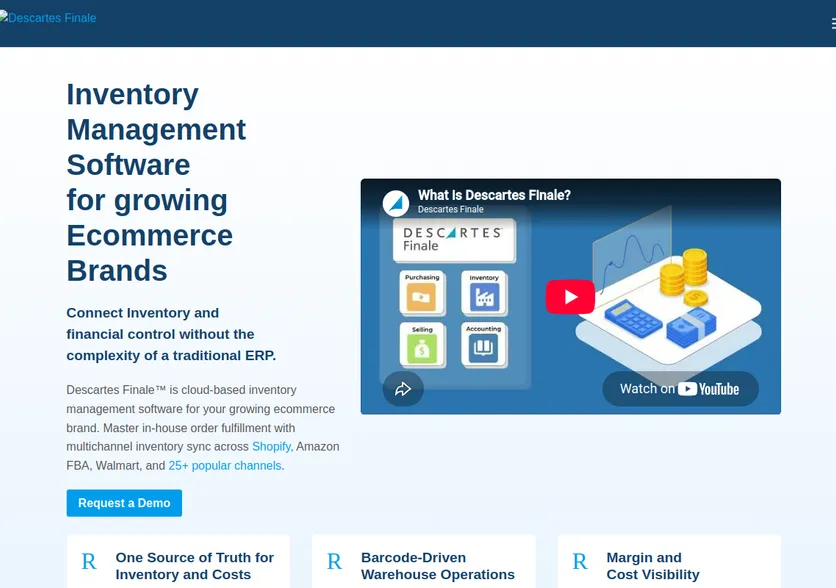
Paid tool Starting price: $499/month · Four hundred and ninety-nine dollars a month on Essentials for 1 to 2 warehouses; Growth is $799 a month and Enterprise is custom, and most customers sign 12, 24 or 36 month terms
Free plan: No free plan; free trial
Four hundred and ninety-nine dollars a month buys the Essentials plan from Finale Inventory for one to two warehouses, with multi-warehouse inventory and more than forty channel integrations. Procurement and replenishment are built in, and the system handles up to one and a half million orders a month. The old ninety-nine dollar Starter ladder is gone since the Descartes rebuild.
What we like
- Multi-warehouse inventory with 40 plus channel integrations
- Procurement and replenishment built in
- Handles up to 1.5 million orders a month
Watch out for
- The old $99 a month Starter ladder is gone since the Descartes rebuild
- API and EDI access need the custom Enterprise tier
How to try it
- Connect sales channels and import the catalog
- Set reorder points per warehouse
- Run picking from the mobile barcode app on Growth
7. EZOfficeInventory
Best for: Teams tracking shared equipment and assets
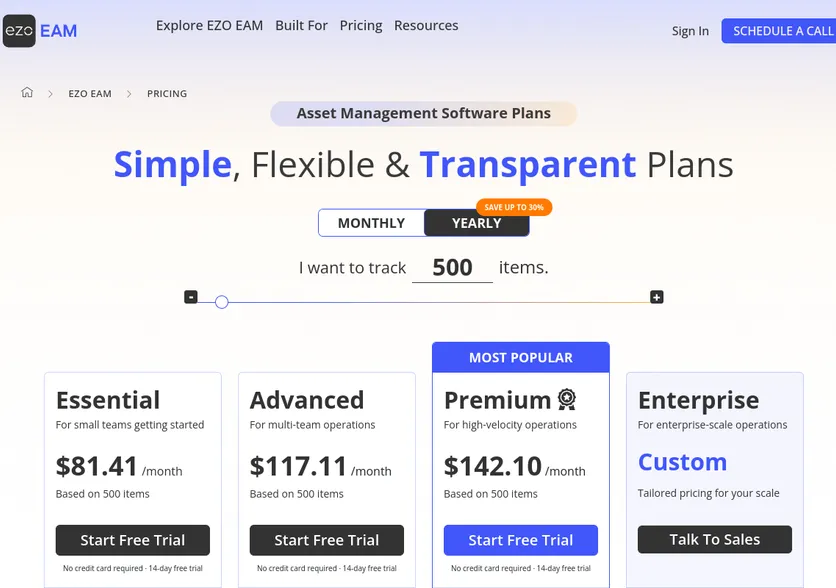
Paid tool Starting price: $44.75/month · Forty-four dollars and seventy-five cents a month on Essential billed annually at 100 items ($48 billed monthly); Advanced is $85.51 and Premium is $100.88 a month at 300 items
Free plan: Free trial
Forty-four dollars and seventy-five cents a month buys the Essential plan from EZOfficeInventory billed annually at one hundred items, with reservations and checkouts for shared equipment. It is built for assets and equipment rather than retail order flow, so a wholesaler should treat it as the tracking side, not the order system. Barcode and QR scanning work on mobile.
What we like
- Priced by items tracked, so small catalogs stay cheap
- Reservations and checkouts for shared equipment
- Barcode and QR scanning on mobile
Watch out for
- Built for assets and equipment, not retail order flow
- The price climbs with the item count
How to try it
- Import items and tag them with barcodes
- Set reservation rules for shared stock
- Track checkouts, returns and maintenance in one place
8. Fulfil
Best for: High-volume Shopify brands that need a full ERP
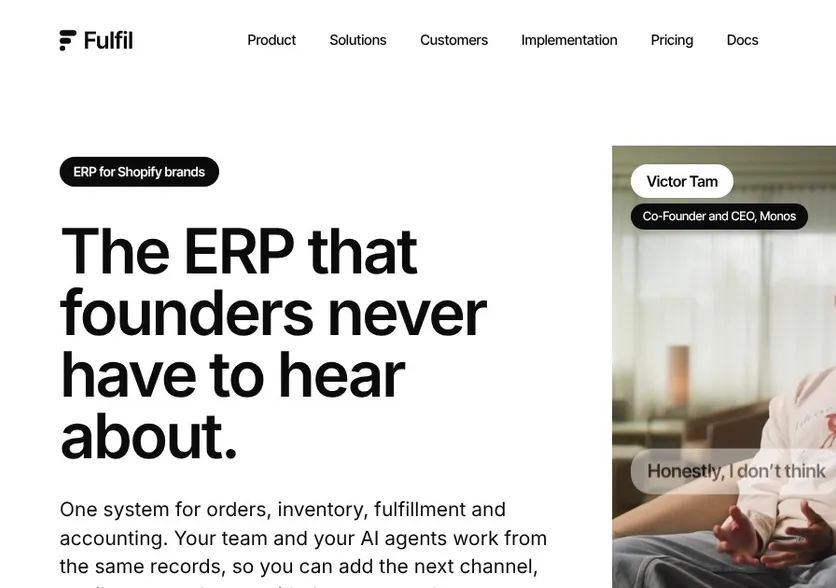
Paid tool Starting price: $4,000/month · Four thousand dollars a month paid annually, priced by annual order volume; implementation is a separate fixed price between $10,000 and $20,000, and older $499 a month figures in directories are stale
Free plan: Free demo
Four thousand dollars a month buys the entry plan from Fulfil paid annually, with a full ERP for Shopify brands that covers orders, inventory, EDI and accounting. Multi-channel order management runs from one queue, and implementation costs ten thousand to twenty thousand dollars on top. It is the ceiling in this list, built for high-volume wholesale, direct and manufacturing together.
What we like
- Full ERP for Shopify brands: orders, inventory, EDI and accounting
- Multi-channel order management from one queue
- Built for high-volume DTC, wholesale and manufacturing
Watch out for
- The entry price is far above order managers
- Implementation takes 4 to 8 weeks and costs extra
How to try it
- Scope the implementation with the Fulfil team
- Migrate orders, inventory and accounting into one system
- Route multi-channel orders through a single queue
Prices above were checked on each vendor’s own website on Nov 28, 2026 and can change — the vendor’s page is the final word. Vendor links are editorial: nobody paid to be listed or ranked here. Vendors who want a featured listing can see how it works on our Get listed page.
How to pick wholesale order software
Start with the price list, because wholesale pricing is never one flat number and the tool must handle customer-specific prices. Check lot and serial tracking if the stock is regulated, since a wholesaler without it cannot answer a recall. Test the trade portal with a real buyer, because a portal that buyers avoid is just an expensive website. Keep one stock record across every warehouse, or the team will promise stock that sits in the wrong building. Check credit terms as well, because a wholesaler who invoices on thirty-day terms needs the system to track them.
Before you buy
- Confirm the tool handles customer price lists, not just one flat retail price.
- Check lot and serial tracking if your stock is regulated or recalled.
- Test the trade portal with a real buyer before you commit to a year.
- Make sure stock is shared across warehouses, so no location oversells.
- Compare the total cost, including onboarding and implementation, not just the monthly price.
Official websites
Official websites of the products reviewed above. Features and prices were checked against these sites when this guide was written, and they can change, so confirm on the vendor site before you buy.
Frequently asked questions
What is the best order management software for wholesale brands?
Fishbowl is the strongest fit for most wholesalers, with deep QuickBooks integration and lot and serial tracking from two hundred and twenty-nine dollars a month. Cin7 Core starts at three hundred and forty-nine dollars with more than seven hundred integrations and a B2B portal. For high-volume brands, Fulfil is a full ERP at four thousand dollars a month, covering orders, inventory, EDI and accounting.
How much does wholesale order software cost?
Zoho Inventory starts at twenty-nine dollars a month, inFlow at ninety-nine, Fishbowl at two hundred and twenty-nine, Katana and Cin7 Core at two hundred and ninety-nine and three hundred and forty-nine, Finale at four hundred and ninety-nine and Fulfil at four thousand. The price gap reflects depth: Zoho suits a small wholesaler, while Fulfil suits a brand running wholesale, direct and manufacturing together.
Do I need lot and serial tracking for wholesale?
A wholesaler selling regulated stock, such as food, medicine or electronics, needs lot and serial tracking to answer a recall. Fishbowl includes it from two hundred and twenty-nine dollars a month, and inFlow offers it as a paid add-on. A wholesaler selling unregulated goods can skip it, but the moment a customer asks for a batch number, the tool must have it.
What is the difference between wholesale and retail order software?
Wholesale software handles customer price lists, trade portals and bulk orders, while retail software focuses on the checkout and the shipping label. A wholesaler needs to quote, invoice and track credit terms, which a retail tool does not do. The tools in this guide handle both sides, so a brand that sells wholesale and direct can run one system instead of two.
When should a wholesaler move to a full ERP?
Fulfil starts at four thousand dollars a month with ten thousand to twenty thousand dollars of implementation, so it suits a brand that has outgrown separate tools for orders, inventory, EDI and accounting. The signal is not order count alone, but how much time the team spends reconciling data between systems. Until then, Fishbowl or Cin7 Core will carry a wholesale brand a long way.
Start with Zoho Inventory or Fishbowl and move to Fulfil only when separate tools stop keeping up.
Browse Business Tools tools