On this page
Entertainment work runs on deadlines that sit inside other deadlines: option windows, royalty statements, licensing renewals and chain-of-title files that all need to be right when a deal closes. The eight tools below handle that mix for firms of every size, from a solo clearing music rights to a team running film and television matters. Clio leads because it covers matters, billing and documents in the system most firms already know for forty-nine dollars per user a month, and the rest are ranked on how well they fit the pace of entertainment work.
How we researched this
We checked every price on the vendor pricing page on November 28, 2026, and only included tools with a published US dollar list price. The big platforms that sell by quote, including Smokeball, Filevine, LEAP and Actionstep, publish no prices, so they are not in this list. Prices change, so confirm the current figure on the vendor site before you buy.
Compare the tools
| Name | Best for | Starting price | Free plan | |
|---|---|---|---|---|
 Clio | Firms that want the most widely used platform | $49/user/month | 7-day free trial | Visit |
 MyCase | Small firms that want billing and texting built in | $50/user/month | 10-day free trial | Visit |
 PracticePanther | Firms that want published prices and fast intake | $49/user/month | 7-day free trial | Visit |
 CosmoLex | Firms that want accounting built in | $49/user/month | 10-day free trial | Visit |
 Rocket Matter | Firms that bill by matter and retainer | $59/user/month | 10-day free trial | Visit |
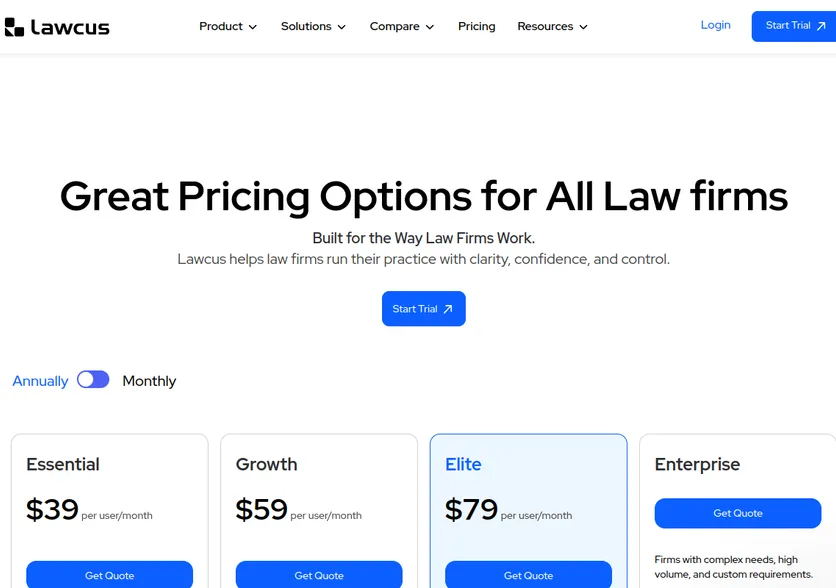
 Lawcus | Firms that think in pipelines and boards | $49/user/month | Free trial available | Visit |
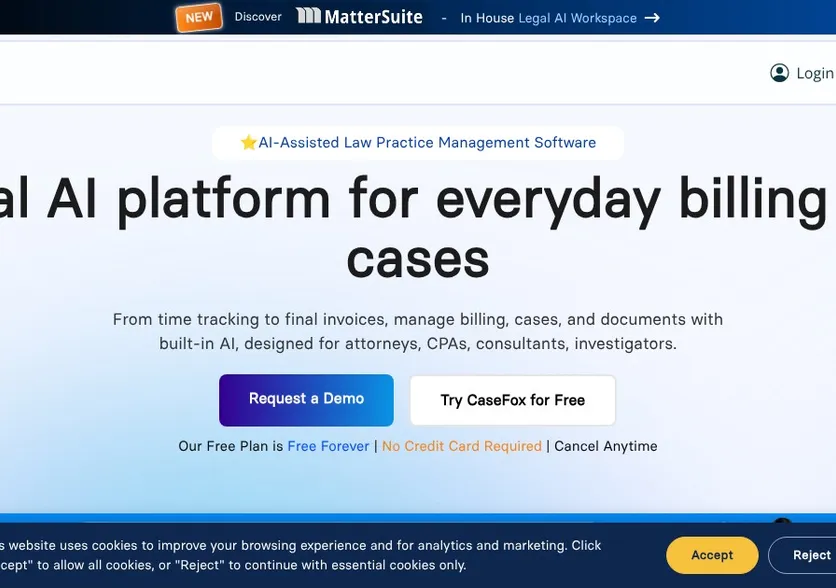
 CaseFox | Budget-conscious solos and small firms | $39/user/month | Free plan (2 users, 4 cases) | Visit |
| Lawmatics | High-intake firms that automate follow-up | $199/month | No free plan; demo available | Visit |
The practice management software for entertainment law firms, compared
1. Clio
Best for: Firms that want the most widely used platform
Paid tool Starting price: $49/user/month · Forty-nine dollars per user a month billed annually on EasyStart ($59 billed monthly); Essentials is $89 a user a month billed annually ($99 monthly), Advanced $119, Complete $149; higher tiers are quoted; the $79 Essentials figure in older guides is stale
Free plan: 7-day free trial
For an entertainment law firm, this Clio plan costs forty-nine dollars per user a month billed annually, and it covers matters, billing and documents in one workspace. Matters, documents, calendar, time and billing sit in one workspace, and Clio Grow adds intake and electronic signature. It is the default comparison point for entertainment law firm buyers, with integrations for accounting, document automation and payments.

What we like
- Matter-centered workspace with documents, calendar and billing together
- Largest integration library in legal practice management
- Clio Grow intake and e-signature bolt on cleanly
Watch out for
- Trust accounting add-ons and higher tiers raise the real monthly cost
- The interface packs in so much that new staff need training time
How to try it
- Create a matter and add the client, contacts and key dates
- Log time and expenses as work happens
- Share documents and updates through the client portal
2. MyCase
Best for: Small firms that want billing and texting built in
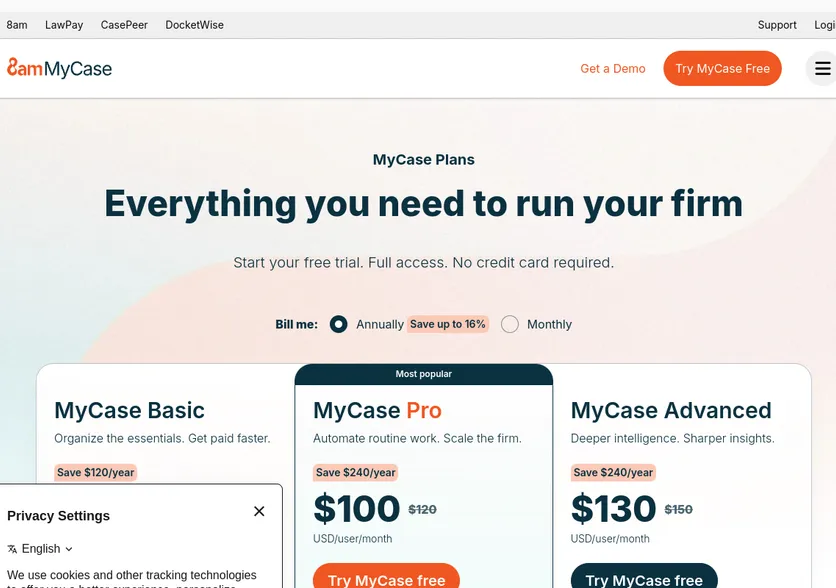
Paid tool Starting price: $50/user/month · Fifty dollars per user a month billed annually on Basic ($60 billed monthly); Pro is $100 a user a month billed annually ($120 monthly) and Advanced is $130 ($150 monthly); MyCase Accounting adds $39 per user a month on Pro and Advanced; prices rose in August 2026 from $39, $89 and $109
Free plan: 10-day free trial
For an entertainment law firm, this MyCase plan costs fifty dollars per user a month billed annually, and it bundles cases, billing, texting and a client portal. Cases, billing, documents and a client portal sit in one simple system, with two-way texting that keeps clients informed. For a entertainment law firm, the draw is how little setup it needs, since intake forms, payment links and texting work out of the box.
What we like
- Client portal with two-way texting and payment links
- Simple setup that a small team learns in days
- Intake forms and lead tracking included from the start
Watch out for
- Full trust accounting costs thirty-nine dollars extra per user a month
- Reporting is lighter than the enterprise platforms
How to try it
- Add the client and open a case with the intake form
- Send documents and payment requests through the portal
- Track time and send the invoice when the work is done
3. PracticePanther
Best for: Firms that want published prices and fast intake
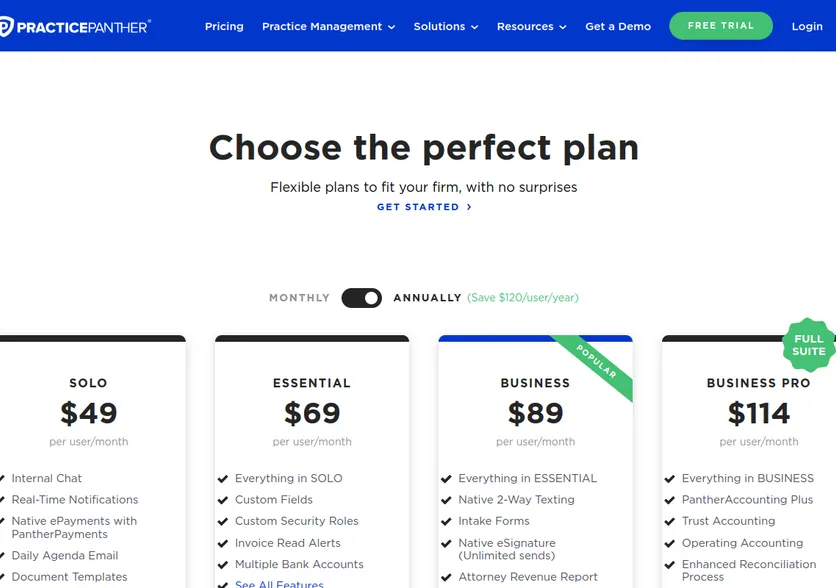
Paid tool Starting price: $49/user/month · Forty-nine dollars per user a month billed annually on Solo ($59 billed monthly); Essential is $69 ($79 monthly), Business $89 ($99 monthly) and Business Pro $114 ($124 monthly); annual billing saves $120 per user a year
Free plan: 7-day free trial
For an entertainment law firm, this PracticePanther plan costs forty-nine dollars per user a month billed annually, and it covers intake, cases, billing and payments in a clean interface. Intake, cases, documents, time and billing run in a clean interface, with native electronic signature and payment links. A entertainment law firm that wants every plan priced in public will like the four published tiers, since the firm can budget without a sales call.
What we like
- Four published plans, so budgeting needs no sales call
- Native e-signature and payment links in every plan
- Fast intake forms with two-way texting
Watch out for
- Full trust accounting needs the Business Pro tier
- Automations are thinner than the dedicated intake CRMs
How to try it
- Build an intake form and share it on the firm website
- Open the matter and track time against it
- Send the invoice with a payment link
4. CosmoLex
Best for: Firms that want accounting built in
Paid tool Starting price: $49/user/month · Forty-nine dollars per user a month billed annually on Launch ($59 billed monthly); Core is $99 a user a month billed annually ($109 monthly) and Pro is $129 ($139 monthly)
Free plan: 10-day free trial
For an entertainment law firm, this CosmoLex plan costs forty-nine dollars per user a month billed annually, and it pairs practice management with full legal accounting. Practice management comes with full legal accounting built in, so business and trust ledgers, billing and matter files live in the same system. For a entertainment law firm that reconciles trust accounts every month, that single ledger is the point, since it removes the sync errors of a separate app.
What we like
- Full business and trust accounting built into the base plan
- Single ledger removes sync errors between apps
- LEDES billing and matter accounting in one place
Watch out for
- The interface feels dated next to newer rivals
- Core and Pro tiers cost double or more than Launch
How to try it
- Set up the matter and link it to the client ledger
- Record time and expenses, then bill the matter
- Reconcile the trust account inside CosmoLex each month
5. Rocket Matter
Best for: Firms that bill by matter and retainer
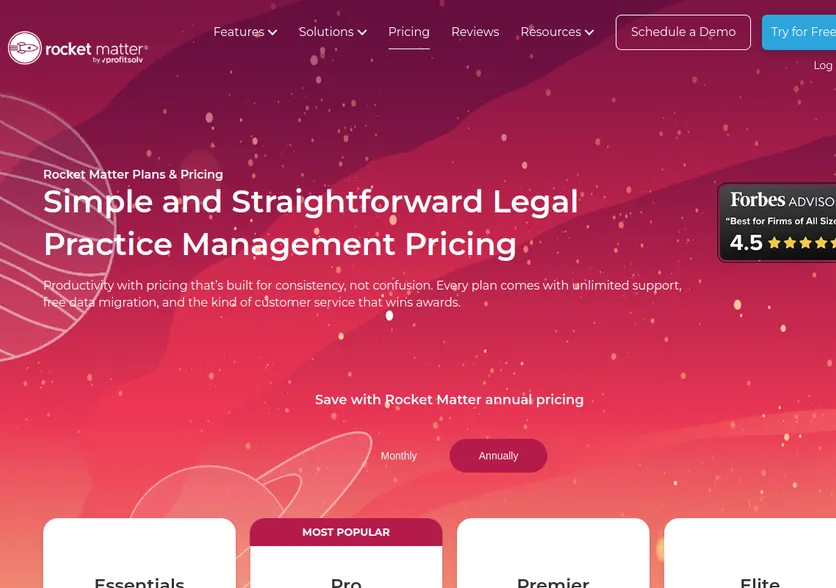
Paid tool Starting price: $59/user/month · Fifty-nine dollars per user a month billed annually on Essentials; Pro is $95, Premier $115 and Elite $145 on the same billing basis; the $49 FAQ figure is stale; the CRM add-on carries a $399 onboarding fee
Free plan: 10-day free trial
For an entertainment law firm, this Rocket Matter plan costs fifty-nine dollars per user a month billed annually, and it centers on billing with batch invoices and retainers. Billing sits at the center, with batch billing, evergreen retainers and trust accounting from the entry tier, plus document assembly for repeated forms. A entertainment law firm that bills by the matter rather than the hour will like flat fees and retainers instead of forcing everything into a timer.
What we like
- Batch billing and evergreen retainers from the entry tier
- Document assembly for repeated forms and letters
- Trust accounting included without an add-on
Watch out for
- The entry price is higher than the forty-nine dollar rivals
- The CRM add-on carries a three hundred ninety-nine dollar onboarding fee
How to try it
- Open a matter and set the billing arrangement
- Assemble documents from templates and track time
- Run batch billing and collect payment online
6. Lawcus
Best for: Firms that think in pipelines and boards
Paid tool Starting price: $49/user/month · Forty-nine dollars per user a month; older listings show $34 or $39 a user a month, but multiple November 2026 reads of the vendor pricing page agree on $49
Free plan: Free trial available
For an entertainment law firm, this Lawcus plan costs forty-nine dollars per user a month, and it runs matters as visual Kanban pipelines. Matters run as visual Kanban pipelines, so a firm can see every case move from intake to close on one board, with intake, time and billing on each card. For a entertainment law firm that juggles many small matters at once, the board view beats a list, since bottlenecks show up at a glance.
What we like
- Visual Kanban boards make caseload status obvious
- Intake, time and billing attached to each matter card
- Simple pricing with no tier maze
Watch out for
- Fewer integrations than the biggest platforms
- Older listings quote lower prices, so confirm the current rate
How to try it
- Create a pipeline with stages for each matter type
- Drag each matter card forward as the work progresses
- Log time on the card and invoice from it
7. CaseFox
Best for: Budget-conscious solos and small firms
Paid tool Starting price: $39/user/month · Thirty-nine dollars per user a month billed annually on Pro ($45 billed monthly); Enterprise is $79; the free Solo plan covers 2 users and 4 cases with all Pro features
Free plan: Free plan (2 users, 4 cases)
For an entertainment law firm, this CaseFox plan costs thirty-nine dollars per user a month billed annually, and it covers cases, time, billing and trust accounting at the lowest price here. Case management, timekeeping, billing, invoicing, trust accounting and document storage come in one hosted platform, and the free Solo plan covers two users and four cases. A entertainment law firm on a tight budget gets the cheapest paid tier in this list, and the free plan means a solo can run real matters for months before paying.
What we like
- Cheapest paid tier in this list at thirty-nine dollars
- Free Solo plan covers two users and four cases
- Time, billing and trust accounting in one hosted app
Watch out for
- Fewer integrations than the larger platforms
- Support and training resources are thinner than the big names
How to try it
- Sign up for the free Solo plan and add a case
- Track time and expenses against the matter
- Generate the invoice and send it with a payment link
8. Lawmatics
Best for: High-intake firms that automate follow-up
Paid tool Starting price: $199/month · Last published prices: Lite one hundred ninety-nine dollars a month flat and Pro two hundred ninety-nine dollars a month flat, billed annually; the vendor no longer publishes prices on its pricing page, so confirm the current rate before buying
Free plan: No free plan; demo available
For an entertainment law firm, this Lawmatics plan costs one hundred and ninety-nine dollars a month flat, and it automates intake from first call to signed client. Lawmatics is the intake-focused CRM in this list, with pipelines, automated messages, intake forms and electronic signature that move new clients from first call to signed engagement. For a entertainment law firm that wins work on speed of response, the automation matters most, since drip follow-ups chase leads the firm would otherwise lose.

What we like
- Deepest intake automation of any tool in this list
- Flat per-firm pricing instead of per-seat billing
- Drip campaigns and round-robin booking included
Watch out for
- It is an intake CRM, not a full practice management system
- The vendor no longer publishes prices, so confirm the current rate
How to try it
- Build an intake form and connect it to the pipeline
- Set up automated follow-up messages for new leads
- Send the engagement letter for signature
Prices above were checked on each vendor’s own website on Nov 28, 2026 and can change — the vendor’s page is the final word. Vendor links are editorial: nobody paid to be listed or ranked here. Vendors who want a featured listing can see how it works on our Get listed page.
How to run entertainment matters without losing a deadline
Start every matter with the rights file attached, because an option window or a royalty audit is only as good as the chain of title behind it. Log time against the deal as it happens, not at the end of the week, since entertainment billing mixes flat fees, percentages and hourly work on the same matter. Set a calendar rule for every option and renewal date the moment it is signed, and let the client portal carry the documents. Review the trust ledger monthly, because client funds sit in the same account as the fees.
Before you buy
- Confirm the tool tracks option windows and renewal dates with automatic calendar reminders
- Check whether billing handles flat fees, percentages and hourly work on the same matter
- Ask if the client portal lets producers and label contacts fetch documents without email
- Make sure trust accounting separates client funds from fees on every settlement and advance
- Test intake on a real licensing inquiry before paying, including the conflict check
Official websites
Official websites of the products reviewed above. Features and prices were checked against these sites when this guide was written, and they can change, so confirm on the vendor site before you buy.
Frequently asked questions
What is the best practice management software for entertainment law firms?
Clio is the best overall pick for entertainment law firms, at forty-nine dollars per user a month billed annually, because it covers matters, documents, calendar, time and billing in the system most firms already know. It also connects to accounting, document automation and payment tools, so royalty and licensing work stays in one place. Smaller firms that want a lower bill should look at CaseFox first.
How much does Clio cost for an entertainment law firm?
Clio costs forty-nine dollars per user a month billed annually on EasyStart, or fifty-nine dollars billed monthly. Essentials is eighty-nine dollars a user a month billed annually and adds more automation and reporting, while Advanced and Complete cost one hundred nineteen and one hundred forty-nine dollars. A seven-day free trial lets the firm test it first.
Is there a free practice management option for entertainment law firms?
Yes, CaseFox offers a free Solo plan covering two users and four cases with all Pro features, which suits a solo entertainment lawyer starting out. The paid Pro plan is thirty-nine dollars per user a month billed annually. No other tool here has a free plan, though Clio, MyCase and PracticePanther offer free trials.
Which tool handles entertainment deal intake best?
Lawmatics handles deal intake best, because its pipelines, automated messages and round-robin booking chase licensing and rights inquiries the moment they arrive. It costs one hundred and ninety-nine dollars a month flat on Lite, the last published price. It is an intake CRM rather than a full practice system, so most firms pair it with Clio or PracticePanther for the matter work.
Which tool is best for a small entertainment law firm?
CaseFox is the best value for a small entertainment firm, at thirty-nine dollars per user a month billed annually, with a free Solo plan for two users and four cases. PracticePanther is the better pick if the firm wants native e-signature and payment links in every plan. Clio suits firms that plan to grow, since its integration library is the largest here.
Compare the eight tools above, then start with a free trial or the free CaseFox plan on the tool that matches how the firm already handles entertainment matters before paying for a full year.
Browse Business Tools tools