On this page
A trademark practice is a docket of deadlines: searches, filings, office actions and renewals, each one with a response window that closes whether the firm is ready or not. The eight tools below keep that docket in order at prices a firm can verify before buying. Lawcus leads because its kanban board shows every mark at its stage for forty-nine dollars per user a month, and the rest are ranked on how they handle trademark volume.
How we researched this
We checked every price on the vendor pricing page on November 28, 2026, and only included tools with a published US dollar list price. The big enterprise platforms that sell by quote, including Filevine and Smokeball, publish no prices, so they are not in this list. Prices change, so confirm the current figure on the vendor site before you buy.
Compare the tools
| Name | Best for | Starting price | Free plan | |
|---|---|---|---|---|
 Clio | Firms that want one system for matters and billing | $49/user/month | 7-day free trial | Visit |
 MyCase | Firms that want a client portal with billing | $50/user/month | 10-day free trial | Visit |
 PracticePanther | Small firms that want workflows from day one | $49/user/month | 7-day free trial | Visit |
 CosmoLex | Firms that do their own books in-house | $49/user/month | 10-day free trial | Visit |
 Rocket Matter | Firms that bill by the hour and want time captured | $59/user/month | 10-day free trial | Visit |
 Lawcus | Firms that want a visual kanban view of cases | $49/user/month | Free trial available | Visit |
 CaseFox | Budget-conscious firms that want the essentials | $39/user/month | Free plan available | Visit |
 CARET Legal | Mid-size firms that want analytics with matters | $79/user/month | No free plan; book a demo | Visit |
The practice management software for trademark law firms, compared
1. Clio
Best for: Firms that want one system for matters and billing
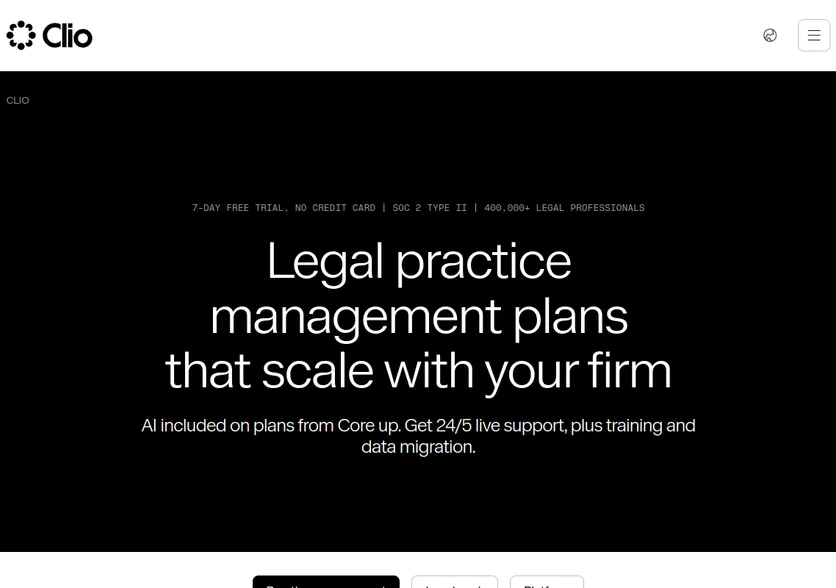
Paid tool Starting price: $49/user/month · Forty-nine dollars per user a month billed annually on EasyStart ($59 billed monthly); Essentials is $89 a user a month billed annually ($99 monthly), Advanced $119, Complete $149; higher tiers are quoted; the $79 Essentials figure in older guides is stale
Free plan: 7-day free trial
A trademark docket lives or dies on its deadlines, and this Clio plan costs forty-nine dollars per user a month billed annually to keep every filing date in one calendaring system. Applications, office actions and renewal dates sit beside the matter file, and deadline rules warn the team before a response window closes. It is the reliable default for a trademark firm that cannot afford a missed filing date.
What we like
- Matter, document and billing tools in one login
- Hundreds of integrations including LawPay and QuickBooks
- Court calendaring with deadline rules built in
Watch out for
- EasyStart caps some automation that higher tiers unlock
- Add-ons such as Clio Grow cost extra on top of Manage
How to try it
- Create a matter from the intake form and set the billing rate
- Log time and expenses against the matter as work happens
- Generate the invoice and send it through the client portal
2. MyCase
Best for: Firms that want a client portal with billing
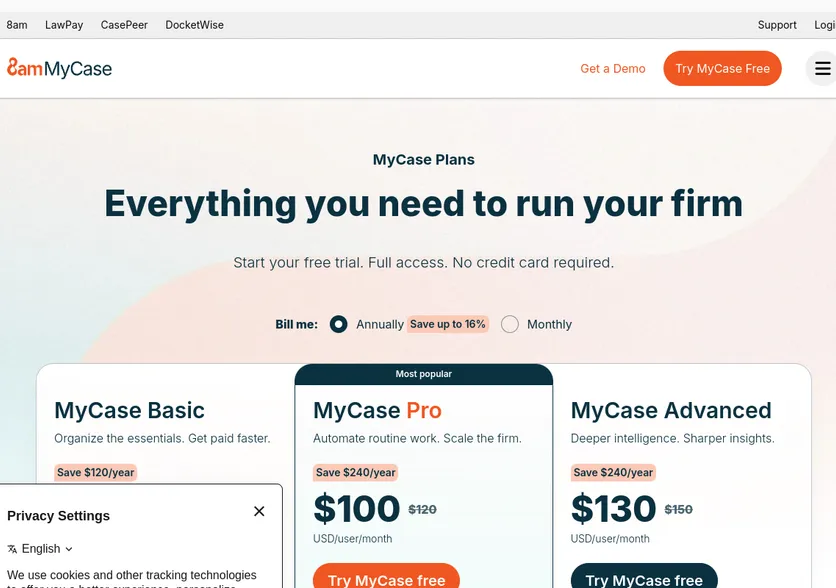
Paid tool Starting price: $50/user/month · Fifty dollars per user a month billed annually on Basic ($60 billed monthly); Pro is $100 a user a month billed annually ($120 monthly) and Advanced is $130 ($150 monthly); MyCase Accounting adds $39 per user a month on Pro and Advanced; prices rose in August 2026 from $39, $89 and $109
Free plan: 10-day free trial
Trademark clients want to see their mark moving, and this MyCase plan costs fifty dollars per user a month billed annually with a client portal that shows them exactly that. Clients upload specimens and sign engagement letters online, while the firm tracks office actions and renewals from the same case record. It suits a trademark practice that wants clients updated without a weekly status email.
What we like
- Client portal with messaging and online payments
- Built-in accounting keeps trust ledgers beside matters
- Document automation builds routine letters in seconds
Watch out for
- Accounting add-on costs extra on Pro and Advanced
- Reporting is thinner than Clio on the Basic tier
How to try it
- Open a new case and invite the client to the portal
- Set tasks and calendar events from the case timeline
- Send the invoice and track payment in the same window
3. PracticePanther
Best for: Small firms that want workflows from day one
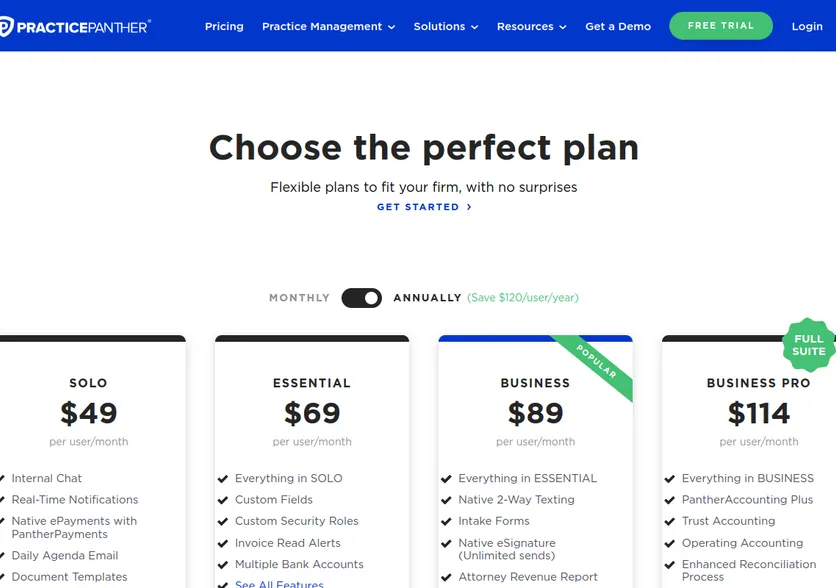
Paid tool Starting price: $49/user/month · Forty-nine dollars per user a month billed annually on Solo ($59 billed monthly); Essential is $69 ($79 monthly), Business $89 ($99 monthly) and Business Pro $114 ($124 monthly); annual billing saves $120 per user a year
Free plan: 7-day free trial
Every trademark application follows the same path, and this PracticePanther plan costs forty-nine dollars per user a month billed annually to run that path as a workflow. Search, filing, office action response and renewal each get their own stage, and the workflow moves the file forward without manual chasing. It is the pick for a trademark firm that files in volume.
What we like
- Workflows move a matter forward without manual chasing
- PantherPayments collects card payments inside the app
- Templates and e-signatures cover routine documents
Watch out for
- Solo tier limits automation runs per month
- No built-in accounting, so books live elsewhere
How to try it
- Start a matter from a template and assign the workflow
- Track time with the built-in timer as you work
- Invoice from the matter and collect payment online
4. CosmoLex
Best for: Firms that do their own books in-house
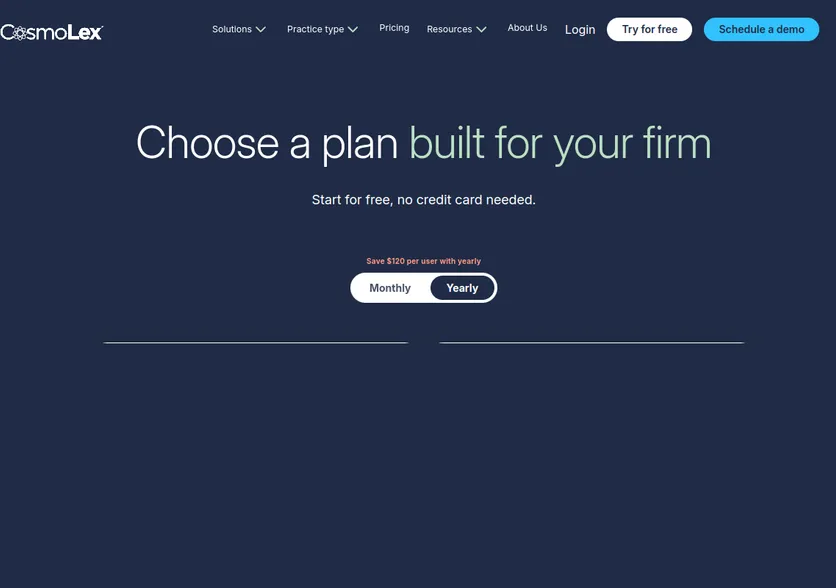
Paid tool Starting price: $49/user/month · Forty-nine dollars per user a month billed annually on Launch ($59 billed monthly); Core is $99 a user a month billed annually ($109 monthly) and Pro is $129 ($139 monthly)
Free plan: 10-day free trial
Trademark work mixes flat-fee filings with hourly disputes, and this CosmoLex plan costs forty-nine dollars per user a month billed annually with billing and accounting in the same system. Filing fees, client funds and invoices reconcile beside the docket, so the firm always knows what a mark has earned and what it has cost. It fits a trademark practice that wants its books beside its filings.
What we like
- Accounting and billing live in the same system
- Trust accounting reports satisfy compliance checks
- Client portal covers intake, messaging and payments
Watch out for
- Launch tier omits some advanced accounting reports
- Interface feels dated next to newer rivals
How to try it
- Create the matter and record the retainer in trust
- Log billable time and expenses against the matter
- Run the invoice and reconcile the trust ledger
5. Rocket Matter
Best for: Firms that bill by the hour and want time captured
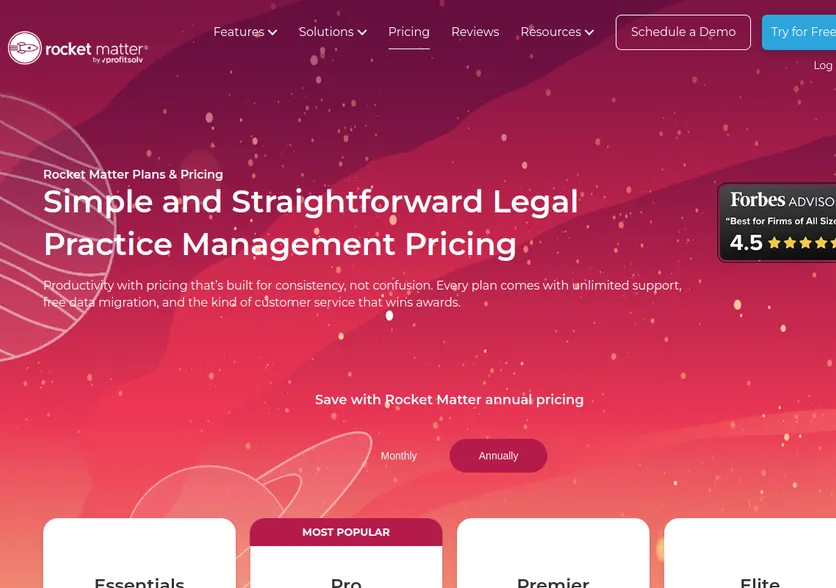
Paid tool Starting price: $59/user/month · Fifty-nine dollars per user a month billed annually on Essentials; Pro is $95, Premier $115 and Elite $145 on the same billing basis; the CRM add-on carries a $399 onboarding fee
Free plan: 10-day free trial
An office action response is billable work that is easy to forget, and this Rocket Matter plan costs fifty-nine dollars per user a month billed annually to capture it as it happens. Time on searches, filings and responses is logged from the matter dashboard, and document automation builds the routine letters in seconds. It suits a trademark firm that bills by the hour and wants every response on the invoice.
What we like
- Billing-first design keeps every hour captured
- Document automation builds routine filings fast
- Free data migration and unlimited support included
Watch out for
- Interface looks older than Clio or MyCase
- CRM features cost extra through the add-on
How to try it
- Open a matter and set the billing arrangement
- Record time from the matter dashboard as you work
- Batch the invoices and send them to clients
6. Lawcus
Best for: Firms that want a visual kanban view of cases
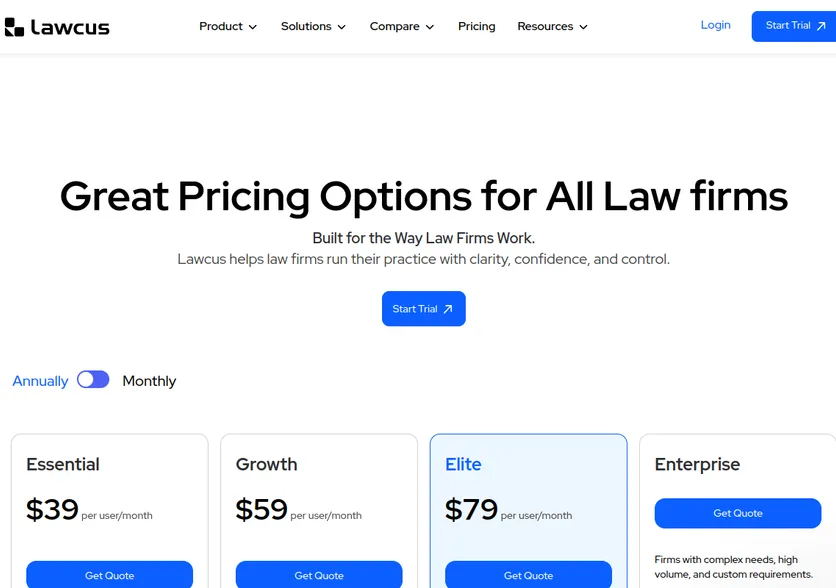
Paid tool Starting price: $49/user/month · Forty-nine dollars per user a month; older listings show $34 or $39 a user a month, but multiple November 2026 reads of the vendor pricing page agree on $49
Free plan: Free trial available
A trademark portfolio is a board of marks at different stages, and this Lawcus plan costs forty-nine dollars per user a month to show that board as a kanban. Searches, filings, office actions and renewals move across the board as they progress, and intake forms capture the next applicant while the team works the current filings. It is the visual pick for a firm that manages marks by stage.
What we like
- Kanban boards make the whole caseload visible
- Built-in intake forms capture leads automatically
- Time tracking and billing sit beside each matter
Watch out for
- Smaller integration library than Clio or MyCase
- Reporting is basic on the entry tier
How to try it
- Add the matter to the board and set its stage
- Send the intake form and log the first call
- Track time and invoice from the matter card
7. CaseFox
Best for: Budget-conscious firms that want the essentials
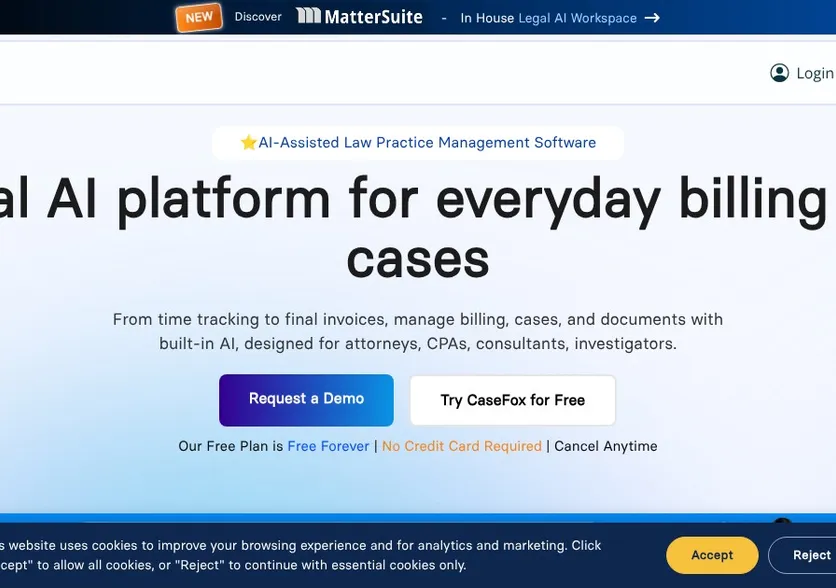
Paid tool Starting price: $39/user/month · Thirty-nine dollars per user a month billed annually ($45 billed monthly); a free Solo plan covers a single user with core billing and case tools
Free plan: Free plan available
A solo trademark attorney does not need enterprise software to file marks, and this CaseFox plan costs thirty-nine dollars per user a month billed annually for the case, time and billing essentials. The free Solo plan covers a single user outright, so a new trademark practice can run its first filings without paying at all. It is the cheapest way onto a real practice system for a one-person firm.
What we like
- Lowest entry price in this list for a full suite
- Free Solo plan covers a single user genuinely
- Billing, invoicing and case tools in one place
Watch out for
- Interface is plain and less polished than rivals
- Integrations are fewer than the bigger platforms
How to try it
- Create the case and enter the client details
- Log time and expenses as the case progresses
- Generate the invoice and email it to the client
8. CARET Legal
Best for: Mid-size firms that want analytics with matters
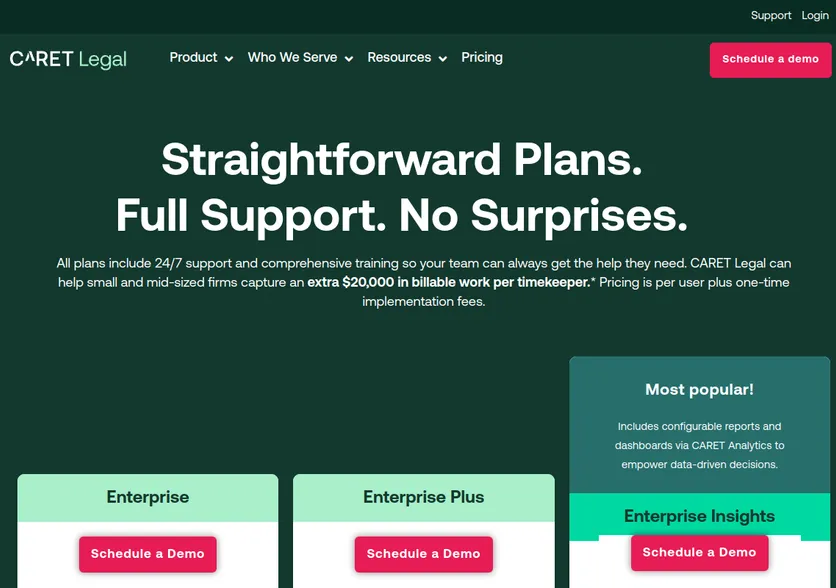
Paid tool Starting price: $79/user/month · Seventy-nine dollars per user a month billed annually on Enterprise; one-time implementation fees sit on top of the subscription
Free plan: No free plan; book a demo
A trademark firm with a large portfolio needs analytics on what it files, and this CARET Legal plan costs seventy-nine dollars per user a month billed annually to put those analytics beside the matter record. Email, documents and billing share one workspace, so partners can see filing volume and revenue without waiting for reports. It is the management pick for a trademark practice that runs at scale.
What we like
- Email, documents and billing in one workspace
- Analytics show revenue and matter health together
- Client portal covers intake through payment
Watch out for
- Enterprise-only pricing with implementation fees on top
- Smaller user community than Clio or MyCase
How to try it
- Set up the matter with its documents and deadlines
- Track time and tasks from the matter dashboard
- Review the analytics before sending invoices
Prices above were checked on each vendor’s own website on Nov 28, 2026 and can change — the vendor’s page is the final word. Vendor links are editorial: nobody paid to be listed or ranked here. Vendors who want a featured listing can see how it works on our Get listed page.
How to run a trademark docket without missing a filing date
Put every mark on the board the day the search starts, because a trademark file that lives in email is a file that misses its office action deadline. Docket the response window the moment the filing goes in, and set the rule to warn the team a week early rather than the day it closes. Keep specimens and engagement letters in the same matter record, so the file is complete when the examiner asks, and reconcile filing fees against the client ledger every month so no mark is ever filed unpaid.
Before you buy
- Check whether calendaring rules cover office action deadlines and renewal dates automatically
- Confirm the tool shows the whole portfolio by stage, not just one matter at a time
- Ask if document automation covers engagement letters and routine office action responses
- Make sure billing handles flat-fee filings and hourly disputes in the same matter
- Test the tool on a real trademark file before paying, including an office action response
Official websites
Official websites of the products reviewed above. Features and prices were checked against these sites when this guide was written, and they can change, so confirm on the vendor site before you buy.
Frequently asked questions
What is practice management software for trademark law firms?
It is software that runs a trademark docket from search through filing, office action and renewal in one place, covering the file, the calendar, the billing and the client portal. Good tools add deadline rules for response windows and a portfolio view that shows every mark at its stage, so a firm filing in volume never misses a date.
How much does Lawcus cost for a trademark firm?
Lawcus costs forty-nine dollars per user a month, with kanban boards, intake forms, time tracking and billing in the same tool. Older listings show thirty-four or thirty-nine dollars a user a month, but multiple November 2026 reads of the vendor pricing page agree on forty-nine dollars.
Which tool is best for tracking trademark deadlines?
Clio is the best pick for deadlines, at forty-nine dollars per user a month billed annually on EasyStart, because its calendaring carries deadline rules that warn the team before a response window closes. Every application, office action and renewal date sits beside the matter file.
Can a solo trademark attorney use these tools for free?
Yes, with CaseFox, which offers a free Solo plan covering a single user with core billing and case tools. That is enough to run a new trademark practice until the filing volume grows, and the paid plan starts at thirty-nine dollars per user a month billed annually.
Do these tools handle flat-fee trademark filings?
Yes, all eight tools handle flat-fee billing alongside hourly work, though CosmoLex does it best because billing and accounting sit in the same system. Filing fees, client funds and invoices reconcile beside the docket, so the firm always knows what a mark has earned.
Compare the eight tools above, then start with a free trial or the free CaseFox Solo plan on the tool that matches how the firm already runs its trademark docket before paying for a full year.
Browse Business Tools tools