
On this page
Contested probate adds hearings, discovery and motion deadlines to an estate that already runs for months, and the losing side often pays the other costs. The eight tools below track contested estates from intake to trial, with the deadlines, documents and billing that keep a litigation team ahead. Clio leads because it costs forty-nine dollars per user a month billed annually and covers matters, documents, calendars and billing in the system most firms already know.
How we researched this
We checked every price on the vendor pricing page or in multiple agreeing November 2026 reads of vendor-owned pages, and only included tools with a published US dollar price. Smokeball and Filevine publish no prices on their US pages and sell by quote, so they are not in this list. Prices change, so confirm the current figure on the vendor site before you buy.
Compare the tools
| Name | Best for | Starting price | Free plan | |
|---|---|---|---|---|
 Clio | Litigation firms handling contested estates | $49/user/month | 7-day free trial | Visit |
 MyCase | Litigation firms that want heirs kept informed during disputes | $50/user/month | 10-day free trial | Visit |
 PracticePanther | Litigation teams juggling several contested estates | $49/user/month | 7-day free trial | Visit |
 CosmoLex | Litigation firms that need a defensible estate ledger | $49/user/month | 10-day free trial | Visit |
 Rocket Matter | Litigation firms that bill every hour of a dispute | $59/user/month | 14-day free trial | Visit |
 TimeSolv | Litigation firms that want the cheapest full practice tool | $43/user/month | 30-day free trial | Visit |
 Lawcus | Litigation teams that want visual tracking of contested estates | $49/user/month | 14-day free trial | Visit |
 CARET Legal | Litigation firms that want a modern all-in-one system | $79/user/month | 14-day free trial | Visit |
The probate software for litigation firms, compared
1. Clio
Best for: Litigation firms handling contested estates
Paid tool Starting price: $49/user/month · Forty-nine dollars per user a month billed annually ($59 billed monthly); Essentials is $89 a user a month billed annually
Free plan: 7-day free trial
Litigation over an estate adds contested hearings, discovery and motion deadlines to ordinary probate work, and this Clio plan costs forty-nine dollars per user a month billed annually. It manages matters, documents, calendars and billing in one place, with court rules and deadline tracking that keep a contested estate on schedule. Its integration ecosystem also connects the discovery and e-signature tools a litigation team already uses.

What we like
- Matter, document, calendar and billing in one place
- Deadline tracking keeps contested estates on schedule
- Largest integration ecosystem in legal software
Watch out for
- Entry price buys the base plan, not the full feature set
- Add-ons push the monthly cost above the headline
How to try it
- Create a matter for each contested estate
- Set the hearing, discovery and motion deadlines
- Bill time and expenses against the estate as work proceeds
2. MyCase
Best for: Litigation firms that want heirs kept informed during disputes
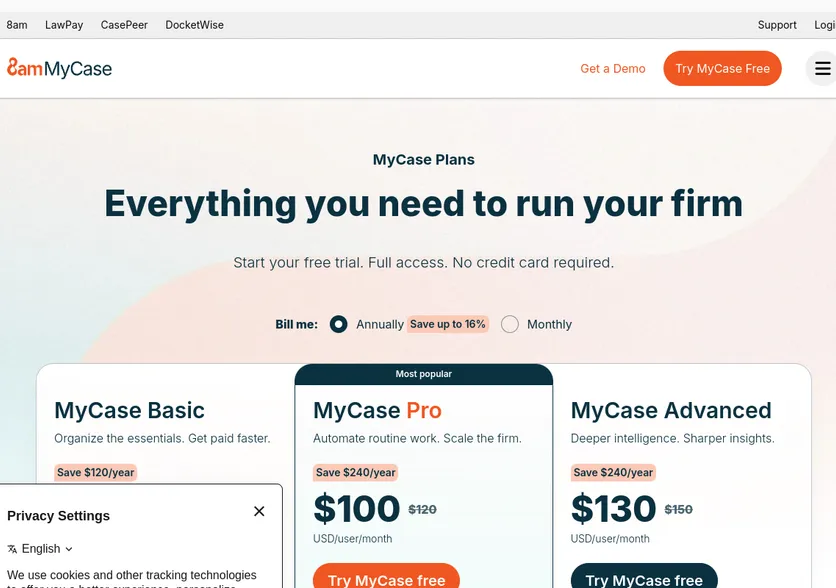
Paid tool Starting price: $50/user/month · Fifty dollars per user a month billed annually ($60 billed monthly); Pro is $100 and Advanced is $130 a user a month billed annually
Free plan: 10-day free trial
Contested probate means more calls from anxious heirs, so a portal that answers them matters, and this MyCase plan costs fifty dollars per user a month billed annually. Heirs and executors can check the case status, share documents and pay invoices through the client portal instead of phoning the office. Built-in billing and payments keep the estate account tidy through a long dispute.
What we like
- Client portal keeps heirs and executors updated
- Built-in billing and online payments
- Case, document and calendar tools in one system
Watch out for
- Fewer integrations than Clio
- Advanced features need the Pro or Advanced tier
How to try it
- Open the contested estate matter and invite the executor
- Upload the will, filings and discovery documents
- Send invoices through the portal as the case proceeds
3. PracticePanther
Best for: Litigation teams juggling several contested estates
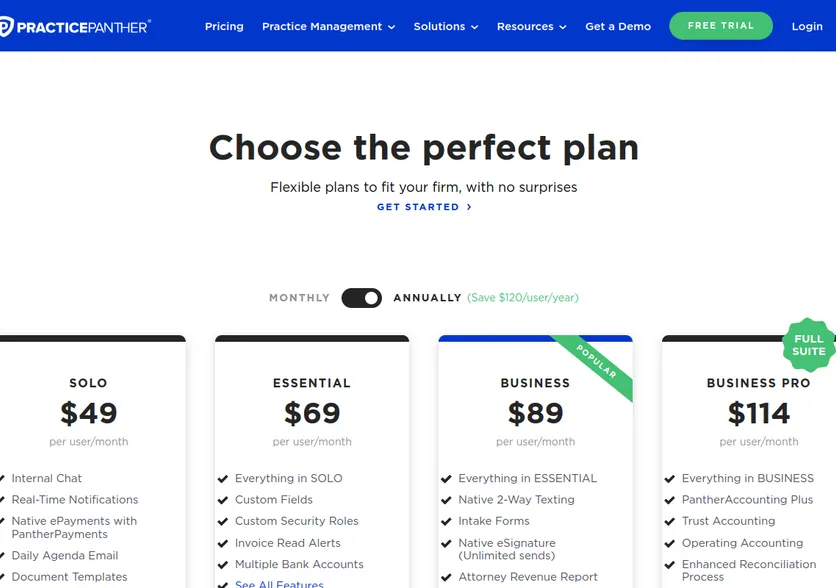
Paid tool Starting price: $49/user/month · Forty-nine dollars per user a month billed annually on Solo ($59 billed monthly); Essential is $69, Business is $89 and Business Pro is $114 a user a month billed annually
Free plan: 7-day free trial
A litigation team juggling several contested estates needs automation that never drops a deadline, and this PracticePanther plan costs forty-nine dollars per user a month billed annually on Solo. It automates intake, tracks matters and deadlines, and generates documents from templates, so the same estate forms never get typed twice. The simple interface keeps a busy litigation team moving without an administrator.
What we like
- Document templates stop retyping the same estate forms
- Intake automation and deadline tracking included
- Simple interface a busy team can run alone
Watch out for
- Solo plan is one user, so teams pay per seat
- Reporting is lighter than the bigger platforms
How to try it
- Set up each contested estate with its deadlines
- Build templates for the probate forms used most
- Automate intake for new estate disputes
4. CosmoLex
Best for: Litigation firms that need a defensible estate ledger
Paid tool Starting price: $49/user/month · Forty-nine dollars per user a month billed annually on Launch ($59 billed monthly); Core is $99 and Pro is $129 a user a month billed annually
Free plan: 10-day free trial
A contested estate ends with the court examining every dollar, so the ledger must be beyond reproach, and this CosmoLex plan costs forty-nine dollars per user a month billed annually on Launch. It combines practice management with built-in legal accounting, so trust and estate funds stay reconciled without a separate bookkeeping tool. That single ledger is the difference between a smooth final accounting and a courtroom problem.

What we like
- Built-in legal accounting with trust reconciliation
- Practice management and billing in one ledger
- Final accountings are easier after a long dispute
Watch out for
- Accounting depth takes longer to learn
- Core and Pro tiers cost double or more
How to try it
- Open the estate matter and its trust ledger
- Record every receipt and payment against the estate
- Run the reconciliation before the final accounting
5. Rocket Matter
Best for: Litigation firms that bill every hour of a dispute
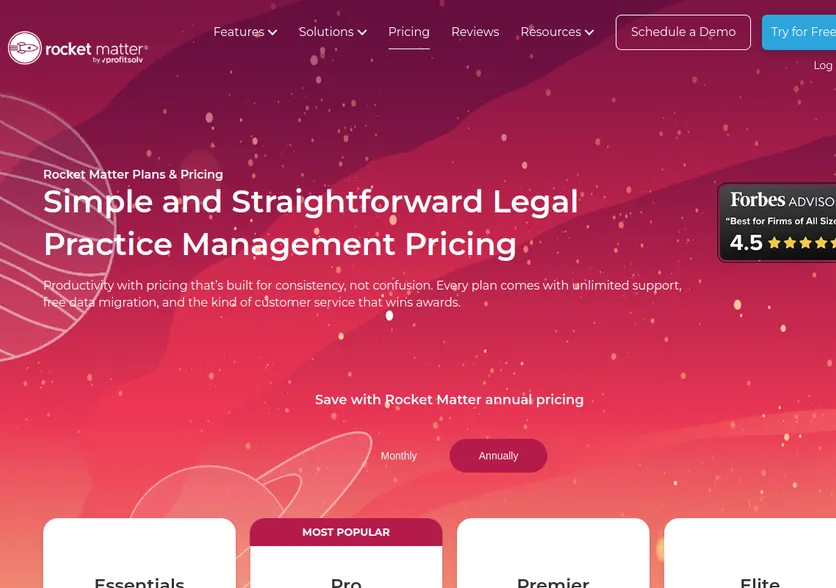
Paid tool Starting price: $59/user/month · Fifty-nine dollars per user a month billed annually on Essentials; Pro is $95, Premier is $115 and Elite is $145 a user a month billed annually; the $49 figure in older listings is stale
Free plan: 14-day free trial
Litigation billing is relentless, with every call and hearing charged to the estate, and this Rocket Matter plan costs fifty-nine dollars per user a month billed annually on Essentials. It tracks time, matters, documents and billing with a clean interface, and the higher tiers add document automation and advanced reporting. It is a solid middle-priced choice for a firm that outgrew a basic tracker.
What we like
- Clean time capture tied to each estate matter
- Document automation on the higher tiers
- Billing and trust accounting included
Watch out for
- Entry price is higher than Clio, MyCase or CosmoLex
- The $49 figure in older listings is stale
How to try it
- Create the estate matter and start the time clock
- Log calls, hearings and discovery time as they happen
- Invoice the estate from the tracked time each month
6. TimeSolv
Best for: Litigation firms that want the cheapest full practice tool
Paid tool Starting price: $43/user/month · Forty-three dollars per user a month billed annually on Pro; Legal is $58 a user a month billed annually; the twenty-five percent first-year promotion is not the list price
Free plan: 30-day free trial
A contested estate can run for years, so a firm needs billing that captures every small task across all of them, and this TimeSolv plan costs forty-three dollars per user a month billed annually on Pro. It tracks time and expenses, manages matters and invoices, and its legal-specific billing handles the fee structures estates use. At forty-three dollars it is the cheapest full practice tool in this list.

What we like
- Lowest entry price in this list at $43 a user a month
- Legal-specific billing for estate fee structures
- Thirty-day free trial, the longest here
Watch out for
- Smaller integration list than Clio or MyCase
- The twenty-five percent first-year promo is not the list price
How to try it
- Set up the estate matter with its fee arrangement
- Track time and expenses as the dispute proceeds
- Invoice the estate from the tracked entries
7. Lawcus
Best for: Litigation teams that want visual tracking of contested estates
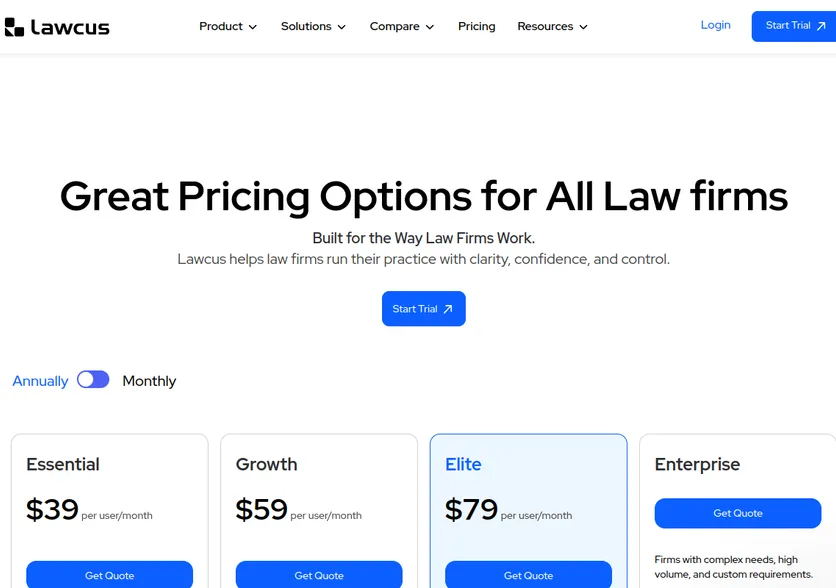
Paid tool Starting price: $49/user/month · Forty-nine dollars per user a month per multiple November 2026 reads; older listings showing $34 or $39 a user a month are called out here as stale against the current reads
Free plan: 14-day free trial
A litigation practice that tracks each estate through stages will like the board view here, because this Lawcus plan costs forty-nine dollars per user a month. Its kanban boards show every contested estate at its current stage, from intake to trial, with automation moving files forward as tasks complete. It is a lighter system than the big suites, which suits a team that wants clarity over depth.
What we like
- Kanban boards show every estate at its stage
- Automation moves files forward as tasks complete
- Light system a small team can run without training
Watch out for
- Older $34 and $39 listings are stale against current reads
- Fewer accounting features than CosmoLex or TimeSolv
How to try it
- Build a board with the stages from intake to trial
- Move each estate card as its tasks complete
- Automate reminders for the next hearing or filing
8. CARET Legal
Best for: Litigation firms that want a modern all-in-one system
Paid tool Starting price: $79/user/month · Seventy-nine dollars per user a month billed annually; higher tiers and add-ons are quoted on the vendor site
Free plan: 14-day free trial
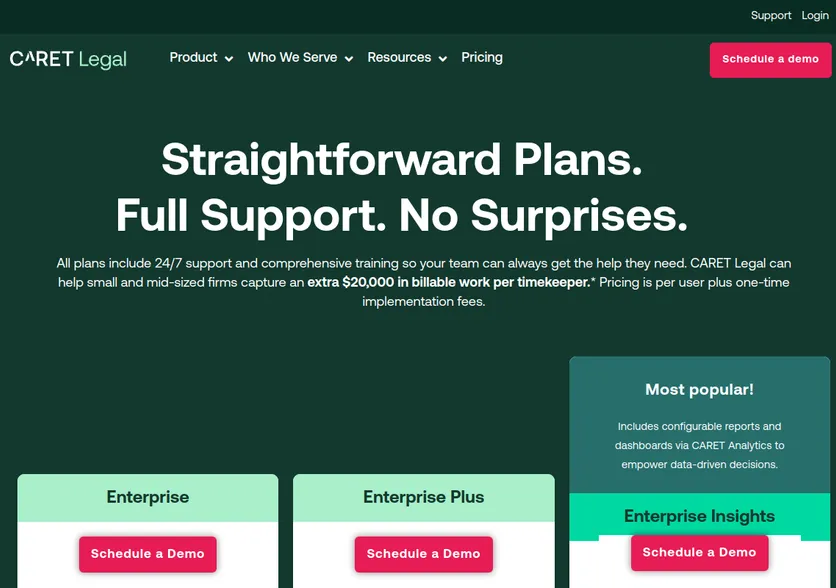
A litigation firm that wants a modern system built for the way firms work now will find it here, since this CARET Legal plan costs seventy-nine dollars per user a month billed annually. It covers matter management, time tracking, billing and document handling in a clean interface, with workflow tools that suit a team handling contested estates. It is the priciest entry in this list, so it should earn the premium in daily use.
What we like
- Modern interface with matter, time and billing together
- Workflow tools suit teams handling contested estates
- Document handling built into the matter file
Watch out for
- Highest entry price in this list at $79 a user a month
- Higher tiers and add-ons are quoted
How to try it
- Open the contested estate matter with its parties
- Track time and documents against the matter
- Invoice the estate from the tracked entries each month
Prices above were checked on each vendor’s own website on Nov 28, 2026 and can change — the vendor’s page is the final word. Vendor links are editorial: nobody paid to be listed or ranked here. Vendors who want a featured listing can see how it works on our Get listed page.
How a litigation firm should run a contested estate
Open one matter per contested estate and keep discovery, motions and correspondence inside it, because a disputed estate that lives in email will lose a filing at the worst moment. Set every hearing, discovery and motion deadline the day the matter opens, with a reminder a week before it falls due. Log every call and hearing the same day, since a contested estate is billed on the record and memory fades fast. Finally, reconcile the estate account monthly, because a dispute that ends in court will put every dollar under examination. Keep the client portal updated too, since an heir who can see progress phones the office far less.
Before you buy
- Keep discovery, motions and correspondence inside one estate matter
- Set all hearing, discovery and motion deadlines on the day the matter opens
- Log every call and hearing the same day for accurate billing
- Check whether trust accounting is built in or needs a separate tool
- Reconcile the estate account monthly so the final accounting survives scrutiny
Official websites
Official websites of the products reviewed above. Features and prices were checked against these sites when this guide was written, and they can change, so confirm on the vendor site before you buy.
Frequently asked questions
What is the best probate software for a litigation firm?
Clio is the best overall pick for most litigation firms, at forty-nine dollars per user a month billed annually with matters, documents, calendars and billing in one system. CosmoLex is the best pick where trust accounting matters most, with a built-in legal ledger from the same price. TimeSolv is the best budget pick at forty-three dollars per user a month for a firm that bills every hour of a dispute.
How much does CosmoLex cost for a litigation firm?
CosmoLex costs forty-nine dollars per user a month billed annually on Launch, or fifty-nine dollars billed monthly, with Core at ninety-nine dollars and Pro at one hundred and twenty-nine dollars a user a month billed annually. That covers practice management with built-in legal accounting and trust reconciliation. A ten-day free trial lets a firm test it on a real contested estate before paying.
Do litigation firms need different probate software than other firms?
The core needs are the same, but litigation firms should weigh deadline tracking, document handling and time capture more heavily, since contested estates generate more hearings, discovery and billable hours. CARET Legal at seventy-nine dollars per user a month is the premium pick in this list for firms that want a modern all-in-one system. Smaller litigation teams can run on Clio, MyCase or TimeSolv at forty-three to fifty dollars per user a month.
Can a small litigation firm use these tools for free?
No full practice tool here offers a free plan, but every one offers a free trial of seven to thirty days, with TimeSolv longest at thirty days. TimeSolv at forty-three dollars per user a month is the cheapest paid entry, and PracticePanther Solo at forty-nine dollars covers a single user. A small firm should trial two tools on a real contested estate and keep the one the team actually uses.
What should a litigation firm look for in probate software?
Look for matter management that holds the will, filings, discovery and correspondence in one place, deadline tracking with court rules, and time capture that never leaks billable hours. Trust accounting matters too, since a contested estate ends with the court examining every dollar. Finally, check the price per user at the firm real headcount, since a forty-nine dollar headline can double on a higher tier.
Compare the eight tools above, then trial the one that fits the firm caseload on a real contested estate before paying for a full year.
Browse Business Tools tools