On this page
Electronics retailers take back faulty gadgets every day, and every return that needs a human email costs money twice. The eight tools below automate that job, from a cheap portal for a first store to a full returns platform that swaps faulty items without a refund. Loop Returns leads because it automates exchanges, refunds and logistics for three hundred and forty dollars a month, and the rest are ranked on how much of the returns work they take off the team.
How we researched this
We checked every price on the vendor pricing page on November 28, 2026, and only included tools with a published United States dollar list price. Narvar, Happy Returns, ReBound and Optoro, which Toolnimba lists for electronics returns, publish no prices, so they are not in this list. Prices change, so confirm the current figure on the vendor site before you buy.
Compare the tools
| Name | Best for | Starting price | Free plan | |
|---|---|---|---|---|
| Loop Returns | Electronics retailers whose returns volume outgrew email | $340/month | Free Checkout+ plan (eligible merchants) | Visit |
| ReturnLogic | Electronics retailers that need an audit trail for every return | $299/month | No free plan; usage-based from $0.25/return | Visit |
| ZigZag Global | Electronics retailers with a modest returns volume | $20/month | Free plan (UK domestic returns only) | Visit |
| ReturnGO | Electronics retailers that want swaps instead of refunds | $147/month | 14-day free trial | Visit |
| AfterShip Returns | Electronics retailers that already track shipments with AfterShip | $16/month | No free plan; free trial available | Visit |
| WeSupply | Electronics retailers that want tracking and returns in one subscription | $50/month | 14-day free trial | Visit |
| Return Prime | Electronics retailers on Shopify that want a cheap portal | $19.99/month | Free plan (5 requests a month) | Visit |
| RichReturns | Electronics retailers on Shopify with a small returns volume | $19/month | No free plan; 30-day free trial | Visit |
The returns automation software for electronics retailers, compared
1. Loop Returns
Best for: Electronics retailers whose returns volume outgrew email
Paid tool Starting price: $340/month · Returns plan is three hundred and forty dollars a month on an annual contract, for up to one thousand returns a year; Checkout+ is free for eligible merchants.
Free plan: Free Checkout+ plan (eligible merchants)
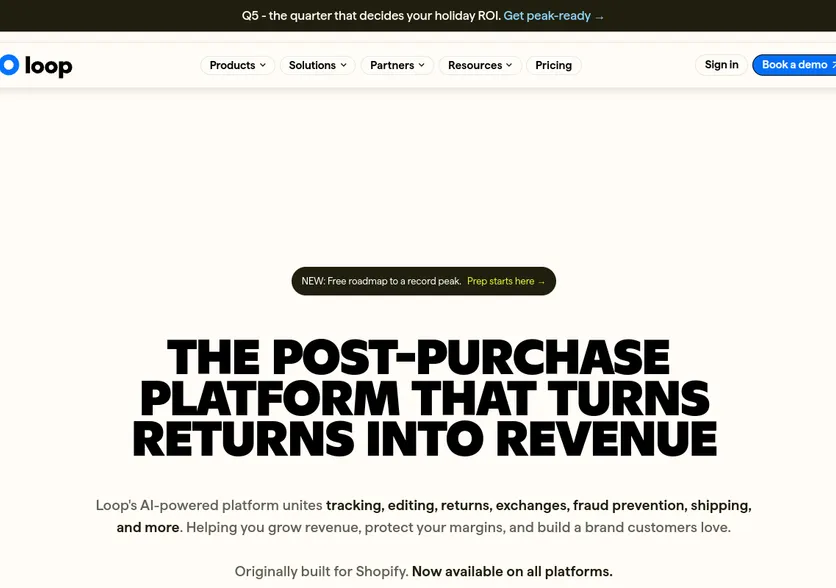
An electronics retailer that takes back faulty gadgets every day needs returns to run themselves, and this Loop Returns plan costs three hundred and forty dollars a month on an annual contract, for up to one thousand returns a year. The portal handles exchanges, refunds and logistics in one flow, so staff touch only the exceptions. It suits a retailer whose returns volume has outgrown email and spreadsheets.
What we like
- Exchanges, refunds and logistics in one flow
- Branded portal that keeps customers in the store
- Checkout+ is free for eligible merchants
Watch out for
- Three hundred and forty dollars a month is the annual contract rate
- The old Essential plan at one hundred and fifty-five dollars is gone
How to try it
- Connect the store and set the return rules
- Brand the returns portal and publish it
- Review exceptions and let the rest run themselves
2. ReturnLogic
Best for: Electronics retailers that need an audit trail for every return
Paid tool Starting price: $299/month · Essential starts at two hundred and ninety-nine dollars a month; the vendor pricing page also lists usage-based rates from twenty-five cents to three dollars and ninety cents a return with no subscription, so confirm the plan at checkout; Enterprise is quoted and contracts auto-renew for twelve months.
Free plan: No free plan; usage-based from $0.25/return
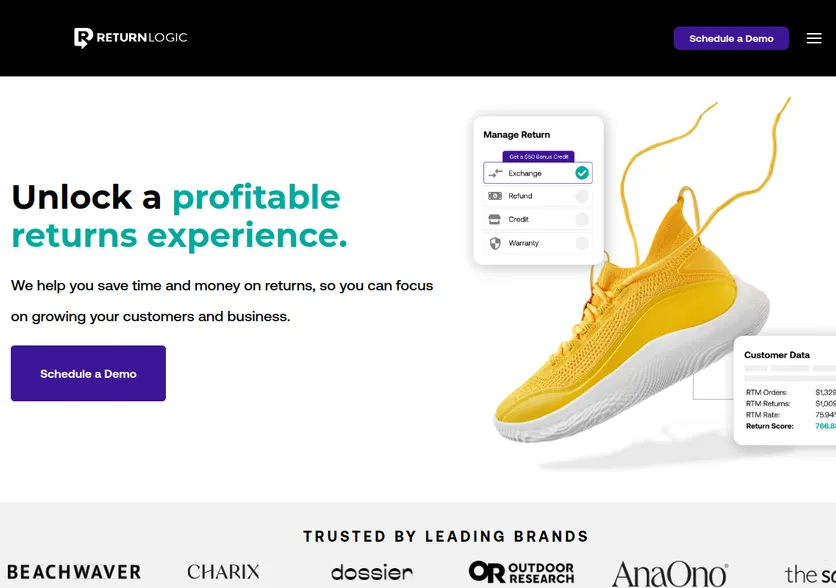
For an electronics retailer that wants every return tracked from request to refund, this ReturnLogic plan costs two hundred and ninety-nine dollars a month, and it covers the portal, the warehouse checks and the refund flow in one system. Every return carries its own record, so staff can see where a faulty item sits at any moment. It suits a retailer that needs a clear audit trail for every return.
What we like
- Portal, warehouse checks and refunds in one system
- Every return carries its own record
- Usage-based rates from twenty-five cents a return
Watch out for
- The vendor page also lists usage-based rates with no subscription
- Enterprise is quoted and contracts auto-renew for twelve months
How to try it
- Connect the store and set the return rules
- Brand the portal and set the warehouse checks
- Track each return from request to refund
3. ZigZag Global
Best for: Electronics retailers with a modest returns volume
Paid tool Starting price: $20/month · Silver is twenty dollars a month for one hundred returns, with twenty cents per extra return; Gold is fifty dollars a month and Platinum is one hundred and ninety-nine dollars a month; carriage is charged on top.
Free plan: Free plan (UK domestic returns only)
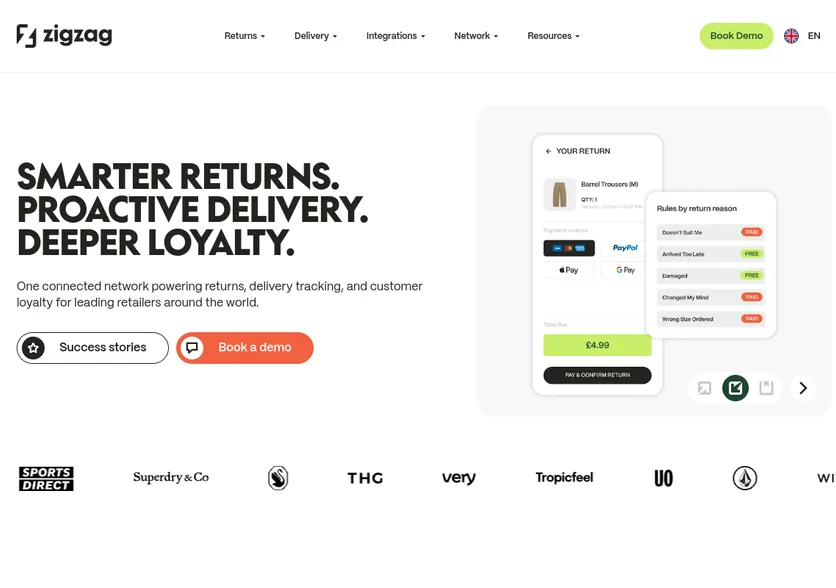
An electronics retailer with a modest returns volume gets the cheapest start here, because this ZigZag Global plan costs twenty dollars a month for one hundred returns, with twenty cents per extra return. The portal handles requests, labels and carrier bookings, while the free tier covers domestic returns in the United Kingdom. It suits a retailer that takes back a few faulty items a week, not hundreds a day.
What we like
- Cheapest start in this list at twenty dollars a month
- Free tier covers domestic returns in the United Kingdom
- Labels and carrier bookings included
Watch out for
- Carriage is charged on top of the monthly price
- The free tier covers the United Kingdom only
How to try it
- Start the fourteen-day trial and connect the store
- Set the return rules and carrier options
- Publish the portal and let customers request returns
4. ReturnGO
Best for: Electronics retailers that want swaps instead of refunds
Paid tool Starting price: $147/month · Premium is one hundred and forty-seven dollars a month for one hundred and ten returns, with one dollar and twenty-five cents per extra return; Pro is two hundred and ninety-seven dollars a month for three hundred returns.
Free plan: 14-day free trial
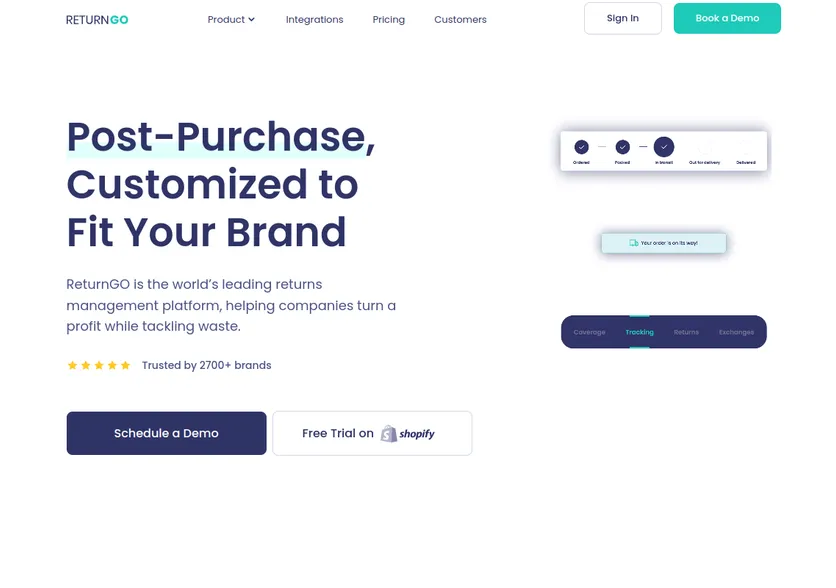
For an electronics retailer that wants faulty items swapped rather than refunded, this ReturnGO plan costs one hundred and forty-seven dollars a month, and it covers exchanges, refunds and instant credit in one portal. The portal pushes customers toward a swap first, which keeps the sale and the customer. It suits a retailer that loses margin on refunds and wants exchanges instead.
What we like
- Pushes customers toward exchanges instead of refunds
- Instant credit keeps customers shopping
- Fourteen-day free trial before paying
Watch out for
- One hundred and forty-seven dollars a month covers one hundred and ten returns
- Extra returns cost one dollar and twenty-five cents each
How to try it
- Connect the store and set the exchange rules
- Brand the portal and set the instant credit offer
- Review exchanges and let refunds run themselves
5. AfterShip Returns
Best for: Electronics retailers that already track shipments with AfterShip
Paid tool Starting price: $16/month · Essentials is sixteen dollars a month billed annually, or nineteen dollars month to month, for two hundred and forty returns a year; Premium is ninety-nine dollars a month billed annually for one thousand two hundred returns a year.
Free plan: No free plan; free trial available
An electronics retailer that already tracks shipments with AfterShip gets returns in the same account here, since this AfterShip Returns plan costs sixteen dollars a month billed annually, and it covers a branded portal with automated refunds. The portal handles requests, labels and status updates, so customers stop emailing the team. It suits a retailer that already uses AfterShip for tracking and wants returns beside it.
What we like
- Returns beside shipment tracking in one account
- Branded portal with automated refunds
- Cheapest paid portal in this list
Watch out for
- No free plan, only a free trial
- Essentials covers two hundred and forty returns a year
How to try it
- Connect the store and set the return rules
- Brand the portal and set the refund rules
- Publish the portal and let customers track returns
6. WeSupply
Best for: Electronics retailers that want tracking and returns in one subscription
Paid tool Starting price: $50/month · Growth is fifty dollars a month for two thousand shipments and one hundred returns a month; Advanced is one hundred and sixty-eight dollars a month; Enterprise is quoted above fifteen thousand shipments a month.
Free plan: 14-day free trial
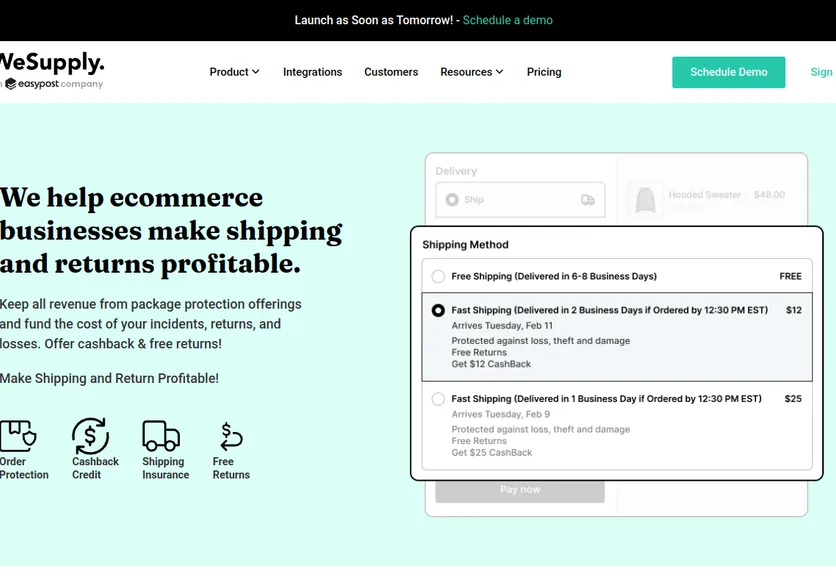
For an electronics retailer that wants tracking and returns in one subscription, this WeSupply plan costs fifty dollars a month, and it covers two thousand shipments and one hundred returns a month. The portal handles requests, labels and status updates, while tracking keeps customers informed after the sale. It suits a retailer that wants one subscription for the whole post-purchase journey.
What we like
- Tracking and returns in one subscription
- Branded portal with status updates
- Fourteen-day free trial before paying
Watch out for
- Growth covers one hundred returns a month
- Enterprise is quoted above fifteen thousand shipments a month
How to try it
- Connect the store and set the return rules
- Brand the portal and the tracking pages
- Review returns and let tracking run itself
7. Return Prime
Best for: Electronics retailers on Shopify that want a cheap portal
Paid tool Starting price: $19.99/month · Grow is nineteen dollars and ninety-nine cents a month for sixty requests; Thrive AI is seventy-nine dollars and ninety-nine cents and Scale is one hundred and forty-nine dollars and ninety-nine cents a month; Shopify only.
Free plan: Free plan (5 requests a month)
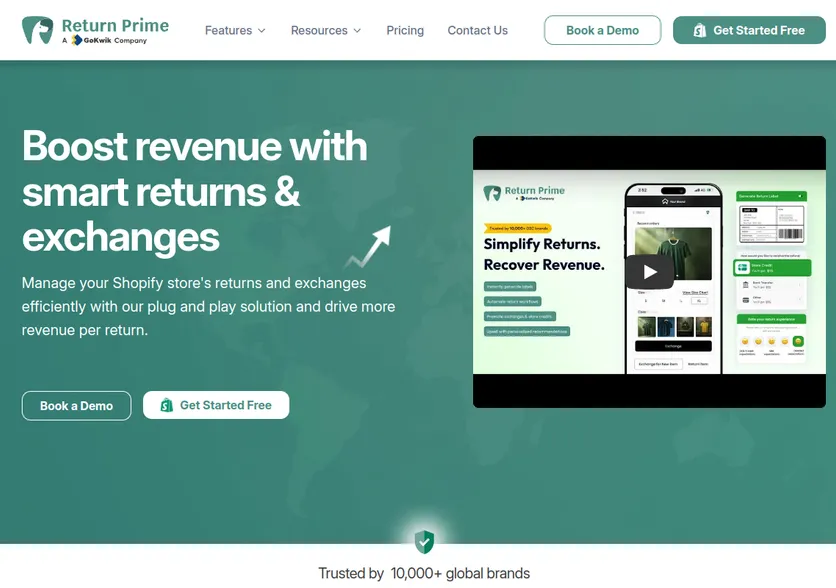
An electronics retailer on Shopify that wants a branded returns portal gets a cheap start here, because this Return Prime plan costs nineteen dollars and ninety-nine cents a month, and it covers sixty requests a month. The portal handles exchanges, refunds and store credit, with a free plan for five requests a month. It suits a Shopify retailer that wants a proper portal without a big monthly bill.
What we like
- Branded portal for Shopify stores
- Free plan covers five requests a month
- Exchanges, refunds and store credit in one portal
Watch out for
- Nineteen dollars and ninety-nine cents a month covers sixty requests
- Shopify only, so other platforms cannot use it
How to try it
- Install the app from the Shopify store
- Brand the portal and set the return rules
- Publish the portal and let customers request returns
8. RichReturns
Best for: Electronics retailers on Shopify with a small returns volume
Paid tool Starting price: $19/month · Standard is nineteen dollars a month for ten returns, with one dollar per extra return; Pro is thirty-nine dollars a month for fifty returns and Premium is ninety-nine dollars a month for one hundred; Shopify only.
Free plan: No free plan; 30-day free trial
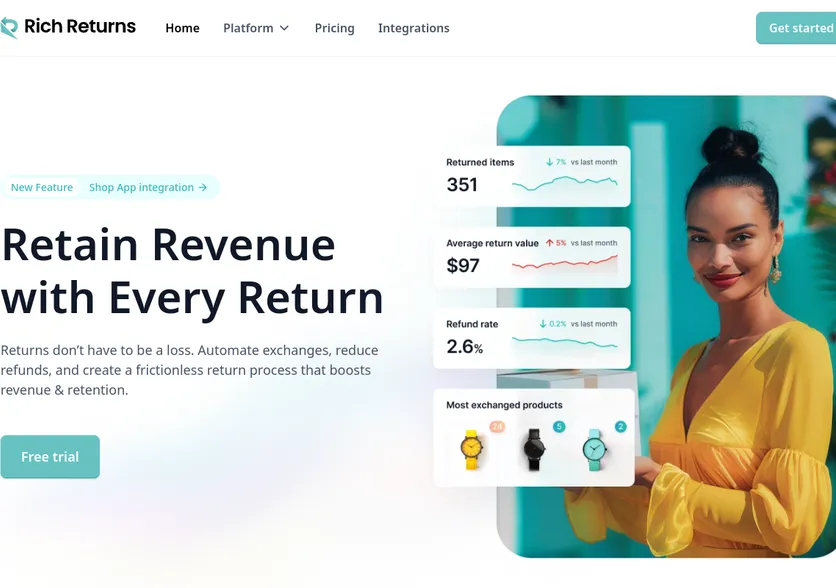
For an electronics retailer on Shopify with a small returns volume, this RichReturns plan costs nineteen dollars a month, and it covers ten returns with one dollar per extra return. The portal handles exchanges, refunds and store credit, with a thirty-day free trial before paying. It suits a Shopify retailer that takes back a few faulty items a month and wants a simple portal.
What we like
- Simple portal for Shopify stores
- Thirty-day free trial before paying
- Exchanges, refunds and store credit in one portal
Watch out for
- Nineteen dollars a month covers ten returns only
- Shopify only, so other platforms cannot use it
How to try it
- Install the app from the Shopify store
- Brand the portal and set the return rules
- Publish the portal and let customers request returns
Prices above were checked on each vendor’s own website on Nov 28, 2026 and can change — the vendor’s page is the final word. Vendor links are editorial: nobody paid to be listed or ranked here. Vendors who want a featured listing can see how it works on our Get listed page.
How an electronics retailer automates faulty-item returns
Put the portal where customers already look, because a return that starts with an email costs the team twice. Set the rules once, including which items can be swapped, which need a warehouse check and which go straight to refund, then let the portal apply them without a human in the middle. Check the exceptions every morning, because a faulty batch shows up first in the returns queue, and a quick swap keeps the customer when a refund would lose them.
Before you buy
- Confirm the portal pushes customers toward exchanges, not just refunds, to protect margin
- Check whether the price covers enough returns for a busy month, or charges per extra return
- Ask if the portal brands itself as the store, or sends customers to a third-party page
- Make sure the tool handles faulty items, including warehouse checks and restocking rules
- Test the portal with a real faulty product, from request to refund or swap
Official websites
Official websites of the products reviewed above. Features and prices were checked against these sites when this guide was written, and they can change, so confirm on the vendor site before you buy.
Frequently asked questions
What is the best returns automation software for electronics retailers?
Loop Returns is the best overall pick for electronics retailers, because it automates exchanges, refunds and logistics for three hundred and forty dollars a month on an annual contract, for up to one thousand returns a year. AfterShip Returns is the best value, at sixteen dollars a month billed annually for a branded portal. ZigZag Global is the cheapest start, at twenty dollars a month for one hundred returns.
How much does Loop Returns cost?
Loop Returns costs three hundred and forty dollars a month on an annual contract, for up to one thousand returns a year. Checkout+ is free for eligible merchants, which covers the post-purchase experience without the full returns platform. The old Essential plan at one hundred and fifty-five dollars a month was removed in November 2026, so confirm the current figure before buying.
Can an electronics retailer automate returns for free?
Yes, partly, because Return Prime offers a free plan for five requests a month, and ZigZag Global offers a free tier for domestic returns in the United Kingdom. Both are genuine free tiers rather than trials, so a small retailer can automate a few returns without paying. A busy electronics retailer will outgrow either free tier quickly and should compare the paid plans above.
Should returns push customers toward exchanges or refunds?
Exchanges, because a refund loses the sale and the customer, while a swap keeps both. ReturnGO and Loop Returns push customers toward exchanges first, with instant credit as the fallback, which suits electronics retailers that take back faulty items. A retailer that mostly refunds should check whether the portal can be set to offer exchanges before refunds.
Which tool is best for a small electronics retailer?
AfterShip Returns is the best value for a small electronics retailer, because it costs sixteen dollars a month billed annually for a branded portal with automated refunds. Return Prime suits a Shopify retailer, at nineteen dollars and ninety-nine cents a month for sixty requests. Loop Returns suits only a retailer with a serious returns volume, because its price is far higher than the rest.
Compare the eight tools above, then start with the free Return Prime plan or a trial on the tool that matches how the store already handles faulty items before paying for a full year.
Browse Business Tools tools