On this page
Shipping is where a Shopify store either makes money or quietly loses it, because every label, pickup and return eats margin. The eight tools below cover that job for stores of every size, from a shop sending ten parcels a week to a brand shipping thousands a month across borders. ShipStation leads because it prints labels for every major carrier in one place for fourteen dollars and ninety-nine cents a month, and the rest are ranked on how cheaply and reliably they move a Shopify order out the door.
How we researched this
We checked every price on the vendor pricing page on November 28, 2026, and only included tools with a published US dollar list price. ShipBob was left out because it quotes fulfillment by contract and publishes no price, and Pirate Ship was left out because it charges postage only with no monthly plan to compare. Prices change, so confirm the current figure on the vendor site before you buy.
Compare the tools
| Name | Best for | Starting price | Free plan | |
|---|---|---|---|---|
 ShipStation | Shopify stores shipping up to fifty orders a month | $14.99/month | No free plan; 30-day free trial | Visit |
| Shippo | Small sellers who want discounted postage fast | $17/month | Free plan (30 labels a month) | Visit |
| Easyship | Shopify stores shipping internationally every week | $23/month | Free plan | Visit |
| Stamps.com | Stores shipping mostly by USPS from one desk | $14.99/month | No free plan; 30-day free trial | Visit |
| AfterShip Shipping | Stores that field constant where-is-my-order questions | $11/month | Free plan | Visit |
| Ship.com | New Shopify stores shipping under ten orders a week | $4.99/month | No free plan; free trial | Visit |
| ShipStation API (formerly ShipEngine) | Developers embedding shipping in a custom store or app | $75/month | Free plan (sandbox + discounted carriers) | Visit |
 Ordoro | Growing stores that need shipping plus inventory | $59/month | No free plan; free trial | Visit |
The shipping software for Shopify stores, compared
1. ShipStation
Best for: Shopify stores shipping up to fifty orders a month
Paid tool Starting price: $14.99/month · Fourteen dollars and ninety-nine cents a month on Starter for fifty shipments ($11.99 a month billed annually); Standard is $29.99 a month and Premium is $349.99 a month; no free plan, thirty-day trial
Free plan: No free plan; 30-day free trial
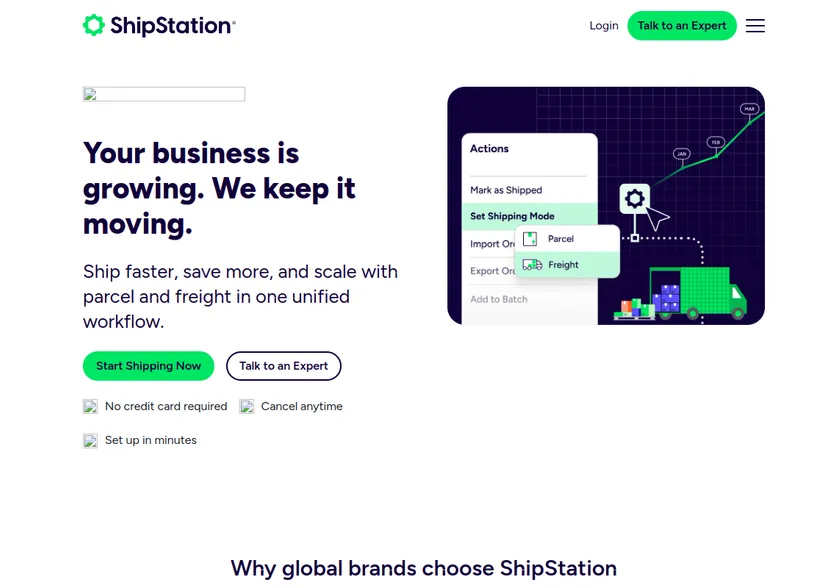
A Shopify store that ships fifty orders a month gets a proven multi-carrier desk here, since this ShipStation plan costs fourteen dollars and ninety-nine cents a month and covers the carriers most stores actually use. Its automation rules pick the cheapest service, print packing slips and send tracking emails without anyone touching the order, and branded tracking pages keep the buyer on the store site. It is the safest default for a store that wants shipping handled rather than managed by hand.
What we like
- Discounted rates across USPS, UPS, FedEx and DHL in one desk
- Automation rules pick services, print slips and email tracking
- Branded tracking pages keep buyers on the store site
Watch out for
- Starter caps at fifty shipments, so growth pushes you up a tier
- No free plan, so the trial is the only way to test it
How to try it
- Connect the Shopify store and import the open orders
- Set automation rules for the cheapest carrier per order weight
- Print the batch of labels and send tracking emails automatically
2. Shippo
Best for: Small sellers who want discounted postage fast
Paid tool Starting price: $17/month · Seventeen dollars a month on Pro billed annually ($19 billed monthly) for one to two hundred labels; Starter is free for thirty labels a month; Premier is quoted
Free plan: Free plan (30 labels a month)
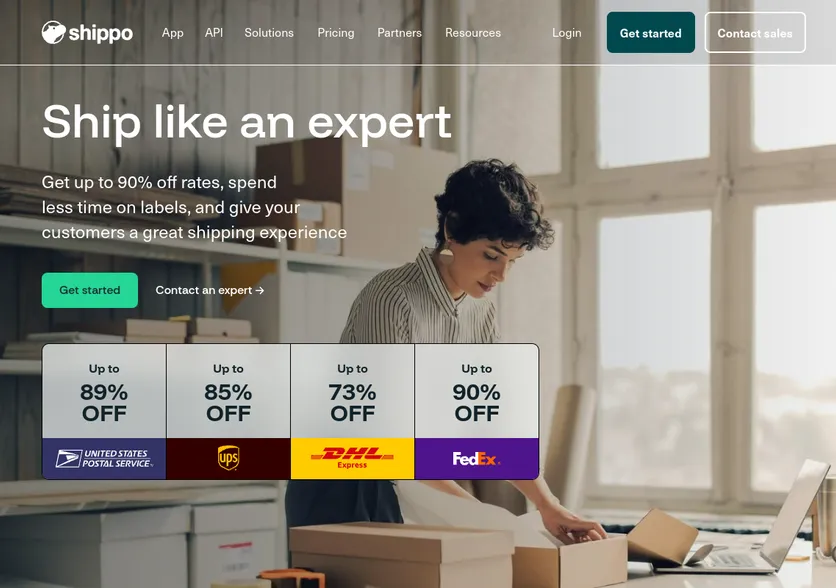
A small Shopify seller that wants discounted postage without a big commitment finds it here, since this Shippo plan costs seventeen dollars a month billed annually and covers one to two hundred labels. It compares rates across carriers at the label screen, prints in batches and syncs tracking back to Shopify, and the free Starter plan covers thirty labels a month for the smallest shops. It is the cheapest way to stop paying retail postage on every parcel.
What we like
- Discounted carrier rates with no volume commitment on Pro
- Rate comparison and batch printing at the label screen
- Free Starter plan covers thirty labels a month
Watch out for
- Pro caps at two hundred labels, so busy months cost more
- Premier pricing is quoted, so high-volume costs are unclear
How to try it
- Connect Shopify and confirm the carrier accounts to use
- Compare rates for the order and pick the cheapest service
- Print labels in a batch and sync tracking to the store
3. Easyship
Best for: Shopify stores shipping internationally every week
Paid tool Starting price: $23/month · Twenty-three dollars a month on Plus billed annually ($29 billed monthly) for up to five hundred shipments; Premier is $69 a month and Scale starts at $99; free plan for up to fifty shipments a month
Free plan: Free plan
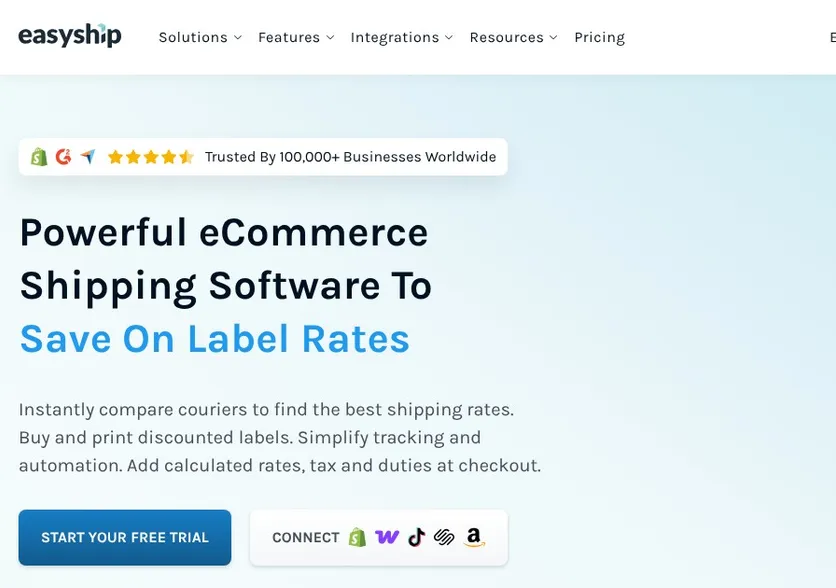
A store that ships overseas as often as it ships at home saves real money here, since this Easyship plan costs twenty-three dollars a month billed annually and covers up to five hundred shipments with discounted multi-carrier rates. It compares rates across two hundred and fifty couriers, prints labels in batches and shows branded tracking to buyers, and the free plan covers fifty shipments a month for the smallest shops. It suits a Shopify store whose customers sit in more than one country and wants one dashboard for every carrier.
What we like
- Discounted multi-carrier rates with branded tracking for buyers
- Customs forms and invoices printed in the same flow
- Two hundred and fifty plus couriers in one dashboard
Watch out for
- Duty and tax display at checkout needs the Premier tier
- The free plan is thin, so real volume needs Plus
How to try it
- Connect the store and enable the couriers to offer
- Turn on duty and tax calculation at checkout
- Print labels and customs forms for each order
4. Stamps.com
Best for: Stores shipping mostly by USPS from one desk
Paid tool Starting price: $14.99/month · Fourteen dollars and ninety-nine cents a month on Basic for one user, twenty-five stamps and ten labels; Professional is $29.99 and Multi-Location is $49.99; thirty-day trial, no free plan
Free plan: No free plan; 30-day free trial
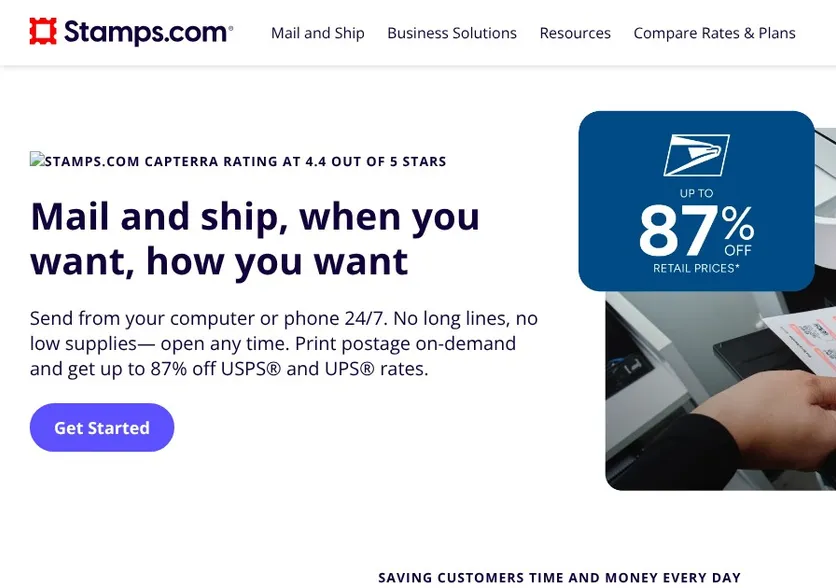
A seller that still prints postage from a desk drawer gets the post office on screen here, since this Stamps.com plan costs fourteen dollars and ninety-nine cents a month and covers stamps, labels and envelopes. It prints postage for letters and parcels, schedules free carrier pickups and tracks every piece, and the address book and batch tools cut the admin on repeat orders. It fits a store that ships mostly with the postal service and wants the cheapest possible setup.
What we like
- Print postage, labels and envelopes without leaving the desk
- Free carrier pickup scheduling on every plan
- Batch printing and an address book for repeat buyers
Watch out for
- Postal-service focus, so other carriers are an afterthought
- No free plan, so the trial is the only free test
How to try it
- Create the account and connect the Shopify store
- Import the orders and print postage in a batch
- Schedule a carrier pickup and send tracking to buyers
5. AfterShip Shipping
Best for: Stores that field constant where-is-my-order questions
Paid tool Starting price: $11/month · Eleven dollars a month on Essentials from one hundred labels; Pro starts at eighty-nine dollars a month from two thousand labels; free plan for low-volume stores
Free plan: Free plan
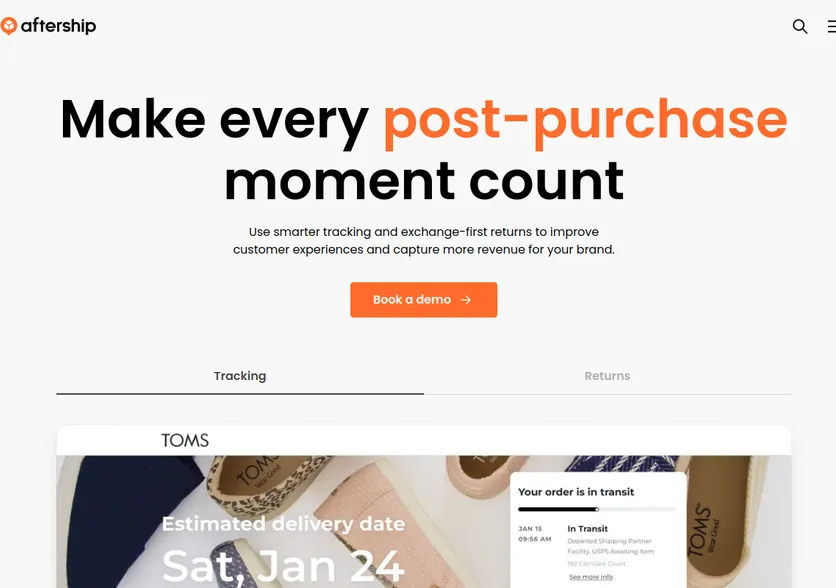
A store that wants tracking pages and returns handled in one place finds it here, since this AfterShip Shipping plan costs eleven dollars a month from one hundred labels and adds branded tracking on top. It rateshops across carriers, generates labels and gives buyers a tracking page that carries the store brand, while the returns portal takes the back-and-forth out of refunds. It is the best pick for a store whose buyers ask where their order is every day.
What we like
- Branded tracking pages that keep buyers on the store
- Returns portal that handles refunds without email chains
- Rateshopping across carriers at the label screen
Watch out for
- Essentials starts at one hundred labels, so tiny stores pay for slack
- Pro jumps to eighty-nine dollars, a big step up
How to try it
- Connect Shopify and the carriers to offer
- Enable the branded tracking page for buyers
- Turn on the returns portal and set the refund rules
6. Ship.com
Best for: New Shopify stores shipping under ten orders a week
Paid tool Starting price: $4.99/month · Four dollars and ninety-nine cents a month on Starter for ten shipments; Growth is $19.99 a month ($14 billed annually) and Executive is $29.99 ($22 annually)
Free plan: No free plan; free trial
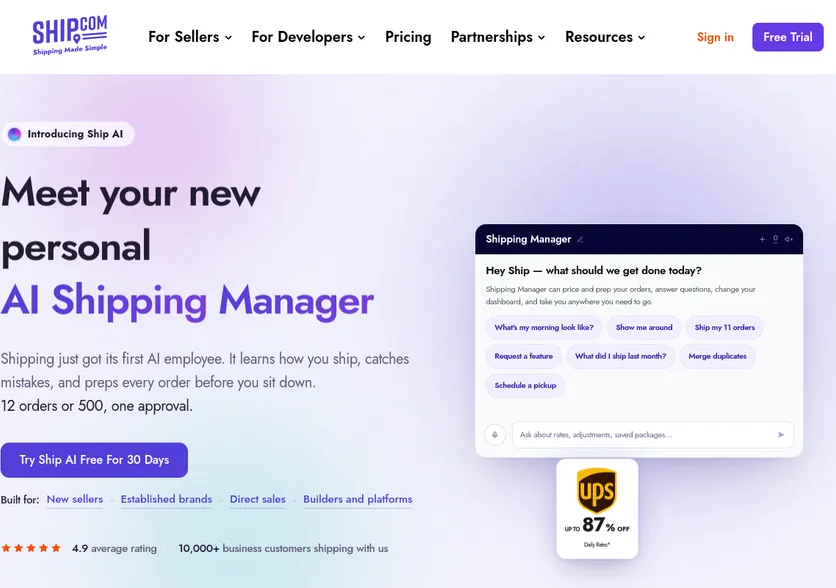
A tiny Shopify store that ships a handful of orders a week gets a cheap start here, since this Ship.com plan costs four dollars and ninety-nine cents a month for ten shipments and still compares carrier rates. It prints labels, tracks parcels and keeps the per-order cost visible, so a new seller can see exactly what shipping costs before scaling up. It is the lowest-priced entry in this list for a store just finding its feet.
What we like
- Lowest entry price in this list for a real shipping tool
- Carrier rate comparison even on the cheapest plan
- Simple setup with no long contract
Watch out for
- Starter caps at ten shipments, so growth means upgrading fast
- Fewer automation features than the bigger desks
How to try it
- Sign up and connect the Shopify store
- Compare carrier rates for the first orders
- Print labels and track each parcel to delivery
7. ShipStation API (formerly ShipEngine)
Best for: Developers embedding shipping in a custom store or app
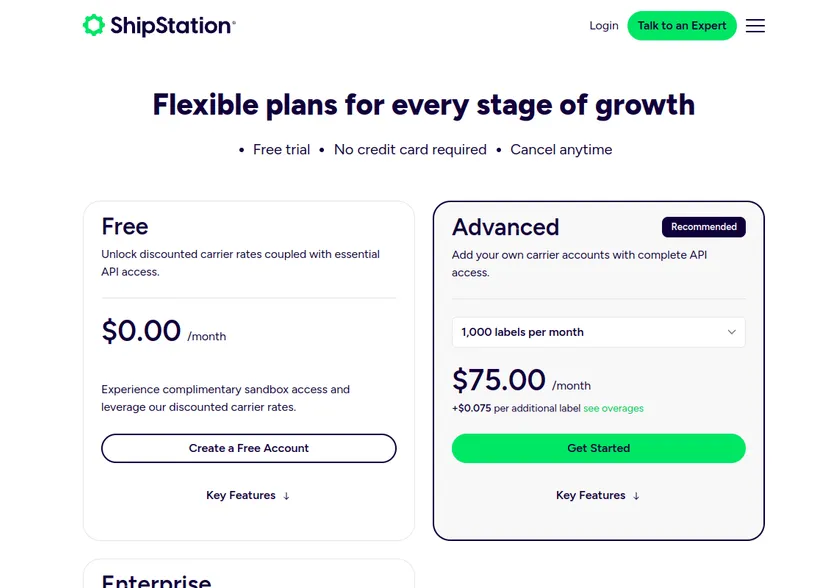
Paid tool Starting price: $75/month · Seventy-five dollars a month on Advanced for one thousand API calls per endpoint ($325 for five thousand, $600 for ten thousand); the Free plan covers sandbox testing and shipping on discounted carriers with no API usage charges; Enterprise is quoted; ShipEngine rebranded as ShipStation API in February 2025
Free plan: Free plan (sandbox + discounted carriers)
A developer building a custom shipping flow into a Shopify store gets a clean API here, since this ShipStation API plan costs seventy-five dollars a month for one thousand API calls per endpoint and connects dozens of carriers through one integration. It validates addresses, compares rates, prints labels and tracks parcels from code, and the sandbox plan lets a team test the whole flow before paying. It is the right pick when the store needs shipping inside its own app rather than inside a dashboard.
What we like
- One API for dozens of carriers, rates and labels
- Address validation and tracking built into the same calls
- Free sandbox plan for testing before paying
Watch out for
- No dashboard workflow, so non-developers get little value
- Advanced starts at one thousand labels, which is a lot for a test
How to try it
- Create a sandbox account and read the API docs
- Connect the carriers and test rates and labels
- Move to Advanced and point the store at the live keys
8. Ordoro
Best for: Growing stores that need shipping plus inventory
Paid tool Starting price: $59/month · Fifty-nine dollars a month on Express, shipping only; Pro is $499 a month and adds inventory and multichannel tools; Enterprise is $999 a month
Free plan: No free plan; free trial
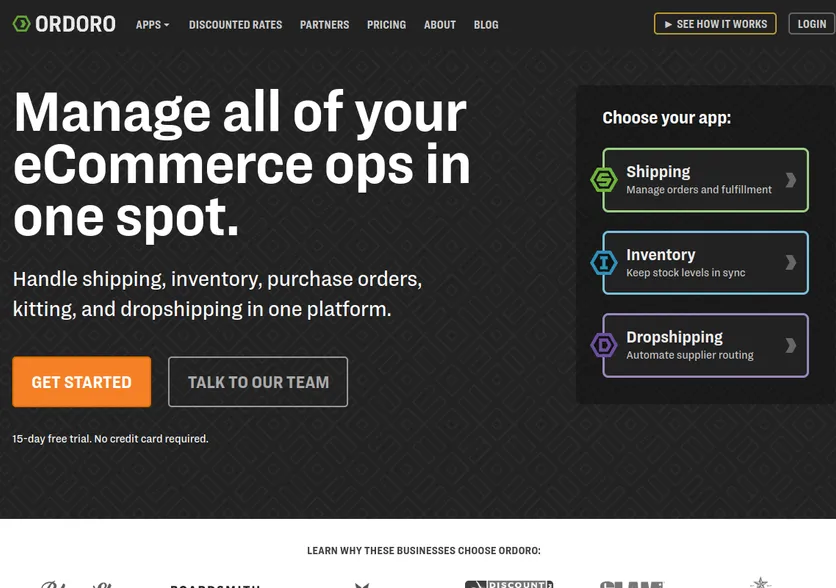
A growing store that needs shipping tied to inventory and dropshipping gets it here, since this Ordoro plan costs fifty-nine dollars a month on Express and handles labels, tracking and supplier orders together. It keeps stock levels honest across channels, routes dropship orders to suppliers automatically and prints labels in batches, so the warehouse stops being a spreadsheet. It suits a store that has outgrown shipping-only tools and needs the back office too.
What we like
- Shipping, inventory and dropshipping in one back office
- Supplier routing that sends dropship orders automatically
- Batch label printing with tracking synced to Shopify
Watch out for
- Express is shipping only, so inventory needs the Pro tier
- Pro at $499 a month is a steep jump from Express
How to try it
- Connect Shopify and the sales channels to sync
- Import products and set stock levels per warehouse
- Route orders to suppliers and print labels in batches
Prices above were checked on each vendor’s own website on Nov 28, 2026 and can change — the vendor’s page is the final word. Vendor links are editorial: nobody paid to be listed or ranked here. Vendors who want a featured listing can see how it works on our Get listed page.
The shipping software for Shopify stores, compared
Start with the real numbers, not the plan names: count the labels the store prints each month, then check what each plan covers before the overage starts. A ten-dollar plan that caps at fifty shipments costs more than a fifteen-dollar plan with room to grow once the store passes the cap. Test the tracking page as a buyer would, because a plain carrier page sends customers away while a branded page brings them back. Finally, check the return flow before the first sale, since a returns portal set up in ten minutes saves hours of email later.
Before you buy
- Count the labels the store prints in a busy month before picking a plan tier
- Check whether discounted carrier rates are included or only available on higher tiers
- Test the buyer tracking page and the returns portal before the first sale goes out
- Confirm the tool prints customs forms and shows landed costs for international orders
- Make sure automation rules cover the carriers and services the store actually uses
Official websites
Official websites of the products reviewed above. Features and prices were checked against these sites when this guide was written, and they can change, so confirm on the vendor site before you buy.
Frequently asked questions
What is the cheapest shipping software for a Shopify store?
Ship.com is the cheapest entry in this list at four dollars and ninety-nine cents a month for ten shipments, and AfterShip Shipping starts at eleven dollars a month from one hundred labels. Shippo offers a free Starter plan for thirty labels a month, which is the cheapest way to start if the store ships very little. Once volume passes a few hundred labels a month, ShipStation at fourteen dollars and ninety-nine cents usually works out cheaper per label.
Does ShipStation work with Shopify?
Yes, ShipStation connects directly to Shopify and imports orders, products and customer details automatically. It prints labels for USPS, UPS, FedEx, DHL and more, applies automation rules to pick the cheapest service, and syncs tracking numbers back to the store so buyers see them. The Starter plan costs fourteen dollars and ninety-nine cents a month for fifty shipments, with a thirty-day free trial and no free plan.
What does Easyship do that ShipStation does not?
Easyship focuses on cross-border shipping, showing duties, taxes and landed costs at checkout so buyers see the full price before they pay. ShipStation is stronger on domestic automation, batch printing and branded tracking for US orders. A store that ships mostly overseas will get more from Easyship at twenty-three dollars a month, while a domestic store will usually get more from ShipStation at fourteen dollars and ninety-nine cents.
Can I print USPS postage from my computer?
Yes, Stamps.com prints USPS postage, labels and envelopes from a desk computer for fourteen dollars and ninety-nine cents a month on Basic, with free carrier pickup scheduling. It also tracks every piece and keeps an address book for repeat buyers. Shippo and ShipStation also print USPS labels with discounted rates, so compare the monthly fee against the postage savings before choosing.
Do I need a separate tool for returns?
Not always. AfterShip Shipping includes a returns portal that handles refund requests without email chains, and most of the tools here sync tracking so buyers can follow their order. ShipStation and Ordoro handle returns through their order workflows too. If returns are a big part of the business, pick a tool with a built-in portal rather than adding a second app later.
Compare the eight tools above, then start with a free trial on the one that matches the store's monthly label count and carrier mix before paying for a full year.
Browse Business Tools tools