On this page
Enterprise software that texts customers needs an API that is cheap per message, reliable at volume and simple to build on, because every notification, reminder and alert flows through it. The eight APIs below cover that job, from the cheapest per-message rates to the most documented platforms. Telnyx leads because it charges four tenths of a cent per message part on its own private network, and the rest are ranked on rate, coverage and how easy they are to integrate.
How we researched this
We checked every price on the vendor pricing page on November 28, 2026, and only included APIs with a published US dollar list price. Infobip and Kaleyra sell by quote and publish no US per-message rate, so they are not in this list. Prices change, and carrier fees sit on top of every rate here, so confirm the current figure on the vendor site before you buy.
Compare the tools
| Name | Best for | Starting price | Free plan | |
|---|---|---|---|---|
 Twilio | Enterprises building SMS into their own software | $0.0083/SMS | Free trial ($15 trial credit) | Visit |
 Vonage | Enterprises that want SMS plus voice and video | $0.0086/SMS | Free trial with test credit | Visit |
 Plivo | High-volume senders that want a lean API | $0.0077/SMS | Free trial ($10 credit) | Visit |
 Telnyx | Enterprises that want the lowest per-message rate | $0.004/message part | Free trial ($10 credit) | Visit |
 Sinch | Enterprises mixing an API with no-code tools | $0.0078/SMS | Free trial (14-day trial with credits) | Visit |
| Bandwidth | Enterprises that want a direct carrier relationship | $0.004/SMS | Free trial (3,000 Build credits) | Visit |
 ClickSend | Businesses that want SMS without writing code | $0.0273/SMS | Free trial with test credit | Visit |
 TextMagic | Businesses that text irregularly and hate subscriptions | $0.049/SMS | Free trial with test credit | Visit |
The SMS APIs for enterprise management software, compared
1. Twilio
Best for: Enterprises building SMS into their own software
Paid tool Starting price: $0.0083/SMS · Eighty-three hundredths of a cent per US SMS segment, outbound and inbound, plus carrier fees of about a third to half a cent per segment; MMS is $0.022 per message
Free plan: Free trial ($15 trial credit)
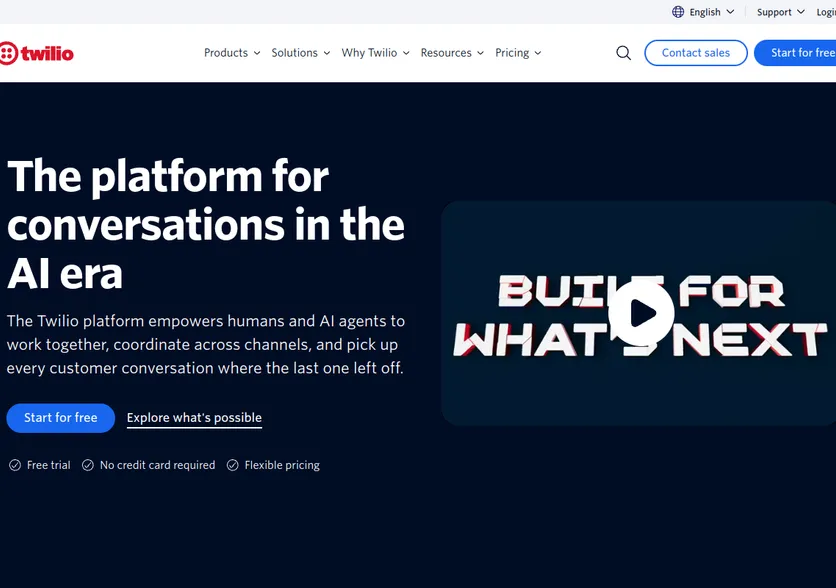
An enterprise team building SMS into its own software starts here, because this Twilio plan costs eighty-three hundredths of a cent per US SMS segment, and it is the most documented messaging API in the industry. It is the default SMS API for a reason: the documentation is thorough, the SDKs cover every major language, and the same account scales from a prototype to millions of messages. The pay-as-you-go model means an enterprise pays only for what it sends.
What we like
- The most documented SMS API in the industry
- Global coverage with local numbers in most countries
- Add-ons for verification, voice and WhatsApp on one account
Watch out for
- Carrier fees push the real cost to about 1.2 cents a message
- Pricing by segment makes long messages cost more
How to try it
- Create a Twilio account and buy a phone number
- Register the brand and campaign for 10DLC sending
- Send the first message through the Messages API
2. Vonage
Best for: Enterprises that want SMS plus voice and video
Paid tool Starting price: $0.0086/SMS · Eighty-six hundredths of a cent per US outbound SMS on a local number in November 2026 reads ($0.00691 inbound); earlier 2026 reads showed $0.00809, so confirm the current rate before budgeting
Free plan: Free trial with test credit
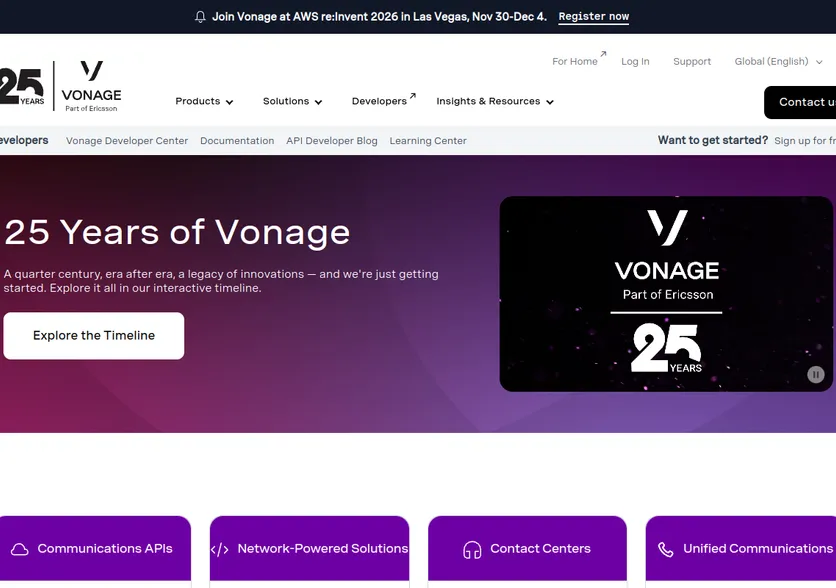
An enterprise that wants SMS, voice and video from one vendor will find this Vonage plan costs eighty-six hundredths of a cent per US outbound message, and the same account covers the whole communications stack. It pairs the SMS API with voice, video and verification under one account, which suits an enterprise that wants a single communications vendor. The Messages API also covers WhatsApp and RCS, so one integration can reach customers on several channels.
What we like
- One API for SMS, voice, video and verification
- Global reach with local numbers in many countries
- Volume pricing available through sales
Watch out for
- The published rate moved during 2026, so quotes vary
- Toll-free sending is priced through sales
How to try it
- Sign up and get API keys from the dashboard
- Rent a virtual number for sending
- Call the SMS API with the message and destination
3. Plivo
Best for: High-volume senders that want a lean API
Paid tool Starting price: $0.0077/SMS · Seventy-seven hundredths of a cent per US outbound SMS on long codes and short codes ($0.0079 toll-free), plus carrier surcharges; SMS now sits on the Enterprise plan with a $1,000 a month minimum commitment
Free plan: Free trial ($10 credit)
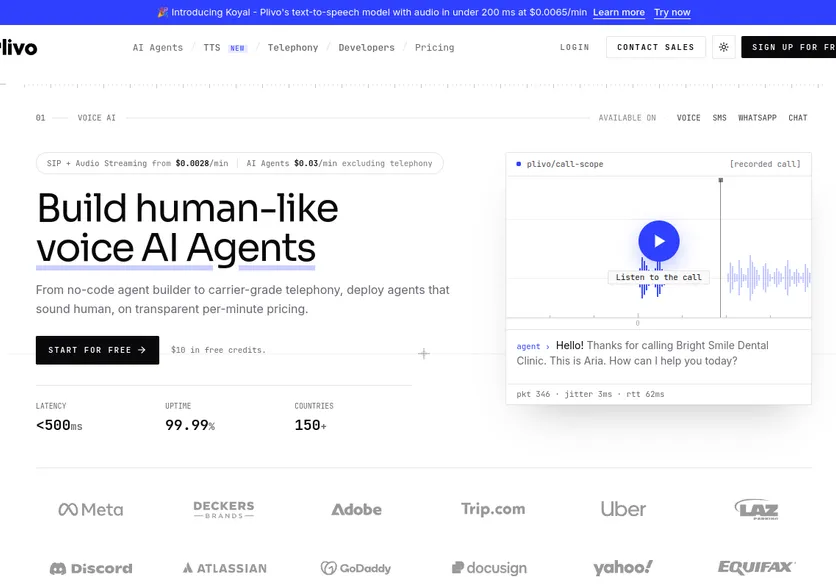
A high-volume enterprise that wants the cheapest simple API will find this Plivo plan costs seventy-seven hundredths of a cent per US outbound message, though SMS now needs the Enterprise plan and its monthly commitment. It undercuts the big names on the per-message rate while keeping the API simple enough to integrate in an afternoon. The catch in 2026 is the Enterprise gate: SMS now requires a monthly commitment, so it suits senders with real volume rather than occasional traffic.
What we like
- Flat US rate across long codes and short codes
- Clean REST API with SDKs in six languages
- Volume pricing and a fraud shield on the Enterprise plan
Watch out for
- SMS is now gated behind the $1,000 a month Enterprise plan
- Fewer engagement tools than the omnichannel platforms
How to try it
- Create an account and claim the trial credit
- Buy a US long code number for $0.50 a month
- Send a test message through the Messages API
4. Telnyx
Best for: Enterprises that want the lowest per-message rate
Paid tool Starting price: $0.004/message part · Four tenths of a cent per US SMS message part, outbound and inbound, plus carrier fees; toll-free is $0.0055 and short code is $0.007 per part
Free plan: Free trial ($10 credit)
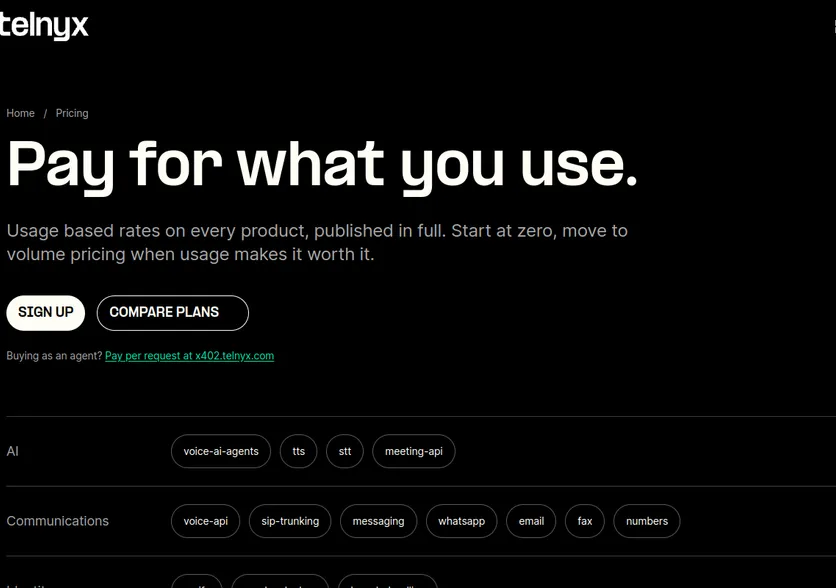
An enterprise counting every tenth of a cent will find the lowest published US rate here, since this Telnyx plan costs four tenths of a cent per SMS message part, and it runs on its own private network. It owns its network end to end, which is how it holds the lowest published US rate in this list at four tenths of a cent a part. The pricing page lists the carrier fee as its own line, so an enterprise can see exactly what the message costs and what the carrier takes.
What we like
- Lowest published US SMS rate at $0.004 a part
- Own private network with direct carrier connections
- Carrier fees shown as a separate line, never marked up
Watch out for
- Volume discounts only start above 100 million messages
- The portal is built for developers, not marketers
How to try it
- Create an account and fund it with credit
- Buy a messaging number from the portal
- Send through the API or the no-code messaging flow
5. Sinch
Best for: Enterprises mixing an API with no-code tools
Paid tool Starting price: $0.0078/SMS · Seventy-eight hundredths of a cent per US message on 10DLC and toll-free ($0.009 on short codes), plus carrier fees; 10DLC numbers are $1 a month
Free plan: Free trial (14-day trial with credits)
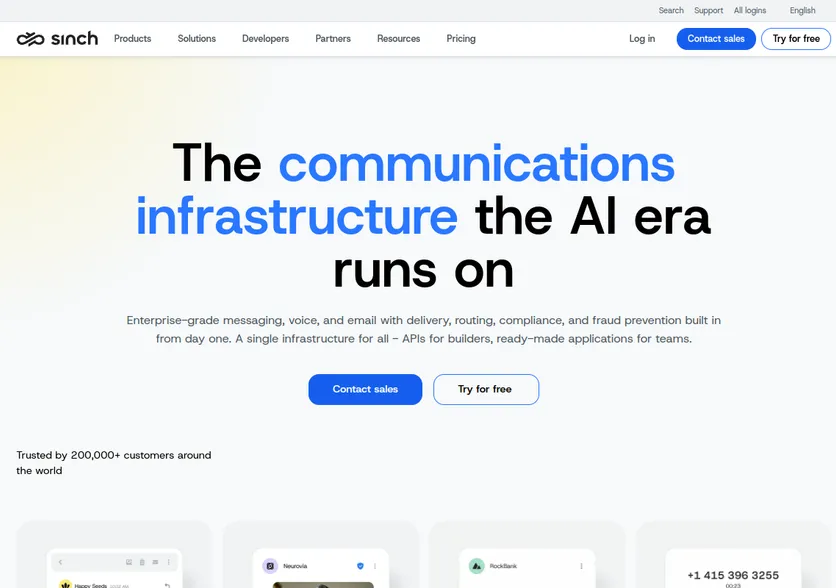
An enterprise that needs both an API for developers and no-code tools for marketers will find this Sinch plan costs seventy-eight hundredths of a cent per US message, and both sides work from the same account. It pairs a developer API with no-code tools for the marketing team, so one vendor can serve both the engineers and the people writing campaigns. Direct carrier connections and a published uptime SLA make it a solid enterprise pick.
What we like
- API plus no-code messaging tools in one vendor
- Direct connections to tier-one US carriers
- Also owns SimpleTexting, ClickSend and Mailgun
Watch out for
- Carrier fee amounts are not published on the pricing page
- Volume discounts are negotiated, not listed
How to try it
- Start the trial and pick a sending number
- Register the 10DLC brand and campaign
- Send through the SMS API or the dashboard builder
6. Bandwidth
Best for: Enterprises that want a direct carrier relationship
Paid tool Starting price: $0.004/SMS · Four tenths of a cent per US outbound SMS on 10DLC ($0.007 toll-free, $0.008 short code), plus carrier surcharges; production accounts are onboarded through sales
Free plan: Free trial (3,000 Build credits)
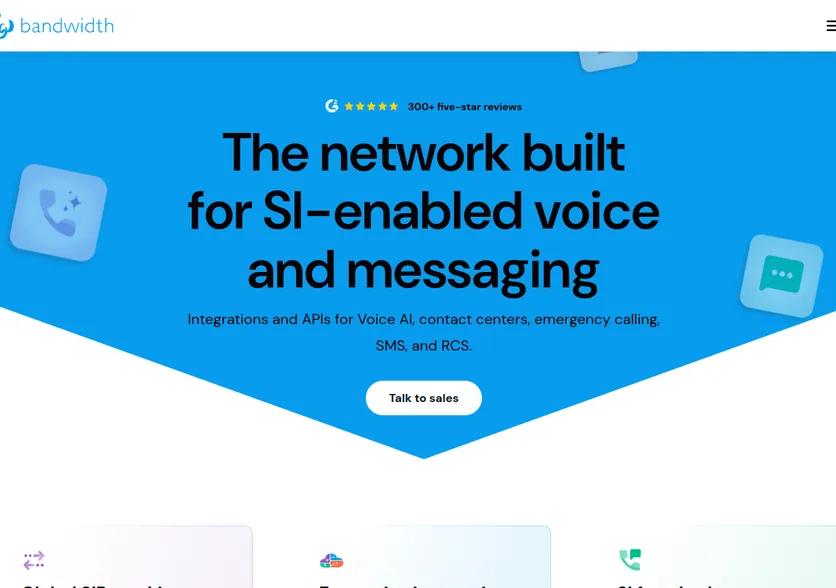
An enterprise that wants to buy messaging from the carrier itself will find this Bandwidth plan costs four tenths of a cent per US outbound message on 10DLC, and it runs on the company's own nationwide network. It is a carrier first and a software vendor second, which is why its 10DLC rate matches the cheapest in this list. An enterprise that wants a direct relationship with the network rather than a reseller will like the control, though onboarding runs through sales.
What we like
- Matches the lowest published 10DLC rate at $0.004
- Runs its own nationwide carrier network
- Messaging, voice and emergency calling APIs in one place
Watch out for
- Production messaging accounts are onboarded through sales
- Inbound rates and number prices are not published
How to try it
- Start the Build trial with no card
- Talk to sales to open a production messaging account
- Send through the REST Messaging API
7. ClickSend
Best for: Businesses that want SMS without writing code
Paid tool Starting price: $0.0273/SMS · Two point seven three cents per US SMS on the entry Boost tier ($20 top-up), falling to $0.0089 on a $2,000 top-up, plus a flat $0.0041 carrier fee per message; inbound SMS is free
Free plan: Free trial with test credit
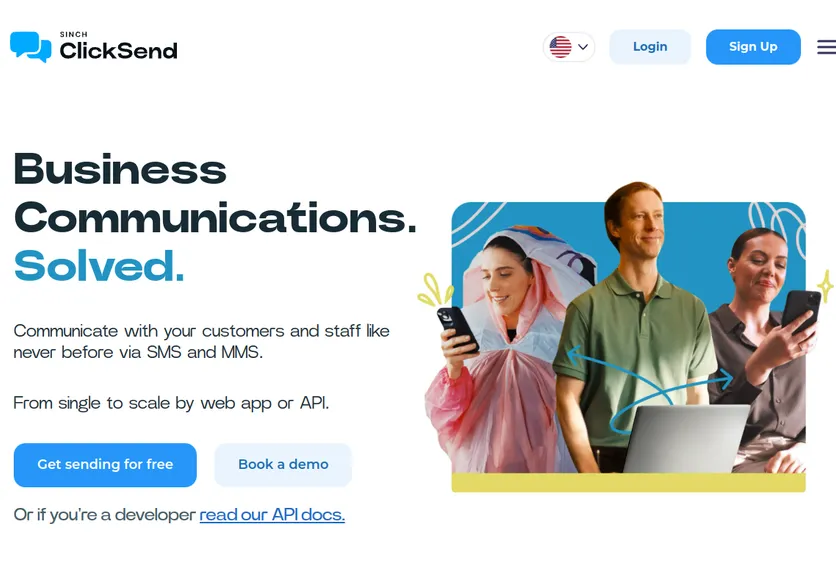
An enterprise that wants messaging without building an integration will find this ClickSend plan costs about two and three-quarter cents per US message on the entry tier, and the same account also sends email, voice and postal mail. It is the no-code option: a dashboard that sends SMS, email, voice and even postal mail from one account, with no subscription and no contract. The per-message price falls sharply with bigger top-ups, so it rewards businesses that prepay.
What we like
- SMS, email, voice and postal mail in one account
- No subscription, no monthly minimum, no contract
- Prepaid credits mean the bill never surprises you
Watch out for
- The entry rate is the highest per-message price in this list
- The rate depends on top-up size, not on how much you send
How to try it
- Create an account and top up with credit
- Pick a toll-free or local sending number
- Send a campaign from the dashboard or the API
8. TextMagic
Best for: Businesses that text irregularly and hate subscriptions
Paid tool Starting price: $0.049/SMS · Four and nine-tenths cents per outbound SMS on pay-as-you-go credits, falling to $0.02 at 100,000 messages; a dedicated number is $10 a month and 10DLC registration is $10 a month
Free plan: Free trial with test credit
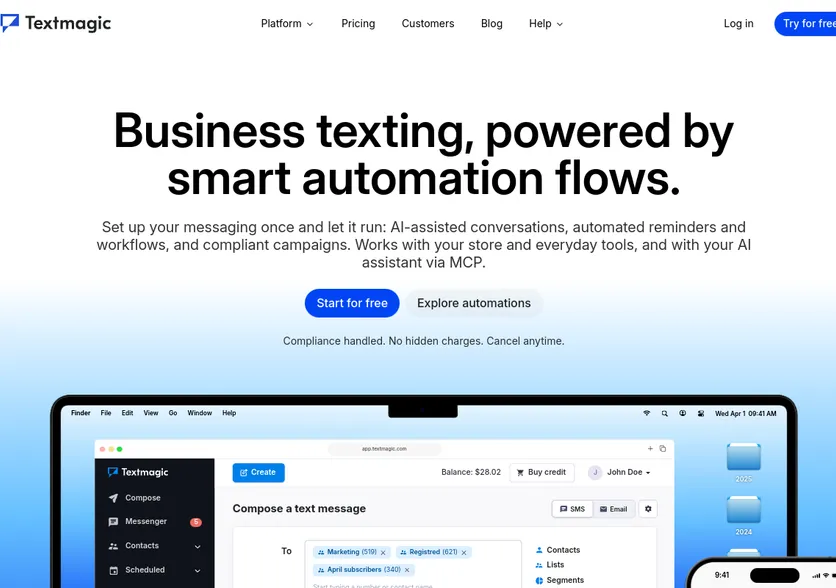
An enterprise that texts in bursts rather than every day will like this TextMagic plan, which costs four and nine-tenths cents per SMS on pay-as-you-go credits that never expire, so quiet months cost nothing. It charges by the message and nothing else: buy credits once, spend them whenever, with no monthly plan to keep paying through quiet months. The bring-your-own-carrier option lets a business connect its own Twilio or Vonage number and pay a penny a message on top.
What we like
- Pay-as-you-go credits that never expire
- Email-to-SMS and two-way messaging included
- Bring-your-own-carrier option cuts the rate to $0.01 a message
Watch out for
- The per-message rate is the highest of the dashboard tools
- A number and 10DLC registration add $20 a month on top
How to try it
- Buy a credit bundle from the pricing calculator
- Rent a dedicated number for sending
- Send a campaign or a one-to-one text from the dashboard
Prices above were checked on each vendor’s own website on Nov 28, 2026 and can change — the vendor’s page is the final word. Vendor links are editorial: nobody paid to be listed or ranked here. Vendors who want a featured listing can see how it works on our Get listed page.
How to pick an SMS API without blowing the messaging budget
Price the whole message, not just the headline rate, because carrier fees add a third to half a cent to every text on most of these APIs. Work out the monthly volume first: at a few thousand messages the cheapest API wins, but at hundreds of thousands the volume tiers and the Enterprise minimums matter more. Then check the number costs and the 10DLC registration fees, which are separate on every platform. Finally, send a test message through the sandbox before committing, and read the delivery reports to see how fast messages actually arrive.
Before you buy
- Compare the full cost per message, including carrier fees, not just the headline rate
- Check whether the API needs a monthly minimum or an Enterprise plan before you can send
- Confirm 10DLC registration and number rental costs are in the budget, not just messages
- Test delivery speed and reporting in the sandbox before moving production traffic
- Make sure the API covers the countries and channels the enterprise actually needs
Official websites
Official websites of the products reviewed above. Features and prices were checked against these sites when this guide was written, and they can change, so confirm on the vendor site before you buy.
Frequently asked questions
What is an SMS API for enterprise management software?
It is a programming interface that lets enterprise software send and receive text messages from its own code, without a human opening a dashboard. The software calls the API to send appointment reminders, alerts, one-time codes and notifications, and the API handles delivery, replies and reporting back to the system.
How much does Twilio SMS cost per message?
Twilio charges eighty-three hundredths of a cent per US SMS segment, outbound and inbound, plus carrier fees of about a third to half a cent per segment. That puts a single short text at roughly 1.2 cents all in. MMS costs two point two cents per message. There is no monthly subscription, so the bill is purely what the business sends.
Which SMS API is cheapest for US messages?
Telnyx and Bandwidth tie at four tenths of a cent per US message, the lowest published rates in this list. Plivo follows at seventy-seven hundredths of a cent, Sinch at seventy-eight hundredths, and Twilio at eighty-three hundredths. Remember that carrier fees sit on top of every rate, so the gap narrows on the real bill.
Do SMS APIs have free trials?
Yes, most of them do. Twilio offers trial credit, Plivo gives ten dollars in credit, Telnyx gives ten dollars, and Bandwidth offers a Build trial with three thousand credits and no card. The trials cover test messages, while production sending needs a registered number and 10DLC campaign approval.
What is 10DLC and why does it matter for SMS APIs?
10DLC is the US system for registering business texting on ten-digit long code numbers, and every carrier requires it for application-to-person messages. Each API in this list handles the registration, but the brand and campaign fees are separate and add a few dollars a month. Unregistered traffic gets filtered or blocked, so registration is not optional.
Compare the eight APIs above, then start with a free trial on the one that matches the enterprise's volume and integration needs before moving production traffic.
Browse Business Tools tools