On this page
A retail warehouse that still counts stock by hand is losing money on every miscount, and automation is no longer an enterprise luxury. The seven tools below automate picking, stock and shipping, and were priced on November 29, 2026, from two hundred and twenty-nine dollars a month to fifteen thousand dollars a year. Fishbowl Inventory leads because it brings barcode control and QuickBooks sync to a retail warehouse at the lowest published price here, and the rest are ranked on automation depth.
How we researched this
We checked every price on the vendor pricing page on November 29, 2026, and only included tools with a published US dollar list price. The quote-only warehouse platforms, including Manhattan Active WM, Blue Yonder WM, Korber Supply Chain WMS, SAP Extended WM and Oracle Fusion Cloud WM, publish no prices, so they are not in this list. Prices change, so confirm the current figure on the vendor site before you buy.
Compare the tools
| Name | Best for | Starting price | Free plan | |
|---|---|---|---|---|
 Fishbowl Inventory | QuickBooks and Xero shops that need warehouse control | $229/month | No free plan; demo available | Visit |
 Cin7 Core | Multichannel sellers that need one stock record | $349/month | 14-day free trial | Visit |
 ShipHero | 3PLs and brands shipping real volume | $15,000/year | No free plan | Visit |
 Finale Inventory | Ecommerce sellers that need multi-warehouse control | $499/month | Free trial | Visit |
 Katana | Makers and manufacturers that build to order | $299/month | 14-day free trial | Visit |
 Linnworks | High-volume sellers automating orders and stock | $449/month | No free plan | Visit |
 Ordoro | Ecommerce sellers that ship, kit and dropship | $499/month | Free trial | Visit |
The warehouse automation software for retail warehouses, compared
1. Fishbowl Inventory
Best for: QuickBooks and Xero shops that need warehouse control
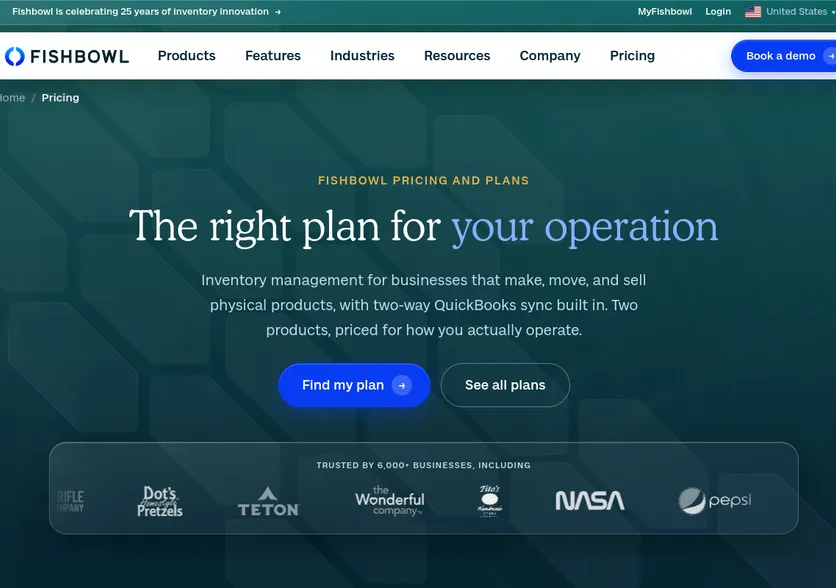
Paid tool Starting price: $229/month · Two hundred and twenty-nine dollars a month on Essentials when billed annually (two thousand seven hundred and forty-eight dollars a year), including two users; Growth is four hundred and twenty-nine dollars a month and Scale is seven hundred and twenty-nine dollars a month; Advanced Warehouse starts at five hundred and ninety-five dollars a month; every purchase requires an implementation package that is not priced publicly; this is Fishbowl Inventory, not the Fishbowl restaurant guest platform
Free plan: No free plan; demo available
A retail warehouse still counting stock on paper needs barcode control without an enterprise price, and this Fishbowl Inventory plan costs two hundred and twenty-nine dollars a month with real-time stock, mobile barcode scanning and QuickBooks sync. Reorder points keep shelves full, and the app runs receiving, picking and cycle counts from the floor. It is the cheapest published-price warehouse system here for a retail operation.
What we like
- Real-time stock with mobile barcode scanning
- QuickBooks Online and Xero sync included
- Unlimited warehouses from the Growth plan
Watch out for
- Essentials covers only two users and no marketplace integrations
- A mandatory implementation package adds to the first-year cost
How to try it
- Connect QuickBooks or Xero and import the catalogue
- Set up warehouses, bins and barcode labels
- Run receiving, picking and cycle counts from the app
2. Cin7 Core
Best for: Multichannel sellers that need one stock record
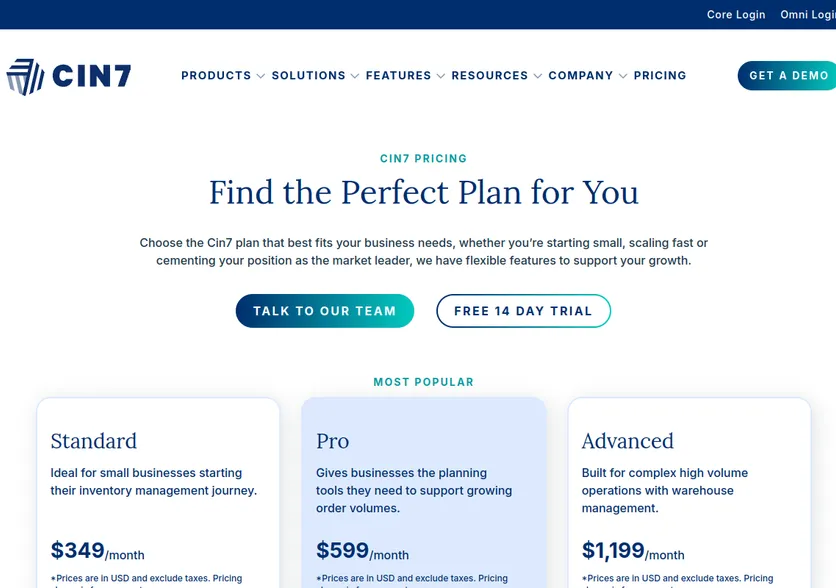
Paid tool Starting price: $349/month · Three hundred and forty-nine dollars a month on Standard for five users, two integrations and six thousand sale orders a year; Pro is five hundred and ninety-nine dollars a month and Advanced is one thousand one hundred and ninety-nine dollars a month; prices are in US dollars excluding tax for new customers, and the larger Cin7 Omni edition is quoted
Free plan: 14-day free trial
A retailer selling on a store, a website and a marketplace needs one stock count everywhere, and this Cin7 Core plan costs three hundred and forty-nine dollars a month with one stock pool, over seven hundred integrations and unlimited locations. Orders sync across channels, and reorder points stop overselling before it happens. It is the best multichannel pick here for a retail warehouse.
What we like
- One stock pool across stores, marketplaces and wholesale
- Over seven hundred integrations
- Unlimited inventory locations on every plan
Watch out for
- Standard caps at two integrations and six thousand orders
- Extra users and integrations are quoted on top
How to try it
- Connect the sales channels and import stock
- Set reorder points and warehouse locations
- Process orders and sync stock across channels
3. ShipHero
Best for: 3PLs and brands shipping real volume
Paid tool Starting price: $15,000/year · Fifteen thousand dollars a year from for Core, covering twenty-five thousand direct-to-consumer shipments, ten store connections and unlimited users, SKUs and warehouses; extra shipments cost twenty-four cents each pay as you go; Growth and Enterprise are quoted; onboarding typically starts around five thousand dollars and the subscription is invoiced monthly
Free plan: No free plan
A retail brand shipping thousands of orders a month needs a warehouse system that grows with volume, and this ShipHero plan costs fifteen thousand dollars a year for twenty-five thousand shipments with smart batching, wave picking and unlimited users. Users, SKUs and warehouses are never metered, so the bill follows shipments rather than headcount. It is the volume pick here for a retail warehouse that ships at scale.
What we like
- Users, SKUs and warehouses are never metered
- Multi-client billing and a white-label portal for 3PLs
- Smart batching and wave picking built in
Watch out for
- The fifteen thousand dollar floor applies even at low volume
- Wholesale orders bill separately at two dollars and ten cents each
How to try it
- Connect the stores and import the catalogue
- Set up warehouses, pick paths and carriers
- Process orders and bill clients from the portal
4. Finale Inventory
Best for: Ecommerce sellers that need multi-warehouse control
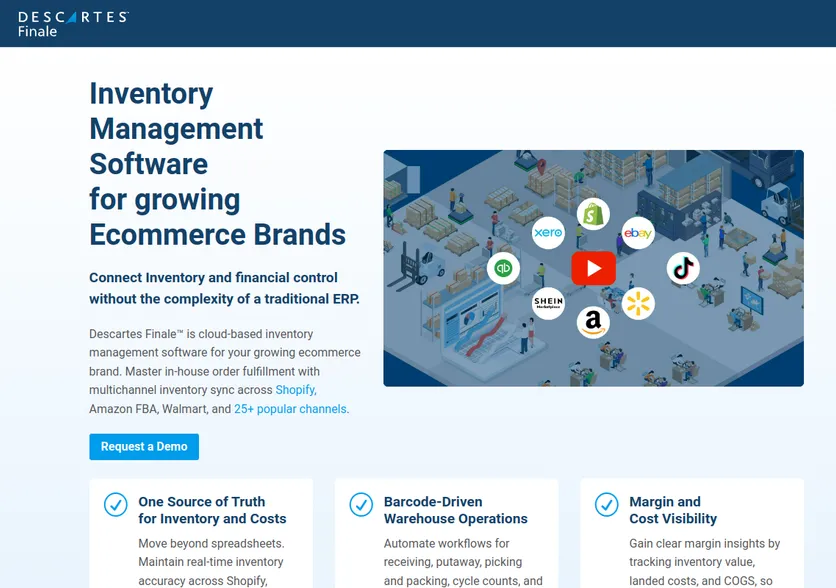
Paid tool Starting price: $499/month · Four hundred and ninety-nine dollars a month from for Essentials, covering one to two warehouses; Growth starts at seven hundred and ninety-nine dollars a month and Enterprise is quoted; there is no free plan; Finale is now Descartes Finale after the Descartes acquisition, and the entry price moved from ninety-nine dollars to four hundred and ninety-nine dollars in September 2026
Free plan: Free trial
A retail seller with stock in two warehouses needs to know exactly where every item sits, and this Finale Inventory plan costs four hundred and ninety-nine dollars a month with multi-warehouse stock, barcode picking and over forty channel integrations. Procurement and replenishment run from the same dashboard, and financial reporting keeps the books straight. It is the most complete stock system here for a multi-warehouse retailer.
What we like
- Multi-warehouse stock with barcode picking
- Forty plus sales channel integrations
- Procurement and replenishment built in
Watch out for
- The entry price jumped from ninety-nine to four hundred and ninety-nine dollars in 2026
- The mobile barcode WMS module needs the Growth plan
How to try it
- Import products and set up the warehouses
- Connect the sales channels and sync stock
- Run picking, packing and replenishment from the dashboard
5. Katana
Best for: Makers and manufacturers that build to order
Paid tool Starting price: $299/month · Two hundred and ninety-nine dollars a month on Core; Advantage is a custom tier; the price covers inventory, production and sales in one system, with the shop-floor app included
Free plan: 14-day free trial
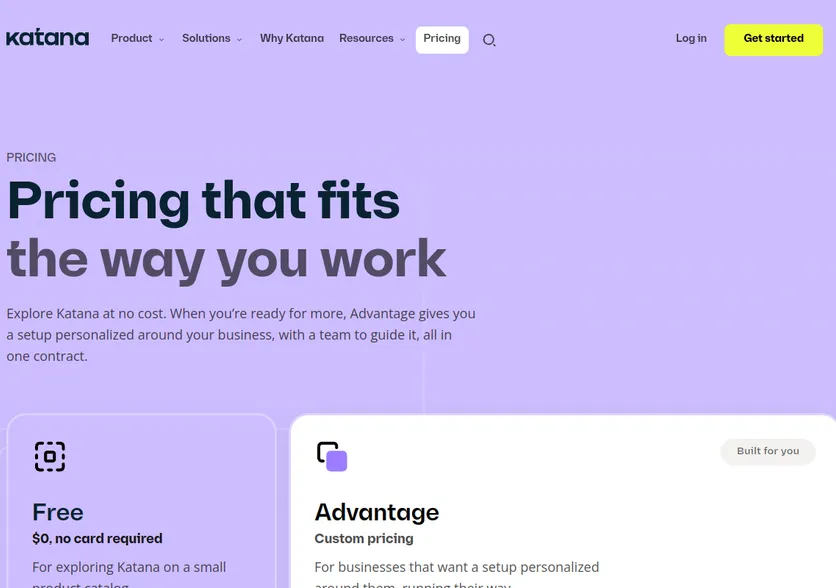
A retailer that also makes its own products needs stock tied to production, not just shelves, and this Katana plan costs two hundred and ninety-nine dollars a month with a visual board that links stock to production orders and bills of materials. Raw materials, finished goods and sales stay in one live record, and the shop-floor app keeps makers on track. It is the best pick here for a retailer that manufactures.
What we like
- Visual board links stock to production orders
- Bills of materials and shop-floor app included
- Real-time stock across sales channels
Watch out for
- Built for makers, so pure resellers get less value
- Advanced features sit on the custom Advantage tier
How to try it
- Import products, materials and bills of materials
- Create production orders from sales orders
- Track stock and shop-floor progress live
6. Linnworks
Best for: High-volume sellers automating orders and stock
Paid tool Starting price: $449/month · Four hundred and forty-nine dollars a month from, per the vendor blog, with the final price set by order volume and channels; SkuVault, the warehouse system Linnworks acquired, is now part of the same platform; the vendor page does not print a full rate card, so confirm the figure before buying
Free plan: No free plan
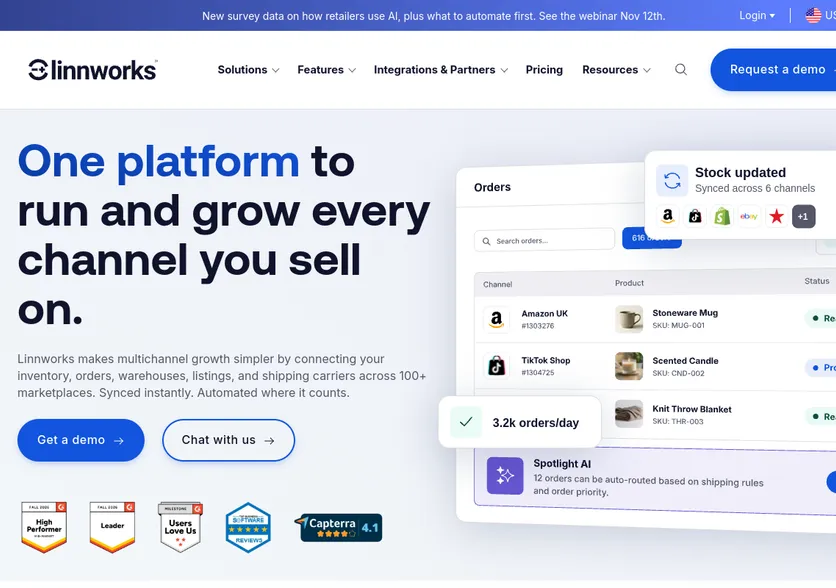
A retailer doing thousands of orders a month needs automation to keep up, and this Linnworks plan costs four hundred and forty-nine dollars a month with automation rules for repricing, fulfilment and stock across every channel. Marketplaces, couriers and warehouses connect in one dashboard, and central stock control stops overselling. It is the automation pick here for a high-volume retail warehouse.
What we like
- Automation rules handle repricing and fulfilment
- Connects marketplaces, couriers and warehouses
- Central stock control across every channel
Watch out for
- The starting price is a floor, not a fixed quote
- Setup and onboarding take real time for large catalogues
How to try it
- Connect the marketplaces and couriers
- Set automation rules for orders and stock
- Monitor fulfilment and stock from one dashboard
7. Ordoro
Best for: Ecommerce sellers that ship, kit and dropship
Paid tool Starting price: $499/month · Four hundred and ninety-nine dollars a month on Pro for inventory and order management; Express is fifty-nine dollars a month for shipping only and Enterprise is nine hundred and ninety-nine dollars a month; older app-tier figures of three hundred and forty-nine and two hundred and ninety-nine dollars are no longer published
Free plan: Free trial
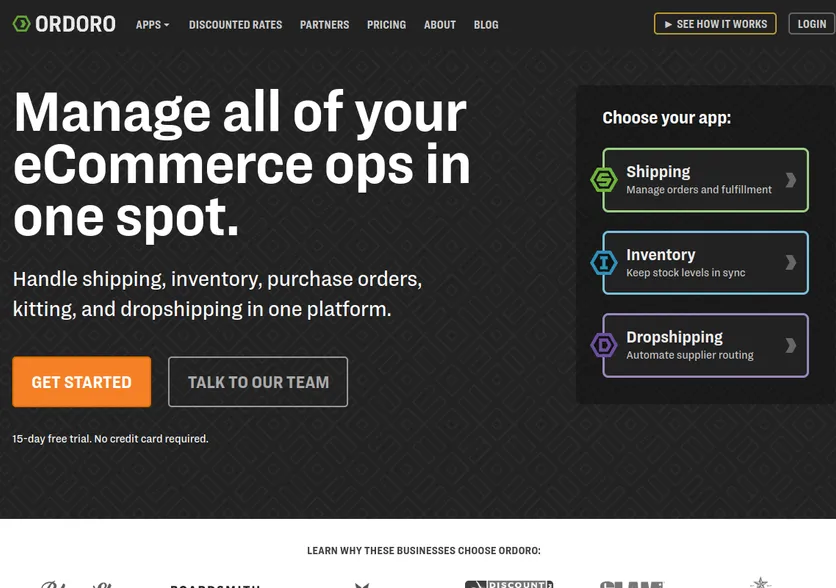
A retailer that ships, kits and dropships needs one tool for all three, and this Ordoro plan costs four hundred and ninety-nine dollars a month with inventory, shipping and dropshipping in one system. Batch label printing speeds up the packing bench, and kitting and purchase orders are included. It is the best shipping-led pick here for a retail warehouse.
What we like
- Inventory, shipping and dropshipping in one tool
- Kitting and purchase orders included
- Batch label printing speeds up the packing bench
Watch out for
- Pro is a big step up from the shipping-only Express plan
- Dropshipping workflows need the higher tiers
How to try it
- Connect the stores and import products and suppliers
- Set up shipping presets and dropship suppliers
- Process orders in batches and print labels
Prices above were checked on each vendor’s own website on Nov 29, 2026 and can change — the vendor’s page is the final word. Vendor links are editorial: nobody paid to be listed or ranked here. Vendors who want a featured listing can see how it works on our Get listed page.
How to automate a retail warehouse without stopping it
Map the current flow before buying anything, because automation pasted over a bad process just makes mistakes faster. Start with barcode scanning at receiving and picking, since that is where most errors happen, and add automation in one area at a time. Train the pickers on the new flow before go-live, and run the old and new systems side by side for a week. Measure pick accuracy and order time weekly, and fix the process before buying more software. Keep the old system running until the new one proves itself.
Before you buy
- Check that barcode scanning covers receiving, picking and packing, not just one step
- Confirm the plan includes the sales channels and integrations the warehouse actually uses
- Ask what the implementation package costs, since it is rarely in the headline price
- Make sure stock syncs in real time across every channel to stop overselling
- Test the system on a real order flow before committing to a full rollout
Official websites
Official websites of the products reviewed above. Features and prices were checked against these sites when this guide was written, and they can change, so confirm on the vendor site before you buy.
Frequently asked questions
What is warehouse automation software for retail warehouses?
It is software that automates receiving, picking, packing and shipping in a retail warehouse, using barcode scanning, smart batching and real-time stock to cut errors. The best tools sync stock across every sales channel, so a sale in the store and a sale online both draw from the same count.
How much does retail warehouse automation cost?
Prices in this list start at two hundred and twenty-nine dollars a month for Fishbowl Inventory and two hundred and ninety-nine dollars a month for Katana, while Cin7 Core is three hundred and forty-nine dollars a month. ShipHero starts at fifteen thousand dollars a year, which suits high-volume operations.
Can a small retail warehouse automate for free?
No, since none of the tools here offers a free plan for warehouse automation, though Cin7 Core and Finale Inventory offer free trials. The cheapest published price is Fishbowl Inventory at two hundred and twenty-nine dollars a month, which is the realistic entry point for a small retail warehouse.
Which tool is best for a retail warehouse?
Fishbowl Inventory is the best pick for a retail warehouse, at two hundred and twenty-nine dollars a month with barcode control and QuickBooks sync. Cin7 Core is the better choice for a retailer selling on many channels, at three hundred and forty-nine dollars a month with one stock pool everywhere.
Do these tools work with QuickBooks?
Yes, with Fishbowl Inventory, which syncs with QuickBooks Online and Xero on every plan, and with Cin7 Core, which connects to QuickBooks and over seven hundred other apps. QuickBooks sync matters because the warehouse and the accounts must agree on stock value.
Do these tools handle returns?
Yes, with Fishbowl Inventory, Cin7 Core and Finale Inventory, which all handle returns, exchanges and restocking in the same flow as normal orders. Returns matter for a retail warehouse because the stock has to come back into the count cleanly, or the website will sell items that are not on the shelf.
Compare the seven tools above, then start with a free trial on the tool that matches how the retail warehouse moves stock before paying for a full year.
Browse Business Tools tools