On this page
Peak season doubles the orders, triples the temp staff and breaks every roster that worked in a quiet month, so the labour tools have to flex with it. The eight tools below handle surge hiring, fast onboarding and shift coverage, from warehouse systems that scale with volume to scheduling apps that fill gaps in minutes. ShipHero WMS leads because it runs unlimited users through the surge for one thousand two hundred and fifty dollars a month, and the rest are ranked on how well they hold the floor together when it is busiest.
How we researched this
We checked every price on the vendor pricing page on November 29, 2026, and only included tools with a published US dollar list price. The big enterprise warehouse systems that sell by quote, including Manhattan, Blue Yonder, SAP EWM, Oracle WMS, Deposco and Logiwa, publish no prices, so they are not in this list. Prices change, so confirm the current figure on the vendor site before you buy.
Compare the tools
| Name | Best for | Starting price | Free plan | |
|---|---|---|---|---|
 ShipHero WMS | Warehouses whose headcount surges at peak | $1,250/month | No free plan; free demo | Visit |
 Packiyo | 3PLs billing clients through the surge | $949/month | Free demo | Visit |
 Zenventory | Small 3PLs facing their first real peak | $499/month | Free demo | Visit |
 Deputy | Warehouses that plan peak by the numbers | $5/user/month | No free plan; 30-day free trial | Visit |
 Connecteam | Floor teams that live on phones at peak | $29/month | Free Small Business plan for up to 10 users | Visit |
 When I Work | Single-site warehouses with rosters that change daily | $2.50/user/month | No free plan; 14-day free trial | Visit |
 7shifts | Warehouses planning shifts against forecasts | $39.99/location/month | Free Comp plan for 1 location, up to 15 employees | Visit |
 Homebase | Warehouses that hire hard at peak | $24/location/month | Free Basic plan for 1 location and up to 10 employees | Visit |
The warehouse labor management software for peak season, compared
1. ShipHero WMS
Best for: Warehouses whose headcount surges at peak
Paid tool Starting price: $1,250/month · One thousand two hundred and fifty dollars a month on Core, based on the published fifteen thousand dollar yearly figure, with twenty-five thousand direct-to-consumer shipments a year included; Growth and Enterprise are quoted; onboarding costs about five thousand dollars one time
Free plan: No free plan; free demo
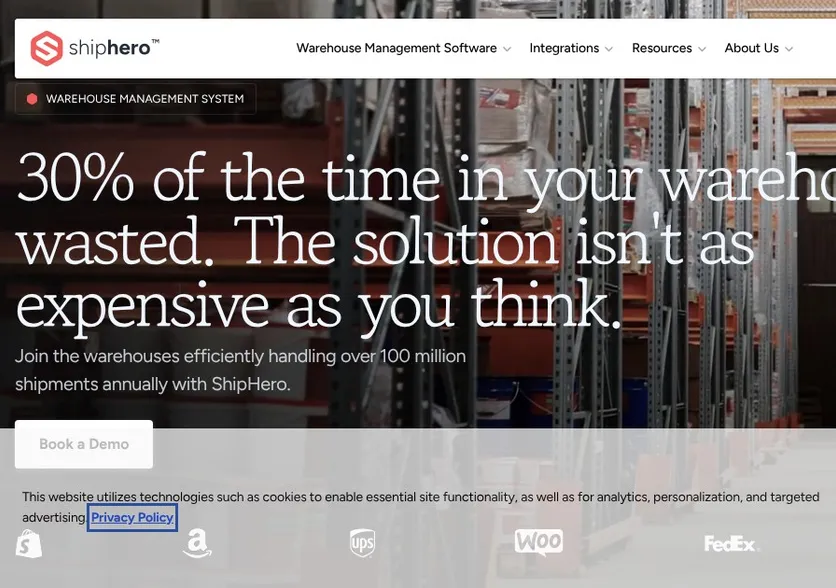
Peak season punishes any system that charges per head, and this ShipHero WMS plan costs one thousand two hundred and fifty dollars a month. Unlimited users on the Core plan means temp pickers cost nothing extra to add, and twenty-five thousand shipments a year are included. It is the strongest pick here for a warehouse that needs the surge handled inside the system itself.
What we like
- Real warehouse management, not just shipping
- Unlimited users on the Core plan
- Scales to twenty-five thousand shipments a month
Watch out for
- Onboarding costs about five thousand dollars one time
- Overkill for a crib that never ships
How to try it
- Map the warehouse layout and import products
- Set up pick paths for the fastest-moving lines
- Run pick, pack and ship on a real order
2. Packiyo
Best for: 3PLs billing clients through the surge
Paid tool Starting price: $949/month · Nine hundred and forty-nine dollars a month on the 3PL plan, covering five users and up to five thousand shipments a month, with multi-client inventory, native 3PL billing and branded client dashboards
Free plan: Free demo
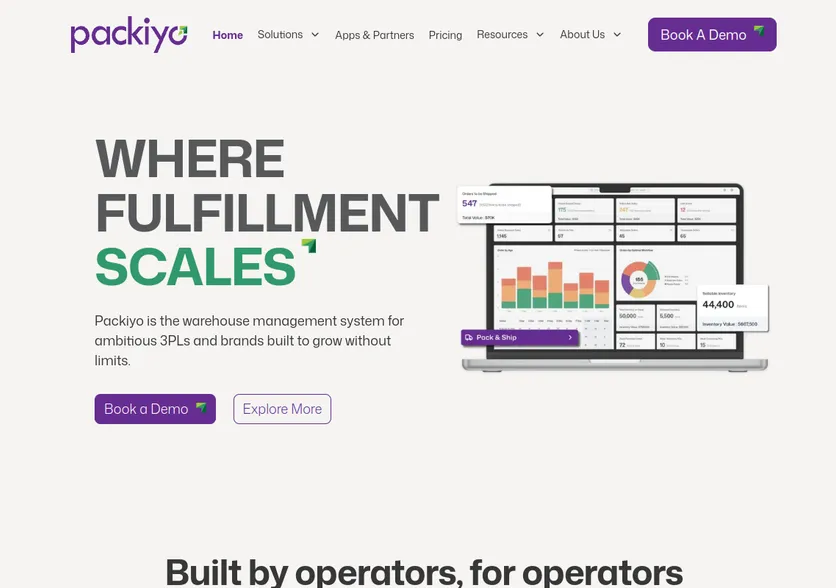
A 3PL that bills clients through the surge needs the billing to keep up, and this Packiyo plan costs nine hundred and forty-nine dollars a month. It covers five users and up to five thousand shipments a month, with native billing by rate card for every client. It fits a 3PL whose peak problem is proving the extra hours to the client, not just staffing them.
What we like
- Published monthly price with published overage rates
- Native 3PL billing with rate cards per client
- Branded client dashboards for every customer
Watch out for
- Five users on the 3PL plan, so bigger teams pay more
- Built for 3PLs, so a single-brand warehouse gets less value
How to try it
- Set up the warehouse and add clients with rate cards
- Receive and put away stock with barcode workflows
- Pick, pack and ship, then bill clients from the built-in system
3. Zenventory
Best for: Small 3PLs facing their first real peak
Paid tool Starting price: $499/month · Four hundred and ninety-nine dollars a month on the Starter plan, covering up to ten thousand shipments a month with unlimited users, clients and integrations on every plan
Free plan: Free demo
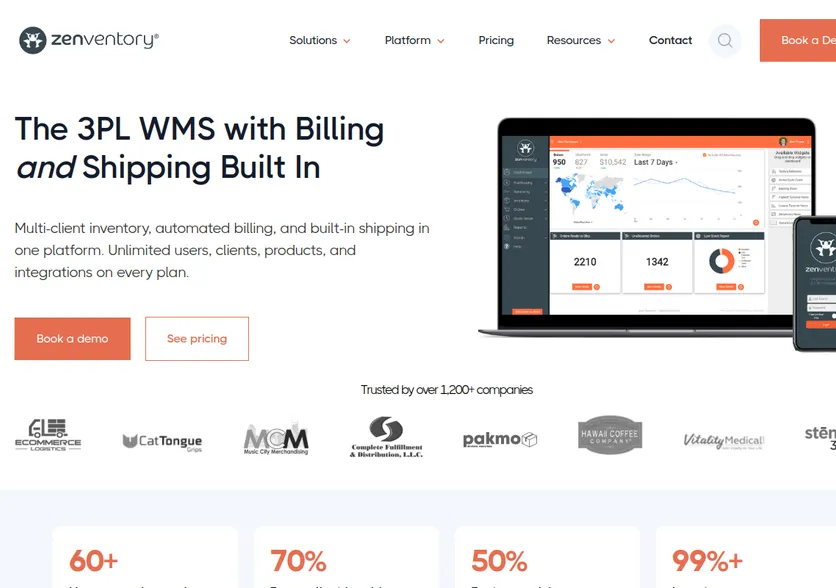
A small 3PL facing its first real peak will want the flat price here, because this Zenventory plan costs four hundred and ninety-nine dollars a month. Unlimited users, clients and integrations are included on every plan, so the roster can grow without the bill moving. It is the best fit for a small 3PL that needs billing and picking to scale together.
What we like
- Automated 3PL client billing built in
- Unlimited users, clients and integrations
- Flat monthly price with no per-user fees
Watch out for
- Starter caps at ten thousand shipments a month
- No free trial, demo-led sales
How to try it
- Set up the warehouse and add clients
- Receive shipments and put stock away with barcode scanning
- Pick, pack and ship, then let billing run automatically
4. Deputy
Best for: Warehouses that plan peak by the numbers
Paid tool Starting price: $5/user/month · Five dollars per user a month on Lite billed annually (five dollars and fifty cents billed monthly); Core is six dollars and fifty cents and Pro is nine dollars per user a month; monthly plans carry a thirty-dollar minimum spend per invoice; the four dollar and fifty cent figure in older listings was the scheduling-only rate and is superseded
Free plan: No free plan; 30-day free trial
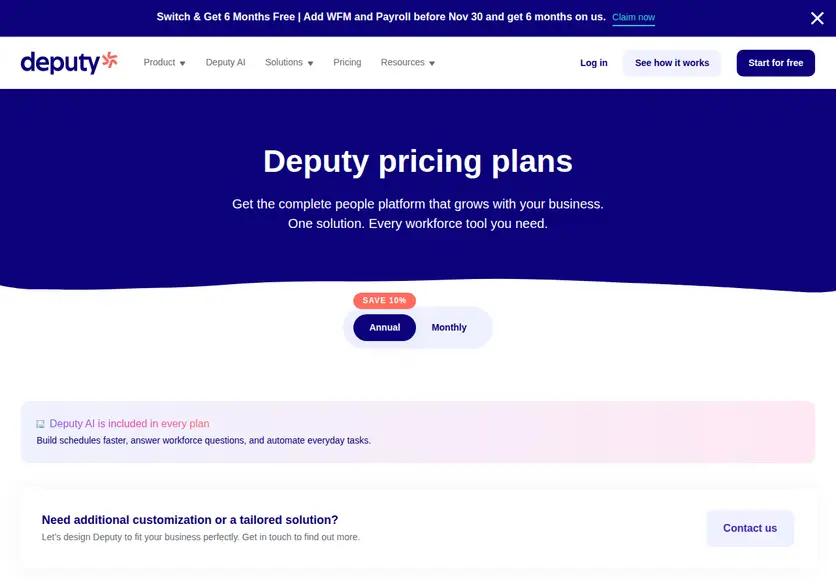
Demand forecasting is what separates a smooth peak from a scramble, and this Deputy plan costs five dollars per user a month billed annually. It builds rosters around expected volume, tracks time with a biometric clock and shows the labour budget before the shift starts. It is the best value here for a warehouse that plans its peak by the numbers.
What we like
- Auto-scheduling builds rosters around demand
- Biometric time clock stops buddy punching
- Labor budgets show cost before the shift starts
Watch out for
- Thirty-dollar monthly minimum spend per invoice
- HR and payroll cost extra as add-ons
How to try it
- Import the team and set pay rates and roles
- Publish the first roster with auto-scheduling
- Review timesheets and approve them for payroll
5. Connecteam
Best for: Floor teams that live on phones at peak
Paid tool Starting price: $29/month · Twenty-nine dollars a month per hub on Basic billed annually (thirty-five dollars billed monthly), covering the first thirty users; Advanced is forty-nine dollars and Expert is ninety-nine dollars a month per hub; each hub is billed separately, so all three hubs on Basic cost eighty-seven dollars a month
Free plan: Free Small Business plan for up to 10 users
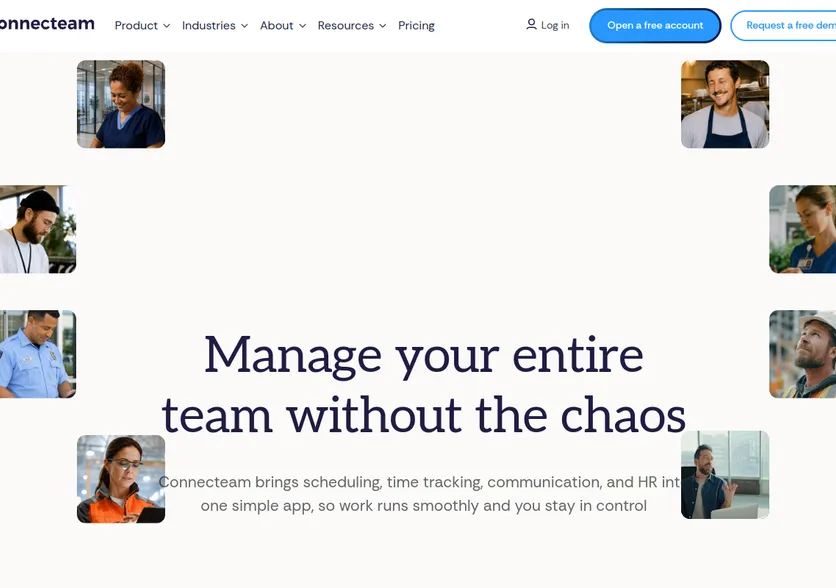
A warehouse that hires temps by the dozen needs onboarding that takes minutes, and this Connecteam plan costs twenty-nine dollars a month per hub billed annually. The free Small Business plan covers up to ten users, and the Operations hub adds scheduling, time clock and checklists for the rest. It fits a floor team that lives on phones and needs the roster in an app.
What we like
- Free for teams of up to ten users
- Scheduling, time clock and chat in one app
- Flat price covers the first thirty users per hub
Watch out for
- Each hub is billed separately, so the full suite costs three times the entry price
- Advanced scheduling needs the Advanced hub
How to try it
- Add the team and set up the Operations hub
- Publish the weekly schedule to the mobile app
- Review clock-ins and approve timesheets
6. When I Work
Best for: Single-site warehouses with rosters that change daily
Paid tool Starting price: $2.50/user/month · Two dollars and fifty cents per user a month for a single location or schedule; multiple locations or schedules cost five dollars per user a month; some listings show a Premium tier at eight dollars, which the vendor pricing page does not confirm as a separate plan
Free plan: No free plan; 14-day free trial
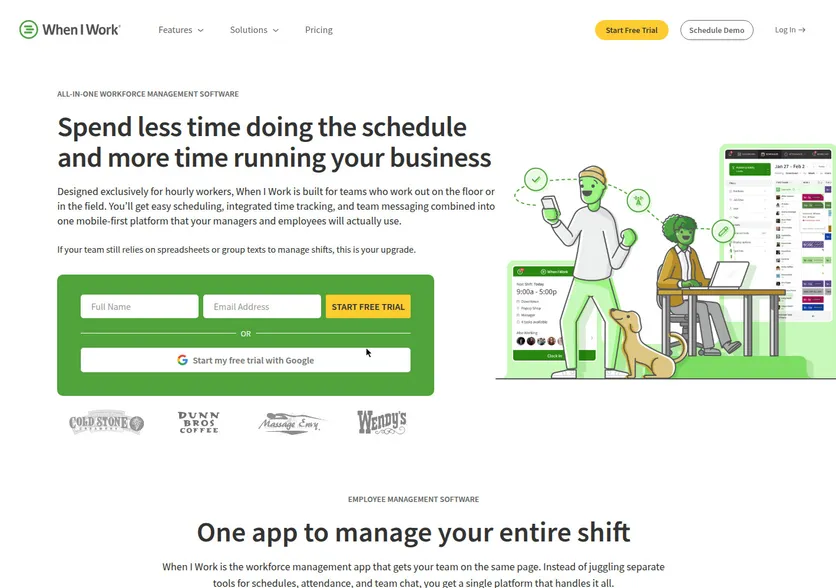
Open shifts are the peak-season lifeline, and this When I Work plan costs two dollars and fifty cents per user a month. Staff can claim open shifts and swap with each other in the app, and both plans include the time clock and messaging. It is the cheapest way to keep a single-site warehouse covered when the roster changes daily.
What we like
- Cheapest per-user scheduling in this list
- Auto-scheduling on the entry plan
- Time clock and messaging included in both plans
Watch out for
- Seats bill in bundles of five or ten
- Custom reporting needs the five-dollar plan
How to try it
- Add staff and set their availability
- Publish the schedule and let staff swap shifts in the app
- Review timesheets and export them to payroll
7. 7shifts
Best for: Warehouses planning shifts against forecasts
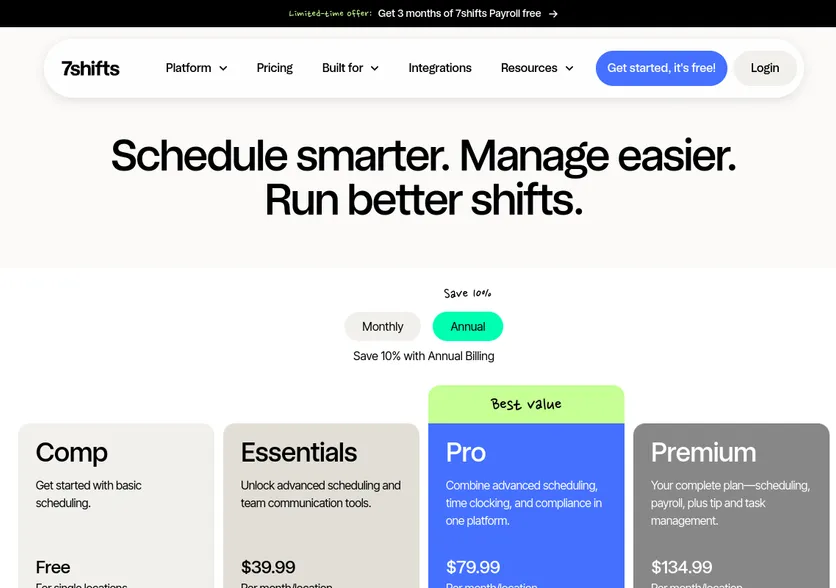
Paid tool Starting price: $39.99/location/month · Thirty-nine dollars and ninety-nine cents per location a month on Essentials billed annually (forty-four dollars and ninety-nine cents billed monthly), for up to thirty employees; Pro is seventy-nine dollars and ninety-nine cents and Premium is one hundred and thirty-four dollars and ninety-nine cents a location a month billed annually
Free plan: Free Comp plan for 1 location, up to 15 employees
Forecasting labour against expected sales is the whole peak game, and this 7shifts plan costs thirty-nine dollars and ninety-nine cents per location a month billed annually. It builds schedules from the sales forecast, tracks time and labour budgets, and the free Comp plan covers one location with up to fifteen employees. It fits a warehouse that plans shifts against the order forecast, not last week.
What we like
- Sales-based labor forecasting for shift planning
- Tip pooling and payroll tools built in
- Free Comp plan for one location
Watch out for
- Headcount caps push growing teams up a tier
- Built for restaurants, so warehouse teams get less value
How to try it
- Add the team and set roles and availability
- Build the schedule against the sales forecast
- Review labor cost against budget each week
8. Homebase
Best for: Warehouses that hire hard at peak
Paid tool Starting price: $24/location/month · Twenty-four dollars per location a month on Essentials billed annually (thirty dollars billed monthly); Plus is fifty-six dollars and All-in-One is ninety-six dollars a location a month billed annually; payroll is a separate add-on at forty-nine dollars a month plus six dollars per employee paid
Free plan: Free Basic plan for 1 location and up to 10 employees
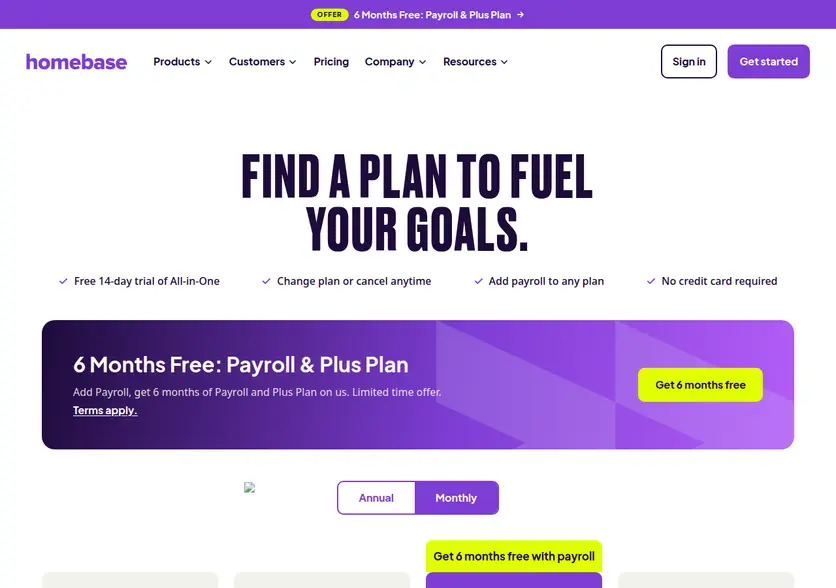
The bill should not triple when the roster does, and this Homebase plan costs twenty-four dollars per location a month billed annually. Paid plans carry unlimited team members per location, so fifty temps cost the same as ten, and the free Basic plan covers one location with up to ten employees. It is the best value here for a warehouse that hires hard at peak.
What we like
- Free Basic plan for one location
- Price stays flat as headcount grows
- AI schedule builder on Plus
Watch out for
- Payroll is a separate add-on at forty-nine dollars plus six per employee
- Labor cost analytics need the All-in-One plan
How to try it
- Add the team and set up one location
- Publish the schedule and open the time clock
- Review hours and approve timesheets for payroll
Prices above were checked on each vendor’s own website on Nov 29, 2026 and can change — the vendor’s page is the final word. Vendor links are editorial: nobody paid to be listed or ranked here. Vendors who want a featured listing can see how it works on our Get listed page.
How to staff a warehouse for peak season without chaos
Start hiring before the surge, because the temp agencies run dry the week the orders spike and late hires cost more than early ones. Keep a bench of trained casuals who already know the floor, and the first week of peak will feel like a normal busy week instead of a crisis. Publish rosters a week ahead and open every gap to the whole team in the app, so a sick call at six in the morning is covered by seven. Track picks per hour daily through peak, not monthly, since a slow line spotted on day two can be fixed and one spotted in January cannot.
Before you buy
- Confirm the tool lets you add and remove temp staff fast, without a per-user penalty
- Check whether open shifts can be claimed in the app, since peak gaps need filling in minutes
- Ask if the price stays flat as headcount grows, because peak rosters can triple overnight
- Make sure new starters can be onboarded from a phone, with no desktop training session
- Test the tool on a surge week before paying, including a roster that doubles in size
Official websites
Official websites of the products reviewed above. Features and prices were checked against these sites when this guide was written, and they can change, so confirm on the vendor site before you buy.
Frequently asked questions
What is warehouse labor management software for peak season?
It is software that rosters, onboards and tracks a warehouse team through the busiest weeks of the year, when orders and temp staff both surge. Good tools add casuals fast, publish open shifts the team can claim in an app, and keep pick rates and labour cost visible daily, so the surge stays profitable.
How much does ShipHero WMS cost for peak season?
ShipHero WMS costs one thousand two hundred and fifty dollars a month on Core, based on the published fifteen thousand dollar yearly figure, with twenty-five thousand direct-to-consumer shipments a year included. Unlimited users are included on Core, which matters when temp staff flood the floor, and onboarding costs about five thousand dollars one time.
Can a warehouse manage peak labour for free?
Yes, with Connecteam, which offers a free Small Business plan for teams of up to ten users, and Homebase, which offers a free Basic plan for one location with up to ten employees. Both are genuine free tiers rather than trials, so a small warehouse can roster a core team without paying. A peak roster will outgrow either free tier fast and should compare the paid plans above.
Which pricing model survives peak season best?
Flat per-location pricing survives peak best, because the bill does not move when the roster triples. Homebase charges twenty-four dollars per location a month with unlimited staff on paid plans, and 7shifts charges per location with headcount caps. Per-user pricing, such as Deputy at five dollars, climbs with every temp added, so budget for the peak headcount, not the quiet one.
Which tool is best for a warehouse facing its first peak?
Homebase is the best value for a first peak, at twenty-four dollars per location a month with unlimited staff and a free Basic plan to start on. Deputy is the better pick once demand forecasting matters, since it builds rosters around expected volume. ShipHero suits a warehouse that needs the surge handled inside a full warehouse system.
Compare the eight tools above, then start with a free trial or the free Connecteam or Homebase plan on the tool that matches how the warehouse already rosters before peak arrives.
Browse Business Tools tools