On this page
A startup warehouse has no budget for an enterprise system and no time for a spreadsheet that breaks at the first busy week, so the software has to be cheap, quick to learn and honest about stock. The eight tools below cover that job for new businesses, from a free plan that handles fifty orders a month to a full warehouse system for a growing team. Zoho Inventory leads because it starts free and its first paid plan costs twenty-nine dollars a month, and the rest are ranked on value for a startup that counts every dollar.
How we researched this
We checked every price on the vendor pricing page on November 29, 2026, and only included tools with a published US dollar list price. The enterprise warehouse platforms that sell by quote, including ShipBob, Extensiv, Manhattan Active, Blue Yonder and SAP EWM, publish no prices, so they are not in this list. Prices change, so confirm the current figure on the vendor site before you buy.
Compare the tools
| Name | Best for | Starting price | Free plan | |
|---|---|---|---|---|
 Zoho Inventory | Small sellers that want cheap, solid inventory | $29/month | Free plan (50 orders a month) | Visit |
 Fishbowl | Growing brands that need real warehouse control | $229/month | No free plan; free trial available | Visit |
 inFlow Inventory | Small makers and sellers that need simple stock control | $99/month | 14-day free trial | Visit |
 Katana | Makers and small manufacturers that sell online | $299/month | Free plan (30 SKUs) | Visit |
 Cin7 Core | Multi-channel brands that need inventory everywhere | $349/month | 14-day free trial | Visit |
 Ordoro | Sellers that want inventory and shipping in one place | $499/month | No free plan; free trial available | Visit |
 ShipStation | Brands that ship every day and want cheap labels | $14.99/month | No free plan; 30-day free trial | Visit |
 Easyship | Brands shipping internationally from a small warehouse | $23/month | Free plan (pay as you go) | Visit |
The warehouse management software for startups, compared
1. Zoho Inventory
Best for: Small sellers that want cheap, solid inventory
Paid tool Starting price: $29/month · Twenty-nine dollars a month on Standard billed annually ($39 billed monthly); Professional is seventy-nine dollars a month billed annually and Premium is one hundred and twenty-nine dollars a month billed annually; Enterprise is two hundred and forty-nine dollars a month billed annually; the free plan covers fifty orders a month; an older July 2026 read showed higher tiers, which the November 2026 reads supersede
Free plan: Free plan (50 orders a month)
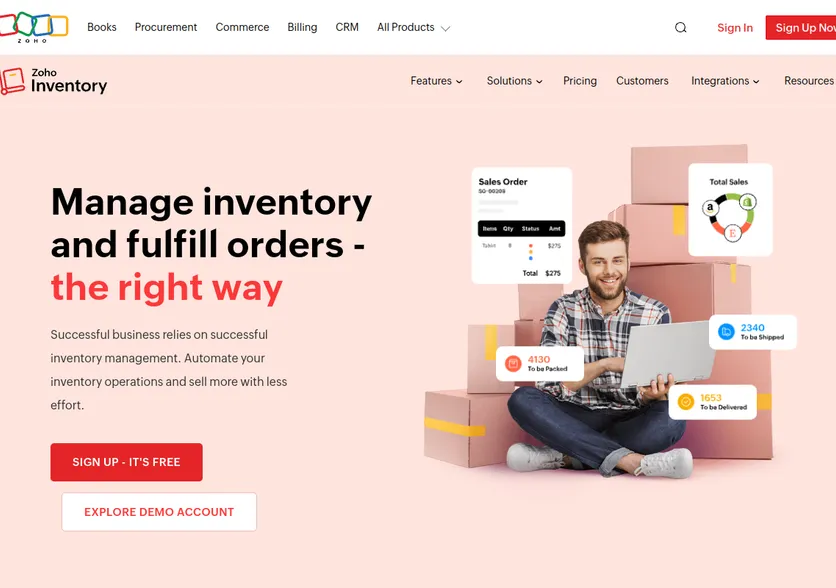
A startup that needs warehouse control without an enterprise contract gets low-cost inventory, orders and multi-warehouse stock with this Zoho Inventory plan, which costs twenty-nine dollars a month. It covers inventory, orders and warehouses at a low price, which is why it is the default pick for a small seller on a budget. The free tier lets a new seller run real orders before paying anything, and the paid tiers stay cheap as volume grows.
What we like
- Free plan covers fifty orders a month for tiny sellers
- Multi-warehouse stock and composite items included
- Works smoothly with the rest of the Zoho suite
Watch out for
- Two locations only on the Standard plan
- Advanced warehouse features sit on the dearer tiers
How to try it
- Connect the sales channels and import the catalog
- Set up warehouses and stock levels per location
- Create a purchase order and receive the first shipment
2. Fishbowl
Best for: Growing brands that need real warehouse control
Paid tool Starting price: $229/month · Two hundred and twenty-nine dollars a month on the Essentials plan, the entry inventory plan; higher plans add advanced warehousing and automation, so confirm the tier that fits your order volume before you buy
Free plan: No free plan; free trial available
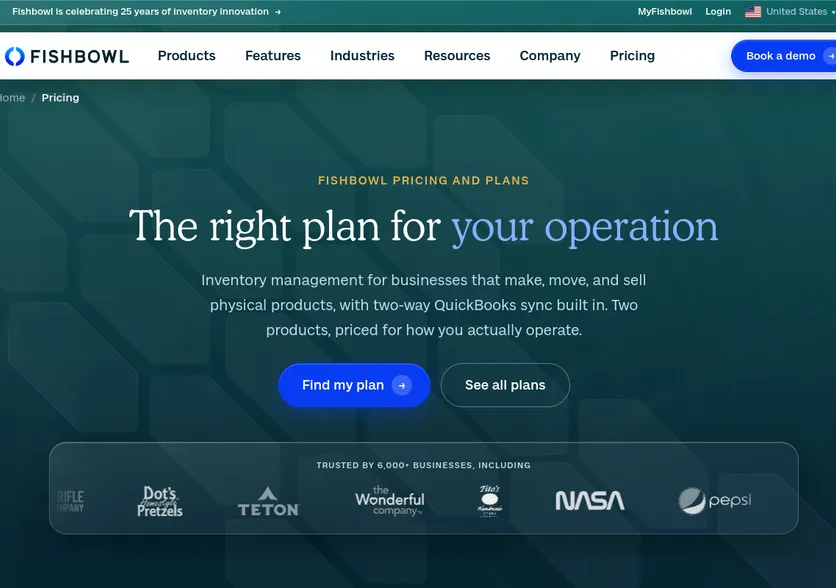
A startup that needs warehouse control without an enterprise contract gets full inventory, picking and shipping control with this Fishbowl plan, which costs two hundred and twenty-nine dollars a month. It handles multi-location stock, purchase orders and manufacturing in one place, so a growing brand stops juggling spreadsheets and separate apps. The barcode scanning keeps picks accurate as order volume climbs, which is where a brand usually starts losing money on mispicks.
What we like
- Barcode picking and packing built for warehouse teams
- Tracks inventory across warehouses, channels and locations
- Manufacturing and order tools in the same system
Watch out for
- No free plan, so small teams pay from day one
- Setup takes real work on locations, bins and barcodes
How to try it
- Connect the sales channels and import the product catalog
- Set up warehouse locations and bin layouts for every product
- Run a test order from receipt to shipment before going live
3. inFlow Inventory
Best for: Small makers and sellers that need simple stock control
Paid tool Starting price: $99/month · Ninety-nine dollars a month on Lite billed annually ($129 billed monthly); Core is two hundred and ninety-nine dollars a month billed annually and Pro is four hundred and ninety-nine dollars a month billed annually; Max is six hundred and ninety-nine dollars a month billed annually; a four hundred and ninety-nine dollar one-time onboarding fee applies on most plans; fourteen-day free trial
Free plan: 14-day free trial
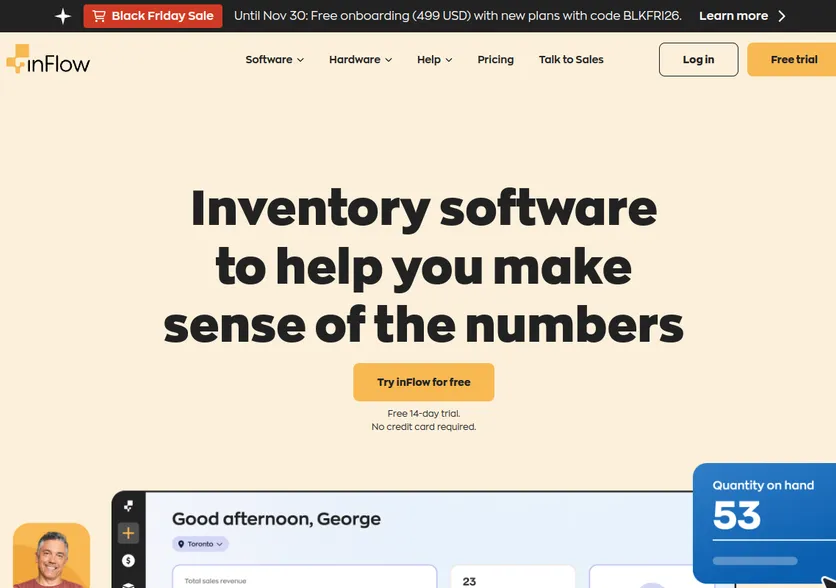
A startup that needs warehouse control without an enterprise contract gets simple inventory, orders and barcode scanning with this inFlow Inventory plan, which costs ninety-nine dollars a month. It keeps inventory simple for a small team, with orders, purchase orders and barcode scanning that a new hire learns in a day. The straightforward design suits a maker or small seller who wants stock control without a warehouse consultant.
What we like
- Easy to learn, with a clean interface for small teams
- Barcode scanning and purchase orders included
- Works on desktop and mobile for warehouse and office
Watch out for
- The one-time onboarding fee applies on most plans
- Multi-warehouse depth is lighter than the dearer tools
How to try it
- Import products and set opening stock levels
- Connect the sales channels for order sync
- Scan a test batch through receiving, picking and packing
4. Katana
Best for: Makers and small manufacturers that sell online
Paid tool Starting price: $299/month · Two hundred and ninety-nine dollars a month on Core; Advantage is a custom tier with no published price; the free plan covers thirty SKUs with unlimited users
Free plan: Free plan (30 SKUs)
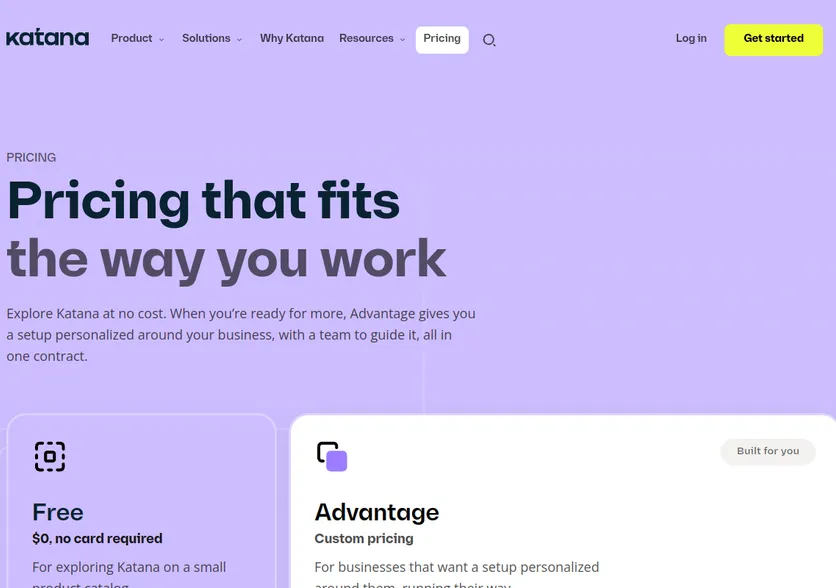
A startup that needs warehouse control without an enterprise contract gets inventory plus light manufacturing control with this Katana plan, which costs two hundred and ninety-nine dollars a month. It pairs inventory with simple production planning, so a maker knows what to build, what raw materials are on hand and what is ready to ship. The visual board makes stock and production obvious at a glance, which suits small teams without a warehouse manager.
What we like
- Visual production planning that makers actually understand
- Free plan covers thirty products with unlimited users
- Shopify and accounting integrations work out of the box
Watch out for
- Manufacturing depth is light next to a full ERP system
- The paid plan starts high for a very small maker
How to try it
- Add the product catalog with bills of materials
- Connect Shopify and set the warehouse locations
- Plan the first production run and track raw material stock
5. Cin7 Core
Best for: Multi-channel brands that need inventory everywhere
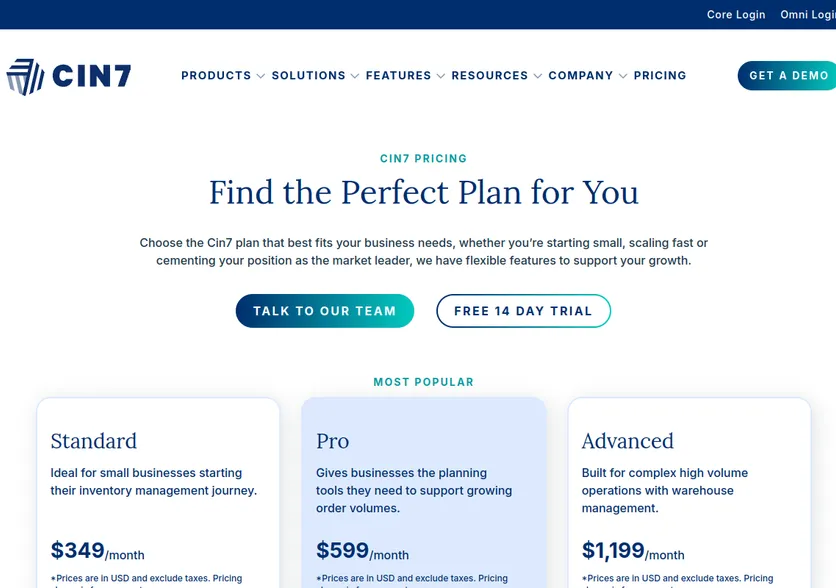
Paid tool Starting price: $349/month · Three hundred and forty-nine dollars a month on Standard (five users, six thousand orders a year, two integrations); Pro is five hundred and ninety-nine dollars a month and Advanced is one thousand one hundred and ninety-nine dollars a month; Omni is quoted; fourteen-day free trial
Free plan: 14-day free trial
A startup that needs warehouse control without an enterprise contract gets multi-channel inventory and order control with this Cin7 Core plan, which costs three hundred and forty-nine dollars a month. It keeps stock, orders and suppliers in sync across every channel, so the warehouse always sees the same numbers the storefront shows. The order routing and backorder handling suit brands that sell the same products on several channels at once.
What we like
- Connects Shopify, marketplaces and warehouses in one system
- Handles backorders, bundles and multi-location stock
- Strong reporting on stock value and sell-through
Watch out for
- Standard caps at two integrations, so bigger stacks pay more
- The learning curve is steep for a first warehouse system
How to try it
- Connect Shopify and the other sales channels first
- Import products, stock levels and supplier details
- Map the warehouse locations, then test a full order cycle
6. Ordoro
Best for: Sellers that want inventory and shipping in one place
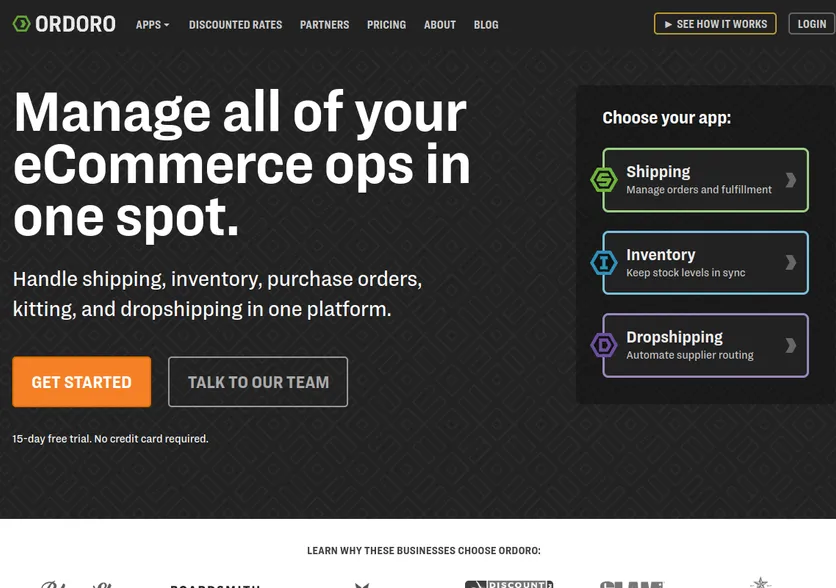
Paid tool Starting price: $499/month · Four hundred and ninety-nine dollars a month on Pro; Express is fifty-nine dollars a month for shipping only and Enterprise is nine hundred and ninety-nine dollars a month
Free plan: No free plan; free trial available
A startup that needs warehouse control without an enterprise contract gets inventory, shipping and supplier control in one app with this Ordoro plan, which costs four hundred and ninety-nine dollars a month. It combines inventory with shipping and dropshipping, so a seller can manage stock, suppliers and labels without switching apps. The supplier and purchase-order tools suit sellers who reorder often and track stock by supplier.
What we like
- Shipping, inventory and supplier management in one app
- Dropshipping tools built in for suppliers and purchase orders
- Kitting and bundling for sellers with combined products
Watch out for
- Pro is a big jump from the shipping-only Express plan
- The interface shows its age next to newer tools
How to try it
- Connect the store and import products and stock
- Set up shipping carriers and rate shopping
- Create suppliers and purchase orders for the next restock
7. ShipStation
Best for: Brands that ship every day and want cheap labels
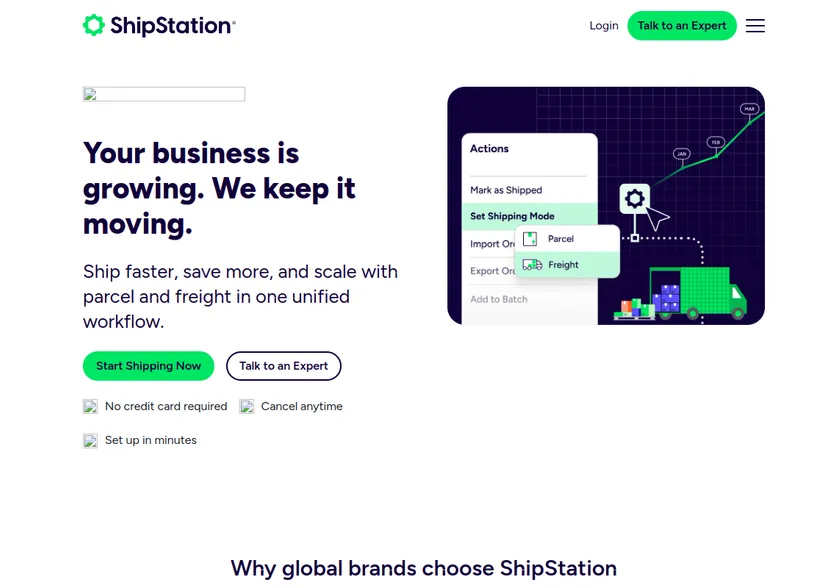
Paid tool Starting price: $14.99/month · Fourteen dollars and ninety-nine cents a month on Starter at fifty shipments ($11.99 billed annually); Standard is twenty-nine dollars and ninety-nine cents a month and Premium is three hundred and forty-nine dollars and ninety-nine cents a month; no free plan, thirty-day trial; the old Bronze, Silver, Growth and Scale tiers ended November 1, 2026
Free plan: No free plan; 30-day free trial
A startup that needs warehouse control without an enterprise contract gets fast label printing and carrier rate shopping with this ShipStation plan, which costs fourteen dollars and ninety-nine cents a month. It pulls orders from every channel, compares carrier rates and prints labels fast, which is the daily grind for any shipping warehouse. The automation rules handle the repetitive label and packing-slip work so a small team can ship far more orders.
What we like
- Discounted carrier rates across many carriers at once
- Automation rules that cut manual label work to minutes
- Branded tracking pages and packing slips included
Watch out for
- Starter caps at fifty shipments a month
- Inventory features are lighter than a full warehouse system
How to try it
- Connect the store and import the open orders
- Connect carriers and set automation rules for labels
- Print a test batch and check tracking pages before going live
8. Easyship
Best for: Brands shipping internationally from a small warehouse
Paid tool Starting price: $23/month · Twenty-three dollars a month on the Plus plan billed annually; the free plan is pay as you go with no monthly fee
Free plan: Free plan (pay as you go)
A startup that needs warehouse control without an enterprise contract gets international shipping rates and customs paperwork with this Easyship plan, which costs twenty-three dollars a month. It focuses on the hardest part of shipping for a small warehouse, which is international rates, duties and customs paperwork. The free pay-as-you-go plan suits a brand that ships abroad only a few times a month.
What we like
- International rates and customs forms handled in one place
- Free plan lets a small brand start with no monthly fee
- Crowdfunding and marketplace integrations built in
Watch out for
- Warehouse features are thin next to a full inventory system
- The Plus plan is the first tier with real volume discounts
How to try it
- Connect the store and set the warehouse address
- Compare international rates for the usual destinations
- Print a test label with customs forms before the first real order
Prices above were checked on each vendor’s own website on Nov 29, 2026 and can change — the vendor’s page is the final word. Vendor links are editorial: nobody paid to be listed or ranked here. Vendors who want a featured listing can see how it works on our Get listed page.
How a startup sets up warehouse software on a small budget
Start with the free plan or the cheapest tier and pay only when order volume forces the upgrade, because a startup rarely needs the dearest features in year one. Keep the catalog small and clean, with one record per product and no duplicates, since messy data costs more later than any software fee. Use barcode scanning from the start, even with a phone, because accurate picks are what turn a first-time buyer into a repeat customer. Connect the store and the shipping carrier before launch, and test the whole flow with a real order, from payment to label to tracking. Review the subscription every quarter and drop the features the team never opens.
Before you buy
- Confirm the free plan or cheapest tier covers the order volume the startup actually has
- Check whether barcode scanning is included, since accurate picks matter from day one
- Ask how the price rises as orders, users and warehouses grow
- Make sure the tool connects to the store and the shipping carrier the startup uses
- Test the tool with real orders for two weeks before committing to a yearly plan
Official websites
Official websites of the products reviewed above. Features and prices were checked against these sites when this guide was written, and they can change, so confirm on the vendor site before you buy.
Frequently asked questions
What is warehouse management software for startups?
It is software that gives a new business control of its stock, orders and warehouse without an enterprise budget or a long setup. It tracks what is on the shelves, what is ordered and what needs reordering, and it syncs with the store so the website never sells stock that is not there. Good tools start cheap or free and grow with the business.
How much does Zoho Inventory cost for a startup?
Zoho Inventory is free for fifty orders a month, and its first paid plan, Standard, costs twenty-nine dollars a month billed annually, or thirty-nine dollars a month billed monthly. That covers multi-warehouse stock and composite items, with Professional at seventy-nine dollars a month and Premium at one hundred and twenty-nine dollars a month billed annually. A startup can run real orders on the free plan before paying anything.
Can a startup run its warehouse for free?
Yes, for a while. Zoho Inventory offers a free plan covering fifty orders a month, and Easyship has a free pay-as-you-go plan with no monthly fee. Both are genuine free tiers rather than trials, so a startup can ship real orders without a subscription. Once orders pass fifty a month, the cheapest paid tier is usually the right next step.
Which tool is best for a startup warehouse?
Zoho Inventory is the best value for a startup, since it starts free and its first paid plan costs twenty-nine dollars a month. Fishbowl is the better pick once the startup needs barcode picking and multi-location stock, and inFlow suits makers who want simple stock control that a new hire learns in a day. ShipStation is the cheapest way to add fast shipping labels.
What should a startup check before buying warehouse software?
Check how the price rises as orders, users and warehouses grow, since a cheap start can turn expensive fast. Confirm barcode scanning is included, because accurate picks matter from the first order. Make sure the tool connects to the store and the shipping carrier the startup uses, and test it with real orders for two weeks before committing to a yearly plan.
Compare the eight tools above, then start on a free plan and upgrade only when order volume forces it, so the startup never pays for warehouse software it does not use yet.
Browse Business Tools tools