On this page
How we researched this
We compared seven web push tools that publish a real USD price and offer a plan a publisher can actually buy. We checked each vendor pricing page in November 2026, weighed free-plan limits, automation and per-subscriber costs, and dropped quote-only tools and those priced only in euros.
Compare the tools
| Name | Best for | Starting price | Free plan | |
|---|---|---|---|---|
 OneSignal | Publishers that also want email and in-app messages | $19/month | Free plan (1,000 mobile MAU, 10,000 web push subscribers per send) | Visit |
 Pushwoosh | Publishers that pay only for active readers | $7/1,000 MAU/month | Free plan (1,000 MAU a month) | Visit |
 Webpushr | Publishers that want a simple push service with a real free plan | $29/month | Free plan (10,000 subscribers) | Visit |
 PushEngage | Publishers that need cart-abandonment and drip push | $14/month | Free plan (200 subscribers, 30 campaigns) | Visit |
 PushAlert | Publishers that want unlimited notifications on a free plan | $10/month | Free plan (3,000 subscribers) | Visit |
 Aimtell | Publishers that want every feature on every plan | $49/month | No free plan; 14-day free trial | Visit |
 SendPulse | Publishers that already send email with SendPulse | $19.20/month | Free plan (10,000 web push subscribers) | Visit |
The 7 best web push notification tools for publishers
1. OneSignal
Best for: Publishers that also want email and in-app messages
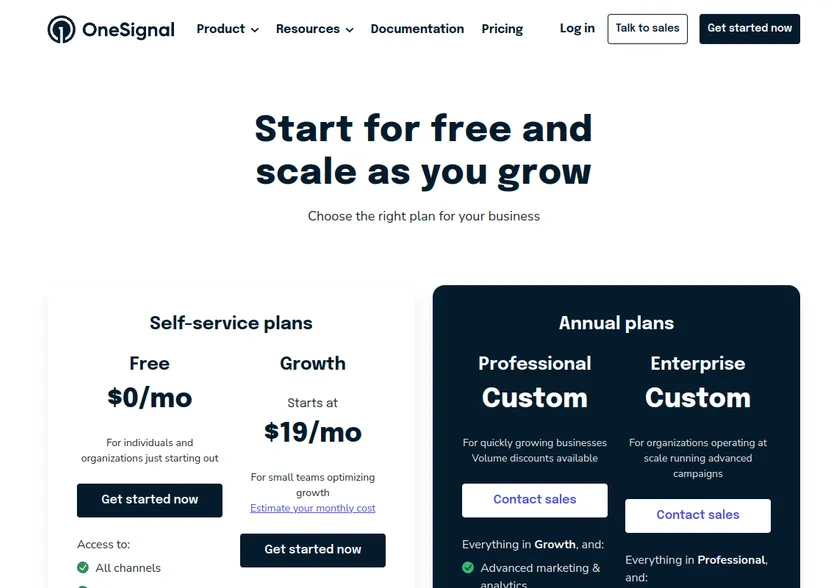
Paid tool Starting price: $19/month · Nineteen dollars a month for the Growth platform, plus usage at $0.012 per mobile monthly active user and $0.004 per web push subscriber; email adds $1.50 per 1,000 sends after 20,000 free sends a month; Professional and Enterprise are priced by quote.
Free plan: Free plan (1,000 mobile MAU, 10,000 web push subscribers per send)
A publisher with a big email list as well as push subscribers gets one dashboard here, since this OneSignal Growth plan costs nineteen dollars a month plus a small usage charge per subscriber. It covers web push, email, SMS and in-app messages, so a newsletter and a push alert can share one audience. Segmentation by topic and reading behavior keeps alerts relevant instead of noisy.
What we like
- Covers push, email, SMS and in-app messaging in one account
- Rich segmentation by reader behavior and topic
- Generous free plan for smaller publisher audiences
Watch out for
- Web push pricing counts every subscriber, so large lists get costly fast
- Email overage rates vary between vendor docs, so confirm on the pricing page
How to try it
- Create a OneSignal account and add your site as a web push app
- Paste the small setup script into your site template
- Build your first segment and send a test push to a small reader group
2. Pushwoosh
Best for: Publishers that pay only for active readers
Paid tool Starting price: $7/1,000 MAU/month · $7 per 1,000 monthly active users on Push only, with the first 1,000 free each month; Omnichannel is $13 per 1,000 MAU and Email only is $5; the $7 rate is a limited offer until December 31, 2026, locked for 24 months after signup.
Free plan: Free plan (1,000 MAU a month)
A publisher that only wants to pay for readers who actually open notifications should look closely, since this Pushwoosh Push plan costs seven dollars per one thousand monthly active users. The first one thousand active users are free every month, so a small site can run for nothing while it grows. Drip campaigns and automated journeys handle welcome and re-engagement messages without manual work.

What we like
- Pay-per-active-user model keeps small audiences cheap
- Drip campaigns and automated journeys built in
- Works across web, mobile and email from one dashboard
Watch out for
- The headline seven-dollar rate is a limited offer, not a permanent price
- Advanced reporting sits on the pricier Omnichannel plan
How to try it
- Sign up for Pushwoosh and register your site
- Add the provided code to your site header
- Set up a welcome drip and test it on one article category
3. Webpushr
Best for: Publishers that want a simple push service with a real free plan
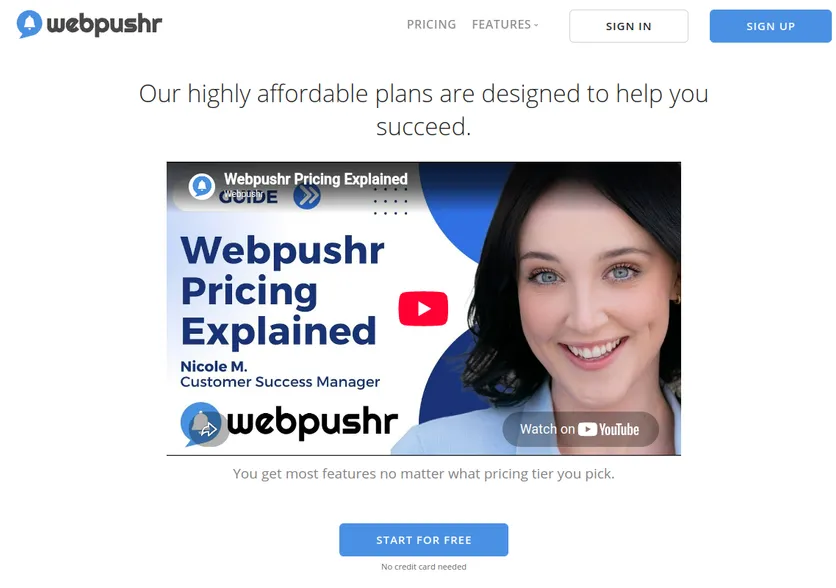
Paid tool Starting price: $29/month · $29 a month for Individual (up to 50,000 subscribers); Startup is $49 (100,000) and Growth is $99 (150,000); the free plan covers 10,000 subscribers with all features included.
Free plan: Free plan (10,000 subscribers)
A publisher that wants every feature without climbing a pricing ladder will like the simplicity here, since this Webpushr Individual plan costs twenty-nine dollars a month for up to fifty thousand subscribers. The free plan covers ten thousand subscribers with all features included, which is rare at this price. RSS-to-push turns each new article into a notification with no editor effort.
What we like
- Every feature is included on the free plan
- RSS-to-push keeps new stories flowing automatically
- No minimum term and no setup fee
Watch out for
- No mobile app push on the lower plans
- Support is email-based on the cheapest paid tier
How to try it
- Create a Webpushr account and add your domain
- Install the WordPress plugin or paste the script
- Turn on RSS-to-push so new posts go out on their own
4. PushEngage
Best for: Publishers that need cart-abandonment and drip push
Paid tool Starting price: $14/month · $14 a month for Business (up to 50,000 subscribers) at the regular renewal rate; the vendor currently shows an $8 introductory first-year rate, so expect the bill to rise after year one; Premium is $29 and Growth is $60 a month.
Free plan: Free plan (200 subscribers, 30 campaigns)
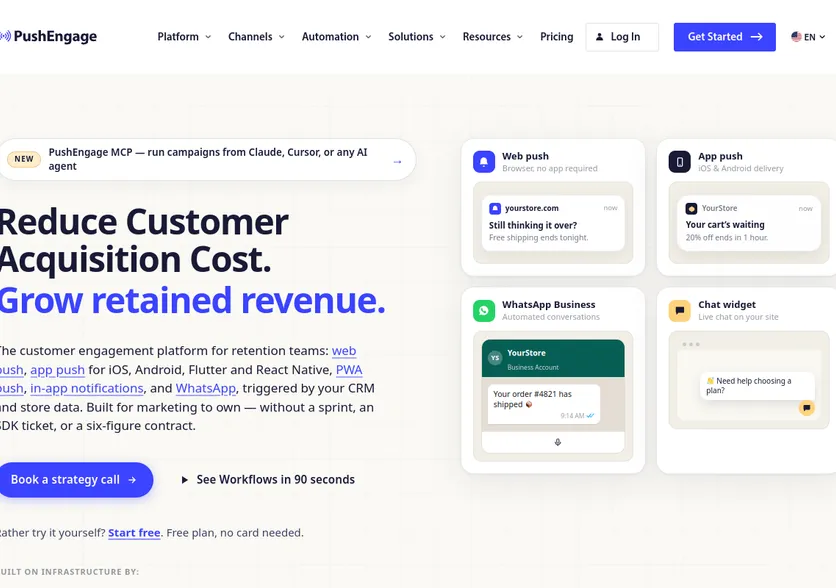
A publisher that runs drip campaigns for new readers gets strong automation here, since this PushEngage Business plan costs fourteen dollars a month at the regular rate. It pairs well with WordPress and WooCommerce, so subscribers sync without extra tools. A/B testing on send times helps editors learn when their readers actually click.
What we like
- Strong drip and dynamic trigger campaigns
- A/B testing on subject lines and send times
- WordPress and WooCommerce plugins are well maintained
Watch out for
- The advertised first-year price is lower than the renewal rate
- The free plan is small, with only two hundred subscribers
How to try it
- Open a PushEngage account and add your site
- Connect the WordPress plugin to sync subscribers
- Create a drip campaign for new readers and send a test
5. PushAlert
Best for: Publishers that want unlimited notifications on a free plan
Paid tool Starting price: $10/month · $10 a month billed annually for Basic ($12 billed monthly) with 3,000 subscribers; Premium is $33 a month billed annually and Platinum is $58; the free plan covers 3,000 subscribers with unlimited notifications.
Free plan: Free plan (3,000 subscribers)
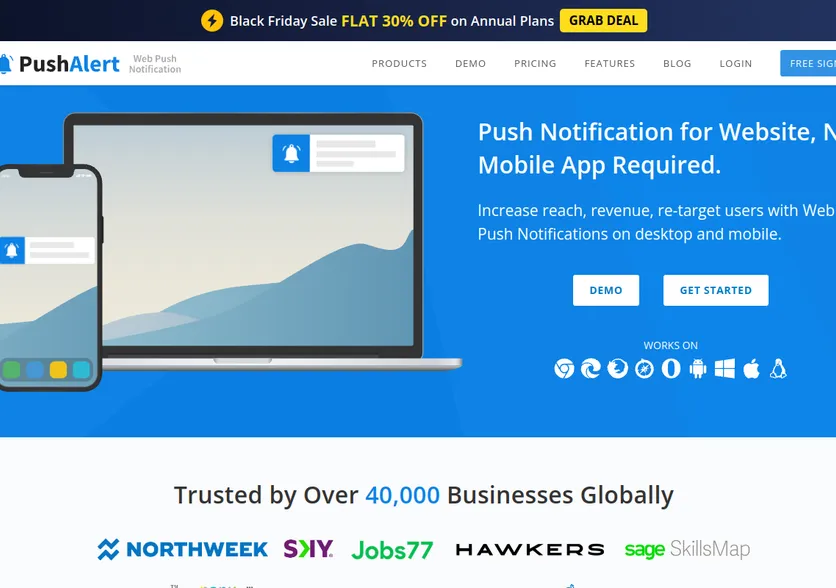
A publisher on a tight budget gets unlimited notifications here, since this PushAlert Basic plan costs ten dollars a month billed annually. The free plan covers three thousand subscribers with no cap on how many alerts you send. Real-time analytics show which stories drive clicks within minutes of publishing.
What we like
- Unlimited notifications even on the free plan
- Real-time analytics for every push sent
- Works with WordPress, Shopify and plain HTML
Watch out for
- Automation features need the Premium tier
- Audience targeting is basic compared with larger rivals
How to try it
- Sign up for PushAlert and add your website
- Install the WordPress plugin or paste the code
- Send a test notification and check the live analytics
6. Aimtell
Best for: Publishers that want every feature on every plan
Paid tool Starting price: $49/month · $49 a month for Basic (up to 10,000 subscribers); Plus is $99 (50,000) and Pro is $199 (100,000); Enterprise starts at $499 a month; older listings showing a $29 Starter tier are stale.
Free plan: No free plan; 14-day free trial
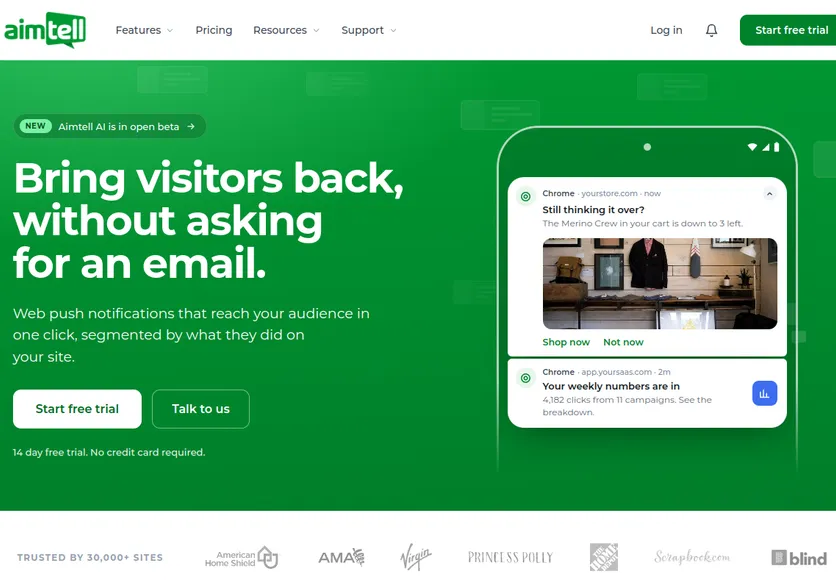
A publisher that hates feature tiers will appreciate the flat approach here, since this Aimtell Basic plan costs forty-nine dollars a month for up to ten thousand subscribers. Every plan includes the full feature set, so segmentation and automation never sit behind a paywall. Setup is a single JavaScript snippet, and campaigns can go live the same afternoon.
What we like
- All features are included on every paid plan
- Advanced segmentation without a tier jump
- Fast setup with a small JavaScript snippet
Watch out for
- No free plan, only a fourteen-day trial
- Enterprise pricing starts high for very large lists
How to try it
- Start the Aimtell trial and add your domain
- Paste the snippet into your site template
- Build a segment and schedule your first campaign
7. SendPulse
Best for: Publishers that already send email with SendPulse
Paid tool Starting price: $19.20/month · $19.20 a month billed annually for Web Push Pro (30,000 subscribers); $24 a month billed monthly; Basic web push is free to 10,000 subscribers; note that SendPulse email plans are priced separately.
Free plan: Free plan (10,000 web push subscribers)
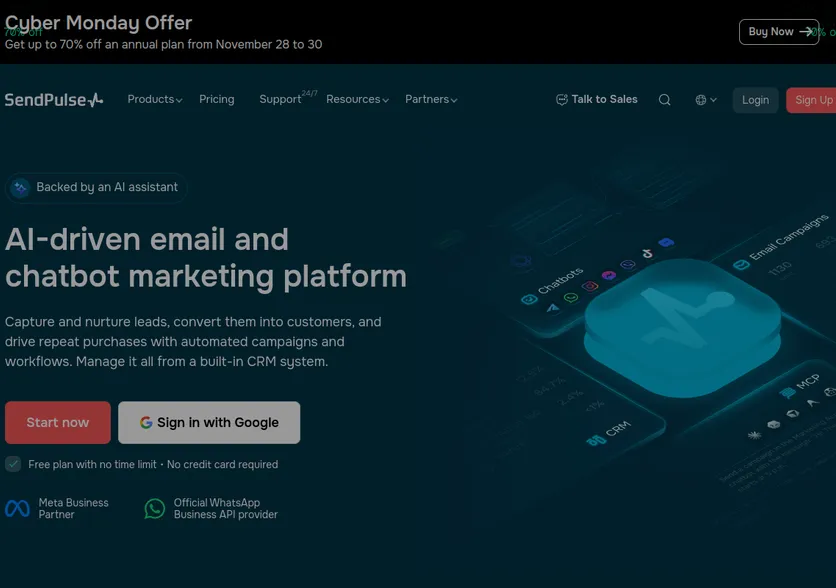
A publisher that already sends newsletters will find a familiar home here, since this SendPulse Web Push Pro plan costs nineteen dollars and twenty cents a month billed annually. The free plan covers ten thousand web push subscribers with unlimited notifications. A visual automation builder lets editors chain welcome messages and article alerts without code.
What we like
- Web push, email and chatbots in one platform
- Free web push up to ten thousand subscribers
- Visual automation builder with no coding
Watch out for
- Email and web push are billed as separate products
- The cheapest Pro tier caps at thirty thousand subscribers
How to try it
- Create a SendPulse account and open web push
- Add your site and install the tracking script
- Set up an automated push series for new subscribers
Prices above were checked on each vendor’s own website on Nov 29, 2026 and can change — the vendor’s page is the final word. Vendor links are editorial: nobody paid to be listed or ranked here. Vendors who want a featured listing can see how it works on our Get listed page.
How to pick a web push tool for your publication
Start with your subscriber count, because most web push tools charge per subscriber or per active user. A free plan that covers ten thousand subscribers can carry a growing publication for months, while a tool priced per active user stays cheap when many subscribers rarely visit. Check whether the plan includes RSS-to-push, because that single feature turns every new article into an alert with no editor work.
Next, test the opt-in prompt on your own site. A polite, delayed prompt converts far better than an instant popup, and the best tools let you time it after a reader has seen a page. Finally, look at automation: drip campaigns and segmentation matter more than a long feature list, because a relevant alert gets opened and a generic one gets blocked.
Before you buy
- Count your subscribers before you buy, because most plans charge per subscriber or per active user
- Check whether RSS-to-push is included, since it automates alerts for every new article
- Test the opt-in prompt timing, because a delayed prompt converts far better than an instant popup
- Compare the free plan limits, because some cover ten thousand subscribers and others only a few hundred
- Confirm the renewal price, because some vendors advertise a lower first-year rate
Official websites
Official websites of the products reviewed above. Features and prices were checked against these sites when this guide was written, and they can change, so confirm on the vendor site before you buy.
Frequently asked questions
Which web push tool is best for a small publisher?
Webpushr suits a small publisher best, because its free plan covers ten thousand subscribers with every feature included, and the first paid plan costs twenty-nine dollars a month for fifty thousand subscribers. OneSignal is the stronger pick once you also need email and in-app messages, since its free plan covers one thousand mobile monthly active users and ten thousand web push subscribers per send. Start free and upgrade only when your list outgrows the cap.
How much does web push notification software cost?
Most web push tools in this roundup start free and charge between eight and fifty dollars a month for a small list. PushAlert costs ten dollars a month billed annually, PushEngage costs fourteen dollars a month at the regular rate, and Webpushr costs twenty-nine dollars a month. Per-subscriber plans like Pushwoosh charge seven dollars per one thousand monthly active users, so the final bill depends on how many readers actually visit your site.
Do these web push tools work with WordPress?
Yes, most of them do. Webpushr, PushEngage and PushAlert all offer WordPress plugins that sync subscribers and send alerts for new posts with little setup. OneSignal, Pushwoosh and Aimtell work with a small script pasted into your site template instead, which suits custom themes and non-WordPress sites. SendPulse also connects through a plugin or a script, so either route works.
What is the difference between Pushwoosh and OneSignal?
Pushwoosh charges per monthly active user, so you pay only for readers who actually visit, while OneSignal charges a platform fee plus a small usage charge per subscriber. OneSignal also covers email, SMS and in-app messages in one account, while Pushwoosh focuses on push and drip journeys. A small publisher with a quiet list usually pays less with Pushwoosh, while a publisher that also sends email gets more from OneSignal.
Can I send unlimited push notifications for free?
PushAlert lets you send unlimited notifications on its free plan for three thousand subscribers, which is the most generous free allowance here. Webpushr also includes every feature on its free plan for ten thousand subscribers, though the subscriber cap still applies. Other tools limit the free plan by subscriber count or campaign count, so check the cap before you build your audience around a free plan.
Pick a free plan, send your first push and see which stories readers click.
Browse Business Tools tools