On this page
A therapy practice shares rooms, sensory tools, assessment kits and laptops across clinicians, and the kit that goes missing is the one a session needs. The seven tools below run from twenty dollars a month to a few hundred, and every price was checked on the vendor site on November 27, 2026. Simple check-out matters more here than a heavy maintenance suite, because the register has to work between back-to-back sessions. Sortly is our first pick — the visual tracker a practice can set up in an afternoon.
How we researched this
We started with the asset trackers therapy practices actually use, then read each price on the vendor pricing page on November 27, 2026 and noted the free plan or trial each one carries. We judged them for a practice that shares rooms, sensory tools and assessment kits across clinicians. We dropped Asset Panda because its price is quoted per deployment and no list price could be verified.
Compare the tools
| Name | Best for | Starting price | Free plan | |
|---|---|---|---|---|
 Sortly | Therapy practices that want visual inventory with photos on every kit | $49/month | Free plan for 100 items and 1 user; 14-day trial on paid plans | Visit |
 AssetTiger | Small therapy practices that want the cheapest barcode tracking | $20/month | No free plan; 30-day free trial | Visit |
 Reftab | Therapy practices that want lean check-in and check-out with a free start | $31.25/month | Free plan for up to 50 assets | Visit |
 EZOfficeInventory | Therapy practices that need reservations, check-out and maintenance together | $44.75/month | No free plan; 15-day free trial | Visit |
 UpKeep | Therapy practices that run maintenance alongside asset tracking | $24/user/month | No free plan; free trial available | Visit |
 GoCodes | Small therapy practices that want flat yearly QR tracking | $500/year | No free plan; free trial available | Visit |
| AssetSonar | Therapy practices that also need laptops and software licences tracked | $0.75/asset/month | No free plan; demo available | Visit |
The asset tracking software for therapists, compared
1. Sortly
Best for: Therapy practices that want visual inventory with photos on every kit
Paid tool Starting price: $49/month · Advanced plan lists at forty-nine dollars a month; the vendor also shows fifty percent first-year promotional rates that are not the list price
Free plan: Free plan for 100 items and 1 user; 14-day trial on paid plans
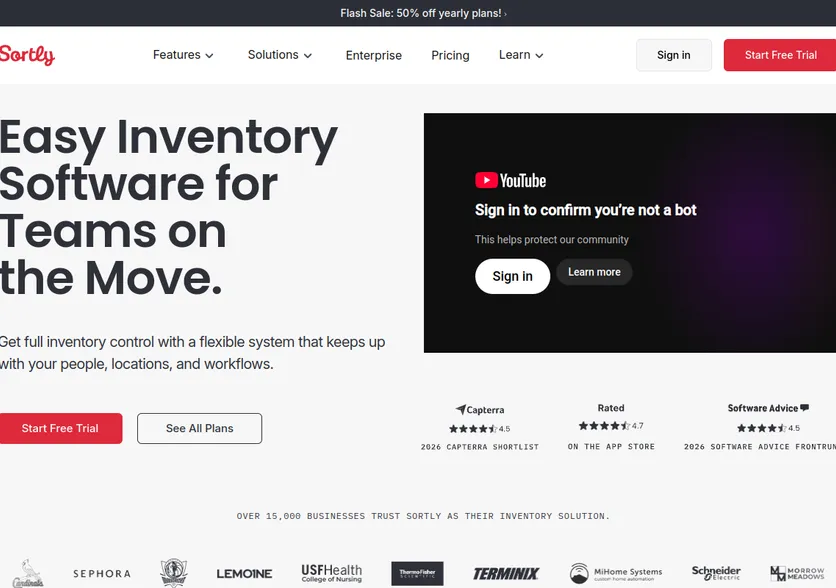
A therapy practice runs on shared kits, and Sortly turns each one into a photo card that any clinician can find in seconds. This Sortly Advanced plan lists at forty-nine dollars a month, with a free plan covering one hundred items for one user. Clinicians scan barcodes at the shelf, log check-outs between sessions and keep an audit trail without a spreadsheet.
What we like
- Visual inventory with photos makes kits easy to find
- Free plan covers one hundred items for a genuine pilot
- Barcode scanning works from any phone
Watch out for
- Advanced features sit on the forty-nine dollar plan, not the free one
- First-year promotional rates rise sharply at renewal
How to try it
- Open the Sortly site and start with the free plan
- Photograph each kit and add barcodes at the shelf
- Set up check-out rules for shared rooms and kits
2. AssetTiger
Best for: Small therapy practices that want the cheapest barcode tracking
Paid tool Starting price: $20/month · Basic plan lists at twenty dollars a month for up to five hundred assets with unlimited users; larger tiers run to two hundred seventy-five dollars a month
Free plan: No free plan; 30-day free trial
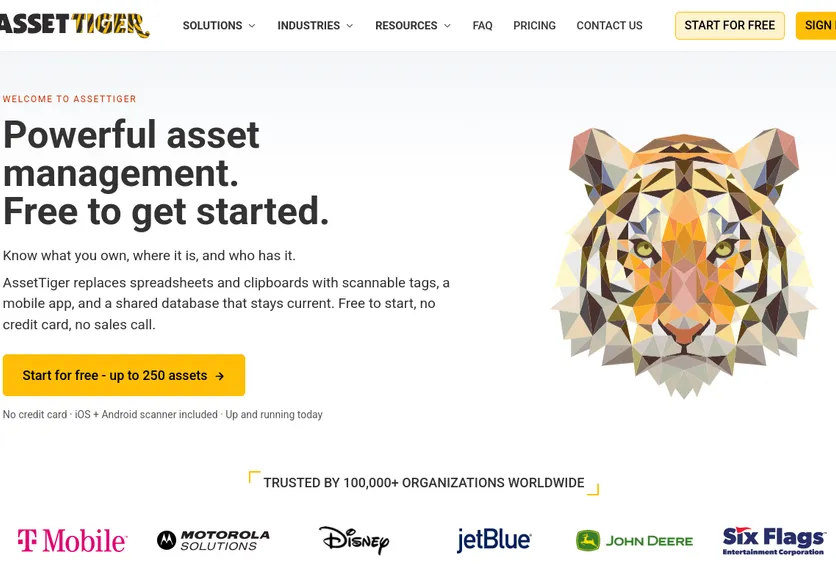
For a therapy practice watching every dollar, AssetTiger is the cheapest tracker in this list, with barcode check-in and check-out and unlimited users on every plan. This AssetTiger Basic plan lists at twenty dollars a month for up to five hundred assets. A therapy practice can tag every assessment kit and sensory tool, log who took what to which room and run an audit count without paying per seat.
What we like
- Lowest monthly price in this comparison at twenty dollars
- Unlimited users on every plan, so all clinicians can scan
- Simple barcode workflow with no learning curve
Watch out for
- No maintenance scheduling, so equipment servicing needs another tool
- Interface looks dated next to newer trackers
How to try it
- Open the AssetTiger pricing page and start the 30-day trial
- Print barcode labels for each kit and tool
- Train clinicians to scan kits out and back in daily
3. Reftab
Best for: Therapy practices that want lean check-in and check-out with a free start
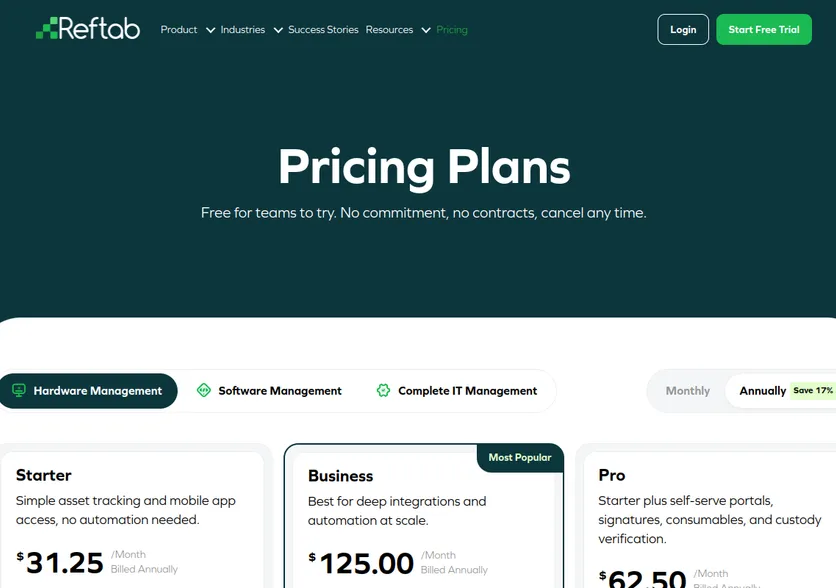
Paid tool Starting price: $31.25/month · Starter plan lists at thirty-one dollars and twenty-five cents a month on annual billing for the two hundred fifty asset tier; Pro lists at sixty-two dollars and fifty cents and Business at one hundred twenty-five dollars
Free plan: Free plan for up to 50 assets
Reftab is the leanest tracker here, built around check-in and check-out with QR codes and a setup that takes minutes. This Reftab Starter plan lists at thirty-one dollars and twenty-five cents a month on annual billing, with a free plan for up to fifty assets. A practice can label shared kits, log who took what to which room and run a quick audit count at month end.
What we like
- Free plan for up to fifty assets
- Lean check-in and check-out with almost no setup
- Low starting price for a small practice
Watch out for
- No maintenance scheduling or work orders
- Software management costs extra per tracked user
How to try it
- Open the Reftab pricing page and start on the free plan
- Generate QR codes and label each shared kit
- Run a monthly audit count from the mobile app
4. EZOfficeInventory
Best for: Therapy practices that need reservations, check-out and maintenance together
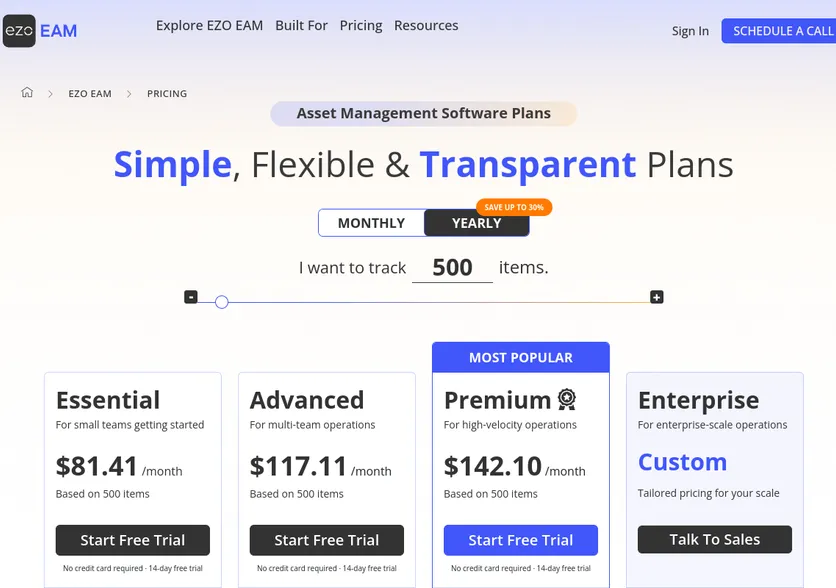
Paid tool Starting price: $44.75/month · Essential plan, $44.75 a month billed annually for 100 items ($48 billed monthly); the price rises with item count ($63.55 at 300 items, $81.41 at 500 items); a fifteen-day trial is included
Free plan: No free plan; 15-day free trial
A therapy practice that shares rooms and kits needs reservations as much as tracking, and EZOfficeInventory, now sold as EZO, covers the full equipment lifecycle, from reservations and check-outs to warranties, repair history and depreciation. This EZOfficeInventory Essential plan costs forty-four dollars and seventy-five cents a month billed annually for one hundred items, with unlimited users. A practice can reserve shared rooms and kits by calendar, log maintenance and get alerts before service dates pass.
What we like
- Reservations and check-outs with a calendar view
- Unlimited users, so every clinician can request kit
- Maintenance, warranties and depreciation in one place
Watch out for
- Price rises with item count, so count kits before budgeting
- Setup takes more thought than a simple visual tracker
How to try it
- Open the EZO pricing page and start the 15-day trial
- Add locations, groups and approval rules for each clinic
- Set maintenance alerts for shared equipment
5. UpKeep
Best for: Therapy practices that run maintenance alongside asset tracking
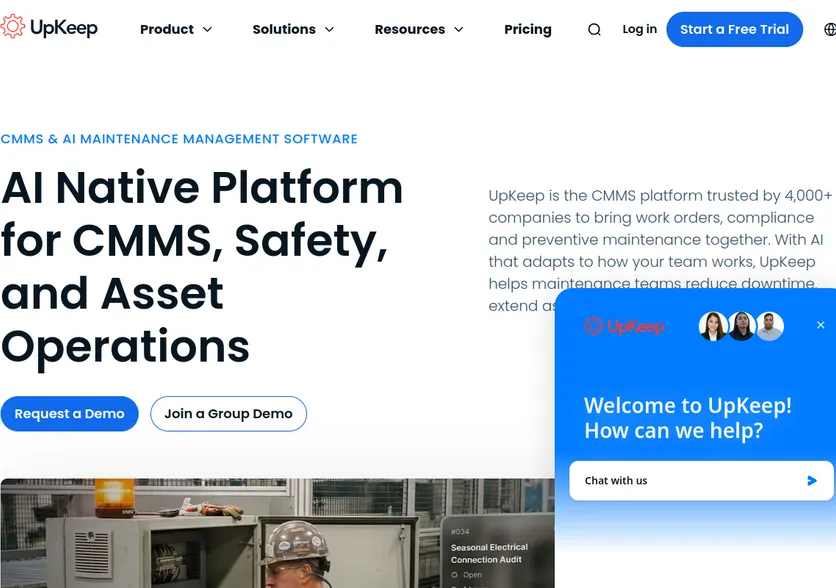
Paid tool Starting price: $24/user/month · Essential plan lists at twenty-four dollars per user a month; Premium lists at fifty-five dollars and higher tiers are quoted
Free plan: No free plan; free trial available
UpKeep pairs asset tracking with work orders, so a broken sensory tool and its repair request live in the same place. This UpKeep Essential plan lists at twenty-four dollars per user a month, with Premium at fifty-five dollars. A practice manager can raise a repair from the asset page, assign it to a colleague and close it with photos attached.
What we like
- Work orders and asset records in one system
- Mobile app built for people on the move
- Clear per-user pricing with no hidden tiers
Watch out for
- No free plan, so every clinician needs a paid seat
- Deeper analytics sit on the higher tiers
How to try it
- Open the UpKeep pricing page and start a free trial
- Import kits and link each one to its maintenance schedule
- Raise the first work order from an asset record
6. GoCodes
Best for: Small therapy practices that want flat yearly QR tracking
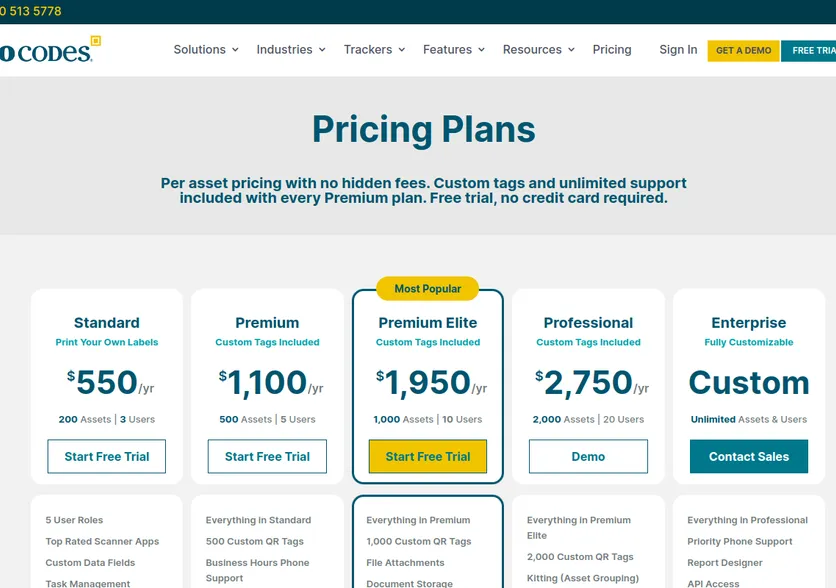
Paid tool Starting price: $500/year · Standard plan lists at five hundred dollars a year for two hundred assets and three users; Premium lists at one thousand one hundred dollars a year and billing is annual only
Free plan: No free plan; free trial available
GoCodes is the simplest tracker here: print QR labels, stick them on kits, and scan with any phone. This GoCodes Standard plan lists at five hundred dollars a year for two hundred assets and three users, with annual billing only. A small practice gets check-out history and maintenance alerts without per-user fees or a complex setup.
What we like
- Flat yearly price with no per-user fees
- Anyone can scan with a phone, no app install needed
- Simple enough for a practice to adopt in a day
Watch out for
- Annual billing only, so there is no monthly option
- Feature depth is entry level next to EZO or UpKeep
How to try it
- Open the GoCodes pricing page and start a free trial
- Order or print QR labels for each kit
- Scan kits in and out of rooms with any smartphone
7. AssetSonar
Best for: Therapy practices that also need laptops and software licences tracked
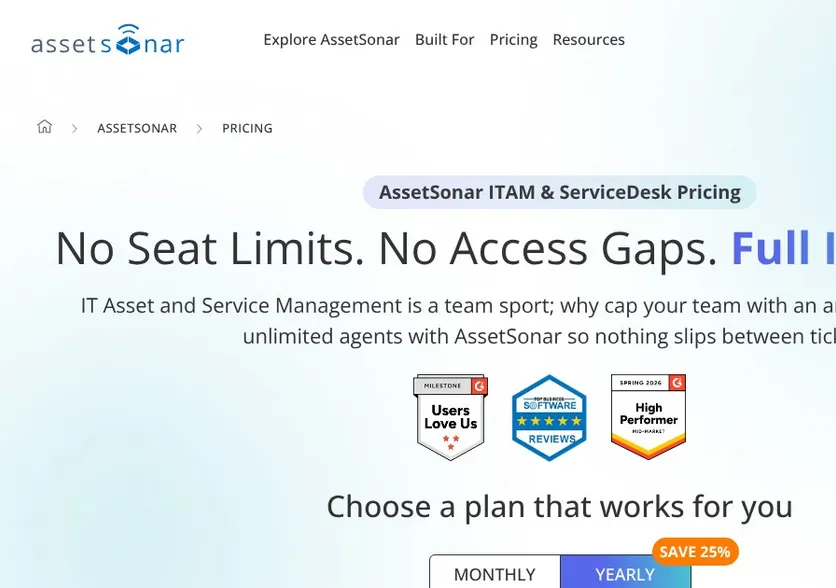
Paid tool Starting price: $0.75/asset/month · ITAM plan lists at seventy-five cents per asset a month on annual billing, with a one hundred asset minimum; ITSM lists at one dollar and eight cents and the Advanced SAM add-on at forty-two cents
Free plan: No free plan; demo available
When a therapy practice also runs a fleet of laptops, AssetSonar is the IT-focused sibling of EZO, built for teams that track hardware and software licences together. This AssetSonar ITAM plan lists at seventy-five cents per asset a month on annual billing, with a one hundred asset minimum. A practice with a fleet of laptops can watch licences, link devices to tickets and keep agents unlimited without paying per clinician.
What we like
- Per-asset pricing suits practices with a fixed device count
- Unlimited agents, so staff never cost extra
- Hardware and software tracking in one system
Watch out for
- One hundred asset minimum means small practices pay for assets they lack
- ITSM features cost extra on top of the ITAM rate
How to try it
- Open the AssetSonar pricing page and check the asset minimum
- Import laptops and link software licences to each device
- Connect the helpdesk so tickets attach to devices
Prices above were checked on each vendor’s own website on Nov 27, 2026 and can change — the vendor’s page is the final word. Vendor links are editorial: nobody paid to be listed or ranked here. Vendors who want a featured listing can see how it works on our Get listed page.
What therapist asset tracking costs in 2026
A therapy practice pays for asset tracking in three ways, and the cheapest headline is rarely the cheapest year. Per-user plans look small until every clinician needs a seat, per-asset plans look fair until the device count grows, and flat yearly plans look simple until the asset cap forces an upgrade. Add the real seat count and the real kit count before you compare any two prices. A free plan that covers fifty assets is a genuine pilot for one clinic, not a permanent home for a group practice.
Start with the free plan or trial on two trackers and tag twenty real kits, including one assessment kit that clinicians share daily. Run two weeks of check-outs between sessions, test the scan in a busy room and run an audit count at the end. Pick the tool clinicians actually open, because the register only stays accurate if people use it without being chased.
Before you buy
- Count every shared kit and room item before you buy, because several plans price by asset count and a big register jumps tiers fast.
- Check whether the price is per user, per asset or flat, because the cheapest headline changes once every clinician needs access.
- Start on a free plan and run a real two-week pilot, because a tracker nobody opens between sessions is worse than a clipboard.
- Confirm the mobile scan works in a busy clinic, because a barcode that fails under room lighting slows every check-out.
- Name one person as the register owner, because a shared list without an owner drifts out of date within weeks.
Official websites
Official websites of the products reviewed above. Features and prices were checked against these sites when this guide was written, and they can change, so confirm on the vendor site before you buy.
Frequently asked questions
Which asset tracking software is best for therapists in 2026?
Sortly is the best overall pick at forty-nine dollars a month, with visual inventory, photos and barcode scanning that a practice learns fast. AssetTiger is the best budget pick at twenty dollars a month for barcode tracking with unlimited users. Reftab is the best lean pick at thirty-one dollars and twenty-five cents a month, with a free plan for up to fifty assets.
How much does asset tracking software for therapists cost?
Prices in this list run from twenty dollars a month for AssetTiger to eighty-one dollars and forty-one cents a month for EZOfficeInventory, with per-user plans from twenty to twenty-four dollars per user a month. GoCodes charges a flat five hundred dollars a year, and AssetSonar charges seventy-five cents per asset a month with a one hundred asset minimum. Count clinicians and kits before comparing, because per-user pricing changes the total fast.
Do any of these tools offer a free plan?
Yes, two of them do. Sortly offers a free plan for one hundred items and one user, and Reftab offers a free plan for up to fifty assets. AssetTiger, GoCodes, UpKeep and EZOfficeInventory offer free trials instead, and AssetSonar offers a demo, so you can test each one on real kits before paying anything.
Can a therapy practice start with a free plan and upgrade later?
Yes, and that is the smartest path for most practices. Sortly and Reftab both let a practice run a real register on a free plan, then upgrade when the kit count or the clinician count outgrows the cap. Start with the free tier, tag the twenty kits the practice shares most, and move to a paid plan only when the free limits start blocking real work.
Is QR code or barcode scanning better for a therapy practice?
QR codes suit therapy practices best, because any phone can scan them without an app and each code can open a web page for the kit. Barcodes suit practices that already label stock with barcodes and scan with a dedicated reader. GoCodes and Reftab lean on QR codes, Sortly and AssetTiger lean on barcodes, and EZOfficeInventory supports both, so pick the format your clinicians already scan without thinking.
Need everyday business help too? Try Toolsvine's free business tools right in your browser.
Browse Business Tools tools