On this page
Growth marketing for a B2B team is a pipeline problem: find the right accounts, get the right contact data, reach out in a way that gets replies, and prove which campaigns created revenue. No single tool does all of it well, so a GTM team usually buys two or three and makes them work together. We compared eight tools on live 2026 prices, from a twenty-dollar platform seat to a one-hundred-sixty-seven-dollar data tool. HubSpot Marketing Hub is our top pick for most teams, because it holds the whole marketing motion in one place.
How we researched this
We kept only growth marketing tools with a published price on their own website and a real fit for a B2B GTM motion. 6sense, Demandbase, Clearbit, ZoomInfo, Cognism, Mutiny, HockeyStack and MadKudu were dropped because none publishes prices, and five tools here also appear in the automated outbound comparison with different descriptions written for this post. Every price below is the vendor list price checked on November 27, 2026, with the annual-billed figure as the headline and the monthly-billed figure in the note.
Compare the tools
| Name | Best for | Starting price | Free plan | |
|---|---|---|---|---|
 HubSpot Marketing Hub | GTM teams that want one platform for marketing | $20/seat/month | Free plan available with basic marketing tools | Visit |
 Clay | Data enrichment and waterfall prospecting | $167/month | No free plan; free trial available | Visit |
 Lusha | Budget data enrichment with a free tier | $37.45/month | Free plan available, forty credits per month | Visit |
 Apollo | Prospecting and outreach in one seat | $49/seat/month | Free plan available with limited credits | Visit |
 Instantly | High-volume campaigns that need scale | $37/month | No free plan; free trial available | Visit |
 Lemlist | Personalized campaigns that stand out | $55/seat/month | No free plan; free trial available | Visit |
 Reply.io | Outreach with AI agents doing the research | $49/month | No free plan; free trial available | Visit |
 Smartlead | Deliverability-first sending at scale | $32/month | No free plan; free trial available | Visit |
The b2b growth marketing software, compared
1. HubSpot Marketing Hub
Best for: GTM teams that want one platform for marketing
Paid tool Starting price: $20/seat/month · Marketing Hub Starter plan; higher tiers are priced per seat and scale with contacts and features
Free plan: Free plan available with basic marketing tools
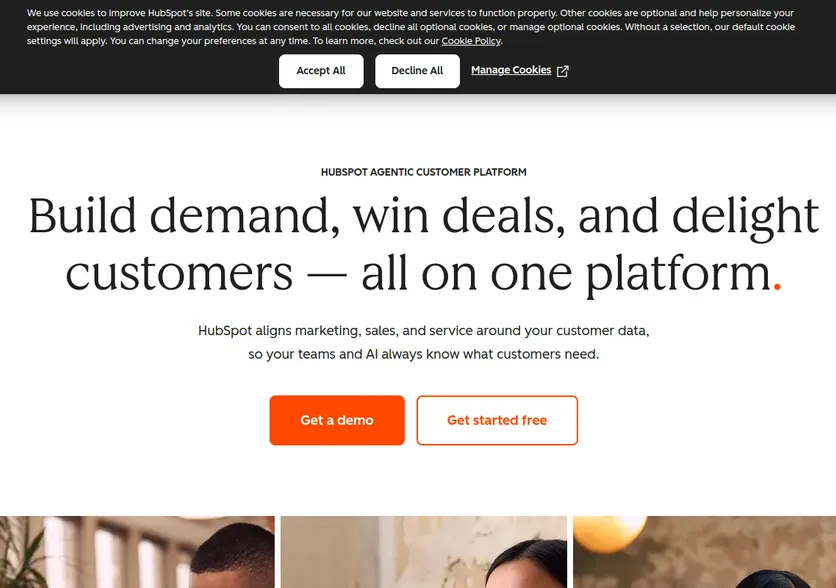
HubSpot Marketing Hub is the platform pick on this list: email, landing pages, automation and reporting in one system that talks to the HubSpot CRM. The HubSpot Marketing Hub Starter plan costs twenty dollars per seat per month, which makes it the cheapest entry point here for a team that wants a real platform rather than a point tool. It is less specialized than Clay or Apollo, but it covers the whole marketing motion in one place.
What we like
- Full marketing platform in one system
- Tight integration with the HubSpot CRM
- Free plan with basic marketing tools
Watch out for
- Higher tiers get expensive as contacts grow
- Less specialized than Clay or Apollo for data
How to try it
- Connect Marketing Hub to your HubSpot CRM.
- Build a landing page and a follow-up email workflow.
- Track which campaigns create pipeline in the reporting dashboard.
2. Clay
Best for: Data enrichment and waterfall prospecting
Paid tool Starting price: $167/month · Launch plan, billed annually; one hundred eighty-five dollars per month billed monthly; Growth four hundred forty-six dollars billed annually
Free plan: No free plan; free trial available
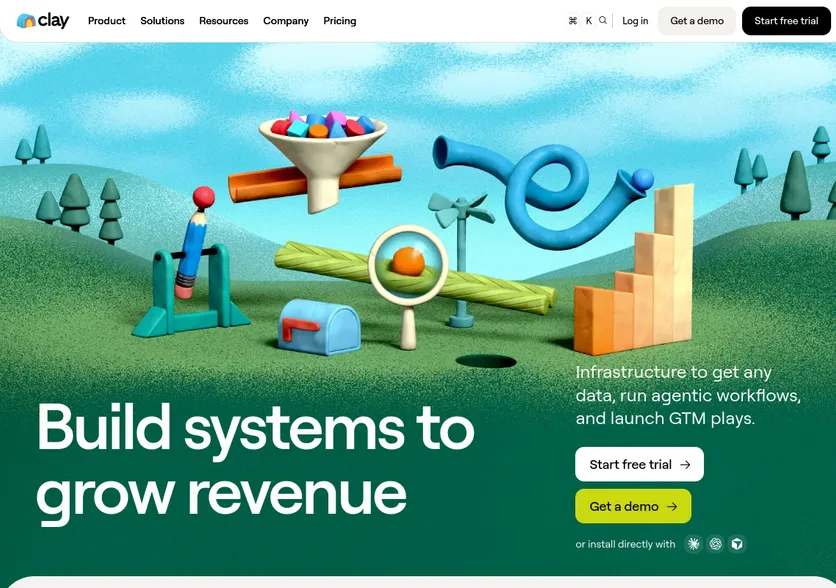
Clay is the data tool that growth teams reach for when a plain list is not enough. It enriches a prospect list from dozens of sources, runs a waterfall to fill in missing emails and phones, and pushes the result into your CRM or outreach tool. The Clay Launch plan costs one hundred sixty-seven dollars a month billed annually, which is a lot for a data tool, but teams that live on account research say it pays for itself in pipeline.
What we like
- Waterfall enrichment from dozens of sources
- Flexible workflows for account research
- Strong integrations with CRMs and outreach tools
Watch out for
- Most expensive data tool on this list
- Learning curve for the workflow builder
How to try it
- Import your target account list into Clay.
- Run a waterfall enrichment to fill in emails and phones.
- Push the enriched list into your CRM or outreach tool.
3. Lusha
Best for: Budget data enrichment with a free tier
Paid tool Starting price: $37.45/month · Starter plan, billed annually; forty-nine dollars ninety per month billed monthly; Pro fifty-two dollars forty-five billed annually and Premium two hundred ninety-nine dollars ninety-five billed annually; free plan with forty credits per month
Free plan: Free plan available, forty credits per month
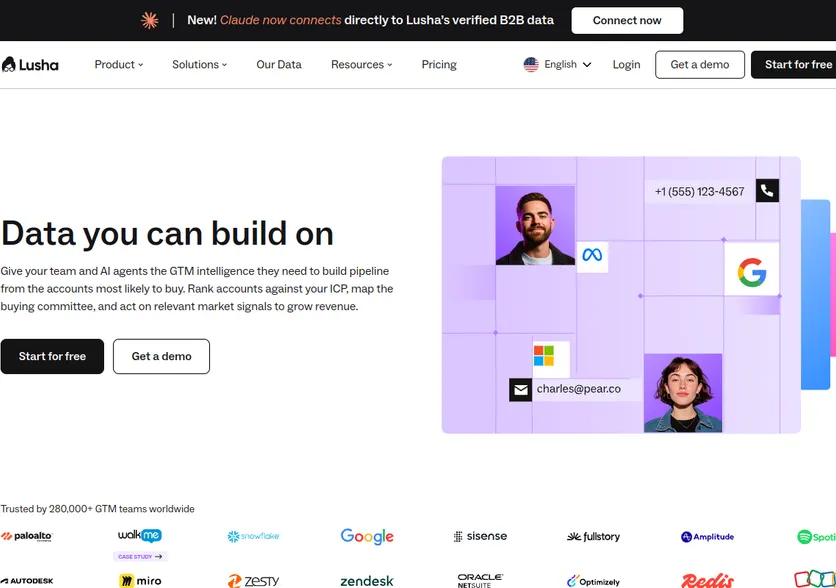
Lusha is the budget data tool on this list, and it is the one to try first if you want verified emails and phones without a big contract. The Lusha Starter plan costs thirty-seven dollars and forty-five cents a month billed annually, and the free plan includes forty credits a month. It is simpler than Clay and cheaper than Apollo for pure enrichment, which makes it a good fit for a small GTM team.
What we like
- Free plan with forty credits a month
- Verified emails and phones on demand
- Simple browser extension workflow
Watch out for
- Credits cap how much you can enrich
- Less depth than Clay for account research
How to try it
- Install the Lusha browser extension and open a LinkedIn profile.
- Reveal the verified email and phone for the prospect.
- Export the enriched contacts into your CRM.
4. Apollo
Best for: Prospecting and outreach in one seat
Paid tool Starting price: $49/seat/month · Basic plan, billed annually; sixty-five dollars per seat per month billed monthly; Professional seventy-nine dollars and Organization one hundred nineteen dollars billed annually
Free plan: Free plan available with limited credits
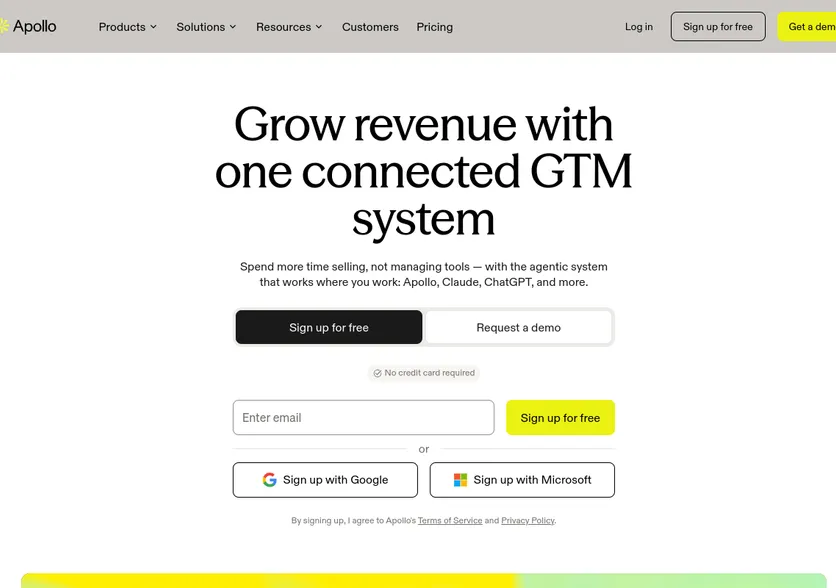
For a GTM team, Apollo is the workhorse: a prospecting database of more than two hundred million contacts plus sequences, tracking and reporting in the same seat. The Apollo Basic plan is the entry point, and the free plan lets a team test the data before paying. It is the most complete single tool on this list, and it is the one we recommend when a team can only buy one thing.
What we like
- Prospecting database and sequences together
- Free plan to test the data first
- A/B testing and reply tracking included
Watch out for
- Credits cap how much prospecting you can do
- Data quality varies by industry and region
How to try it
- Filter the database for your ideal customer profile.
- Build a sequence and set the send limits per mailbox.
- Track replies and move positive replies into the pipeline.
5. Instantly
Best for: High-volume campaigns that need scale
Paid tool Starting price: $37/month · Growth plan, billed annually; forty-seven dollars per month billed monthly; Hypergrowth about eighty-six dollars per month billed annually
Free plan: No free plan; free trial available
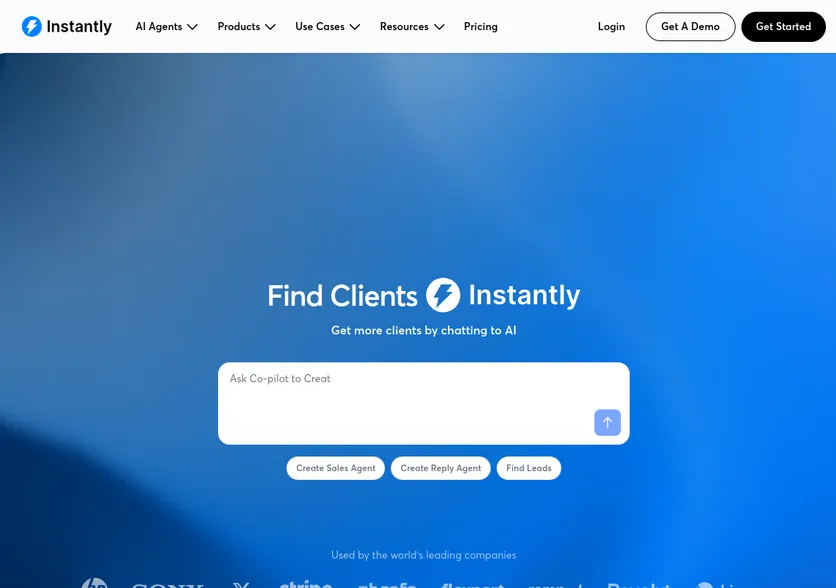
When a GTM team needs to send at volume, Instantly is the tool for the job. It connects many mailboxes, warms them up automatically and sends thousands of emails a day without charging per seat. The Instantly Growth plan is the sweet spot, with unlimited warmup included. It is a sender, not a database, so most teams pair it with Apollo or Clay for the list.
What we like
- Unlimited warmup on the Growth plan
- Many mailboxes under one account
- Built for thousands of emails a day
Watch out for
- Smaller built-in database than Apollo
- Pricing rounds to about thirty-seven dollars per month annually
How to try it
- Connect your mailboxes and turn on unlimited warmup.
- Import the enriched list from your data tool.
- Split the list across campaigns and watch deliverability daily.
6. Lemlist
Best for: Personalized campaigns that stand out
Paid tool Starting price: $55/seat/month · Email plan, billed annually; sixty-nine dollars per seat per month billed monthly; Multichannel eighty-seven dollars billed annually
Free plan: No free plan; free trial available
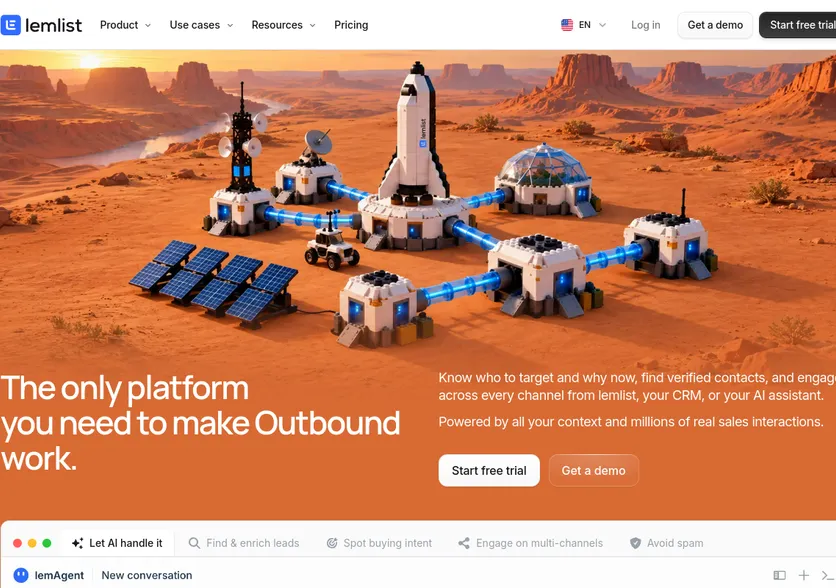
Lemlist is the personalization tool on this list, and it is the pick for a GTM team that would rather send fewer, better emails. Dynamic images, custom landing pages and LinkedIn steps make each message feel hand-written, and the reply rates show it. The Lemlist Email plan covers email outreach, and the Multichannel plan adds LinkedIn and calls for teams that want more than email.
What we like
- Best personalization features on this list
- Multichannel steps with LinkedIn and calls
- Clean reporting on replies and meetings
Watch out for
- Pricier per seat than the volume tools
- LinkedIn steps need the Multichannel plan
How to try it
- Import your list and add a personalized image to the first email.
- Build a sequence that mixes email with LinkedIn touches.
- Review replies daily and pause sequences that go stale.
7. Reply.io
Best for: Outreach with AI agents doing the research
Paid tool Starting price: $49/month · Email Volume entry plan, billed annually; fifty-nine dollars per month billed monthly; Multichannel eighty-nine dollars per seat billed annually
Free plan: No free plan; free trial available
Reply is the AI-forward option on this list: its agents research leads, draft first messages and handle simple replies, so a small GTM team can run a bigger motion than its headcount suggests. The Reply Email Volume plan is priced for teams that send a lot of email, and the AI features are the reason to choose it over a plainer sender. Supervise the AI closely in the first weeks and it becomes a real force multiplier.
What we like
- AI agents for research and first drafts
- Email Volume plan built for heavy senders
- Strong CRM integrations
Watch out for
- AI features need supervision at first
- Multichannel costs more per seat
How to try it
- Import your list and let the AI agent enrich each lead.
- Set up a sequence with email steps and AI follow-ups.
- Review the AI-drafted replies before they go out.
8. Smartlead
Best for: Deliverability-first sending at scale
Paid tool Starting price: $32/month · Base plan, billed annually; thirty-nine dollars per month billed monthly; Pro seventy-eight dollars and Unlimited Smart one hundred forty-four dollars billed annually
Free plan: No free plan; free trial available
Smartlead is the deliverability specialist: unlimited mailboxes, unlimited warmup and a master inbox for every reply. The Smartlead Base plan is cheap for what it does, and it is the tool agencies pick when inbox placement matters more than anything else. It is a sender, not a database, so pair it with Apollo, Clay or Lusha for the list and let Smartlead handle the delivery.

What we like
- Unlimited mailboxes and warmup on every plan
- Master inbox for all campaign replies
- Low price for high-volume teams
Watch out for
- Learning curve is steeper than Instantly
- No free plan, only a free trial
How to try it
- Connect your mailboxes and switch on warmup for each one.
- Import the enriched list from your data tool.
- Set daily send caps and let the tool spread the load.
Prices above were checked on each vendor’s own website on Nov 27, 2026 and can change — the vendor’s page is the final word. Vendor links are editorial: nobody paid to be listed or ranked here. Vendors who want a featured listing can see how it works on our Get listed page.
How to build a GTM stack without paying twice for the same data
The expensive mistake in growth marketing is buying the same data twice. Apollo, Clay and Lusha all sell contact data, and a team that buys all three pays for the same emails three times. Pick one data source as your system of record: Apollo if you want data and sending together, Clay if account research is your edge, Lusha if you want the cheapest enrichment with a free tier. Then buy a sender that does not charge you for data you already own.
The second decision is platform versus point tools. HubSpot Marketing Hub holds email, landing pages and reporting in one system, which is simpler and easier to report on. The point tools are better at their one job: Clay enriches better, Instantly sends at higher volume, Lemlist personalizes better. Most GTM teams end up with HubSpot plus one data tool and one sender, and that stack costs less than a single enterprise platform that does everything badly.
Before you buy
- Check the contact or credit limit on the exact plan, because growth tools charge by database size.
- Confirm the plan includes the channels you need, since LinkedIn and calls often cost extra.
- Ask whether data enrichment is included or charged per credit on top of the seat.
- Make sure the tool connects to your CRM so pipeline and revenue sync both ways.
- Test the data quality on your own target accounts before you commit to an annual contract.
Official websites
Official websites of the products reviewed above. Features and prices were checked against these sites when this guide was written, and they can change, so confirm on the vendor site before you buy.
Frequently asked questions
What is B2B growth marketing software?
B2B growth marketing software is the stack a GTM team uses to find accounts, enrich them, reach out and turn replies into pipeline. It covers data enrichment, prospecting, email sequences, LinkedIn outreach and reporting. The tools on this list split into three groups: platforms such as HubSpot, data tools such as Clay and Lusha, and senders such as Apollo, Instantly and Smartlead.
Should a GTM team buy one platform or several tools?
Most GTM teams end up with two or three tools: one for data, one for sending and sometimes one platform to hold it together. Apollo is the exception because it does data and sending in one seat. If your budget only stretches to one tool, pick Apollo. If you can afford two, add Clay for data or Instantly for volume sending.
How much should a GTM team budget for growth marketing software?
Budget around twenty to fifty dollars per seat per month for the platform or sender, plus a data tool. HubSpot Marketing Hub Starter is twenty dollars per seat, Apollo Basic is forty-nine dollars, and Lusha Starter is about thirty-seven dollars. Clay is the exception at one hundred sixty-seven dollars a month, and it only makes sense if account research is core to your motion.
Why are 6sense, Demandbase and ZoomInfo not on this list?
6sense, Demandbase, Clearbit, ZoomInfo, Cognism, Mutiny, HockeyStack and MadKudu were all dropped because none of them publishes prices. That is normal for enterprise marketing software, and it makes a fair comparison impossible. If your team is large enough to need them, ask each vendor for a quote and compare the per-seat cost against Apollo at forty-nine dollars.
Can a GTM team try growth marketing software for free?
Yes, and it is the cheapest way to test a tool. Apollo and Lusha both have free plans, HubSpot Marketing Hub has a free tier with basic tools, and most of the others offer free trials. Test the data quality on your own target accounts, not on a demo list, because a tool that works for one industry can fail on another.
Start with HubSpot Marketing Hub if you want one platform for the whole GTM motion, or compare the data pricing above first.
Browse Marketing & Ads Calculators tools