On this page
A small business runs on data scattered across a shop, a CRM and a spreadsheet, and nobody has time to copy rows between them by hand. The eight tools below move that data into one place, with no-code setup a team can finish in an afternoon. Every price was checked on the vendor site on November 27, 2026, and the list runs from five dollars a month to one thousand nine hundred and ninety-nine dollars a month. Make is our first pick — nine dollars a month for automation across three thousand apps, with a free plan to start.
How we researched this
We started with the data integration tools small businesses actually buy, then read each price on the vendor pricing page on November 27, 2026 and noted the trial each plan carries. We judged them for a team with no data engineer, where the owner or the ops lead sets up the pipeline. We left out Informatica, Talend, SnapLogic, Matillion and IBM DataStage because none of them publishes a list price, so a small business cannot compare them without a sales call.
Compare the tools
| Name | Best for | Starting price | Free plan | |
|---|---|---|---|---|
 Make | Small teams that want visual automation at the lowest price here | $9/month | Free plan | Visit |
 Zapier | Small teams that want the widest app catalogue for simple automations | $19.99/month | Free plan | Visit |
 Airbyte | Teams that want open-source connectors with a managed cloud option | $20/month | Free trial | Visit |
 Fivetran | Small teams that want fully managed pipelines without a data engineer | $5/month | Free plan; 14-day free trial | Visit |
 Skyvia | Small teams that want no-code integration priced by records, not by seats | $79/month | Free plan | Visit |
 Stitch | Small teams that want simple ETL with a predictable monthly price | $100/month | Free trial | Visit |
 Hevo Data | Small teams that want a no-code pipeline with built-in transformations | $265/month | 14-day free trial | Visit |
 Integrate.io | Small businesses that want one flat fee and no metering surprises | $1,999/month | 14-day free trial | Visit |
The cloud data integration software for small business, compared
1. Make
Best for: Small teams that want visual automation at the lowest price here
Paid tool Starting price: $9/month · Nine dollars a month billed annually for the Core plan with ten thousand credits, or ten dollars and fifty-nine cents billed monthly; Pro costs sixteen dollars and Teams costs twenty-nine dollars a month billed annually
Free plan: Free plan
Make is the visual automation platform that lets a small team connect apps with drag-and-drop scenarios, no code needed. This Make Core plan costs nine dollars a month billed annually, with ten thousand credits for scenario runs. A small business gets three thousand apps connected for less than a streaming subscription.

What we like
- Visual builder that a non-technical owner can use
- Three thousand apps ready to connect
- Free plan with one thousand credits a month
Watch out for
- Credit billing needs care, because each module run costs one credit
- The free plan caps at two active scenarios
How to try it
- Open the Make site and create a free account
- Build a scenario that moves data between two apps
- Run the scenario and check the data lands correctly
2. Zapier
Best for: Small teams that want the widest app catalogue for simple automations
Paid tool Starting price: $19.99/month · Nineteen dollars and ninety-nine cents a month billed annually for the Professional plan with seven hundred and fifty tasks, or twenty-nine dollars and ninety-nine cents billed monthly; Team starts at sixty-nine dollars a month billed annually
Free plan: Free plan
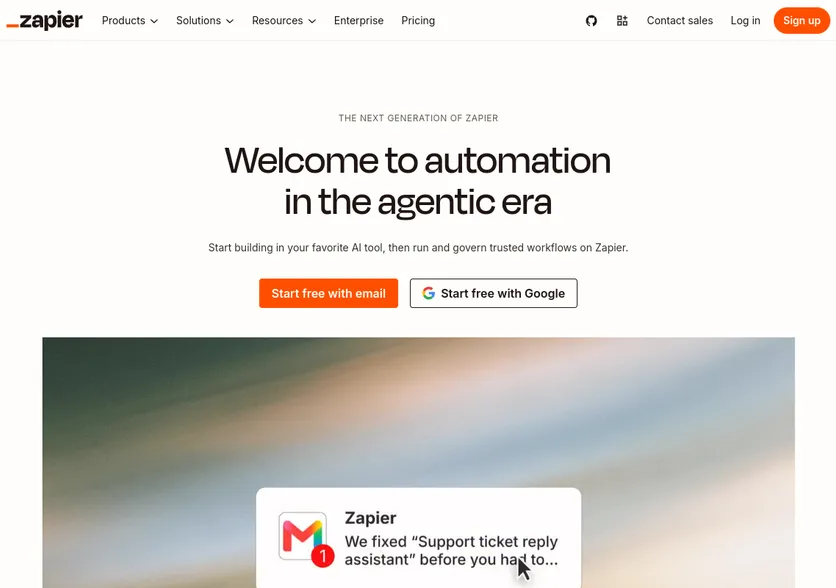
Zapier is the automation platform every small business already knows, connecting ten thousand apps with simple triggers and actions. This Zapier Professional plan costs nineteen dollars and ninety-nine cents a month billed annually, with seven hundred and fifty tasks. A small team gets multi-step workflows and premium apps without writing a line of code.
What we like
- Ten thousand apps, the widest catalogue here
- Multi-step Zaps with filters and formatting built in
- Free plan for one hundred tasks a month
Watch out for
- Task pricing climbs fast once the workflow grows
- Professional covers one user, so a team needs the Team plan
How to try it
- Open the Zapier site and create a free account
- Build a Zap that moves data between two apps
- Turn it on and check the first hundred tasks run cleanly
3. Airbyte
Best for: Teams that want open-source connectors with a managed cloud option
Paid tool Starting price: $20/month · Twenty dollars a month for the Standard cloud plan with five credits, or about one gigabyte of syncs; self-hosted Airbyte Core is free and a fourteen-day cloud trial includes four hundred credits
Free plan: Free trial
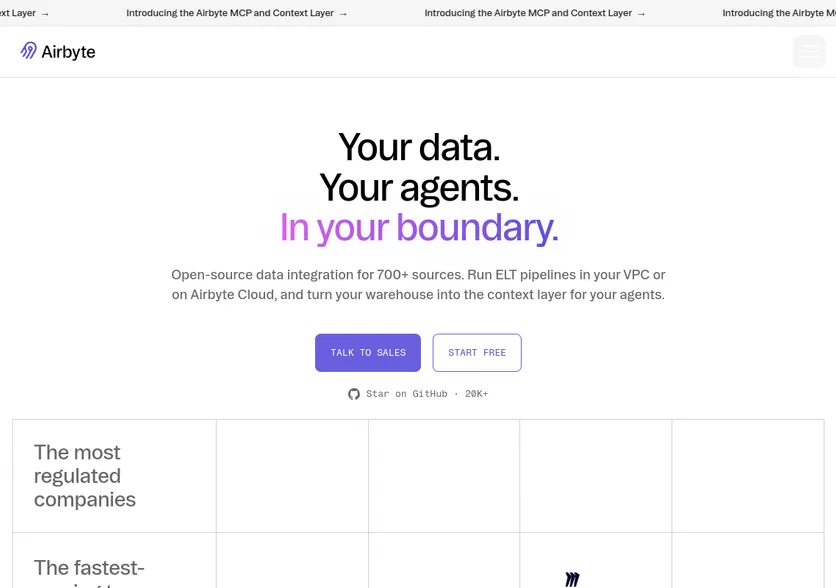
Open-source connectors and a free self-hosted core make Airbyte the flexible choice for a small team that wants no servers to run. This Airbyte Standard cloud plan costs twenty dollars a month with five credits, or about one gigabyte of syncs. A small business gets thousands of connectors and the freedom to move to self-hosting later.
What we like
- Open-source connectors with a huge community
- Self-hosted core is free if you want to run it
- Managed cloud for teams that want no servers
Watch out for
- Credit pricing needs care, because a gigabyte of syncs is not much
- Advanced features sit on the higher Pro and Enterprise plans
How to try it
- Open the Airbyte site and start the 14-day cloud trial
- Connect a source and a warehouse destination
- Run the first sync and check the data lands correctly
4. Fivetran
Best for: Small teams that want fully managed pipelines without a data engineer
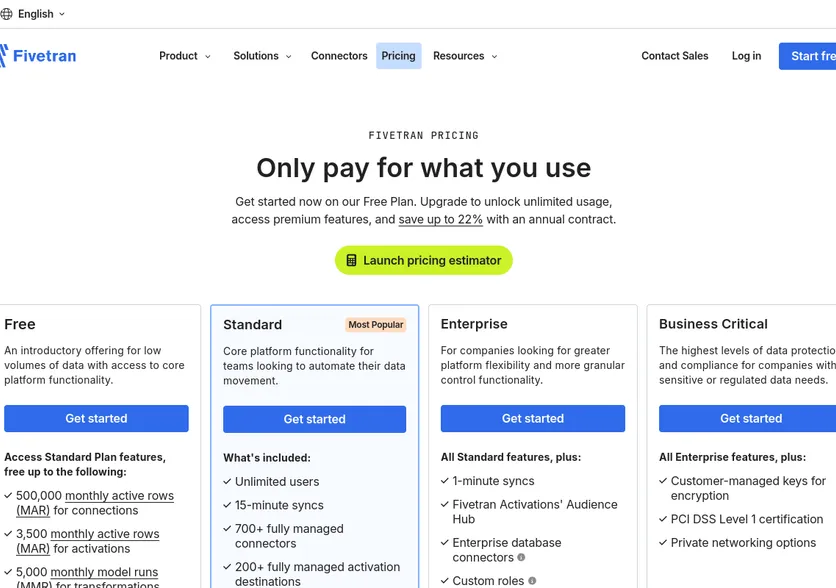
Paid tool Starting price: $5/month · Five dollars a month is the base charge for each standard connection with one to one million monthly active rows; the real bill depends on row volume, the free plan covers five hundred thousand rows a month, and annual contracts save up to twenty-two percent
Free plan: Free plan; 14-day free trial
Fully managed pipelines move data from apps and databases into a warehouse with no pipeline to babysit, and Fivetran maintains seven hundred and fifty sources for you. This Fivetran Standard plan carries a five-dollar base charge per connection, with usage priced on monthly active rows. A small business gets seven hundred and fifty sources maintained by the vendor, with schema changes handled automatically.
What we like
- Fully managed, with no pipeline code to maintain
- Seven hundred and fifty sources kept working by the vendor
- Free plan covers five hundred thousand rows a month
Watch out for
- The bill grows with row volume, so the five-dollar base is not the total
- Per-connection pricing penalises many small sources
How to try it
- Open the Fivetran site and start a free trial
- Connect your first source and pick a warehouse destination
- Check the first sync and set the schedule for the rest
5. Skyvia
Best for: Small teams that want no-code integration priced by records, not by seats
Paid tool Starting price: $79/month · Seventy-nine dollars a month billed annually for the Data Integration Basic plan, or ninety-nine dollars billed monthly; Standard costs one hundred and fifty-nine dollars a month billed annually and the free plan covers ten thousand records a month
Free plan: Free plan
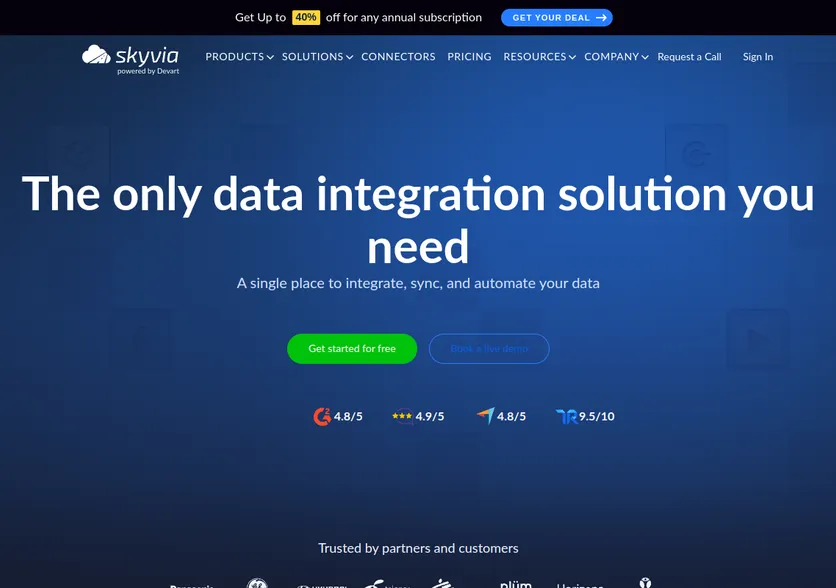
Skyvia is the no-code data platform for small teams, moving data between cloud apps, databases and warehouses with visual mapping. This Skyvia Data Integration Basic plan costs seventy-nine dollars a month billed annually. A small business gets two hundred connectors and a price that follows record volume, not headcount.
What we like
- No-code mapping that a non-technical owner can use
- Priced by records, not by seats
- Free plan with ten thousand records a month
Watch out for
- Record volume sets the price, so a busy month costs more
- The free plan schedules expire after thirty days
How to try it
- Open the Skyvia site and create a free account
- Connect a source and a destination in the visual editor
- Run your first package and check the records land correctly
6. Stitch
Best for: Small teams that want simple ETL with a predictable monthly price
Paid tool Starting price: $100/month · One hundred dollars a month for the Standard plan; Advanced costs one thousand five hundred dollars and Premium costs three thousand dollars a month billed annually
Free plan: Free trial
Stitch is the straightforward ETL service for small teams that want data moved on a schedule without a platform to learn. This Stitch Standard plan costs one hundred dollars a month. A small business that needs a few reliable pipelines gets them running in an afternoon, with a price that does not move with row volume.
What we like
- Simple setup with no platform to learn
- Predictable monthly price with no row metering
- Replication schedules that just keep running
Watch out for
- Advanced jumps to one thousand five hundred dollars a month
- No built-in transformations, so data lands raw
How to try it
- Open the Stitch site and start a free trial
- Connect your sources and pick a warehouse
- Set the replication schedule and check the first load
7. Hevo Data
Best for: Small teams that want a no-code pipeline with built-in transformations
Paid tool Starting price: $265/month · Two hundred and sixty-five dollars a month for the entry paid plan; pricing is usage-based on events and the exact bill depends on volume, so confirm your tier on the pricing page before you buy
Free plan: 14-day free trial
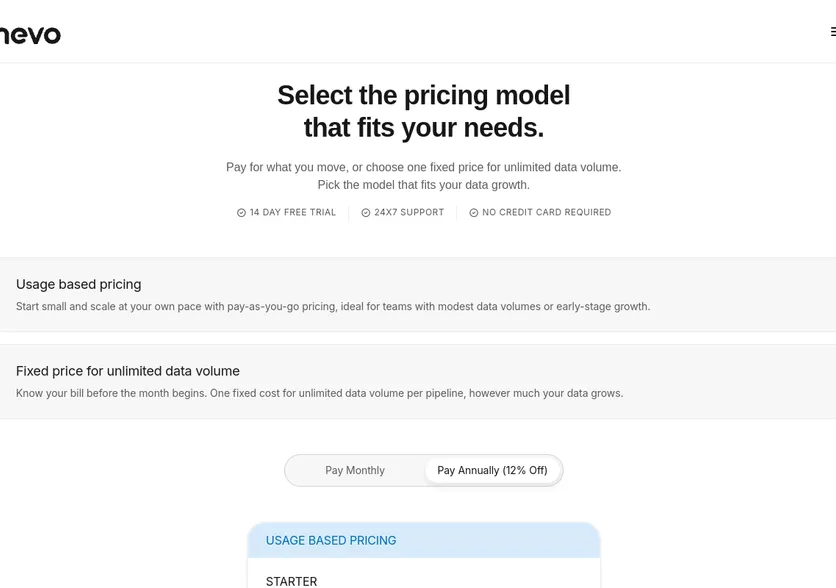
Hevo Data is the no-code data pipeline for small teams that want to move data and transform it without writing code. This Hevo Data entry paid plan costs two hundred and sixty-five dollars a month, with pricing based on events moved. A small business gets drag-and-drop transformations and automatic schema handling in one login.
What we like
- No-code setup with built-in transformations
- Automatic schema and data-type handling
- One hundred and fifty sources ready to connect
Watch out for
- Usage-based pricing makes the monthly bill hard to predict
- Fewer enterprise sources than Fivetran or Airbyte
How to try it
- Open the Hevo site and start the 14-day free trial
- Connect a source and pick your warehouse
- Build a transformation in the drag-and-drop editor and run it
8. Integrate.io
Best for: Small businesses that want one flat fee and no metering surprises
Paid tool Starting price: $1,999/month · One thousand nine hundred and ninety-nine dollars a month for the flat-rate Unlimited plan with no row limits; the price is the same whatever the volume, which suits teams with heavy or spiky loads
Free plan: 14-day free trial
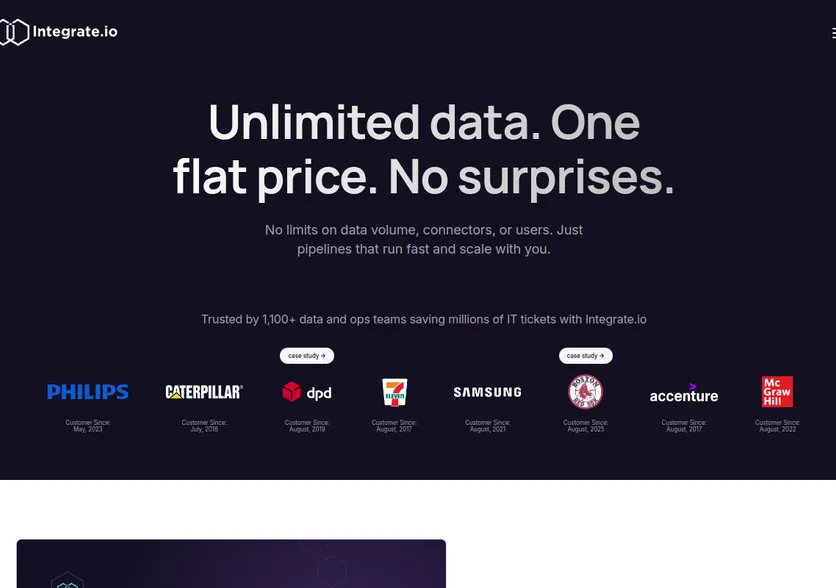
One flat monthly fee and no row limits make this data integration platform easy to budget for a small business. This Integrate.io Unlimited plan costs one thousand nine hundred and ninety-nine dollars a month. A small business with heavy or spiky loads gets every pipeline it needs for one predictable price.
What we like
- One flat fee with no row limits or metering
- Visual pipeline builder with no code needed
- Predictable bill whatever the volume does
Watch out for
- The flat fee is high for a team with only two sources
- Fewer pre-built connectors than Fivetran
How to try it
- Open the Integrate.io site and start the 14-day free trial
- Connect your sources and build a pipeline in the visual editor
- Run the pipeline and check the data in your warehouse
Prices above were checked on each vendor’s own website on Nov 27, 2026 and can change — the vendor’s page is the final word. Vendor links are editorial: nobody paid to be listed or ranked here. Vendors who want a featured listing can see how it works on our Get listed page.
What small business data integration costs in 2026
Small business data integration charges in three ways, a flat monthly fee, a per-connection charge, or a metered price on rows or tasks moved. Flat pricing suits a team with steady volume, while metered pricing suits a team whose loads spike around a launch or a season. The cheapest tool here carries a five-dollar base charge per connection, while the most expensive costs one thousand nine hundred and ninety-nine dollars a month flat.
Start with a free plan or a trial on two tools and sync your three most important sources into one place. Watch the first week for failed syncs and duplicate rows. Pick the tool whose syncs stay green without daily attention, because a pipeline that needs babysitting is a second job, not a tool.
Before you buy
- Check the free plan's limits, because a free tier that covers only two sources is a demo, not a solution.
- Confirm the connectors you need are included, because a missing source means a second tool and a second bill.
- Ask what happens when you pass the row limit, because an overage charge can cost more than the plan itself.
- Test a sync with your messiest spreadsheet, because clean demo data hides the duplicates that break real pipelines.
- Check the price at your real volume, because a nine-dollar plan is not the bill when ten thousand rows move daily.
Official websites
Official websites of the products reviewed above. Features and prices were checked against these sites when this guide was written, and they can change, so confirm on the vendor site before you buy.
Frequently asked questions
Which cloud data integration software is best for small business in 2026?
Make is the best overall pick at nine dollars a month, with visual automation across three thousand apps and a free plan to start. Zapier is the best pick for app coverage at nineteen dollars and ninety-nine cents a month, with ten thousand apps and multi-step workflows. Airbyte is the best pick for open-source flexibility at twenty dollars a month, with a free self-hosted core underneath.
How much does cloud data integration software for small business cost?
Prices in this list run from a five-dollar base charge per connection for Fivetran to one thousand nine hundred and ninety-nine dollars a month flat for Integrate.io, with most tools landing between nine and one hundred dollars a month. Metered pricing suits a team with few sources, while flat pricing suits a team with many sources and heavy volume. Add the cost of overages and extra tasks to the subscription before you compare totals.
Can a small business set up data integration without a data engineer?
Yes, because a small team has no data engineer, and a pipeline that breaks silently leaves yesterday's data in today's report. A no-code tool with a visual builder lets the owner set up the sync in an afternoon and see when it fails. The tools in this list all offer a free plan or trial, so a small team can test the setup before paying.
Is the free plan enough for a small business?
No, because the free plan usually covers a handful of sources with tight limits, while the paid plan adds the connectors, the sync frequency and the volume a real business needs. Make's free plan covers one thousand credits a month, which suits a trial but not a business that moves data daily. Price the plan that covers your sources and your volume, not the headline.
Do schema changes break data pipelines?
Yes, because a renamed field or a changed data type can break a pipeline overnight, and the break shows up as missing data, not an error. A tool that handles schema changes automatically keeps the sync running while the team sleeps. Test every shortlisted tool with your messiest spreadsheet before you sign, because clean demo data hides the duplicates that break real pipelines.
Need everyday developer help too? Try Toolsvine's free developer tools right in your browser.
Browse Developer Tools tools