On this page
Small teams automate infrastructure to stop doing the same cloud clicks by hand, but the tools charge in wildly different ways. The seven tools below cover flat plans, per-resource rates and per-run billing, so a team can match the price to how it actually deploys. Every figure was checked on the vendor site on November 27, 2026, and the list runs from fractions of a cent to eight hundred dollars a month. Pulumi Cloud is our first pick — the flat forty dollar plan that lets a team define infrastructure in a real language.
How we researched this
We started with the infrastructure automation tools small teams actually buy, then read each price on the vendor pricing page on November 27, 2026 and noted whether the headline is a flat fee or a usage rate. We judged them for a small business that deploys often and needs automation without a platform team. We dropped env0 because its paid tiers are quote-only, and we left out Ansible Automation Platform because Red Hat publishes no list price for it.
Compare the tools
| Name | Best for | Starting price | Free plan | |
|---|---|---|---|---|
| Northflank | Small teams that want usage-based pricing with no seat fees | $0.01667/vCPU/hour | Free Sandbox tier with up to $20 of resources a month | Visit |
| HCP Terraform | Terraform teams that want managed state and runs at a low per-resource price | $0.10/resource/month | Free tier up to 500 resources | Visit |
| Scalr | Teams that run Terraform or OpenTofu and want per-run pricing | $0.99/run | Free plan up to 50 runs a month | Visit |
| Pulumi Cloud | Small teams that want Pulumi's infrastructure as code with a flat price | $40/month | Free plan for 1 user with 500 workflow minutes | Visit |
| Qovery | Teams that want a visual deployment platform with preview environments | $299/month | Free plan for 3 users with 1 cluster | Visit |
 Spacelift | Terraform teams that want policy checks and drift detection in one console | $399/month | Free plan for 2 users | Visit |
| ControlMonkey | Teams that want cloud asset inventory with automated remediation | $800/month | No free plan listed | Visit |
The cloud infrastructure automation software for small business, compared
1. Northflank
Best for: Small teams that want usage-based pricing with no seat fees
Paid tool Starting price: $0.01667/vCPU/hour · One point six six seven cents per vCPU hour on the pay-as-you-go plan, with memory at zero point eight three three cents per gigabyte hour and no seat fees; a one vCPU, two gigabyte container costs twenty-four dollars a month
Free plan: Free Sandbox tier with up to $20 of resources a month
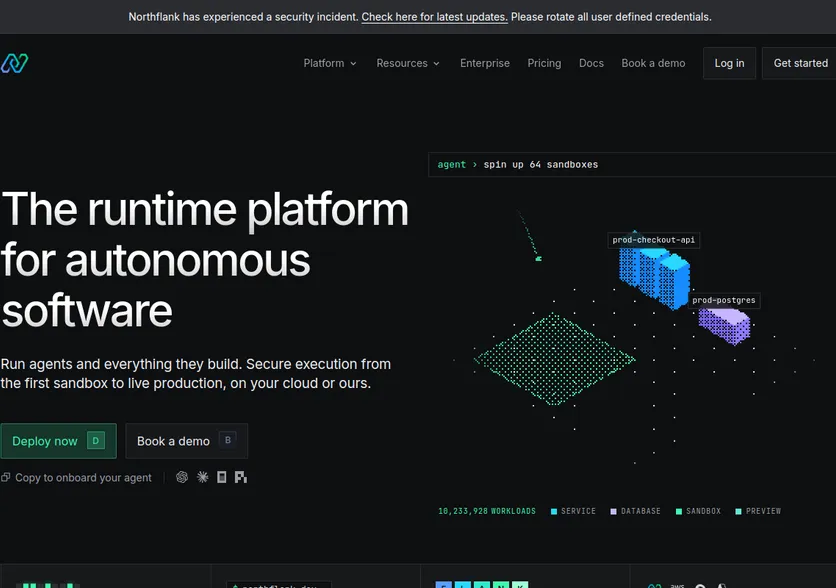
Northflank is the deployment platform that charges only for the compute you run, billed by the second with no seat fees at all. This Northflank pay-as-you-go plan starts at zero point zero one six six seven dollars per vCPU hour, so a one vCPU container with two gigabytes of memory costs twenty-four dollars a month. A small team that hates per-seat billing gets Kubernetes power without a per-user tax.
What we like
- No seat fees on any plan
- Billed by the second, so idle time costs nothing
- Bring-your-own-cloud across six hundred regions
Watch out for
- Usage pricing is hard to budget until you measure real load
- Bring-your-own-cloud fees are billed separately by your provider
How to try it
- Open the Northflank site and create a free Sandbox account
- Deploy your first service from a Git repository
- Set autoscaling rules and watch the usage bill
2. HCP Terraform
Best for: Terraform teams that want managed state and runs at a low per-resource price
Paid tool Starting price: $0.10/resource/month · Ten cents per managed resource a month for the Essentials edition; Standard costs forty-seven cents per resource a month and Premium costs ninety-nine cents. The free tier covers up to five hundred resources
Free plan: Free tier up to 500 resources
HCP Terraform is HashiCorp's managed Terraform Cloud, running infrastructure as code with remote state, runs and policy checks in one place. This HCP Terraform Essentials edition costs ten cents per managed resource a month, so a hundred resources cost ten dollars a month. A small team that already writes Terraform gets managed runs without running its own servers.
What we like
- Ten cents per resource keeps small estates cheap
- Free tier covers up to five hundred resources
- Policy checks built into every run
Watch out for
- Costs grow with every resource, so sprawl gets expensive
- Legacy free tier ended in March 2026 for new users
How to try it
- Open the HCP Terraform site and create a free account
- Connect your Git repository and import your state
- Run your first plan and apply it from the console
3. Scalr
Best for: Teams that run Terraform or OpenTofu and want per-run pricing
Paid tool Starting price: $0.99/run · Ninety-nine cents per run for the Business plan, so one hundred runs cost ninety-nine dollars a month; the free plan covers up to fifty runs a month and Enterprise is quote-only
Free plan: Free plan up to 50 runs a month
Scalr is the Terraform automation platform that charges per run instead of per user, so a team that deploys rarely pays very little. This Scalr Business plan costs ninety-nine cents per run, which means one hundred runs a month cost ninety-nine dollars. A small team with a modest deploy cadence gets full automation without a flat monthly fee.
What we like
- Pay per run, not per seat
- Free plan covers fifty runs a month
- Works with Terraform and OpenTofu
Watch out for
- A busy deploy week can spike the bill fast
- Enterprise needs twenty thousand runs a year to qualify
How to try it
- Open the Scalr site and create a free account
- Connect your workspaces and version control
- Run a plan and watch the per-run billing
4. Pulumi Cloud
Best for: Small teams that want Pulumi's infrastructure as code with a flat price
Paid tool Starting price: $40/month · Forty dollars a month for the Essentials plan covering up to five hundred managed resources with unlimited users; Pro costs four hundred dollars a month
Free plan: Free plan for 1 user with 500 workflow minutes
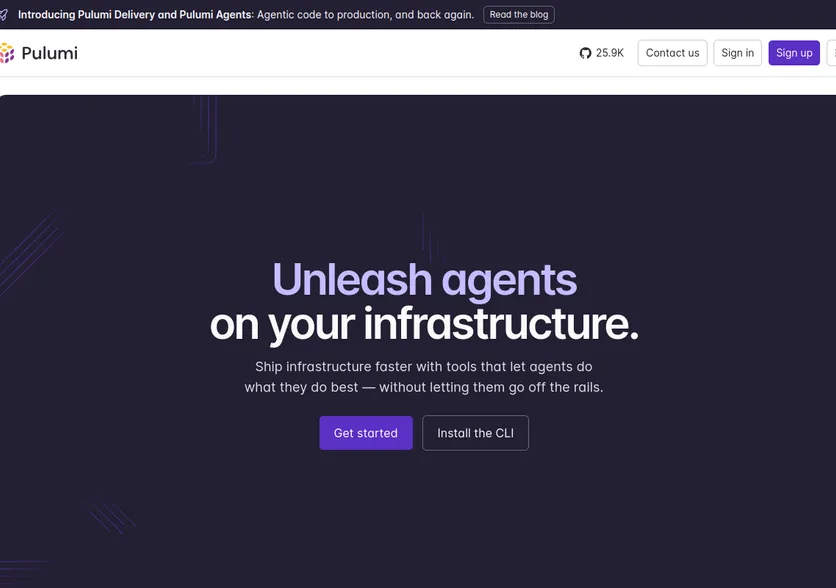
Pulumi Cloud is the infrastructure as code platform that lets a team define cloud resources in TypeScript, Python or Go instead of a new language. This Pulumi Cloud Essentials plan costs forty dollars a month and covers up to five hundred managed resources with unlimited users. A small team that codes in a real language gets cloud automation without learning HCL.
What we like
- Define infrastructure in TypeScript, Python or Go
- Flat forty dollar price with unlimited users
- Five hundred managed resources on Essentials
Watch out for
- Free plan covers only one user
- Pro plan jumps tenfold to four hundred dollars a month
How to try it
- Open the Pulumi site and create a free account
- Write your first stack in your team's language
- Deploy it and check the resource count in the console
5. Qovery
Best for: Teams that want a visual deployment platform with preview environments
Paid tool Starting price: $299/month · Two hundred ninety-nine dollars a month billed yearly for the Starter plan; Growth costs eight hundred ninety-nine dollars a month and Scale costs two thousand nine hundred ninety-nine dollars a month
Free plan: Free plan for 3 users with 1 cluster
Qovery is the deployment platform that turns a Git push into a running environment, with preview apps for every pull request. This Qovery Starter plan costs two hundred ninety-nine dollars a month billed yearly and covers the core deploy flow. A small team that wants Heroku-style simplicity on its own cloud gets it without managing Kubernetes directly.
What we like
- Preview environments for every pull request
- Works on your own cloud account
- Free plan covers three users and one cluster
Watch out for
- Compute is billed separately by your cloud provider
- Starter price is the yearly-billing rate
How to try it
- Open the Qovery site and create a free account
- Connect your Git repository and cloud account
- Push a change and open the preview environment
6. Spacelift
Best for: Terraform teams that want policy checks and drift detection in one console
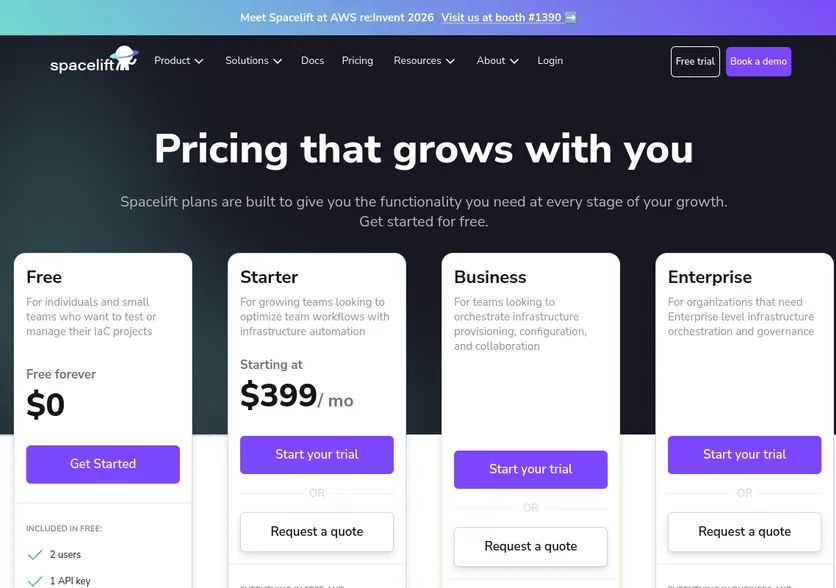
Paid tool Starting price: $399/month · Three hundred ninety-nine dollars a month for the Starter plan covering ten users and two public workers; Business and Enterprise are higher
Free plan: Free plan for 2 users
Spacelift is the infrastructure automation platform built for Terraform and OpenTofu teams, with policy checks, drift detection and private workers. This Spacelift Starter plan costs three hundred ninety-nine dollars a month and covers ten users with two public workers. A small team that runs Terraform in production gets guardrails without building them itself.
What we like
- Policy checks on every Terraform run
- Drift detection that flags manual changes
- Private workers for sensitive environments
Watch out for
- Dear for a team that only runs a few stacks
- Two public workers cap the Starter plan
How to try it
- Open the Spacelift site and create a free account
- Connect your Terraform workspaces
- Turn on policy checks and drift detection
7. ControlMonkey
Best for: Teams that want cloud asset inventory with automated remediation
Paid tool Starting price: $800/month · Eight hundred dollars a month for the Startup plan covering up to ten users, five thousand cloud assets and five hundred deployments a month; Enterprise is custom priced
Free plan: No free plan listed
ControlMonkey is the cloud automation platform that inventories every asset, spots drift and remediates it automatically. This ControlMonkey Startup plan costs eight hundred dollars a month and covers up to ten users, five thousand cloud assets and five hundred deployments a month. A small team drowning in manual cloud fixes gets an autopilot for its estate.
What we like
- Automatic remediation of drifted resources
- Full asset inventory across your clouds
- Five hundred deployments a month on Startup
Watch out for
- Dearest flat price in this comparison
- No free tier, so testing needs a paid plan or trial
How to try it
- Open the ControlMonkey site and book a demo
- Connect your cloud accounts for the asset inventory
- Turn on automated remediation for drifted resources
Prices above were checked on each vendor’s own website on Nov 27, 2026 and can change — the vendor’s page is the final word. Vendor links are editorial: nobody paid to be listed or ranked here. Vendors who want a featured listing can see how it works on our Get listed page.
What infrastructure automation costs in 2026
The headline price means little until you know the billing unit. Per-resource plans punish sprawl, per-run plans punish busy deploy weeks, and flat plans punish teams that barely deploy. Work out your real numbers first: count your managed resources, count your monthly runs, then price each tool on the same basis.
Start on a free tier and automate one real service end to end. Check that the state file stays safe, that a failed deploy rolls back cleanly, and that the audit log shows who changed what. Pick the tool whose pricing stays predictable as you grow, because an automation bill that doubles with every new service is worse than a higher flat fee.
Before you buy
- Check how the tool charges, because per-resource, per-run and per-month pricing produce very different bills.
- Confirm the free tier limits, because a generous free plan can carry a small team for months.
- Test the rollback path, because an automation tool must undo a bad deploy as fast as it ships one.
- Ask which clouds it supports, because a tool that only runs on one cloud locks your infrastructure in.
- Check the state handling, because lost or locked state files are the fastest way to break a deployment.
Official websites
Official websites of the products reviewed above. Features and prices were checked against these sites when this guide was written, and they can change, so confirm on the vendor site before you buy.
Frequently asked questions
Which cloud infrastructure automation software is best for small business in 2026?
Pulumi Cloud is the best overall pick at forty dollars a month, with a flat price, unlimited users and infrastructure as code in real programming languages. Northflank is the best pay-as-you-go pick, charging only for the compute you run with no seat fees. Spacelift is the best choice for Terraform teams that need policy checks and drift detection in one console.
How much does cloud infrastructure automation cost?
Prices in this list run from fractions of a cent per resource or per run to eight hundred dollars a month for ControlMonkey, because the tools charge in different units. A small estate costs ten to forty dollars a month on usage plans, while flat plans start at forty dollars and climb fast. Model your real resource count or deploy cadence before you compare headlines.
Is there a free infrastructure automation tool for small business?
Yes, Northflank, HCP Terraform, Scalr, Pulumi Cloud, Qovery and Spacelift all offer free tiers, so a small team can automate real deployments without paying. Free tiers cap users, resources or runs, and they lack the policy checks and support a production estate needs. Most teams move to a paid plan once deploys become daily.
Should a small team pick usage pricing or a flat plan?
Usage pricing suits teams whose estate changes slowly, because the bill follows actual resources or runs. Flat pricing suits teams with steady, heavy usage, because the cost stops growing once you pass the included limits. A team that deploys ten times a day usually saves on a flat plan, while a team that deploys weekly saves on usage pricing.
Do these tools work with Terraform?
Yes, every tool here supports Terraform or OpenTofu, and Pulumi Cloud adds its own code-first approach in TypeScript, Python and Go. Spacelift, Scalr and HCP Terraform are built around Terraform runs, while Northflank and Qovery focus on deployments rather than state files. Check which tool matches the code your team already writes.
Need more developer help? Try Toolsvine's free developer tools right in your browser.
Browse Developer Tools tools