On this page
A remote workshop lives or dies on its whiteboard, and a slow canvas or a confusing share link can sink a meeting in the first five minutes. The eight tools below cover the full range, from the biggest template libraries to the cheapest seats and the most compliant hosting. Every price was checked on the vendor site on November 27, 2026, and the list runs from three dollars a month to ten dollars a month per editor. Miro is our first pick — the whiteboard with the largest template library and the most integrations for remote teams.
How we researched this
We started with the whiteboards remote teams actually buy, then read each price on the vendor pricing page on November 27, 2026 and noted the free plan each one carries. We judged them for a distributed team that meets on video every week and needs boards that load fast, share easily and survive a long workshop. We dropped Microsoft Whiteboard because it has no paid plan of its own, and we left out quote-only enterprise boards that a small team cannot price without a sales call.
Compare the tools
| Name | Best for | Starting price | Free plan | |
|---|---|---|---|---|
 Miro | Remote teams that want the biggest template library and the most integrations | $8/user/month | Free plan for up to 3 editable boards | Visit |
 Mural | Teams that run structured workshops with facilitation built in | $9.99/member/month | Free plan available | Visit |
 FigJam | Design teams that already work in Figma and want a cheap whiteboard | $3/editor/month | Free Starter plan | Visit |
 Lucidspark | Teams that want a Lucid whiteboard beside diagrams and docs | $9/month | Free plan available | Visit |
 Whimsical | Small teams that want docs, boards and wireframes in one tool | $10/editor/month | Free plan for personal use | Visit |
 Stormboard | Small teams that want sticky-note brainstorming at a low price | $8.33/user/month | Free Personal plan | Visit |
| Conceptboard | Regulated teams that need European hosting and task tracking on the board | $6/user/month | Free plan with 3 active boards | Visit |
| Explain Everything | Teachers and trainers who record lessons on the whiteboard | $7.49/month | Free plan with 3 projects | Visit |
The collaborative whiteboard software for remote teams, compared
1. Miro
Best for: Remote teams that want the biggest template library and the most integrations
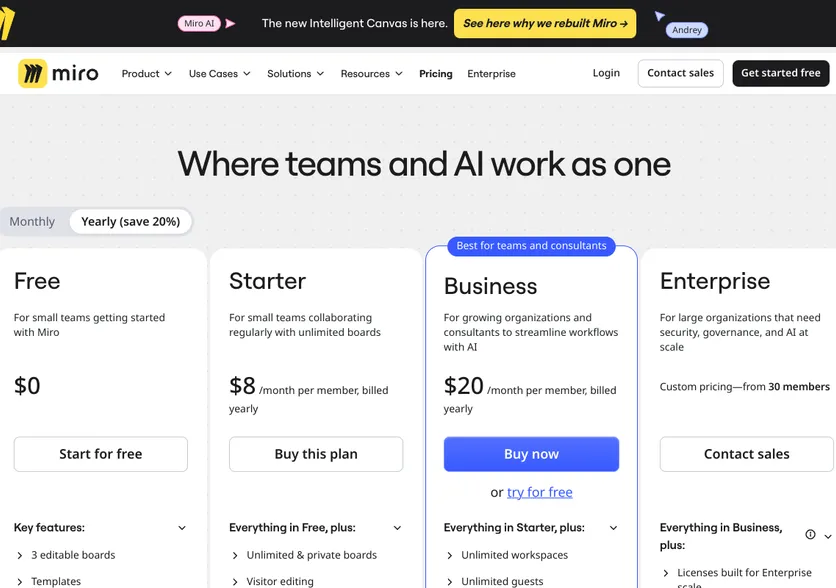
Paid tool Starting price: $8/user/month · Eight dollars per user a month billed annually for the Starter plan, or ten dollars per user a month billed monthly; Business costs twenty dollars per user a month billed annually
Free plan: Free plan for up to 3 editable boards
Miro is the online whiteboard most remote teams already know, with an endless canvas, hundreds of templates and integrations with the tools a distributed team already uses. This Miro Starter plan costs eight dollars per user a month billed annually and adds unlimited boards and private projects. A remote team that runs workshops, planning and retrospectives in one place gets a board that scales from a quick sketch to a full program plan.
What we like
- Largest template library of any whiteboard here
- Unlimited boards on the first paid plan
- Deep integrations with Slack, Jira and video tools
Watch out for
- Large boards can feel slow on older laptops
- Per-user pricing adds up quickly for big teams
How to try it
- Open the Miro site and start with the free plan
- Pick a template for your workshop, retro or planning session
- Invite the team and run your first live session on the board
2. Mural
Best for: Teams that run structured workshops with facilitation built in
Paid tool Starting price: $9.99/member/month · Nine dollars and ninety-nine cents per member a month billed annually for the Team+ plan, or twelve dollars per member a month billed monthly
Free plan: Free plan available
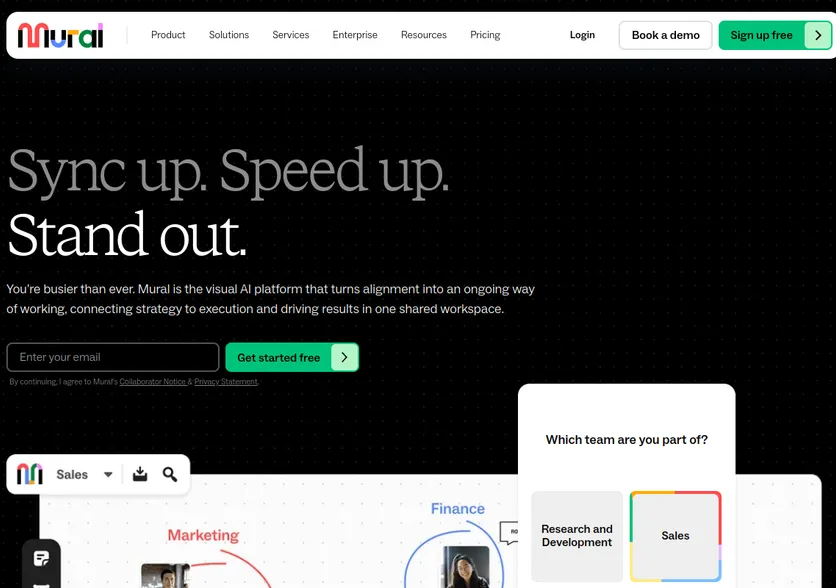
Mural is the visual workspace built for facilitated workshops, with frameworks, timers and voting that keep a remote session moving. This Mural Team+ plan costs nine dollars and ninety-nine cents per member a month billed annually and adds unlimited rooms and advanced facilitation features. A team that runs design sprints and planning workshops gets a board that guides the session instead of just holding sticky notes.
What we like
- Facilitation tools like timers and voting built in
- Strong template library for workshops and sprints
- Clean rooms that keep each session separate
Watch out for
- Costs more per member than the simplest boards
- Fewer casual drawing tools than Miro
How to try it
- Open the Mural site and create a free workspace
- Choose a facilitation template for your workshop
- Invite participants and run the session with timers and voting
3. FigJam
Best for: Design teams that already work in Figma and want a cheap whiteboard
Paid tool Starting price: $3/editor/month · Three dollars per editor a month for a FigJam Collab seat on Figma Professional; full Figma Professional costs fifteen dollars per editor a month
Free plan: Free Starter plan
FigJam is Figma's online whiteboard, built for quick sketches, diagrams and team brainstorms beside the design files themselves. This FigJam Collab seat costs three dollars per editor a month on a Figma Professional plan and adds the full whiteboard beside Figma design work. A design team that already pays for Figma gets a whiteboard for the price of a coffee.
What we like
- Cheapest paid whiteboard in this comparison
- Lives beside Figma design files
- Simple tools that anyone learns in minutes
Watch out for
- Needs a Figma plan, so it is not standalone
- Fewer enterprise controls than Miro or Mural
How to try it
- Open the FigJam site and sign in with Figma
- Start a board from a template or a blank canvas
- Share the link and sketch together in real time
4. Lucidspark
Best for: Teams that want a Lucid whiteboard beside diagrams and docs
Paid tool Starting price: $9/month · Nine dollars a month for the Individual plan; team and enterprise plans cost more per user
Free plan: Free plan available
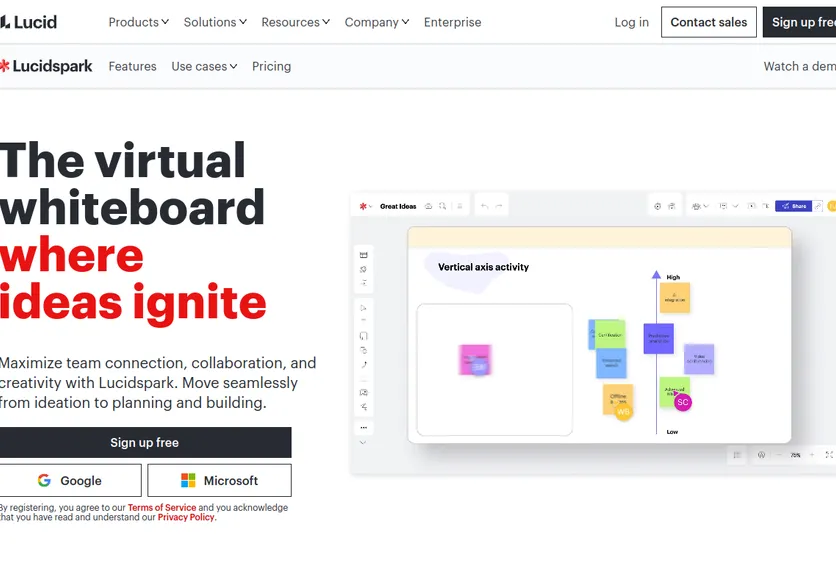
Lucidspark is Lucid's virtual whiteboard, pairing an infinite canvas with the diagramming tools the Lucid suite is known for. This Lucidspark Individual plan costs nine dollars a month and adds unlimited boards with collaboration for a single user. A team that already diagrams in Lucidchart gets a whiteboard that shares the same workspace and logins.
What we like
- Shares a workspace with Lucidchart diagrams
- Clean canvas with strong shape and connector tools
- Breakout boards keep group work tidy
Watch out for
- Individual plan is priced per user, not per team
- Template library is smaller than Miro's
How to try it
- Open the Lucidspark site and create a free account
- Start a board and add sticky notes, shapes and freehand drawing
- Share the board link with your team and collaborate live
5. Whimsical
Best for: Small teams that want docs, boards and wireframes in one tool
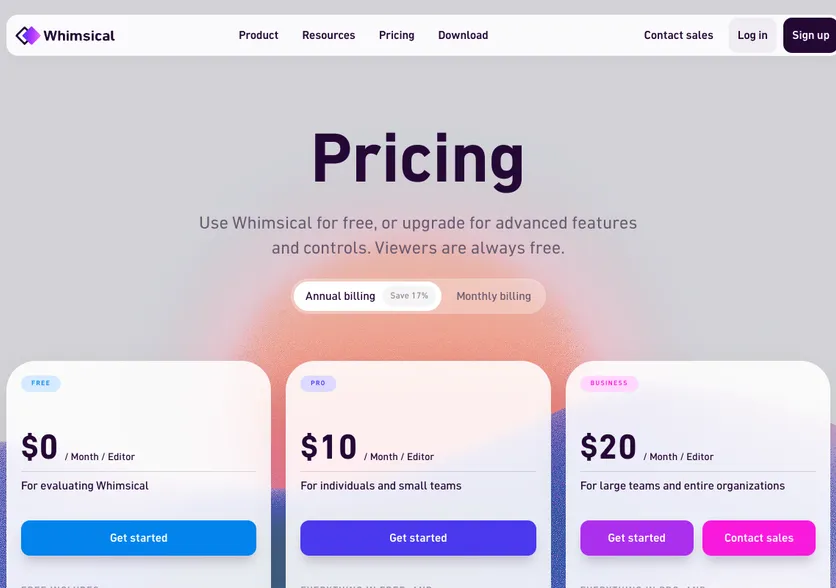
Paid tool Starting price: $10/editor/month · Ten dollars per editor a month billed annually for the Pro plan, or twelve dollars per editor a month billed monthly; Business costs twenty dollars per editor a month
Free plan: Free plan for personal use
Whimsical is the fast, friendly workspace that combines whiteboards with docs, wireframes and project tracking in one subscription. This Whimsical Pro plan costs ten dollars per editor a month billed annually and adds unlimited boards, docs and projects for small teams. A small remote team gets a whiteboard plus the docs and wireframes that usually need two more tools.
What we like
- Boards, docs and wireframes in one subscription
- Viewers are always free, so sharing costs nothing
- Fastest-feeling canvas in this comparison
Watch out for
- Fewer workshop facilitation features than Mural
- Business plan doubles the per-editor price
How to try it
- Open the Whimsical site and create a free workspace
- Start a board, a doc or a wireframe from the same menu
- Invite editors and share the board with viewers for free
6. Stormboard
Best for: Small teams that want sticky-note brainstorming at a low price
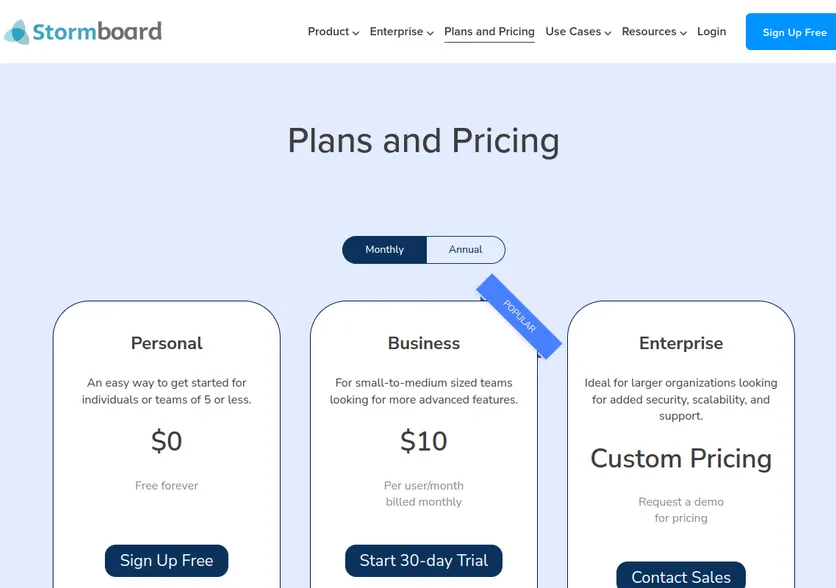
Paid tool Starting price: $8.33/user/month · Eight dollars and thirty-three cents per user a month billed annually for the Business plan, or ten dollars per user a month billed monthly; Personal is free
Free plan: Free Personal plan
Stormboard is the straightforward whiteboard for teams that want sticky notes, templates and reports without a heavy platform. This Stormboard Business plan costs eight dollars and thirty-three cents per user a month billed annually and adds advanced templates and reporting for small to mid-size teams. A remote team that brainstorms in short sessions gets a board that is ready in minutes and costs less than a lunch.
What we like
- Low price for a full business plan
- Reports turn sticky notes into summaries
- 30-day trial on paid plans
Watch out for
- Smaller template library than the big names
- Enterprise pricing is quote-only
How to try it
- Open the Stormboard site and sign up for the free plan
- Pick a brainstorming template and add your sticky notes
- Share the board and export a report when the session ends
7. Conceptboard
Best for: Regulated teams that need European hosting and task tracking on the board
Paid tool Starting price: $6/user/month · Six dollars per user a month for the Starter plan; the vendor lists five euros per user a month excluding VAT, with Advanced from ten euros and Corporate from fourteen euros
Free plan: Free plan with 3 active boards
Conceptboard is the whiteboard for teams that need their boards hosted in Germany, with tasks, deadlines and workflows built onto the canvas. This Conceptboard Starter plan costs six dollars per user a month and adds unlimited boards and objects with up to five active projects. A team in a regulated industry gets a compliant board where every sticky note can become an assigned task.

What we like
- German hosting with ISO 27001 certification
- Tasks, deadlines and Kanban views on the board
- 30-day free trial of the paid plans
Watch out for
- Prices are listed in euros excluding VAT
- Advanced plans need 10 users and a 12-month contract
How to try it
- Open the Conceptboard site and create a free account
- Start a board and turn sticky notes into tasks with deadlines
- Invite the team and run the workshop with live moderation tools
8. Explain Everything
Best for: Teachers and trainers who record lessons on the whiteboard
Paid tool Starting price: $7.49/month · Seven dollars and forty-nine cents a month billed annually for the Pro plan, or nine dollars and ninety-nine cents a month billed monthly; Team costs the same per user a month
Free plan: Free plan with 3 projects
Explain Everything is the teaching whiteboard that records the lesson as you draw, turning a live session into a video students can replay. This Explain Everything Pro plan costs seven dollars and forty-nine cents a month billed annually and adds unlimited projects, unlimited video length and collaboration for up to eight people. A remote trainer gets a whiteboard and a recording studio in one subscription.
What we like
- Records voice and drawing into shareable video
- Works on browsers, iPads and Android devices
- Team plan adds shared folders and settings
Watch out for
- Built for teaching, so business templates are thin
- Free plan limits videos to three minutes
How to try it
- Open the Explain Everything site and create a free account
- Start a project and record while you draw and talk
- Share the recording link with students or teammates
Prices above were checked on each vendor’s own website on Nov 27, 2026 and can change — the vendor’s page is the final word. Vendor links are editorial: nobody paid to be listed or ranked here. Vendors who want a featured listing can see how it works on our Get listed page.
What remote whiteboards cost in 2026
A whiteboard subscription looks cheap until the whole team needs a seat, because nearly every tool here charges per editor. A three-dollar FigJam seat is a bargain for a design team, but a ten-dollar Whimsical seat for twenty editors is two hundred dollars a month before anyone draws a line. Count editors, not viewers, since viewers are free on most plans and editors are the ones who pay.
Start with the free plan on two tools and run a real workshop on each one. Check that sticky notes, voting and timers work on a live call, that guests can join without a licence, and that the board exports cleanly when the session ends. Pick the tool whose board your team actually finishes meetings on, because a beautiful canvas that nobody opens is worse than a plain one everyone uses.
Before you buy
- Check how many boards and editors the paid plan allows, because a per-editor price climbs fast once the whole team joins.
- Test sticky notes, voting and timers on a real call, because a whiteboard that lags in a live workshop wastes the meeting.
- Confirm guests can join without a paid seat, because clients and contractors should not each cost a licence.
- Ask where board data is stored and who can export it, because a tool that locks your workshops behind an export fee costs more later.
- Try the mobile app before you commit, because remote teammates often sketch and comment from a phone or tablet.
Official websites
Official websites of the products reviewed above. Features and prices were checked against these sites when this guide was written, and they can change, so confirm on the vendor site before you buy.
Frequently asked questions
Which collaborative whiteboard is best for remote teams in 2026?
Miro is the best overall pick at eight dollars per user a month, with the largest template library and the most integrations. Mural is the best choice for facilitated workshops, with timers and voting built in. FigJam is the best budget pick at three dollars per editor a month for teams already using Figma.
How much does collaborative whiteboard software cost?
Prices in this list run from three dollars per editor a month for FigJam to ten dollars per editor a month for Whimsical, with most boards landing between six and ten dollars per user a month. The headline rate is per editor, so a team of ten pays ten times the sticker price. Add guest rules and storage limits to the comparison before you choose.
Do remote teams need facilitation features in a whiteboard?
Yes, if the team runs live workshops, because timers, voting and breakout boards keep a remote session on track. A plain canvas works for casual sketching, but a facilitated session without those tools drifts and runs long. Mural and Conceptboard both build facilitation into the board itself.
Is there a free whiteboard tool for remote teams?
Yes, most tools here offer a free plan, including Miro, Mural, FigJam, Whimsical and Stormboard, so a small team can start without paying. Free plans limit boards, objects or collaborators, so check the caps before you build your main workflow on one. Most teams move to a paid plan once the board count grows.
Should a remote team choose Miro, Mural or Whimsical?
Miro suits teams that want the most templates and integrations, while Mural suits teams that run structured workshops with a facilitator. Whimsical suits small teams that also need docs and wireframes in the same tool. Pick the one whose strengths match the meetings you actually run every week.
Want more ways to work smarter? Try Toolsvine's free productivity tools right in your browser.
Browse Productivity Tools tools