On this page
Small businesses cannot afford to publish content and hope it works. A good analytics tool shows which articles bring visitors, which topics earn sign-ups, and which pages deserve a refresh, all without a data team. This comparison covers eight paid tools with prices checked on the vendor site on November 27, 2026, from nine dollars a month to about one hundred forty. For most small teams, Frase is the best place to start.
How we researched this
We compared paid tools that publish US dollar prices and fit a small business budget, with entry plans that a solo owner or small team can actually afford. Each tool was scored on simplicity, how well it measures real results, and whether its entry price covers a realistic workload. Quote-only platforms and tools with no public price were left out.
Compare the tools
| Name | Best for | Starting price | Free plan | |
|---|---|---|---|---|
 Frase | Small businesses that need solid content briefs without a big budget | $39/month | 7-day free trial | Visit |
 Surfer | Small businesses that want a page score while they write | $49/month | No free plan; free trial available | Visit |
 Plausible Analytics | Small businesses that want clean, privacy-friendly traffic stats without cookie banners | $9/month | No free plan; 30-day free trial | Visit |
 HubSpot Marketing Hub | Small businesses that already use HubSpot and want content tied to leads | $20/seat/month | Free plan | Visit |
 Semrush | Small businesses that want one tool for keyword research and content audits | $139.95/month | Free plan; 7-day free trial | Visit |
 Clearscope | Small businesses that want a quality score for every article before publishing | $129/month | No free plan; free trial available | Visit |
 Content Harmony | Small businesses that brief freelancers and need every brief to look the same | $99/month | $10 trial for 10 workflows | Visit |
 Content Camel | Small businesses that share content with customers and partners and want to know what gets read | $25/active seat/month | Free Solo plan for 1 user | Visit |
The content analytics software for small business, compared
1. Frase
Best for: Small businesses that need solid content briefs without a big budget
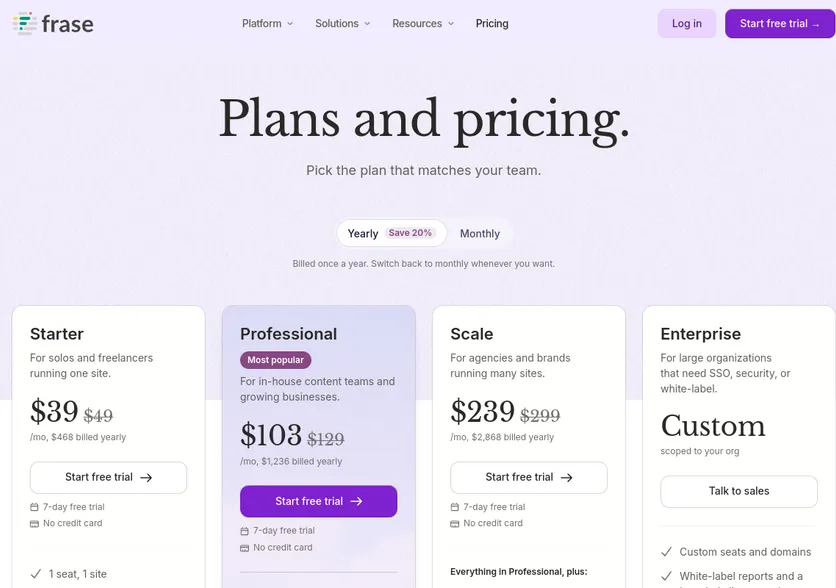
Paid tool Starting price: $39/month · Thirty-nine dollars a month for the Starter plan billed yearly, or forty-nine dollars billed monthly; Professional costs one hundred three dollars a month billed annually.
Free plan: 7-day free trial
Frase does the research legwork for small teams: it reads the top-ranking pages for a keyword and turns them into a brief your writer can follow. The Starter plan costs thirty-nine dollars a month billed yearly, and its question research shows the exact queries readers are asking. For a small business, that means fewer wasted drafts and faster publishing.
What we like
- Research briefs built from live results
- Lowest-cost way to brief writers well
- Question research finds reader intent
Watch out for
- Starter limits documents per month
- No traffic analytics of its own
How to try it
- Type in the keyword your next article should target.
- Review the generated brief and hand it to whoever writes.
- Score the finished draft and fix the gaps before it goes live.
2. Surfer
Best for: Small businesses that want a page score while they write
Paid tool Starting price: $49/month · Forty-nine dollars a month for the Discovery plan billed yearly; Standard costs ninety-nine dollars a month and Pro costs one hundred eighty-two dollars a month.
Free plan: No free plan; free trial available
Surfer keeps small teams honest while they draft: its Content Editor scores your article against the top twenty results in real time, so you can see whether it is strong enough before you publish. Discovery starts at forty-nine dollars a month billed yearly, and the audit tool flags older pages that have slipped. It is a practical pick when one person wears the writer and editor hats.
What we like
- Live scores while you write
- Audit tool catches decaying pages
- Simple enough for a one-person team
Watch out for
- Discovery limits articles per month
- No backlink data built in
How to try it
- Open the Content Editor for your target keyword.
- Write until the content score reaches the suggested range.
- Audit your published pages each month and refresh the ones that slip.
3. Plausible Analytics
Best for: Small businesses that want clean, privacy-friendly traffic stats without cookie banners
Paid tool Starting price: $9/month · Nine dollars a month for up to ten thousand monthly pageviews billed annually; the Business plan costs nineteen dollars a month and adds funnels and ecommerce attribution.
Free plan: No free plan; 30-day free trial
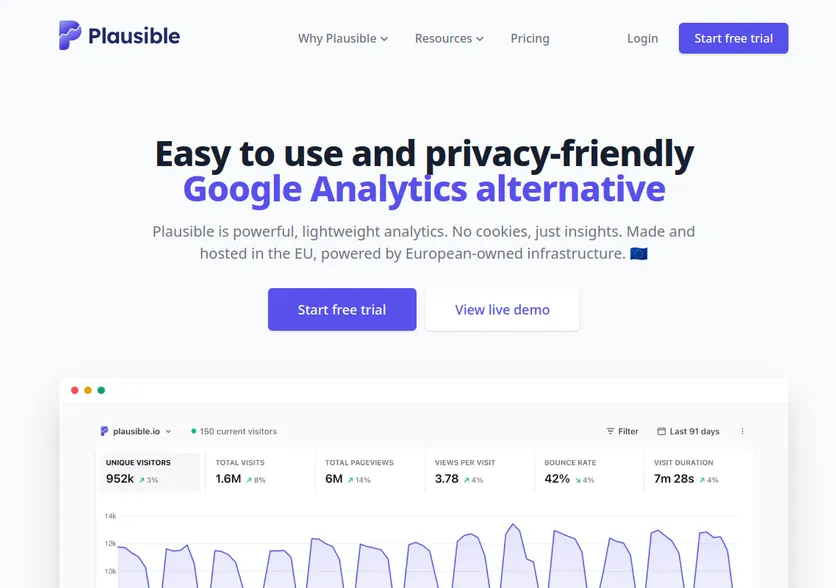
Plausible is the lightweight answer to content analytics: one small script shows your top pages, traffic sources, and goals in a single simple dashboard. It never uses cookies, so there is no banner to slow readers down, and the plan for ten thousand monthly pageviews costs nine dollars a month billed annually. Small teams pick it when Google Analytics feels like overkill.
What we like
- Simple dashboard with no learning curve
- No cookies means no consent banner
- Nine dollars a month is hard to beat
Watch out for
- Pricing page moved; pricing is shown on the homepage
- No keyword or backlink data
How to try it
- Add the Plausible script to your site and set your key goals.
- Check the dashboard weekly to see which articles bring visitors.
- Compare sources to learn whether search, social, or referrals drive your readers.
4. HubSpot Marketing Hub
Best for: Small businesses that already use HubSpot and want content tied to leads
Paid tool Starting price: $20/seat/month · Twenty dollars per seat a month is the Starter list price; HubSpot currently shows a new-customer discount to seven dollars per seat a month billed annually; Professional costs eight hundred dollars a month.
Free plan: Free plan
HubSpot Marketing Hub lets a small team see content in the same place as contacts: an article that brings in a lead is visible right next to the deal it becomes. Starter lists at twenty dollars per seat a month, and the free plan covers the basics. For a small business already running HubSpot, it keeps content measurement inside one login.
What we like
- Content linked to contacts and deals
- Low Starter list price
- Free plan covers the basics
Watch out for
- Full reporting needs Professional at $800 a month
- Discount shown today is for new customers only
How to try it
- Connect your blog to HubSpot and set up a campaign for each content theme.
- Check the campaign report to see which assets brought contacts.
- Follow the best assets into the deal pipeline to see what converts.
5. Semrush
Best for: Small businesses that want one tool for keyword research and content audits
Paid tool Starting price: $139.95/month · One hundred thirty-nine dollars and ninety-five cents a month for the Pro plan billed monthly, or one hundred seventeen dollars and thirty-three cents a month billed annually; Guru costs two hundred forty-nine dollars and ninety-five cents a month.
Free plan: Free plan; 7-day free trial
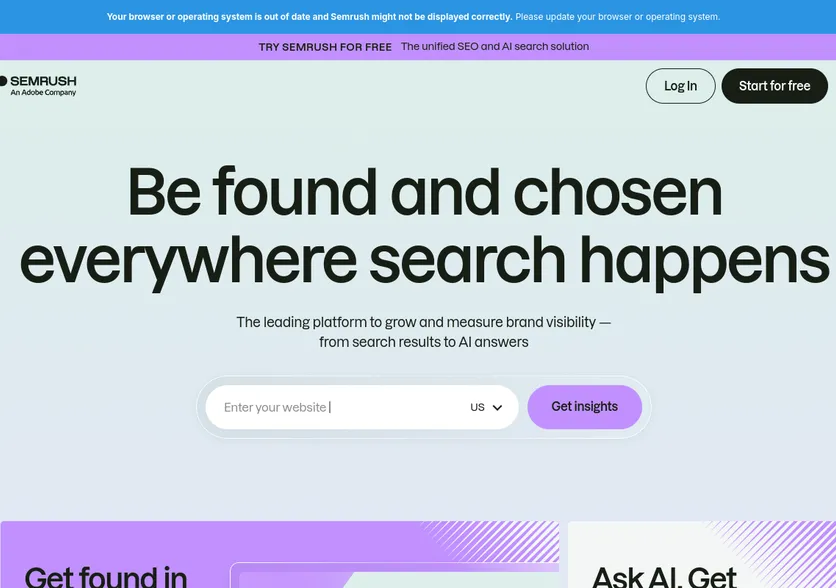
Semrush gives a small business the same research database big agencies use: keyword gaps, traffic estimates, and a Content Audit that scores your whole library. Pro starts at one hundred thirty-nine dollars and ninety-five cents a month, which is the priciest pick here, but it replaces several tools at once. It suits businesses ready to treat content as a serious growth channel.
What we like
- Huge keyword and traffic database
- Content Audit finds pages to fix
- One subscription replaces several tools
Watch out for
- Priciest pick in this comparison
- Pro limits projects and reports
How to try it
- Run a Content Audit to score every page on your site.
- Use Topic Research to find gaps your competitors cover.
- Refresh the pages the audit flags, then re-audit next quarter.
6. Clearscope
Best for: Small businesses that want a quality score for every article before publishing
Paid tool Starting price: $129/month · One hundred twenty-nine dollars a month for the Essentials plan; Business costs three hundred ninety-nine dollars a month.
Free plan: No free plan; free trial available
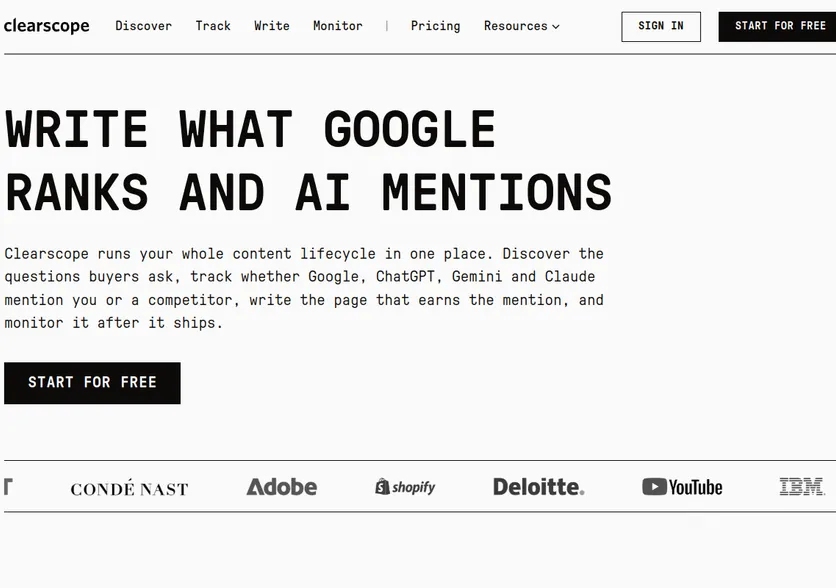
Clearscope grades each article against the pages already ranking for your keyword, giving writers a clear target instead of vague advice. Essentials starts at one hundred twenty-nine dollars a month, so it is an investment, but the grading keeps a small team's output consistent. It works best when one person edits everything and wants an objective check.
What we like
- Simple A to F grading writers understand
- Reports based on live ranking pages
- Google Docs integration
Watch out for
- Essentials limits monthly reports
- No traffic or backlink analytics
How to try it
- Create a report for your target keyword before writing.
- Draft to the grade, covering the terms the report lists.
- Re-run the report after edits and publish only when the grade holds.
7. Content Harmony
Best for: Small businesses that brief freelancers and need every brief to look the same
Paid tool Starting price: $99/month · Ninety-nine dollars a month for the Standard plan with twelve content workflows, or about eighty-nine dollars a month paid annually; a ten-dollar trial buys ten workflows.
Free plan: $10 trial for 10 workflows
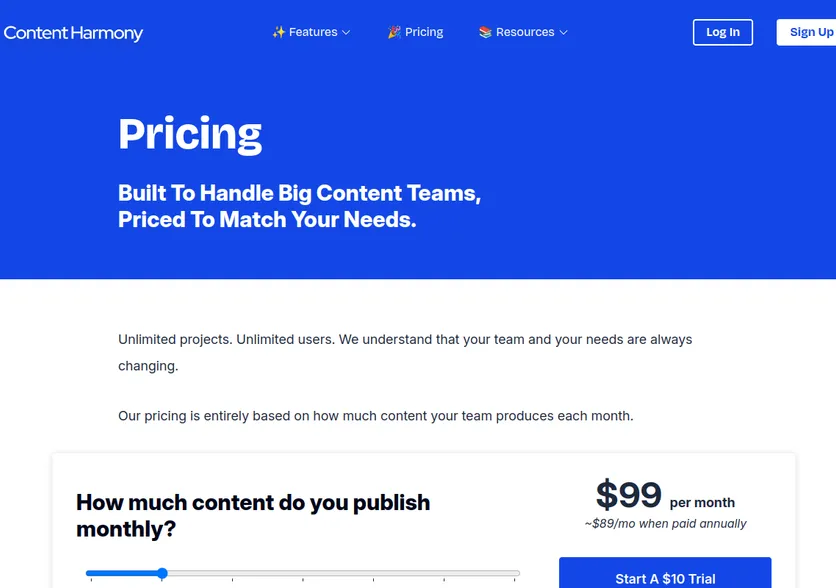
Content Harmony builds a full workflow around each keyword: research, outline, brief, and a final grade, all from the pages already ranking. Standard costs ninety-nine dollars a month for twelve workflows, and a ten-dollar trial covers ten workflows. For a small business hiring writers, it makes every brief consistent without extra management.
What we like
- Brief and grading in one workflow
- Ten-dollar trial for real work
- Keeps freelancers on the same standard
Watch out for
- Workflows cap monthly output
- No traffic or revenue reporting
How to try it
- Create a workflow for your target keyword.
- Send the generated brief to your freelancer.
- Grade the returned draft and publish only when it passes.
8. Content Camel
Best for: Small businesses that share content with customers and partners and want to know what gets read
Paid tool Starting price: $25/active seat/month · Twenty-five dollars per active seat a month for the Team plan, with viewers free; Enterprise is custom priced.
Free plan: Free Solo plan for 1 user
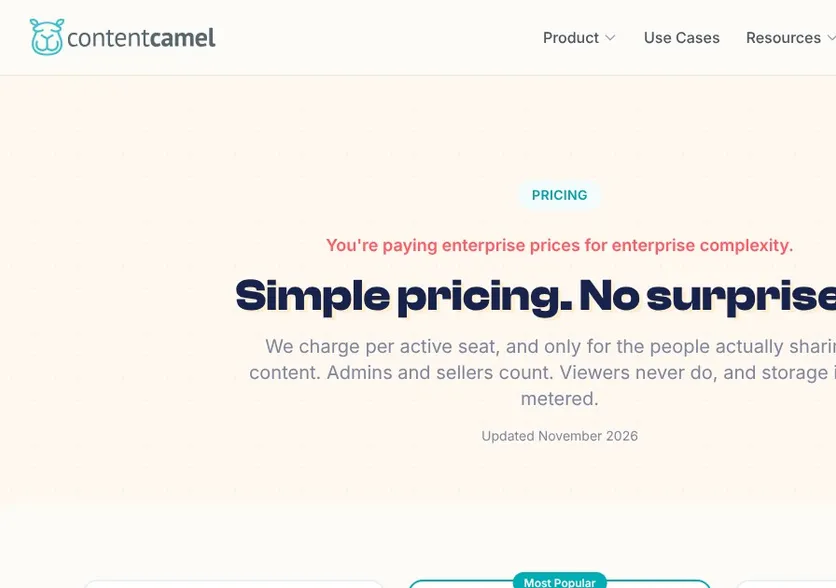
Content Camel tracks the sales and marketing content you share, showing which assets prospects actually open and read. The Team plan costs twenty-five dollars per active seat a month, and viewers never count as seats, so sharing stays cheap. It is a smart fit for small businesses where the same content supports both marketing and sales.
What we like
- Viewers are free, only active seats pay
- Shows what prospects actually read
- Simple pricing with no surprises
Watch out for
- Focused on content sharing, not SEO
- No keyword research tools
How to try it
- Upload your guides, decks, and case studies to Content Camel.
- Share tracked links with prospects and customers.
- Review which assets get opened and build more of what works.
Prices above were checked on each vendor’s own website on Nov 27, 2026 and can change — the vendor’s page is the final word. Vendor links are editorial: nobody paid to be listed or ranked here. Vendors who want a featured listing can see how it works on our Get listed page.
How small businesses should use content analytics
Start small: pick one analytics tool and three goals, such as contact forms, newsletter sign-ups, and purchases. Check the same report every week for a month before changing anything, so you learn your baseline first. Then spend your writing time on the topics that already bring results, and refresh the top ten pages that are losing traffic. A nine-dollar tool used every week beats a hundred-dollar tool opened once a quarter.
Before you buy
- Pick a plan that covers your actual monthly pageviews or document count, not the cheapest tier.
- Check whether the tool includes a free plan or trial so you can test it on real content.
- Confirm the analytics work with your CMS without a developer or a paid plugin.
- Make sure reports are simple enough that a non-technical owner can read them in five minutes.
- Ask what the price becomes when you outgrow the entry plan, so there are no surprises.
Official websites
Official websites of the products reviewed above. Features and prices were checked against these sites when this guide was written, and they can change, so confirm on the vendor site before you buy.
Frequently asked questions
What is the cheapest content analytics software for small business?
Plausible at nine dollars a month is the cheapest analytics tool here, while Frase at thirty-nine dollars a month is the cheapest way to get research briefs and scoring. The right cheap pick depends on your gap: traffic stats, or better briefs. Many small teams start with Plausible and add Frase when writing volume grows.
Can I start with free content analytics tools?
Yes, if you pick tools with free plans or trials: Plausible offers a thirty-day trial, HubSpot and Frase have free options, and Content Harmony sells a ten-dollar trial. You can measure traffic and grade a few articles before spending anything, then buy the tool that proves its value.
How is small business content analytics different from enterprise tools?
The main difference is scale and seats. Small business tools charge by pageviews, documents, or seats, while enterprise tools charge by volume and add sales support. A small team rarely needs the enterprise tier; buy the smallest plan that covers your pageviews and reports.
Is Semrush worth it for a small business?
Only if your main question is search performance. If you mainly need traffic stats, Plausible is enough; if you need briefs and grading, Frase or Surfer is the better buy. Semrush earns its price when you also need keyword research and competitor tracking in the same tool.
What should I measure first with content analytics?
The quickest signals are top pages, traffic sources, and goals completed. Set three goals, such as contact form submissions or sign-ups, then check weekly which articles drive them. After a month you will know which topics deserve more content and which to stop writing.
Want to grow your content without guesswork? Try Toolsvine's free SEO tools right in your browser.
Browse SEO Tools tools