On this page
A law firm runs on two kinds of paperwork, matters and contracts, and the wrong system turns both into a hunt through inboxes and drives. The eight tools below cover the full range, from practice managers that bill and reconcile trust accounts to AI reviewers that redline inside Word. Every price was checked on the vendor site on November 27, 2026, and the list runs from nineteen dollars a user a month to four hundred ninety-nine dollars a month. Clio is our first pick — the practice platform that pairs matter management with billing and trust accounting in one login.
How we researched this
We started with the contract and practice tools law firms actually buy, then read each price on the vendor pricing page on November 27, 2026 and noted the trial each plan carries. We judged them for a firm that manages matters, bills clients and must find any signed agreement in seconds. We dropped Ironclad, Juro and Harvey because none publishes a price a firm can budget against without a sales call.
Compare the tools
| Name | Best for | Starting price | Free plan | |
|---|---|---|---|---|
 Clio | Law firms that want practice management, billing and trust accounting in one login | $49/user/month | No free plan; 7-day free trial | Visit |
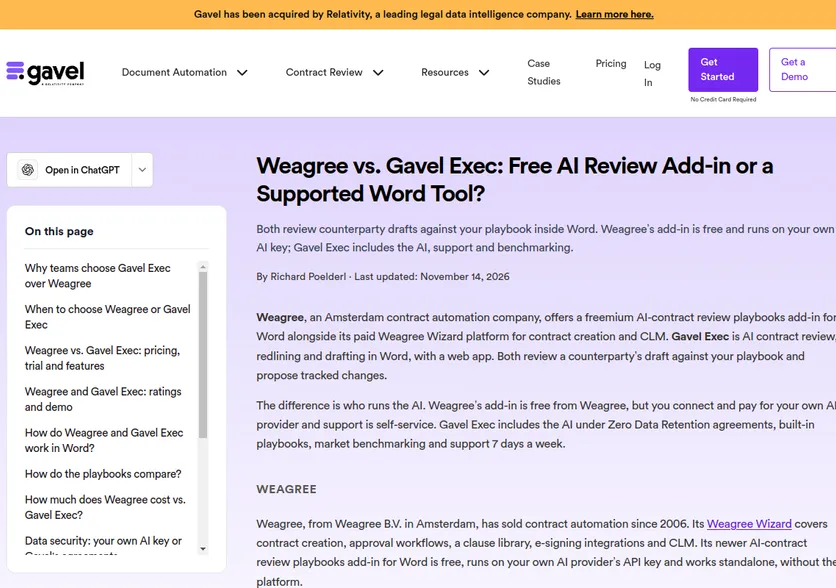
 Gavel Exec | Law firms that redline contracts inside Microsoft Word | $160/user/month | 25 free queries per user; no free plan | Visit |
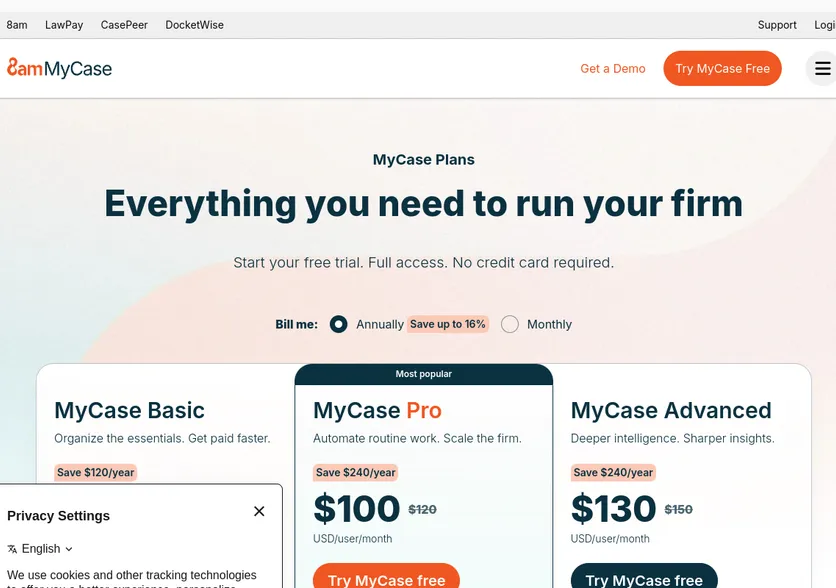
 MyCase | Small firms that want case management, billing and client messaging together | $50/user/month | No free plan; 10-day free trial | Visit |
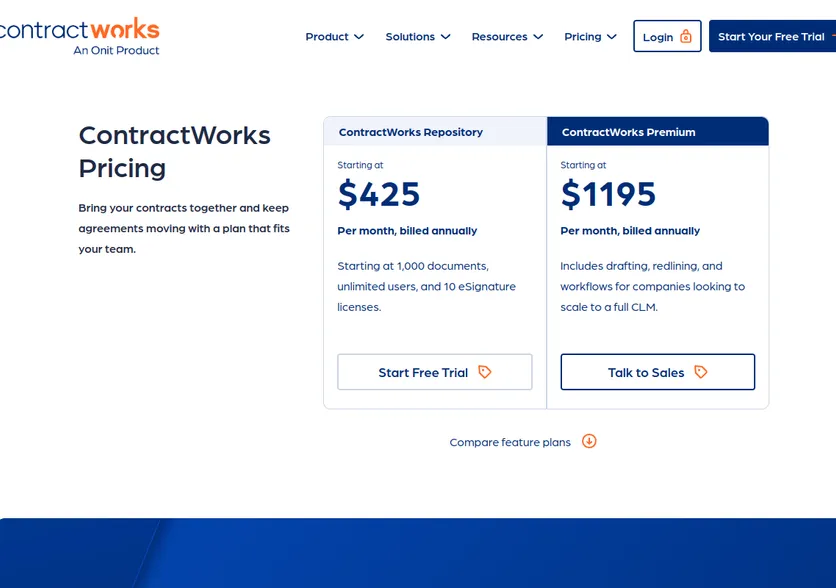
 ContractWorks | Firms that need one searchable repository for every signed agreement | $425/month | No free plan; 14-day free trial | Visit |
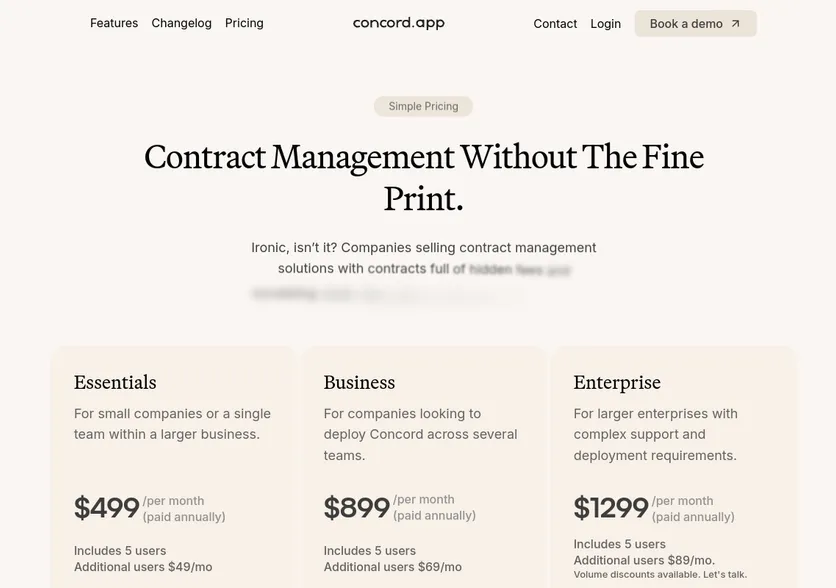
 Concord | Firms that draft, negotiate and sign in one shared workspace | $499/month | No free plan; demo available | Visit |
 Docusign IAM | Firms that want AI agreement management with the DocuSign name | $45/user/month | No free plan; free trial available | Visit |
 PandaDoc | Firms that send engagement letters and proposals at volume | $19/user/month | Free plan | Visit |
 DocuSign | Firms that only need trusted e-signatures, not a full CLM | $25/user/month | 30-day free trial | Visit |
The contract management software for law firms, compared
1. Clio
Best for: Law firms that want practice management, billing and trust accounting in one login
Paid tool Starting price: $49/user/month · Forty-nine dollars per user a month for the Starter plan; Core, Signature and Elite cost more, monthly billing runs higher, and the plans were renamed in 2026 from EasyStart, Essentials, Advanced and Complete
Free plan: No free plan; 7-day free trial
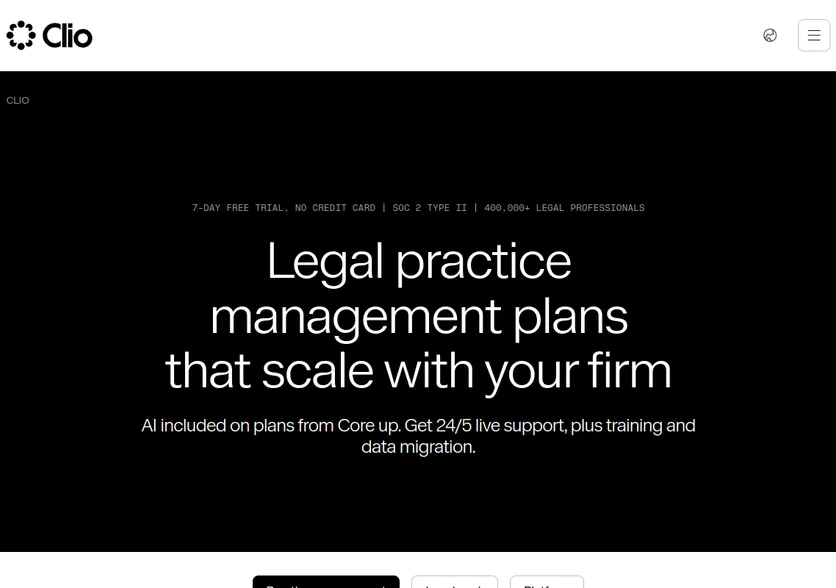
Clio is the practice platform most law firms start with, pairing matter management with time tracking, billing and trust accounting in one login. This Clio Starter plan costs forty-nine dollars per user a month and covers matters, contacts, documents, time and billing with legal accounting built in. A firm that wants cases, calendars and invoices together gets one system instead of three separate tools.
What we like
- Matter, billing and trust accounting in one platform
- Client portal included on higher plans
- Unlimited document storage on every plan
Watch out for
- AI features only arrive on Core and above
- Client portal and advanced billing need higher tiers
How to try it
- Open the Clio site and start the 7-day trial
- Add your matters, contacts and billing rates
- Turn on the client portal and send a test invoice
2. Gavel Exec
Best for: Law firms that redline contracts inside Microsoft Word
Paid tool Starting price: $160/user/month · One hundred sixty dollars per user a month, or one thousand seven hundred forty dollars per user a year; teams of ten or more seats get discounted team pricing
Free plan: 25 free queries per user; no free plan
A firm that negotiates contracts all week needs a reviewer that works where the drafting happens, and Gavel Exec runs playbook checks and redlines directly inside Word. This Gavel Exec seat costs one hundred sixty dollars per user a month and includes one thousand completions a month after twenty-five free queries. A lawyer who marks up third-party paper gets pass-or-fail answers for every playbook rule, with the reason and a proposed fix attached.
What we like
- Playbook review with pass-or-fail reasons
- Redlines land as tracked changes in Word
- No long-term contract on the monthly plan
Watch out for
- No document management system integration yet
- Per-seat pricing adds up fast for a large firm
How to try it
- Open Gavel Exec and use the twenty-five free queries
- Build a playbook from your firm's standard positions
- Run a client contract through it and accept the tracked changes
3. MyCase
Best for: Small firms that want case management, billing and client messaging together
Paid tool Starting price: $50/user/month · Fifty dollars per user a month for the Basic plan billed annually, or sixty dollars per user a month billed monthly; Pro costs one hundred dollars and Advanced costs one hundred thirty dollars per user a month billed annually
Free plan: No free plan; 10-day free trial
MyCase is the all-in-one platform for small firms that want cases, billing and client communication in one place without enterprise complexity. This MyCase Basic plan costs fifty dollars per user a month billed annually and covers case and contact management, time entry, invoicing and trust accounting. A small firm that juggles matters, invoices and client texts gets one login for all three.
What we like
- Cases, billing and messaging in one tool
- Trust accounting with three-way reconciliation
- Unlimited document storage on every plan
Watch out for
- Automation and AI assistants need Pro or Advanced
- No open API on the Basic or Pro plans
How to try it
- Open the MyCase site and start the 10-day trial
- Add your cases, contacts and billing rates
- Invite a client to the portal and send a test message
4. ContractWorks
Best for: Firms that need one searchable repository for every signed agreement
Paid tool Starting price: $425/month · Four hundred twenty-five dollars a month for the Repository plan billed annually, covering up to one thousand documents and unlimited users; Premium starts at one thousand one hundred ninety-five dollars a month
Free plan: No free plan; 14-day free trial
A law firm that inherits years of signed agreements needs to find any of them in seconds, and ContractWorks gives the firm a flat-priced repository to do it. This ContractWorks Repository plan costs four hundred twenty-five dollars a month and covers up to one thousand documents for unlimited users. A firm that answers constant questions about where an agreement lives gives every attorney read access without paying per seat.
What we like
- Unlimited users on a flat monthly price
- AI tagging fills in dates and key terms
- Milestone alerts catch renewals before they lapse
Watch out for
- Drafting and redlining need the Premium plan at one thousand one hundred ninety-five dollars a month
- Document count caps at one thousand on the entry plan
How to try it
- Open the ContractWorks site and start the 14-day trial
- Upload a batch of signed agreements and let the AI tagging run
- Set milestone alerts for your nearest renewal dates
5. Concord
Best for: Firms that draft, negotiate and sign in one shared workspace
Paid tool Starting price: $499/month · Four hundred ninety-nine dollars a month for the Essentials plan billed annually, covering five users with unlimited agreements and e-signatures; extra users cost forty-nine to eighty-nine dollars a month and Business costs eight hundred ninety-nine dollars a month
Free plan: No free plan; demo available
Concord gives a small firm one workspace where drafting, redlining, approval and signing happen without passing files between tools or inboxes. This Concord Essentials plan costs four hundred ninety-nine dollars a month billed annually and covers five users with unlimited agreements and e-signatures. A firm that negotiates its own paper end to end gets version control and deadline reminders built in.
What we like
- Drafting, negotiation and signing in one place
- Unlimited e-signatures on every plan
- AI review flags risky clauses before signing
Watch out for
- Five users included, so larger firms pay forty-nine to eighty-nine dollars per extra user
- Approval workflows start on the eight hundred ninety-nine dollar Business plan
How to try it
- Open the Concord site and book a demo
- Invite your five users and import your templates
- Send a first agreement and track its approval
6. Docusign IAM
Best for: Firms that want AI agreement management with the DocuSign name
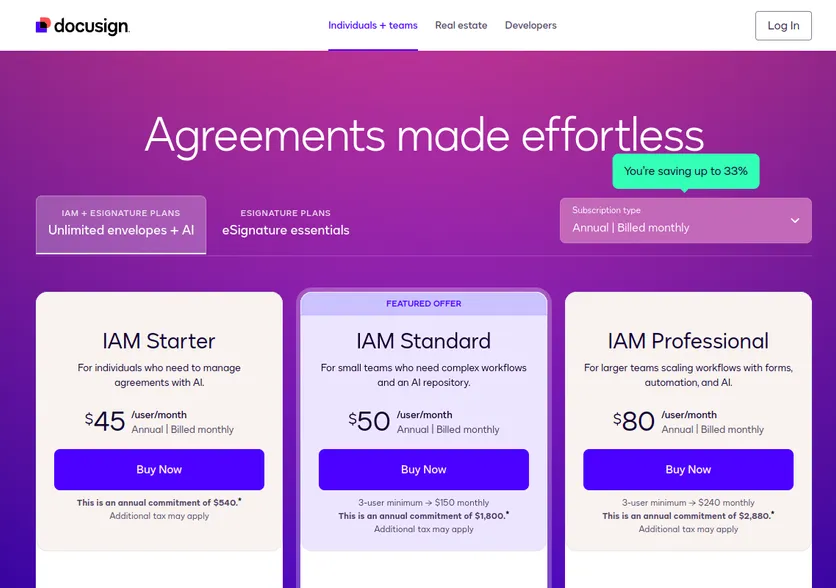
Paid tool Starting price: $45/user/month · Forty-five dollars per user a month for IAM Starter on annual billing billed monthly, or forty dollars per user a month paid upfront; Standard costs fifty dollars per user a month and Professional costs eighty dollars
Free plan: No free plan; free trial available
For a firm already standardized on DocuSign, Docusign IAM adds the agreement layer the signature alone lacks, with an AI repository and workflows for complex matters. This Docusign IAM Starter plan costs forty-five dollars per user a month on annual billing billed monthly and adds an AI repository to unlimited sending. A firm that manages agreements from intake to renewal gets one system clients already recognize and trust.
What we like
- Counterparties already trust the DocuSign name
- AI repository searches across all agreements
- Unlimited envelope sending through the web app
Watch out for
- Standard and Professional require at least three users
- The full AI workflow set needs the higher tiers
How to try it
- Open the Docusign IAM pricing page and start a trial
- Import your existing agreements into the AI repository
- Build one approval workflow for client contracts
7. PandaDoc
Best for: Firms that send engagement letters and proposals at volume
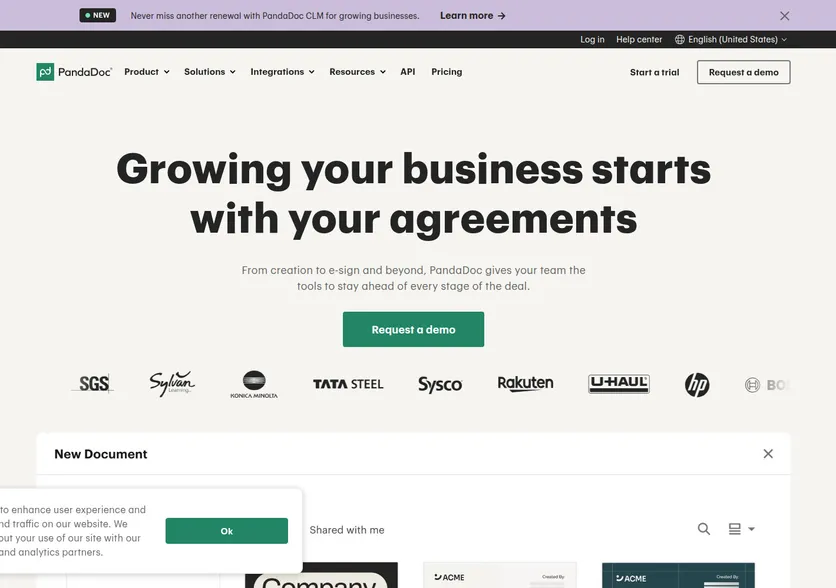
Paid tool Starting price: $19/user/month · Nineteen dollars per user a month for the Starter plan billed annually, or thirty-five dollars per user a month billed monthly; Business costs forty-nine dollars per user a month and Starter covers at most two seats
Free plan: Free plan
A firm that sends engagement letters, proposals and fee agreements every week needs templates and signing that keep up, and PandaDoc delivers both at a low per-seat price. This PandaDoc Starter plan costs nineteen dollars per user a month billed annually and covers unlimited documents and e-signatures. A firm that issues standard agreements all week gets templates, tracking and signing in one subscription.
What we like
- Cheapest paid entry in this comparison
- Free plan covers five documents a month
- Document tracking shows when a client opens the file
Watch out for
- Starter covers at most two seats, so bigger firms pay Business prices
- CRM integrations only arrive on the Business plan
How to try it
- Open the PandaDoc site and start with the free plan
- Turn your engagement letter into a reusable template
- Send a test document and watch the signing status
8. DocuSign
Best for: Firms that only need trusted e-signatures, not a full CLM
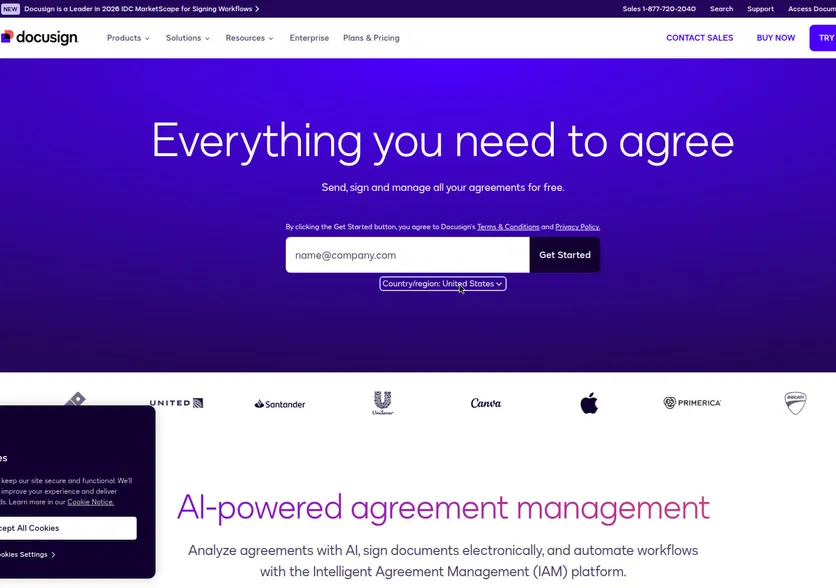
Paid tool Starting price: $25/user/month · Standard plan, $25 a user a month billed annually upfront ($300 a year); $30 a month on an annual commitment billed monthly; $45 month to month. Personal $10 a month billed annually upfront ($11 billed monthly); Business Pro $40 a month billed annually upfront ($45 billed monthly); Enterprise is quoted. Standard includes 100 envelopes per user a year.
Free plan: 30-day free trial
When the job is simply getting agreements signed by clients who trust the brand, DocuSign eSignature remains the default choice for law firms. This DocuSign Standard plan costs twenty-five dollars per user a month billed annually upfront on annual billing billed monthly and includes one hundred envelopes per user a year. A firm that sends engagement letters and settlement agreements to outside parties gets signatures back fast, with an audit trail nobody questions.
What we like
- The most recognized e-signature brand
- Templates and reminders cut chasing time
- Audit trail stands up in a dispute
Watch out for
- One hundred envelopes per user a year, then you pay more
- No contract repository or renewal alerts included
How to try it
- Open the DocuSign site and start the trial
- Upload a template and set your signing order
- Send a test envelope and check the audit trail
Prices above were checked on each vendor’s own website on Nov 27, 2026 and can change — the vendor’s page is the final word. Vendor links are editorial: nobody paid to be listed or ranked here. Vendors who want a featured listing can see how it works on our Get listed page.
What law firm contract software costs in 2026
A firm pays for contract software in two ways, the subscription and the billable hours lost to admin. A nineteen-dollar signing tool looks cheap until a missed renewal or a lost agreement costs a client, so weigh trust accounting, search and the client portal against the sticker price. Per-user billing multiplies with every attorney and paralegal, while flat-priced repositories cost the same however many people look up agreements.
Start with a trial on two tools and run a real matter through each one. Check that trust accounts reconcile without a spreadsheet, that the client portal works on a phone, and that search finds a clause inside a scanned agreement. Pick the tool your attorneys actually open every day, because a practice system nobody uses costs more than the subscription.
Before you buy
- Match the tool to your practice area, because a personal injury firm and a transactional firm need different matter fields.
- Check trust accounting compliance, because a tool without proper trust reconciliation creates risk on every retainer.
- Confirm the price covers every attorney, because per-user billing multiplies fast in a growing firm.
- Test the client portal on a phone, because most clients check their matter from mobile and a clumsy page loses them.
- Ask who owns your data, because a tool that locks matters behind an export fee costs more later.
Official websites
Official websites of the products reviewed above. Features and prices were checked against these sites when this guide was written, and they can change, so confirm on the vendor site before you buy.
Frequently asked questions
Which contract management software is best for law firms in 2026?
Clio is the best overall pick at forty-nine dollars per user a month, with matter management, billing and trust accounting in one login. Gavel Exec is the best choice for contract review at one hundred sixty dollars per user a month, with playbook checks inside Word. MyCase is the best pick for small firms at fifty dollars per user a month, with cases, billing and client messaging together.
How much does contract management software cost for law firms?
Prices here run from nineteen dollars per user a month for PandaDoc to four hundred ninety-nine dollars a month for Concord, with most practice tools landing between forty-five and fifty dollars per user a month. Per-user billing multiplies fast in a growing firm, so count every attorney and paralegal before comparing totals. Add trust accounting, client portals and signing caps to the subscription before you decide.
Do law firms need AI contract review?
Yes, if the firm reviews third-party paper every week, because AI review flags risky clauses and checks every rule in a playbook in minutes instead of hours. A firm that mostly signs its own standard agreements gains less, since templates and e-signatures already cover the work. Start with the free queries on one live agreement and compare the review against a lawyer's own markup before paying.
What is the difference between practice management and contract management software?
A practice manager runs matters, billing and trust accounting, while a CLM runs contracts from drafting to renewal, and most firms need both. Clio or MyCase covers the practice side, while ContractWorks or Concord covers the contract archive. Buy the practice manager first if billing and trust accounting are the pain, and add the CLM when contracts pile up.
Is there a free contract management tool for law firms?
PandaDoc offers a free plan for five documents a month, so a solo firm can start signing without paying. Clio and MyCase offer free trials of seven and ten days, which is enough to test a real matter end to end. Most firms move to a paid plan once the diary fills and billing matters.
Need everyday business help too? Try Toolsvine's free business tools right in your browser.
Browse Business Tools tools