On this page
A critical event cannot wait for office hours: the right platform pages the on-call engineer, escalates the alert and tracks the incident until it is fixed. The seven tools below cover on-call scheduling, alerting and incident response, and every price was checked on the vendor site on November 26, 2026. Plans run from about $6 to about $21 per user a month, and most offer a free plan or a free trial. Zenduty is our first pick — the cheapest paid plan here, with a 14-day trial.
How we researched this
We started with the critical event management platforms that enterprises actually buy, then read each price on the vendor site on November 26, 2026 and noted the free plan or free trial each one carries. We judged them for an enterprise that needs on-call rotations, fast alerting and incident tracking across many teams. We kept the list to tools with a published price, and we dropped any tool whose price we could not verify.
Compare the tools
| Name | Best for | Starting price | Free plan | |
|---|---|---|---|---|
 PagerDuty | Enterprises that want the best-known incident platform | $21/user/month | Free plan | Visit |
 SolarWinds Incident Response | Teams that want on-call scheduling plus incident timelines | $15/user/month | 14-day free trial | Visit |
 Zenduty | Enterprises that want the cheapest paid incident platform | $6/user/month | 14-day free trial | Visit |
 ilert | Teams that want monitoring alerts routed to the right engineer | $19/user/month | Free plan; 14-day free trial | Visit |
 SIGNL4 | Teams that want mobile alerting an engineer cannot miss | $9/user/month | Free plan; 30-day free trial | Visit |
 OnPage | Teams that need alerts that repeat until someone responds | $13.99/user/month | Free trial | Visit |
 Spike | Teams moving off Opsgenie that want simple incident management | $7/user/month | 14-day free trial | Visit |
The critical event management tools, compared
1. PagerDuty
Best for: Enterprises that want the best-known incident platform
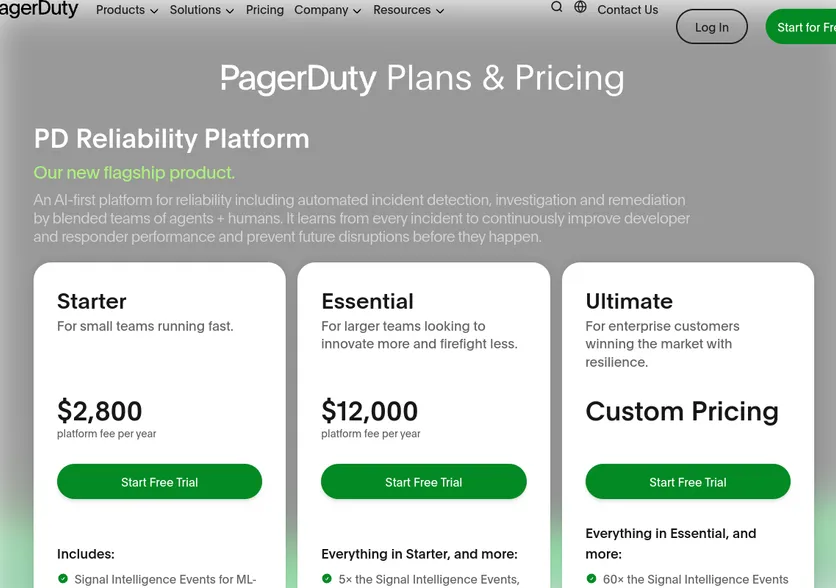
Paid tool Starting price: $21/user/month · Incident Management Professional plan, per user per month; Free plan included; PD Reliability Platform Starter is about $2,800 a year, Essential about $12,000 and Plus about $48,000 a year
Free plan: Free plan
PagerDuty is the best-known incident platform on this list, and the one most enterprises reach for first. This PagerDuty plan covers incident management, on-call scheduling and automation on Professional, with a free plan for small teams. It is the safest pick when a large company needs a platform every engineer already knows.
What we like
- Best-known incident platform, widely adopted
- Free plan for small teams
- Deep automation and integrations
Watch out for
- Professional is about $21 per user a month
- Platform plans run to tens of thousands a year
How to try it
- Open the PagerDuty pricing page and compare the plans
- Set up an on-call rotation and escalation policy
- Trigger a test incident and check the alert flow
2. SolarWinds Incident Response
Best for: Teams that want on-call scheduling plus incident timelines
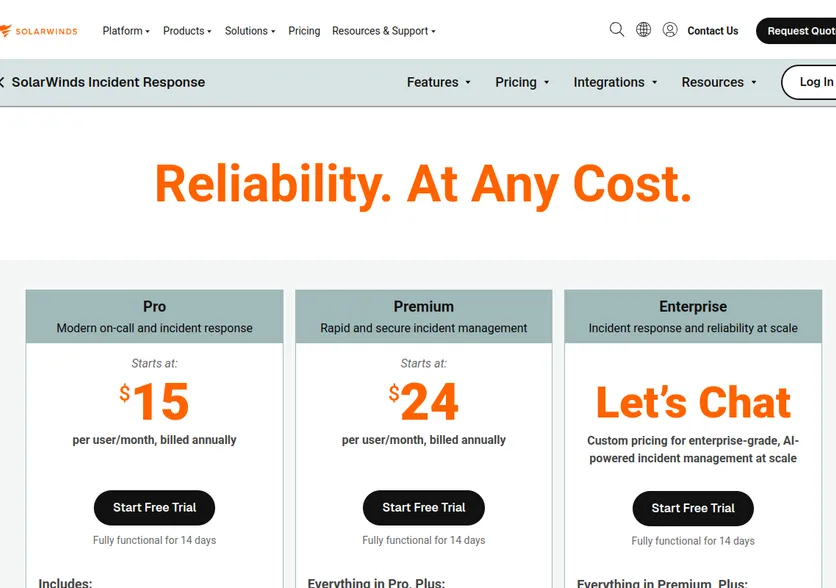
Paid tool Starting price: $15/user/month · Pro plan, per user per month billed annually; Premium is about $24 a month; Enterprise is custom; 14-day free trial
Free plan: 14-day free trial
SolarWinds Incident Response, formerly Squadcast, pairs on-call scheduling with incident timelines in one platform. This SolarWinds Incident Response plan covers schedules, escalations and status pages on Pro, with more integrations on Premium. It is the right choice for a team that wants a modern incident platform at $15 per user a month.
What we like
- On-call schedules and incident timelines in one place
- Status pages included on Pro
- 14-day free trial, no card needed
Watch out for
- Pro is about $15 per user a month billed annually
- Premium jumps to about $24 a month
How to try it
- Open the Squadcast pricing page and start the 14-day trial
- Set up your on-call schedule and escalation rules
- Run a test incident and review the timeline
3. Zenduty
Best for: Enterprises that want the cheapest paid incident platform
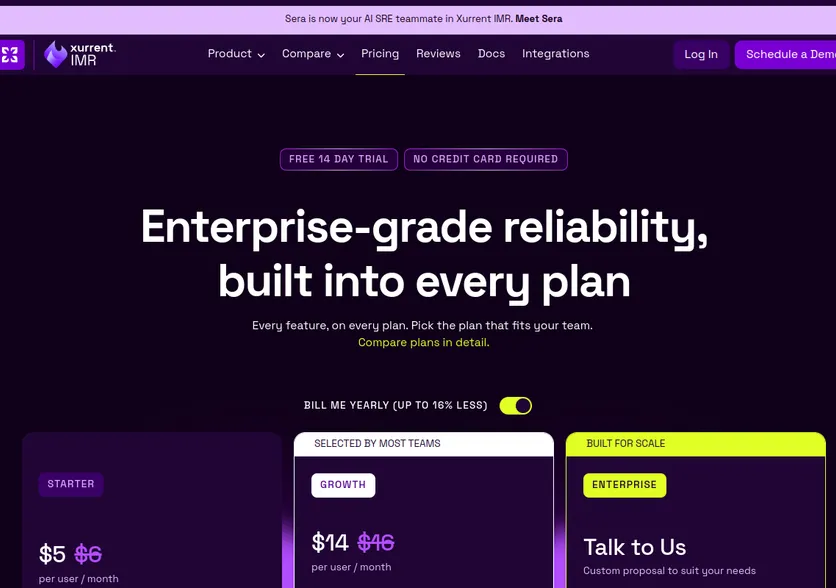
Paid tool Starting price: $6/user/month · Starter plan, per user per month billed yearly; Growth is about $16 a month; Enterprise is custom; 14-day free trial, no credit card
Free plan: 14-day free trial
Zenduty is the cheapest paid platform on this list, and it covers the on-call basics a growing team needs. This Zenduty plan covers on-call schedules, escalations and alerting on Starter, with more integrations on Growth. It is the best value pick for an enterprise that wants real incident management at $6 per user a month.
What we like
- Cheapest paid plan here at $6 per user a month
- 14-day free trial, no credit card
- On-call schedules and escalations included
Watch out for
- Starter is billed yearly
- Growth jumps to about $16 a month
How to try it
- Open the Zenduty pricing page and start the 14-day trial
- Build your on-call rotation and escalation policy
- Connect your monitoring tools and test an alert
4. ilert
Best for: Teams that want monitoring alerts routed to the right engineer
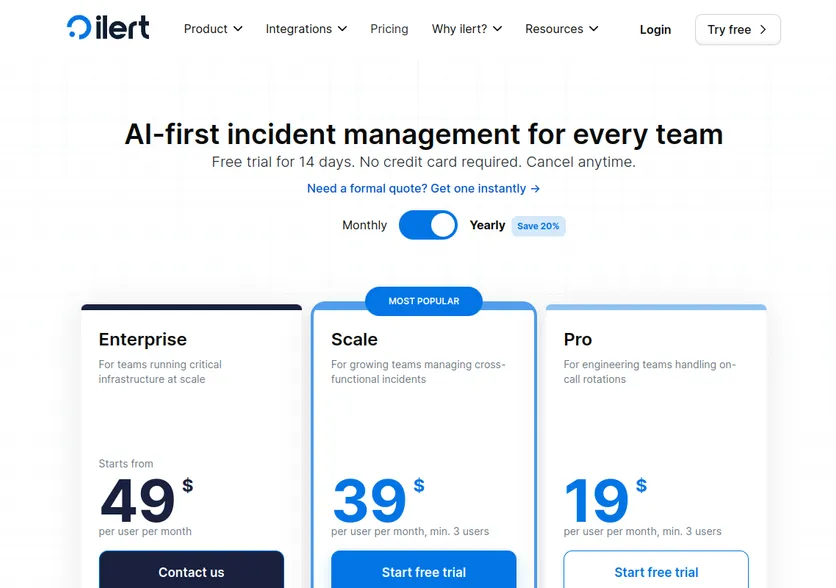
Paid tool Starting price: $19/user/month · Pro plan, per user per month, minimum 3 users; Scale starts from about $49 per user a month billed annually; Enterprise is custom; Free plan up to 5 users; 14-day free trial
Free plan: Free plan; 14-day free trial
ilert connects monitoring tools to on-call teams, so an alert reaches the right engineer in seconds. This ilert plan covers on-call schedules, alerting and status pages on Pro, with a free plan for up to 5 users. It is the best pick for a team that wants strong integrations at $19 per user a month.
What we like
- Free plan for up to 5 users
- Strong integrations with monitoring tools
- Status pages included on Pro
Watch out for
- Pro needs a minimum of 3 users
- Scale starts from about $49 per user a month
How to try it
- Open the ilert pricing page and start on the free plan
- Connect your monitoring tools to ilert
- Set up an on-call rotation and test an alert
5. SIGNL4
Best for: Teams that want mobile alerting an engineer cannot miss
Paid tool Starting price: $9/user/month · Notify and Connect plan, per user per month; Starter is free up to 5 users; Optimize is about $15 a month on annual billing and Maximize about $25; 30-day free trial on Maximize
Free plan: Free plan; 30-day free trial
SIGNL4 turns critical alerts into mobile push notifications that an on-call engineer cannot miss. This SIGNL4 plan covers alerting, on-call duty planning and team messaging on Notify and Connect, with a free Starter tier for up to 5 users. It is the best pick for a team that wants loud, reliable mobile alerting at $9 per user a month.

What we like
- Mobile alerts that are hard to miss
- Free Starter plan for up to 5 users
- 30-day free trial on the top plan
Watch out for
- Notify and Connect is about $9 per user a month
- Top plan is about $25 a month on annual billing
How to try it
- Open the SIGNL4 pricing page and start on the free Starter plan
- Set up duty planning and alert rules for your team
- Send a test alert and check it lands on mobile
6. OnPage
Best for: Teams that need alerts that repeat until someone responds
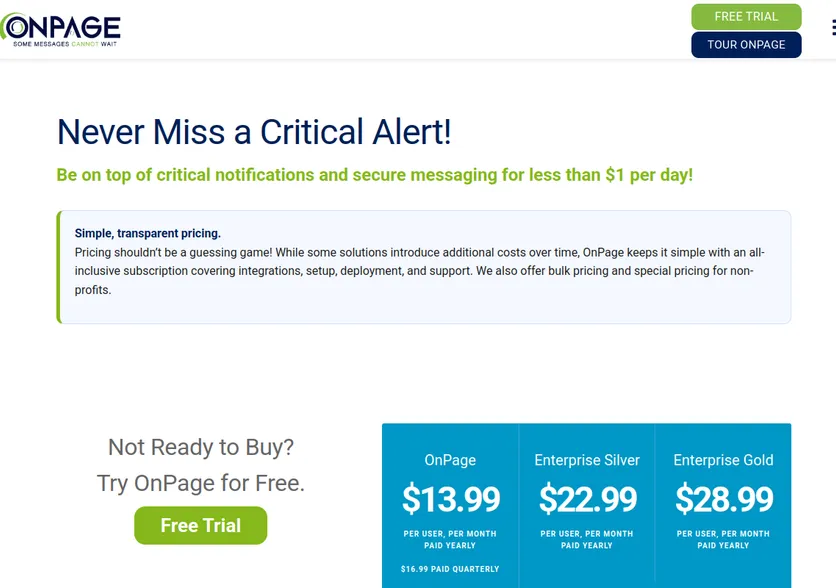
Paid tool Starting price: $13.99/user/month · OnPage plan, per user per month paid yearly; $16.99 a month paid quarterly; Enterprise Silver is about $22.99 and Enterprise Gold about $28.99 a month; free trial available
Free plan: Free trial
OnPage is the critical alerting app built for teams that cannot miss a message, from IT to healthcare. This OnPage plan covers persistent alerts, on-call scheduling and secure messaging at $13.99 per user a month paid yearly. It is the right choice when alerts must keep ringing until someone reads them.
What we like
- Alerts repeat for up to eight hours until read
- HIPAA compliant for healthcare teams
- Fixed monthly fee, no per-alert charges
Watch out for
- OnPage plan is about $13.99 per user a month paid yearly
- Quarterly billing is about $16.99 a month
How to try it
- Open the OnPage pricing page and compare the plans
- Set up your on-call schedule and alert rules
- Test a persistent alert and check the audit trail
7. Spike
Best for: Teams moving off Opsgenie that want simple incident management
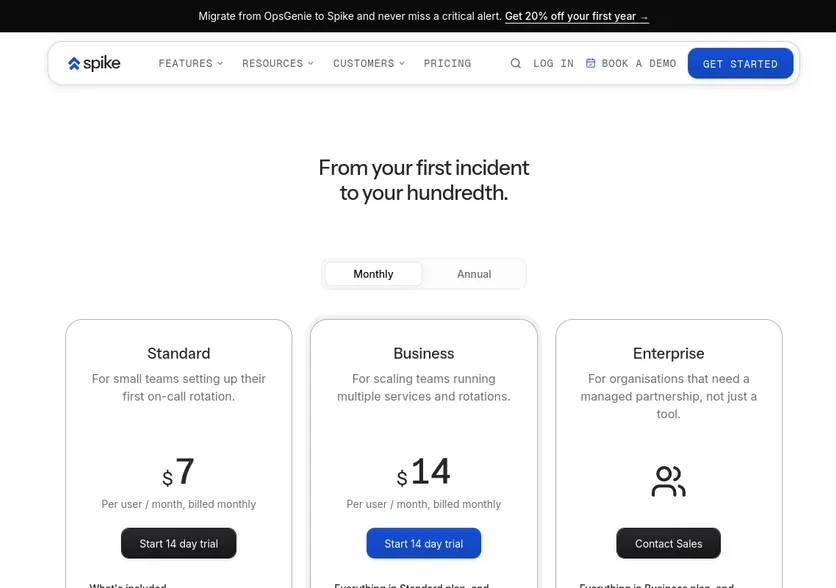
Paid tool Starting price: $7/user/month · Standard plan, per user per month billed monthly; Business is about $14 a month; Enterprise is custom; 14-day free trial
Free plan: 14-day free trial
Spike is the incident platform built for teams moving off Opsgenie, with on-call scheduling and live call routing. This Spike plan covers on-call schedules, phone and SMS alerts and a status page on Standard, with unlimited alerts on Business. It is the best pick for a team that wants a simple incident platform at $7 per user a month.
What we like
- Built for teams moving off Opsgenie
- Standard is about $7 per user a month
- Status page included on every paid plan
Watch out for
- Standard caps phone and SMS alerts at 100 a month
- Business jumps to about $14 a month
How to try it
- Open the Spike pricing page and start the 14-day trial
- Set up your first on-call rotation
- Connect Slack and test a phone alert
Prices above were checked on each vendor’s own website on Nov 26, 2026 and can change — the vendor’s page is the final word. Vendor links are editorial: nobody paid to be listed or ranked here. Vendors who want a featured listing can see how it works on our Get listed page.
What critical event management costs in 2026
Price is the first filter, and the range here runs from about $6 to about $21 per user a month. The cheapest plans are not always the cheapest deal, because seat minimums, alert limits and annual billing change what an enterprise really pays. Most tools here offer a free plan or a free trial, so test with a real on-call rotation before paying. The table below uses the headline plan each vendor shows on its own pricing page, checked on November 26, 2026. Pick the platform that fits your alerting needs first, then compare the price — a cheap platform that misses a critical alert is no bargain at any price.
Before you buy
- Count how many people join the on-call rotation, then check whether the plan charges per user or one flat rate.
- Ask what counts as an alert: some platforms here cap phone and SMS alerts, while others include unlimited alerts.
- Test the alerting on a real incident, because a platform that pages slowly costs more uptime than any monthly fee.
- Check the billing terms before you buy: Zenduty Starter is about $6 per user a month billed yearly, while PagerDuty Professional is about $21.
- Confirm the escalation and audit tools, since a critical event needs a clear trail from alert to resolution.
Official websites
Official websites of the products reviewed above. Features and prices were checked against these sites when this guide was written, and they can change, so confirm on the vendor site before you buy.
Frequently asked questions
Which critical event management platform is best for an enterprise in 2026?
Zenduty is the best value, at about $6 per user a month billed yearly, with a 14-day trial. Spike is better for a team moving off Opsgenie, at about $7 a month with a status page included. PagerDuty wins when a large enterprise wants the best-known platform, at about $21 a month. Test each one with a real on-call rotation before you buy.
What is the cheapest critical event management platform?
Zenduty Starter, at about $6 per user a month billed yearly, is the cheapest paid plan here. Spike Standard is about $7 a month, and SIGNL4 Notify and Connect is about $9 a month. ilert and SIGNL4 both have free plans for up to 5 users. Watch the alert limits, because capped phone and SMS alerts can force an upgrade.
Can an enterprise try critical event management software before paying?
Yes, most tools here offer a free plan or a free trial. PagerDuty, ilert and SIGNL4 all have free plans, and Zenduty, Spike and SolarWinds Incident Response give 14-day trials. Test with a real on-call rotation and a real incident, not a demo account, so you see the alerting your team will actually get.
What is the difference between on-call scheduling and incident management?
On-call scheduling decides who gets paged and when, which is what Zenduty, Spike and SIGNL4 do. Incident management tracks the whole event from alert to resolution, which is what PagerDuty and SolarWinds Incident Response add. Most teams need both: a rotation that pages the right person, and a timeline that records what happened.
Do these platforms replace Opsgenie?
Yes, most are built for teams moving off Opsgenie, which was discontinued in April 2025. Spike markets directly to Opsgenie teams, and PagerDuty, Zenduty and ilert all cover the same on-call and alerting ground. Before you buy, check the migration help on your plan, because moving rotations and escalation rules takes real work.
Need the everyday business jobs too? Try the free business tools on Toolsvine right in your browser.
Browse Business Tools tools