On this page
Machine learning teams lose weeks hunting for the right dataset, then lose more weeks when the model trains on the wrong one. The seven tools below catalog datasets, columns and lineage, so a data scientist finds trusted data in minutes. Every price was checked on the vendor site on November 27, 2026, and the list runs from ninety-nine dollars a month to ninety thousand dollars a year. dbt Cloud is our first pick — the analytics engineering platform that catalogs models and data from one hundred dollars a developer seat a month.
How we researched this
We started with the catalog tools machine learning teams actually buy, then read each price on the vendor pricing page on November 27, 2026 and noted the trial each plan carries. We judged them for a team that trains models on warehouse data, with lineage, column-level search and governance that a data engineer can trust. We dropped Atlan, Collibra, DataGalaxy and Monte Carlo because none of them publishes a list price, so a buyer cannot compare them without a sales call.
Compare the tools
| Name | Best for | Starting price | Free plan | |
|---|---|---|---|---|
| dbt Cloud | ML teams that want their data models tested, documented and version-controlled | $100/developer seat/month | Free Developer plan for 1 seat | Visit |
| Coalesce Catalog | Data teams that want a catalog beside the pipelines that build their data | $150/user/month | Free Developer plan without Catalog | Visit |
| Secoda | ML teams that want a catalog that writes its own documentation | $99/month | No free plan; free trial available | Visit |
| Select Star | Data teams that want to find the datasets people actually use | $270/month | No free plan; free trial available | Visit |
| Decube | Data teams that want data quality monitoring beside the catalog | $21,000/year | No free plan; demo available | Visit |
| data.world | Enterprise teams that want a knowledge graph catalog with business meaning | $90,000/year | Free Individual plan | Visit |
| Alation | Enterprise ML teams that want the most mature catalog in the market | $60,000/year | No free plan; demo available | Visit |
The data catalog software for machine learning teams, compared
1. dbt Cloud
Best for: ML teams that want their data models tested, documented and version-controlled
Paid tool Starting price: $100/developer seat/month · One hundred dollars per developer seat a month for the Starter plan, up to five seats and fifteen thousand models a month; the Developer plan is free for one seat
Free plan: Free Developer plan for 1 seat
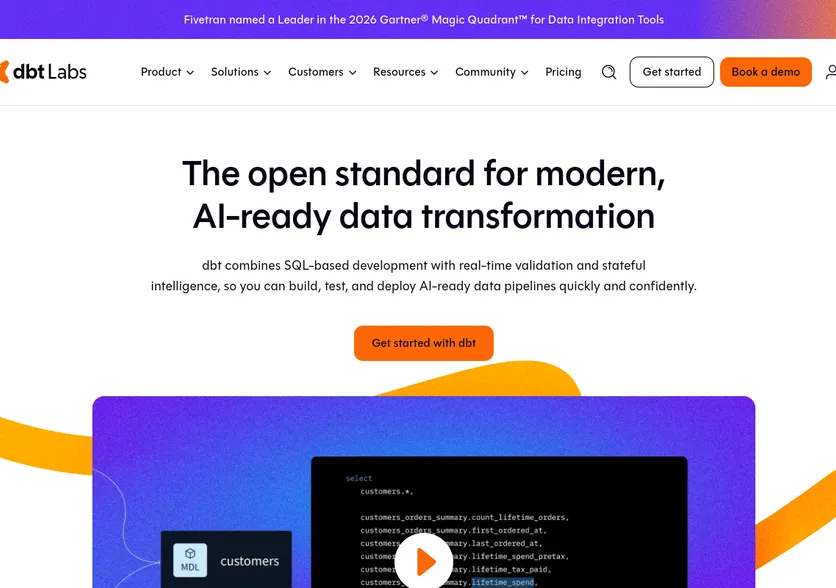
dbt Cloud is the analytics engineering platform where data teams build, test and document the models that feed machine learning. This dbt Cloud Starter plan costs one hundred dollars per developer seat a month for up to five seats and fifteen thousand models a month. An ML team gets version-controlled transformations, tests and docs in one workflow.
What we like
- Version-controlled transformations with tests built in
- Documentation that updates with every model
- Free Developer plan for one seat
Watch out for
- Starter caps at five seats
- No data catalog UI until the higher plans
How to try it
- Open the dbt Cloud pricing page and start the free Developer plan
- Connect your warehouse and build a first model
- Run the tests and publish the documentation
2. Coalesce Catalog
Best for: Data teams that want a catalog beside the pipelines that build their data
Paid tool Starting price: $150/user/month · One hundred and fifty dollars per user a month billed annually for the Catalog plan, up to four users; the Developer plan is free without Catalog
Free plan: Free Developer plan without Catalog
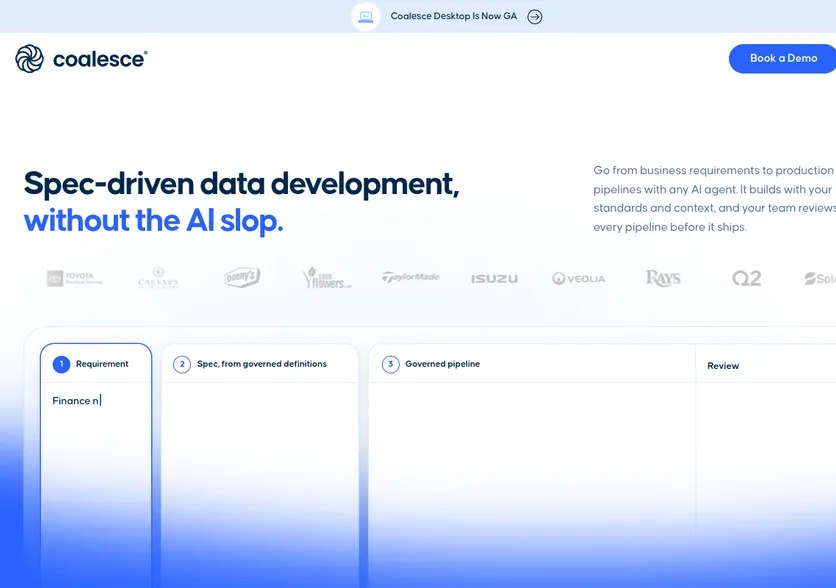
Coalesce Catalog is the data catalog built on the Coalesce transformation platform, giving ML teams a searchable map of every table, column and model. This Coalesce Catalog plan costs one hundred and fifty dollars per user a month billed annually for up to four users. A data team gets lineage, column search and governance beside the pipelines that build the data.
What we like
- Lineage and column search beside the pipelines
- Governance built into the catalog
- Low entry price for a catalog tool
Watch out for
- Catalog caps at four users
- Needs the Coalesce platform underneath it
How to try it
- Open the Coalesce pricing page and start the free Developer plan
- Connect your warehouse and build a pipeline
- Open the catalog and search for a dataset
3. Secoda
Best for: ML teams that want a catalog that writes its own documentation
Paid tool Starting price: $99/month · Ninety-nine dollars a month billed annually for the Starter plan; Premium costs four hundred and ninety-nine dollars a month and Enterprise is quoted
Free plan: No free plan; free trial available
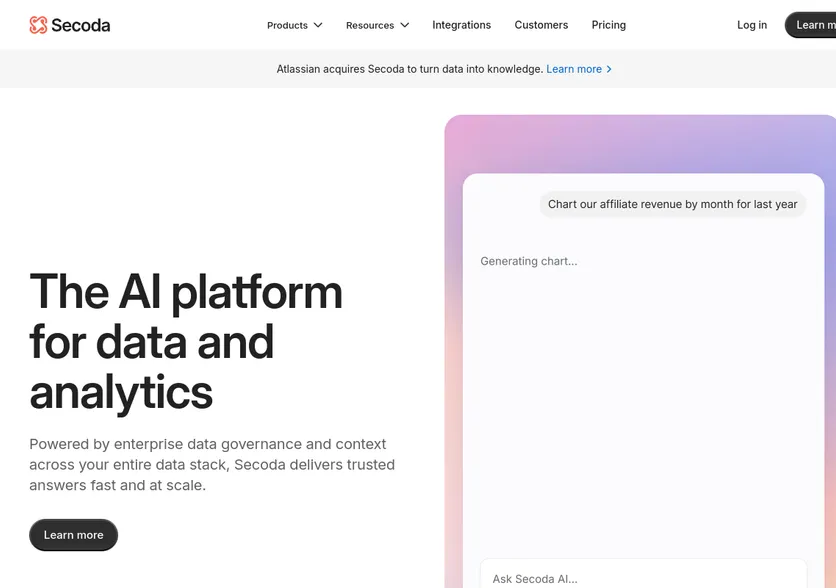
Secoda is the AI-powered data catalog that auto-generates documentation and answers questions about your data in plain language. This Secoda Starter plan costs ninety-nine dollars a month billed annually with search, lineage and AI documentation. An ML team gets a searchable catalog that writes its own docs instead of waiting for an engineer to do it.
What we like
- AI documentation that writes itself
- Plain-language search across tables and columns
- Lineage that shows where data came from
Watch out for
- No free plan to test with
- Premium is five times the Starter price
How to try it
- Open the Secoda site and start a free trial
- Connect your warehouse and data sources
- Search the catalog and check the AI documentation
4. Select Star
Best for: Data teams that want to find the datasets people actually use
Paid tool Starting price: $270/month · Two hundred and seventy dollars a month billed annually for the Pro plan; Growth costs eight hundred and ten dollars a month and Enterprise is quoted
Free plan: No free plan; free trial available
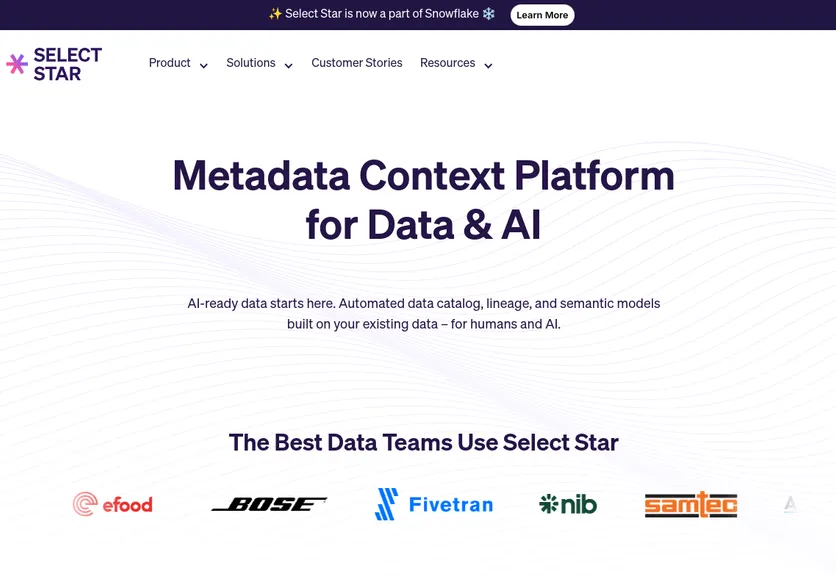
Select Star is the data discovery platform that shows which datasets are actually used, so ML teams stop training on stale tables. This Select Star Pro plan costs two hundred and seventy dollars a month billed annually with search, lineage and popularity scores. A data team gets a catalog that ranks datasets by real usage, not by who wrote the best description.
What we like
- Popularity scores that show real dataset usage
- Lineage across warehouse, BI and ETL
- Search that covers tables, columns and dashboards
Watch out for
- No free plan to test with
- Growth is three times the Pro price
How to try it
- Open the Select Star site and start a free trial
- Connect your warehouse and BI tools
- Search for a dataset and check its popularity score
5. Decube
Best for: Data teams that want data quality monitoring beside the catalog
Paid tool Starting price: $21,000/year · Twenty-one thousand dollars a year for the entry plan, as published on the vendor pricing page; higher plans are quoted
Free plan: No free plan; demo available
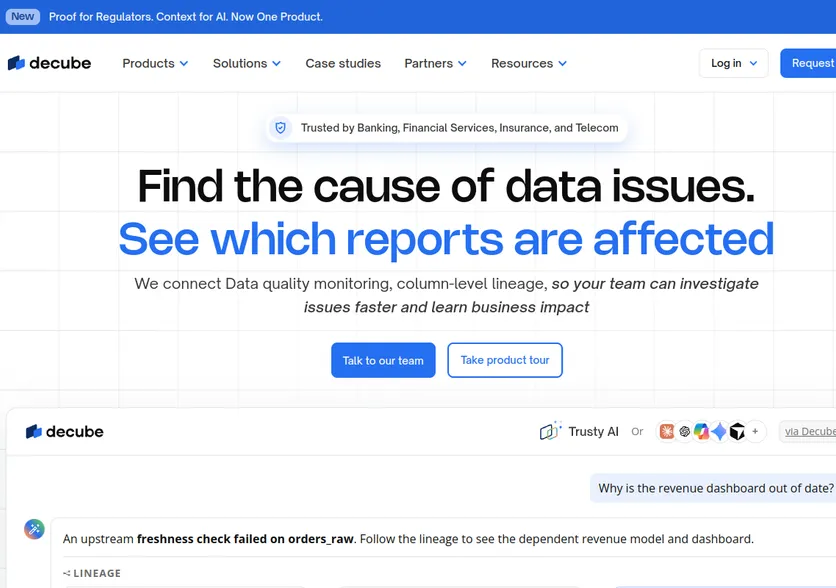
Decube is the data observability and catalog platform that monitors data quality beside the catalog, so ML teams catch bad data before it trains a model. This Decube entry plan costs twenty-one thousand dollars a year with data quality monitoring, lineage and a searchable catalog. A data team gets one platform for quality, catalog and governance.
What we like
- Data quality monitoring beside the catalog
- Lineage that traces any dataset to its source
- Governance and access control included
Watch out for
- Twenty-one thousand dollars a year is a real commitment
- Needs a data team to set up the monitors
How to try it
- Open the Decube site and book a demo
- Connect your warehouse and data sources
- Set up a quality monitor and check the catalog
6. data.world
Best for: Enterprise teams that want a knowledge graph catalog with business meaning
Paid tool Starting price: $90,000/year · Ninety thousand dollars a year for the Essentials plan, as published on the AWS Marketplace; the Individual plan is free
Free plan: Free Individual plan
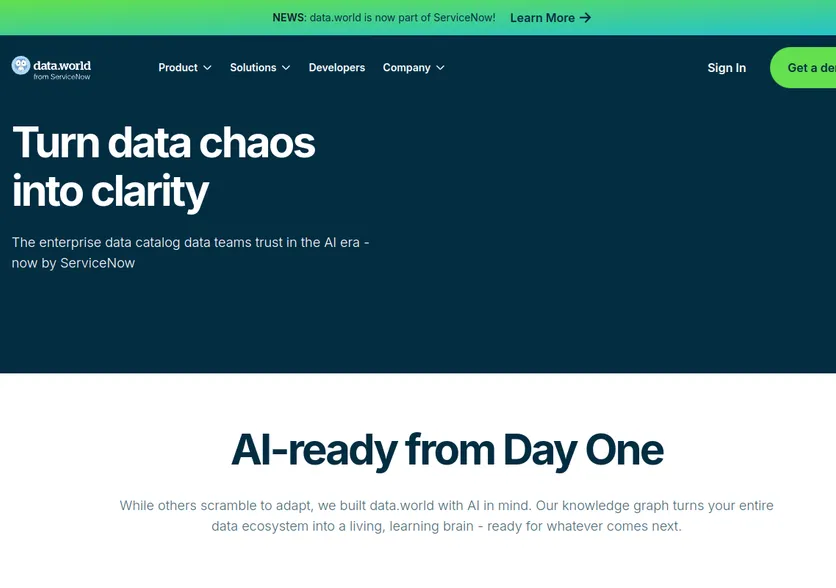
Data World is the data catalog platform built on a knowledge graph, giving ML teams a rich map of datasets, people and business terms. This Data World Essentials plan costs ninety thousand dollars a year with a knowledge graph catalog, governance and search. An enterprise team gets a catalog that understands business meaning, not just table names.
What we like
- Knowledge graph that links data to business terms
- Strong governance and access control
- Free Individual plan to test the concept
Watch out for
- Ninety thousand dollars a year is the highest price here
- Needs a dedicated team to model the graph
How to try it
- Open the data.world site and start the free Individual plan
- Load a dataset and explore the knowledge graph
- Book a demo to price the Essentials plan
7. Alation
Best for: Enterprise ML teams that want the most mature catalog in the market
Paid tool Starting price: $60,000/year · Sixty thousand dollars a year for a twelve-month subscription, as published on the AWS Marketplace; the vendor site quotes higher plans
Free plan: No free plan; demo available
Alation is the enterprise data catalog that started the category, with machine learning that suggests documentation and flags sensitive data. This Alation plan costs sixty thousand dollars a year for a twelve-month subscription with search, lineage and governance. An enterprise ML team gets the most mature catalog in the market, with a community of data stewards behind it.

What we like
- The most mature catalog in this comparison
- Machine learning that suggests documentation
- Strong community and stewardship features
Watch out for
- Sixty thousand dollars a year is a real commitment
- Implementation takes weeks, not days
How to try it
- Open the Alation site and book a demo
- Connect your warehouse and data sources
- Search the catalog and check the lineage view
Prices above were checked on each vendor’s own website on Nov 27, 2026 and can change — the vendor’s page is the final word. Vendor links are editorial: nobody paid to be listed or ranked here. Vendors who want a featured listing can see how it works on our Get listed page.
What data catalog software costs in 2026
Data catalog tools charge in two ways, per user a month or per year for the whole platform, and the difference decides the bill. Per-user pricing suits a small ML team, while a flat annual fee suits an enterprise that needs governance across the whole business. The cheapest plan here costs ninety-nine dollars a month, while the most expensive costs ninety thousand dollars a year.
Start with a trial on two tools and search for the same dataset in each one: the table that feeds your most important model. Check how fast the search finds it, whether the lineage shows where it came from, and whether the documentation answers a new hire's questions. Pick the tool whose catalog a data scientist actually opens before asking a colleague, because a catalog nobody searches is just a prettier spreadsheet.
Before you buy
- Check whether the catalog covers your warehouse, because a tool that cannot see your data is an empty shelf.
- Test the lineage view on a real model, because a catalog without lineage cannot prove where data came from.
- Ask how documentation is created, because a catalog that needs manual docs will go stale in a month.
- Confirm the user cap on the entry plan, because a four-user limit forces an upgrade fast.
- Check the export terms before you sign, because a catalog you cannot leave locks your metadata inside.
Official websites
Official websites of the products reviewed above. Features and prices were checked against these sites when this guide was written, and they can change, so confirm on the vendor site before you buy.
Frequently asked questions
Which data catalog software is best for machine learning teams in 2026?
dbt Cloud is the best overall pick at one hundred dollars per developer seat a month, with tested and documented data models in one workflow. Secoda is the best pick for fast documentation at ninety-nine dollars a month, with AI that writes the docs. Select Star is the best pick for discovery at two hundred and seventy dollars a month, with popularity scores.
How much does data catalog software cost?
Prices in this list run from ninety-nine dollars a month for Secoda to ninety thousand dollars a year for data.world, with most tools landing between one hundred and two hundred and seventy dollars a month. Per-user pricing suits small ML teams, while flat annual pricing suits enterprises that need governance across the business. Add extra users and higher plans before you compare totals.
What is a data catalog, and why do ML teams need one?
A data catalog is a searchable map of every dataset, table and column in a company, with documentation, lineage and ownership. ML teams need one because a model is only as good as its training data, and a catalog proves the data is trusted, current and legal to use. Without it, data scientists waste weeks hunting for data and risk training on the wrong table.
What is data lineage, and why does it matter for machine learning?
Data lineage shows where a dataset came from, which pipelines transformed it, and which models and dashboards use it. It matters for ML because a model that drifts needs a cause, and lineage traces the problem back to the source table in minutes. It also proves to auditors and regulators that the training data was handled properly.
Can a small ML team use data catalog software?
Yes, and Secoda at ninety-nine dollars a month and dbt Cloud with a free Developer plan are built for exactly that buyer. The enterprise suites in this market charge by quote and need a data team, but the tools here start with a trial and a catalog you build yourself. A team with a warehouse and a few models already has enough data to justify one searchable catalog.
Need everyday business help too? Try Toolsvine's free business tools right in your browser.
Browse Business Tools tools