On this page
Property managers run on data that lives in different systems: rent rolls in the property software, listings on the portals, and maintenance requests in email. Moving that data by hand eats hours every week and leaves rent and vacancy reports out of date. The eight tools below connect rent, listing and maintenance data automatically, with prices checked on the vendor site on November 27, 2026. Make is our first pick — the visual workflow builder that moves property data between systems without writing code.
How we researched this
We started with the integration tools property managers actually buy, then read each price on the vendor pricing page on November 27, 2026 and noted the free plan each one carries. We judged them for a manager that moves rent, listing and maintenance data between its property software and the rest of the stack without hiring a data engineer. We dropped Talend, Informatica, SnapLogic, Boomi, Workato, Jitterbit, Celigo, MuleSoft and Tray because none of them publishes a list price, so a buyer cannot compare them without a sales call.
Compare the tools
| Name | Best for | Starting price | Free plan | |
|---|---|---|---|---|
 Make | Property managers that want visual workflows for rent, listings and maintenance | $9/month | Free plan with 1,000 credits a month | Visit |
 Zapier | Property managers that need quick links between leasing and messaging apps | $19.99/month | Free plan with 100 tasks a month | Visit |
 n8n | Property managers with technical staff that want full control over automation | €20/month | Free self-hosted Community edition | Visit |
 Coupler.io | Property managers that report occupancy and arrears in spreadsheets | $24/month | Free plan with 1 account and 100 rows per run | Visit |
 Skyvia | Property managers that want cloud integration with nothing to install | $79/month | Free plan with 10,000 records a month | Visit |
 Portable | Property managers whose stack includes niche tools no other vendor covers | $500/month | No free plan; book a demo to start | Visit |
 Estuary | Property managers that need live portfolio data in the warehouse | $0.50/GB | Free Developer tier with 10 GB a month and 2 connectors | Visit |
 Fivetran | Property managers that want reliable warehouse syncs with no pipeline code | $500/month | Free plan with 500,000 MAR a month | Visit |
The data integration software for property managers, compared
1. Make
Best for: Property managers that want visual workflows for rent, listings and maintenance
Paid tool Starting price: $9/month · Nine dollars a month billed annually for the Core plan, or ten dollars and fifty-nine cents monthly, for ten thousand credits a month; Pro costs sixteen dollars and Teams costs twenty-nine dollars a month billed annually
Free plan: Free plan with 1,000 credits a month
Make draws the workflows that move rent rolls, listings and maintenance requests between a property manager's systems. This Make Core plan costs nine dollars a month billed annually, or ten dollars and fifty-nine cents monthly, for ten thousand credits a month. A manager that wants richer workflows than simple triggers gets a visual builder that handles branches and filters.

What we like
- Visual builder that shows the whole workflow at a glance
- Branches and filters for real property logic
- Cheapest paid plan in this comparison
Watch out for
- Credit costs rise when workflows check for new leases often
- Complex scenarios take longer to build than simple triggers
How to try it
- Open the Make site and start the free plan
- Draw a workflow from your property software to the finance tool
- Add a filter for vacant units, then switch the scenario on
2. Zapier
Best for: Property managers that need quick links between leasing and messaging apps
Paid tool Starting price: $19.99/month · Nineteen dollars and ninety-nine cents a month billed annually for the Starter plan, or twenty-nine dollars and ninety-nine cents monthly, for seven hundred and fifty tasks a month; Professional costs forty-nine dollars and Team costs sixty-nine dollars a month billed annually
Free plan: Free plan with 100 tasks a month
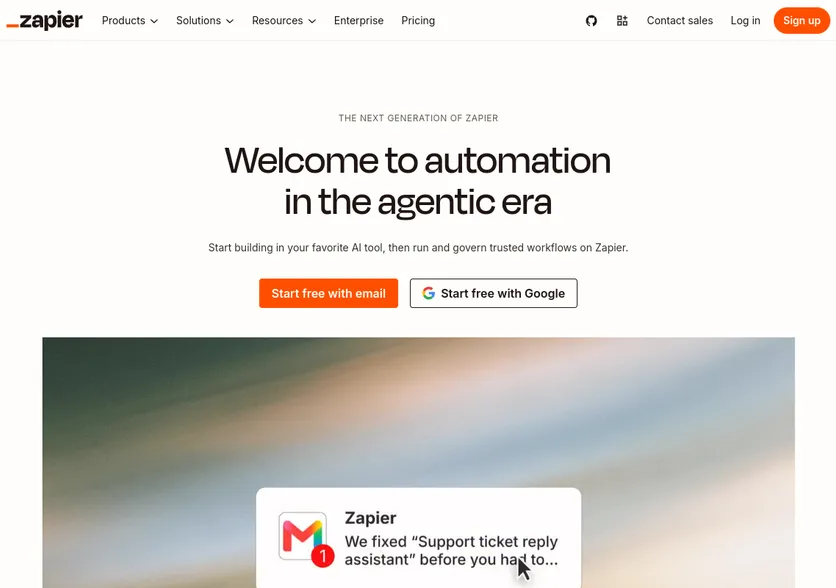
Zapier links a property management system to the tools the office already uses, so new leases and maintenance requests reach every system without retyping. This Zapier Starter plan costs nineteen dollars and ninety-nine cents a month billed annually, or twenty-nine dollars and ninety-nine cents monthly, for seven hundred and fifty tasks a month. A manager that needs quick links between leasing and messaging tools gets automation running in an afternoon without code.
What we like
- Thousands of app connections with no code
- Workflows that start running the same afternoon
- Free plan that covers light automation
Watch out for
- Task limits mean a busy leasing month can stop workflows mid-month
- It moves records between apps, it does not replace a warehouse
How to try it
- Open the Zapier site and start the free plan
- Build a workflow that copies new maintenance requests to your team chat
- Test the workflow on a few requests, then switch it on
3. n8n
Best for: Property managers with technical staff that want full control over automation
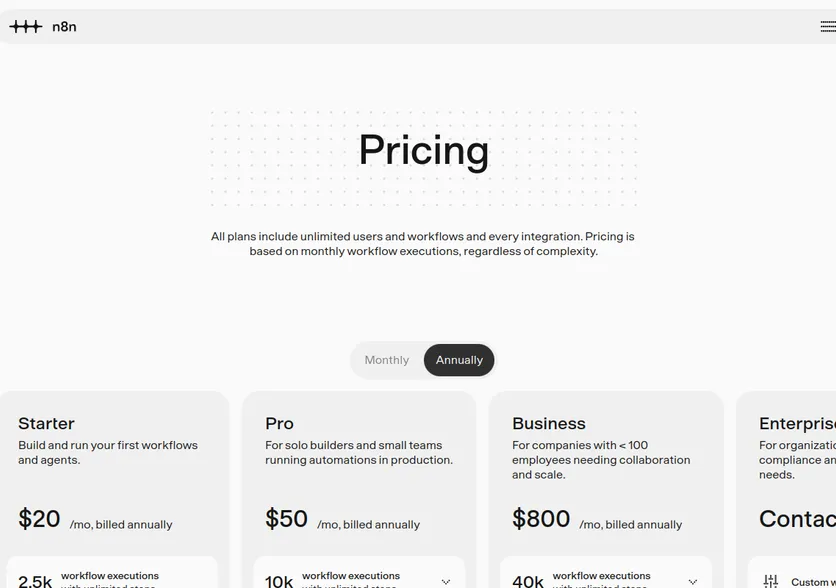
Paid tool Starting price: €20/month · Twenty euros a month billed annually for the Cloud Starter plan, or twenty-four euros monthly, for two thousand five hundred executions; Pro costs fifty euros and Business costs six hundred sixty-seven euros a month billed annually (eight hundred euros on monthly billing)
Free plan: Free self-hosted Community edition
n8n gives a property management team a self-hosted automation builder for leases, rent collection and maintenance workflows. This n8n Cloud Starter plan costs twenty euros a month billed annually, or twenty-four euros monthly, for two thousand five hundred executions. A manager with technical staff gets full control over its workflows and tenant data without a per-task meter on the self-hosted edition.
What we like
- Self-hosted edition with no per-task meter
- Full control over workflow logic and tenant data
- Active community that shares workflow templates
Watch out for
- Self-hosted setup needs someone technical to maintain it
- The cloud execution meter can surprise teams in a busy leasing month
How to try it
- Open the n8n site and try the free Community edition
- Build a workflow that alerts the team when a lease is due to renew
- Test the workflow on a few leases, then run it live
4. Coupler.io
Best for: Property managers that report occupancy and arrears in spreadsheets
Paid tool Starting price: $24/month · Twenty-four dollars a month billed annually for the Starter plan, or thirty-two dollars monthly, for three accounts with daily refresh; Active costs ninety-nine dollars and Pro costs one hundred and ninety-nine dollars a month billed annually
Free plan: Free plan with 1 account and 100 rows per run
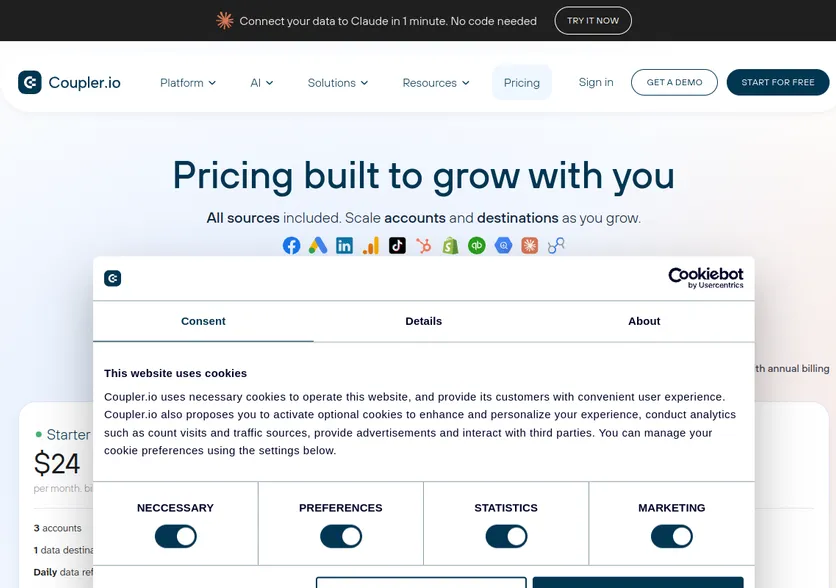
Coupler pulls rent roll and vacancy figures from a property system into spreadsheets and dashboards on a schedule. This Coupler Starter plan costs twenty-four dollars a month billed annually, or thirty-two dollars monthly, for three accounts with daily refresh. A manager that reports occupancy and arrears in spreadsheets gets fresh numbers every morning without manual exports.
What we like
- Fresh spreadsheet data every morning without exports
- Simple setup that a portfolio manager finishes in an hour
- Daily refresh that keeps occupancy reports current
Watch out for
- Starter refreshes daily only, so intraday numbers need a higher plan
- Three accounts on Starter may not cover a large portfolio
How to try it
- Open the Coupler site and start the free plan
- Connect your property system as a source
- Send the rent roll data to a spreadsheet and schedule a daily refresh
5. Skyvia
Best for: Property managers that want cloud integration with nothing to install
Paid tool Starting price: $79/month · Seventy-nine dollars a month billed annually for the Data Integration Basic plan, or ninety-nine dollars monthly, for five million records with daily runs; Standard costs one hundred and fifty-nine dollars and Professional costs three hundred and ninety-nine dollars a month billed annually
Free plan: Free plan with 10,000 records a month
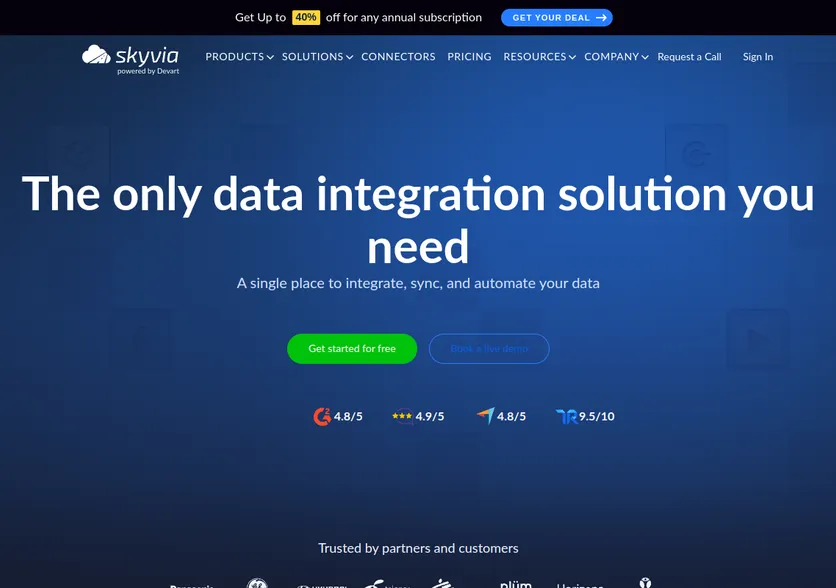
Skyvia connects a property management system to the warehouse from a browser, with no agent installed on office machines. This Skyvia Data Integration Basic plan costs seventy-nine dollars a month billed annually, or ninety-nine dollars monthly, for five million records with daily runs. A manager that wants integration without touching on-site computers gets a cloud tool that starts from a browser tab.
What we like
- Browser-based setup with nothing to install
- Free plan that covers small monthly volumes
- Daily runs that keep reporting data current
Watch out for
- Basic runs daily only, so same-day data needs a higher plan
- Record limits mean a growing portfolio can force an upgrade
How to try it
- Open the Skyvia site and start the free plan
- Connect your cloud property system as a source
- Build the first package and schedule a daily run
6. Portable
Best for: Property managers whose stack includes niche tools no other vendor covers
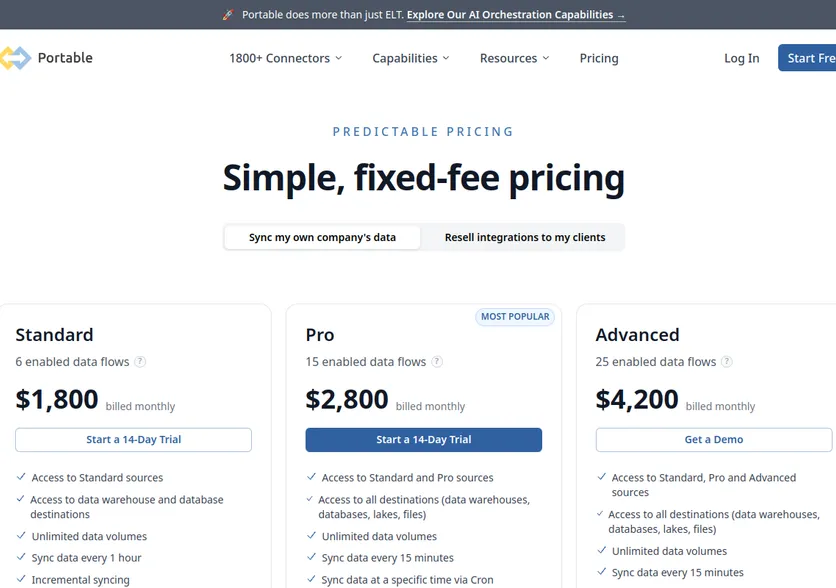
Paid tool Starting price: $500/month · Five hundred dollars a month for the Basic plan with one data flow and twenty-four hour syncs; Standard costs one thousand eight hundred dollars a month for six flows with hourly syncs, Pro costs two thousand eight hundred dollars and Advanced costs four thousand two hundred dollars a month billed annually
Free plan: No free plan; book a demo to start
Portable builds long-tail connectors for the niche property tools managers rely on, with a team that maintains each one. This Portable Basic plan costs five hundred dollars a month for one data flow with twenty-four hour syncs, while Standard costs one thousand eight hundred dollars a month. A manager whose stack includes an unusual leasing system gets a connector maintained by the vendor instead of an internal script.
What we like
- Long-tail connectors for niche property tools
- Vendor-maintained connectors, so updates are not your job
- Simple per-flow pricing that is easy to budget
Watch out for
- Basic covers only one data flow, so each extra system adds cost
- Twenty-four hour syncs on Basic leave reports a day behind
How to try it
- Open the Portable site and book a demo
- List the niche systems your portfolio needs connected
- Start with one data flow and check the sync quality
7. Estuary
Best for: Property managers that need live portfolio data in the warehouse
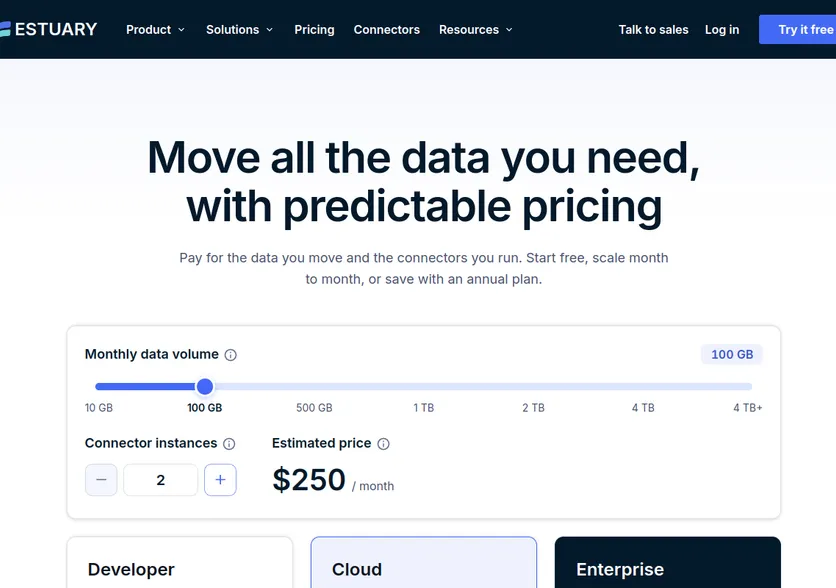
Paid tool Starting price: $0.50/GB · Fifty cents per gigabyte plus one hundred dollars a month per connector instance for the first six connectors, then fifty dollars after the sixth; the Developer tier is free with ten gigabytes a month and two connectors, and a thirty-day trial is included
Free plan: Free Developer tier with 10 GB a month and 2 connectors
Estuary streams property data into the warehouse in real time, so occupancy dashboards reflect the latest lease state. This Estuary Cloud plan costs fifty cents per gigabyte plus one hundred dollars a month per connector instance, with a free Developer tier covering ten gigabytes a month and two connectors. A manager that needs fresh data for live portfolio tracking gets streaming syncs without a fixed monthly fee for volume.
What we like
- Real-time streaming instead of daily batch loads
- Usage pricing that fits uneven monthly volumes
- Free Developer tier for testing live syncs
Watch out for
- Per-connector fees add up once you stream many sources
- Streaming setup takes more care than a simple scheduled sync
How to try it
- Open the Estuary site and start the free Developer tier
- Capture your property database as a live stream
- Materialize the stream into your warehouse and check the lag
8. Fivetran
Best for: Property managers that want reliable warehouse syncs with no pipeline code
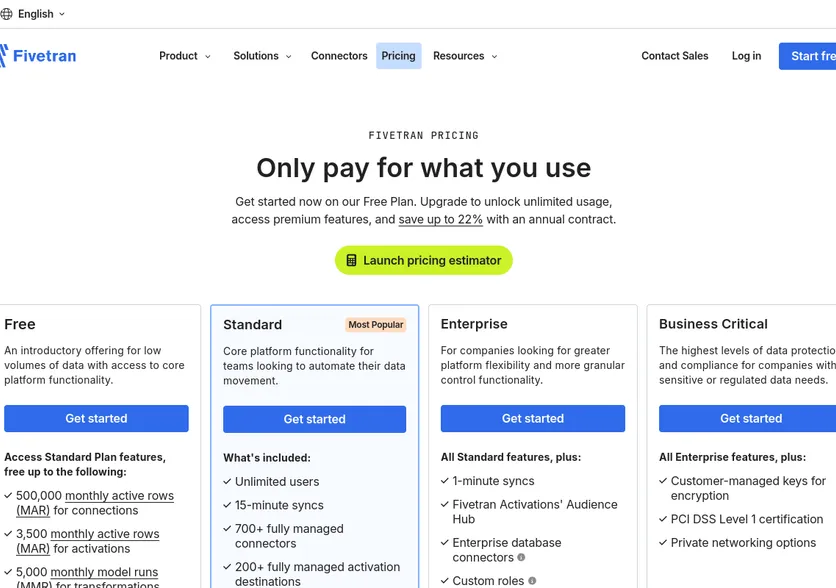
Paid tool Starting price: $500/month · Five hundred dollars a month for one million monthly active rows on the Standard plan, with a five hundred dollar base per connection; annual contracts start at twelve thousand dollars
Free plan: Free plan with 500,000 MAR a month
Fivetran pulls rent, finance and operations data from property systems into the warehouse on a schedule the team sets once. This Fivetran Standard plan costs five hundred dollars a month for one million monthly active rows, with a five hundred dollar base per connection and annual contracts from twelve thousand dollars. A manager that already runs a warehouse gets reliable syncs and schema handling without building pipelines by hand.
What we like
- Hundreds of maintained connectors for common systems
- Automatic schema handling when source fields change
- Reliable scheduled syncs with clear run history
Watch out for
- The row-based meter grows fast once you sync large tables
- Annual contracts start high, so small managers should test the free plan first
How to try it
- Open the Fivetran site and start with the free plan
- Connect your property software and finance system first
- Set the sync schedule and check the first load in the warehouse
Prices above were checked on each vendor’s own website on Nov 27, 2026 and can change — the vendor’s page is the final word. Vendor links are editorial: nobody paid to be listed or ranked here. Vendors who want a featured listing can see how it works on our Get listed page.
What integration software costs a property manager
Property integration pricing follows the unit count and the sync volume, not the headcount, so a manager should count its monthly records before it compares plans. The cheapest paid plan here costs nine dollars a month, while the most expensive costs five hundred dollars a month, and the gap comes from volume limits and connector counts. A manager with a few hundred units fits the low end, while a portfolio syncing thousands of units across many systems needs a plan priced for that volume.
Start with a trial on two tools and connect the three systems that matter most: the property software, the listing portals and the finance tool. Run the syncs for two weeks, then check whether every lease and payment arrived and how long a full refresh takes. Pick the tool whose syncs finish on time and whose connector list covers the next system you plan to add, because a cheap plan that misses a connector costs more than the plan above it.
Before you buy
- Count the units and records you sync each month, because a plan priced by volume punishes a growing portfolio.
- Check that your property software has a connector, because one missing link means manual retyping at the office.
- Ask how the tool handles lease changes, because a renewed lease can break a sync overnight.
- Confirm the sync speed your reporting needs, because daily syncs leave arrears a day behind the office.
- Test the free plan on real rent roll data first, because a trial with sample rows hides the problems your data carries.
Official websites
Official websites of the products reviewed above. Features and prices were checked against these sites when this guide was written, and they can change, so confirm on the vendor site before you buy.
Frequently asked questions
Which data integration software is best for property managers in 2026?
Make is the best overall pick at nine dollars a month, with a visual workflow builder that handles rent, listings and maintenance logic. Zapier is the best pick for quick links at nineteen dollars and ninety-nine cents a month, connecting leasing and messaging tools with no code. n8n is the best pick for control, with a free self-hosted edition that keeps tenant data on your own servers.
How much does data integration software cost for a property manager?
Prices in this list run from nine dollars a month for Make to five hundred dollars a month for Fivetran and Portable, with most tools landing between twenty and seventy-nine dollars a month. Credit-based and row-based plans charge by volume, so a manager should count its monthly records before comparing headline prices. Add connector fees and storage costs to the subscription before you compare totals.
Do property managers need real-time sync, or is daily enough?
Daily syncs suit most property reporting, because rent rolls and vacancy figures are reviewed once a day. Real-time syncs matter for maintenance, where a new request should reach the vendor within minutes. A manager should buy real-time syncs only for the handful of workflows where the delay changes a tenant experience, and run the rest on a daily schedule.
Can a small property manager use these tools without an IT team?
Yes, and most of the tools here are built for that buyer. Zapier and Make need no code at all, and Coupler sends data to spreadsheets with a setup a portfolio manager finishes in an hour. A small manager should pick a tool with a free plan, connect two systems first, and only add the warehouse once the first syncs run cleanly.
What is the difference between an integration tool and property management software?
Property management software runs the portfolio: leases, rent collection and maintenance. An integration tool moves data between that software and the other systems the office runs, such as finance tools and listing portals. A manager that only needs one system should buy the property software, while a manager with several systems needs an integration tool to stop retyping the same record.
Need everyday business help too? Try Toolsvine's free business tools right in your browser.
Browse Business Tools tools