On this page
A store database earns its keep on the busiest day of the year, when the checkout must stay fast while orders pour in. The eight tools below range from five dollars a month to four hundred dollars a month, and every price was checked on the vendor site on November 26, 2026. Six of them offer a free tier, so you can build a store with real products before you spend anything. PlanetScale is our first pick — serverless MySQL that stays fast under sale-day traffic.
How we researched this
We started with the database tools ecommerce teams actually buy, then read each price on the vendor pricing page on November 26, 2026 and noted the free plan or trial each one carries. We judged them for a store that needs fast checkouts, a flexible catalog and survival on sale days, and we kept only tools with a published price. We added Redis Cloud, because a cache layer is the cheapest way to make any store feel instant.
Compare the tools
| Name | Best for | Starting price | Free plan | |
|---|---|---|---|---|
 PlanetScale | Stores that need MySQL to stay fast during a sale without downtime | $29/month | Free Hobby plan, 1 database and 5 GB | Visit |
 Supabase | Stores that want Postgres plus auth and storage in one backend | $25/month | Free tier, 500 MB and 2 projects | Visit |
 Neon | Stores that want serverless Postgres with a copy for every feature | $15/month | Free tier included | Visit |
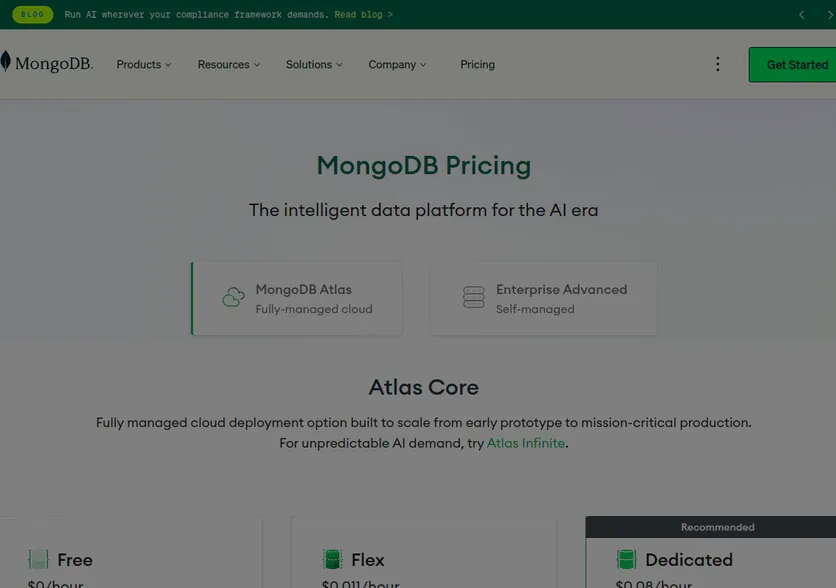
 MongoDB Atlas | Stores with flexible catalogs that change shape every season | $56.94/month | Free M0 cluster | Visit |
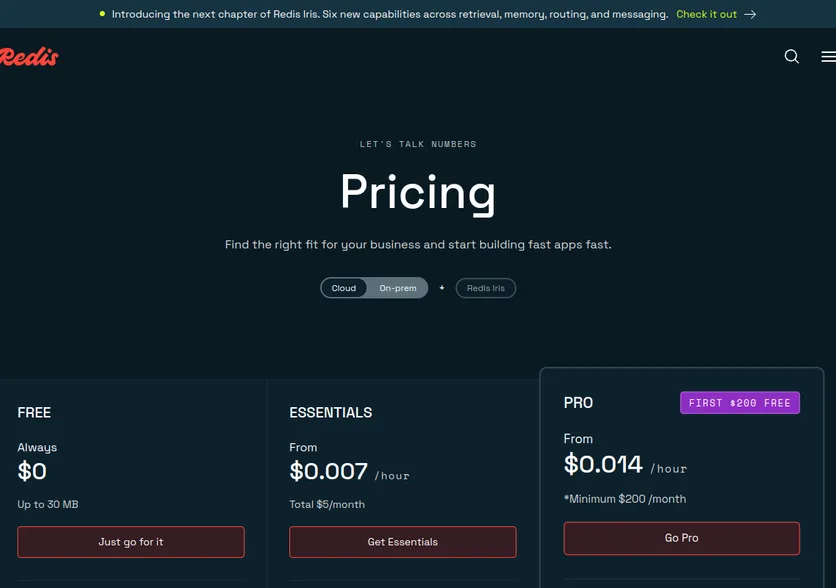
 Redis Cloud | Stores that need fast carts, sessions and product caching | $5/month | Free 30 MB tier | Visit |
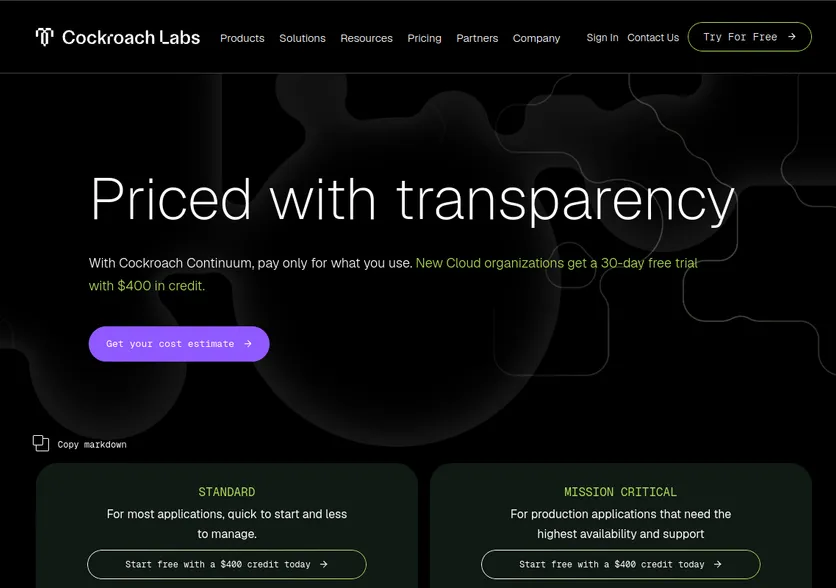
 CockroachDB | Global stores that need strong consistency across regions | $0.092 per vCPU-hour | No free plan; 30-day trial with $400 credit | Visit |
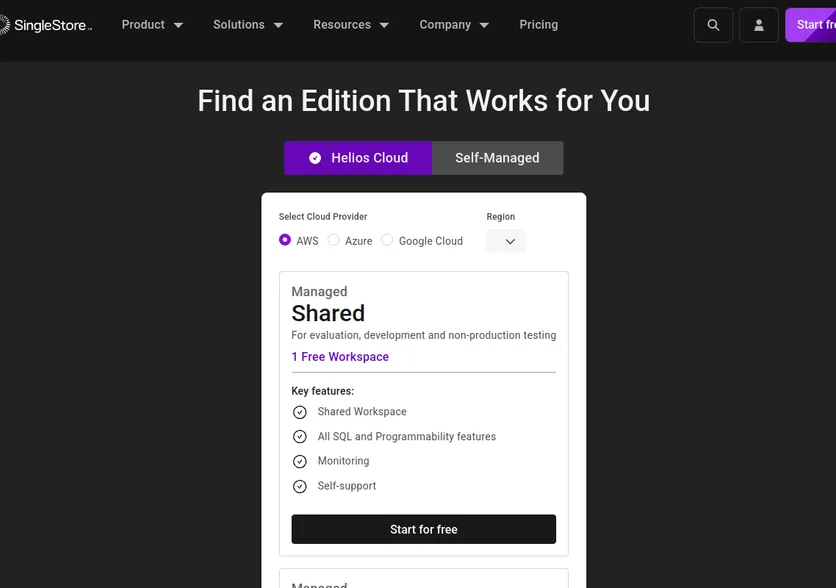
 SingleStore | Stores that need real-time analytics on live order data | $0.99/hour | Free Shared workspace for non-production use | Visit |
 TiDB Cloud | Large stores that need MySQL-compatible scale with analytics built in | $400/month | Free Starter tier within limits | Visit |
The database software for ecommerce websites, compared
1. PlanetScale
Best for: Stores that need MySQL to stay fast during a sale without downtime
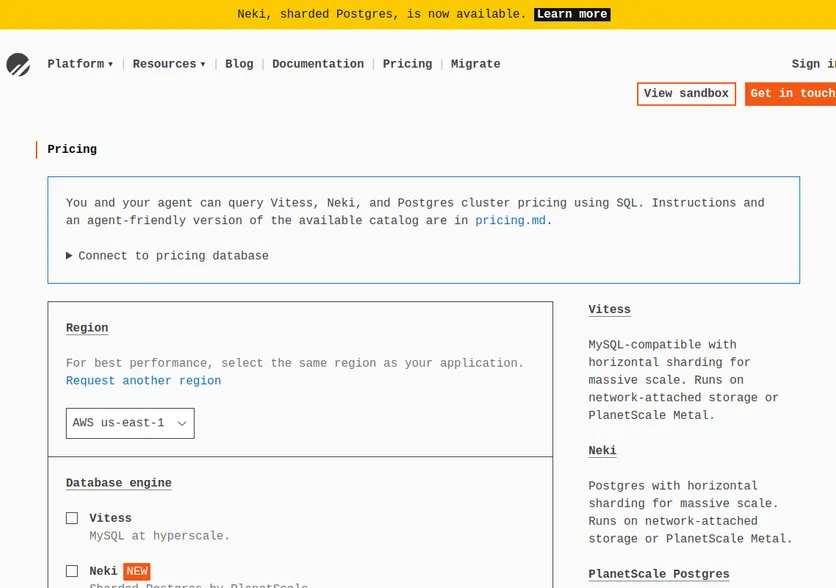
Paid tool Starting price: $29/month · MySQL Scaler plan, $29 a month for 1 production database; Team $39 a user a month; Hobby free
Free plan: Free Hobby plan, 1 database and 5 GB
A store database earns its keep on the busiest day of the year, and PlanetScale keeps MySQL fast with serverless scaling and schema changes that never lock a table. This PlanetScale Scaler plan costs twenty-nine dollars a month for one production database with branching and automated backups. A store that deploys new features often will like the safety, because a bad migration can be reverted without taking the checkout offline.
What we like
- Stays fast under sale-day traffic
- Schema changes never lock a table
- Automated backups included
Watch out for
- One production database on the entry plan
- Postgres offering starts separately at five dollars a month
How to try it
- Open the PlanetScale pricing page and claim the free plan
- Create a database and load your product catalog
- Open a branch to test a schema change safely
2. Supabase
Best for: Stores that want Postgres plus auth and storage in one backend
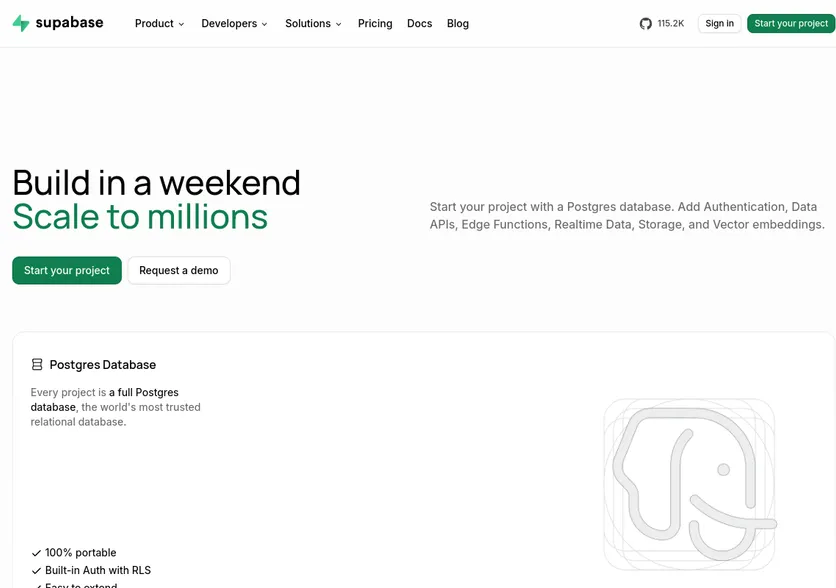
Paid tool Starting price: $25/month · Pro plan, from $25 a month per organisation; Team from $599 a month; free tier included
Free plan: Free tier, 500 MB and 2 projects
A small store needs a backend that covers more than tables, and Supabase pairs managed Postgres with auth, storage and realtime so a shop can launch without extra services. This Supabase Pro plan starts at twenty-five dollars a month per organisation and includes eight gigabytes of disk, two hundred and fifty gigabytes of egress and one hundred thousand monthly active users. A team building a storefront will like the speed, because customer accounts and product images arrive already wired to the database.
What we like
- Auth and storage built into the backend
- Open source, self-hosting stays an option
- Generous free tier for starting a store
Watch out for
- Free projects pause after a week idle
- Egress overage is billed on top
How to try it
- Open the Supabase pricing page and claim the free plan
- Create a project and add products and orders tables
- Turn on auth so customers can sign in and check out
3. Neon
Best for: Stores that want serverless Postgres with a copy for every feature
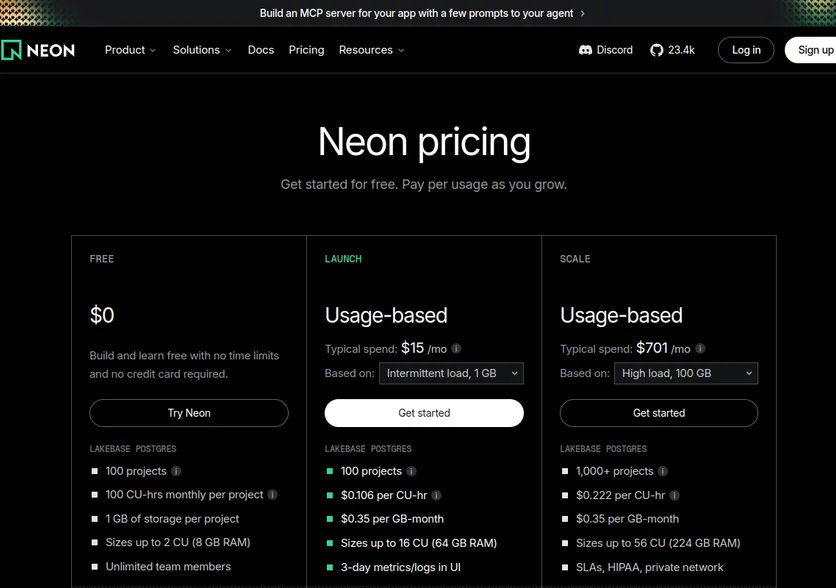
Paid tool Starting price: $15/month · Launch plan, usage-based with a typical spend of $15 a month ($0.106 per CU-hour, $0.35 per GB-month); Scale typical $701 a month; free tier included
Free plan: Free tier included
A storefront changes constantly, and Neon lets a team test each change against a branched copy of the live database in seconds. This Neon Launch plan is usage-based, with a typical spend of fifteen dollars a month. A team that ships new checkout features weekly will like the branching, because every pull request gets its own database copy with real data.
What we like
- Branching for every feature and pull request
- Scales to zero when idle, saving money
- Instant point-in-time restore
Watch out for
- Launch is usage-based, so the bill varies with compute and storage
- A database that never idles costs more than the typical spend
How to try it
- Open the Neon pricing page and claim the free tier
- Create a Postgres database and load your catalog
- Branch it for a new feature and test the checkout
4. MongoDB Atlas
Best for: Stores with flexible catalogs that change shape every season
Paid tool Starting price: $56.94/month · Dedicated M10 cluster, listed at just under $57 a month; storage, backups and transfer billed on top; Flex from $8 a month; M0 free
Free plan: Free M0 cluster
A catalog that changes every season needs a database that changes with it, and MongoDB Atlas stores products as flexible documents that gain new fields without a migration. This MongoDB Atlas Dedicated M10 cluster costs just under fifty-seven dollars a month for two gigabytes of RAM, two virtual CPUs and ten to one hundred and twenty-eight gigabytes of storage. A store with varied products will like the document model, because a shoe and a sofa can live in the same collection with different fields.
What we like
- Flexible documents fit varied catalogs
- Runs on every major cloud
- Free cluster covers real testing
Watch out for
- Real monthly bills run higher with storage and backups
- Document model suits some workloads poorly
How to try it
- Open the MongoDB Atlas pricing page and claim the free cluster
- Create an M10 dedicated cluster in your region
- Load your catalog as documents and test a search
5. Redis Cloud
Best for: Stores that need fast carts, sessions and product caching
Paid tool Starting price: $5/month · Essentials plan, from $5 a month for 250 MB; Pro from $200 a month minimum; free 30 MB tier
Free plan: Free 30 MB tier
Redis Cloud is the cache layer that makes a store feel instant, holding carts, sessions and hot product data in memory so the main database never slows down. This Redis Cloud Essentials plan starts at five dollars a month for two hundred and fifty megabytes and covers the core in-memory database. A store with slow product pages will like the speed, because cached pages and sessions load in milliseconds instead of seconds.
What we like
- Cheapest paid plan in this comparison
- Makes carts and sessions feel instant
- Free tier covers real testing
Watch out for
- Entry plan caps at two hundred and fifty megabytes
- Pro plan starts at two hundred dollars a month
How to try it
- Open the Redis pricing page and claim the free tier
- Create a database and connect your store
- Cache your hottest product pages and measure the speed
6. CockroachDB
Best for: Global stores that need strong consistency across regions
Paid tool Starting price: $0.092 per vCPU-hour · Standard plan, about $203 a month for a 2-vCPU cluster with 100 GB per the vendor example; Mission Critical $0.162 per vCPU-hour; storage billed on top
Free plan: No free plan; 30-day trial with $400 credit
A store that sells worldwide needs orders to stay consistent everywhere, and CockroachDB spreads data across regions while keeping strong consistency. This CockroachDB Standard plan costs about nine cents per virtual CPU-hour, which works out to about two hundred and three dollars a month for a two-CPU cluster with one hundred gigabytes, per the vendor example. A global store will like the resilience, because a whole region can fail without the checkout going down.
What we like
- Strong consistency across regions
- Survives a whole region failing
- Postgres-compatible SQL
Watch out for
- No free plan for new organisations
- Costs climb fast with more CPUs
How to try it
- Open the CockroachDB pricing page and start the trial
- Create a cluster across your main regions
- Test an order placed from each region
7. SingleStore
Best for: Stores that need real-time analytics on live order data
Paid tool Starting price: $0.99/hour · Helios Standard plan, from $0.99 an hour for the smallest workspace; Enterprise $1.49 an hour; storage billed per GB on top; $500 in free credits to start
Free plan: Free Shared workspace for non-production use
A store owner wants to see sales as they happen, and SingleStore runs transactions and analytics on the same database so dashboards reflect live orders. This SingleStore Helios Standard plan starts at ninety-nine cents an hour for the smallest workspace with two virtual CPUs and sixteen gigabytes of memory. A team that runs flash sales will like the speed, because the dashboard shows the sale as it happens instead of the next morning.
What we like
- Live dashboards on real order data
- Very fast analytical queries
- Free workspace for trying it out
Watch out for
- Hourly billing adds up around the clock
- Smaller community than Postgres or MySQL
How to try it
- Open the SingleStore pricing page and claim the free workspace
- Create a Standard workspace and load orders
- Build a dashboard that updates as orders arrive
8. TiDB Cloud
Best for: Large stores that need MySQL-compatible scale with analytics built in
Paid tool Starting price: $400/month · Essential plan, from $400 a month; Premium from $1,800 and Dedicated from $1,376 a month; Starter free within limits
Free plan: Free Starter tier within limits
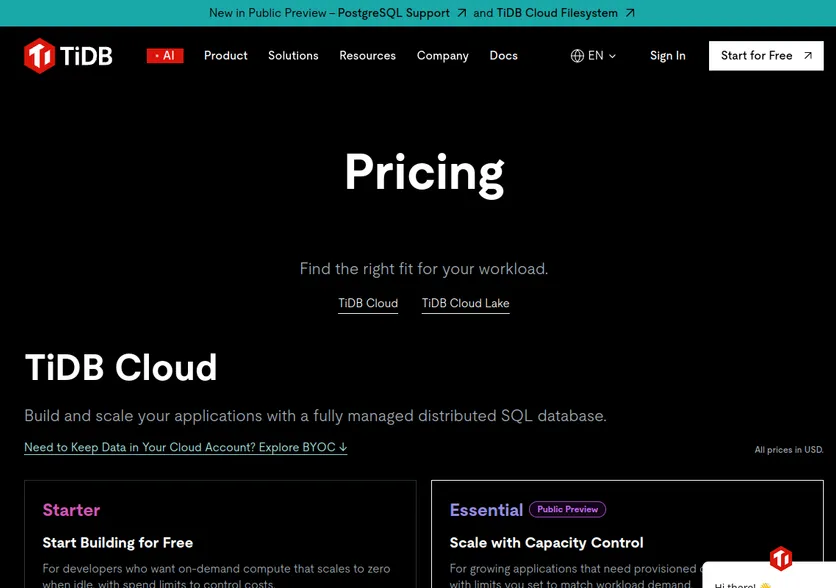
A large store outgrows a single MySQL server eventually, and TiDB Cloud scales that same MySQL workload across a distributed cluster without rewriting queries. This TiDB Cloud Essential plan starts at four hundred dollars a month and covers the core serverless cluster with row and columnar storage. A growing store will like the analytics, because sales reports run against live data without moving it to a warehouse.
What we like
- MySQL-compatible, no query rewrites
- Scales beyond one server
- Analytics on live data
Watch out for
- Highest entry price in this comparison
- Essential plan is still in public preview
How to try it
- Open the TiDB Cloud pricing page and claim the free tier
- Create a cluster and import your MySQL catalog
- Run a sales report against the columnar store
Prices above were checked on each vendor’s own website on Nov 26, 2026 and can change — the vendor’s page is the final word. Vendor links are editorial: nobody paid to be listed or ranked here. Vendors who want a featured listing can see how it works on our Get listed page.
What database software costs for ecommerce in 2026
Store database pricing splits in two, because some tools charge a flat monthly fee and others charge by the hour or by usage. PlanetScale costs twenty-nine dollars a month flat and Neon is usage-based with a typical spend of fifteen dollars a month, while CockroachDB charges about nine cents per virtual CPU-hour and SingleStore ninety-nine cents an hour. The headline plan each vendor shows on its own pricing page is the number in the table above, checked on November 26, 2026.
Start with the free tier on two tools and load your real catalog into each one, including the biggest product images and the slowest search. Compare checkout speed at peak load, how the bill grows with storage, and whether a cache layer helps. Pick the database that stays fast when traffic spikes, because a slow checkout on sale day costs more than any subscription.
Before you buy
- Check the peak-traffic story, because a store database must survive a sale day without slowing down.
- Count the included storage and transfer, because product images and traffic can push bills up fast.
- Confirm the caching story, because a fast cache layer matters more than raw database speed at checkout.
- Test with a real catalog, because demo data hides the slow queries a big store actually runs.
- Compare annual and monthly billing, because some tools here cut the price by about a fifth on annual plans.
Official websites
Official websites of the products reviewed above. Features and prices were checked against these sites when this guide was written, and they can change, so confirm on the vendor site before you buy.
Frequently asked questions
Which database software is best for ecommerce websites in 2026?
PlanetScale is the best overall pick for an ecommerce site, because its serverless MySQL stays fast under sale-day traffic with schema changes that never lock a table, from twenty-nine dollars a month. Supabase is the best all-in-one pick, pairing Postgres with auth and storage from twenty-five dollars a month. MongoDB Atlas is the best pick for a flexible catalog, with documents that change shape without migrations from just under fifty-seven dollars a month.
How much does database software cost for an ecommerce site?
Entry prices here run from five dollars a month for Redis Cloud to four hundred dollars a month for TiDB Cloud, with most tools between nineteen and fifty-seven dollars a month. Usage-based tools add charges for storage, compute and transfer, so the headline price is only the start. Always estimate your catalog size and peak traffic first, because a busy store can cost several times the entry price.
Is there free database software for ecommerce?
PlanetScale, Supabase, Neon, MongoDB Atlas, Redis Cloud and TiDB Cloud all offer a free tier, and SingleStore offers a free shared workspace. CockroachDB offers no free plan for new organisations, only a thirty-day trial with four hundred dollars of credit. A free tier is enough to build a store and test it with real products before you pay.
How do I choose a database for my online store?
Start with your catalog, because a store with varied products suits a flexible document database while a store with a fixed catalog suits MySQL or Postgres. Then check the peak-traffic story, since a database that slows during a sale loses orders. Run your real catalog and your slowest queries in a trial, and pick the database that stays fast when traffic spikes.
Should I add a cache layer to my store?
Yes, Redis Cloud is the cache layer most stores add, because carts, sessions and hot product pages load from memory in milliseconds. It starts at five dollars a month with a free thirty-megabyte tier. Pair it with any database in this list, and the storefront feels instant even when the main database is busy.
Need everyday business help too? Try Toolsvine's free business tools right in your browser.
Browse Business Tools tools