On this page
A mid-size firm runs dozens of depositions at once, and a record that lives on one lawyer's laptop is a record the firm cannot defend. The eight tools below cover case management, transcripts, exhibits and remote depositions, with prices from five dollars a video hour to one hundred and thirty dollars a user a month. Every price was checked on the vendor site on November 27, 2026. MyCase is our first pick — the practice platform that runs cases, clients and billing from one login for fifty dollars a user a month.
How we researched this
We started with the deposition tools mid-size firms actually use, then read each price on the vendor pricing page on November 27, 2026 and noted the trial each plan carries. We judged them for a firm that runs dozens of depositions at once and needs every lawyer working from the same file, and checked transcript sync, exhibit handling and remote deposition support. We dropped Prevail, Veritext, Esquire, Planet Depos, Steno and CaseFleet because none of them publishes a list price, so a buyer cannot compare them without a sales call.
Compare the tools
| Name | Best for | Starting price | Free plan | |
|---|---|---|---|---|
 Clio | Mid-size firms that want every lawyer working from the same file | $49/user/month | No free plan; 7-day free trial | Visit |
 MyCase | Mid-size firms that want cases, clients and billing from one login | $50/user/month | No free plan; 10-day free trial | Visit |
| TranscriptPad | Mid-size firms that give every litigator a transcript tool on an iPad | $50/month | No free plan; 7-day free trial | Visit |
| AgileLaw | Mid-size firms that take depositions every week and want exhibits in the session | $200/month | Free Starter plan (pay per session); 14-day free trial on paid plans | Visit |
| DepoFlow | Mid-size firms that play deposition clips in court and need video synced to text | $5/video hour | Free viewing plan; $10 in free sync credits | Visit |
| LiveLitigation | Mid-size firms that want one tool for the whole deposition session | $399/year | No free plan; demo available | Visit |
| eDepoze | Mid-size firms that want exhibits organized without a subscription | $50 one-time | Free plan available; 30-day free trial | Visit |
| ExhibitSuite | Mid-size firms that lose exhibits in shared folders and want one place for them | $25/month | No free plan; demo available | Visit |
The deposition management software for mid-size law firms, compared
1. Clio
Best for: Mid-size firms that want every lawyer working from the same file
Paid tool Starting price: $49/user/month · Forty-nine dollars per user per month billed annually for the Manage Starter plan; higher tiers are quoted by the vendor
Free plan: No free plan; 7-day free trial
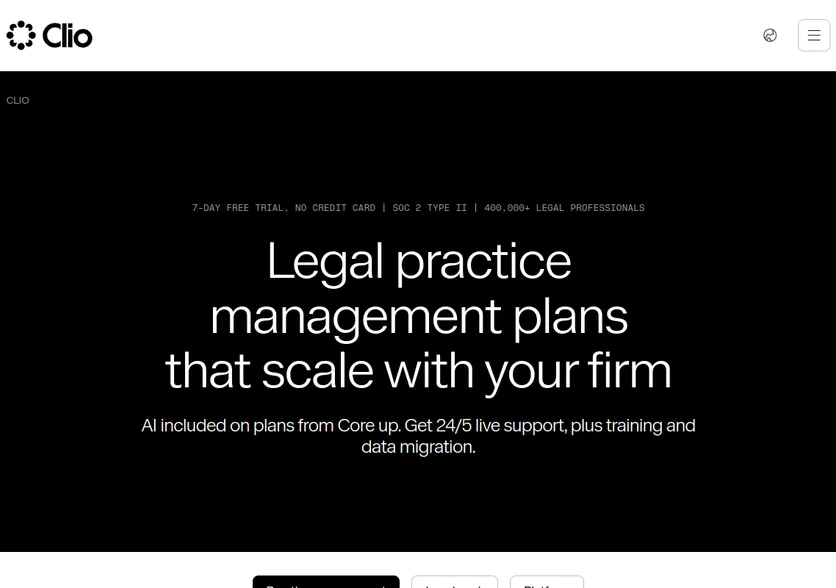
Clio is the case platform a mid-size firm buys to give every lawyer the same file, with matters, documents, billing and the deposition record in one place. This Clio Manage Starter plan costs forty-nine dollars per user per month billed annually, with higher tiers quoted by the vendor. A firm that juggles dozens of cases at once gets one system for the whole file, with integrations for the tools it already uses.
What we like
- One system for matters, documents and billing
- Large integration library for the tools firms already use
- Published Starter price with a seven-day trial
Watch out for
- Higher tiers are quoted, not published
- Deposition-specific tools are integrations, not built in
How to try it
- Open the Clio site and start the 7-day free trial
- Set up a matter and load the deposition record into it
- Test document management and billing with a real case
2. MyCase
Best for: Mid-size firms that want cases, clients and billing from one login
Paid tool Starting price: $50/user/month · Fifty dollars per user per month billed annually for the Basic plan; Pro costs one hundred dollars and Advanced costs one hundred and thirty dollars per user per month billed annually
Free plan: No free plan; 10-day free trial
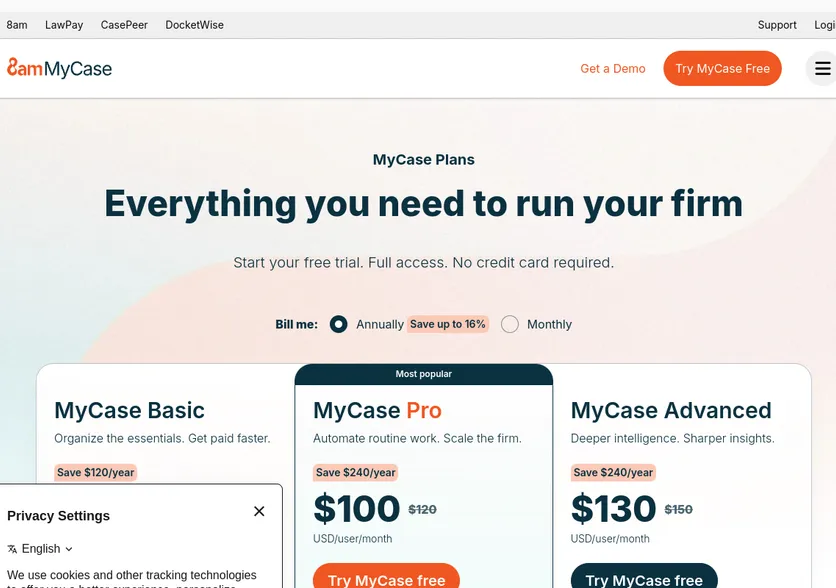
MyCase is the practice platform a mid-size firm buys to run cases, clients and billing from one login, with a published price and a ten-day trial. This MyCase Basic plan costs fifty dollars per user per month billed annually, with Pro at one hundred dollars and Advanced at one hundred and thirty dollars. A firm that wants client messaging, documents and billing in one place gets all three without a separate tool.
What we like
- Cases, clients, documents and billing in one login
- Published prices for all three tiers
- Client portal that keeps communication in one place
Watch out for
- Deposition tools are integrations, not built into the core plan
- The Basic plan lacks some advanced billing features
How to try it
- Open the MyCase site and start the 10-day free trial
- Set up a case and invite a client to the portal
- Test billing and document management with a real matter
3. TranscriptPad
Best for: Mid-size firms that give every litigator a transcript tool on an iPad
Paid tool Starting price: $50/month · Fifty dollars a month billed yearly for the LIT SUITE, which includes TranscriptPad, TrialPad and the rest of the suite; a seven-day trial is available
Free plan: No free plan; 7-day free trial
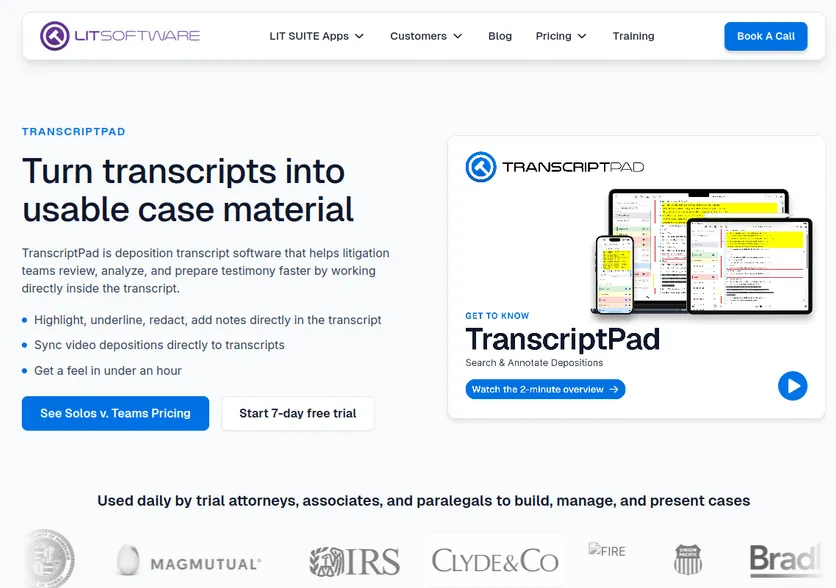
TranscriptPad is the transcript tool a mid-size firm gives every litigator on an iPad, with search, highlighting and issue coding built for the record. This TranscriptPad LIT SUITE costs fifty dollars a month billed yearly and includes TranscriptPad, TrialPad and the rest of the suite. A lawyer who reads transcripts every day gets a tool made for the deposition record, with a seven-day trial to test it.
What we like
- Built for the deposition record, not adapted from a generic reader
- Search, highlighting and issue coding in one tool
- LIT SUITE includes TrialPad and the rest of the suite
Watch out for
- Apple devices only, so Windows teams need another tool
- The full suite price is per month billed yearly, not monthly
How to try it
- Open the LIT Software site and start the 7-day free trial
- Load a deposition transcript and test search and highlighting
- Try issue coding on a real case before the trial ends
4. AgileLaw
Best for: Mid-size firms that take depositions every week and want exhibits in the session
Paid tool Starting price: $200/month · Two hundred dollars a month for the Essentials plan with five host sessions; the Starter plan is pay per use at one hundred and ninety-five dollars per host session and Advantage costs five hundred dollars a month
Free plan: Free Starter plan (pay per session); 14-day free trial on paid plans
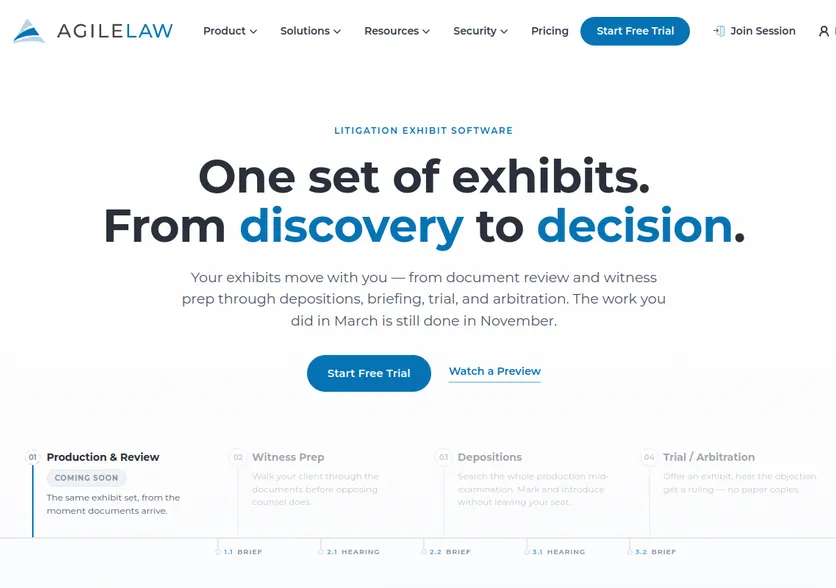
AgileLaw is the deposition platform a mid-size firm buys to run remote depositions at scale, with video, exhibits and transcript sync in one session. This AgileLaw Essentials plan costs two hundred dollars a month for five host sessions, with a pay-per-use Starter plan at one hundred and ninety-five dollars per host session. A firm that takes depositions every week gets the exhibits and the transcript in the same session.
What we like
- Video, exhibits and transcript sync in one session
- Free Starter plan with pay-per-use sessions
- Built for depositions, not adapted from a meeting tool
Watch out for
- Only five host sessions are included in the Essentials plan
- Per-session pricing adds up fast for a busy deposition practice
How to try it
- Open the AgileLaw site and start the 14-day free trial
- Host a test deposition and share an exhibit in the session
- Check the transcript sync and the recording before going live
5. DepoFlow
Best for: Mid-size firms that play deposition clips in court and need video synced to text
Paid tool Starting price: $5/video hour · Five dollars per video hour with a five-dollar minimum per sync and no subscription; ten dollars in free sync credits to start and Designate unlock costs ninety-nine dollars one-time per transcript
Free plan: Free viewing plan; $10 in free sync credits
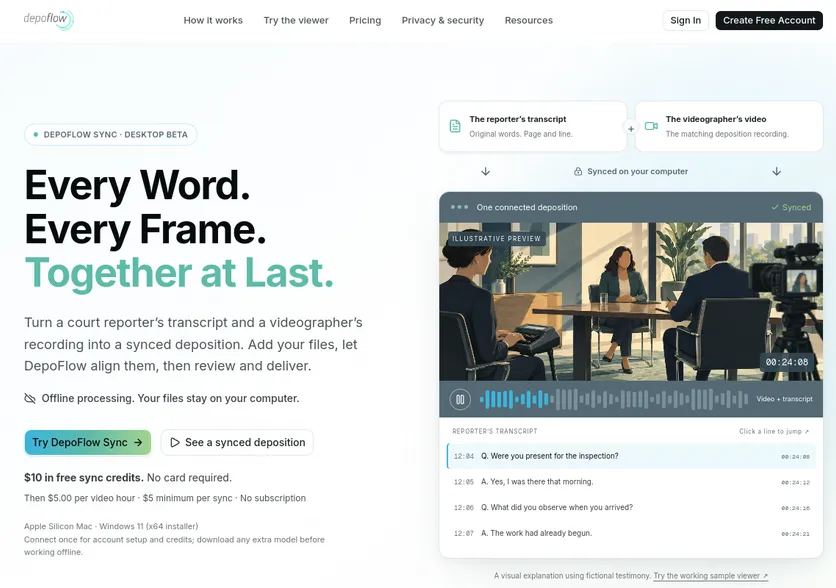
DepoFlow is the transcript sync tool a mid-size firm buys to line up video with the words, at five dollars per video hour with no subscription. This DepoFlow sync costs five dollars per video hour, with a five-dollar minimum per sync and ten dollars in free sync credits to start. A firm that plays deposition clips in court gets synced video and transcript without a monthly bill.
What we like
- No subscription, just five dollars per video hour
- Free viewing plan with ten dollars in sync credits
- Built for playing deposition clips in court
Watch out for
- Sync only, so case management needs a separate tool
- Designate unlock is a separate one-time charge per transcript
How to try it
- Open the DepoFlow site and create a free account
- Upload a deposition video and transcript and sync them
- Play a clip in court mode and check the sync
6. LiveLitigation
Best for: Mid-size firms that want one tool for the whole deposition session
Paid tool Starting price: $399/year · Three hundred and ninety-nine dollars a year for the Local Only plan; Local plus Remote costs six hundred and ninety-nine dollars a year
Free plan: No free plan; demo available
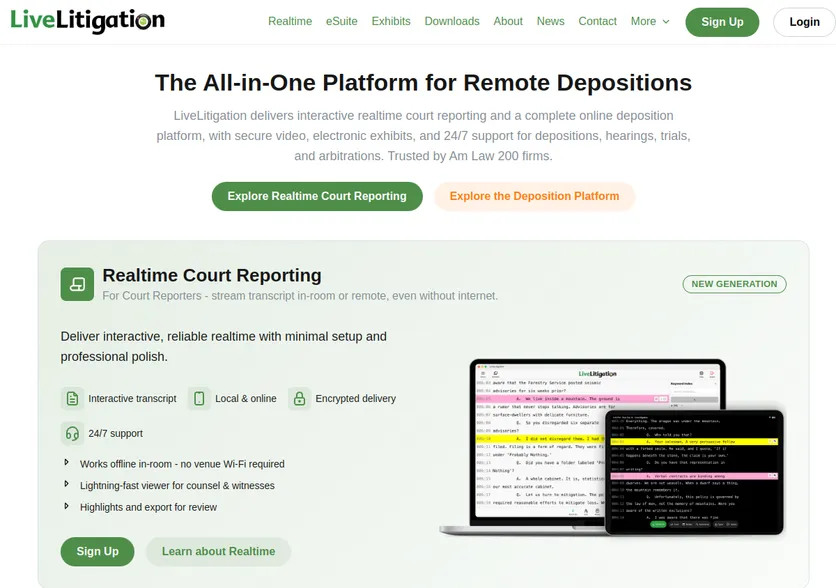
LiveLitigation is the deposition tool a mid-size firm buys to take and defend depositions live, with video, exhibits and transcript capture in one session. This LiveLitigation Local Only plan costs three hundred and ninety-nine dollars a year, with Local plus Remote at six hundred and ninety-nine dollars a year. A firm that wants one tool for the whole deposition gets video and exhibits without a per-session charge.
What we like
- One annual price with no per-session charge
- Video, exhibits and transcript capture in one session
- Local and remote deposition modes in one tool
Watch out for
- No free plan, only a demo to test with
- Smaller user base than the big deposition platforms
How to try it
- Open the LiveLitigation site and book a product demo
- Run a test deposition with video and an exhibit
- Check the transcript capture and the recording before going live
7. eDepoze
Best for: Mid-size firms that want exhibits organized without a subscription
Paid tool Starting price: $50 one-time · Fifty dollars one-time for the eDepoze plan
Free plan: Free plan available; 30-day free trial
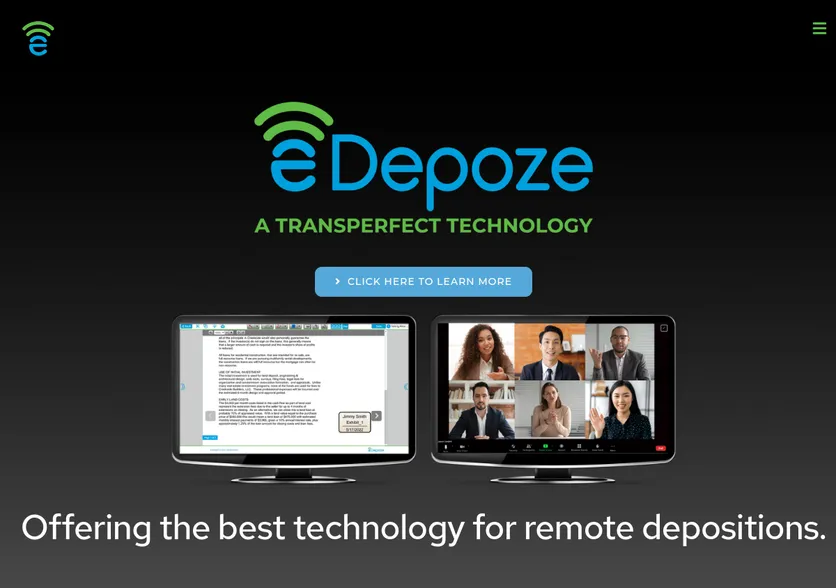
eDepoze is the exhibit tool a mid-size firm buys to organize trial exhibits, at fifty dollars one-time with no monthly bill. This eDepoze plan costs fifty dollars one-time, with the vendor site listing the full feature set. A firm that wants exhibits organized without a subscription gets one place for every exhibit, with a thirty-day free trial to test it.
What we like
- One-time price with no monthly bill
- Built for trial exhibits, not adapted from a file store
- Thirty-day free trial to test with a real case
Watch out for
- Exhibits only, so case management needs a separate tool
- The one-time price covers the core plan only
How to try it
- Open the eDepoze site and start the 30-day free trial
- Load the exhibits from a current case and organize them
- Test the exhibit list and the courtroom display mode
8. ExhibitSuite
Best for: Mid-size firms that lose exhibits in shared folders and want one place for them
Paid tool Starting price: $25/month · Twenty-five dollars a month for the ExhibitSuite plan
Free plan: No free plan; demo available
ExhibitSuite is the exhibit tool a mid-size firm buys to keep trial exhibits organized, at twenty-five dollars a month with no per-exhibit charge. This ExhibitSuite plan costs twenty-five dollars a month, with the vendor site listing the full feature set. A firm that loses exhibits in shared folders gets one place for every exhibit, with a demo to test it.
What we like
- One flat price with no per-exhibit charge
- Built for trial exhibits, not adapted from a file store
- Demo available to test with a real case
Watch out for
- Exhibits only, so case management needs a separate tool
- No free plan, only a demo to test with
How to try it
- Open the ExhibitSuite site and book a product demo
- Load the exhibits from a current case and organize them
- Test the exhibit list and the courtroom display mode
Prices above were checked on each vendor’s own website on Nov 27, 2026 and can change — the vendor’s page is the final word. Vendor links are editorial: nobody paid to be listed or ranked here. Vendors who want a featured listing can see how it works on our Get listed page.
What deposition software costs a mid-size firm in 2026
A mid-size firm pays for deposition software in one of three ways, per user per month, per session or per video hour, and the same headline means very different totals at team scale. A per-user price suits a firm that runs many cases, a per-session price suits a firm that takes few depositions, and a per-hour price suits a firm that only needs transcript sync. The cheapest tool here costs five dollars per video hour, while the most expensive costs one hundred and thirty dollars per user per month.
Start with a trial on two tools and run a real deposition through each one. Load the transcript, share an exhibit, play a clip and check the sync, then watch how many steps each job takes. Pick the tool whose record every lawyer can find, because a deposition record that lives on one laptop is a record the firm cannot defend.
Before you buy
- Check whether the price is per user or per session, because a deposition tool priced per session gets expensive at team scale.
- Confirm exhibits, video and transcript sync are included, because a tool that charges for each one costs more than it looks.
- Ask how transcripts export, because a deposition record locked in one tool is a record the firm cannot use in court.
- Test a remote deposition end to end, because a session that drops mid-testimony wastes the whole day.
- Check the security and access controls before you sign, because a firm file is the most sensitive data a practice holds.
Official websites
Official websites of the products reviewed above. Features and prices were checked against these sites when this guide was written, and they can change, so confirm on the vendor site before you buy.
Frequently asked questions
Which deposition management software is best for mid-size law firms in 2026?
MyCase is the best overall pick at fifty dollars per user per month, because it runs cases, clients and billing from one login with every price published. AgileLaw is the best pick for remote depositions at two hundred dollars a month, with video, exhibits and transcript sync in one session. ExhibitSuite is the best budget pick at twenty-five dollars a month, with one flat price for every exhibit.
How much does deposition management software cost a mid-size firm?
Prices in this list run from five dollars per video hour for DepoFlow to one hundred and thirty dollars per user per month for MyCase Advanced, with most tools landing between twenty-five and fifty dollars per user per month. Multiply the per-user price by the team size before you compare totals, because a fifty-dollar plan for twenty lawyers is a thousand dollars a month before any add-ons.
What deposition features matter most for a mid-size law firm?
Transcript sync matters most, because a video clip that does not line up with the words is useless in court. Exhibit handling matters next, because a deposition that cannot show the exhibit is a deposition that stops. Remote deposition support matters too, because witnesses are rarely in the same room anymore, and the session has to hold together for hours.
Can a mid-size firm try deposition software before paying?
Yes, and the trials here are real: Clio gives seven days, MyCase gives ten days, and TranscriptPad gives seven days on the LIT SUITE, while eDepoze gives thirty days. Use the trial with a real case, not demo data, because a deposition record only proves a tool when it is the record the firm will take to court. Load a transcript, share an exhibit and run a remote session before the trial ends.
Can a mid-size firm switch deposition software without losing case files?
Yes, and the move is usually a matter of exporting matters, documents and transcripts, then importing them into the new tool, because case platforms do not share a common format. Start with one closed case, check that every document and transcript made the move, and only switch the active cases once the new tool has proven itself on a real file.
Need everyday business help too? Try Toolsvine's free business tools right in your browser.
Browse Business Tools tools