On this page
A startup catalogue starts as a spreadsheet and turns into a mess the week the third channel goes live, because every marketplace wants the same products in a different shape. The seven platforms below give startups one source of truth for product information, from one hundred and forty-nine dollars a month to one thousand dollars a month, and every price was checked on the vendor site on November 27, 2026. Plytix is our first pick — the free plan to one hundred SKUs and the price that scales with the catalogue fit a startup best.
How we researched this
We looked for product information tools that publish a price and suit a startup, where the catalogue is small, the budget is tight and the team is two or three people. We read each price on the vendor pricing page or a vendor supplied listing on November 27, 2026, and favoured tools with a free plan or trial and a price that grows with the catalogue. We dropped Catsy, Akeneo, Salsify and inRiver because none of them publishes a dollar price, so a startup cannot compare them without a sales call.
Compare the tools
| Name | Best for | Starting price | Free plan | |
|---|---|---|---|---|
| Plytix | Startups that want to start free and pay only as the catalogue grows. | $149/month | Free Standard plan up to 100 SKUs. | Visit |
| Apimio | Startups that sell on marketplaces and need clean feeds from day one. | $199/month | No free plan; 14-day free trial. | Visit |
| Sales Layer | Startups planning to sell the same catalogue on many channels. | $1,000/month | No free plan; demo available. | Visit |
| Pimcore | Startups with technical founders who want an open source PIM. | $825/month | Free Community edition. | Visit |
| PIMworks | Startups that want a collaborative PIM with a free trial. | $699/month | 14-day free trial. | Visit |
| KatanaPIM | Startups with variants and multilingual listings to manage. | $399/month | Free trial available. | Visit |
| JasperX PIM | Startups that want AI to keep their catalogue channel ready. | $999/month | Free trial available. | Visit |
The e merchandising software for startups, compared
1. Plytix
Best for: Startups that want to start free and pay only as the catalogue grows.
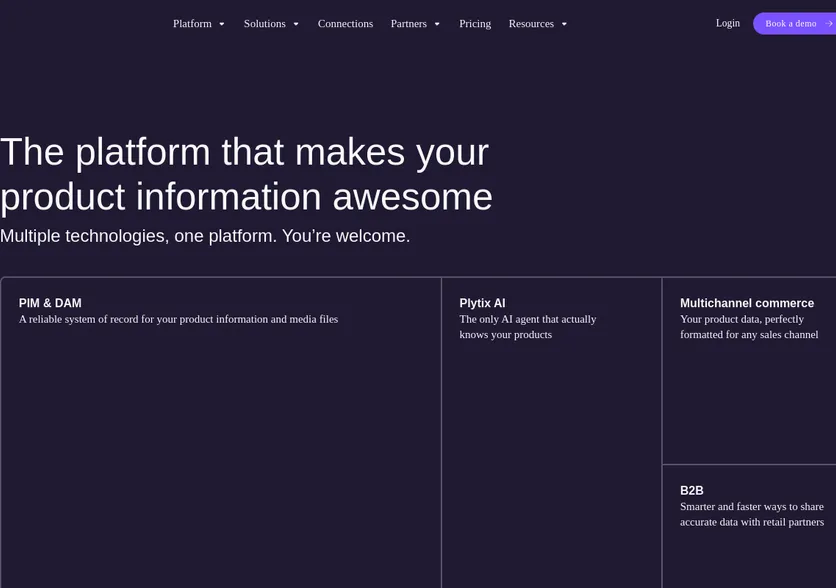
Paid tool Starting price: $149/month · One hundred and forty-nine dollars a month for the Pro plan to start. Price scales with SKU count, with two thousand SKUs costing two hundred and sixty-nine dollars a month on Pro; Standard is free up to one hundred SKUs.
Free plan: Free Standard plan up to 100 SKUs.
A startup should not pay for a product catalogue system before it has products to sell, and Plytix is the tool that respects that order. This Plytix Pro plan starts at one hundred and forty-nine dollars a month, with the price scaling as the SKU count grows, and Standard is free up to one hundred SKUs. A startup gets one place to enrich product data, manage digital assets and publish to every channel, without a spreadsheet that the whole team edits at once.
What we like
- Free plan up to one hundred SKUs to start
- Product data and digital assets in one platform
- Price scales with catalogue size, not headcount
Watch out for
- Advanced modules are sold separately on top of the plan
- A large catalogue pushes the price well above the entry figure
How to try it
- Import your product catalogue and set up your attributes and categories.
- Enrich products with descriptions, images and specifications.
- Publish the catalogue to your store and marketplaces from one place.
2. Apimio
Best for: Startups that sell on marketplaces and need clean feeds from day one.
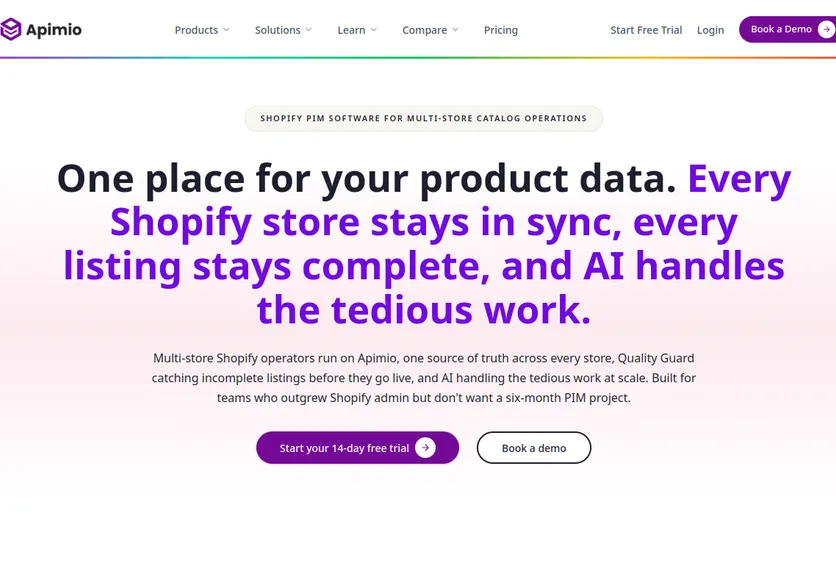
Paid tool Starting price: $199/month · One hundred and ninety-nine dollars a month for the Basic PIM plan with one store and ten thousand SKUs. Advanced PIM costs three hundred and ninety-nine dollars a month and Enterprise starts at nine hundred and ninety-nine dollars a month; fourteen-day free trial.
Free plan: No free plan; 14-day free trial.
Marketplace feeds are where a startup catalogue usually breaks, and Apimio is the tool built to keep them clean from the first listing. This Apimio Basic PIM plan costs one hundred and ninety-nine dollars a month for one store and ten thousand SKUs. A startup gets product data, feeds, an API and multi store support as it grows, with a fourteen-day free trial to prove the workflow.
What we like
- Strong marketplace feeds for every sales channel
- API access and multi store support on higher plans
- Fourteen-day free trial to test a real catalogue
Watch out for
- One store only on the Basic plan
- Feeds and API depth vary by plan tier
How to try it
- Import your catalogue and set up your product attributes.
- Build feeds for the marketplaces and channels you sell on.
- Connect the API to your store and sync product data automatically.
3. Sales Layer
Best for: Startups planning to sell the same catalogue on many channels.
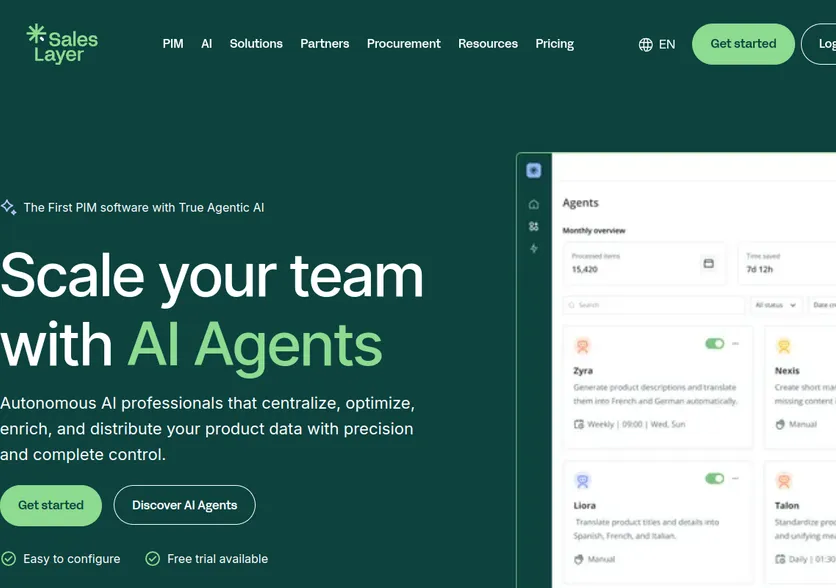
Paid tool Starting price: $1,000/month · One thousand dollars a month from the vendor app listing and vendor supplied listings. The vendor site itself is quote only, so confirm the rate with sales before buying.
Free plan: No free plan; demo available.
One thousand dollars a month is a lot for a startup, so Sales Layer only makes sense when the catalogue must stay in step across many channels from the start. This Sales Layer plan costs one thousand dollars a month, according to the vendor app listing and vendor supplied listings. A startup that sells on stores, marketplaces and through partners gets a single source of truth for product data with syndication to every channel.
What we like
- Single source of truth for product data across channels
- Syndication to stores, marketplaces and partners
- Scales to five users and ten thousand SKUs on the Scale plan
Watch out for
- The vendor site is quote only, so confirm the price first
- One thousand dollars a month is enterprise pricing
How to try it
- Book a demo and import a sample of your catalogue.
- Set up your channels and map your product attributes once.
- Syndicate the catalogue and check the data on each channel.
4. Pimcore
Best for: Startups with technical founders who want an open source PIM.
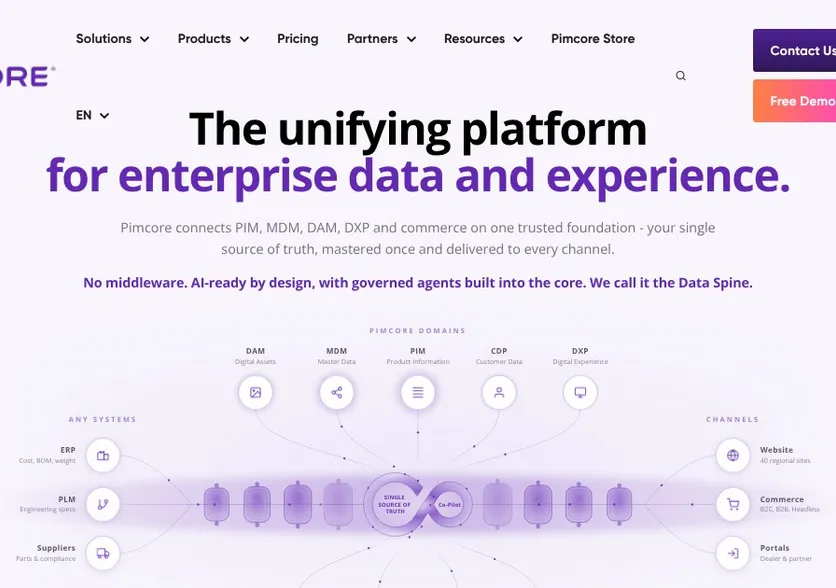
Paid tool Starting price: $825/month · Eight hundred and twenty-five dollars a month for the Professional plan, or nine thousand nine hundred dollars a year. Enterprise costs twenty-nine thousand nine hundred dollars a year; the Community edition is free.
Free plan: Free Community edition.
Technical founders often prefer to own their stack, and Pimcore is the open source PIM that lets a startup do exactly that. This Pimcore Professional plan costs eight hundred and twenty-five dollars a month, or nine thousand nine hundred dollars a year, with a free Community edition underneath. A startup gets product data, digital assets and a content platform in one open source system, paying for support rather than licences.
What we like
- Open source with a free Community edition
- Product data, assets and content in one platform
- Paid support tiers when the team needs help
Watch out for
- Open source means the team runs the infrastructure
- Enterprise features need the dearest plan
How to try it
- Install the free Community edition or start a Professional trial.
- Model your product attributes and import your catalogue.
- Connect your store and channels, then publish from one place.
5. PIMworks
Best for: Startups that want a collaborative PIM with a free trial.
Paid tool Starting price: $699/month · Six hundred and ninety-nine dollars a month starting price, listed by the vendor on SourceForge. The vendor site itself prices by quote, so confirm the rate with sales before buying.
Free plan: 14-day free trial.
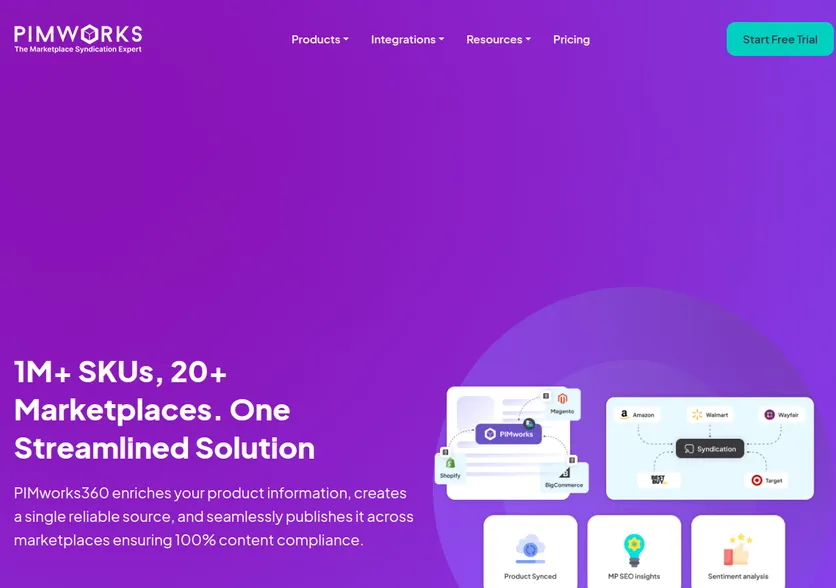
A startup catalogue is usually built by two or three people at once, and PIMworks is the cloud tool that lets them collaborate without stepping on each other. This PIMworks plan starts at six hundred and ninety-nine dollars a month, with custom pricing for larger catalogues. A startup gets centralised product data, enrichment workflows and marketplace syndication in one place, with a fourteen-day free trial.
What we like
- Collaborative workflows for a small team
- Built in enrichment and validation for product data
- Marketplace syndication from the same platform
Watch out for
- The vendor site is quote based, so confirm the price first
- Custom pricing applies to larger catalogues
How to try it
- Start the free trial and import your product catalogue.
- Set up enrichment workflows for your small team.
- Syndicate the catalogue to your store and marketplaces.
6. KatanaPIM
Best for: Startups with variants and multilingual listings to manage.
Paid tool Starting price: $399/month · Three hundred and ninety-nine dollars a month starting price, listed by the vendor.
Free plan: Free trial available.
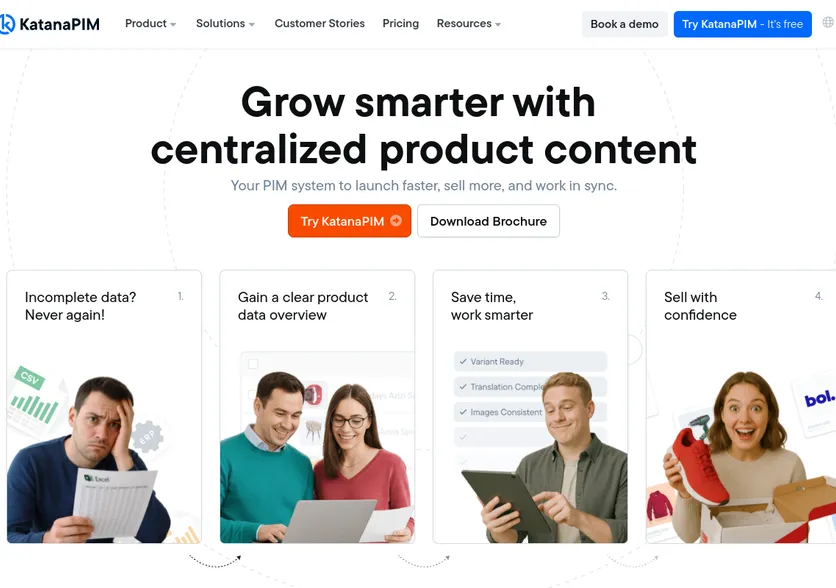
Variants and translations are where a young catalogue turns into a mess, and KatanaPIM is the tool that keeps both under control. This KatanaPIM plan costs three hundred and ninety-nine dollars a month. A startup gets a single source of truth for product information, with feed mapping, variants and multilingual data in one place.
What we like
- Strong variant and multilingual data handling
- Feed mapping connects files to marketplaces fast
- Single source of truth for brands and wholesalers
Watch out for
- The vendor publishes few plan details on its site
- Built for brands and wholesalers, not small retailers
How to try it
- Start a trial and import your product catalogue.
- Map your feeds to the marketplaces you sell on.
- Enrich variants and publish in each language your channels need.
7. JasperX PIM
Best for: Startups that want AI to keep their catalogue channel ready.
Paid tool Starting price: $999/month · Nine hundred and ninety-nine dollars a month for the Growth plan, quoted from the vendor pricing page on November 21, 2026. Professional costs one thousand nine hundred and ninety-nine dollars a month and Enterprise is custom.
Free plan: Free trial available.
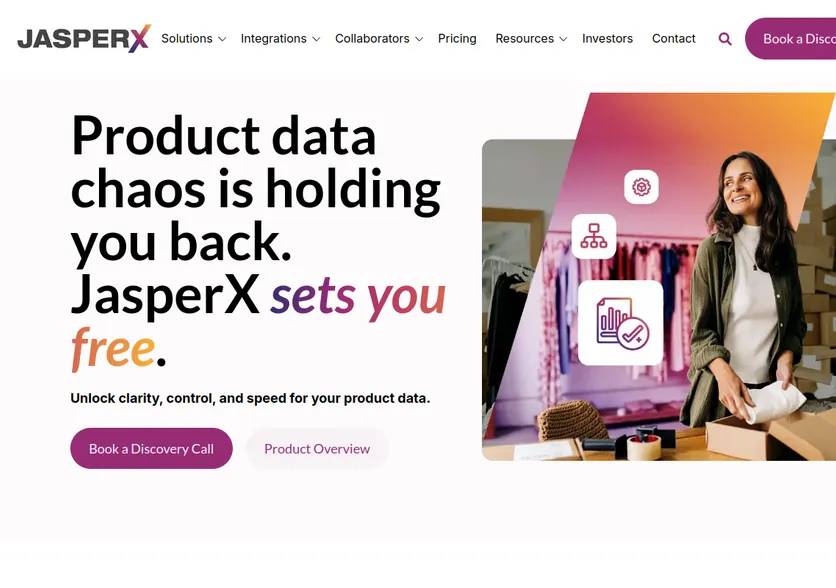
A startup catalogue has gaps, and the cheapest way to find them is an AI agent that checks every product before it goes live, which is what JasperX PIM does. This JasperX PIM Growth plan costs nine hundred and ninety-nine dollars a month and includes two sales channels with onboarding. A startup gets a central product record that updates every storefront and region from one dashboard, with AI that flags products that are not ready for a channel.
What we like
- AI agent finds catalogue gaps before launch
- One central product record for every storefront and region
- Ready made connectors for Shopify and BigCommerce
Watch out for
- Growth includes only two sales channels
- The vendor site shows no pricing page, so confirm the rate first
How to try it
- Start a trial and connect your storefronts to JasperX.
- Ask the AI agent which products are not channel ready.
- Fix the missing attributes and publish the catalogue to your channels.
Prices above were checked on each vendor’s own website on Nov 27, 2026 and can change — the vendor’s page is the final word. Vendor links are editorial: nobody paid to be listed or ranked here. Vendors who want a featured listing can see how it works on our Get listed page.
What startups should check first
Start free and prove the workflow before you pay. Plytix offers a free plan up to one hundred SKUs and Pimcore has a free Community edition, so a startup can test a real catalogue without spending anything. Count your SKUs and your channels too, because both set the price: JasperX Growth includes only two sales channels, so a third channel forces an upgrade.
Pick a plan you can grow into, because migrating a catalogue to a new tool is painful. Test a product launch end to end on the trial, from import to publication, and check that the tool connects to your store. Start with one channel, prove the data stays in step, and only then add the next marketplace.
Before you buy
- Start on the free plan or trial, because a startup should prove the workflow before paying.
- Count your SKUs, because a growing catalogue pushes the price up fast.
- Check which channels are included, because a two channel limit forces an upgrade early.
- Confirm the tool connects to your store before you buy, not after.
- Pick a plan you can grow into, because migrating a catalogue is painful.
Official websites
Official websites of the products reviewed above. Features and prices were checked against these sites when this guide was written, and they can change, so confirm on the vendor site before you buy.
Frequently asked questions
Which e merchandising software is best for startups?
Plytix is the best overall pick for a startup, starting at one hundred and forty-nine dollars a month with a free plan up to one hundred SKUs. Apimio is the best for marketplace feeds at one hundred and ninety-nine dollars a month. Pimcore suits technical founders, with a free Community edition and Professional at eight hundred and twenty-five dollars a month.
How much does e merchandising software cost a startup?
Entry prices here run from one hundred and forty-nine dollars a month for Plytix Pro to one thousand dollars a month for Sales Layer. Most startups pay between one hundred and ninety-nine and six hundred and ninety-nine dollars a month. Start on the free plan or trial, because a startup should prove the workflow before paying.
Is there a free way for a startup to start with a PIM?
Yes. Plytix offers a free Standard plan up to one hundred SKUs, and Pimcore has a free Community edition. Apimio and PIMworks both give a fourteen-day free trial. A startup can prove the workflow on a small catalogue before paying anything, then move to a paid plan when the catalogue grows.
What features matter most for a startup PIM?
A PIM should offer a single source of truth for product data, enrichment workflows, digital asset management and syndication to your store and marketplaces. Check that it connects to your store, and that the plan covers the channels you sell on. Without syndication, the PIM is just another spreadsheet.
How should a startup choose between these tools?
Count your SKUs and your channels before you buy, because both set the price. A plan that covers two channels will force an upgrade when you add a third, and a plan priced by SKUs will grow with your catalogue. Pick a plan you can grow into, because migrating a catalogue to a new tool is painful.
Need everyday business help too? Try Toolsvine's free business tools right in your browser.
Browse Business Tools tools