On this page
Ecommerce sellers do not just sell products, they juggle marketplaces, payment fees, refunds, and sales tax, and the accounting software has to keep up. The best tools for online sellers import payouts automatically, track inventory, and separate fees from revenue so the books stay clean. Prices run from about nineteen dollars a month for a simple connector to one hundred forty dollars a month for a full ledger. QuickBooks Online is our first pick for sellers who want a complete ledger with deep ecommerce connections.
How we researched this
We checked the vendor pricing pages for eight accounting tools that ecommerce sellers actually use, and we kept only tools with a published list price in dollars. We compared each one for marketplace payout handling, fee and refund tracking, inventory support, and sales tax help, then ranked them for online sellers at every volume.
Compare the tools
| Name | Best for | Starting price | Free plan | |
|---|---|---|---|---|
 QuickBooks Online | Ecommerce sellers who need inventory and multi-user access | $140/month | Free plan at no monthly cost with 1 user; 30-day trial on paid plans | Visit |
 Xero | Online sellers who want clean books and easy connections | $59/month | No free plan; a 30-day trial is listed | Visit |
 FreshBooks | Sellers who mix services with online product sales | $43/month | No free plan; a 30-day trial is listed | Visit |
 Zoho Books | Budget-conscious sellers who need inventory tracking | $40/month | Free plan for businesses under fifty thousand dollars of yearly revenue | Visit |
 A2X | Marketplace sellers who need clean payout accounting | $29/month | 30-day free trial; no free plan | Visit |
 Link My Books | Small sellers who want cheap marketplace payout sync | $21/month | 14-day free trial; no free plan | Visit |
 Synder | Multi-channel sellers who sync many platforms | $65/month | 15-day free trial; no free plan | Visit |
 Taxomate | Amazon and eBay sellers on a tight budget | $19/month | No free tier published on the pricing page | Visit |
The accounting software for ecommerce business, compared
1. QuickBooks Online
Best for: Ecommerce sellers who need inventory and multi-user access
Paid tool Starting price: $140/month · Plus plan per user; Simple Start is thirty eight dollars a month and Advanced is three hundred forty
Free plan: Free plan at no monthly cost with 1 user; 30-day trial on paid plans
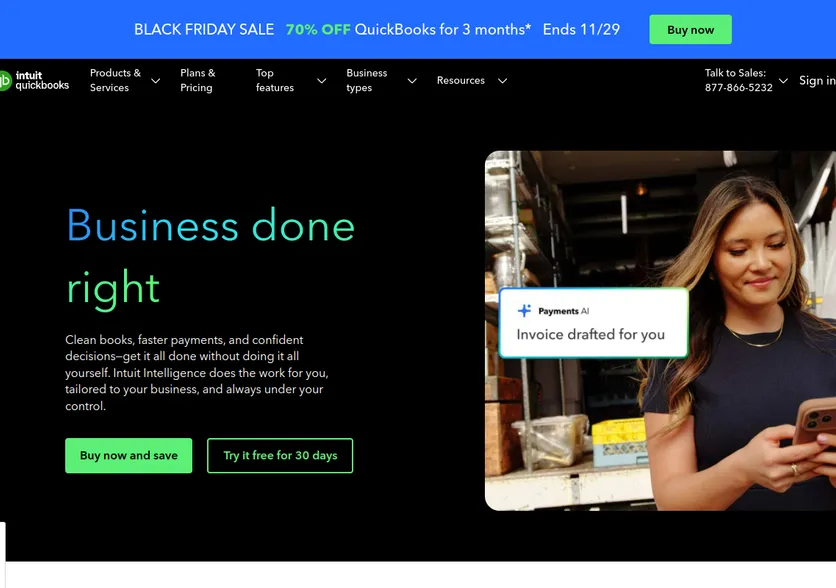
QuickBooks Online is the full ledger that ecommerce sellers grow into, and the Plus plan adds inventory tracking and multi-user access that the entry tier lacks. It connects to Shopify, Amazon, and payment processors through its marketplace, and it handles sales tax and purchase orders in one place. The monthly price is the highest here, so it fits sellers with real volume rather than a side hobby.
What we like
- Inventory tracking on the Plus plan
- Deep ecommerce app marketplace
- Strong sales tax and purchase order tools
Watch out for
- Highest monthly price in this list
- Setup takes time for new sellers
How to try it
- Connect your store and payment accounts from the app marketplace
- Set up inventory items and sales tax for your selling states
- Match payouts to orders and review profit by product monthly
2. Xero
Best for: Online sellers who want clean books and easy connections
Paid tool Starting price: $59/month · Growing plan; Early is twenty seven dollars a month and Established is ninety seven
Free plan: No free plan; a 30-day trial is listed
Xero is the cloud ledger that ecommerce sellers pick for clean books and easy app connections, and the Growing plan covers unlimited invoicing and bills. It syncs with Shopify and payment tools through its app store, and it handles multi-currency sales well for sellers who ship abroad. Inventory tracking is basic, so sellers with complex stock often add a dedicated inventory app.

What we like
- Clean interface and strong app store
- Good multi-currency support
- Unlimited invoicing on the Growing plan
Watch out for
- Basic inventory tracking
- Payroll is thinner than some rivals
How to try it
- Connect your bank, store, and payment apps from the app store
- Set up tracking categories for each sales channel
- Reconcile payouts weekly and review channel profit
3. FreshBooks
Best for: Sellers who mix services with online product sales
Paid tool Starting price: $43/month · Plus plan billed annually; Lite is twenty three dollars a month and Premium is seventy
Free plan: No free plan; a 30-day trial is listed
FreshBooks is the invoicing tool that service-based sellers use when they also sell online, and the Plus plan adds double-entry accounting and more clients. It connects with payment processors and tracks expenses and time, which suits sellers who mix services with products. It is not built for heavy inventory, so product-heavy stores will outgrow it faster than a full ledger.

What we like
- Excellent invoicing and client tools
- Simple time and expense tracking
- Easy to learn with no accounting background
Watch out for
- Weak inventory for product-heavy stores
- Not a full ledger for complex books
How to try it
- Connect your payment processor and import your products
- Send invoices and track expenses by project or product
- Review profit reports and chase late payments
4. Zoho Books
Best for: Budget-conscious sellers who need inventory tracking
Paid tool Starting price: $40/month · Professional plan per organization, billed annually; Standard is fifteen dollars a month and Premium is sixty
Free plan: Free plan for businesses under fifty thousand dollars of yearly revenue
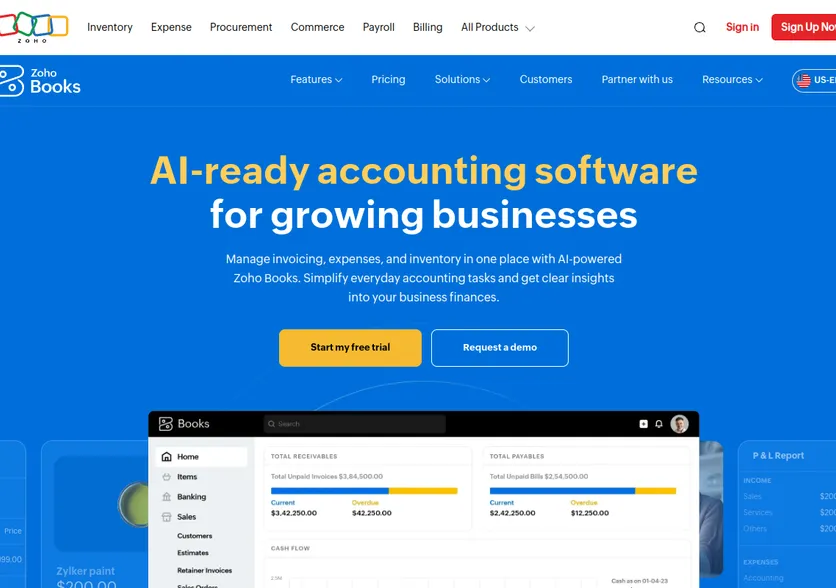
Zoho Books is the budget ledger for ecommerce sellers, and the Professional plan adds inventory tracking and multi-currency support at a low price. It connects natively with Zoho Inventory and outside stores, which suits sellers already in the Zoho world. The interface is denser than the leaders, and some advanced ecommerce features need a higher tier.
What we like
- Inventory and multi-currency at a low price
- Native Zoho Inventory connection
- Free plan for very small sellers
Watch out for
- Denser interface than the leaders
- Some features need a higher tier
How to try it
- Connect your store and bank accounts, then set up inventory items
- Turn on multi-currency if you sell abroad
- Create invoices and track stock levels from the dashboard
5. A2X
Best for: Marketplace sellers who need clean payout accounting
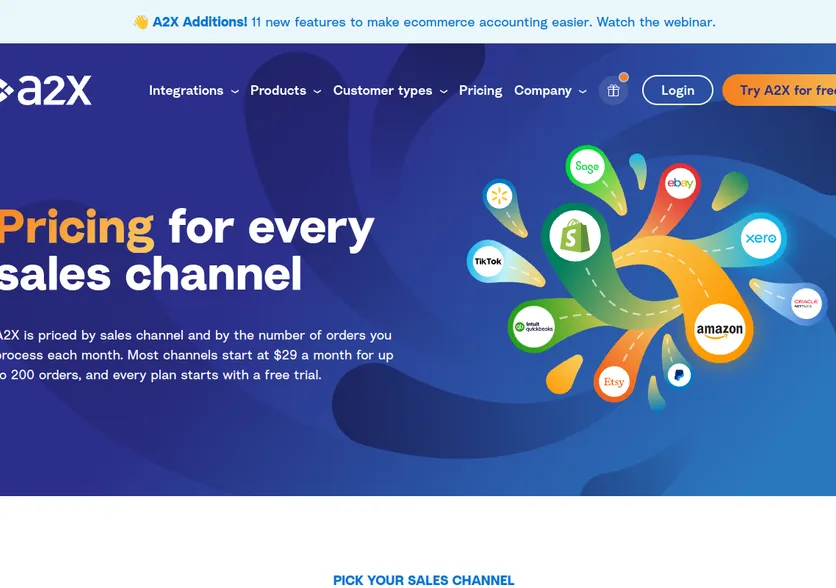
Paid tool Starting price: $29/month · Mini plan for up to two hundred orders a month; Starter is sixty five dollars a month
Free plan: 30-day free trial; no free plan
A2X turns Amazon, Shopify, and eBay payouts into clean accounting entries, and it is the connector most ecommerce accountants recommend first. It breaks each settlement into sales, fees, refunds, and tax, then posts the summary straight into your ledger. It does not replace your accounting software, so budget for a ledger beside it, and the price rises as order volume grows.
What we like
- Accurate payout breakdowns by channel
- Works with the major ledgers
- Saves hours of manual reconciliation
Watch out for
- Needs a separate ledger
- Price rises with order volume
How to try it
- Connect your marketplace and your accounting software
- Map the payout accounts and set your tax rules once
- Review the posted summaries and reconcile them monthly
6. Link My Books
Best for: Small sellers who want cheap marketplace payout sync
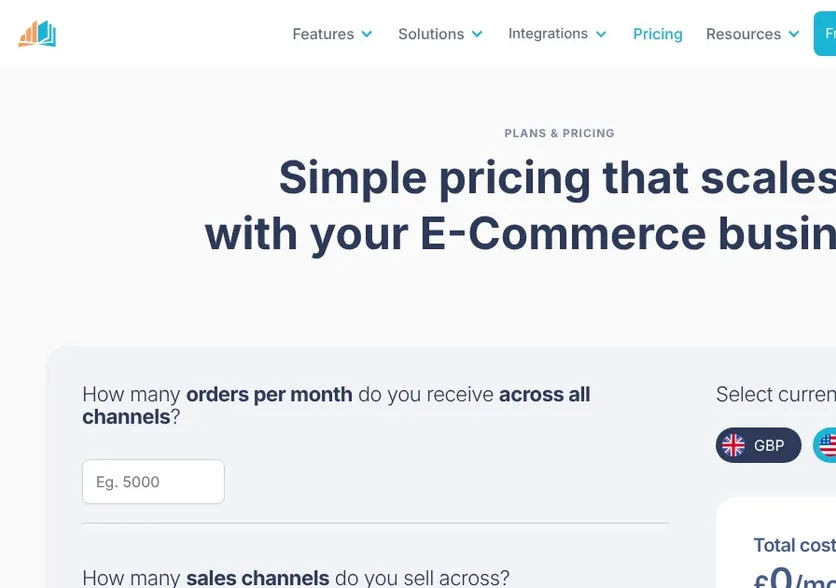
Paid tool Starting price: $21/month · Starter plan for up to two hundred orders a month
Free plan: 14-day free trial; no free plan
Link My Books is the low-cost connector for small ecommerce sellers, and it posts marketplace payouts into your books for about twenty dollars a month. It covers Amazon, eBay, Etsy, and Shopify with a simple setup that takes minutes. Its feature set is lighter than the bigger connectors, so high-volume sellers with complex tax needs may outgrow it.
What we like
- Lowest connector price in this list
- Simple setup in minutes
- Covers the big marketplaces
Watch out for
- Lighter features than bigger connectors
- May not suit high-volume sellers
How to try it
- Connect your marketplace and your accounting software
- Choose your payout accounts and tax settings
- Let the tool post summaries and reconcile them monthly
7. Synder
Best for: Multi-channel sellers who sync many platforms
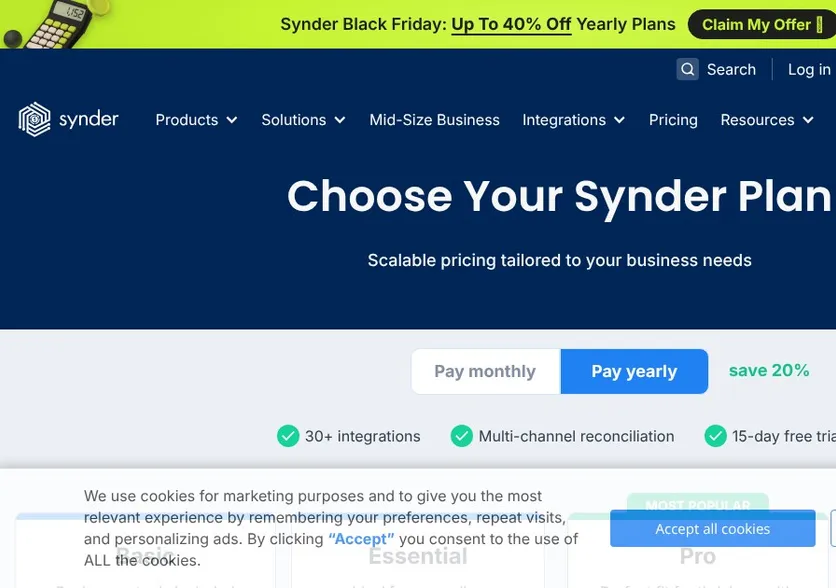
Paid tool Starting price: $65/month · Basic plan for five hundred transactions a month; billed annually it is fifty two dollars a month
Free plan: 15-day free trial; no free plan
Synder syncs sales and payments from dozens of ecommerce and payment platforms into your ledger, and it is the broadest connector in this list. It handles Stripe, PayPal, Shopify, and Amazon in one place, with rules that categorize fees and refunds automatically. The starting price is the highest among the connectors here, so it fits sellers with several channels and real volume.
What we like
- Broadest platform coverage here
- Automatic fee and refund categorization
- Accurate multi-channel sync
Watch out for
- Highest connector price in this list
- Needs a separate ledger
How to try it
- Connect every payment and ecommerce platform you sell on
- Set up rules for fees, refunds, and payouts
- Review the synced entries and reconcile them weekly
8. Taxomate
Best for: Amazon and eBay sellers on a tight budget
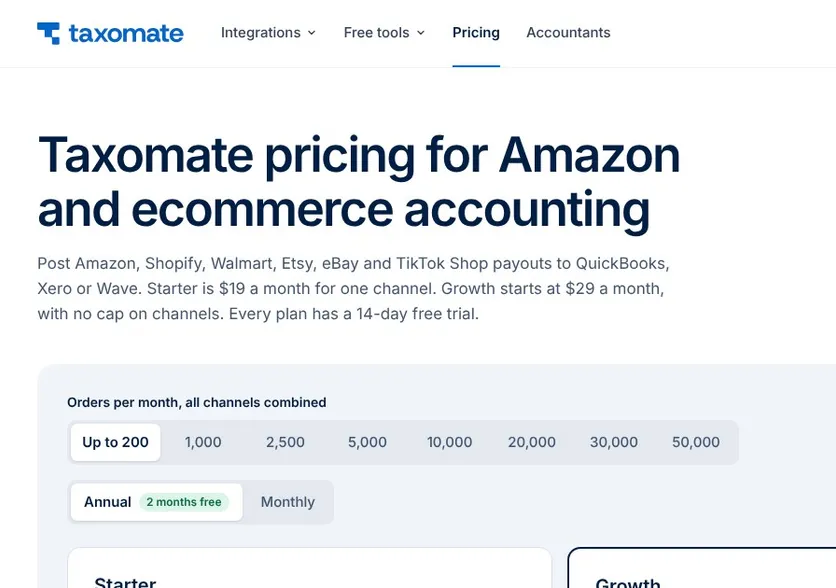
Paid tool Starting price: $19/month · Starter plan, $19 a month billed monthly; $16 a month billed annually ($190 a year) for one sales channel, up to 200 orders a month
Free plan: No free tier published on the pricing page
Taxomate is the budget connector for Amazon and eBay sellers, and it posts payouts into your books for about nineteen dollars a month. It covers the basics well, with settlement summaries and tax handling for the big marketplaces. It supports fewer platforms than the pricier connectors, so sellers on many channels will need a broader tool.
What we like
- Cheapest connector in this list
- Simple setup for Amazon and eBay
- Clean settlement summaries
Watch out for
- Fewer platforms than pricier connectors
- Light on advanced features
How to try it
- Connect your marketplace and your accounting software
- Set your tax and payout accounts once
- Review the posted summaries each month
Prices above were checked on each vendor’s own website on Nov 26, 2026 and can change — the vendor’s page is the final word. Vendor links are editorial: nobody paid to be listed or ranked here. Vendors who want a featured listing can see how it works on our Get listed page.
What accounting software for ecommerce actually costs
An ecommerce seller can start for about nineteen dollars a month with a simple connector, and a full ledger with inventory runs from about forty to one hundred forty dollars a month. Most sellers need both, a ledger plus one connector, which lands around fifty to one hundred dollars a month in total. High-volume sellers with several channels can spend more, since connector prices rise with order count, but the time saved on reconciliation usually pays for the tools several times over.
Before you buy, count your monthly orders and check the connector tier that covers them, since a plan that caps at two hundred orders will not suit a store doing a thousand. Pick a ledger that tracks inventory at your tier, and make sure it handles sales tax for every state you sell into.
Before you buy
- Check the connector covers your order volume, since prices rise with orders
- Confirm the ledger tracks inventory at the tier you plan to buy
- Make sure sales tax is handled for every state you sell into
- Test payout reconciliation on a real settlement before you commit
- Count the combined cost of ledger plus connector, not just one tool
Official websites
Official websites of the products reviewed above. Features and prices were checked against these sites when this guide was written, and they can change, so confirm on the vendor site before you buy.
Frequently asked questions
What is the best accounting software for ecommerce?
QuickBooks Online Plus leads for growing sellers because it combines inventory tracking, multi-user access, and a deep ecommerce app marketplace. Xero suits sellers who want clean books and easy connections, while Zoho Books is the budget pick with inventory included. Pair any ledger with a payout connector like A2X for accurate marketplace accounting.
How much does ecommerce accounting software cost?
A simple connector starts near nineteen dollars a month, and a full ledger with inventory runs from about forty to one hundred forty dollars a month. Most sellers need both, so expect fifty to one hundred dollars a month in total. High-volume sellers pay more as connector prices rise with order count, but the reconciliation time saved usually covers it.
Do I need A2X if I use QuickBooks Online?
If you sell on Amazon, eBay, or Shopify, a connector like A2X turns messy marketplace payouts into clean summarized entries in your ledger. QuickBooks Online alone imports the bank deposit but not the fee and refund breakdown behind it. Sellers with low volume can manage manually, but most sellers save hours with a connector.
Which accounting software handles inventory best?
QuickBooks Online Plus has the strongest inventory tracking here, with stock levels, purchase orders, and cost tracking built in. Zoho Books Professional also includes inventory at a lower price, while Xero covers basic stock and pairs well with a dedicated inventory app. Sellers with complex warehouses usually add a specialist inventory tool beside the ledger.
Can I use FreshBooks for an ecommerce store?
FreshBooks works for sellers who mix services with products, since it handles invoicing, expenses, and time tracking well. It is weaker on inventory than a full ledger, so product-heavy stores will feel its limits. If your store is mostly products with stock to track, pick QuickBooks Online, Xero, or Zoho Books instead.
Need free money help too? Try Toolsvine's free finance calculators for quick answers right in your browser.
Browse Finance Calculators tools