On this page
Healthcare apps need numbers where the care happens: bed occupancy on a ward dashboard, appointment trends in a clinic portal, outcomes in a patient app. The eight tools below embed dashboards directly in a health app, with white-labelling and row-level security so each clinic sees only its own patients. Metabase is our first pick, the friendliest embedded analytics platform here, with a free open-source edition and a Pro plan that covers ten users. Prices run from $14 a user a month to $999 a month, so a small clinic app and a hospital network will land on different tools.
How we researched this
We started with embedded reporting tools that publish a real dollar price and support white-labelling, row-level security and embedding in a patient-facing app. We read each price on the vendor site or a corroborating listing on November 26, 2026 and judged them for a health team that must keep patient data separate and audits clean. We kept only tools a team can buy without a sales call, and dropped eleven well-known names, including Looker, Sigma and Domo, because none of them publishes a price.
Compare the tools
| Name | Best for | Starting price | Free plan | |
|---|---|---|---|---|
| Metabase | Health apps that want friendly dashboards with a low entry price | $500/month | Open Source edition free, self-hosted | Visit |
| Bold BI | Health apps that need branded dashboards with strict access control | $999/month | 15-day free trial | Visit |
| Power BI | Health apps already running on Microsoft 365 | $14/user/month | Free plan (personal use, no sharing) | Visit |
| Tableau | Health apps that need the most polished clinical dashboards | $75/user/month | 14-day free trial | Visit |
| Qlik Sense | Health apps that need governed analytics with an audit trail | $30/user/month | 30-day free trial | Visit |
| Amazon QuickSight | Health apps on AWS that need cheap viewer access | $24/user/month | 30-day free trial | Visit |
| Zoho Analytics | Health apps that want strong analytics at a mid-range price | $115/month | Free plan (2 users, 10,000 rows) | Visit |
| Preset | Health apps built on Apache Superset that need managed embedding | $20/user/month | Free Starter plan (up to 5 users) | Visit |
The embedded reporting tools, compared
1. Metabase
Best for: Health apps that want friendly dashboards with a low entry price
Paid tool Starting price: $500/month · Pro plan includes 10 users with $10 per extra user a month; Starter is $85 a month for 5 users and annual Pro is $5,400 a year
Free plan: Open Source edition free, self-hosted
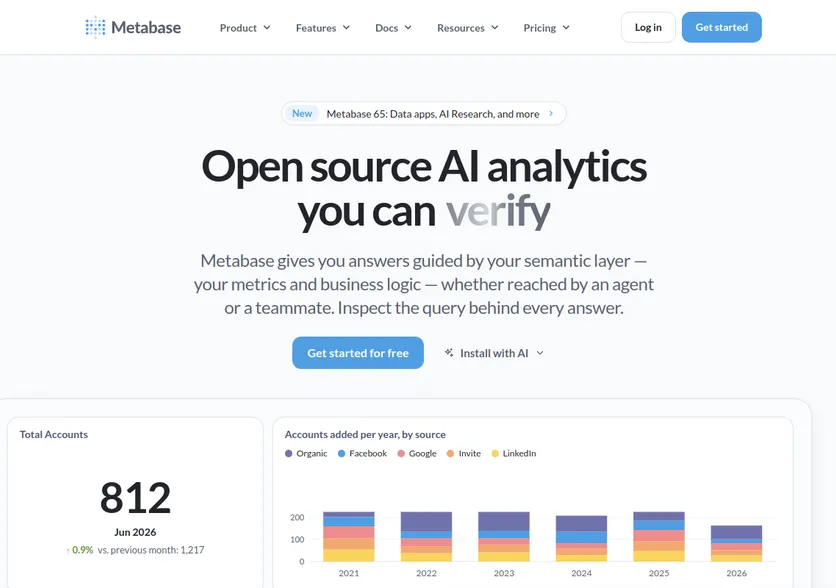
Metabase is the friendliest embedded analytics platform for a health app, because clinicians and managers can build a dashboard by asking questions in plain language. This Metabase Pro plan includes ten users and adds white-labelling, so patients and staff see your brand on every chart. The open-source edition is free to self-host, which suits a health team that must keep patient data on its own servers for compliance reasons.
What we like
- Plain-language questions build dashboards fast
- Open-source edition is free to self-host
- White-labelling included on Pro
Watch out for
- Embedding at scale needs the higher tiers
- Self-hosting means you run the server yourself
How to try it
- Connect Metabase to your clinical database
- Build a dashboard with the question builder
- Embed it in your app with a signed URL
2. Bold BI
Best for: Health apps that need branded dashboards with strict access control
Paid tool Starting price: $999/month · Cloud Edition for 100 users with $5 per extra user; On-Premises starts at $499 a month for 100 users
Free plan: 15-day free trial
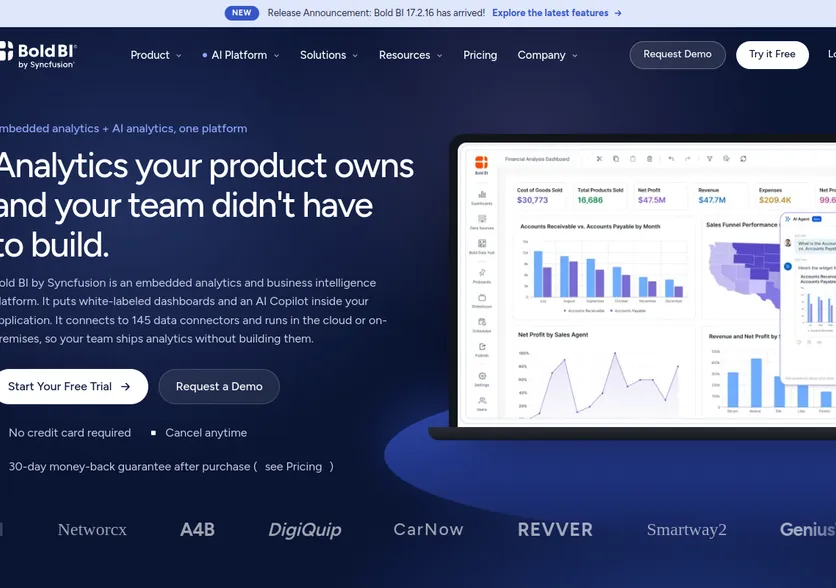
Bold BI is the embedded analytics platform for health apps that need dashboards to match the product and access rules to be airtight. This Bold BI Cloud plan covers one hundred users and includes white-labelling, row-level security and a JavaScript SDK for deep embedding. A clinic can show each care team only its own patients, and the audit trail records who viewed what, which is the control a compliance review asks about first.
What we like
- Row-level security keeps patient data separate
- Dashboards match your product design exactly
- Audit trail supports compliance reviews
Watch out for
- Entry price is high for a young health app
- Cloud plan is the only option with full support
How to try it
- Connect Bold BI to your data warehouse
- Design a dashboard in the drag-and-drop designer
- Embed it with row-level security per care team
3. Power BI
Best for: Health apps already running on Microsoft 365
Paid tool Starting price: $14/user/month · Pro plan paid yearly; Premium Per User is $24 a user a month
Free plan: Free plan (personal use, no sharing)
Power BI is the cheapest way to embed analytics in a health app that already runs on Microsoft 365, because most of the team already knows it. This Power BI Pro plan costs less per user than any other tool here and includes sharing, scheduled refresh and the full desktop authoring app. Embedding works through the JavaScript API, and Microsoft will sign the agreements a health organisation needs before patient data flows through the service.
What we like
- Cheapest per-user price on this list
- Most teams already know the interface
- Microsoft agreements cover health data needs
Watch out for
- Sharing needs a paid licence for every viewer
- Embedding capacity costs extra at scale
How to try it
- Build your report in Power BI Desktop
- Publish it to the Power BI service
- Embed it in your app with the JavaScript API
4. Tableau
Best for: Health apps that need the most polished clinical dashboards
Paid tool Starting price: $75/user/month · Creator plan, Standard edition; Explorer is $42 and Viewer is $15 a user a month
Free plan: 14-day free trial
Tableau is the visual analytics standard, and its dashboards are the ones clinicians notice first when they open a health app. This Tableau Creator plan includes the desktop authoring tool and the full visual grammar, from maps to forecasting, with embedding through the JavaScript API and connected apps. It is the pick for a health team that wants analytics to feel like a flagship feature, whether the audience is a doctor, a manager or a patient.
What we like
- Best-looking dashboards on this list
- Huge community and learning resources
- Strong mapping and forecasting built in
Watch out for
- Creator price is high for large teams
- Embedding needs care with licensing and capacity
How to try it
- Build your dashboard in Tableau Desktop
- Publish it to Tableau Cloud
- Embed it in your app with connected apps
5. Qlik Sense
Best for: Health apps that need governed analytics with an audit trail
Paid tool Starting price: $30/user/month · Business plan billed annually with a 5-user minimum; Enterprise is custom at around $70 a user a month
Free plan: 30-day free trial
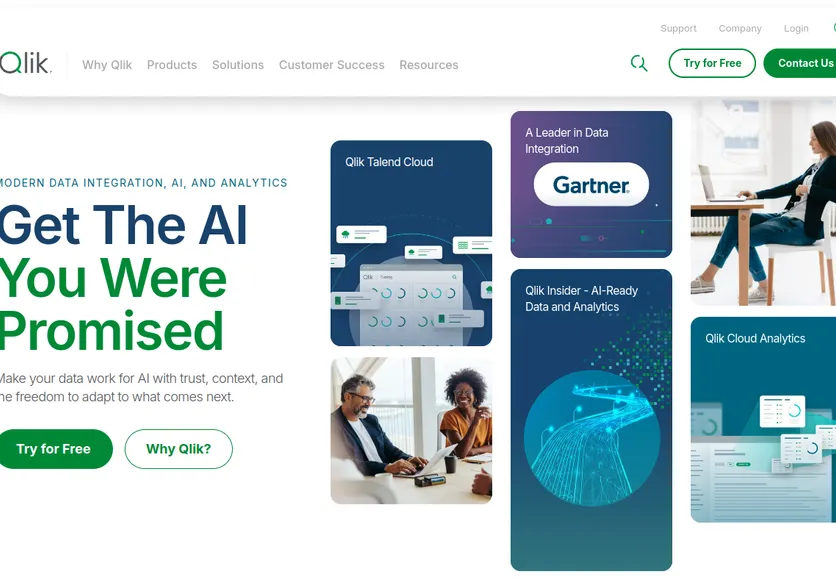
Qlik Sense pairs a powerful associative engine with governed self-service, so analysts can explore freely while the organisation keeps control of the data model. This Qlik Sense Business plan covers five users minimum and includes the full analytics engine, with embedding through mashups and the capability API. It suits health teams where every metric must be traceable to its source, because a number on a clinical dashboard has to be defensible.
What we like
- Associative engine finds hidden relationships
- Governance keeps clinical metrics trustworthy
- Strong audit trail for regulated teams
Watch out for
- Vendor does not publish this price on its own page
- Learning curve is steep for new analysts
How to try it
- Connect Qlik Sense to your clinical data sources
- Build an app with the associative engine
- Embed the visualisations in your product
6. Amazon QuickSight
Best for: Health apps on AWS that need cheap viewer access
Paid tool Starting price: $24/user/month · Author plan per user per month; Reader is $3, Reader Pro is $20 and Author Pro is $40, plus a $250 monthly account fee with Pro users
Free plan: 30-day free trial
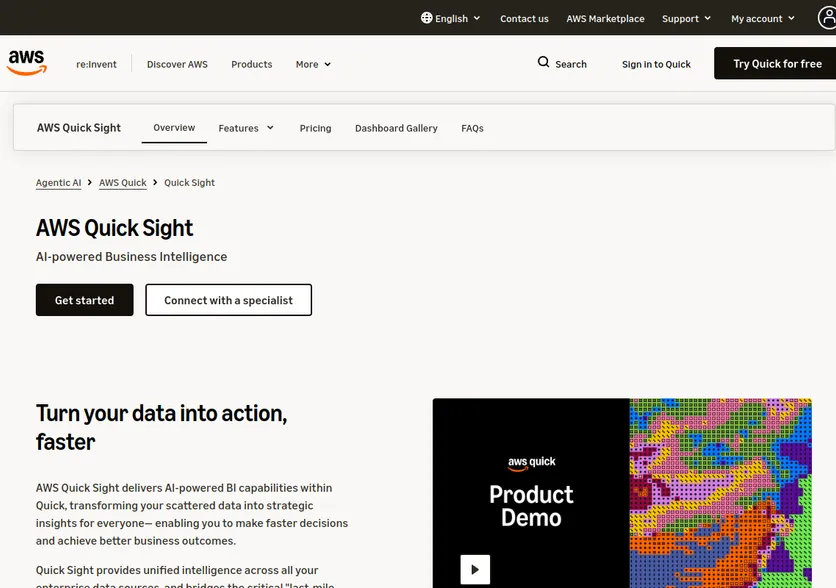
Amazon QuickSight is the AWS-native way to embed dashboards in a health app, and its reader pricing is the cheapest way to show charts to thousands of patients or staff. This Amazon QuickSight Author plan covers the people who build dashboards, while readers pay only a few dollars a month, which is the model that makes embedded analytics affordable at health-system scale. It connects to every AWS data source natively, so a team already on AWS can embed a first dashboard in a day.
What we like
- Reader pricing is the cheapest here
- Native to every AWS data source
- Pay-per-session option for occasional readers
Watch out for
- Account fee applies once any Pro user exists
- Visual polish lags Tableau and Bold BI
How to try it
- Connect QuickSight to your AWS data sources
- Build a dashboard with the authoring tool
- Embed it for readers with the embedding SDK
7. Zoho Analytics
Best for: Health apps that want strong analytics at a mid-range price
Paid tool Starting price: $115/month · Premium plan billed annually for 15 users and 5 million rows; Basic is $24, Standard is $48 and Enterprise is $455 a month
Free plan: Free plan (2 users, 10,000 rows)
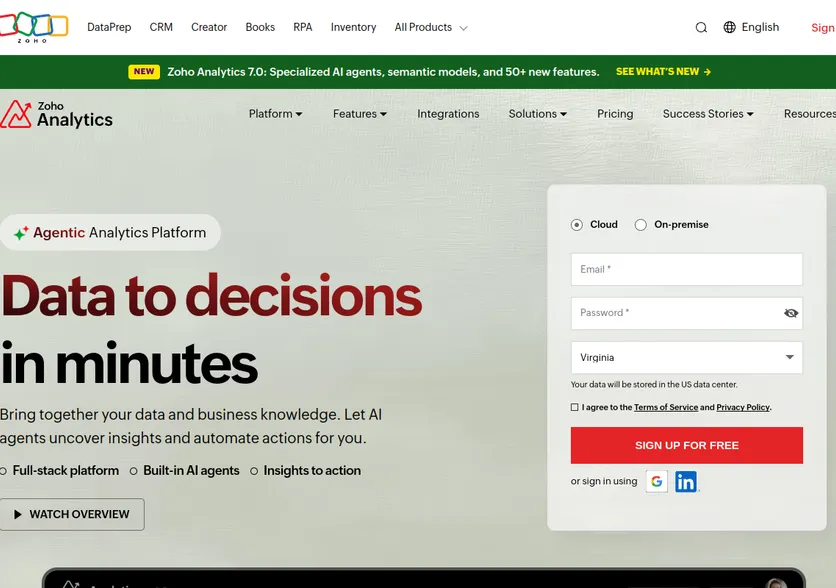
Zoho Analytics is the value pick for a health app that needs real dashboards without an enterprise bill. This Zoho Analytics Premium plan covers fifteen users and five million rows, with white-labelling, scheduled email reports and an embedding API. It integrates with the rest of Zoho, which suits a health team that already runs its CRM and support there, and the price stays flat while the team grows.
What we like
- Strong value for fifteen users
- White-labelling included on Premium
- Integrates with the wider Zoho suite
Watch out for
- Embedding is less deep than Bold BI
- Row limits can force an upgrade as data grows
How to try it
- Connect Zoho Analytics to your clinical database
- Build a dashboard with the drag-and-drop designer
- Embed it in your app with white-labelling on
8. Preset
Best for: Health apps built on Apache Superset that need managed embedding
Paid tool Starting price: $20/user/month · Professional plan billed annually; monthly billing is $25 a user, and embedded viewer licences are $500 a month per 50 viewers
Free plan: Free Starter plan (up to 5 users)
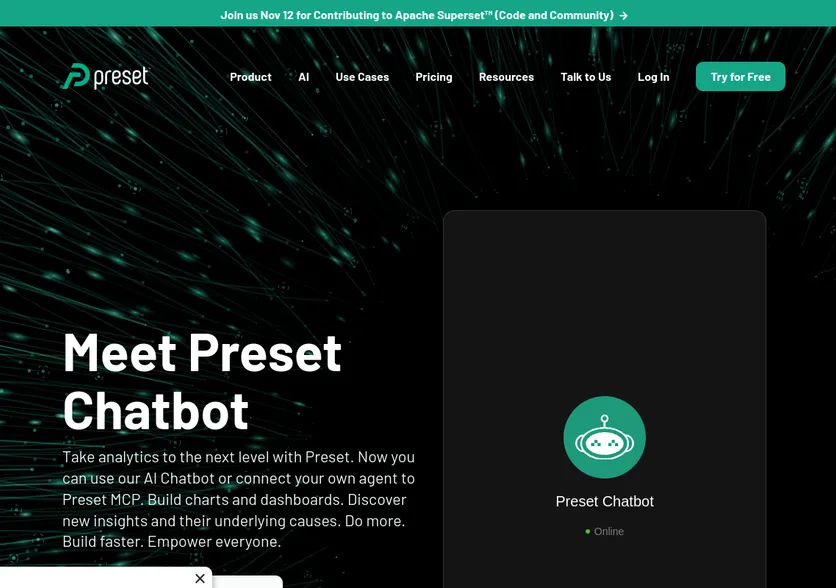
Preset is the managed cloud for Apache Superset, the open-source analytics tool many health teams already run, and it adds the embedding layer those teams usually build themselves. This Preset Professional plan costs twenty dollars a user a month on annual billing, and the embedded viewer add-on lets patients or staff see dashboards inside your app without a full licence each. It is the pick for a health team that likes Superset and wants someone else to run it.
What we like
- Managed Superset with no servers to run
- Embedded viewers cost far less than full seats
- Free Starter plan for up to five users
Watch out for
- Embedded viewers are a costly add-on at scale
- Smaller vendor than Microsoft or Salesforce
How to try it
- Import your Superset dashboards into Preset
- Set up embedded viewers for patients or staff
- Embed the dashboards in your app with the SDK
Prices above were checked on each vendor’s own website on Nov 26, 2026 and can change — the vendor’s page is the final word. Vendor links are editorial: nobody paid to be listed or ranked here. Vendors who want a featured listing can see how it works on our Get listed page.
What embedded reporting costs a health app in 2026
Start with the compliance questions, not the price tag. A vendor must sign a business associate agreement, host data in your region and offer row-level security before patient data flows, and those requirements narrow the field fast. Then price the embedding by the viewer, because a per-user tool looks cheap until thousands of patients open a dashboard. Pilot with real data and two test accounts, verify that each account sees only its own patients, and only then roll the dashboard out to everyone. Ask the vendor for the agreement in writing before the pilot starts.
Before you buy
- Confirm the vendor will sign a business associate agreement before you buy
- Check row-level security, because one clinic must never see another clinic patient data
- Verify where data is hosted and whether it meets your compliance region
- Ask whether embedding needs code or works with a simple iframe and token
- Read the audit log options, because healthcare reporting must show who saw what
Official websites
Official websites of the products reviewed above. Features and prices were checked against these sites when this guide was written, and they can change, so confirm on the vendor site before you buy.
Frequently asked questions
Which embedded reporting tool is best for a healthcare app?
Metabase Pro is the best starting point at $500 a month for ten users, because it is easy to embed and the open-source edition can be self-hosted to keep patient data on your own servers. Power BI Pro is the cheapest per user at $14 a month and the right pick when the organisation already runs on Microsoft 365. Preset is the best choice when the team already uses Apache Superset and wants it managed.
Do these tools help with HIPAA compliance?
No tool alone makes a health app compliant, but the right ones support it. Look for a vendor that will sign a business associate agreement, encrypt data in transit and at rest, offer row-level security so one clinic never sees another clinic patients, and keep an audit log of who viewed what. Every tool here offers most of these on paid plans, but confirm the agreement in writing before patient data flows.
Is embedded reporting secure enough for patient data?
Yes, if the vendor supports row-level security and your embedding uses signed tokens, not public links. Every tool here except the cheapest tiers supports row-level security, which filters data per user so one care team never sees another team patients. Test it with two test accounts before launch, because a security mistake in health analytics is a compliance incident, not a bug.
How should a healthcare app budget for embedded reporting?
Per-user tools such as Power BI and Tableau multiply with headcount, while flat-rate tools such as Metabase, Zoho Analytics and Bold BI stay predictable as the team grows. Reader-based tools such as QuickSight are cheapest when thousands of patients or staff view dashboards but few build them. Model the cost at twice your current size, because the cheapest tier rarely survives growth.
Is there a free embedded reporting tool for a healthcare app?
Yes. Metabase has a free open-source edition you can self-host, Zoho Analytics has a free plan for two users, Preset has a free Starter plan for five users, and Power BI has a free plan for personal use. The free tiers are enough to build and test a dashboard, but embedding with white-labelling and row-level security needs a paid plan on every tool here.
Put live numbers inside your health app — browse the full set of health tools, free and running on your device.
Browse Health & Fitness Calculators tools