On this page
An electric truck cannot run a diesel route: the planner has to know the battery level, the charger locations and the time each charge takes, or the truck ends the day stranded. A good route tool also respects truck weight and height limits, re-plans around traffic, and proves every delivery happened. We compared seven tools on published price, per-driver cost and how well they handle electric fleets. OptimoRoute is our first pick — the strongest multi-stop planner here, with a thirty-day trial and a per-driver price that scales cleanly.
How we researched this
We started with the route planning tools trucking fleets actually use to dispatch multi-stop routes, then read each price on the vendor site on November 27, 2026 and noted the trial each plan carries. We judged them for a fleet that runs electric trucks, needs charging stops planned by battery level, and wants live tracking without a surprise bill. We dropped quote-only dispatch platforms and consumer navigation apps, because a fleet needs a published price, a driver app and a route it can trust.
Compare the tools
| Name | Best for | Starting price | Free plan | |
|---|---|---|---|---|
| OptimoRoute | Trucking fleets that want the fastest multi-stop routes with proof of delivery | $35.10/driver/month | No free plan; 30-day free trial | Visit |
| Routific | Small fleets that want one flat monthly price whatever the driver count | $150/month | Free plan to 100 orders a month | Visit |
| Detrack | Fleets that want the cheapest per-driver start with live driver tracking | $29/driver/month | No free plan; 14-day free trial | Visit |
| Onfleet | Large delivery fleets that need dispatch, tracking and customer updates in one system | $619/month | No free plan; demo available | Visit |
| Spoke Dispatch | Fleets that want unlimited drivers with a simple per-stop price | $125/month | No free plan; demo available | Visit |
| Upper | Fleets that want route optimisation with a clear per-user price | $40/user/month | No free plan; 7-day free trial | Visit |
| Tookan | Delivery operations that want task-based pricing and pay only for completed jobs | $99/month | Free Forever plan: 100 tasks a month | Visit |
The EV route planning software for trucking fleets, compared
1. OptimoRoute
Best for: Trucking fleets that want the fastest multi-stop routes with proof of delivery
Paid tool Starting price: $35.10/driver/month · Lite costs thirty-five dollars and ten cents per driver a month billed annually, or thirty-nine dollars month to month; Pro costs forty-four dollars and ten cents per driver a month billed annually, or forty-nine dollars month to month; annual billing saves ten percent, and a thirty-day trial is included
Free plan: No free plan; 30-day free trial
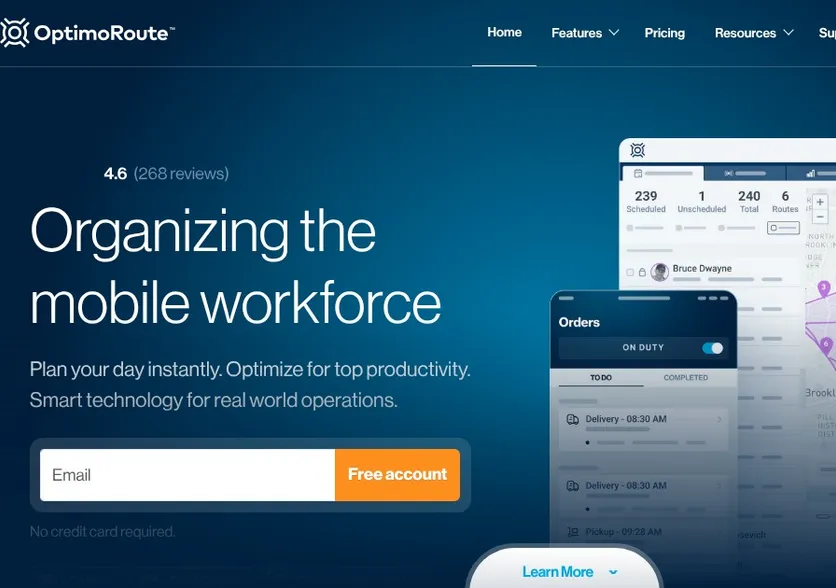
This OptimoRoute plan builds multi-stop routes for up to one thousand orders at once, which suits a trucking fleet that dispatches dozens of deliveries a day. The Lite plan starts at about thirty-five dollars per driver a month billed annually, and the Pro plan adds more orders and live tracking. A thirty-day trial lets a fleet run real routes before paying, and the annual discount cuts ten percent off the monthly rate.
What we like
- Plans routes for up to one thousand orders at once
- Thirty-day trial is the longest in this comparison
- Annual billing saves ten percent off the monthly rate
Watch out for
- Per-driver pricing adds up fast for a large fleet
- Proof of delivery is limited on the Lite plan
How to try it
- Open the OptimoRoute pricing page and start the thirty-day trial
- Import one week of real stops and let the planner build the routes
- Check the proof of delivery flow before the trial ends
2. Routific
Best for: Small fleets that want one flat monthly price whatever the driver count
Paid tool Starting price: $150/month · Free to one hundred orders a month; one hundred and fifty dollars a month flat to one thousand orders; above that, per-order pricing runs from fifteen cents an order down to three cents at very high volume; seven-day trial with no card required
Free plan: Free plan to 100 orders a month
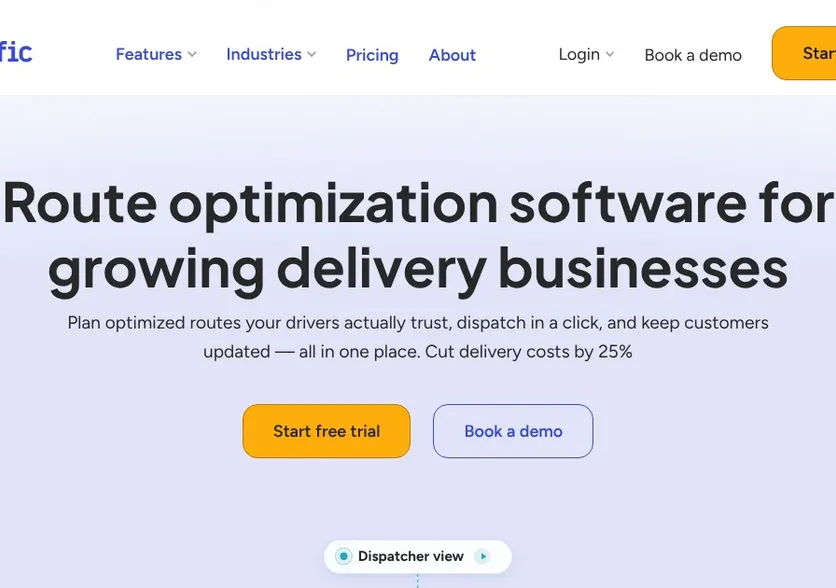
This Routific plan charges one flat price of one hundred and fifty dollars a month for up to one thousand orders, which makes it the simplest bill in this comparison for a small trucking fleet. There is no per-driver charge, so adding a driver costs nothing extra, and the free tier covers one hundred orders a month for a fleet that is just starting out. A seven-day trial with no card required lets a dispatcher test the planner on a real week of stops.
What we like
- One flat monthly price with no per-driver charge
- Free tier covers one hundred orders a month
- Seven-day trial needs no card
Watch out for
- Flat price only covers one thousand orders a month
- Per-order charges start above the flat tier
How to try it
- Start on the free tier with one hundred orders a month
- Test the planner on a real week of stops before upgrading
- Check the per-order price once your volume passes one thousand orders
3. Detrack
Best for: Fleets that want the cheapest per-driver start with live driver tracking
Paid tool Starting price: $29/driver/month · Pro costs twenty-nine dollars per driver app a month, Advanced costs thirty-nine dollars, and Enterprise is custom; fourteen-day trial with no card required, and annual billing saves ten percent
Free plan: No free plan; 14-day free trial
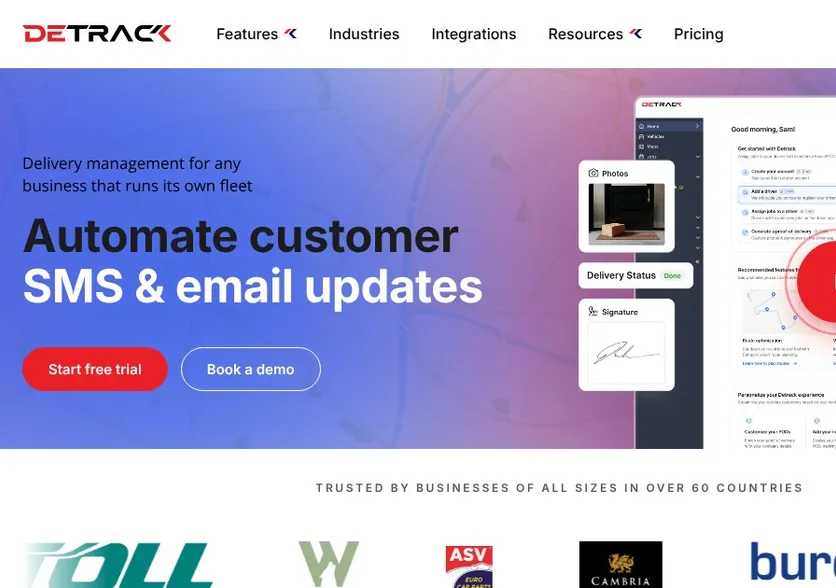
This Detrack plan is the cheapest per-driver start in this comparison at twenty-nine dollars per driver app a month, and it adds live tracking so dispatchers can see where every truck is. The Advanced plan at thirty-nine dollars adds more reporting, and the fourteen-day trial needs no card. Annual billing saves ten percent, which brings the Pro plan down further for a fleet that commits for the year.
What we like
- Cheapest per-driver start in this comparison
- Live tracking shows every truck on one screen
- Fourteen-day trial needs no card
Watch out for
- Priced per driver app, so the bill grows with the fleet
- Deeper reporting waits for the Advanced plan
How to try it
- Open the Detrack pricing page and start the fourteen-day trial
- Connect one driver app and test the live tracking view
- Compare Pro and Advanced reporting before the trial ends
4. Onfleet
Best for: Large delivery fleets that need dispatch, tracking and customer updates in one system
Paid tool Starting price: $619/month · Launch starts at six hundred and nineteen dollars a month for up to two thousand five hundred completed deliveries; Scale starts at one thousand three hundred and forty-nine dollars a month for five thousand deliveries a month; Enterprise starts at three thousand and ninety-nine dollars a month for ten thousand or more; Courier Suite add-on starts at two hundred and ninety-nine dollars a month
Free plan: No free plan; demo available
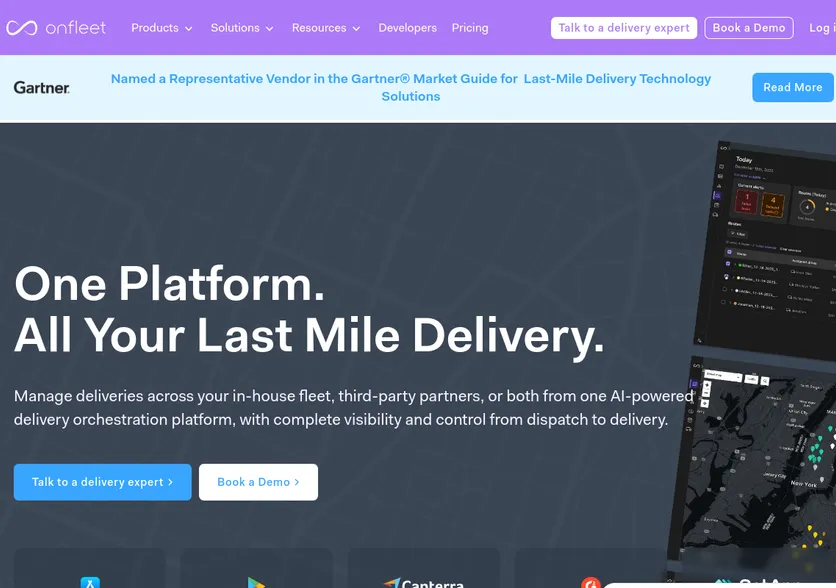
This Onfleet plan is built for fleets that complete thousands of deliveries a month, with dispatch, live tracking and customer notifications in one workspace. The Launch plan starts at six hundred and nineteen dollars a month for up to two thousand five hundred completed deliveries, and the Scale plan covers five thousand a month. A Courier Suite add-on from two hundred and ninety-nine dollars a month handles last-mile courier work beside the main dispatch flow.
What we like
- Dispatch, live tracking and customer notifications in one workspace
- Launch plan covers two thousand five hundred deliveries a month
- Courier Suite add-on handles last-mile courier work
Watch out for
- Entry price is the highest in this comparison
- No free plan or trial, only a demo
How to try it
- Open the Onfleet pricing page and check the Launch delivery limit
- Book a demo and ask how customer notifications are set up
- Compare Launch and Scale against your monthly delivery volume
5. Spoke Dispatch
Best for: Fleets that want unlimited drivers with a simple per-stop price
Paid tool Starting price: $125/month · Starter costs one hundred and twenty-five dollars a month for one thousand stops, Premium costs two hundred dollars a month for two thousand stops, and Expert costs one thousand dollars a month for twelve thousand stops; overage runs from four to seven cents a stop; unlimited drivers on every plan; the Spoke Route Planner app is free to ten stops a route, with Lite at nine dollars and ninety-nine cents a month and Standard at nineteen dollars and ninety-nine cents
Free plan: No free plan; demo available
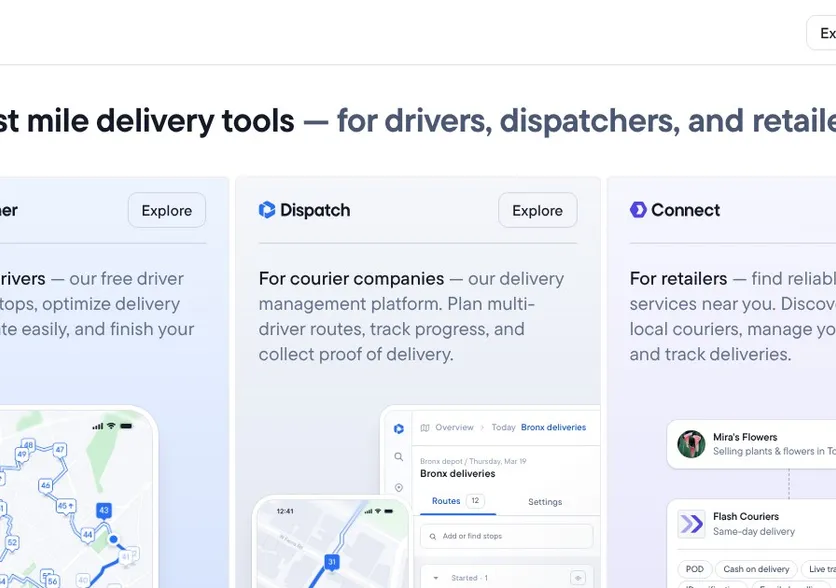
This Spoke Dispatch plan charges by stops rather than by drivers, so a fleet can add as many drivers as it needs without the bill moving. The Starter plan costs one hundred and twenty-five dollars a month for one thousand stops, Premium costs two hundred dollars for two thousand, and Expert costs one thousand dollars for twelve thousand. Spoke is the new name for Circuit, which rebranded in 2026, and the route planner app still offers a free tier for solo drivers.
What we like
- Unlimited drivers on every plan, priced by stops instead
- Starter covers one thousand stops for one hundred and twenty-five dollars
- Free route planner app for solo drivers
Watch out for
- Stop tiers cap your monthly volume, so overage charges can add up
- Formerly Circuit, so older guides may use the old name
How to try it
- Open the Spoke pricing page and check the stop tier for your volume
- Test the route planner app on the free tier first
- Confirm the overage rate before you commit to a stop tier
6. Upper
Best for: Fleets that want route optimisation with a clear per-user price
Paid tool Starting price: $40/user/month · Starter costs forty dollars per user a month billed annually, or fifty dollars month to month; Professional costs forty-eight dollars a month billed annually, or sixty dollars month to month; Optimize costs seventy-one dollars a month billed annually, or eighty-nine dollars month to month; Enterprise is quoted; a three-user minimum is enforced at checkout, so the real Starter start is one hundred and fifty dollars a month; seven-day Professional trial, no free plan
Free plan: No free plan; 7-day free trial
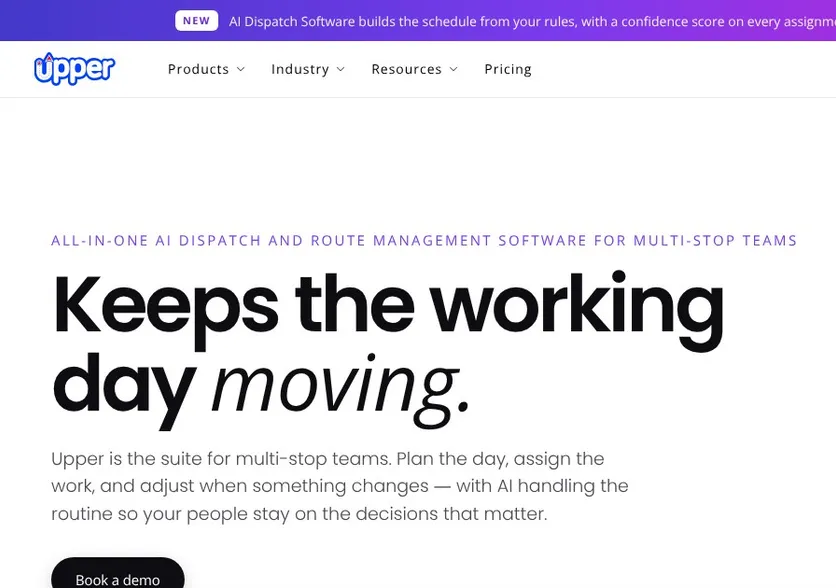
This Upper plan prices per user rather than per driver, which keeps the bill predictable for a fleet with a fixed dispatch team. The Starter plan costs forty dollars per user a month billed annually, Professional costs forty-eight dollars and Optimize costs seventy-one dollars. The catch is a three-user minimum enforced at checkout, so the real starting bill is one hundred and fifty dollars a month on Starter, and there is no free plan, only a seven-day trial of the Professional tier.
What we like
- Per-user pricing keeps the bill predictable for a fixed team
- Professional trial runs for seven days with no card
- Optimise tier handles the most complex multi-stop routes
Watch out for
- Three-user minimum makes the real start one hundred and fifty dollars a month
- No free plan, only a seven-day trial
How to try it
- Open the Upper pricing page and check the three-user minimum
- Start the seven-day Professional trial with a real week of stops
- Compare Starter and Professional against your route complexity
7. Tookan
Best for: Delivery operations that want task-based pricing and pay only for completed jobs
Paid tool Starting price: $99/month · Startup costs ninety-nine dollars a month billed annually, or one hundred and twenty-nine dollars month to month, for one thousand tasks; Growth costs two hundred and forty-nine dollars a month billed annually for three thousand tasks; Standard costs three hundred and ninety-nine dollars a month billed annually for six thousand tasks; Free Forever covers one hundred tasks a month for two agents; route optimisation is a paid add-on on every tier
Free plan: Free Forever plan: 100 tasks a month
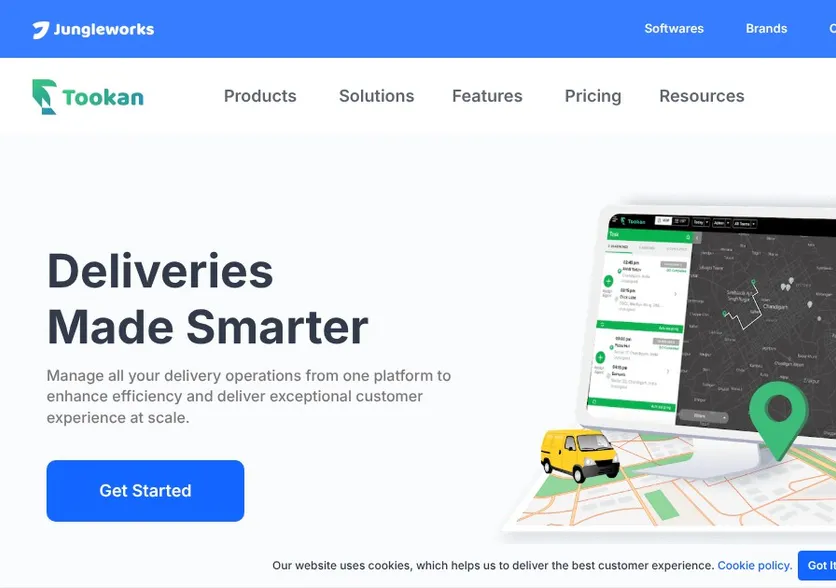
This Tookan plan charges by tasks rather than by drivers or stops, so a fleet pays for the deliveries it actually completes. The Startup plan costs ninety-nine dollars a month billed annually for one thousand tasks, Growth costs two hundred and forty-nine dollars for three thousand, and Standard costs three hundred and ninety-nine dollars for six thousand. A Free Forever plan covers one hundred tasks a month for two agents, but route optimisation is a paid add-on on every tier, so budget for that before you compare the headline price.
What we like
- Task-based pricing means you pay only for completed deliveries
- Free Forever plan covers one hundred tasks a month
- Unlimited agents and drivers on every paid plan
Watch out for
- Route optimisation is a paid add-on on every tier
- Task counting makes the real monthly cost harder to predict
How to try it
- Start on the Free Forever plan with one hundred tasks a month
- Ask sales for the route optimisation add-on price before you upgrade
- Compare the per-task cost at your real monthly volume
Prices above were checked on each vendor’s own website on Nov 27, 2026 and can change — the vendor’s page is the final word. Vendor links are editorial: nobody paid to be listed or ranked here. Vendors who want a featured listing can see how it works on our Get listed page.
How a trucking fleet should plan routes for electric trucks
Start with the battery, not the map, because a route that looks short on miles can still leave a truck stranded if the chargers along the way are slow or out of service. Plan charging stops where the battery needs them, not where the route happens to pass, and build the charging time into the arrival estimate so customers are not promised a delivery the truck cannot make. Live traffic matters twice as much for an electric truck, since a jam burns battery without moving the load.
Count the real cost per driver before you compare headline prices, because most tools charge per driver and a twenty-truck fleet pays twenty seats. A flat-price tool can be cheaper for a large fleet, while a per-stop tool can be cheaper for a fleet with few drivers and many stops. Run one real week of routes inside the trial and compare the planned drive time against what your drivers actually took.
Before you buy
- Count the drivers who need the app, since most tools charge per driver per month
- Check that charging stops are planned by battery level, not just by distance
- Confirm the route respects truck weight, height and road restrictions before you buy
- Ask whether live traffic and re-routing are included or sold as an add-on
- Verify the trial length and whether a card is required before the trial starts
Official websites
Official websites of the products reviewed above. Features and prices were checked against these sites when this guide was written, and they can change, so confirm on the vendor site before you buy.
Frequently asked questions
What is the cheapest route planning software for trucking fleets?
Detrack Pro costs twenty-nine dollars per driver app a month, the lowest per-driver start in this comparison, with a fourteen-day trial and no card required. OptimoRoute Lite costs about thirty-five dollars per driver a month billed annually. For a small fleet that wants no per-driver charge at all, Routific costs one hundred and fifty dollars a month flat for up to one thousand orders. Count your drivers first, because per-driver pricing beats flat pricing only below a certain fleet size.
What makes EV route planning different from normal route planning?
A route planner built for electric trucks plans charging stops by battery level, not just by distance, and warns you when a stop leaves the battery too low for the next leg. It also respects truck weight, height and road restrictions, and it factors in charging time when it estimates arrival. A general planner that only minimises miles can send an electric truck to a charger it cannot reach, which is why EV-specific features matter more than the headline price.
How does per-driver pricing work for route planning tools?
Most route tools charge per driver per month, so a twenty-driver fleet pays twenty seats. Detrack charges twenty-nine dollars per driver app a month and OptimoRoute about thirty-five dollars, while Spoke Dispatch charges by stops instead, so unlimited drivers cost nothing extra. Routific charges one flat monthly price whatever the driver count. Multiply the per-driver rate by your real driver count, including relief drivers, before you compare plans.
Can these tools plan charging stops for electric trucks?
Yes, but only if the tool plans charging by battery state rather than by distance alone. A good EV planner adds charging stops where the battery needs them, estimates the charging time, and adjusts the arrival time to match. It should also flag chargers that are out of service or too slow for a truck. OptimoRoute, Detrack and Upper all plan multi-stop routes, so check during the trial whether each one models battery level before you commit.
What should I check before the free trial ends?
Run one real week of routes inside the trial and compare the planned drive time against what your drivers actually took, because a planner that looks fast on paper can fall apart on real roads. Check that charging stops appear where the battery needs them and that the tool respects truck restrictions on the roads you use. Most trials run seven to thirty days, and OptimoRoute, Routific and Detrack all offer one without asking for a card.
Compare the seven tools above, then run one real week of routes through a free trial before you move the fleet.
Browse Business Tools tools