On this page
Freelancing starts with one question: how much does the platform take from your pay? The eight platforms below run from zero percent commission to twenty percent per order, and every fee was checked on the vendor site on November 26, 2026. Some charge a fee per job, some charge a monthly membership, and some charge nothing at all. Contra is our first pick.
How we researched this
We started with the freelance platforms beginners actually use, then read each fee on the vendor site on November 26, 2026 and noted the free plan or trial each plan carries. We judged them for a beginner who needs a low fee, a clear price and a real chance to win work, and we kept only platforms with a published fee. We dropped PeoplePerHour because its fees are priced in pounds, and we dropped Malt because its pricing is in euros.
Compare the tools
| Name | Best for | Starting price | Free plan | |
|---|---|---|---|---|
 Contra | Beginners who want zero commission and a portfolio-first profile | 0% commission | Free plan with 0 percent commission | Visit |
 Upwork | Beginners who want the biggest job market with the most clients | 0–15% per contract | Free to join; Connects cost about 15 cents each | Visit |
 Fiverr | Beginners who want to sell a fixed-price service with no bidding | 20% of every order | Free to join | Visit |
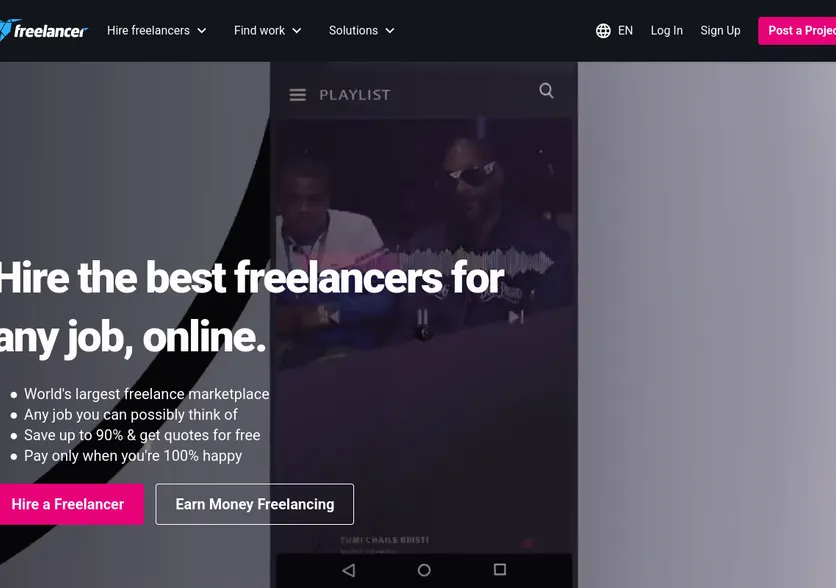
 Freelancer | Beginners who want a low fee with a free plan and hourly work | 10% per project | Free plan | Visit |
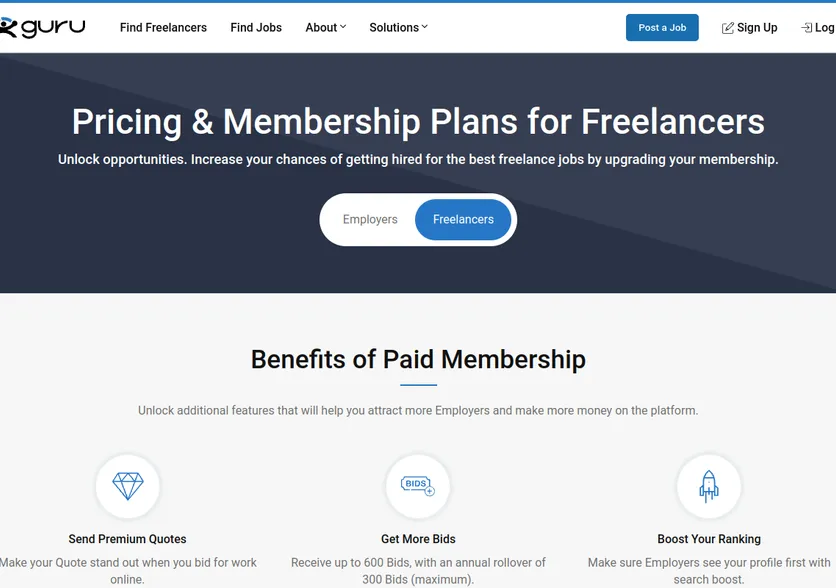
 Guru | Beginners who want a low fee with a free plan and a simple market | 9% job fee | Free Basic plan with 9 percent job fee | Visit |
 Toptal | Senior specialists who want zero commission and high-paying clients | 0% commission | Free to join; invite-only screening | Visit |
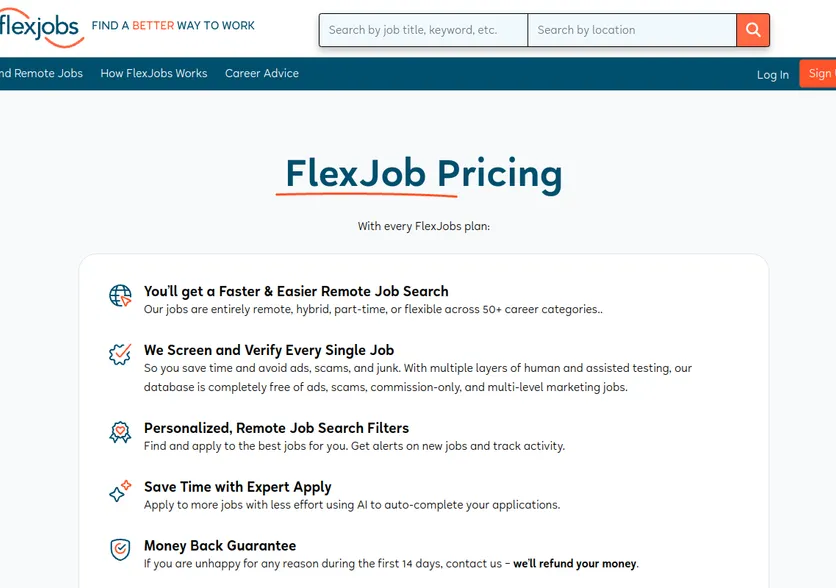
 FlexJobs | Beginners who want a curated job board with no bidding and no commission | $23.95 every 4 weeks | No free plan; two dollars and ninety-five cents for a 14-day trial | Visit |
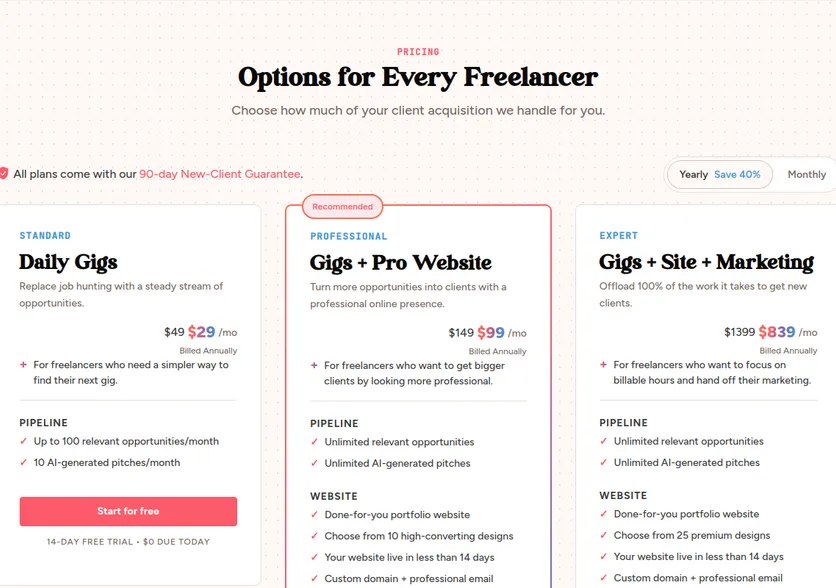
 SolidGigs | Beginners who want a curated list of freelance gigs with no bidding | $29/month | No free plan; 14-day free trial | Visit |
The freelance platforms for beginners, compared
1. Contra
Best for: Beginners who want zero commission and a portfolio-first profile
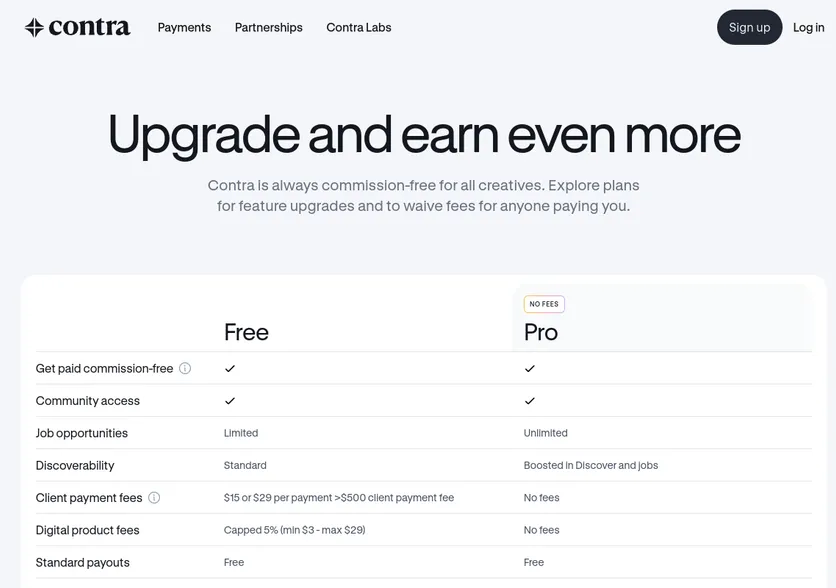
Paid tool Starting price: 0% commission · Free plan with 0 percent commission; Contra Pro costs $29 a month or $199 a year and waives client-side payment fees
Free plan: Free plan with 0 percent commission
Contra is a portfolio-first platform where freelancers pay zero commission on every job, which makes it the best deal for a beginner. This Contra free plan covers zero percent commission with a portfolio and client tools, while Pro costs twenty-nine dollars a month and waives client-side payment fees. A beginner who wants to keep every dollar they earn gets a free platform that takes nothing from the job.
What we like
- Zero percent commission on the free plan
- Portfolio-first profile that shows your work
- Pro plan waives client-side payment fees
Watch out for
- Smaller job market than Upwork or Fiverr
- Pro costs twenty-nine dollars a month for extra tools
How to try it
- Open the Contra pricing page and create a free account
- Build your portfolio with your best work
- Send your first proposal to a client
2. Upwork
Best for: Beginners who want the biggest job market with the most clients
Paid tool Starting price: 0–15% per contract · Variable service fee set per contract from 0 percent to 15 percent, shown before submitting a proposal and locked for the contract life; Connects cost about 15 cents each to apply
Free plan: Free to join; Connects cost about 15 cents each
Upwork is the biggest freelance market in this list, with the most clients and the most jobs across writing, design, coding and admin work. This Upwork fee is variable, set per contract from zero percent to fifteen percent and shown before you submit a proposal. A beginner who wants the most chances to win work gets the biggest market, though the fee changes with every contract.
What we like
- Biggest job market in this list
- Fee shown before you submit a proposal
- Most job types across writing, design and coding
Watch out for
- Fee changes with every contract
- Connects cost money to apply for jobs
How to try it
- Open the Upwork site and create a free account
- Build your profile with your best work
- Send your first proposal and check the fee
3. Fiverr
Best for: Beginners who want to sell a fixed-price service with no bidding
Paid tool Starting price: 20% of every order · Flat 20 percent commission on every order; buyers pay about five and a half percent plus a small fee on top
Free plan: Free to join
Fiverr lets a beginner sell a fixed-price service, called a gig, without bidding against other freelancers for every job. This Fiverr fee is a flat twenty percent on every order, with buyers paying about five and a half percent plus a small fee on top. A beginner who wants to sell a clear service at a clear price gets a simple market, though the fee is the highest in this list.
What we like
- No bidding, so you sell a fixed-price gig
- Simple market with a clear price
- Free to join with no monthly fee
Watch out for
- Highest fee in this list at twenty percent
- Hard to stand out among thousands of gigs
How to try it
- Open the Fiverr site and create a free account
- Create your first gig with a clear price
- Share the gig and wait for your first order
4. Freelancer
Best for: Beginners who want a low fee with a free plan and hourly work
Paid tool Starting price: 10% per project · 10 percent on fixed-price and hourly projects, with a five dollar minimum; 15 percent on Preferred Freelancer and Recruiter projects; clients pay 3 percent with a three dollar minimum
Free plan: Free plan
Freelancer is a big market with fixed-price and hourly work, and the fee is a flat ten percent on most projects. This Freelancer fee is ten percent on fixed-price and hourly projects, with a five dollar minimum, while Preferred Freelancer projects cost fifteen percent. A beginner who wants hourly work with a low fee gets a simple market with a clear rate.
What we like
- Low fee at ten percent on most projects
- Hourly and fixed-price work available
- Free plan with no monthly fee
Watch out for
- Fee rises to fifteen percent on Preferred projects
- Hard to win bids against low-priced freelancers
How to try it
- Open the Freelancer.com site and create a free account
- Build your profile with your best work
- Bid on your first project and check the fee
5. Guru
Best for: Beginners who want a low fee with a free plan and a simple market
Paid tool Starting price: 9% job fee · Basic plan is free with a 9 percent job fee; Professional costs twenty-one dollars and ninety-five cents a month and cuts the fee to 7 percent; Business costs thirty-three dollars and ninety-five cents a month and cuts it to 6 percent; Executive costs forty-nine dollars and ninety-five cents a month and cuts it to 5 percent
Free plan: Free Basic plan with 9 percent job fee
Guru is a freelance market with a free Basic plan and a nine percent job fee, which makes it one of the cheapest paid options here. This Guru Basic plan is free with a nine percent job fee, while Professional costs twenty-one dollars and ninety-five cents a month and cuts the fee to seven percent. A beginner who wants a low fee without a monthly bill gets a simple market with a clear rate.
What we like
- Low fee at nine percent on the free plan
- Free Basic plan with no monthly bill
- Simple market with a clear rate
Watch out for
- Smaller job market than Upwork or Fiverr
- Fee drops only if you pay for a monthly plan
How to try it
- Open the Guru site and create a free account
- Build your profile with your best work
- Send your first proposal and check the fee
6. Toptal
Best for: Senior specialists who want zero commission and high-paying clients
Paid tool Starting price: 0% commission · Freelancers pay 0 percent; clients pay a $79 a month matching subscription if matched; Toptal accepts fewer than 3 percent of applicants
Free plan: Free to join; invite-only screening
Toptal is the most selective platform in this list, accepting fewer than three percent of applicants, and it is built for senior specialists rather than beginners. This Toptal fee is zero percent for freelancers, with clients paying a seventy-nine dollar a month matching subscription if matched. A senior specialist who passes the screening gets high-paying clients with no fee, while a beginner should treat it as a stretch goal.
What we like
- Zero percent commission for freelancers
- High-paying clients with long projects
- No bidding, so clients come to you
Watch out for
- Not for beginners, since fewer than three percent pass
- Screening takes weeks and needs senior skills
How to try it
- Open the Toptal site and apply for the screening
- Pass the skills test and the live interview
- Wait for a client match and start work
7. FlexJobs
Best for: Beginners who want a curated job board with no bidding and no commission
Paid tool Starting price: $23.95 every 4 weeks · Paid job board, not a marketplace; two dollars and ninety-five cents for a 14-day trial, then twenty-three dollars and ninety-five cents every four weeks; three-month and annual plans cost less per month
Free plan: No free plan; two dollars and ninety-five cents for a 14-day trial
FlexJobs is a paid job board, not a marketplace, with curated remote and flexible jobs that a beginner can apply for without bidding. This FlexJobs plan costs twenty-three dollars and ninety-five cents every four weeks, after a two dollar and ninety-five cent fourteen-day trial. A beginner who wants a clean list of real jobs without scams gets a curated board, though the fee is monthly rather than per job.
What we like
- Curated jobs with no scams
- No bidding and no commission per job
- Remote and flexible jobs in one place
Watch out for
- Monthly fee with no free plan
- Not a marketplace, so no client tools
How to try it
- Open the FlexJobs pricing page and start the trial
- Search for remote jobs in your field
- Apply directly to the employer, not through a bid
8. SolidGigs
Best for: Beginners who want a curated list of freelance gigs with no bidding
Paid tool Starting price: $29/month · $29 a month billed annually or $35 billed monthly after a 14-day trial
Free plan: No free plan; 14-day free trial
SolidGigs is a curated gig list that sends freelance leads to your inbox, so a beginner can find work without bidding on every job. This SolidGigs plan costs twenty-nine dollars a month billed annually, or thirty-five dollars billed monthly, after a fourteen-day trial. A beginner who wants leads without the noise of a big market gets a short list of jobs each week.
What we like
- Curated gigs sent to your inbox
- No bidding on every job
- Short list of jobs each week
Watch out for
- Monthly fee with no free plan
- Smaller gig list than a big market
How to try it
- Open the SolidGigs pricing page and start the trial
- Check your inbox for the first gig list
- Apply directly to the client for a gig
Prices above were checked on each vendor’s own website on Nov 26, 2026 and can change — the vendor’s page is the final word. Vendor links are editorial: nobody paid to be listed or ranked here. Vendors who want a featured listing can see how it works on our Get listed page.
What freelance platforms for beginners cost in 2026
Fees run from zero percent on Contra and Toptal to twenty percent on Fiverr, and the billing model decides the real cost. Upwork charges a variable fee per contract from zero percent to fifteen percent, Freelancer.com charges ten percent per project, and FlexJobs charges twenty-three dollars and ninety-five cents every four weeks. The headline fee each vendor shows on its own site is the number in the table above, checked on November 26, 2026.
Start with a free platform and build one strong profile with your best work. Compare how fast you win your first job, whether the fee feels fair, and how the clients treat you. Pick the platform where you win work, because a free platform with no jobs is worth less than a paid platform with real clients.
Before you buy
- Check the fee before you bid, because Upwork shows a variable fee per contract while Fiverr takes a flat twenty percent.
- Confirm the cost to apply, because Upwork Connects cost about fifteen cents each to send a proposal.
- Ask whether the platform charges a membership, because FlexJobs and SolidGigs charge monthly while Upwork and Fiverr are free to join.
- Test the job quality, because a platform with low-paying gigs wastes more time than a platform with a fee.
- Compare the payout speed, because some platforms hold your money for days after a job closes.
Official websites
Official websites of the products reviewed above. Features and prices were checked against these sites when this guide was written, and they can change, so confirm on the vendor site before you buy.
Frequently asked questions
Which freelance platform is best for beginners in 2026?
Contra, at zero percent commission on the free plan, is the best overall pick because a beginner keeps every dollar they earn. Upwork wins on market size, with the most clients and the most jobs across writing, design, coding and admin work. Guru is the best low-fee market, with a nine percent job fee on the free Basic plan.
How much do freelance platforms cost for beginners?
Fees in this list run from zero percent on Contra and Toptal to twenty percent on Fiverr, and the billing model is the whole story. Upwork charges a variable fee per contract, Freelancer.com charges ten percent per project, and FlexJobs charges twenty-three dollars and ninety-five cents every four weeks. A beginner should compare the fee against the job quality, since a low-paying gig costs more time than a high fee.
Is there a free freelance platform for beginners?
Yes, Upwork, Fiverr, Freelancer.com, Guru, Contra and Toptal are all free to join, though Upwork charges about fifteen cents per Connect to apply for a job. FlexJobs and SolidGigs charge a monthly fee with no free plan. A beginner should start on a free platform and only pay for a membership once the work is coming in.
Can a beginner get work on these platforms?
Yes, but the answer depends on the platform. Toptal accepts fewer than three percent of applicants and is built for senior specialists, so a beginner should treat it as a stretch goal. Upwork, Fiverr, Freelancer.com, Guru and Contra all welcome beginners, though winning the first job takes patience. A beginner should start on one platform and build a portfolio before adding a second.
What should a beginner look for in a freelance platform?
Look for a low fee, since Fiverr takes twenty percent while Contra takes nothing, and check whether the platform charges to apply. Check the job quality, because a platform with low-paying gigs wastes more time than a platform with a fee. Test one platform with a real profile before you commit, since a strong portfolio matters more than the platform.
Need everyday business help too? Try Toolsvine's free business tools for freelancers right in your browser.
Browse Business Tools tools