On this page
A small business does not need a data center to ship AI features. It needs an API that answers fast, bills by the token, and does not demand a sales call before the first request. This comparison ranks eight AI infrastructure platforms on what a small team actually pays and builds with. Claude leads the list because its flagship model is available on every major cloud at the same published token rates, and every platform below is judged on the same test: can a small team start cheap, scale usage up, and understand the bill?
How we researched this
We checked every price on the vendor pricing page on November 27, 2026, and only included platforms with a published US dollar list price. We ranked each platform on per-token pricing, model choice, free credits or tiers, and how easily a small team can move from a first experiment to production. Platforms with quote-only pricing were left out, so every price below can be verified on the vendor site.
Compare the tools
| Name | Best for | Starting price | Free plan | |
|---|---|---|---|---|
 Claude | Small teams that want the strongest model at published rates | $2/$10 per 1M tokens | Free Claude account, API billed by use | Visit |
 OpenAI API | Teams that want the widest model range in one API | $2.50/$15 per 1M tokens | Pay as you go, no free plan | Visit |
 Vertex AI | Google Cloud teams that want Gemini with enterprise controls | $1.50/$9 per 1M tokens | Free trial credits for new Google Cloud accounts | Visit |
| Amazon Bedrock | AWS teams that want many models behind one API | $3/$15 per 1M tokens | No free plan, pay-as-you-go billing | Visit |
| Azure AI Foundry | Microsoft shops that want AI inside Azure | $3/$15 per 1M tokens | Free trial credits for new Azure accounts | Visit |
 Hugging Face | Teams that want open models with a tiny fixed bill | $9/mo | Free account with community models | Visit |
| Together AI | Teams that want fast open-model inference at low rates | $0.15/$0.60 per 1M tokens | Free trial credits for new accounts | Visit |
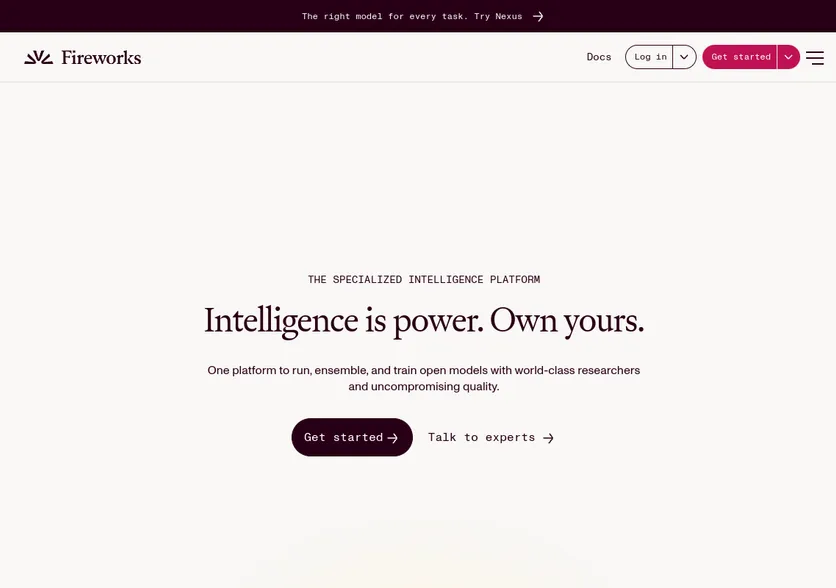
| Fireworks AI | Teams that want the fastest open-model API at low rates | $0.15/$0.60 per 1M tokens | Free trial credits for new accounts | Visit |
The generative ai infrastructure software for small business, compared
1. Claude
Best for: Small teams that want the strongest model at published rates
Paid tool Starting price: $2/$10 per 1M tokens · Claude Sonnet 5 at two dollars per million input tokens and ten dollars per million output tokens, the same rate on Anthropic, Bedrock, Azure and Vertex; Claude Pro subscription is twenty dollars a month, or seventeen dollars billed annually
Free plan: Free Claude account, API billed by use
This Claude API charges two dollars per million input tokens and ten dollars per million output tokens for its flagship Sonnet model, and the same rates apply on Bedrock, Azure and Vertex. A small team can call the API directly or use the model through a cloud it already pays for, which keeps the setup simple. It leads this list because the pricing is public, the model is strong across writing and coding, and there is no minimum spend to start.
What we like
- Published token rates with no minimum spend
- Same model and rates on every major cloud
- Strong results for writing, coding and analysis
Watch out for
- Output tokens cost five times the input rate
- No free API credits on the standard account
How to try it
- Create an API key in the Anthropic console
- Send the first request with the flagship Sonnet model
- Set a monthly usage cap so the bill never surprises you
2. OpenAI API
Best for: Teams that want the widest model range in one API
Paid tool Starting price: $2.50/$15 per 1M tokens · GPT-5.4 at $2.50 per million input tokens and $15 per million output tokens; GPT-5 is $1.25/$10, GPT-5-mini is $0.25/$2 and GPT-5-nano is $0.05/$0.40
Free plan: Pay as you go, no free plan
This OpenAI API charges about two dollars fifty per million input tokens and fifteen dollars per million output tokens for its flagship model, with cheaper mini and nano models for lighter work. One API key covers text, images, audio and search, so a small team can build several features without learning a new platform each time. It is the broadest API in this list, and its model range makes it easy to match cost to the job.
What we like
- Widest model range in a single API
- Cheaper mini and nano models for light work
- One key covers text, images, audio and search
Watch out for
- Flagship output tokens are the priciest in this list
- Older model versions retire on short notice
How to try it
- Create an API key and add a payment method
- Pick the flagship model for hard tasks and mini for light ones
- Set usage limits per key to control the monthly spend
3. Vertex AI
Best for: Google Cloud teams that want Gemini with enterprise controls
Paid tool Starting price: $1.50/$9 per 1M tokens · Gemini 3.5 Flash at $1.50 per million input tokens and $9.00 per million output tokens; cached input is $0.15 and batch requests are $0.75/$4.50
Free plan: Free trial credits for new Google Cloud accounts
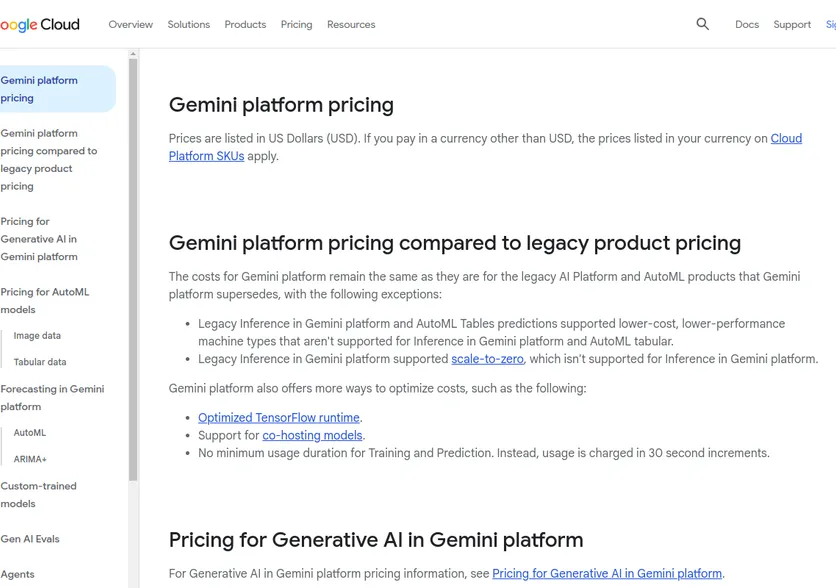
This Vertex AI platform charges about one dollar fifty per million input tokens and nine dollars per million output tokens for its Gemini Flash model, with cached input far cheaper still. It runs inside Google Cloud, so a team already on Google gets the same billing, security and region controls as the rest of its stack. It suits small businesses that want a strong model with enterprise-grade governance rather than a standalone API account.
What we like
- Cached input costs a tenth of the standard rate
- Enterprise security and region controls included
- Batch requests cut the price in half
Watch out for
- Older Gemini versions retire on short notice
- Google Cloud setup takes longer than a simple API key
How to try it
- Enable the Vertex AI API in Google Cloud
- Create a service account and request a token
- Call the Gemini Flash model and watch the usage dashboard
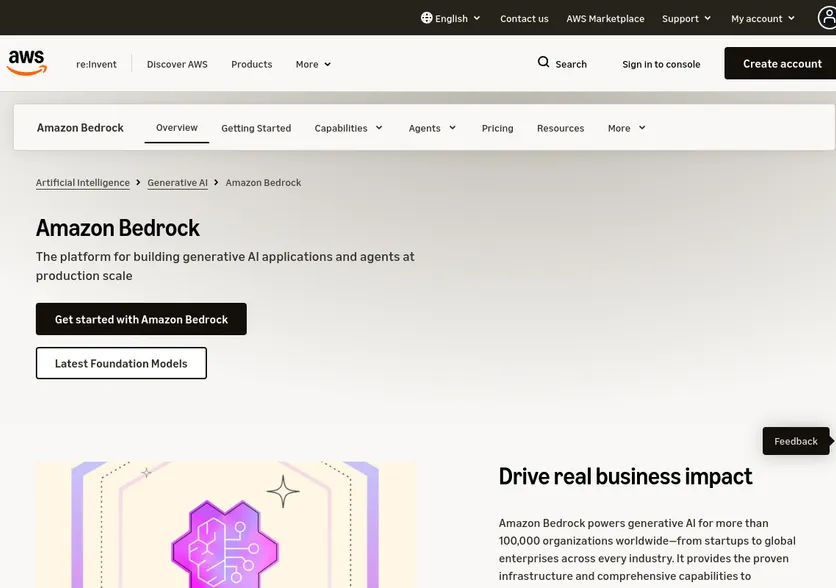
4. Amazon Bedrock
Best for: AWS teams that want many models behind one API
Paid tool Starting price: $3/$15 per 1M tokens · Claude Sonnet 4.6 at $3/$15 per million tokens; open-weight gpt-oss-120b is $0.15/$0.60 per million tokens
Free plan: No free plan, pay-as-you-go billing
This Amazon Bedrock service charges three dollars per million input tokens and fifteen dollars per million output tokens for the Claude Sonnet model, and far less for open-weight models. One API covers models from several providers, so a team can switch models without rewriting the integration. It suits small businesses already on AWS, because the bill, the permissions and the data controls all live in the same console.
What we like
- Many providers behind one API
- Open-weight models cost a fraction of flagship rates
- AWS billing and permissions in one console
Watch out for
- Flagship model rates are higher than direct APIs
- Model access must be requested per region
How to try it
- Enable Bedrock in the AWS console for your region
- Request access to the models you want to use
- Call the model through the unified Bedrock API
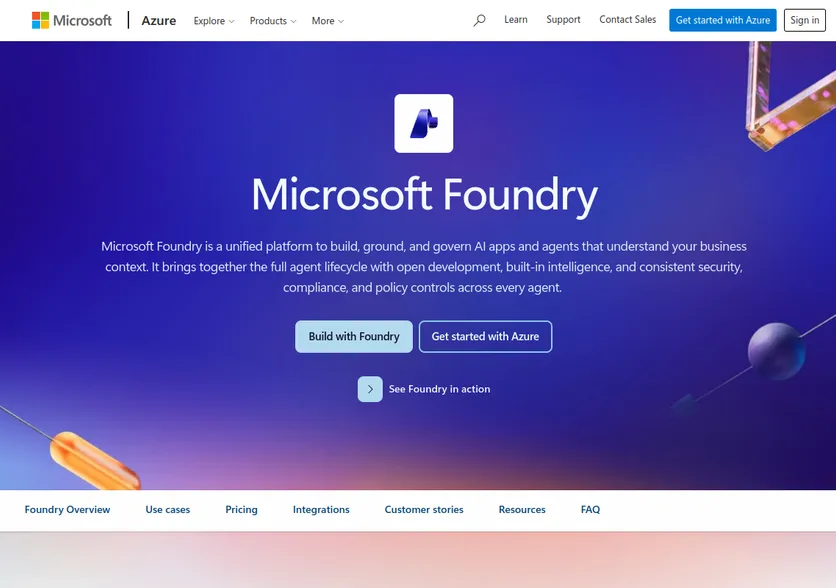
5. Azure AI Foundry
Best for: Microsoft shops that want AI inside Azure
Paid tool Starting price: $3/$15 per 1M tokens · Claude Sonnet 4.6 at $3/$15 per million tokens on Azure; Azure OpenAI GPT-5 is $1.25/$10 per million tokens
Free plan: Free trial credits for new Azure accounts
This Azure AI Foundry platform charges three dollars per million input tokens and fifteen dollars per million output tokens for the Claude Sonnet model, with OpenAI models available in the same portal. A team can test models side by side, deploy the winner, and manage everything with Azure identity and billing. It suits Microsoft shops best, because the AI work lands in the same tenant, the same compliance boundary and the same invoice as everything else.
What we like
- Claude and OpenAI models in one portal
- Azure identity and compliance built in
- Model playground makes comparison easy
Watch out for
- Token rates match the dearer cloud-hosted prices
- Portal navigation is deep and takes learning
How to try it
- Create an AI Foundry project in the Azure portal
- Compare models in the playground before you deploy
- Deploy the chosen model and call it from your app
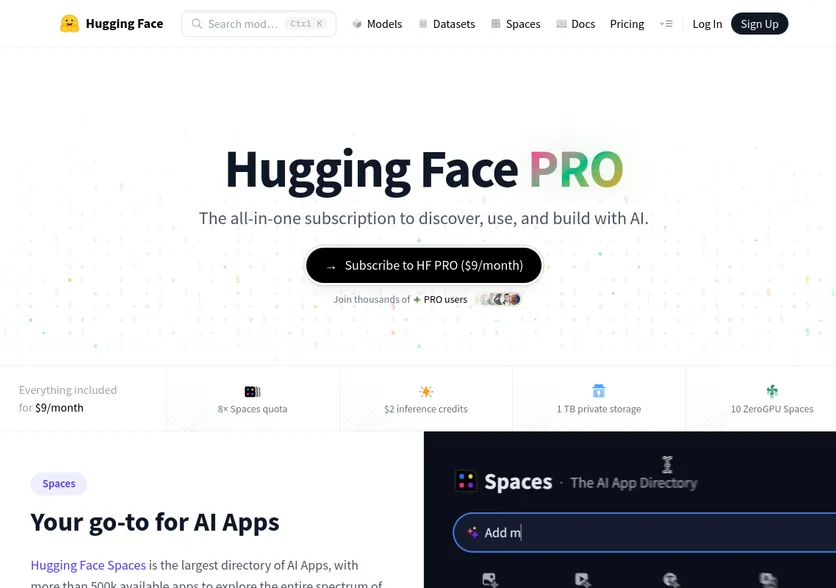
6. Hugging Face
Best for: Teams that want open models with a tiny fixed bill
Paid tool Starting price: $9/mo · PRO plan at nine dollars a month including two dollars a month of inference credits; Team is twenty dollars a user a month and Enterprise is fifty dollars a user a month
Free plan: Free account with community models
This Hugging Face PRO plan costs nine dollars a month, including two dollars of inference credits, and it opens the door to thousands of open models hosted on one platform. A small team can try a model in the browser, call it through the inference API, and switch models without a new contract. It is the cheapest fixed-price entry in this list, and it suits teams that prefer open models and experimentation over a single flagship API.
What we like
- Thousands of open models in one place
- Cheapest fixed monthly price in this list
- Free account covers community models
Watch out for
- Inference credits in PRO are only two dollars
- Open models vary widely in quality
How to try it
- Create a free account and browse the model hub
- Test a model in the browser playground
- Upgrade to PRO and call the inference API with a token
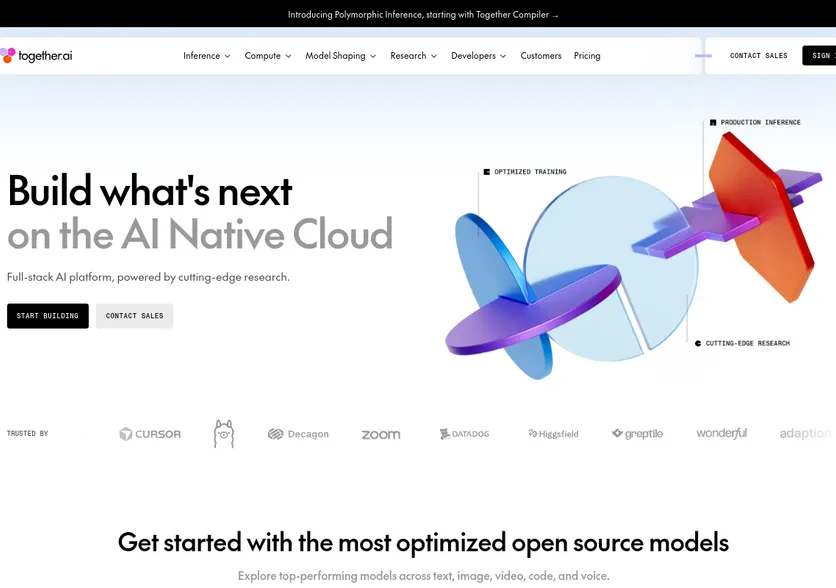
7. Together AI
Best for: Teams that want fast open-model inference at low rates
Paid tool Starting price: $0.15/$0.60 per 1M tokens · Open-weight gpt-oss-120b at $0.15 per million input tokens and $0.60 per million output tokens on serverless; dedicated H100 GPUs are $5.49 an hour and B200 GPUs are $9.29 an hour
Free plan: Free trial credits for new accounts
This Together AI platform charges fifteen cents per million input tokens and sixty cents per million output tokens for the open-weight flagship model on its serverless API. The same platform rents dedicated GPUs by the hour for teams that need steady throughput, so a small business can start serverless and move to dedicated hardware only when volume justifies it. It suits teams that run open models in production and care about the per-token bill.
What we like
- Lowest per-token rates in this comparison
- Serverless and dedicated GPU options in one place
- Fast inference on open models
Watch out for
- No flagship closed model of its own
- Dedicated GPUs add a separate hourly bill
How to try it
- Create an account and copy the API key
- Send the first serverless request to the open model
- Move to a dedicated GPU only when volume justifies it
8. Fireworks AI
Best for: Teams that want the fastest open-model API at low rates
Paid tool Starting price: $0.15/$0.60 per 1M tokens · Open-weight gpt-oss-120b at $0.15 per million input tokens and $0.60 per million output tokens; cached input is $0.015, and Kimi K3 is $3/$15 per million tokens
Free plan: Free trial credits for new accounts
This Fireworks AI platform charges fifteen cents per million input tokens and sixty cents per million output tokens for the open-weight flagship model, with cached input far cheaper still. It is built for speed, so a small team can run a chat feature or a document pipeline without the latency that makes users wait. It suits production teams that chose open models and now want the fastest possible inference at a low per-token price.
What we like
- Lowest per-token rates in this comparison
- Cached input costs a tenth of the standard rate
- Built for fast production inference
Watch out for
- No flagship closed model of its own
- Model catalog is smaller than the big clouds
How to try it
- Create an account and copy the API key
- Test the open model in the playground
- Ship the API call and enable prompt caching to cut costs
Prices above were checked on each vendor’s own website on Nov 27, 2026 and can change — the vendor’s page is the final word. Vendor links are editorial: nobody paid to be listed or ranked here. Vendors who want a featured listing can see how it works on our Get listed page.
How a small business should pick AI infrastructure
Start with the workload, not the model leaderboard. A support chatbot that answers short questions can run on a mini or nano model for a fraction of the flagship price, while a document analysis feature needs the strongest model you can afford. Compare the output token price, not the input price, because most real tasks generate far more output than they read in input. Check the free tier and trial credits first, since a small team can run weeks of experiments on credits before the first bill. Look at where the model lives: a cloud you already pay for keeps billing and permissions in one place, while a standalone API is faster to start. Finally, set a usage cap on day one, because a runaway loop or a popular feature can turn a ten-dollar experiment into a four-figure bill overnight.
Before you buy
- Price the output tokens first, since most real tasks generate far more output than they read in input
- Check the free tier and trial credits, because a small team can run weeks of experiments before the first bill
- Confirm the model is available in the region and cloud you already use, not only on the vendor site
- Set a monthly usage cap on day one so a runaway loop cannot turn into a four-figure bill
- Look at the retirement dates for the model version you pick, since older versions stop working on short notice
Official websites
Official websites of the products reviewed above. Features and prices were checked against these sites when this guide was written, and they can change, so confirm on the vendor site before you buy.
Frequently asked questions
How much does AI API usage cost a small business?
It depends on the model and the volume, but the floor is low. Open-weight models cost about fifteen cents per million input tokens and sixty cents per million output, so a small chatbot can run for a few dollars a month. Flagship models cost two to three dollars per million input tokens and nine to fifteen dollars per million output, which keeps a modest feature under fifty dollars a month. Set a usage cap and watch the dashboard.
What is the cheapest AI infrastructure for a small business?
Together AI and Fireworks AI are the cheapest per-token options at fifteen cents per million input tokens for open-weight models. Hugging Face is the cheapest fixed-price option at nine dollars a month for PRO, including two dollars of inference credits. If the team needs a flagship closed model, Claude is the cheapest of the big three at two dollars per million input tokens. Pick open models for price and flagship models for the hardest tasks.
Do I need a cloud account to use AI models?
No, and most small teams should start without one. Claude, OpenAI, Together AI, Fireworks AI and Hugging Face all work with one API key and a payment method, with no cloud account needed. Vertex AI, Bedrock and Azure AI Foundry need a cloud account, but they suit teams already on Google Cloud, AWS or Azure, where billing and permissions stay in one place. Start with an API key and move to a cloud only when volume or compliance needs it.
What is the difference between input and output tokens?
Input tokens are the text you send to the model, and output tokens are the text it generates back. Vendors charge different rates for each, and output almost always costs more: Claude charges two dollars per million input tokens and ten dollars per million output tokens. A task that writes long answers costs far more than one that reads long documents, so price the output rate first when you estimate the monthly bill.
Can a small business run AI without a developer?
Yes, for simple uses, because every platform in this list has a playground where you can test prompts without writing code. Hugging Face lets you try models in the browser, and the cloud platforms offer no-code connectors and chat interfaces. Building a feature into your own product still needs a developer, but the API itself is a standard web request. Start in the playground, prove the value, and hire the developer once the idea works.
Compare the eight platforms above, then start with free credits on the platform that matches your stack before you pay for a full year.
Browse AI Tools (In-Browser, No API) tools