On this page
A startup cannot outspend its competitors on marketing, so it has to out-choose them. The right stack costs less than a hundred dollars a month, covers email, automation and search, and grows with the list instead of punishing the startup for growing. This comparison ranks eight marketing tools for startups on what a new company actually gets for its first dollars. Brevo leads the list because nine dollars a month buys a real email platform priced by sends, and every tool below is judged on the same test: can a startup market properly before the revenue arrives?
How we researched this
We checked every price on the vendor pricing page on November 27, 2026, and only included tools with a published US dollar list price. We ranked each tool on entry price, free plan generosity, automation that a small team can actually use, and how the bill grows as the list grows. Tools with quote-only pricing were left out, so every price below can be verified on the vendor site.
Compare the tools
| Name | Best for | Starting price | Free plan | |
|---|---|---|---|---|
 Brevo | Startups that want the cheapest real email platform | $9/mo | Free plan with 300 emails a day | Visit |
 Mailchimp | Startups that want the familiar default for email | $13/mo | Free plan for 250 contacts | Visit |
 HubSpot Marketing Hub | Startups that want a free CRM to grow into paid marketing | $15/mo/seat | Free plan with CRM, forms and email | Visit |
 ActiveCampaign | Startups that automate onboarding from day one | $15/mo | 14-day free trial, no free plan | Visit |
 Klaviyo | Ecommerce startups that sell through personalized flows | $20/mo | Free plan for 250 profiles | Visit |
 MailerLite | Startups that want simple email at a startup price | $9/mo | Free plan for 250 subscribers | Visit |
 Semrush | Startups that win customers through search content | $117.33/mo | Free account with limited searches | Visit |
 Constant Contact | Startups that want phone support and a simple editor | $10.20/mo | Free trial available, no free plan | Visit |
The google workspace for marketing software for startups, compared
1. Brevo
Best for: Startups that want the cheapest real email platform
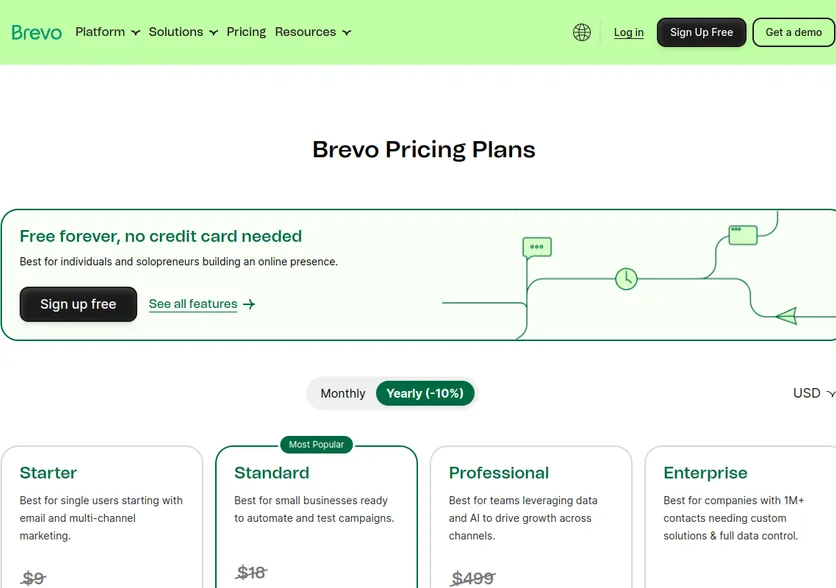
Paid tool Starting price: $9/mo · Starter plan at nine dollars a month for five thousand emails; Standard is eighteen dollars a month and adds automation, landing pages and A/B testing, and the free plan allows three hundred emails a day with unlimited contacts
Free plan: Free plan with 300 emails a day
This Brevo Starter plan costs nine dollars a month for five thousand emails, and it is the cheapest serious starting point in this list because it charges by sends rather than by contacts. A startup with a big list and light sending pays almost nothing, while the free plan covers three hundred emails a day with unlimited contacts stored. It suits a new company that needs email, SMS and chat in one place before it can afford a bigger stack.
What we like
- Cheapest paid entry in this comparison
- Unlimited contacts stored on the free plan
- Email, SMS and chat in one account
Watch out for
- Automation waits for the eighteen-dollar Standard plan
- Free plan caps at three hundred emails a day
How to try it
- Create the account and import the contact list for free
- Design the first campaign from a template
- Upgrade to Starter when the daily send cap starts to bite
2. Mailchimp
Best for: Startups that want the familiar default for email
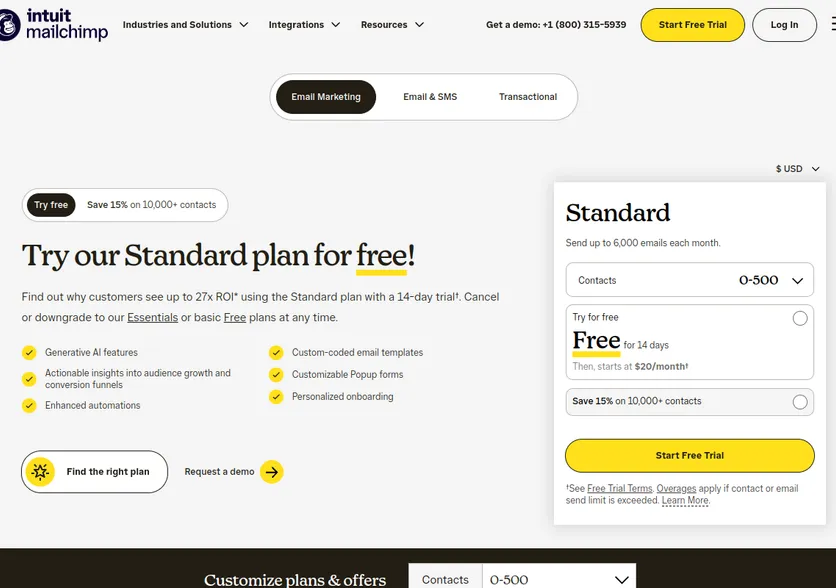
Paid tool Starting price: $13/mo · Essentials plan at thirteen dollars a month for five hundred contacts with no annual rate published; Standard is twenty dollars a month, and the free plan was cut to two hundred fifty contacts in February 2026
Free plan: Free plan for 250 contacts
This Mailchimp Essentials plan costs thirteen dollars a month for five hundred contacts, and it remains the default email tool most founders already know how to use. The templates look polished with almost no design work, the audience tools are simple, and a new hire can send the first campaign on day one. It suits a startup that values familiarity over the lowest price, though the free plan now covers only two hundred fifty contacts after the February 2026 cut.
What we like
- The most familiar email tool for new hires
- Polished templates with almost no design work
- Simple audience tools for a first list
Watch out for
- Free plan now covers only two hundred fifty contacts
- Unsubscribed contacts still count toward the limit
How to try it
- Create the audience and import the first contacts
- Pick a template and write the first campaign
- Schedule the send and watch the first opens come in
3. HubSpot Marketing Hub
Best for: Startups that want a free CRM to grow into paid marketing
Paid tool Starting price: $15/mo/seat · Starter plan at fifteen dollars a month per seat billed annually, or twenty dollars billed monthly; a new-customer promo from seven dollars a seat billed annually is a first-term offer only, and extra marketing contacts cost fifty dollars per thousand a month
Free plan: Free plan with CRM, forms and email
This HubSpot Marketing Hub free plan gives a startup a real CRM with forms, landing pages and email at no cost, and Starter costs fifteen dollars a month per seat billed annually when the team is ready to pay. The contact record follows a lead from the first form fill to the first deal, so the startup never rebuilds its data when it grows. It suits founders who want to start free and scale on the same platform rather than migrate later.
What we like
- Free plan includes a real CRM, not a trial
- Contact record follows leads from form to deal
- No migration needed when the startup grows
Watch out for
- Per-seat pricing grows with every hire
- Extra contacts cost fifty dollars per thousand a month
How to try it
- Start on the free plan with the CRM and forms
- Publish a landing page and capture the first leads
- Upgrade to Starter when the contact list passes one thousand
4. ActiveCampaign
Best for: Startups that automate onboarding from day one
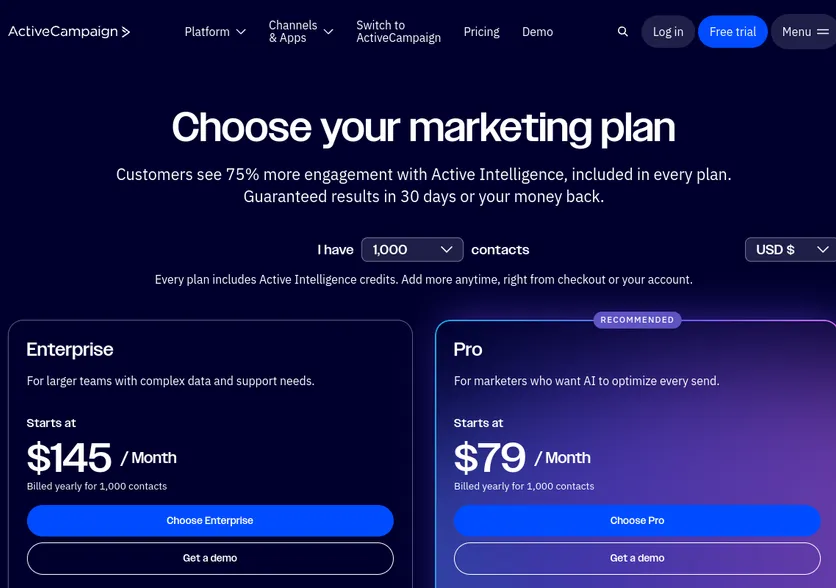
Paid tool Starting price: $15/mo · Starter plan at fifteen dollars a month billed annually for one thousand contacts, or nineteen dollars billed monthly; Plus is forty-nine dollars a month and adds the CRM and lead scoring
Free plan: 14-day free trial, no free plan
This ActiveCampaign Starter plan costs fifteen dollars a month billed annually for one thousand contacts, and it gives a startup the deepest automation in this list from the first paid month. A welcome series, a trial-expiry nudge and a win-back flow can all run while the founder is building the product. It suits startups that sell through onboarding journeys rather than one-off broadcasts, though each Starter automation caps at five actions.
What we like
- Deepest automation in this comparison
- Onboarding journeys run without manual work
- Site tracking shows what new users actually do
Watch out for
- Each Starter automation caps at five actions
- No free plan, only a fourteen-day trial
How to try it
- Map the signup and onboarding journey
- Build the workflow with waits, tags and conditions
- Launch with a small segment and expand as it converts
5. Klaviyo
Best for: Ecommerce startups that sell through personalized flows
Paid tool Starting price: $20/mo · Email plan from twenty dollars a month for two hundred fifty-one to five hundred profiles; the free plan covers two hundred fifty profiles and five hundred emails a month, and SMS is billed separately
Free plan: Free plan for 250 profiles
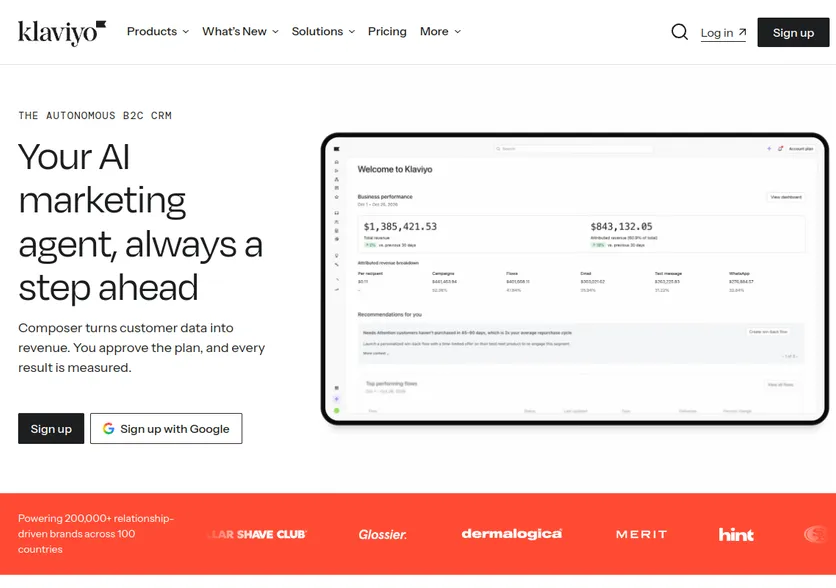
This Klaviyo Email plan starts at twenty dollars a month for up to five hundred profiles, and it is the ecommerce startup's best friend: store events trigger abandoned-cart emails, post-purchase flows and win-back campaigns without a marketer writing each one by hand. The revenue per email is reported clearly, so a founder can see exactly what the tool earns. It suits online stores, because the value comes from purchase behavior that a plain email list cannot provide.
What we like
- Store events trigger emails automatically
- Revenue per email is reported clearly
- Free plan covers two hundred fifty profiles
Watch out for
- Price rises fast as the profile count grows
- Built for stores, not for general newsletters
How to try it
- Connect the store and sync the first purchase events
- Turn on the abandoned-cart and welcome flows
- Watch revenue per email to see what the tool earns
6. MailerLite
Best for: Startups that want simple email at a startup price
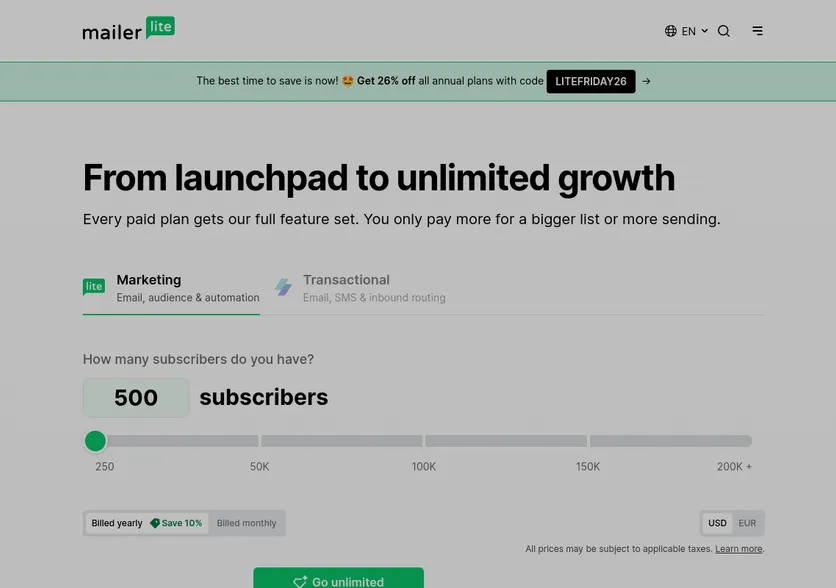
Paid tool Starting price: $9/mo · Comfort plan at nine dollars a month billed annually, or twelve dollars billed monthly; the plan was renamed from Growing Business in June 2026, and the free plan covers two hundred fifty subscribers and two thousand five hundred emails
Free plan: Free plan for 250 subscribers
This MailerLite Comfort plan costs nine dollars a month billed annually, and it is the simplest email tool a startup can buy: a clean editor, straightforward automation, landing pages and honest pricing that does not hide behind contact-count games. A founder can send the first newsletter within an hour of signing up. It suits small teams that want email done well without learning a platform that takes a week to understand.
What we like
- Simplest editor in this comparison
- Honest pricing with no contact-count games
- Free plan covers two hundred fifty subscribers
Watch out for
- Automation is lighter than ActiveCampaign
- Fewer integrations than the bigger platforms
How to try it
- Create the account and import the first subscribers
- Build the welcome automation in the visual editor
- Send the first newsletter and track the opens
7. Semrush
Best for: Startups that win customers through search content
Paid tool Starting price: $117.33/mo · Pro plan at one hundred seventeen dollars thirty-three a month billed annually, or one hundred thirty-nine dollars ninety-five billed monthly; the plan covers five projects with five hundred keywords tracked daily, and a free account allows limited searches
Free plan: Free account with limited searches
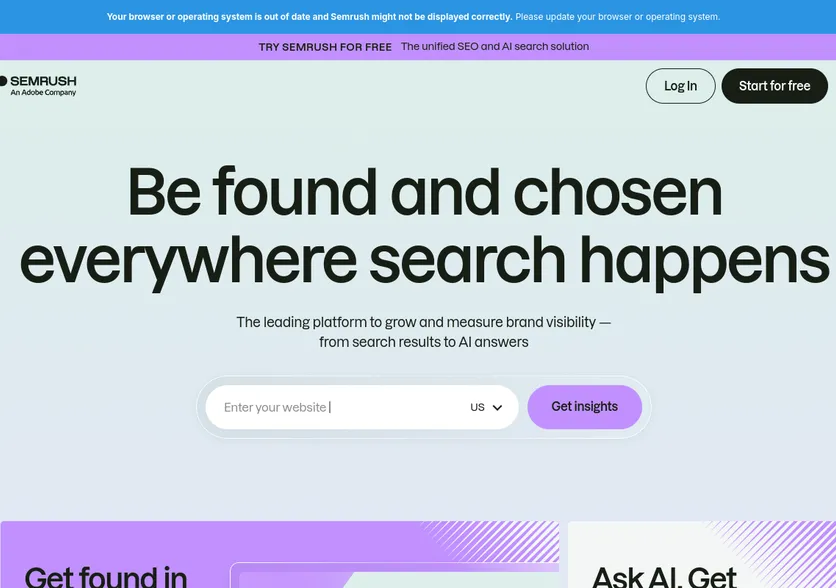
This Semrush Pro plan costs about one hundred seventeen dollars a month billed annually, and it is the most expensive tool in this list for a reason: one subscription covers the keyword research, the site audit, the rank tracking and the competitor analysis a startup needs to win search traffic. A founder can find the keywords worth writing about, brief the article, and track the ranking in the same place. It suits content-led startups that treat search as their main growth channel.
What we like
- Keyword research, audit and tracking in one place
- Five projects with five hundred tracked keywords
- Free account for limited searches
Watch out for
- Most expensive tool in this comparison
- Content tools need the Guru plan or higher
How to try it
- Add the startup website as a project
- Find the keywords worth writing about first
- Track the ranking weekly as the content goes live
8. Constant Contact
Best for: Startups that want phone support and a simple editor
Paid tool Starting price: $10.20/mo · Lite plan at ten dollars twenty a month prepaid for twelve months, or twelve dollars a month billed monthly, for up to five hundred contacts; Standard is twenty-nine dollars seventy-five prepaid and Premium is sixty-eight dollars prepaid
Free plan: Free trial available, no free plan
This Constant Contact Lite plan costs ten dollars twenty a month prepaid for a year, or twelve dollars month to month, for up to five hundred contacts, and it is the simplest email tool in this list for a non-technical founder. The editor is easy, the support team answers the phone, and the price rises only when the contact list grows. It suits local businesses and nonprofits that send a regular newsletter and want help when something goes wrong.
What we like
- Phone support included for beginners
- Simplest editor in this comparison
- Price rises only when the list grows
Watch out for
- No free plan, only a trial
- Automation is basic on the Lite plan
How to try it
- Create the account and import the contact list
- Build the first newsletter in the simple editor
- Prepay for twelve months to lock the lower rate
Prices above were checked on each vendor’s own website on Nov 27, 2026 and can change — the vendor’s page is the final word. Vendor links are editorial: nobody paid to be listed or ranked here. Vendors who want a featured listing can see how it works on our Get listed page.
How a startup should pick its first marketing stack
Start with the budget the startup actually has, not the stack it hopes to afford. Nine dollars a month on Brevo or MailerLite buys a real email platform, and the free HubSpot plan buys a CRM, so a startup can market properly for under twenty dollars a month. Count the cost at five thousand contacts, not five hundred, because the plan that looks cheap today can triple by the time the list grows. Check the free plan before paying: HubSpot and Brevo both offer genuinely useful free tiers, while ActiveCampaign and Constant Contact offer only a trial. Test the automation on the plan the startup would buy, since Starter caps and gated features hide behind the headline price. Finally, pick tools that share data, because a startup with email in one place and contacts in another wastes its scarcest resource, which is time.
Before you buy
- Price the stack at five thousand contacts, not five hundred, since the bill triples as the list grows
- Check the free plan first, because HubSpot and Brevo offer real free tiers while others offer only a trial
- Confirm the automation the startup needs is on the plan it would buy, not gated behind a higher tier
- Test the tool with a real campaign during the trial, not with the sample data
- Look at whether email and contacts share one system, since split data wastes the scarcest resource, time
Official websites
Official websites of the products reviewed above. Features and prices were checked against these sites when this guide was written, and they can change, so confirm on the vendor site before you buy.
Frequently asked questions
What is the best marketing software for a startup?
Brevo is the best overall pick for a startup, because nine dollars a month buys a real email platform priced by sends, with a free plan underneath it. HubSpot is the best free start, since its free plan includes a real CRM, forms and email. MailerLite is the simplest option at nine dollars a month billed annually, and ActiveCampaign is the best for automation. Pick Brevo for price, HubSpot for the free CRM, and MailerLite for simplicity.
How much should a startup spend on marketing software?
A startup can market properly for under twenty dollars a month: Brevo Starter and MailerLite Comfort cost nine dollars a month billed annually, and HubSpot offers a free plan with CRM, forms and email. ActiveCampaign Starter at fifteen dollars a month covers deep automation, while Semrush Pro at about one hundred seventeen dollars a month is the big spend for content-led startups. Budget twenty dollars a month to start, and add tools only when the list or traffic justifies them.
Is there free marketing software for startups?
Yes, and the free tiers are genuinely useful. HubSpot offers a free plan with CRM, forms, landing pages and email, Brevo is free for three hundred emails a day with unlimited contacts, and MailerLite and Klaviyo are free for two hundred fifty subscribers or profiles. Mailchimp is free for two hundred fifty contacts after its February 2026 cut. ActiveCampaign, Semrush and Constant Contact offer only a trial or a limited free account, not a full free plan.
Which email tool is cheapest for a startup list?
Brevo is the cheapest for most startups, because it prices by emails sent rather than contacts stored, so a big list with light sending stays at nine dollars. MailerLite Comfort costs nine dollars a month billed annually, and Constant Contact Lite costs ten dollars twenty prepaid yearly. Mailchimp Essentials costs thirteen dollars a month for five hundred contacts and rises fast. Compare the price at the list size the startup expects in a year, not today.
Should a startup buy Semrush this early?
Only if search is the main growth channel. Semrush Pro costs about one hundred seventeen dollars a month billed annually, which is six times the price of the email tools in this list, but it replaces several research tools at once. A startup that wins customers through content should buy it early and treat it as the content engine. A startup that wins customers through ads, partnerships or sales should wait, and spend the money on email and automation first.
Compare the eight tools above, then start with a free plan on the tool that matches your budget before you pay for a full year.
Browse Business Tools tools