On this page
Event planners juggle clients, vendors and dates, and every booking starts with a proposal, a contract and a deposit. HoneyBook leads this list because it turns an inquiry into a signed contract and a paid invoice in one flow. The other seven tools cover workflow automation, scheduling and team messaging, so a planning business can run several events at once without dropping a client. Prices below are the list prices we verified on 27 November 2026.
How we researched this
We checked the vendor pricing pages on 27 November 2026 and kept only tools with a published starting price, so every figure below comes from the vendor, not a directory. We favoured tools that run bookings, contracts and payments for events, and we dropped any vendor that had shut down or stopped publishing prices.
Compare the tools
| Name | Best for | Starting price | Free plan | |
|---|---|---|---|---|
 HoneyBook | Coaches and creatives who book clients and send proposals | $16/mo | 7-day free trial, no free plan | Visit |
 Dubsado | Coaches and event planners who want deep workflow automation | $16.67/mo | Free trial up to 3 clients, no free plan | Visit |
| 17hats | Solo coaches and small firms that need CRM plus invoicing | $50/mo | Free plan available | Visit |
 Gusto | Companies that want payroll, benefits and onboarding in one place | $49/mo + $6/person/mo | No free plan, demo available | Visit |
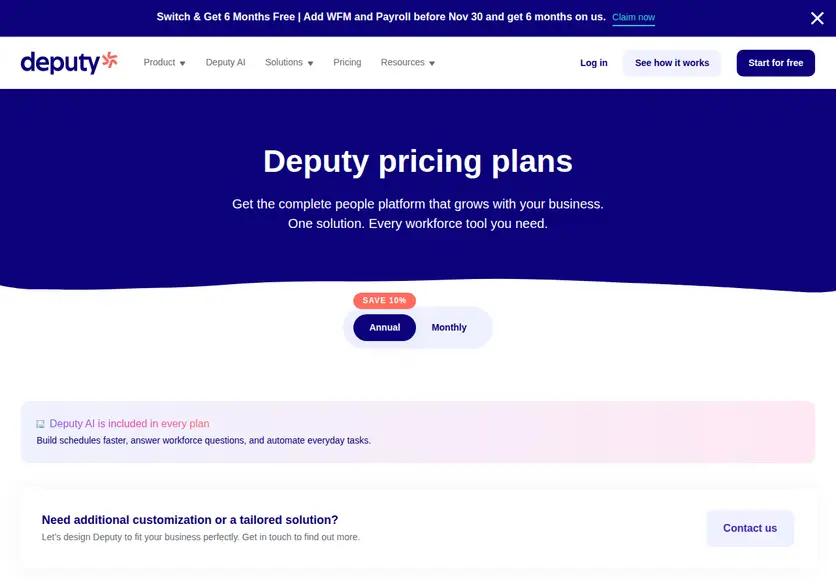
 Deputy | Shift teams that need scheduling, time tracking and payroll exports | $4.50/user/mo | 31-day free trial, no free plan | Visit |
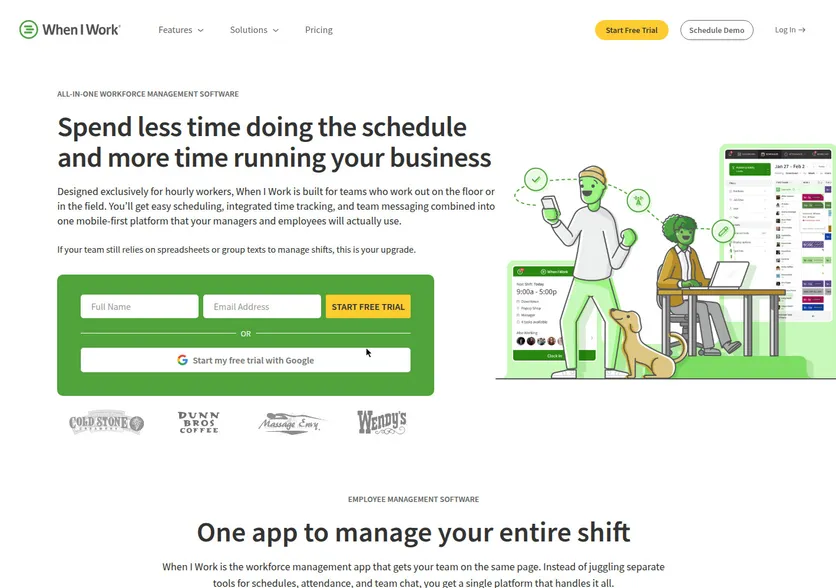
 When I Work | Small hourly teams that want cheap, simple scheduling | $2.50/user/mo | 14-day free trial, no free plan | Visit |
 Sling | Shift teams that want free scheduling with cheap paid upgrades | $1.70/user/mo | Free plan for up to 30 users | Visit |
 Connecteam | Deskless teams that need HR, ops and comms in one app | $29/mo | Free plan for up to 10 users | Visit |
The hr software for event planners, compared
1. HoneyBook
Best for: Coaches and creatives who book clients and send proposals
Paid tool Starting price: $16/mo · Sixteen dollars a month billed annually on Starter, nineteen month to month; Essentials is thirty-nine dollars a month, Premium seventy-nine, and Starter covers one user
Free plan: 7-day free trial, no free plan
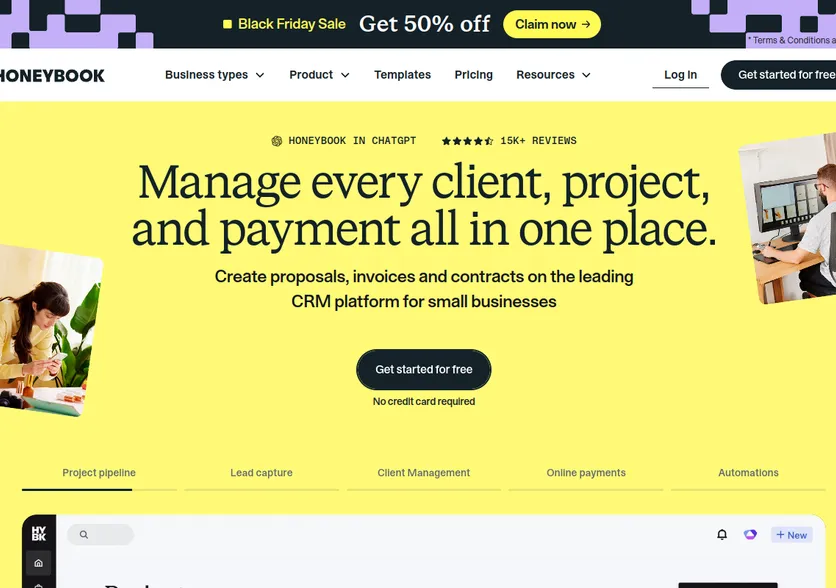
For event planners, HoneyBook books clients, sends proposals and collects payments for coaches. HoneyBook runs the client pipeline for coaches and creatives, from inquiry and proposal to contract, invoice and payment. HoneyBook is built around the booking flow, so a coaching inquiry becomes a signed contract without extra tools.
What we like
- Proposals, contracts and invoices share one flow
- Client portals look professional
- Payments are built in
Watch out for
- Starter covers one user only
- The seven-day trial is short
How to try it
- Send a proposal to a new coaching client
- Get the contract signed online
- Invoice and collect payment in the portal
2. Dubsado
Best for: Coaches and event planners who want deep workflow automation
Paid tool Starting price: $16.67/mo · Two hundred dollars a year on Starter, or twenty dollars month to month; Premier is four hundred dollars a year, and extra brands cost ten dollars a month each
Free plan: Free trial up to 3 clients, no free plan
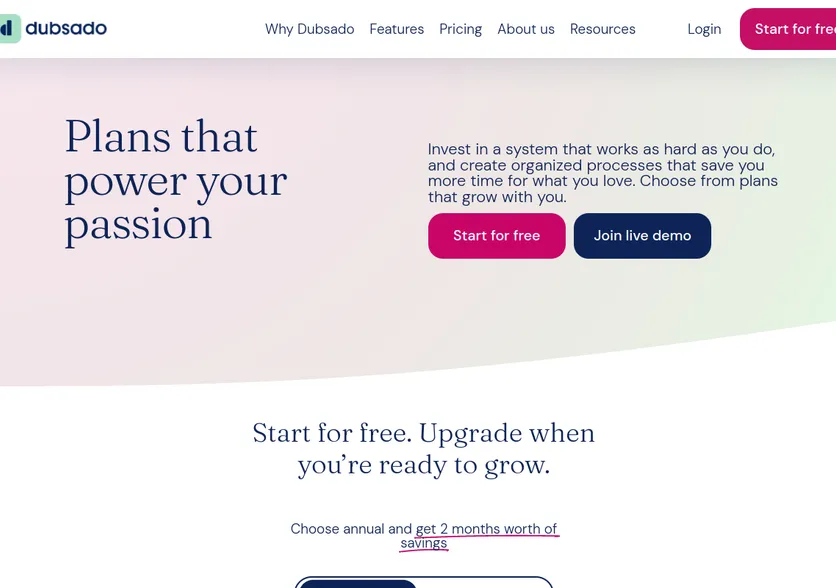
For event planners, Dubsado automates client workflows, forms and invoices for small firms. Dubsado automates the client workflow with forms, contracts, invoices and scheduling, and its templates cover the whole journey from inquiry to payment. Dubsado is cheaper than most rivals on the annual plan, and its free trial has no time limit.
What we like
- Workflow automation is deep and flexible
- Templates cover the whole client journey
- The annual price is low for the feature set
Watch out for
- The interface takes time to learn
- Support is email-based, not live chat
How to try it
- Build a workflow from inquiry to invoice
- Send a contract and payment plan to a client
- Automate follow-ups and reminders
3. 17hats
Best for: Solo coaches and small firms that need CRM plus invoicing
Paid tool Starting price: $50/mo · Fifty dollars a month billed annually, sixty dollars month to month, or eight hundred dollars for two years; the price covers the full feature set with no tiers
Free plan: Free plan available
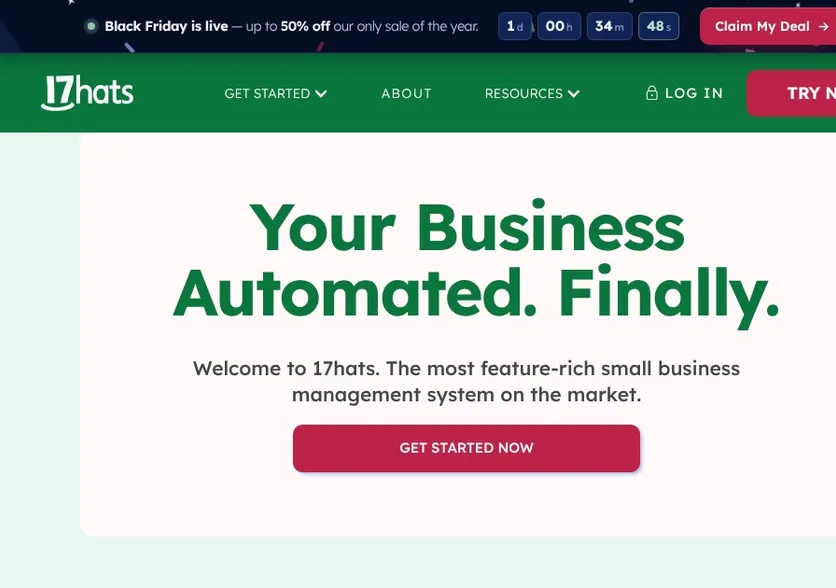
For event planners, 17hats combines CRM, contracts and invoicing for solo coaches. 17hats combines a CRM, contracts, questionnaires, scheduling and invoicing in one system built for solo operators and tiny teams. 17hats charges one flat price for everything, so there are no tier decisions to make.
What we like
- One flat price covers the whole feature set
- Contracts and invoices share one workflow
- Built for solo operators, not enterprises
Watch out for
- The interface feels dated next to newer rivals
- No tiered plans means no cheaper stripped-back option
How to try it
- Add a client and send a questionnaire
- Send a contract and invoice from one workflow
- Schedule sessions with the built-in calendar
4. Gusto
Best for: Companies that want payroll, benefits and onboarding in one place
Paid tool Starting price: $49/mo + $6/person/mo · Forty-nine dollars a month plus six dollars per person a month on Simple; Plus is eighty dollars plus twelve per person, Premium one hundred eighty plus twenty-two; no annual-billing discount is published, and the Contractor Only plan closed to new signups in October 2026
Free plan: No free plan, demo available
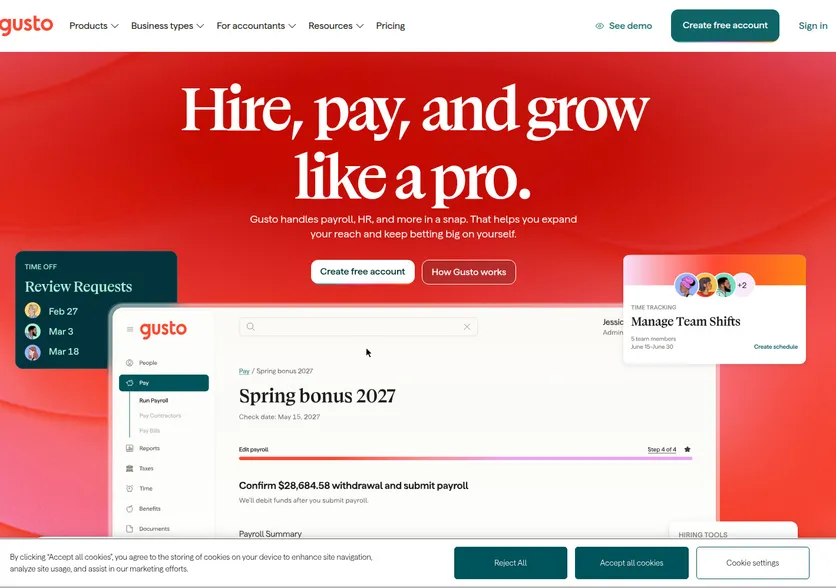
For event planners, Gusto keeps payroll, benefits and onboarding in one dashboard. It runs payroll, tax filing, benefits administration and new-hire onboarding from a single dashboard, with time tracking, hiring and performance reviews as paid add-ons. Gusto also pays contractors, files federal and state payroll taxes, and stores offer letters and employee documents in one place.
What we like
- Payroll, benefits and onboarding share one dashboard
- Tax filing is included in every plan
- New-hire onboarding is genuinely quick to set up
Watch out for
- Per-person pricing climbs steeply past one hundred employees
- Time tracking and hiring cost extra on every plan
How to try it
- Run a payroll cycle with the built-in tax filing
- Enrol staff in health benefits from the same dashboard
- Send offer letters and onboarding paperwork to new hires
5. Deputy
Best for: Shift teams that need scheduling, time tracking and payroll exports
Paid tool Starting price: $4.50/user/mo · Four dollars fifty cents a user a month for Scheduling and the same for Time and Attendance; the Premium bundle is six dollars a user a month with a thirty-dollar monthly minimum
Free plan: 31-day free trial, no free plan
For event planners, Deputy builds rosters, tracks time and exports hours to payroll. Deputy builds rosters, tracks time and attendance, and exports hours to payroll, with demand forecasting that matches staffing to busy periods. Deputy is priced per user, so a small shift team pays very little for scheduling and time tracking.
What we like
- Rosters publish to the team app instantly
- Time and attendance feed straight into payroll
- Demand forecasting cuts overstaffing
Watch out for
- Two modules at four dollars fifty each add up
- The thirty-dollar minimum bites on tiny teams
How to try it
- Build a roster from the demand forecast
- Let staff clock in with the mobile app
- Export approved hours to payroll
6. When I Work
Best for: Small hourly teams that want cheap, simple scheduling
Paid tool Starting price: $2.50/user/mo · Two dollars fifty cents a user a month on Essentials; Pro is five dollars, Premium eight, time tracking is a paid add-on, and the vendor publishes no separate annual rate
Free plan: 14-day free trial, no free plan
For event planners, When I Work keeps shift scheduling simple and cheap for small hourly teams. When I Work covers employee scheduling, time tracking and team messaging for hourly staff, with shift swaps and availability built in. When I Work is one of the cheapest scheduling tools here, and its free trial covers a full pay period.
What we like
- Scheduling is genuinely simple to learn
- Shift swaps and availability are built in
- The entry price is low for small teams
Watch out for
- Time tracking costs extra on top of scheduling
- There is no free plan any more
How to try it
- Build the schedule from staff availability
- Publish shifts and let staff swap them
- Approve timesheets and export to payroll
7. Sling
Best for: Shift teams that want free scheduling with cheap paid upgrades
Paid tool Starting price: $1.70/user/mo · One dollar seventy cents a user a month billed annually on Premium, two dollars month to month; Business is three dollars forty billed annually, and the free plan covers scheduling for up to thirty users
Free plan: Free plan for up to 30 users
For event planners, Sling schedules shifts free for up to thirty staff, with cheap paid tiers. Sling covers scheduling, time clocks, team messaging and task lists for shift teams, with a free plan that suits a single small team. Sling is the cheapest paid scheduling here, and its free plan covers thirty users.
What we like
- Free plan covers thirty users
- Scheduling, messaging and tasks share one app
- Paid tiers are cheap per user
Watch out for
- Advanced reporting sits on the Business plan
- Payroll integrations are limited
How to try it
- Build the schedule and publish it to the team
- Let staff clock in from the mobile app
- Message the team about open shifts
8. Connecteam
Best for: Deskless teams that need HR, ops and comms in one app
Paid tool Starting price: $29/mo · Twenty-nine dollars a month per hub for the first thirty users billed annually, thirty-five month to month; Advanced is forty-nine dollars, Expert ninety-nine, and each hub is billed separately
Free plan: Free plan for up to 10 users
For event planners, Connecteam puts HR, operations and team chat in one mobile app for deskless staff. Connecteam combines an HR hub, an operations hub and a communications hub in one mobile app built for staff who never sit at a desk. Connecteam prices each hub separately, so you pay for the pieces your team actually uses.
What we like
- Built for deskless staff, not office workers
- Chat, forms and scheduling share one app
- The free plan covers ten users
Watch out for
- Three hubs at twenty-nine dollars each add up fast
- Extra users cost fifty to eighty cents each beyond thirty
How to try it
- Set up the HR hub with employee files
- Publish the schedule and forms to the team app
- Send updates through the built-in chat
Prices above were checked on each vendor’s own website on Nov 27, 2026 and can change — the vendor’s page is the final word. Vendor links are editorial: nobody paid to be listed or ranked here. Vendors who want a featured listing can see how it works on our Get listed page.
How to choose HR software for an event planning business
An event planning business needs bookings first, so the first test is whether an inquiry becomes a signed contract and a deposit without extra tools. Trial two finalists with a real event: send a proposal, get it signed, schedule the planning calls and invoice the deposit, then check how much of that was automated. Check whether the price is per event or per user, because a planner running several events at once pays very different amounts on the two models. Finally, confirm the trial length and whether client data exports cleanly if you leave.
Finally, check the payment processing fee on every plan, because it is charged on top of the subscription and it changes the real monthly cost of each event.
Before you buy
- Confirm an inquiry becomes a signed contract and a deposit in one flow
- Trial the system with a real event before you commit
- Check whether the price is per event or per user
- Confirm the trial length and what happens when it ends
- Check that client data exports cleanly if you leave
Official websites
Official websites of the products reviewed above. Features and prices were checked against these sites when this guide was written, and they can change, so confirm on the vendor site before you buy.
Frequently asked questions
How much does HR software cost for event planners?
An event planner pays roughly seventeen to fifty dollars a month: HoneyBook Starter is sixteen dollars a month billed annually, Dubsado Starter is two hundred dollars a year, and 17hats is fifty dollars a month billed annually. Scheduling tools such as Sling start free for up to thirty users, so the full stack is usually under one hundred dollars a month.
What is the best HR software for event planners?
HoneyBook leads this list for event planners because it turns an inquiry into a signed contract and a paid invoice in one flow. Dubsado suits planners who want deep workflow automation, and 17hats is the better pick for a solo planner who wants one flat price for everything.
Do event planners need scheduling software as well as a CRM?
Most do, because a booking is only the start: the planning calls, vendor coordination and the event day itself all need scheduling. Sling covers team scheduling free for up to thirty users, When I Work handles shift rosters from two dollars fifty a user a month, and Connecteam combines scheduling with team messaging in one app.
Can an event planner use free HR software?
17hats offers a free plan, Dubsado has a free trial with up to three clients and no time limit, and Sling is free for up to thirty users. A planner running several events at once will outgrow the free tiers quickly, so treat them as a way to test the workflow before paying for a plan.
How do event planners get deposits from clients?
HoneyBook, Dubsado and 17hats all collect payments through the client portal, so a deposit is invoiced and paid in the same place the contract was signed. Check the payment processing fee before you pick, because it is charged on top of the subscription price, and confirm the deposit schedule can be split across milestones.
Compare the eight tools above, then trial the one that fits your event planning business with a real event before you roll it out.
Browse Business Tools tools