On this page
A hospital intranet has to reach everyone, from surgeons to night-shift porters, and most of them never sit at a desk. Blink is the pick that fits that reality, with a mobile-first app, frontline messaging and a price that starts under four dollars a user a month. This guide compares seven intranet tools for hospital systems, with live 2026 prices, free plans and trials, so a communications team can pick by reach and budget instead of by sales pitch.
How we researched this
We checked the pricing page of every vendor on this list on November 26, 2026, and kept only tools that publish a real dollar price. Each tool had to serve deskless staff as well as office staff, support news, documents and messaging in one place, and fit a hospital's security needs, and we compared entry prices, free plans and mobile reach.
Compare the tools
| Name | Best for | Starting price | Free plan | |
|---|---|---|---|---|
 Blink | Hospitals that need to reach deskless and night-shift staff on mobile | $3.75/user/month | Free trial | Visit |
 MangoApps | Hospitals that want a full intranet plus messaging in one platform | $4.50/employee/month | Free trial | Visit |
 Bitrix24 | Small hospitals that want an intranet plus CRM and project tools in one bill | $49/month | Free plan | Visit |
 Confluence | Hospitals that need a strong wiki for policies, procedures and clinical guidance | $7.15/user/month | Free plan | Visit |
 SharePoint | Hospitals already on Microsoft 365 that need document control and intranet pages | $5/user/month | No free plan; trial through Microsoft 365 | Visit |
 Notion | Hospital teams that want flexible wikis, rotas and project pages in one workspace | $10/member/month | Free plan | Visit |
 Jostle | Hospitals that want a simple, visual intranet with news and people directories | $2.77/user/month | Free trial | Visit |
The tools, compared
1. Blink
Best for: Hospitals that need to reach deskless and night-shift staff on mobile
Paid tool Starting price: $3.75/user/month · Core plan, $3.75 a user a month billed annually; Pro is $5.00
Free plan: Free trial
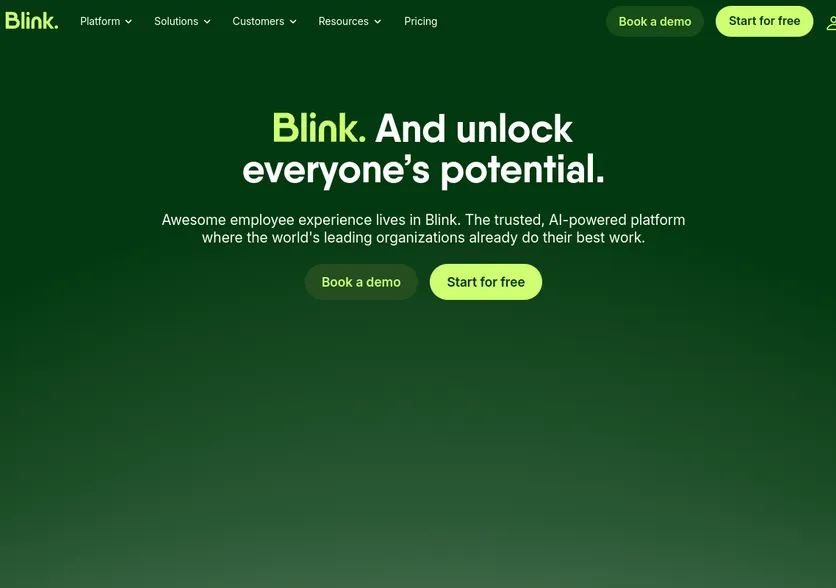
Most hospital staff never sit at a desk, so an intranet that lives on a desktop is an intranet half the hospital never sees, and Blink is built mobile-first for that reason. Its Core plan costs under four dollars a user a month billed annually, and the app combines news, messaging and documents in one feed that works on any phone. It is the best pick for a hospital that needs every worker, from porters to surgeons, on the same channel.
What we like
- Mobile-first design reaches deskless staff
- Read receipts show who saw an alert
- Low price for a hospital-wide rollout
Watch out for
- Document depth is lighter than SharePoint
- Advanced admin tools sit on the Pro plan
How to try it
- Open the Blink pricing page and start the free trial
- Set up departments and wards as separate groups
- Send a test alert and check read receipts on mobile
2. MangoApps
Best for: Hospitals that want a full intranet plus messaging in one platform
Paid tool Starting price: $4.50/employee/month · Communications and Intranet pack, $4.50 an employee a month billed annually; 200-employee minimum
Free plan: Free trial
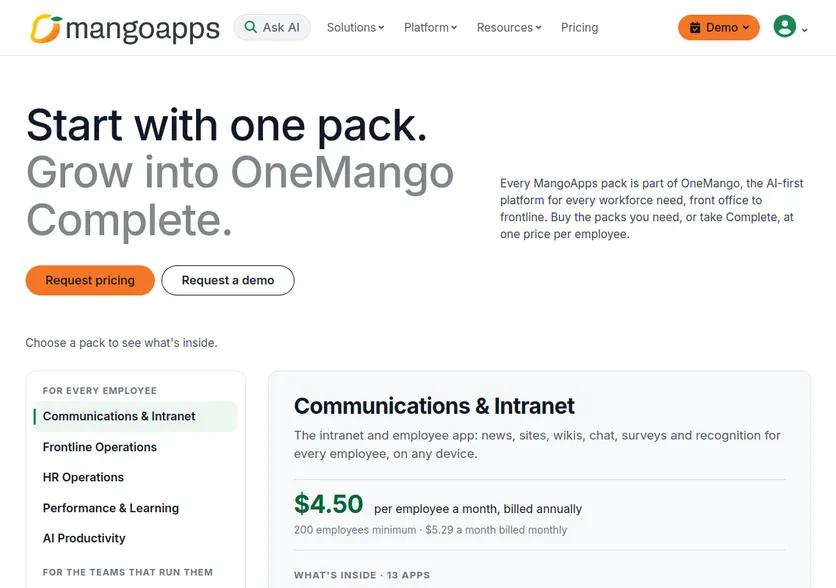
A hospital needs news, documents, chat and recognition in one place, not four logins, and MangoApps bundles them together. Its Communications and Intranet pack costs four dollars fifty an employee a month billed annually, with a 200-employee minimum, and the platform covers pages, files, messaging and social feeds. It is the pick for a hospital that wants a complete intranet with a single vendor and a single bill.
What we like
- News, files, chat and recognition in one platform
- Department pages keep content organized
- Flat per-employee pricing is easy to budget
Watch out for
- 200-employee minimum excludes small clinics
- Setup takes longer than simpler tools
How to try it
- Open the MangoApps pricing page and check the pack options
- Plan the department structure and page owners
- Launch with news and documents, then add messaging
3. Bitrix24
Best for: Small hospitals that want an intranet plus CRM and project tools in one bill
Paid tool Starting price: $49/month · Basic plan, $49 a month billed annually, for 5 users
Free plan: Free plan
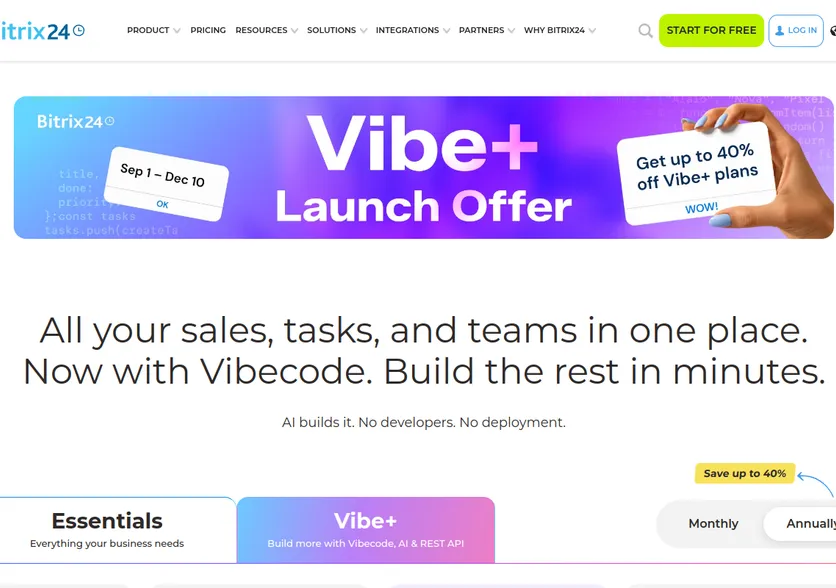
A small hospital cannot justify five separate tools, and Bitrix24 folds intranet, CRM, projects and chat into one platform. Its Basic plan costs $49 a month billed annually for five users, and the free plan covers a small team with core features. It is the pick for a clinic or small hospital that wants one system for internal communication and the daily work around it.
What we like
- Intranet, CRM and projects in one platform
- Free plan covers a small team
- Low flat price for the feature set
Watch out for
- Interface feels busy with so many modules
- Per-user costs grow as the hospital grows
How to try it
- Open the Bitrix24 pricing page and start the free plan
- Set up the company structure and workgroups
- Publish the first news posts and shared documents
4. Confluence
Best for: Hospitals that need a strong wiki for policies, procedures and clinical guidance
Paid tool Starting price: $7.15/user/month · Standard plan, $7.15 a user a month billed monthly for the first 100 users; Premium is $14.10
Free plan: Free plan
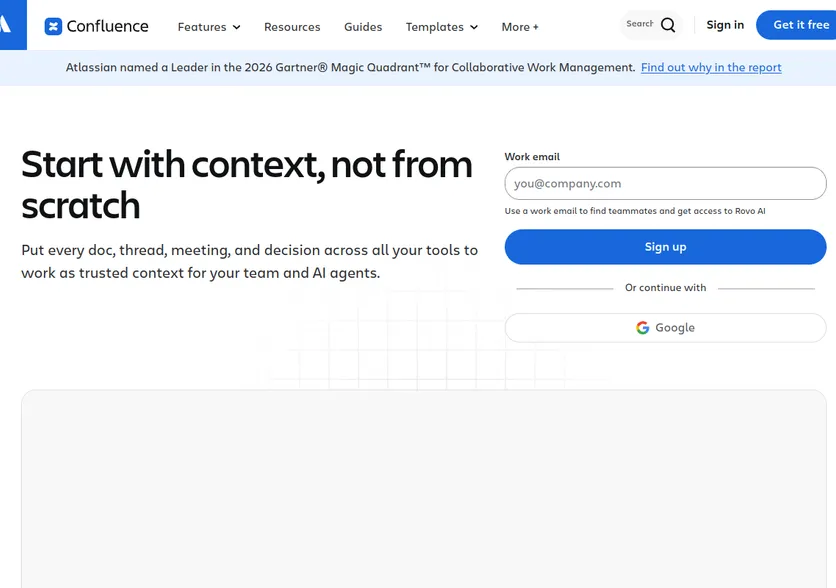
Hospital knowledge lives in policies, procedures and guidance that must stay current, and Confluence is the wiki that teams trust for that job. Its Standard plan costs about seven dollars a user a month for the first hundred users, and pages, templates and version history keep every document auditable. It is the pick when the intranet is mainly a knowledge base that clinicians and administrators edit together.
What we like
- Strong wiki with templates and versioning
- Free plan covers up to ten users
- Deep integration with Jira and the Atlassian suite
Watch out for
- Assumes desk-based staff with company logins
- Mobile experience is weaker than Blink
How to try it
- Open the Confluence pricing page and start the free plan
- Create spaces for each department and ward
- Build templates for policies and procedures with version history
5. SharePoint
Best for: Hospitals already on Microsoft 365 that need document control and intranet pages
Paid tool Starting price: $5/user/month · SharePoint Plan 1, $5 a user a month; standalone plans are being retired, with sales ending in 2026
Free plan: No free plan; trial through Microsoft 365
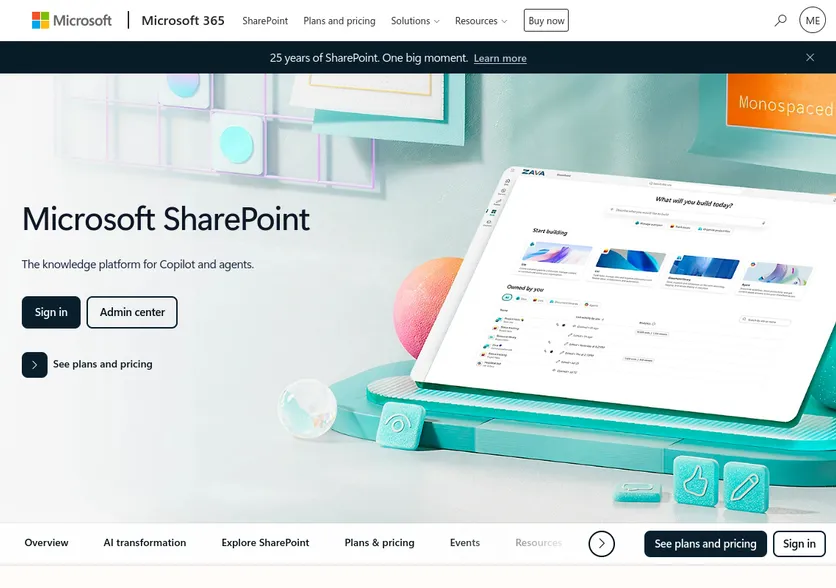
A hospital already on Microsoft 365 does not need another vendor for its intranet, and SharePoint is the obvious extension. Its Plan 1 costs $5 a user a month, and the platform brings document libraries, permissions and versioning that healthcare compliance teams already understand. It is the pick when the hospital wants the intranet inside the Microsoft estate, with the same logins and the same admin console.
What we like
- Deep document control with versioning and permissions
- Same logins as the rest of Microsoft 365
- Strong compliance and audit story
Watch out for
- Standalone plans are being retired in 2026
- Mobile experience trails mobile-first tools
How to try it
- Open the SharePoint page and check the plan options
- Plan the site structure by department and ward
- Set document permissions and versioning before publishing
6. Notion
Best for: Hospital teams that want flexible wikis, rotas and project pages in one workspace
Paid tool Starting price: $10/member/month · Plus plan, $10 a member a month billed annually; $12 on monthly billing
Free plan: Free plan
A hospital team that wants its wiki, rotas and project pages in one flexible workspace will find Notion hard to beat. Its Plus plan costs $10 a member a month billed annually, and the block-based editor lets any department build pages, databases and dashboards without IT help. It is the pick for a team that values flexibility and speed over the rigid structure of a traditional intranet.

What we like
- Flexible pages, databases and dashboards
- Any team can build without IT help
- Free plan covers a small team
Watch out for
- Permissions are simpler than SharePoint
- Not designed for frontline broadcast alerts
How to try it
- Open the Notion pricing page and start the free plan
- Build a department wiki with pages for policies and rotas
- Create a shared database for on-call schedules
7. Jostle
Best for: Hospitals that want a simple, visual intranet with news and people directories
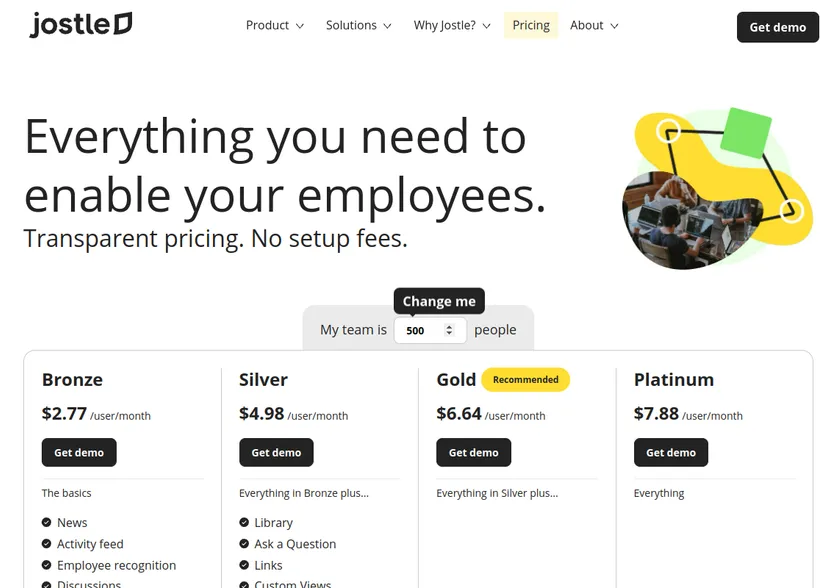
Paid tool Starting price: $2.77/user/month · Bronze plan, $2.77 a user a month at 500 users; Silver is $4.98
Free plan: Free trial
A hospital intranet fails when staff cannot find a colleague or the latest news, and Jostle keeps those two jobs front and center. Its Bronze plan costs under three dollars a user a month at 500 users, and the platform combines a people directory, news and library in a clean, visual layout. It is the cheapest pick on this list and the best fit for a hospital that wants a simple, welcoming intranet.
What we like
- Cheapest entry point on this list
- People directory makes staff easy to find
- Clean, visual layout staff actually open
Watch out for
- Per-user price depends on headcount
- Fewer integrations than bigger platforms
How to try it
- Open the Jostle pricing page and start the free trial
- Import the staff directory and organize it by department
- Publish the first news posts and library documents
Prices above were checked on each vendor’s own website on Nov 26, 2026 and can change — the vendor’s page is the final word. Vendor links are editorial: nobody paid to be listed or ranked here. Vendors who want a featured listing can see how it works on our Get listed page.
How to judge an intranet for a hospital
Start with the hardest-to-reach staff, not the easiest: if the night-shift porter cannot open the intranet on a phone, the tool has failed no matter how good the desktop version looks. Check the mobile app first, then the permissions model, because clinical documents must reach only the staff who need them. Ask how news and urgent alerts travel, since a hospital needs a broadcast channel that works in minutes, not a newsletter that lands next week. Finally, confirm the security story: audit logs, single sign-on and data residency are not optional in healthcare.
Before you buy
- Check the mobile app on a real phone, not just the desktop demo.
- Confirm documents can be restricted by role, ward or department.
- Ask how urgent alerts reach staff who are off shift or off site.
- Verify single sign-on and audit logs before any patient-adjacent content is loaded.
- Count the deskless staff in the price, not just the office seats.
Official websites
Official websites of the products reviewed above. Features and prices were checked against these sites when this guide was written, and they can change, so confirm on the vendor site before you buy.
Frequently asked questions
What is the cheapest intranet tool for a hospital?
Jostle is the cheapest here, with Bronze from under three dollars a user a month at 500 users. Blink Core is under four dollars a user a month billed annually and MangoApps starts at four dollars fifty an employee a month. The right cheap pick depends on the staff mix: Jostle suits office-heavy teams, while Blink suits hospitals with many deskless workers.
Do these tools work for staff without a desk or email?
Blink is built for exactly that, with a mobile app and messaging that works without a corporate email address. MangoApps and Jostle also support frontline staff through mobile apps. SharePoint and Confluence assume a desk and a company login, which makes them a weaker fit for porters, cleaners and night-shift staff. Test the mobile signup flow with a real frontline worker before committing.
Can an intranet handle clinical documents safely?
Yes, with the right permissions. SharePoint and Confluence offer the strongest document control, with versioning, permissions and audit trails. Blink, MangoApps and Jostle support role-based access to pages and files. Never store patient records on an intranet: use it for policies, rotas and guidance, and keep clinical systems separate.
Which tool is best for urgent hospital alerts?
Blink leads on urgent messaging, with push notifications and read receipts that show who saw an alert. MangoApps also supports targeted broadcasts to departments and shifts. For true emergencies, pair the intranet with a dedicated paging or alerting system, since no intranet replaces the hospital's emergency channel.
Is there a free plan for a small hospital team?
Yes. Bitrix24, Confluence and Notion all have free plans, and the rest offer free trials. Start on the free plan to test the mobile app and the news workflow with one department, then pay when the whole hospital needs access.
Still running the business on spreadsheets? Try free invoice, budget and time tools on Toolsvine right in your browser.
Browse Business Tools tools