On this page
A government contractor has to prove where every item is, what it cost and who used it, and the audit does not accept a spreadsheet guess. The eight tools below track assets, parts and stock from one list, from $24 a user up to a multichannel system. UpKeep leads because its work orders and parts records create the paper trail an auditor asks for, and the rest are ranked on the same test: whether the register survives a contract inventory count.
How we researched this
We checked every price on the vendor pricing page on November 28, 2026, and only included tools with a published US dollar list price and a free trial or free plan. The big contract ERPs in this space sell by quote, so they are not in this list, and the tools below cover the asset, parts and stock work with an audit trail. Prices change, so confirm the current figure on the vendor site before you buy.
Compare the tools
| Name | Best for | Starting price | Free plan | |
|---|---|---|---|---|
 UpKeep | Government contractors who must show maintenance records on audit | $24/user/month | Free trial | Visit |
 EZOfficeInventory | Government contractors proving where each asset is | $44.75/month | No free plan; 14-day free trial | Visit |
 QuickBooks Online | Government contractors tracking contracts, budgets and stock together | $140/month | 30-day free trial | Visit |
 Fishbowl | Government contractors with a warehouse feeding several contracts | $229/month | Free trial | Visit |
 Sortly | Government contractors counting consumables across yard and sites | $49/month | Free plan at $0 with 100 unique items and 1 user | Visit |
 Zoho Inventory | Small government contractors that need stock control cheaply | $29/month | Free plan with 50 orders a month and 1 user | Visit |
 Cin7 Core | Government contractors supplying through several channels | $349/month | 14-day free trial; no free plan | Visit |
 Ordoro | Government contractors shipping orders and kits to several sites | $499/month | Free Shipping plan; 15-day free trial | Visit |
The inventory software for government contractors, compared
1. UpKeep
Best for: Government contractors who must show maintenance records on audit
Paid tool Starting price: $24/user/month · Twenty-four dollars per user a month on the Essential plan; Premium is $55 per user a month, and the $20 Lite plan was retired
Free plan: Free trial
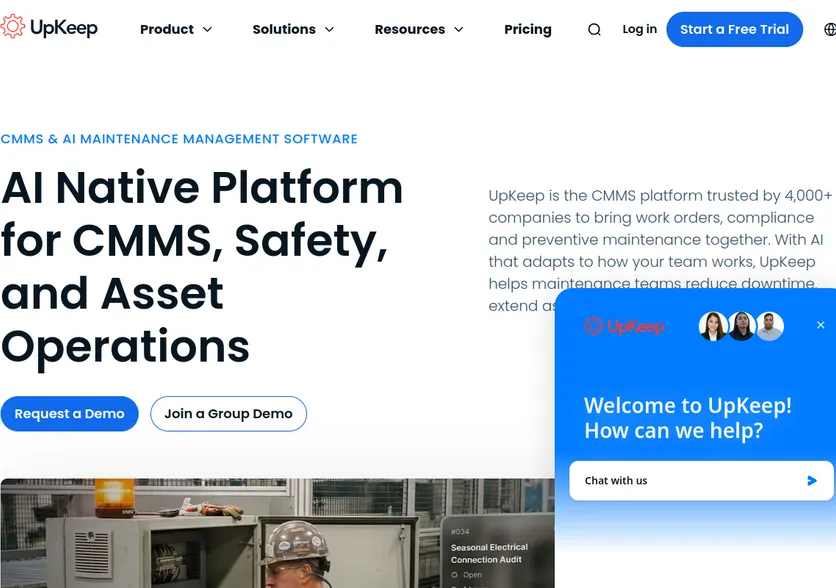
A government contractor must show maintenance records and parts usage on audit, and UpKeep keeps both for $24 per user a month on Essential. Work orders, assets and parts share one mobile-first system, and preventive schedules create the paper trail an auditor asks for. Per-user pricing adds up on a large crew, so keep the seats to the people who run maintenance.
What we like
- Work orders, assets and parts share one mobile-first system
- Preventive maintenance schedules stop breakdowns before they happen
- Parts inventory ties to the assets that consume them
Watch out for
- Per-user pricing adds up fast on a large crew
- The $20 Lite plan was retired, so Essential is the floor
How to try it
- Register each asset with its parts list and service history
- Schedule preventive work orders on a calendar the crew can see
- Issue parts from stock against the work order that used them
2. EZOfficeInventory
Best for: Government contractors proving where each asset is
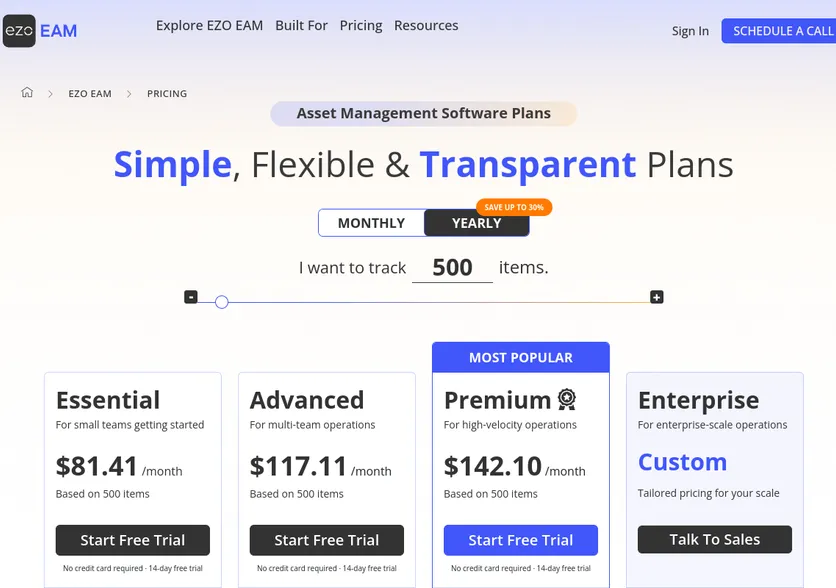
Paid tool Starting price: $44.75/month · Essential plan, $44.75 a month billed annually for 100 items ($48 billed monthly); the price rises with item count ($63.55 at 300 items, $81.41 at 500 items); Advanced $117.11 and Premium $142.10 at 500 items; every plan includes unlimited users
Free plan: No free plan; 14-day free trial
A government contractor with equipment across sites and contracts needs a register that proves where each item is, and EZOfficeInventory keeps it, starting at $44.75 a month billed annually on Essential for 100 items. Unlimited users mean the whole team can scan items in and out, and location audits support the inventory counts a contract requires. The bill rises with the item count, so a large register costs more.
What we like
- Pricing follows item count, with unlimited users on every plan
- Assets run from purchase through retirement in one register
- Barcode, QR and RFID check-in workflows
Watch out for
- The bill rises with the tracked item count
- Offline mode and telematics need the Enterprise plan
How to try it
- Import the asset register and tag items with QR or barcode labels
- Check items in and out with the mobile app as they move
- Run location audits and retire assets with their service history attached
3. QuickBooks Online
Best for: Government contractors tracking contracts, budgets and stock together
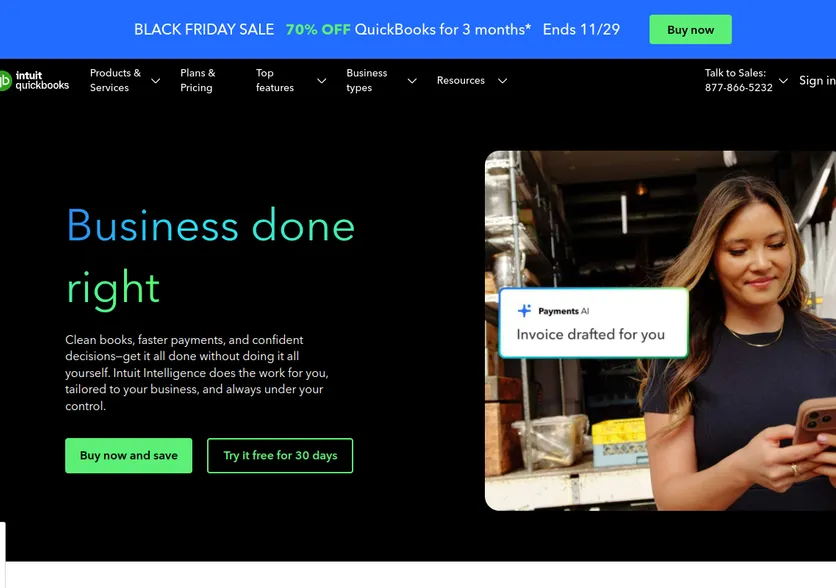
Paid tool Starting price: $140/month · One hundred and forty dollars a month on the Plus plan for 5 users, which is where inventory tracking starts; Simple Start is $38 and Essentials is $85 a month, and new customers get 50% off the first three months
Free plan: 30-day free trial
A government contractor needs the books, budgets and inventory in one auditable ledger, and QuickBooks Online puts them together on the $140 a month Plus plan. Plus covers 5 users with budgets, project profitability and 40 classes and locations, which fits contract cost tracking. The cheaper plans do not include inventory, so Plus is the entry point for stock.
What we like
- Inventory, invoicing and the books share one ledger
- Five users and two accountants on the Plus plan
- Budgets and project profitability sit beside stock
Watch out for
- Inventory tracking starts on Plus at $140, not on cheaper plans
- New-customer 50%-off pricing lasts three months only
How to try it
- Turn on inventory tracking and add products with costs
- Raise purchase orders and receive stock against them
- Reconcile the stock valuation with the balance sheet monthly
4. Fishbowl
Best for: Government contractors with a warehouse feeding several contracts
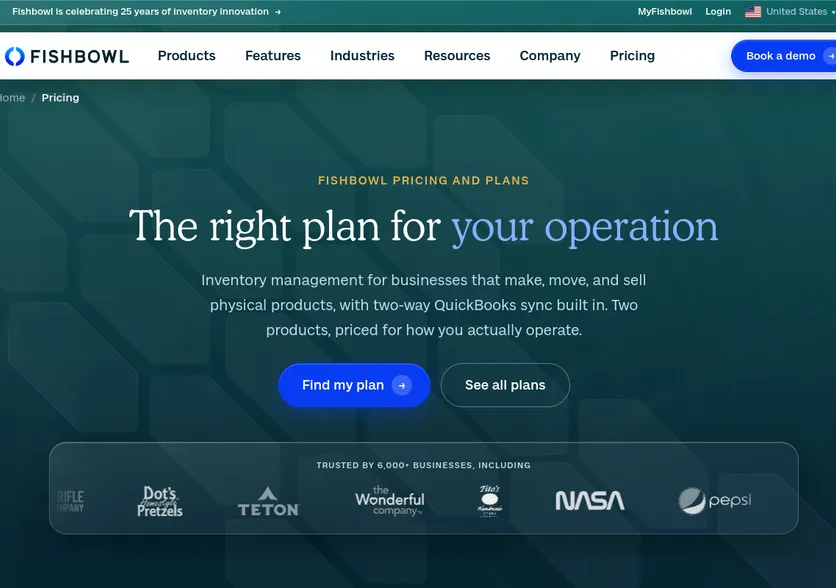
Paid tool Starting price: $229/month · Two hundred and twenty-nine dollars a month billed annually on the Essentials plan for 2 users; Growth is $429 and Scale is $729 a month, and manufacturing needs Fishbowl Advanced
Free plan: Free trial
A government contractor with a warehouse feeding several contracts needs reorder points and barcode receiving, and Fishbowl brings them for $229 a month billed annually on Essentials. The plan covers 2 users with QuickBooks Online and Xero sync and mobile barcode scanning. An implementation package is part of every purchase, and manufacturing needs Fishbowl Advanced.
What we like
- Real-time tracking syncs with QuickBooks Online and Xero
- Mobile barcode scanning is included from Essentials
- Reorder points are built into every plan
Watch out for
- An implementation package is part of every purchase
- Manufacturing is not in the Inventory tiers and needs Fishbowl Advanced
How to try it
- Sync Fishbowl with QuickBooks Online or Xero first
- Set reorder points on stocked items and scan receipts by barcode
- Run cycle counts on the mobile app and reconcile the variances
5. Sortly
Best for: Government contractors counting consumables across yard and sites
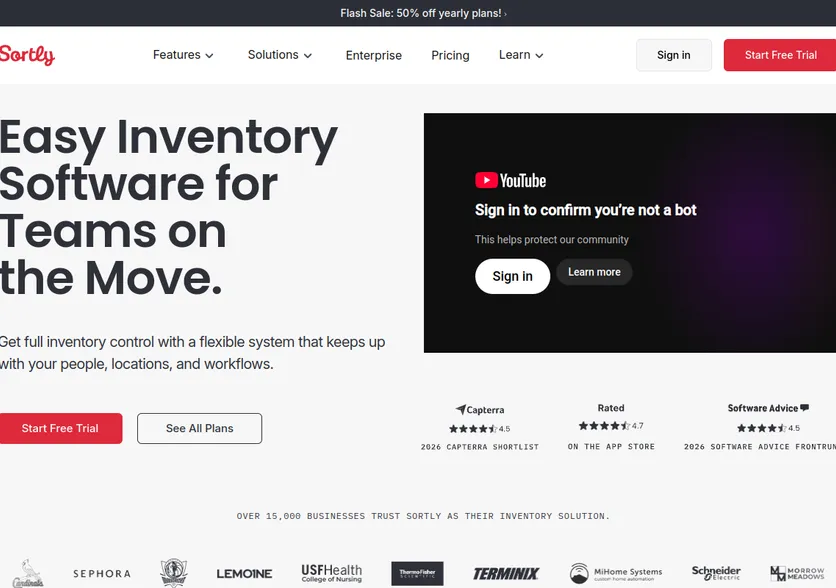
Paid tool Starting price: $49/month · Forty-nine dollars a month on the Advanced plan for 500 unique items and 2 users; the $24 a month yearly figure is a first-year promotion only, and Ultra is $149 and Premium $299 a month
Free plan: Free plan at $0 with 100 unique items and 1 user
A government contractor's consumables live in the yard, the site store and the truck, and Sortly photographs them by location for $49 a month on Advanced. The plan covers 500 unique items and 2 users with QR labels and check-in and check-out for audit. Purchase orders start on Ultra, so ordering needs the higher plan.
What we like
- Photos and QR codes make stock counts fast on a phone
- A free plan covers 100 items for one user
- Low-stock and date-based alerts catch expiry before it happens
Watch out for
- The $24 yearly figure is a first-year promotion, not the list price
- Purchase orders start on Ultra, not Advanced
How to try it
- Photograph each item and file it in folders by location
- Print QR labels and scan items in and out as they move
- Turn on low-stock alerts and count stock with the mobile app
6. Zoho Inventory
Best for: Small government contractors that need stock control cheaply
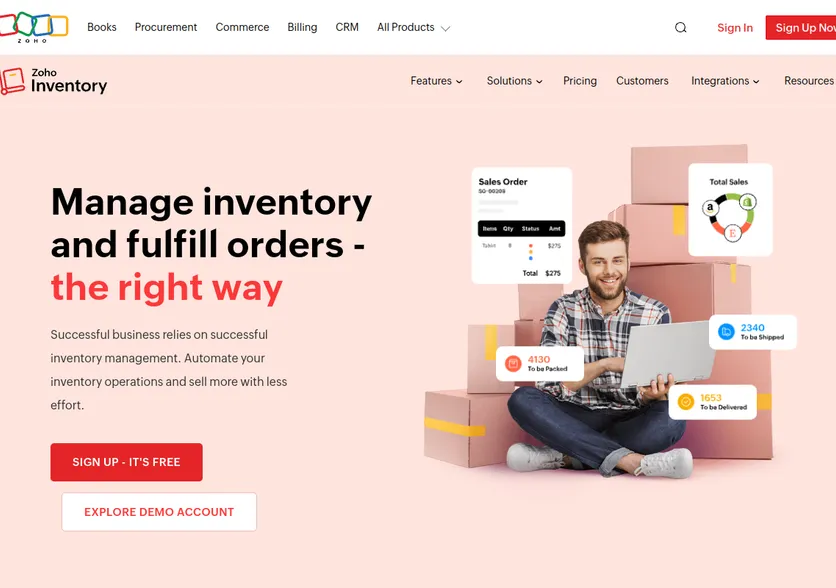
Paid tool Starting price: $29/month · Twenty-nine dollars a month billed annually on the Standard plan per organization ($39 on monthly billing); Professional is $79, Premium $129 and Enterprise $249 a month billed annually
Free plan: Free plan with 50 orders a month and 1 user
A small government contractor needs stock control with a low entry price and a paper trail, and Zoho Inventory gives it from $29 a month on Standard. The plan covers 500 orders a month for 2 users at 2 locations, with batch tracking on paid plans. It is a commercial stock system, so it covers the warehouse, not the contract compliance work itself.
What we like
- A genuinely usable free plan covers 50 orders a month
- Pricing is per organization, not per user
- Serial and batch tracking arrive on paid plans
Watch out for
- Order, user and location caps force upgrades as volume grows
- The Zoho Books link is the smoothest accounting path, not QuickBooks
How to try it
- Add products with SKUs and opening stock at each location
- Connect the sales channels and let orders pull stock automatically
- Set reorder points and let the system raise purchase orders
7. Cin7 Core
Best for: Government contractors supplying through several channels
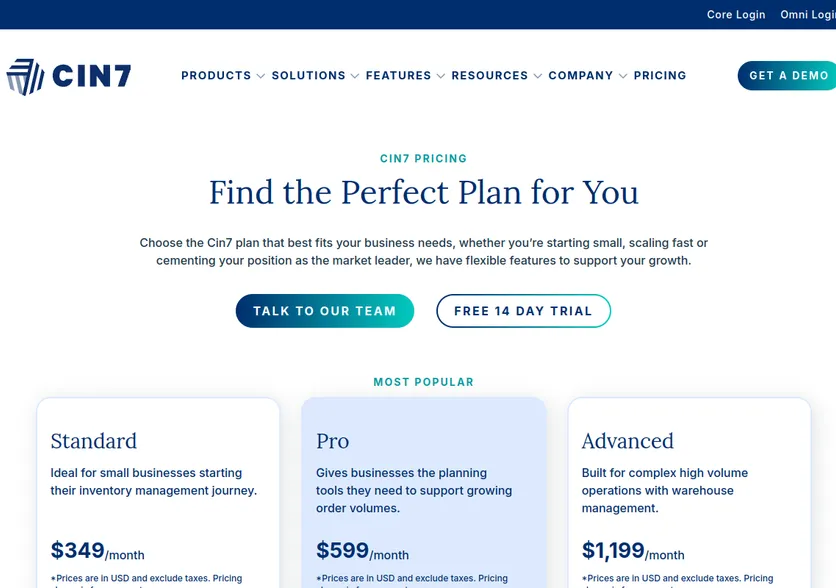
Paid tool Starting price: $349/month · Three hundred and forty-nine dollars a month on the Standard plan for 5 users and 6,000 sale orders a year; Pro is $599 and Advanced is $1,199 a month
Free plan: 14-day free trial; no free plan
A government contractor supplying through several channels needs one stock figure everywhere, and Cin7 Core syncs it for $349 a month on Standard. The plan covers 5 users, 6,000 sale orders a year and demand forecasting, with Pro at $599 and Advanced at $1,199 a month. EDI work for large buyers needs Cin7 Omni, which is priced on request.
What we like
- Stock syncs across every sales channel in real time
- Demand forecasting is built in, not an add-on
- More than 700 integrations cover most storefronts and warehouses
Watch out for
- The $349 entry price is steep for a single-channel seller
- Sale-order caps push high-volume sellers to Pro or Advanced
How to try it
- Connect each sales channel and warehouse to one Cin7 Core account
- Set reorder points on the fastest-moving SKUs and turn on forecasting
- Review the low-stock report daily and raise purchase orders from it
8. Ordoro
Best for: Government contractors shipping orders and kits to several sites
Paid tool Starting price: $499/month · Four hundred and ninety-nine dollars a month on the Pro plan, which is where inventory management, kitting and purchase orders start; Express at $59 a month is shipping only, and Enterprise starts at $999 a month
Free plan: Free Shipping plan; 15-day free trial
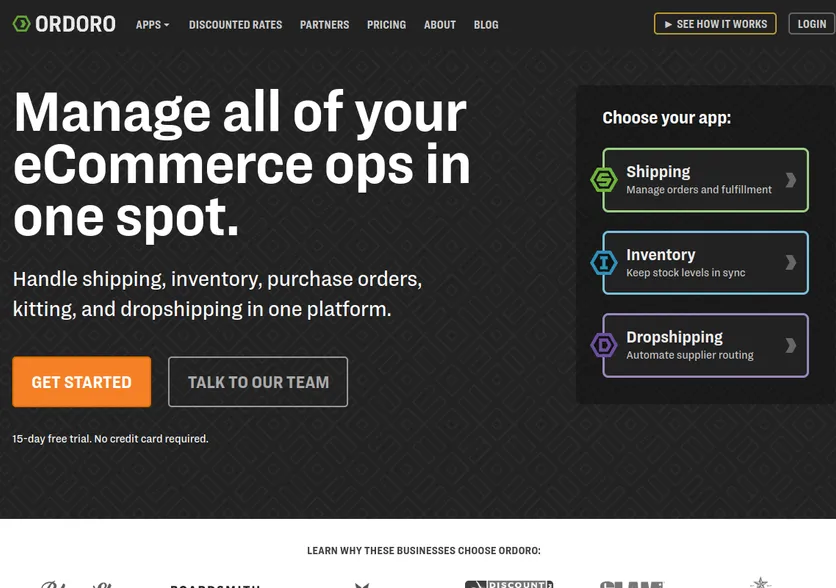
A government contractor shipping orders and kits to several sites needs labels, kitting and stock in one workflow, and Ordoro bundles them on Pro at $499 a month. The plan adds inventory management, kitting, purchase orders and multi-warehouse tracking to batch label printing. Express at $59 a month is shipping only, so inventory buyers pay the Pro price.
What we like
- Shipping, inventory and kitting share one workflow
- Batch label printing with discounted USPS rates
- Multi-warehouse tracking on the Pro plan
Watch out for
- Inventory starts on Pro at $499, not on the $59 Express plan
- Dropshipping automation is a separate $299 a month module
How to try it
- Connect the sales channels and import the product catalog
- Set up kitting rules for bundles that share components
- Print batch labels and let stock deduct as orders ship
Prices above were checked on each vendor’s own website on Nov 28, 2026 and can change — the vendor’s page is the final word. Vendor links are editorial: nobody paid to be listed or ranked here. Vendors who want a featured listing can see how it works on our Get listed page.
How a government contractor should run inventory with software
Start with the audit, not the shelf. A government contractor that records every issue and return with a date, a name and a contract number can answer an inventory count without a week of reconstruction. Count the register quarterly and the high-value items monthly, because the auditor will test the expensive items first. Give every asset a label, a location and a custodian, so a missing item is a person and a place rather than a gap in the spreadsheet. Keep the contracts separate in the records, so stock bought for one contract is never shown against another.
Before you buy
- Check that every issue and return leaves an audit trail with a date and a name
- Confirm whether location audits and inventory counts are built into the plan
- Ask whether the system exports records in a format an auditor accepts
- Count the cost per user if the whole team needs a seat
- Run a trial with one real contract count, from register to signed report, before you commit
Official websites
Official websites of the products reviewed above. Features and prices were checked against these sites when this guide was written, and they can change, so confirm on the vendor site before you buy.
Frequently asked questions
What is inventory software for government contractors?
It is software that tracks the assets, parts and stock a government contractor holds against its contracts, with records an auditor can follow from purchase to use. The tools in this list do that through maintenance and asset registers, warehouse control, or accounting with inventory. None of them manages the contract itself, but a good one stops the contractor failing an inventory count.
Which tool is cheapest for a government contractor?
UpKeep is cheapest at $24 per user a month on Essential, and Zoho Inventory follows at $29 a month with a free plan below it. Sortly has a free plan for 100 items, then $49 a month on Advanced. Compare the total per user, because UpKeep charges by seat while Zoho and Sortly charge a flat plan price, and a large crew changes the maths.
What does UpKeep cost for a government contractor?
UpKeep costs $24 per user a month on the Essential plan, which covers work orders, assets and parts inventory in one mobile-first system. Premium is $55 per user a month, and the $20 Lite plan was retired. The work orders and parts records create the paper trail an auditor asks for, but per-user pricing adds up on a large crew.
Do government contractors need contract-specific software?
For the contract itself, yes, but for the inventory, no: the big contract ERPs sell by quote and cover compliance, while the tools in this list cover the assets, parts and stock with an audit trail. Most contractors run both, with the ERP holding the contract and the inventory tool holding the register. The inventory tool must export records the auditor accepts, and that is the feature to test first.
Can these tools produce an audit trail?
Yes, the asset tools can: UpKeep ties every part issue to a work order with a date, and EZOfficeInventory records check-in, check-out and location audits with a named custodian. The stock tools record receipts, issues and counts, though they do not name a custodian per item. Test the export before buying, because an audit trail that cannot leave the system is no use in an audit.
Compare the eight tools above, then start with a free trial on the tool that matches how your government contractors operation already counts stock before you pay for a full year.
Browse Business Tools tools