On this page
A distributor's knowledge walks out the door with every departing supervisor: the product specs, the supplier terms, the picking routine that only one person knows. The tools below pin that knowledge down so a new hire can work the warehouse on day one. KnowledgeOwl leads the list because it serves customers and staff from one knowledge base for one hundred dollars a month, and the other seven tools are ranked on the same practical test: whether warehouse staff can find the right answer during a shift.
How we researched this
We checked every price on the vendor pricing page on November 28, 2026, and only included tools with a published US dollar list price. Several well-known names in this category publish no prices and ask for a sales call, so they are not in this list. Prices change, so confirm the current figure on the vendor site before you buy.
Compare the tools
| Name | Best for | Starting price | Free plan | |
|---|---|---|---|---|
 KnowledgeOwl | Distributors that need one knowledge base for customers and staff alike | $100/month | 30-day free trial | Visit |
 Scribe | Distributors that want warehouse procedures captured in minutes | $13/seat/month | Free Basic plan | Visit |
 SweetProcess | Distributors that need numbered procedures with sign-offs and version control | $99/month | 14-day free trial; no free plan | Visit |
 Connecteam | Distributors with warehouse staff who need procedures on their phones | $29/month | Free Small Business plan for up to 10 users | Visit |
 Notion | Distributors that want one workspace for products, suppliers and orders | $10/user/month | Free plan for individuals and small teams | Visit |
 Confluence | Distribution groups already using Jira that want docs beside their tickets | $7.15/user/month | Free plan for up to 10 users | Visit |
 Guru | Distributors who want verified answers in Slack instead of repeated questions | $25/seat/month | 30-day free trial; no free plan | Visit |
 Whale | Distributors that train warehouse staff with step-by-step guides and video | $299/month | Free plan for one creator and up to 10 members | Visit |
The knowledge management software for wholesale distributors, compared
1. KnowledgeOwl
Best for: Distributors that need one knowledge base for customers and staff alike
Paid tool Starting price: $100/month · One hundred dollars a month on the Basic plan for one author, with extra authors at twenty-five dollars each; Pro is two hundred and fifty dollars and Business is five hundred dollars a month
Free plan: 30-day free trial
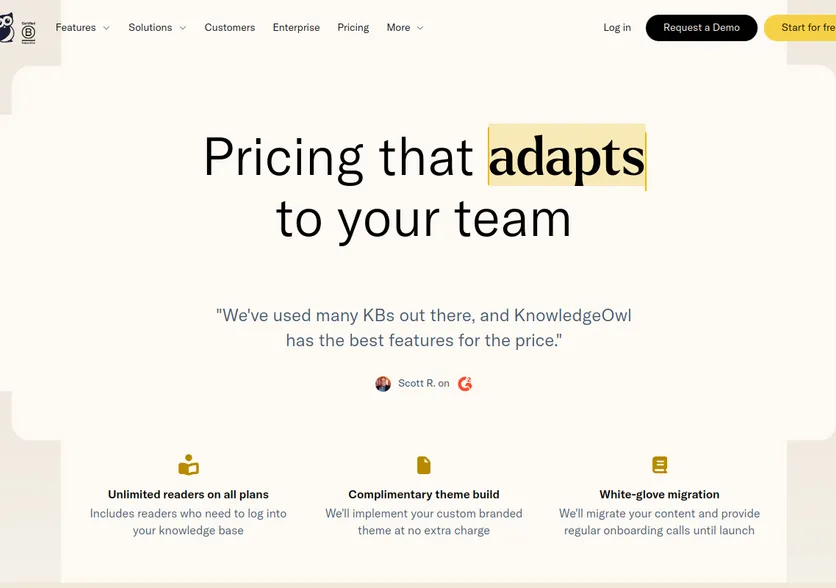
This KnowledgeOwl plan costs one hundred dollars a month for one author, and it is the only tool in this list built to serve customers as well as staff. Product guides, spec sheets and ordering help live in a branded help center, while the same system holds the internal procedures the warehouse team uses. Extra authors are twenty-five dollars each, so the bill grows with the writing team rather than with every reader, which suits a distributor with many customers and few authors.
What we like
- One system serves customers and staff alike
- Readers are free, so only authors cost money
- A branded help center suits a distributor's customers
Watch out for
- Priced per author, so a big writing team costs more
- Less of a general workspace than Notion or Confluence
How to try it
- Build a help center with product guides and ordering help
- Add the internal warehouse procedures in the same system
- Give each guide an owner and a review date
2. Scribe
Best for: Distributors that want warehouse procedures captured in minutes
Paid tool Starting price: $13/seat/month · Thirteen dollars per seat per month billed annually on the Pro Team plan (seventeen dollars on monthly billing), with a five-seat minimum, so the smallest bill is sixty-five dollars a month; Pro Personal is twenty-five dollars a seat per month billed annually
Free plan: Free Basic plan
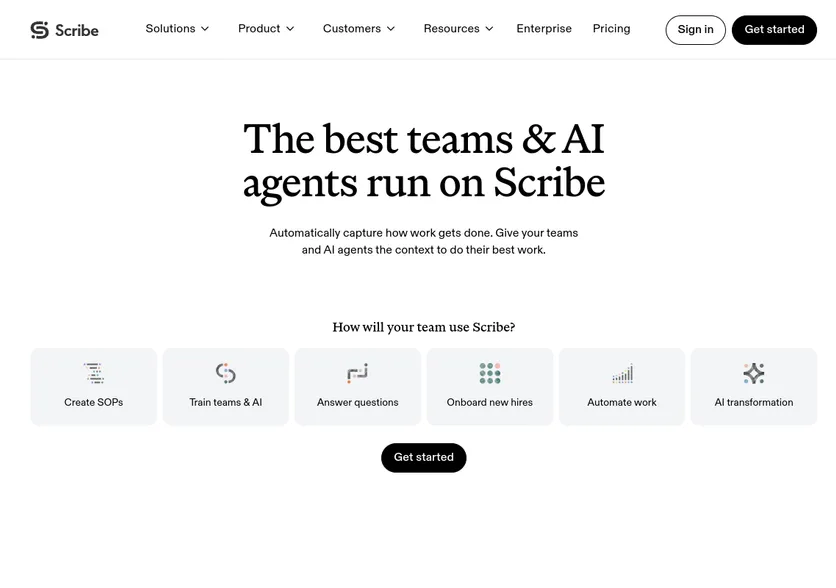
This Scribe plan costs thirteen dollars per seat per month billed annually, and it captures a warehouse procedure while someone does it. Record a picking, packing or receiving routine once, and Scribe turns it into a step-by-step guide with screenshots that a new hire can follow on the first shift. For a distributor, that means the receiving checklist and the returns process exist as guides instead of living in one supervisor's head.
What we like
- Guides are captured from real work, not written from scratch
- Step-by-step screenshots suit hands-on warehouse tasks
- New hires follow a guide on their first shift
Watch out for
- The five-seat minimum prices out a one-person operation
- Guides need a human edit before they are shift-ready
How to try it
- Record the receiving routine once while a supervisor does it
- Edit the guide Scribe generates and add the photos that matter
- Share the guide with the warehouse team and pin it at the station
3. SweetProcess
Best for: Distributors that need numbered procedures with sign-offs and version control
Paid tool Starting price: $99/month · Ninety-nine dollars a month for up to ten users on monthly billing, or eighty-two dollars and fifty cents a month billed annually; the Small Team plan is four hundred and ninety-five dollars a year for up to five users, and extra users are five dollars a month
Free plan: 14-day free trial; no free plan
This SweetProcess plan costs ninety-nine dollars a month for up to ten users, and it treats every distributor procedure as a numbered process with a clear owner. A picking routine, a returns process or a supplier order becomes a checklist that staff tick off in order, and managers see who finished what. Version control means the printed procedure at the packing station always matches the current one, which matters when a process changes mid-season.
What we like
- Numbered procedures suit warehouse and dispatch routines
- Managers see who completed each checklist
- Version control keeps printed procedures current
Watch out for
- The flat price is high for a single small warehouse
- It is a procedures tool, not a general wiki
How to try it
- Write the picking and returns routines as numbered procedures
- Assign each procedure an owner and a review date
- Check the completion log at the end of the week for missed steps
4. Connecteam
Best for: Distributors with warehouse staff who need procedures on their phones
Paid tool Starting price: $29/month · Twenty-nine dollars a month per hub billed annually on the Basic plan (thirty-five dollars on monthly billing), covering the first thirty users; Advanced is forty-nine dollars and Expert is ninety-nine dollars, and each hub is priced separately
Free plan: Free Small Business plan for up to 10 users
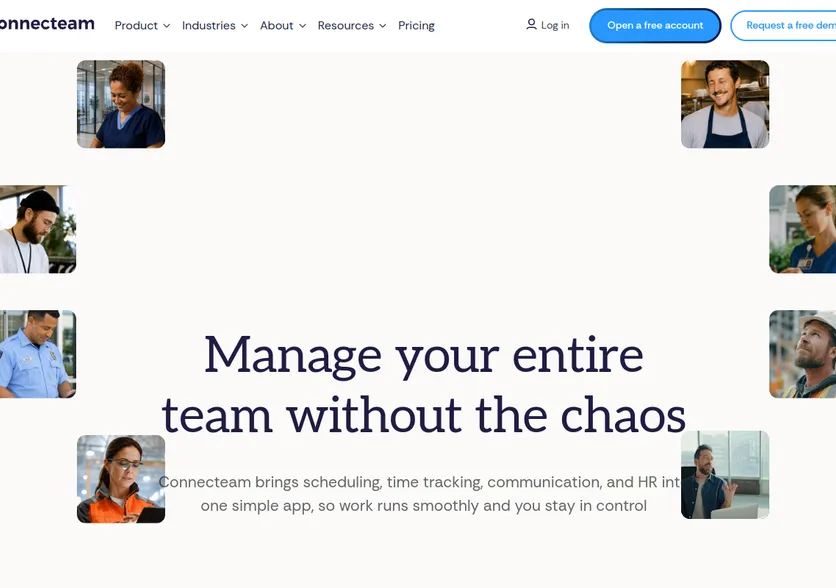
This Connecteam plan costs twenty-nine dollars a month per hub billed annually, and a distributor can run the warehouse knowledge base in the same app as schedules, time tracking and chat. A picker or driver opens the app, finds the procedure or the product note, and gets on with the shift without hunting through a shared drive. The first thirty users are included, which covers most single warehouses, but each hub is priced separately, so the bill grows if you add more hubs.
What we like
- Staff read procedures on the same app as their schedule
- The first thirty users are included on Basic
- Works well for teams that rarely sit at a desk
Watch out for
- Each hub is a separate charge, so costs add up
- The knowledge base is simpler than a dedicated wiki
How to try it
- Add the picking and returns procedures to the knowledge base hub
- Give every warehouse worker the app and test it on one shift
- Pin the three most-used procedures to the top of the hub
5. Notion
Best for: Distributors that want one workspace for products, suppliers and orders
Paid tool Starting price: $10/user/month · Ten dollars per user per month billed annually on the Plus plan (twelve dollars on monthly billing); Business is twenty dollars per user per month, and a free plan is available
Free plan: Free plan for individuals and small teams
This Notion plan costs ten dollars per user per month billed annually, and it gives a distributor one searchable home for everything that is not in the warehouse system. Product specs, supplier contacts, price lists and order notes live in linked pages with databases, so the cost of a line and the note about its supplier sit in the same place. It is more flexible than a procedures tool, but it needs someone to keep the structure tidy.

What we like
- Products, suppliers and price lists share one workspace
- Databases link products to suppliers and margins
- AI search answers questions from the team's own pages
Watch out for
- Needs a tidy structure or the workspace gets messy
- Warehouse staff may prefer a phone-first app
How to try it
- Build a wiki with pages for products, suppliers and price lists
- Link each product to its spec, supplier and margin note
- Write the daily handover log in the same workspace every day
6. Confluence
Best for: Distribution groups already using Jira that want docs beside their tickets
Paid tool Starting price: $7.15/user/month · Seven dollars and fifteen cents per user per month on the Standard plan for teams of one to one hundred users, after the price rise effective 13 October 2026; annual billing is seven hundred and twenty dollars a year for up to ten users, and Premium is higher
Free plan: Free plan for up to 10 users
This Confluence plan costs seven dollars and fifteen cents per user per month, and it keeps a distribution group's documentation in one place with clear ownership. Each warehouse can keep its own pages under a shared space, while head office owns the core product specs and brand standards. Jira links tie a product change to the ticket that requested it, which suits a group rolling out changes across several sites, though a single warehouse will find it heavier than it needs.
What we like
- One space can hold pages for every warehouse
- Head office owns the core standards in one place
- Jira links tie product changes to their tickets
Watch out for
- Heavier than a single warehouse needs
- The price rose in October 2026, so old quotes are stale
How to try it
- Create a space for the group with a page tree per warehouse
- Put core product specs and standards under head-office ownership
- Link product changes to Jira tickets so the reason stays visible
7. Guru
Best for: Distributors who want verified answers in Slack instead of repeated questions
Paid tool Starting price: $25/seat/month · Twenty-five dollars per seat per month billed annually on the All-in-One plan (thirty dollars on monthly billing), with a ten-seat minimum, so the smallest bill is two hundred and fifty dollars a month
Free plan: 30-day free trial; no free plan
This Guru plan costs twenty-five dollars per seat per month billed annually, and it answers the questions a distribution team asks every week. The price list, the supplier contact and the returns policy live as verified cards that surface in Slack and the browser, each with an owner and an expiry date. When a price changes, the card gets flagged for review instead of going stale, which is the part a shared drive never does.
What we like
- Verified cards answer questions inside Slack
- Owners and expiry dates stop answers going stale
- Works where the team already chats
Watch out for
- The ten-seat minimum prices out small distributors
- Writing and verifying cards is real ongoing work
How to try it
- Write the price list and returns policy as verified cards
- Connect Slack so staff get answers without leaving the channel
- Set a verification date on each card and review the ones that expire
8. Whale
Best for: Distributors that train warehouse staff with step-by-step guides and video
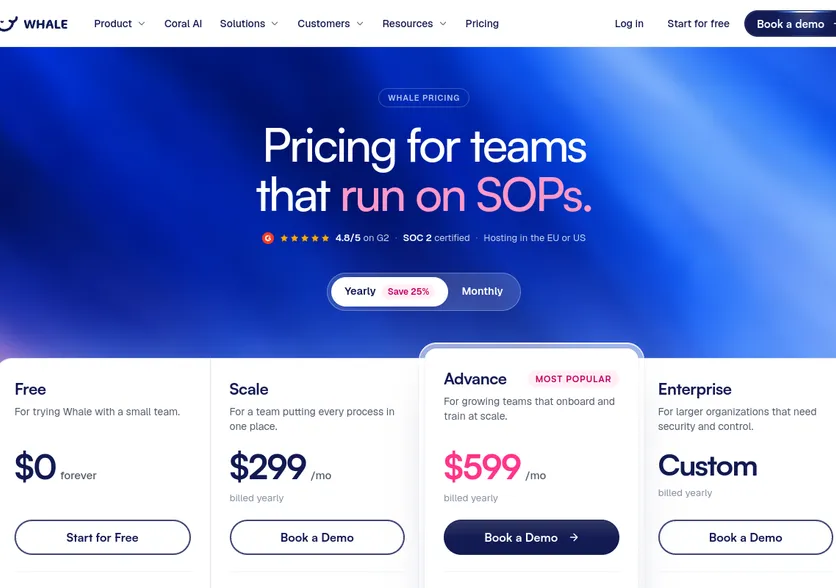
Paid tool Starting price: $299/month · Two hundred and ninety-nine dollars per month billed annually on the Scale plan (three hundred and ninety-nine dollars on monthly billing), including three creators, with extra creators at twenty-nine dollars a month; Advance is five hundred and ninety-nine dollars a month. The old per-user pricing from before May 2026 no longer applies
Free plan: Free plan for one creator and up to 10 members
This Whale plan costs two hundred and ninety-nine dollars per month billed annually, and it turns distributor training into guides people actually finish. A procedure becomes a step-by-step guide with screen recordings, quizzes and checklists, and viewers are free, so every picker and driver can read without a paid seat each. The flat price is steep for one warehouse, but for a distributor onboarding staff every week, the training shape is the point.
What we like
- Step-by-step guides with video and quizzes
- Viewers are free, so all staff can read
- Built for training, not just storage
Watch out for
- The flat monthly price is steep for one warehouse
- Only three creators are included on the Scale plan
How to try it
- Record the onboarding flow once with a screen recording
- Turn the recording into a guide with a short quiz at the end
- Share it with new hires and check who has finished it
Prices above were checked on each vendor’s own website on Nov 28, 2026 and can change — the vendor’s page is the final word. Vendor links are editorial: nobody paid to be listed or ranked here. Vendors who want a featured listing can see how it works on our Get listed page.
How a distributor should run its knowledge base
Start with the procedures that break when one person is away: the receiving routine, the picking routine and the returns process. Capture those three first, give each one an owner and a review date, and let the rest grow around real use. Print from the tool, never from a saved copy, so the warehouse sheet always matches the current procedure. Put the knowledge where staff already look: on their phones during a shift, not in a shared drive they never open. Review the expiring procedures every week, because a procedure nobody maintains is worse than no procedure at all.
Before you buy
- Check that product specs and supplier notes survive staff turnover with named owners
- Confirm warehouse staff can read procedures on a phone without a paid seat
- Ask whether customer-facing help articles and internal docs share one system
- Count the real monthly floor, including per-author and per-hub charges
- Run a trial with one real product guide and one warehouse procedure before you commit
Official websites
Official websites of the products reviewed above. Features and prices were checked against these sites when this guide was written, and they can change, so confirm on the vendor site before you buy.
Frequently asked questions
What is knowledge management software for wholesale distributors?
It is software that stores a distributor's product knowledge, procedures, supplier notes and price lists in one searchable place. Instead of knowledge living in one supervisor's head or in a binder nobody updates, it lives in pages with owners and review dates. The tools in this list range from customer-facing help centers like KnowledgeOwl to step-by-step procedure tools like Scribe and SweetProcess and phone-first hubs like Connecteam.
Which tool is best for a wholesale distributor?
KnowledgeOwl is the strongest pick when customers need answers too, because it serves a branded help center and the internal procedures from one system at one hundred dollars a month for one author. Scribe is the fastest way to capture warehouse procedures, and SweetProcess is better when you need numbered checklists with sign-offs and version control. Most distributors start with Scribe for the warehouse and KnowledgeOwl for the customers.
How much does KnowledgeOwl cost?
KnowledgeOwl costs one hundred dollars a month on the Basic plan for one author, with extra authors at twenty-five dollars each. Pro is two hundred and fifty dollars and Business is five hundred dollars a month. Readers are free, so only the people who write and edit cost money, which keeps the bill low for a distributor with many customers and few authors.
Does the knowledge base need to work on phones?
Yes, and it is the feature that matters most for warehouse teams. A picker or driver will read a procedure on a phone during a shift, not at a desk. Connecteam and Scribe are built for that, while Notion and Confluence work better for managers and office staff. Check the phone experience on a real shift before you buy, not just on a demo.
How do we keep product knowledge current?
Give every product guide and procedure an owner and a review date, and check the ones that expire each week. When a price or a supplier changes, update the guide in the tool first and print from it, so the warehouse copy always matches the current version. Tools like SweetProcess and Guru flag content for review automatically, which stops an old procedure from staying in use.
Compare the eight tools above, then capture your three most-repeated procedures in a free trial before you pay for a full year.
Browse Business Tools tools