On this page
An ecommerce brand pays for traffic twice: once to bring a shopper to the store, and again when that shopper leaves without buying. Lead management software stops the second payment, by capturing the email at checkout, following up on the abandoned cart, and bringing the customer back for a second order. Klaviyo leads the list because its email flows are driven by real store behaviour, starting at twenty dollars a month, and the other six tools are judged on the same test: how many one-time buyers become repeat customers.
How we researched this
We checked every price on the vendor pricing page on November 28, 2026, and only included tools with a published US dollar list price and a free trial or free plan. Attentive, the other big ecommerce name in this category, publishes no prices, so it is not in this list. The seven tools below cover capture, email, SMS and the CRM layer at published prices, and prices change, so confirm the current figure on the vendor site before you buy.
Compare the tools
| Name | Best for | Starting price | Free plan | |
|---|---|---|---|---|
 Klaviyo | Ecommerce brands that want email built around the store | $20/month | Free plan (250 profiles, 500 emails/mo) | Visit |
 HubSpot Marketing Hub | Ecommerce brands that want leads, email and CRM in one system | $15/seat/month | Free plan | Visit |
| Salesforce Sales Cloud | Ecommerce brands that outgrow their email tool and need a real CRM | $25/user/month | Free Suite for up to 2 users | Visit |
 ActiveCampaign | Ecommerce brands that want automation reacting to what shoppers do | $15/month | No free plan; 14-day free trial | Visit |
 Mailchimp | Ecommerce brands that want simple email that works on day one | $13/month | Free plan (250 contacts) | Visit |
 Omnisend | Ecommerce brands that want the best value email and SMS stack | $13/month | Free plan (250 contacts, 500 emails/mo) | Visit |
| Privy | Ecommerce brands that want to convert traffic they already have | $30/month | Free plan | Visit |
The lead management software for ecommerce brands, compared
1. Klaviyo
Best for: Ecommerce brands that want email built around the store
Paid tool Starting price: $20/month · Twenty dollars per month on the Email plan for five hundred active profiles, with five thousand emails included; the price rises with profiles to thirty dollars at one thousand and one hundred dollars at five thousand, and there is no annual discount
Free plan: Free plan (250 profiles, 500 emails/mo)
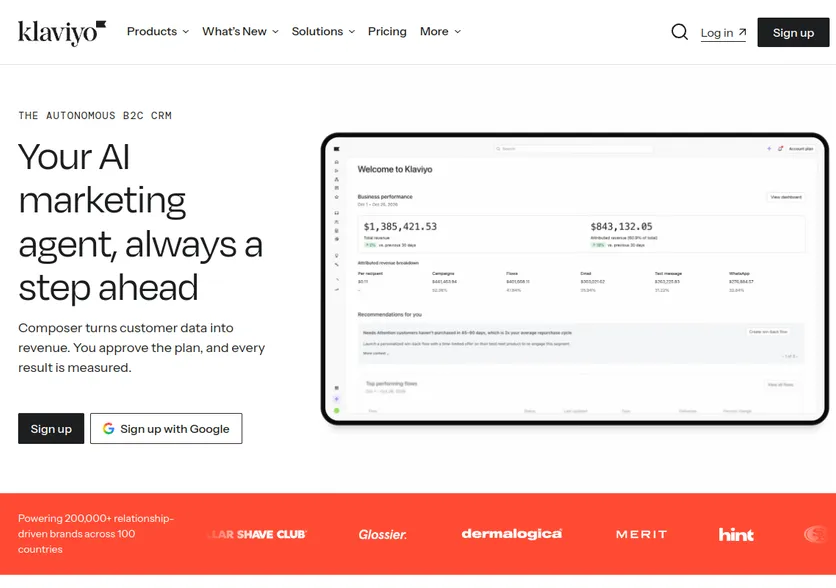
An online store that captures an email at checkout needs that address in a system that can send, segment and report, and Klaviyo does all three, with the Email plan starting at twenty dollars a month for five hundred active profiles. The store data drives the flows: abandoned carts, post-purchase follow-ups and win-backs all trigger from what the shopper actually did. The price rises with the list, so a store should budget by profile count rather than by the starting figure.
What we like
- Email flows trigger from real store behaviour
- Abandoned cart recovery is built in
- Free plan covers two hundred and fifty profiles
Watch out for
- The price rises steeply as the list grows
- SMS and other products cost extra
How to try it
- Connect Klaviyo to the store and sync the customer list
- Build an abandoned cart flow triggered by checkout behaviour
- Send a post-purchase flow and watch the revenue per email
2. HubSpot Marketing Hub
Best for: Ecommerce brands that want leads, email and CRM in one system
Paid tool Starting price: $15/seat/month · Fifteen dollars per seat per month billed annually on the Starter plan, or twenty dollars month to month; new customers currently see a seven-dollar first-year offer, which is a promotion rather than the list price
Free plan: Free plan
A store that sells across email, chat and social needs one record for each shopper, and HubSpot Marketing Hub keeps it, with forms, email and automation for fifteen dollars a seat a month. A lead captured at checkout gets a follow-up sequence, and the record shows every touch before the next campaign. The Starter plan covers a young brand, and the free plan is enough to prove the workflow before paying.
What we like
- Forms, email and automation share one record
- Follow-up starts the moment a lead is captured
- Free plan proves the workflow before paying
Watch out for
- The price is per seat, so a second user doubles it
- Lead scoring needs the higher tiers
How to try it
- Put the HubSpot form on the store and connect it to checkout
- Build a welcome sequence for every new subscriber
- Segment by purchase history before each campaign
3. Salesforce Sales Cloud
Best for: Ecommerce brands that outgrow their email tool and need a real CRM
Paid tool Starting price: $25/user/month · Twenty-five dollars per user per month on the Starter Suite, billed monthly or annually; Pro Suite is one hundred dollars, Core is one hundred and ninety-five dollars, and the price is a starting price with transaction fees on top
Free plan: Free Suite for up to 2 users
An ecommerce brand that outgrows its email tool usually lands on Salesforce Sales Cloud for the CRM layer, keeping leads, accounts and opportunities in one system for twenty-five dollars a user a month. The Starter Suite covers lead and opportunity management with email sync and basic sales flows, and it is the only paid edition that can be billed month to month. It is the system of record in this list, and a brand buys it when the pipeline matters as much as the campaigns.
What we like
- The CRM every other tool integrates with
- Starter Suite can be billed month to month
- Lead routing and sales flows included
Watch out for
- Higher editions climb steeply from one hundred dollars
- Some features need a higher plan or an add-on
How to try it
- Import leads and customers into the Starter Suite
- Set up sales flows and lead routing
- Sync emails and events from Gmail or Outlook
4. ActiveCampaign
Best for: Ecommerce brands that want automation reacting to what shoppers do
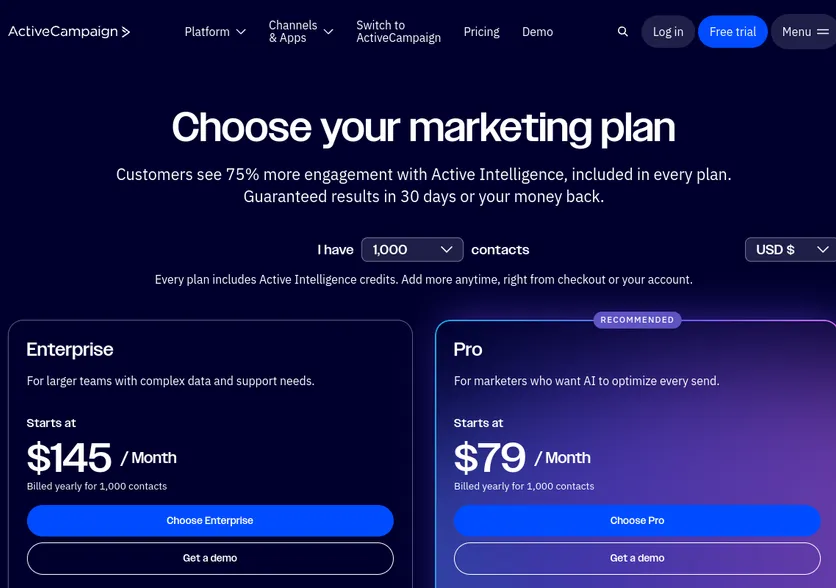
Paid tool Starting price: $15/month · Fifteen dollars per month on the Starter plan for one thousand contacts billed yearly, or nineteen dollars month to month; Plus is forty-nine dollars and Pro is seventy-nine dollars
Free plan: No free plan; 14-day free trial
ActiveCampaign earns its place in an ecommerce stack through automation that reacts to what a shopper does, tagging, scoring and following up for fifteen dollars a month. An abandoned cart can trigger a reminder, a repeat purchase can trigger a loyalty email, and a lapsed customer can enter a win-back sequence on its own. The Starter plan covers one thousand contacts, and the higher tiers add the sales automation a growing store eventually needs.
What we like
- Automation reacts to real shopper behaviour
- Abandoned cart and win-back flows included
- Tags keep customers sorted by purchase history
Watch out for
- No free plan, only a fourteen-day trial
- The price rises with the contact count
How to try it
- Connect the store and tag customers by purchase behaviour
- Build an abandoned cart automation with a reminder
- Set a win-back sequence for customers who go quiet
5. Mailchimp
Best for: Ecommerce brands that want simple email that works on day one
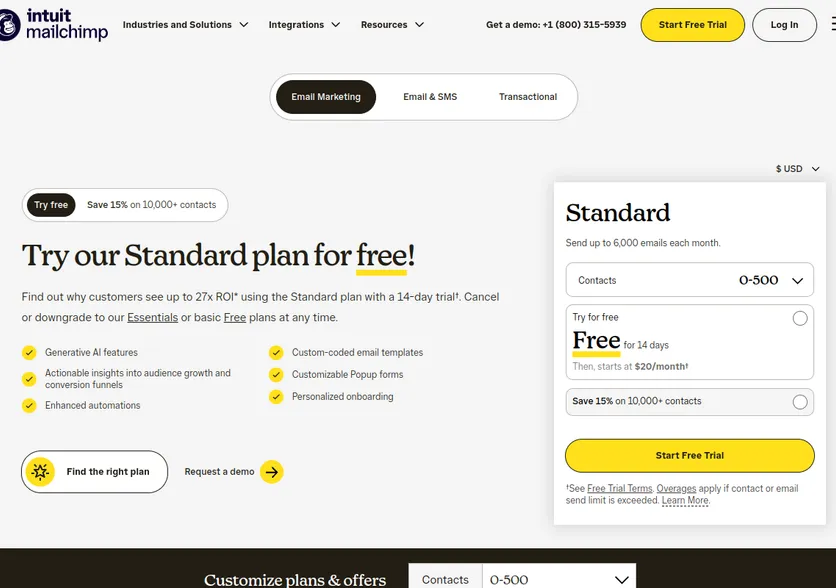
Paid tool Starting price: $13/month · Thirteen dollars per month on the Essentials plan for five hundred contacts on monthly billing, or about eleven dollars with annual prepay; Standard is twenty dollars and Premium is three hundred and fifty dollars
Free plan: Free plan (250 contacts)
Mailchimp has been the default email tool for small stores for years, and for ecommerce it still earns the spot, with newsletters, landing pages and basic automation for thirteen dollars a month. A store can send campaigns, recover carts and track revenue per email without building a marketing stack. The Essentials plan covers five hundred contacts, and the free plan covers two hundred and fifty, which is enough to test whether email brings shoppers back.
What we like
- Simple email that works on day one
- Revenue tracking shows what each campaign earns
- Free plan covers two hundred and fifty contacts
Watch out for
- Automation is basic on the Essentials plan
- The price rises steeply as the list grows
How to try it
- Connect the store so orders and customers sync
- Send a welcome email to every new subscriber
- Track revenue per email and repeat the winners
6. Omnisend
Best for: Ecommerce brands that want the best value email and SMS stack
Paid tool Starting price: $13/month · Sixteen dollars per month on the Standard plan billed monthly, or thirteen dollars a month on annual billing, for five hundred contacts; Pro is fifty-nine dollars, and SMS is Pro-only for new accounts since May 2026
Free plan: Free plan (250 contacts, 500 emails/mo)
Omnisend is the value pick in this list, giving a store email, SMS and web push with every feature on every plan, including the free one, for thirteen dollars a month. The Standard plan covers five hundred contacts with twelve emails per contact per month, and the price scales on a slider as the list grows. It is the cheapest way for a store to run email and SMS together without buying two tools.
What we like
- Email, SMS and web push in one plan
- Every feature is included, even on the free plan
- Cheapest combined email and SMS stack in this list
Watch out for
- SMS is Pro-only for new accounts since May 2026
- The price scales with the contact count
How to try it
- Connect the store and sync the customer list
- Build an abandoned cart flow with email and SMS
- Send a campaign and watch the revenue per channel
7. Privy
Best for: Ecommerce brands that want to convert traffic they already have
Paid tool Starting price: $30/month · Thirty dollars per month on the Starter plan for up to one thousand five hundred mailable contacts; Growth is forty-five dollars, and the price rises with the contact count
Free plan: Free plan
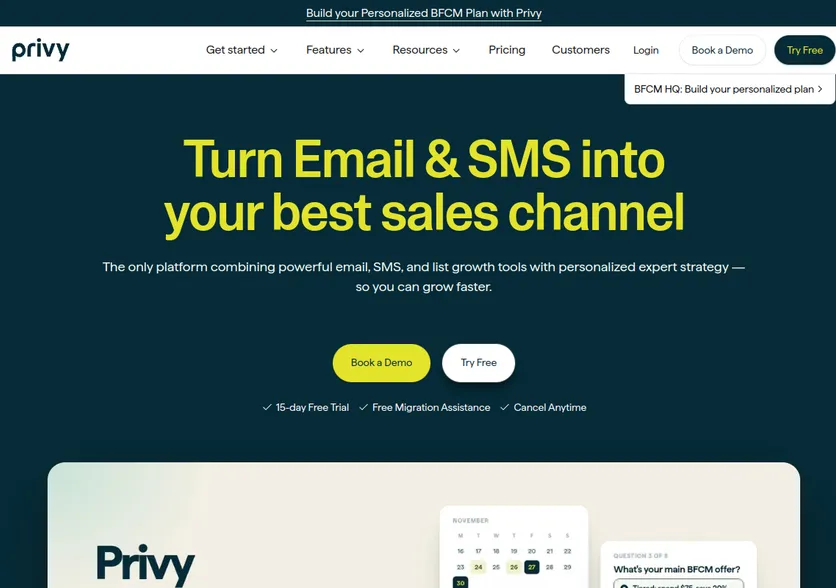
Privy earns its keep on an ecommerce site by converting traffic the store already has, catching visitors with popups, banners and spin-to-win offers for thirty dollars a month. The Starter plan covers up to one thousand five hundred mailable contacts, and the email and text follow-up run from the same account. It is the capture-first tool in this list, and it pairs with any email platform the store already uses.
What we like
- Converts traffic the store already has
- Exit-intent popups catch visitors before they leave
- Email and text follow-up share one account
Watch out for
- The price rises with the contact count
- Popups can annoy visitors if overused
How to try it
- Add a popup to the store with an exit-intent trigger
- Offer a discount in exchange for the email address
- Send the welcome email and the first offer from the same account
Prices above were checked on each vendor’s own website on Nov 28, 2026 and can change — the vendor’s page is the final word. Vendor links are editorial: nobody paid to be listed or ranked here. Vendors who want a featured listing can see how it works on our Get listed page.
How an ecommerce brand should manage leads
Start with the checkout, because every order is a lead the store has already paid to win. Capture the email at purchase, send a welcome flow, and follow up on every abandoned cart within the hour, since a shopper who has forgotten the cart will not come back for a third reminder. Segment by purchase history before each campaign, because a repeat buyer and a first-time browser need different messages. Finally, measure revenue per email, since an open that does not sell is a vanity metric.
Before you buy
- Check that the tool reads your store data, since lead management without purchase history is guesswork
- Confirm the price against your real list size, because contact-based pricing climbs fast as the store grows
- Ask whether SMS and email share one automation or need separate plans
- Test the checkout capture with a real order, from popup to welcome email, before you commit
- Run a trial with one campaign and count recovered carts, not just opens, before you commit
Official websites
Official websites of the products reviewed above. Features and prices were checked against these sites when this guide was written, and they can change, so confirm on the vendor site before you buy.
Frequently asked questions
What is lead management software for ecommerce brands?
It is software that captures shopper details and follows up with them: popups and forms at checkout, email and SMS flows after purchase, and a record of every order behind each contact. The tools in this list cover capture, email, SMS and the CRM layer. For an ecommerce brand, the point is the repeat purchase: a lead that buys once and never returns is the most expensive lead of all.
What does Klaviyo cost for an ecommerce brand?
Klaviyo costs twenty dollars a month on the Email plan for five hundred active profiles, with five thousand emails included. The store data drives the flows, so abandoned carts, post-purchase follow-ups and win-backs trigger from what the shopper actually did. The price rises with profiles to thirty dollars at one thousand and one hundred dollars at five thousand, and there is no annual discount.
Which tool is best for an ecommerce brand?
Omnisend is the value pick at thirteen dollars a month on annual billing, with email, SMS and web push in one plan. Klaviyo is the pick for the deepest store integration, with flows driven by purchase behaviour. ActiveCampaign is the pick for automation that reacts to what shoppers do, with abandoned cart and win-back flows for fifteen dollars a month.
Can these tools recover abandoned carts?
Yes, and the recovered cart is the metric to watch. Klaviyo, ActiveCampaign and Omnisend all run abandoned cart flows that email or text the shopper after checkout is left behind. The flow works best with one reminder and one offer, sent within the hour, since a shopper who has forgotten the cart will not come back for a third email.
How should an ecommerce brand start managing leads?
Start with the checkout capture, because every order is a lead the store has already paid to win. Add one popup for visitors who leave without buying, then one abandoned cart flow and one post-purchase flow. Measure revenue per email rather than opens, since an open that does not sell is a vanity metric. Then add SMS only when the email flows earn their keep.
Compare the seven tools above, then start with a free trial on the tool that matches how your store already captures and follows up with shoppers before you pay for a full year.
Browse Marketing & Ads Calculators tools