On this page
A bankruptcy case turns on documents: schedules, statements, tax returns, bank records and creditor lists, all of which must be gathered, checked and shared without leaking a single page. The tools below cover that work from two sides, secure rooms for sharing sensitive files and case software that turns the documents into a filing. Ansarada leads because it publishes a real starting price, charges by storage instead of by user, and only starts billing when the room goes live.
How we researched this
We checked every price on the vendor pricing page or pricing guide on November 28, 2026, and only included tools with a published US dollar list price and a free trial or free plan. The big enterprise rooms, including Datasite, Intralinks and Firmex, publish no prices, so they are not in this list. Prices change, so confirm the current figure on the vendor site before you buy.
Compare the tools
| Name | Best for | Starting price | Free plan | |
|---|---|---|---|---|
| Ansarada | Bankruptcy firms that share sensitive schedules with trustees and creditors | $99/month | Free until live: billing starts at first external guest or 90 days | Visit |
| SecureDocs | Bankruptcy firms that want one predictable monthly fee for every case | $250/month | No free plan; 14-day free trial | Visit |
| CapLinked | Bankruptcy firms that need a room running today with no long contract | $399/month | No free plan; 14-day free trial | Visit |
| Best Case | Bankruptcy firms that want diligence and petition drafting in one system | $99/user/month | No free plan; 30-day free trial | Visit |
| Casefleet | Bankruptcy teams that build a case around facts, evidence and timelines | $30/user/month | No free plan; free trial available | Visit |
 Clio | Bankruptcy firms that want diligence, matters and billing in one platform | $49/user/month | Free trial available | Visit |
| GoldFynch | Bankruptcy firms that need cheap document search across a case file | $27/case/month | Free 512 MB trial case for 90 days. | Visit |
| AgileLaw | Bankruptcy teams that take depositions and need exhibits in the session | $200/month | Free Starter plan (pay per session); 14-day free trial on paid plans | Visit |
The legal due diligence software for bankruptcy law firms, compared
1. Ansarada
Best for: Bankruptcy firms that share sensitive schedules with trustees and creditors
Paid tool Starting price: $99/month · Ninety-nine dollars a month for the fifty megabyte Essentials plan billed month to month, or sixty-nine dollars a month on a twelve-month term; larger plans run up to one thousand four hundred and seventy-nine dollars a month, and billing starts only when the room goes live
Free plan: Free until live: billing starts at first external guest or 90 days
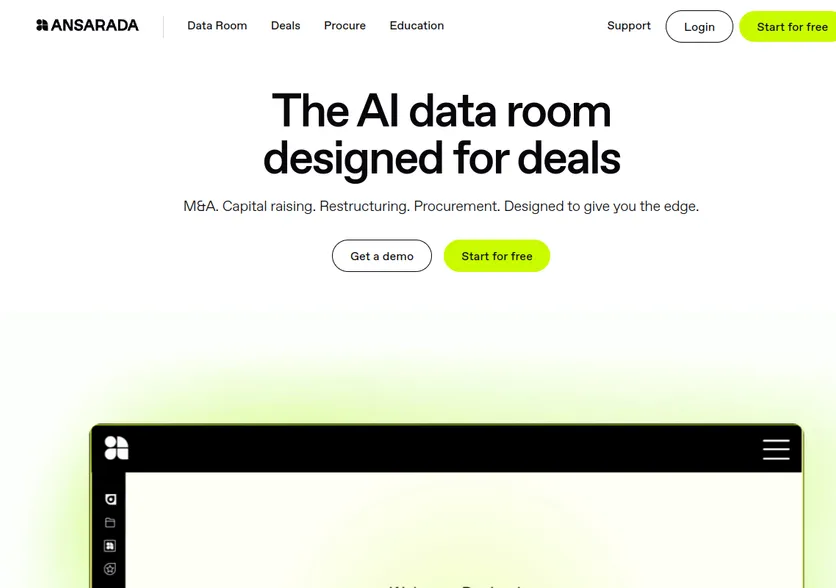
This Ansarada plan costs ninety-nine dollars a month for a fifty megabyte Essentials room, and it prices by storage rather than by seat, so a whole case team and every outside guest can work in the same room without extra per-user fees. Billing only starts when the room goes live, which means a firm can build the folder structure, upload schedules and draft request lists before paying anything. For a bankruptcy practice that runs many small files, that free-until-live window keeps the cost tied to active cases instead of idle rooms.
What we like
- Storage pricing means no per-user fees for guests or staff
- Billing starts only when the room goes live
- Unlimited external guests on every Essentials plan
Watch out for
- Fifty megabytes fills fast with scanned bank statements
- Larger plans jump sharply in price as storage grows
How to try it
- Create the room and build the folder structure for schedules, statements and tax returns
- Invite the trustee and creditors as guests with permissioned access to each folder
- Track who opened each document and close the room when the case is discharged
2. SecureDocs
Best for: Bankruptcy firms that want one predictable monthly fee for every case
Paid tool Starting price: $250/month · Two hundred and fifty dollars a month on the twelve-month plan billed annually, or four hundred dollars a month on the three-month plan billed quarterly, with unlimited users, documents and storage; a fourteen-day free trial is included
Free plan: No free plan; 14-day free trial
This SecureDocs plan costs two hundred and fifty dollars a month on the twelve-month plan, and it covers unlimited users, documents and storage for that single flat fee. A bankruptcy firm can open a fresh room for each new case without watching a storage meter or counting guest seats, which matters when a single Chapter 7 file can hold hundreds of pages. The fourteen-day free trial is long enough to run one real case through the room before committing.
What we like
- One flat fee covers unlimited users and storage
- No per-page or per-guest charges to track
- Rooms can be set up in hours, not weeks
Watch out for
- The three-month plan costs four hundred dollars a month instead
- No per-case pricing for firms that only need one room a year
How to try it
- Open a room per case and upload the full schedule and statement set
- Set guest permissions so each creditor sees only their own documents
- Use the activity log to prove when each document was shared
3. CapLinked
Best for: Bankruptcy firms that need a room running today with no long contract
Paid tool Starting price: $399/month · Three hundred and ninety-nine dollars a month flat for the Team plan with five gigabytes of storage, unlimited guest users and ten admins, while Enterprise starts at five hundred and fifty dollars a month; a fourteen-day free trial is included
Free plan: No free plan; 14-day free trial
This CapLinked plan costs three hundred and ninety-nine dollars a month flat for the Team plan, and it includes five gigabytes of storage with unlimited guest users and ten admins. A bankruptcy practice can stand up a room the same day a case lands, share the schedules with the trustee, and keep the Q and A thread inside the room instead of in email. Enterprise starts at five hundred and fifty dollars a month for firms that need more storage and custom terms.
What we like
- Flat monthly price with no long-term contract
- Unlimited guests and ten admins on the Team plan
- Fourteen-day free trial before paying
Watch out for
- Five gigabytes of storage can be tight for document-heavy cases
- Enterprise pricing starts higher than the Team plan
How to try it
- Create the room and invite the trustee and creditor committee as guests
- Upload schedules and statements with folder-level permissions
- Run questions and answers inside the room to keep the record in one place
4. Best Case
Best for: Bankruptcy firms that want diligence and petition drafting in one system
Paid tool Starting price: $99/user/month · Ninety-nine dollars per user a month for the Cloud plan with unlimited cases; Desktop plans start at one thousand seven hundred fifty dollars a year for Chapter 7
Free plan: No free plan; 30-day free trial
This Best Case plan costs ninety-nine dollars per user a month for the Cloud plan, and it turns the documents a firm has already gathered into the bankruptcy petition itself. Schedules, statements and means-test forms are built from the same data, so a figure checked during diligence does not need retyping when the petition is filed. Unlimited cases are included, which suits a high-volume Chapter 7 and Chapter 13 practice that files every week.
What we like
- Unlimited cases on the Cloud plan
- Petition schedules build from one data entry
- Thirty-day free trial before paying
Watch out for
- Desktop plans are priced separately by chapter
- No secure data room for sharing with outside parties
How to try it
- Enter the debtor information once and let the schedules populate from it
- Run the means test and check the figures against the gathered documents
- File the petition and keep the case record in the same system
5. Casefleet
Best for: Bankruptcy teams that build a case around facts, evidence and timelines
Paid tool Starting price: $30/user/month · Thirty dollars per user a month billed annually for the Starter plan, covering twenty documents per case; higher tiers add more documents and users
Free plan: No free plan; free trial available
This Casefleet plan costs thirty dollars per user a month billed annually, and it organises the facts of a case into a timeline with the evidence attached to each event. A bankruptcy team can trace every transfer, payment and filing date in order, then pull the chronology when the trustee asks what happened and when. Higher tiers add more documents per case for firms that run long, document-heavy matters.

What we like
- Timelines make the case story easy to follow
- Evidence links straight to each fact
- Low entry price for a litigation tool
Watch out for
- Starter covers only twenty documents per case
- No built-in bankruptcy forms or schedules
How to try it
- Log each fact with its date and link the supporting document
- Build the timeline to spot gaps in the record before filing
- Export the chronology for the trustee or the court
6. Clio
Best for: Bankruptcy firms that want diligence, matters and billing in one platform
Paid tool Starting price: $49/user/month · Manage Starter plan, starting at forty-nine dollars a user a month; Core, Signature and Elite tiers are quoted, not published
Free plan: Free trial available
This Clio plan costs forty-nine dollars per user a month on the Starter plan, and it holds the matter, the documents, the calendar and the bill in one place. A bankruptcy firm can keep the diligence file beside the client intake record and the trust ledger, so nothing about a case lives in a separate system. Higher tiers are quoted rather than published, so a growing firm should confirm the upgrade price before it outgrows Starter.
What we like
- Matters, documents, calendar and billing share one system
- Large integration library for filing and e-signature tools
- Free trial available before paying
Watch out for
- Higher tiers are quoted, not published
- No dedicated data room for outside reviewers
How to try it
- Open the matter and upload the diligence documents to the case file
- Set deadlines for schedules, statements and the creditors meeting
- Track time and bill the case from the same record
7. GoldFynch
Best for: Bankruptcy firms that need cheap document search across a case file
Paid tool Starting price: $27/case/month · Twenty-seven dollars a case a month for a three gigabyte case; ten gigabyte cases cost seventy-six dollars a month. Unlimited users are included and a free five hundred and twelve megabyte trial case runs for ninety days
Free plan: Free 512 MB trial case for 90 days.
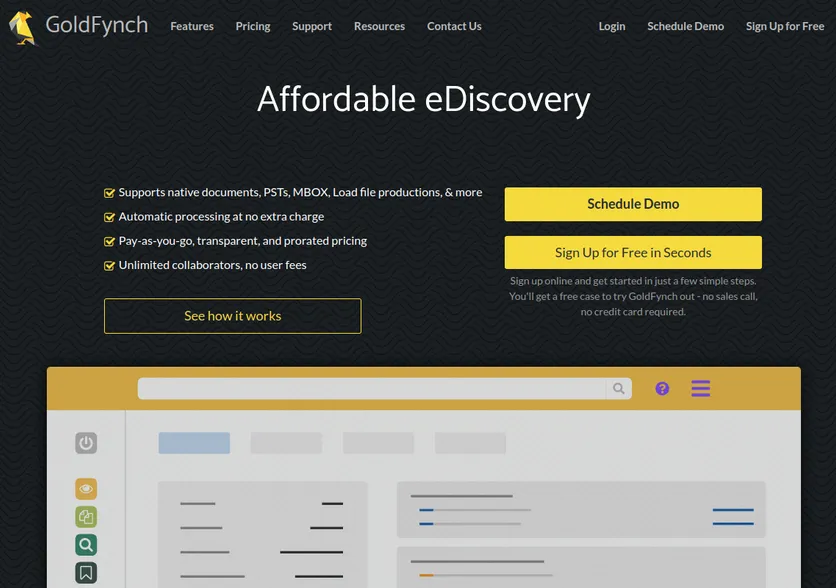
This GoldFynch plan costs twenty-seven dollars a case a month for a three gigabyte case, and it searches the full text of every document in the file. A bankruptcy team can find every mention of a creditor, an account or a transfer across hundreds of pages without opening each one, which is the dull work that eats hours before a filing. Unlimited users are included, and a free five hundred and twelve megabyte trial case runs for ninety days.
What we like
- Per-case pricing keeps small cases cheap
- Full-text search across every uploaded document
- Free trial case for ninety days
Watch out for
- Three gigabytes fills fast with scanned records
- No bankruptcy forms or petition drafting
How to try it
- Upload the case documents and let the system index the full text
- Search for a creditor or account across the whole file
- Tag the key documents and export the set for the trustee
8. AgileLaw
Best for: Bankruptcy teams that take depositions and need exhibits in the session
Paid tool Starting price: $200/month · Two hundred dollars a month for the Essentials plan with five host sessions; the Starter plan is pay per use at one hundred and ninety-five dollars per host session and Advantage costs five hundred dollars a month
Free plan: Free Starter plan (pay per session); 14-day free trial on paid plans
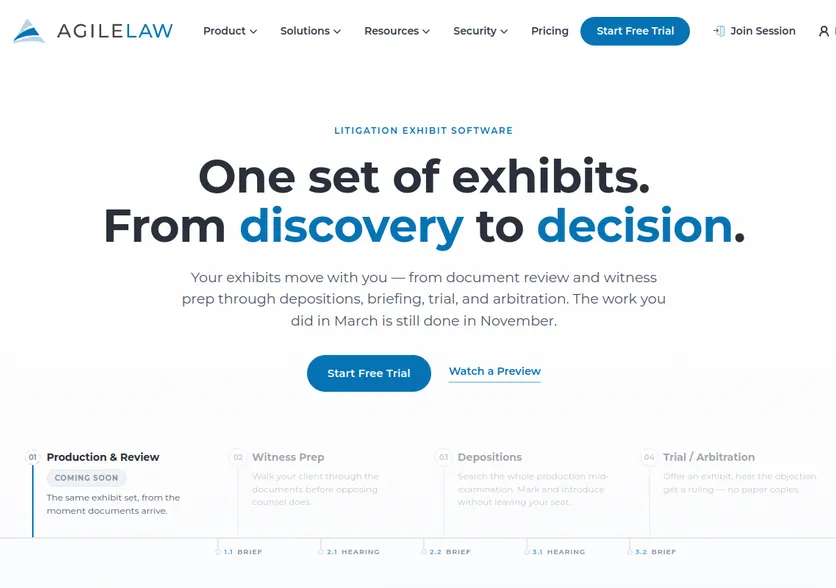
This AgileLaw plan costs two hundred dollars a month for the Essentials plan with five host sessions, and it runs video depositions with exhibits shared inside the session. A bankruptcy team can question a debtor or a witness while both sides see the same statement or bank record on screen, then keep the recording and the exhibits together. The Starter plan is pay per use at one hundred and ninety-five dollars per host session for firms that depose rarely.
What we like
- Exhibits and video share one session
- Pay-per-use Starter plan for occasional depositions
- Fourteen-day free trial on paid plans
Watch out for
- Five host sessions may be tight for a busy practice
- No document review or search tools
How to try it
- Schedule the deposition and upload the exhibits in advance
- Share each exhibit on screen while questioning the witness
- Keep the recording and exhibits in the same case record
Prices above were checked on each vendor’s own website on Nov 28, 2026 and can change — the vendor’s page is the final word. Vendor links are editorial: nobody paid to be listed or ranked here. Vendors who want a featured listing can see how it works on our Get listed page.
How a bankruptcy firm should run due diligence with software
Start with the room, not the petition. A firm that gathers every schedule, statement and tax return into one permissioned place can answer a trustee in an afternoon, while a firm that keeps documents in email still spends days hunting for the right file. Pick one room per case and make sure every document lands there, even minor ones, because a missing bank statement is the gap that delays a discharge. Use the case software to turn the gathered documents into the petition, and search the whole file before filing so no creditor or transfer is missed. Finally, close the room when the case ends, because a room left open is a leak waiting to happen.
Before you buy
- Check that the room charges by storage or flat fee, not per guest, before you share with trustees
- Confirm the activity log records who opened each document and when, for the trustee file
- Ask how the petition data flows from the diligence documents without retyping figures
- Count the storage each case needs, because scanned statements fill small plans fast
- Run one real case through the room and the petition builder before you pay for a year
Official websites
Official websites of the products reviewed above. Features and prices were checked against these sites when this guide was written, and they can change, so confirm on the vendor site before you buy.
Frequently asked questions
What is legal due diligence software for bankruptcy law firms?
It is software that gathers, checks and shares the documents behind a bankruptcy case, from schedules and statements to tax returns and bank records. The tools in this list do that through secure data rooms, petition builders, timelines and document search. None of them replaces a lawyer, but a complete and organised file makes filings faster and gives a firm evidence when a trustee asks questions.
Which tool is cheapest for a small bankruptcy firm?
GoldFynch is cheapest at twenty-seven dollars a case a month for a three gigabyte case, and Casefleet follows at thirty dollars per user a month billed annually. Clio and CosmoLex both start at forty-nine dollars per user a month. Compare the total, including storage and any per-case fees, because a cheap subscription with a small storage limit can cost more than a higher flat fee.
Do I need a data room for a bankruptcy case?
A data room matters when outside parties need the documents, such as a trustee, a creditor committee or co-counsel. If the firm only works internally, case software with document storage is enough. A practical approach is to keep the case file in your practice system and open a room only for cases with outside reviewers, then close it when the case is discharged.
What does Ansarada cost for a bankruptcy firm?
Ansarada costs ninety-nine dollars a month for the fifty megabyte Essentials plan billed month to month, or sixty-nine dollars a month on a twelve-month term. Larger plans run from one hundred and eighty-nine dollars to one thousand four hundred and seventy-nine dollars a month by storage. Billing starts only when the room goes live, so a firm can build the room free first.
Can these tools help with the bankruptcy petition itself?
Best Case builds the petition from the diligence data, so schedules and means-test forms come from one entry. The data rooms and search tools do not draft petitions, but they keep the documents organised so the petition figures can be checked. Ask each vendor whether the petition data exports to your filing system before you rely on it.
Compare the eight tools above, then start with a free trial on the tool that matches how your bankruptcy firm already gathers documents before you pay for a full year.
Browse Business Tools tools