On this page
A criminal case can turn on a single message, photo or recording that was deleted before anyone knew it mattered. Legal hold software stops that loss by freezing the evidence the moment a case opens, then keeping it searchable until the case closes. GoldFynch leads because it costs twenty-seven dollars a case a month, searches the full text of every document, and includes unlimited users on every plan.
How we researched this
We checked every price on the vendor pricing page or pricing guide on November 28, 2026, and only included tools with a published US dollar list price and a free trial or demo. The big e-discovery names, including Everlaw, Logikcull, DISCO and Exterro, publish no prices, so they are not in this list. Prices change, so confirm the current figure on the vendor site before you buy.
Compare the tools
| Name | Best for | Starting price | Free plan | |
|---|---|---|---|---|
| GoldFynch | Criminal defense firms that need cheap evidence preservation per case | $27/case/month | Free 512 MB trial case for 90 days. | Visit |
| Nextpoint | Criminal defense teams that review large evidence sets | $262.50/user/month | No free plan; demo available. | Visit |
| CloudNine LAW | Criminal defense firms that want to pay only for data processed | $35/GB/month | 30-day free trial. | Visit |
| AgileLaw | Criminal defense teams that take depositions and need exhibits in the session | $200/month | Free Starter plan (pay per session); 14-day free trial on paid plans | Visit |
| Casefleet | Criminal defense teams that build a case around facts and timelines | $30/user/month | No free plan; free trial available | Visit |
 Clio | Criminal defense firms that want hold, matters and billing in one platform | $49/user/month | Free trial available | Visit |
 Smokeball | Criminal defense firms that want automatic time capture with the case file | $49/user/month | No free plan; 30-day free trial | Visit |
 PracticePanther | Small criminal defense firms that need matters plus billing | $49/user/month | Free trial available | Visit |
The legal hold software for criminal defense firms, compared
1. GoldFynch
Best for: Criminal defense firms that need cheap evidence preservation per case
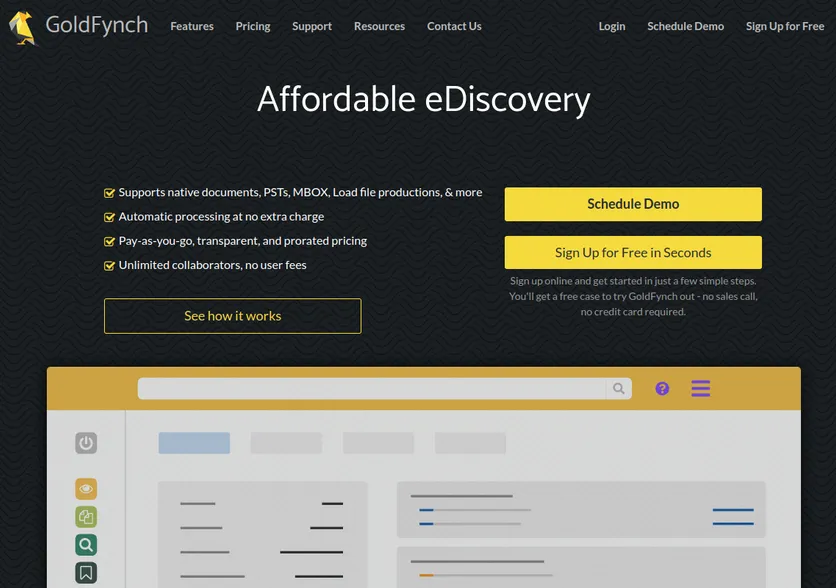
Paid tool Starting price: $27/case/month · Twenty-seven dollars a case a month for a three gigabyte case; ten gigabyte cases cost seventy-six dollars a month. Unlimited users are included and a free five hundred and twelve megabyte trial case runs for ninety days
Free plan: Free 512 MB trial case for 90 days.
A defense team that freezes the evidence and then needs to find every mention of a witness or a place without opening each file by hand will use this GoldFynch plan, which costs twenty-seven dollars a case a month for a three gigabyte case. A defense team can freeze the evidence, index it, and find every mention of a witness, a place or a date without opening each file by hand. Unlimited users are included, and a free five hundred and twelve megabyte trial case runs for ninety days.
What we like
- Per-case pricing keeps small cases cheap
- Full-text search across every uploaded document
- Free trial case for ninety days
Watch out for
- Three gigabytes fills fast with video evidence
- No built-in legal hold notices or custodian tracking
How to try it
- Upload the case evidence and let the system index the full text
- Freeze the set so nothing is deleted or changed while the case runs
- Search for a witness or date across the whole preserved file
2. Nextpoint
Best for: Criminal defense teams that review large evidence sets
Paid tool Starting price: $262.50/user/month · Two hundred and sixty-two dollars and fifty cents per user a month is the starting rate from the vendor cost calculator; user minimums may apply
Free plan: No free plan; demo available.
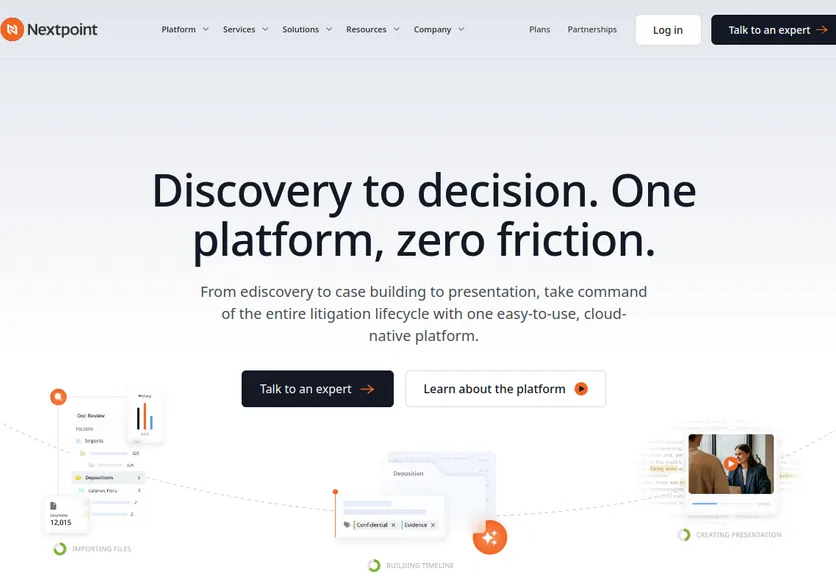
This Nextpoint plan costs two hundred and sixty-two dollars and fifty cents per user a month from the vendor cost calculator, and it is a full review platform for large matters. A defense team can collect, process, search and review the evidence in one system, then produce the set for the prosecution without exporting to another tool. User minimums may apply, so a small firm should confirm the minimum before budgeting.
What we like
- Full review platform in one system
- Starting rate is published by the vendor calculator
- Handles large evidence volumes
Watch out for
- Price is high for a solo practice
- User minimums may apply
How to try it
- Collect the evidence and process it into the review set
- Search and tag the documents that matter to the defense
- Produce the review set for the other side from the same system
3. CloudNine LAW
Best for: Criminal defense firms that want to pay only for data processed
Paid tool Starting price: $35/GB/month · Thirty-five dollars per gigabyte a month on pay per use; subscriptions run from seventeen dollars and fifty cents down to twelve dollars per gigabyte a month. Thirty-day free trial
Free plan: 30-day free trial.
This CloudNine LAW plan costs thirty-five dollars per gigabyte a month on pay per use, and subscriptions run from seventeen dollars and fifty cents down to twelve dollars per gigabyte a month. A defense firm that preserves a small phone extraction pays for a few gigabytes, while a firm with a large device set pays for more, so the cost follows the evidence instead of the headcount. A thirty-day free trial is included.
What we like
- Pay only for the gigabytes you process
- Subscription rates fall as volume grows
- Thirty-day free trial
Watch out for
- Costs rise with every gigabyte preserved
- No flat monthly price for budgeting
How to try it
- Upload the device data and process it into the review set
- Search the processed data for the facts that matter
- Export the preserved set for disclosure or trial
4. AgileLaw
Best for: Criminal defense teams that take depositions and need exhibits in the session
Paid tool Starting price: $200/month · Two hundred dollars a month for the Essentials plan with five host sessions; the Starter plan is pay per use at one hundred and ninety-five dollars per host session and Advantage costs five hundred dollars a month
Free plan: Free Starter plan (pay per session); 14-day free trial on paid plans
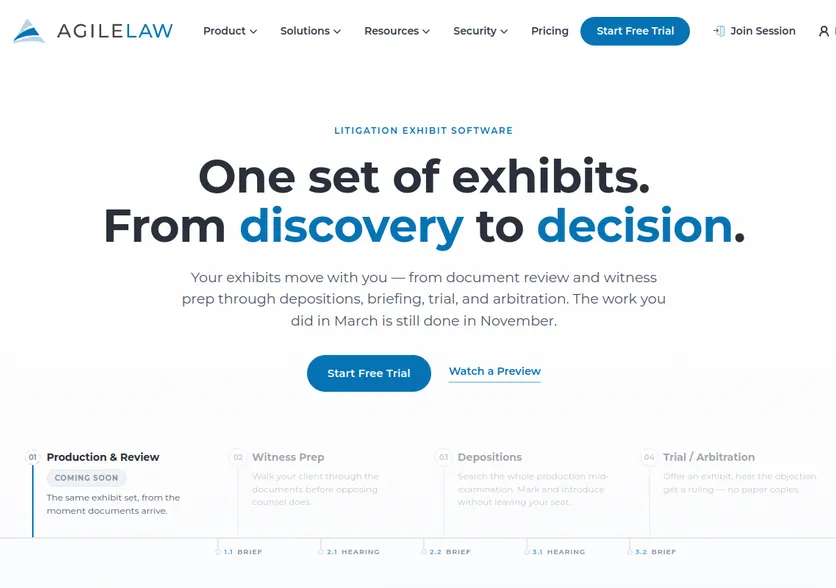
Questioning a witness while both sides see the same statement or photo on screen is what a video deposition is for, and this AgileLaw plan costs two hundred dollars a month for the Essentials plan with five host sessions. A defense team can question a witness while both sides see the same statement or photo on screen, then keep the recording and the exhibits together as part of the preserved record. The Starter plan is pay per use at one hundred and ninety-five dollars per host session for firms that depose rarely.
What we like
- Exhibits and video share one session
- Pay-per-use Starter plan for occasional depositions
- Fourteen-day free trial on paid plans
Watch out for
- Five host sessions may be tight for a busy practice
- No document review or search tools
How to try it
- Schedule the deposition and upload the exhibits in advance
- Share each exhibit on screen while questioning the witness
- Keep the recording and exhibits in the same case record
5. Casefleet
Best for: Criminal defense teams that build a case around facts and timelines
Paid tool Starting price: $30/user/month · Thirty dollars per user a month billed annually for the Starter plan, covering twenty documents per case; higher tiers add more documents and users
Free plan: No free plan; free trial available
Telling the defense story in court starts with tracing every call, meeting and arrest in order, and this Casefleet plan costs thirty dollars per user a month billed annually with the evidence attached to each event. A defense team can trace every call, meeting and arrest in order, then pull the chronology when the story needs telling in court. Higher tiers add more documents per case for firms that run long, evidence-heavy matters.

What we like
- Timelines make the case story easy to follow
- Evidence links straight to each fact
- Low entry price for a litigation tool
Watch out for
- Starter covers only twenty documents per case
- No built-in hold notices or custodian tracking
How to try it
- Log each fact with its date and link the supporting document
- Build the timeline to spot gaps in the record before trial
- Export the chronology for the defense file or the court
6. Clio
Best for: Criminal defense firms that want hold, matters and billing in one platform
Paid tool Starting price: $49/user/month · Manage Starter plan, starting at forty-nine dollars a user a month; Core, Signature and Elite tiers are quoted, not published
Free plan: Free trial available
Keeping the preserved evidence beside the client intake record and the trust ledger is what a defense firm needs from one system, and this Clio plan costs forty-nine dollars per user a month on the Starter plan. A defense firm can keep the preserved evidence beside the client intake record and the trust ledger, so nothing about a case lives in a separate system. Higher tiers are quoted rather than published, so a growing firm should confirm the upgrade price before it outgrows Starter.

What we like
- Matters, documents, calendar and billing share one system
- Large integration library for filing and e-signature tools
- Free trial available before paying
Watch out for
- Higher tiers are quoted, not published
- No dedicated hold notice workflow
How to try it
- Open the matter and upload the preserved evidence to the case file
- Set deadlines for disclosure, motions and trial
- Track time and bill the case from the same record
7. Smokeball
Best for: Criminal defense firms that want automatic time capture with the case file
Paid tool Starting price: $49/user/month · Bill plan is reported at forty-nine dollars per user a month and Boost at eighty-nine dollars, but the vendor pricing page currently shows no dollar figures, so treat these as the last published prices and confirm them on a call
Free plan: No free plan; 30-day free trial
This Smokeball plan costs forty-nine dollars per user a month on the Bill plan, and it captures time automatically while the team works the case. A defense firm that lives on the phone and in court can bill the hours it actually worked instead of the hours it remembered to log. The vendor pricing page currently shows no dollar figures, so treat the price as the last published figure and confirm it on a call, and Boost sits above Bill at eighty-nine dollars.
What we like
- Automatic time capture recovers billable hours
- Document automation for standard defense forms
- Thirty-day free trial
Watch out for
- Vendor page currently shows no dollar figures
- No dedicated e-discovery review tools
How to try it
- Open the matter and let time capture run while you work
- Attach the preserved evidence to the case file
- Generate the invoice from the captured time and costs
8. PracticePanther
Best for: Small criminal defense firms that need matters plus billing
Paid tool Starting price: $49/user/month · Solo plan, forty-nine dollars a user a month billed annually or fifty-nine dollars billed monthly; Essential at sixty-nine dollars, Business at eighty-nine dollars and Business Pro at one hundred fourteen dollars sit above it
Free plan: Free trial available
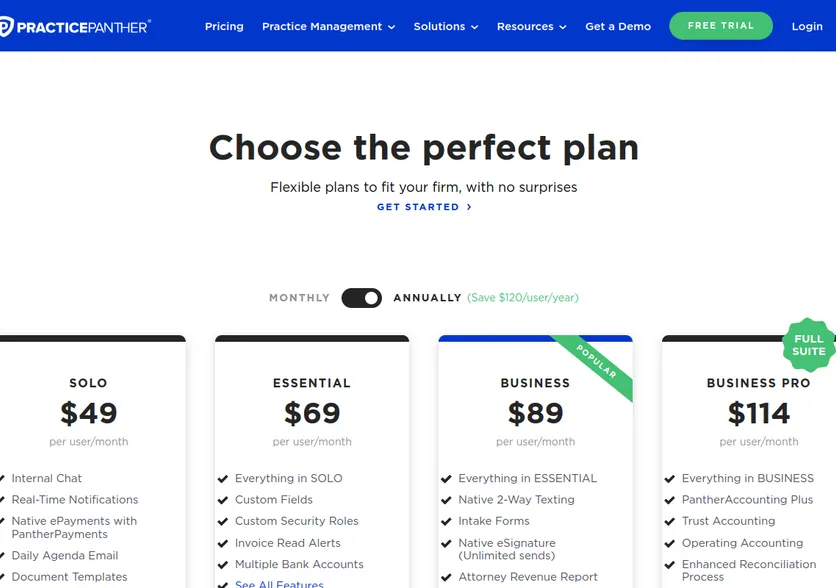
This PracticePanther plan costs forty-nine dollars a user a month billed annually on the Solo plan, or fifty-nine dollars billed monthly, and it covers matters, documents, billing and intake in one system. A small defense firm can keep the preserved evidence with the case file and bill the client from the same record. Essential at sixty-nine dollars, Business at eighty-nine dollars and Business Pro at one hundred fourteen dollars sit above Solo for firms that need more.
What we like
- Matters, documents and billing in one system
- Solo plan priced for a single lawyer
- Free trial available before paying
Watch out for
- Higher plans cost more per user
- No dedicated hold notice workflow
How to try it
- Open the matter and upload the preserved evidence
- Track deadlines for disclosure and motions from the case file
- Bill the client from the same record
Prices above were checked on each vendor’s own website on Nov 28, 2026 and can change — the vendor’s page is the final word. Vendor links are editorial: nobody paid to be listed or ranked here. Vendors who want a featured listing can see how it works on our Get listed page.
How a criminal defense firm should run legal holds with software
Start with the freeze, not the search. A firm that preserves the evidence the moment a case opens can answer a discovery request in an afternoon, while a firm that collects evidence later still spends days wondering what was deleted. Pick one system as the home for preserved evidence and make sure every file lands there, even minor ones, because a deleted message is the gap the other side will find. Search the preserved set before drafting the defense, and keep the hold in place until the case closes, because lifting it early is how evidence disappears. Finally, log who accessed the set, because the chain of custody is the defense itself.
Before you buy
- Check that the preserved set cannot be deleted or changed while the hold is active
- Confirm full-text search covers every file type in the evidence, including messages and photos
- Ask how the preserved set exports for disclosure, including format and chain of custody
- Count the data volume before you compare prices, since per-gigabyte plans scale with evidence
- Run one real case through the hold and review workflow before you pay for a year
Official websites
Official websites of the products reviewed above. Features and prices were checked against these sites when this guide was written, and they can change, so confirm on the vendor site before you buy.
Frequently asked questions
What is legal hold software for criminal defense firms?
It is software that freezes, preserves and searches the evidence behind a criminal case, from messages and photos to recordings and documents. The tools in this list do that through e-discovery review, document search, timelines and case management. None of them replaces a lawyer, but a complete preserved file makes discovery faster and gives a firm evidence when the other side claims something is missing.
Which tool is cheapest for a small criminal defense firm?
GoldFynch is cheapest at twenty-seven dollars a case a month for a three gigabyte case, and Casefleet follows at thirty dollars per user a month billed annually. Clio, Smokeball and PracticePanther all start at forty-nine dollars per user a month. Compare the total, including data volume, because a cheap subscription with a small storage limit can cost more than a higher flat fee.
Do I need a full e-discovery platform for a criminal case?
A full platform matters when the evidence set is large, such as a phone extraction or a long message thread. If the case holds only a few documents, search and case management are enough. A practical approach is to preserve everything in a cheap per-case tool and move to a review platform only when the evidence volume makes searching by hand too slow.
What does Nextpoint cost for a criminal defense firm?
Nextpoint costs two hundred and sixty-two dollars and fifty cents per user a month from the vendor cost calculator, and user minimums may apply. It is a full review platform that collects, processes, searches and produces the evidence in one system. A demo is available before you pay, and a small firm should confirm the minimum first.
Can these tools help with discovery and disclosure?
Yes, in the practical sense: they preserve the evidence, search it, and export the set for the other side with a record of what was produced. The firm still decides what is disclosable, but a complete preserved file shortens the process and supports the chain of custody. Ask each vendor how exports work before you rely on it.
Compare the eight tools above, then start with a free trial on the tool that matches how your criminal defense firm already preserves evidence before you pay for a full year.
Browse Business Tools tools