On this page
A startup visitor asks a question and leaves if nobody answers, because there are ten other tabs open and no reason to wait. The eight tools below were checked on price and fit for startups, from a free plan to a full support suite, and every one of them can answer a visitor in under a minute. Tidio leads because its flat conversation pricing keeps costs predictable while the team is small, and every other tool is judged on the same test: how much customer love it buys for the price.
How we researched this
We checked every price on the vendor pricing page on November 28, 2026, and only included tools with a published US dollar list price. Smartsupp was left out because its current dollar prices could not be verified, and Drift, Podium and Kustomer sell by quote, so they are not in this list. Prices change, so confirm the current figure on the vendor site before you buy.
Compare the tools
| Name | Best for | Starting price | Free plan | |
|---|---|---|---|---|
 Tidio | Startups that want flat pricing by conversation, not by seat | $24.17/month | Free plan | Visit |
 Crisp | Startups with a growing team and no per-seat budget | $45/month | Free plan | Visit |
 LiveChat | Startups that want a dedicated widget with an AI agent included | $19/user/month | 14-day free trial | Visit |
 Intercom | Startups that want AI to qualify leads before a human steps in | $29/seat/month | 14-day free trial | Visit |
 Zendesk | Startups that need more than a chat box and want room to grow | $55/agent/month | 14-day free trial | Visit |
 Freshchat | Startups that want a full inbox at the lowest entry price | $15/agent/month | Free plan | Visit |
| HelpCrunch | Startups that want a simple chat with built-in email marketing | $12/member/month | 14-day free trial | Visit |
| Chatwoot | Startups that want an open-source chat they can self-host | $19/agent/month | Free plan | Visit |
The live chat software for startups, compared
1. Tidio
Best for: Startups that want flat pricing by conversation, not by seat
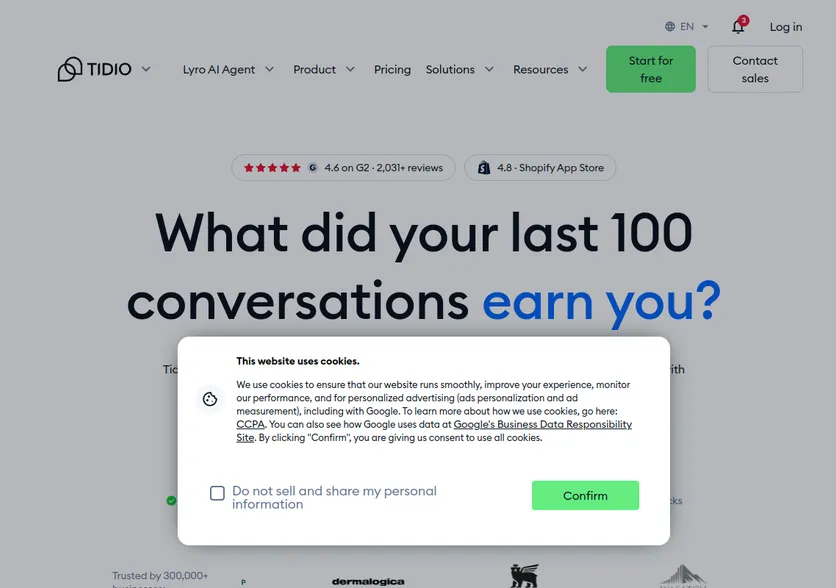
Paid tool Starting price: $24.17/month · Twenty-four dollars and seventeen cents per month on the Starter plan billed annually ($29 billed monthly), for 100 billable conversations; Growth starts at $49.17 per month billed annually. Lyro AI is sold separately from $39 per month
Free plan: Free plan
For a startup, this Tidio plan costs twenty-four dollars and seventeen cents a month on annual billing, and it charges by conversation volume instead of by seat. A small team gets live chat, ticketing and a live visitor list for one flat figure, and the Lyro AI agent can answer routine questions as a separate add-on. That flat pricing fits a startup where everyone answers chats between other jobs.
What we like
- Flat pricing that does not multiply with every agent
- Free plan covers fifty conversations a month
- Lyro AI answers routine questions around the clock
Watch out for
- The Starter cap is one hundred conversations a month
- Lyro AI and Flows are separate paid meters
How to try it
- Install the widget and set your operating hours
- Create flows that greet visitors on your pricing page
- Watch the conversation count so you never hit the cap mid-month
2. Crisp
Best for: Startups with a growing team and no per-seat budget
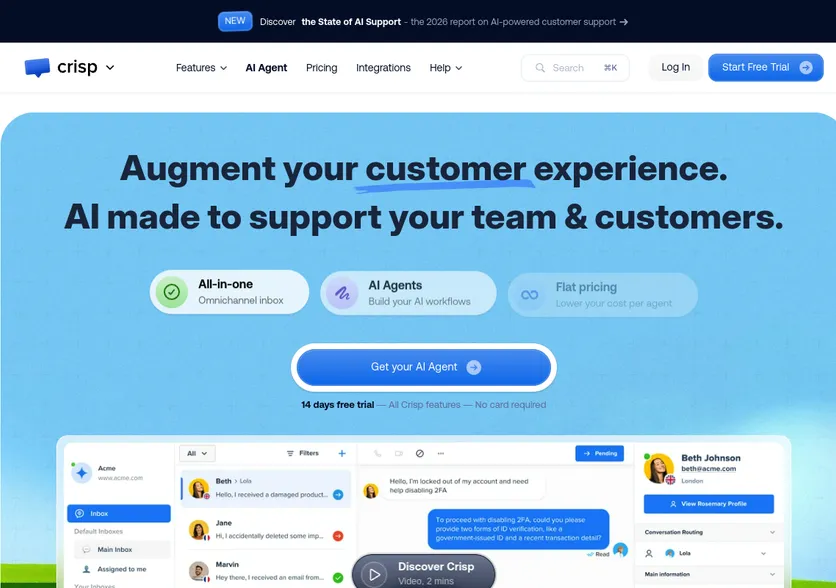
Paid tool Starting price: $45/month · Forty-five dollars per month per workspace on the Mini plan, including 4 seats; Essentials is $95 per month with 10 seats and Plus is $295 per month with 20 or more seats. The older Pro $25 plan is retired; the vendor page does not label a billing basis for the $45 figure
Free plan: Free plan
At forty-five dollars a month per workspace, this Crisp plan charges one flat figure no matter how many people on the team answer chats. A startup gets live chat, a shared inbox, a knowledge base and a chatbot builder without the per-seat bill climbing every time a hire is made. The flat rate is the reason a team of five or six can keep costs predictable while it grows.
What we like
- One flat price per workspace, not per agent
- Chat, inbox, knowledge base and chatbot in one tool
- MagicBrowse co-browsing shows the visitor's screen
Watch out for
- The Mini plan caps at four seats and five thousand contacts
- Omnichannel inbox and AI chatbot need the Essentials plan
How to try it
- Add the widget and remove Crisp branding in settings
- Build a knowledge base for your most asked questions
- Set up chat triggers on your pricing and signup pages
3. LiveChat
Best for: Startups that want a dedicated widget with an AI agent included
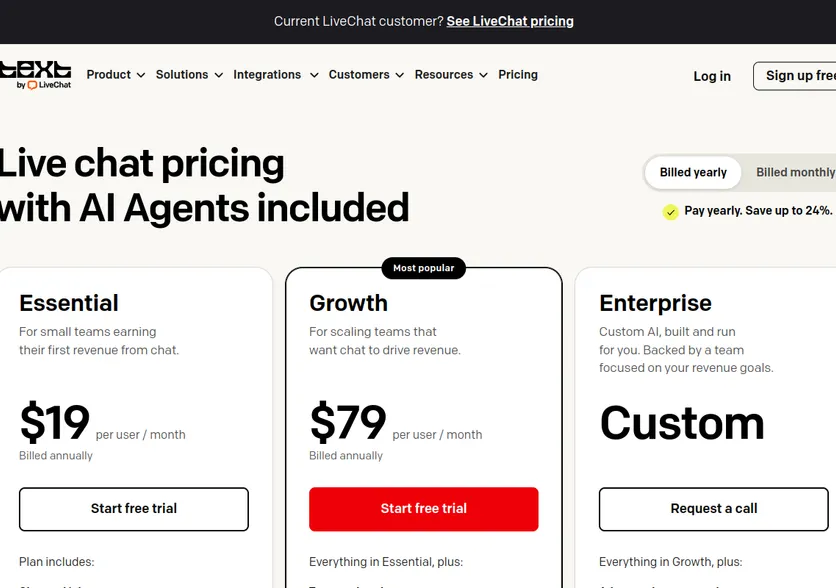
Paid tool Starting price: $19/user/month · Nineteen dollars per user per month on the Text Essential plan billed annually ($25 billed monthly); Growth is $79 per user per month billed annually ($99 monthly). Legacy LiveChat plans (Starter $20, Team $41, Business $59) remain for existing customers only; new signups get Text plans
Free plan: 14-day free trial
For a startup, this LiveChat plan costs nineteen dollars per user a month on annual billing, and it is the dedicated chat widget that new signups get under the Text brand. A small team gets a fast widget, canned responses, chat routing and a built-in AI agent that can answer the first questions and hand over to a person. For a startup the appeal is focus: chat is the whole product, so nothing about the tool distracts from the customer.
What we like
- A fast, focused widget with no extra modules to learn
- Canned responses and routing speed up first replies
- AI agent included on every plan for after-hours cover
Watch out for
- Legacy plan names changed to Text, which confuses comparisons
- Extra AI resolutions cost $49.50 per pack of fifty
How to try it
- Install the widget on your pricing and signup pages first
- Write canned replies for pricing and onboarding questions
- Set the AI agent to hand over to a human on upgrade signals
4. Intercom
Best for: Startups that want AI to qualify leads before a human steps in
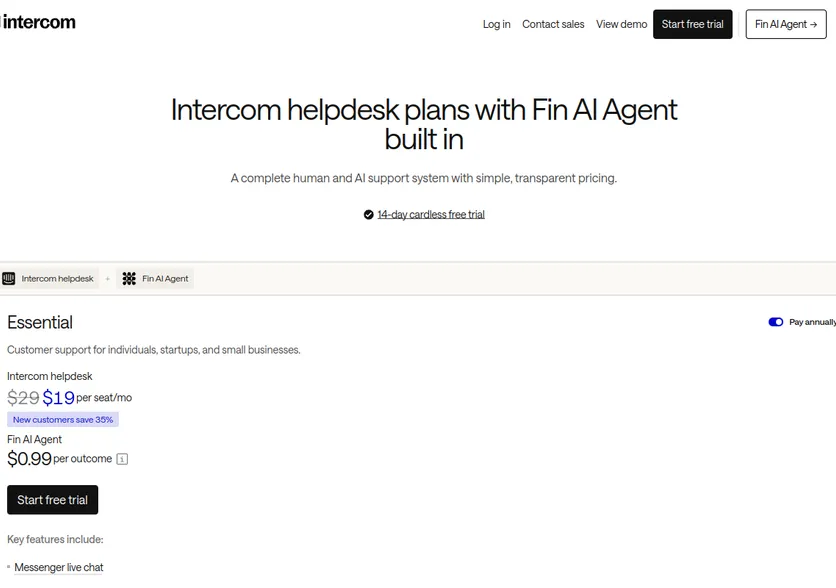
Paid tool Starting price: $29/seat/month · Twenty-nine dollars per seat per month on the Essential plan billed annually ($39 billed monthly); Advanced is $85 and Expert is $132 per seat per month billed annually, and Fin AI costs from $0.99 per outcome. New customers were shown a $19 introductory price, which is a promotion, not the list price
Free plan: 14-day free trial
At twenty-nine dollars per seat a month on annual billing, this Intercom plan pairs live chat with an AI agent that can qualify buyers before a human steps in. A startup can route a hot lead to the right person in seconds, see the visitor's company and browsing history, and keep the conversation in one shared inbox. That combination matters when the team is small and every lead counts.
What we like
- AI agent qualifies buyers before a human steps in
- Visitor company and browsing history on every chat
- Shared inbox with ticketing and reporting built in
Watch out for
- Per-seat pricing grows fast as the team grows
- AI resolutions cost extra on top of seats
How to try it
- Add the Messenger widget to your pricing and signup pages
- Set routing rules so trial users reach the success team first
- Connect Fin and review its answers weekly
5. Zendesk
Best for: Startups that need more than a chat box and want room to grow
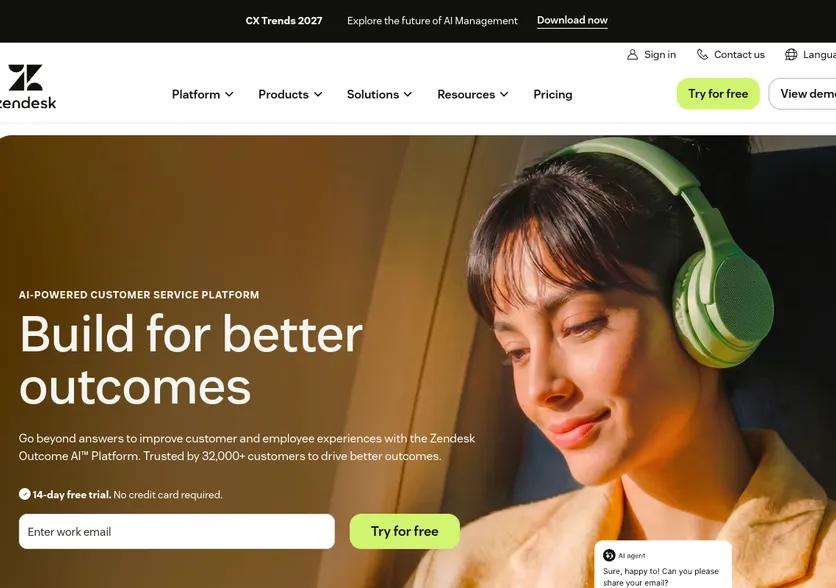
Paid tool Starting price: $55/agent/month · Fifty-five dollars per agent per month on the Suite Team plan billed annually ($69 billed monthly); Suite Growth is $89 and Suite Professional is $115 per agent per month billed annually. The $19 Support Team plan covers email ticketing only and does not include live chat
Free plan: 14-day free trial
For a startup that needs more than a chat box, this Zendesk plan costs fifty-five dollars per agent a month on annual billing, and it puts live chat inside a full support suite with ticketing, email and phone. A small team can follow a customer from the first chat through onboarding without losing the thread, and managers get reporting on response times and resolutions. The price is higher than the chat-only tools, but the suite earns it when support and sales share one queue.
What we like
- Chat, email, phone and ticketing in one agent workspace
- Strong reporting on response times and resolutions
- Thousands of integrations with CRM and sales tools
Watch out for
- Suite Team costs more than chat-only tools
- AI Copilot adds $50 per agent a month
How to try it
- Turn on messaging and connect it to your help center
- Build a view that separates sales chats from support tickets
- Set business hours so customers always get a clear reply time
6. Freshchat
Best for: Startups that want a full inbox at the lowest entry price
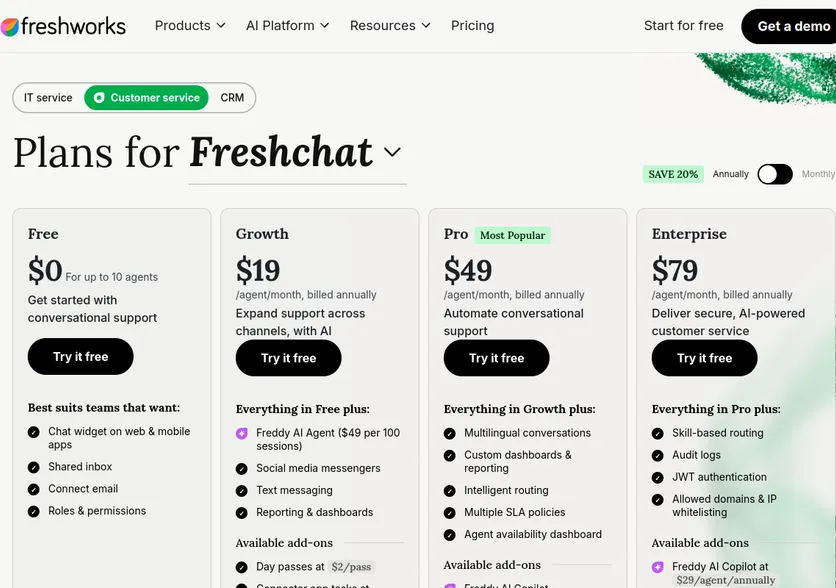
Paid tool Starting price: $15/agent/month · Fifteen dollars per agent per month on the Growth plan billed annually ($18 billed monthly); Pro is $39 and Enterprise is $69 per agent per month billed annually
Free plan: Free plan
For a startup, this Freshchat plan costs fifteen dollars per agent a month on annual billing, and it covers live chat, email and messaging apps from one inbox. A small team can set up canned replies, assign chats by rule and run a basic bot that answers after hours. It is the cheapest way in this list to give a customer a human answer fast without buying a full help desk.
What we like
- Lowest entry price among the full inboxes here
- Chat, email and messaging apps in one place
- Bot sessions included for after-hours questions
Watch out for
- Advanced automation needs the Pro plan
- Reporting is lighter than on Zendesk or Intercom
How to try it
- Connect your website chat and Facebook Messenger
- Set assignment rules so sales chats reach the right person first
- Write canned replies for your five most common questions
7. HelpCrunch
Best for: Startups that want a simple chat with built-in email marketing
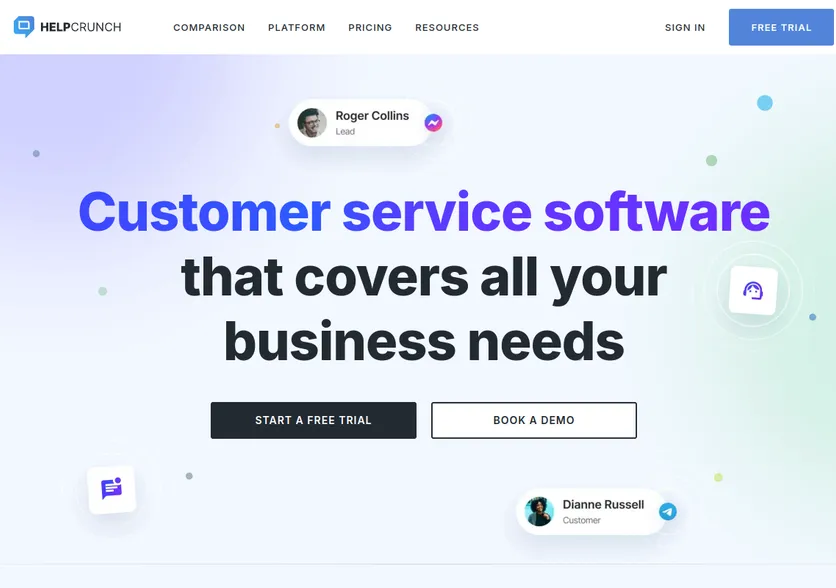
Paid tool Starting price: $12/member/month · Twelve dollars per member per month on the Basic plan billed annually ($15 billed monthly); Pro is $20 and Unlimited is $495 per member per month billed annually. The price rises with team size and email volume
Free plan: 14-day free trial
At twelve dollars per member a month on annual billing, this HelpCrunch plan is the cheapest entry price in this list for a full chat and email inbox. A startup gets live chat, a shared inbox and email campaigns in one tool, so onboarding emails and product updates can go out from the same place that answers questions. The price rises with team size and email volume, so a growing startup should check the next tier before committing.
What we like
- Lowest entry price in this list for a full inbox
- Chat and email campaigns in the same tool
- Auto messages that greet visitors on key pages
Watch out for
- Pricing rises with team size and email volume
- No free plan, only a free trial
How to try it
- Install the widget and set your team hours
- Create a knowledge base for onboarding and pricing questions
- Set up an email campaign for new trial users
8. Chatwoot
Best for: Startups that want an open-source chat they can self-host
Paid tool Starting price: $19/agent/month · Nineteen dollars per agent per month on the Startups plan billed annually; Business is $39 and Enterprise is $99 per agent per month billed annually. The Hacker plan is free for 2 agents and 500 conversations a month, and the self-hosted Community version is free
Free plan: Free plan
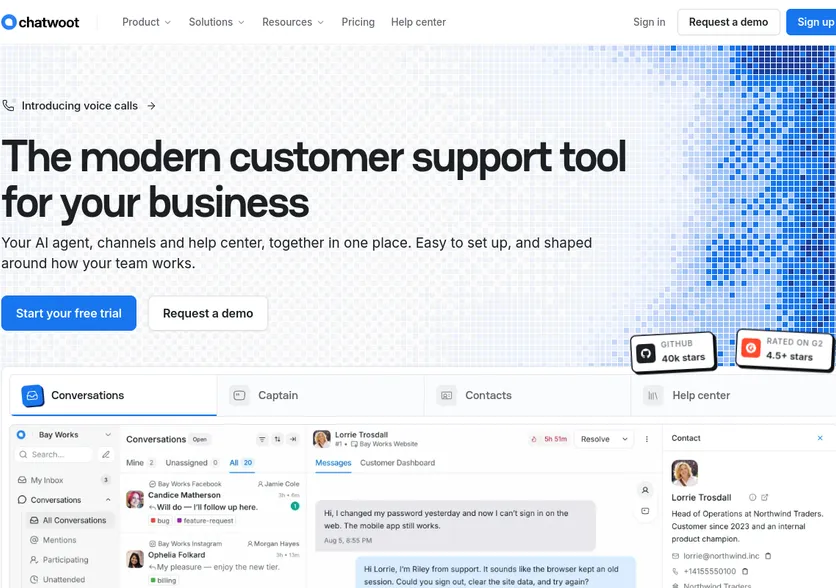
For a startup that wants to own its data, this Chatwoot plan costs nineteen dollars per agent a month on annual billing, and it is the open-source chat tool in this list, with a free self-hosted version for teams that want full control. A startup gets live chat, WhatsApp, Facebook and email in one inbox, plus an AI assistant that can answer routine questions. It is the pick for a team that would rather own its data than rent it.
What we like
- Open-source code you can self-host for free
- WhatsApp, Facebook, Instagram and Telegram in one inbox
- Captain AI answers routine questions around the clock
Watch out for
- No phone support, only chat and email
- Self-hosting needs a server you manage yourself
How to try it
- Connect your website chat and WhatsApp to one inbox
- Set a welcome message that asks for the company name
- Use conversation labels to separate sales from support
Prices above were checked on each vendor’s own website on Nov 28, 2026 and can change — the vendor’s page is the final word. Vendor links are editorial: nobody paid to be listed or ranked here. Vendors who want a featured listing can see how it works on our Get listed page.
How to set up live chat for a startup
Start with the pricing page, because that is where a visitor decides whether to try your product. Write canned replies for the five questions every visitor asks, then set the widget to greet people who spend more than ten seconds on the page. Put a pre-chat form on the signup page so you capture a name and email even if the visitor leaves, and connect WhatsApp and Facebook to the same inbox so nobody has to check three places. Check the chat log every week for the question you keep answering, then put the answer on the website itself so the next visitor never has to ask.
Before you buy
- Check the free plan is enough to test with real customers before you pay anything
- Confirm the tool can grow with you without forcing a jump to an enterprise plan
- Make sure the widget can collect a name and email before the chat starts
- Ask whether AI answers are included or billed per resolution on top of seats
- Test the mobile app, because startup teams answer chats from everywhere, not just a desk
Official websites
Official websites of the products reviewed above. Features and prices were checked against these sites when this guide was written, and they can change, so confirm on the vendor site before you buy.
Frequently asked questions
Why does live chat matter for a startup?
A startup lives or dies on how fast it answers a visitor, because the visitor has ten other tabs open and no reason to wait. A chat box on the pricing page answers the one question that stops a signup, while a chat on the signup page catches the person who got stuck. The best tools in this list answer in under a minute and keep the conversation visible to the whole team, even when the team is three people.
How much does Tidio cost for a startup?
Tidio costs twenty-four dollars and seventeen cents a month on the Starter plan billed annually, or twenty-nine dollars billed monthly, for one hundred billable conversations. Growth starts at forty-nine dollars and seventeen cents a month billed annually. Lyro AI is sold separately from thirty-nine dollars a month, and the free plan covers fifty conversations a month for teams that want to test chat first.
Can a startup start live chat for free?
Yes, with Tidio, which has a free plan for fifty conversations a month, and with Crisp, whose free plan covers two agents. Freshchat has a free plan and Chatwoot has a free Hacker plan for two agents and five hundred conversations a month. A free plan is enough to test whether customers use chat at all, but a growing startup will outgrow the caps and need a paid plan within weeks.
Which tool fits a startup that wants to own its data?
Chatwoot is the strongest fit when you want to own your data, at nineteen dollars per agent a month billed annually, with a free self-hosted version. Crisp is the best fit for a growing team at forty-five dollars a month per workspace, because the price stays flat as the team grows. HelpCrunch is the cheapest entry at twelve dollars per member a month billed annually.
How do I know if live chat is winning customers?
Watch the first reply time, the share of chats that mention pricing or signup, and the share of those chats that end in a trial or a paid plan. A startup that answers in under a minute and links straight to the signup page will see the numbers move within a month. If chats pile up overnight with no answer, add an AI agent or set clear hours so visitors know when to expect a reply.
Pick the tool that fits your team size and budget today, then start on a free plan or trial and let real customer chats decide whether the paid plan is worth it.
Browse Business Tools tools